

> Editorial Note: I’m Liam Wright, an outdoor and garden editor. I grew up in my family’s landscaping business and now cover what actually survives a season of UV, rain, and freeze-thaw cycles. The picks here are evaluated against ASTM weatherability standards and manufacturer durability ratings.
The mistake I see most: people blast the whole frame with a pressure washer, strip the protective finish, and wonder why the aluminum pits or the wood grays out by August. Cleaning a frame isn’t about force. It’s about matching the method to the material, whether you’re wiping down the base of a best gas fire pit table, the legs on a best wood burning fire pit, the arms of a best outdoor sofa, the pole on a best patio umbrella, or the corners of a best raised garden bed. Get the material right and most frames wipe clean in ten minutes.
Which Cleaner Is Safe for Your Frame Material?
Start by identifying the metal or wood. It changes everything about what you can safely use.
Powder-coated aluminum and steel are the most common patio frames, and they’re forgiving. Warm water, a few drops of dish soap, and a soft microfiber cloth handle 90% of grime. Skip anything abrasive. A scouring pad micro-scratches the powder coat, and those scratches are where moisture sneaks in and starts corrosion underneath. If you see white chalky spots on aluminum, that’s oxidation, not dirt, and a mild acidic cleaner labeled safe for aluminum lifts it.
Wrought iron needs a rust check first. Wipe it down, then look for orange bloom at welds and joints. A 50/50 white vinegar and water mix dissolves surface rust without harsh chemicals. For teak and eucalyptus wood frames, avoid bleach entirely. Bleach breaks down the lignin that holds wood fibers together, and it lightens the grain unevenly. A dedicated wood-safe cleaner or plain soapy water plus a soft brush is the standard.
Resin wicker and HDPE plastic frames tolerate almost anything short of solvents. The one rule: rinse thoroughly, because leftover soap film attracts dust and turns cloudy under UV. When in doubt, try any cleaner on a hidden spot near a back leg first.
What’s the Right Cleaning Sequence, Step by Step?
Order matters more than product. Clean out of sequence and you’ll redo work.
Start dry. Brush or vacuum loose debris, pollen, and cobwebs off the frame before any liquid touches it. Wet dust turns into a paste that smears into the finish and clings to welds. A soft-bristle brush gets into the tube joints where spiders and grit collect.
Next, rinse with a garden hose on a gentle spray, not a pressure washer. Standard pressure washers run 1,300 to 2,800 PSI, and anything above roughly 1,500 PSI can lift powder coat, force water into hollow tube frames, and blow out sealed wood joints. A regular hose at 40 to 60 PSI is plenty.
Then apply your cleaner top to bottom. Work in sections so the solution doesn’t dry before you scrub. Use a soft cloth or brush, following the grain on wood and the tube direction on metal. Let a cleaner dwell 2 to 5 minutes on stubborn spots rather than scrubbing harder.
Rinse again, fully. Any residue left behind streaks once it dries. Finally, dry with a towel or let it air-dry in shade. Sun-drying soapy metal can leave water spots etched into the finish. That’s the whole method. Dry, rinse, clean, rinse, dry.
How Often Should You Clean and Reseal?
A light wipe-down every two to four weeks during peak season prevents the deep-scrub sessions nobody enjoys. Pollen, tree sap, and bird droppings are acidic, and left sitting through a hot week they etch into finishes permanently. Ten minutes with a hose beats an hour with a scrub brush.
Do a full deep clean twice a year: once in spring before the furniture goes into heavy use, and once in fall before storage or covering. This is when you inspect for rust, loose hardware, and finish wear.
Resealing depends on the material. Teak and other hardwoods that you want to keep golden need a marine-grade or teak sealer once a year, usually spring. Left unsealed, teak weathers to a silvery gray, which is purely cosmetic and doesn’t hurt durability. Powder-coated frames don’t need resealing, but a coat of automotive paste wax once a season adds a sacrificial barrier that makes future cleanups faster and shields against UV fade. Wrought iron benefits from a rust-inhibiting spray or paint touch-up wherever the finish has chipped. Catch a chip early and it’s a dab. Ignore it and it spreads under the coating.
How Do You Handle Rust, Mildew, and Water Stains?
Each problem has a specific fix, and using the wrong one usually makes it worse.
For surface rust on iron or steel, scuff the spot with fine 220-grit sandpaper or a nylon pad, wipe clean, then treat with a rust converter or prime and repaint. Vinegar handles light bloom, but deep rust needs mechanical removal down to bare metal before you seal.
Mildew shows up as black or green speckling, especially on frames shaded by an umbrella or crowded against a wall. A mix of one cup oxygen bleach per gallon of warm water kills it without the fabric and plant damage that chlorine bleach causes. Oxygen bleach is gentler on surrounding cushions and nearby grass. Scrub, dwell 10 minutes, rinse.
Hard-water spots and mineral deposits on aluminum respond to a mild acid. A vinegar-water solution or a purpose-made outdoor cleaner dissolves the calcium without scratching. For sticky tree sap, a little rubbing alcohol on a cloth breaks it down where soap can’t. Improving airflow around the furniture, and avoiding covers that trap condensation, prevents most mildew from returning in the first place.
Helpful Picks
The three cleaners below all clear a 4.1-plus owner rating and are formulated specifically for outdoor surfaces, not repurposed indoor products. Start with the Carbona if you want an all-in-one with a built-in brush; reach for the AL-NEW when cushions and fabric are part of the job.
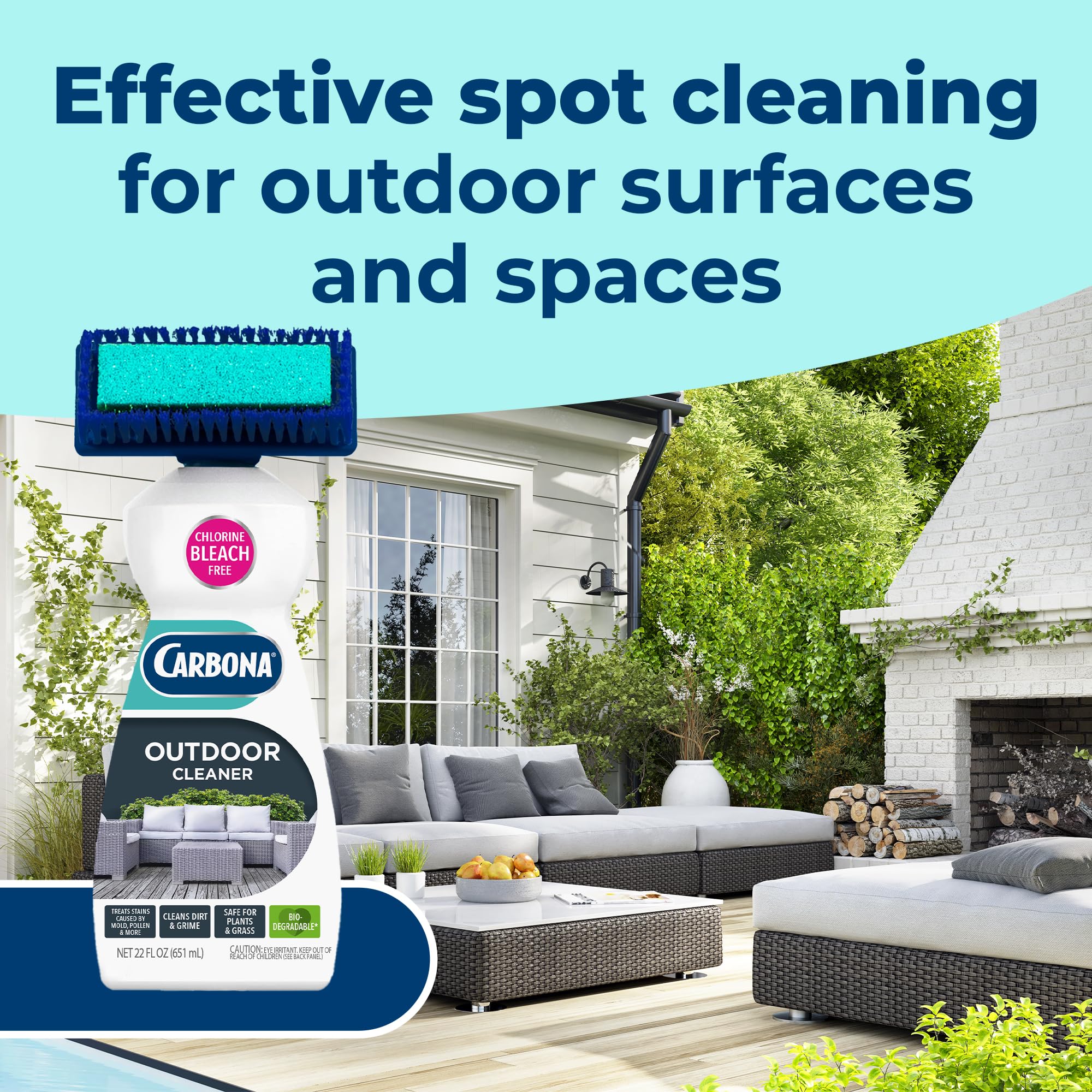
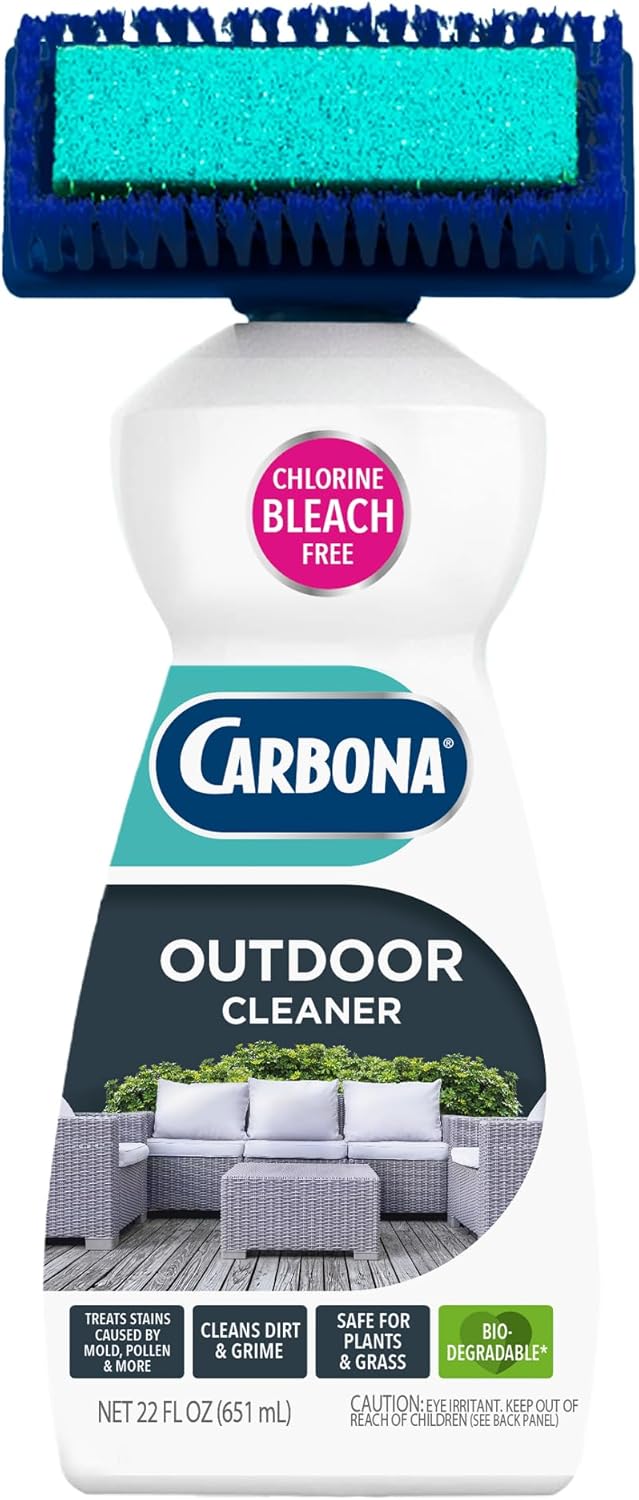
Carbona Oxy Powered Outdoor Cleaner 22oz with 2-in-1 Brush for Patio Furniture, Rugs & Decks
Pros
- Versatile 2-in-1 brush applicator eliminates the need for separate scrubbing tools, saving time and effort
- Oxy-powered formula is effective on a wide range of outdoor stains including dirt, mildew, and organic matter
- Works on diverse surfaces like fabric, rugs, and wood so it covers most outdoor cleaning needs in one product
- Strong 4.4-star rating backed by nearly 1,200 reviews signals consistent real-world performance
- Practical bottle size and integrated brush make it genuinely portable for spot treatments around the yard
Cons
- At 22 oz it is not suited for large-scale deck cleaning projects where a gallon-size concentrate would be more economical
- The integrated brush is convenient but non-replaceable, so if the bristles wear down the entire bottle must be replaced
- Oxy-based formulas can require a second application on heavy set-in stains, adding extra time to the cleaning process
Outdoor living spaces take a beating from weather, foot traffic, and everyday use, and most homeowners do not want to haul out a pressure washer every time a cushion gets a stain or a rug picks up mildew. That is exactly the gap the Carbona Oxy Powered Outdoor Cleaner fills. It is a grab-and-go solution that sits comfortably on a garage shelf and is ready the moment you need it, whether that is after a backyard cookout or before hosting guests on the patio.
What makes this product feel genuinely thoughtful is the integrated 2-in-1 brush. The sponge side is soft enough for outdoor cushion fabrics while the bristle side gives you the scrubbing power needed on deck boards and woven rug fibers. You are not juggling a spray bottle and a separate brush, and that small convenience adds up quickly when you are doing a full outdoor refresh before the weekend. The oxygen-powered formula is also a meaningful choice because it lifts stains without leaving the bleach residue that can fade fabric colors or damage finished wood.
For anyone who has invested in quality outdoor furniture or a statement patio rug, this cleaner is a practical way to protect that investment without a complicated cleaning routine. If you want a clean, guest-ready outdoor space without dedicating a full afternoon to it, this one delivers.
Styles it works with: Modern Farmhouse, Coastal, Bohemian, Traditional Outdoor
Best placed in: Covered patio or deck cleaning kit, garage utility shelf, poolside storage bin
May not suit: Households with very large deck square footage where a concentrated bulk cleaner would be more cost-effective; renters who are not responsible for outdoor surface maintenance and have minimal cleaning storage space
Buy it if:
- You have outdoor cushions, a patio rug, or a wood deck that sees regular use and needs quick spot treatment between seasonal deep cleans
- You want a single product that handles multiple outdoor surfaces so you are not buying separate cleaners for fabric, rugs, and wood
- You are freshening up your outdoor space before entertaining and need something effective that works fast without rinsing machinery
Consider waiting if:
- You are mid-season and your outdoor items are already stored for winter, making it worth waiting until spring to buy fresh
Skip it if:
- Your primary need is treating a very large deck or multiple high-traffic surfaces where a gallon-size bulk cleaner would be significantly more practical and economical
- You need a heavy-duty pressure-wash-level clean on surfaces with years of built-up grime and mold
Check the latest price and availability on Amazon before it sells out.

CLR Outdoor Furniture Cleaner 26 oz Spray - Multi-Surface Patio, Wicker, Wood, Plastic Cleaner (EPA Safer Choice)
Pros
- Versatile multi-surface formula works on wicker, wood, plastic, wrought iron, vinyl, and canvas cushions
- EPA Safer Choice certified with no phosphates, ammonia, or bleach
- Will not harm surrounding grass, shrubs, or vegetation during use
- Easy spray-on application requires no mixing or special equipment
- Safe around children and pets immediately after use
Cons
- 26 oz bottle may not last long if you have a large patio set with multiple pieces
- May require multiple applications and scrubing on heavily stained or neglected furniture
- Not designed for indoor upholstery, limiting year-round usefulness
Outdoor furniture takes a beating from sun, rain, pollen, and everyday use and most of us put off cleaning it because it feels like a chore that requires multiple products. CLR Outdoor Furniture Cleaner simplifies the whole process into one bottle that works across every surface on your patio, deck, or porch.
What stands out is the EPA Safer Choice certification. You can spray down your cushions, wicker chairs, and kids' play equipment without stressing about toxic residue on surfaces your family touches daily. The fact that overspray won't damage your lawn or garden beds is a genuine relief for anyone who has accidentally killed grass with harsh cleaners.
If you want a single outdoor cleaner that handles everything from teak dining sets to resin lounge chairs without harsh chemicals or complicated steps, this one delivers.
Styles it works with: Coastal Patio, Modern Farmhouse Porch, Bohemian Deck, Traditional Garden Entertaining
Best placed in: Outdoor storage closet, garage cleaning cady, mudroom shelf near the back door
May not suit: Households with only indoor furniture needs, or those with extremely large patio setups who would go through bottles quickly
Buy it if:
- You have a mix of outdoor furniture materials (wicker, wood, plastic) and want one cleaner for all of them
- You have kids or pets who use outdoor furniture and you want an EPA-certified safer formula
- Your patio furniture has built-up seasonal grime and you need something stronger than soap and water
Consider waiting if:
- You are heading into winter and will not use outdoor furniture for several months
Skip it if:
- You only need an indoor upholstery cleaner, as this is formulated specifically for outdoor surfaces
- You have a very large furniture collection and would need multiple bottles per cleaning session
Check the latest price and availability on Amazon before it sells out.

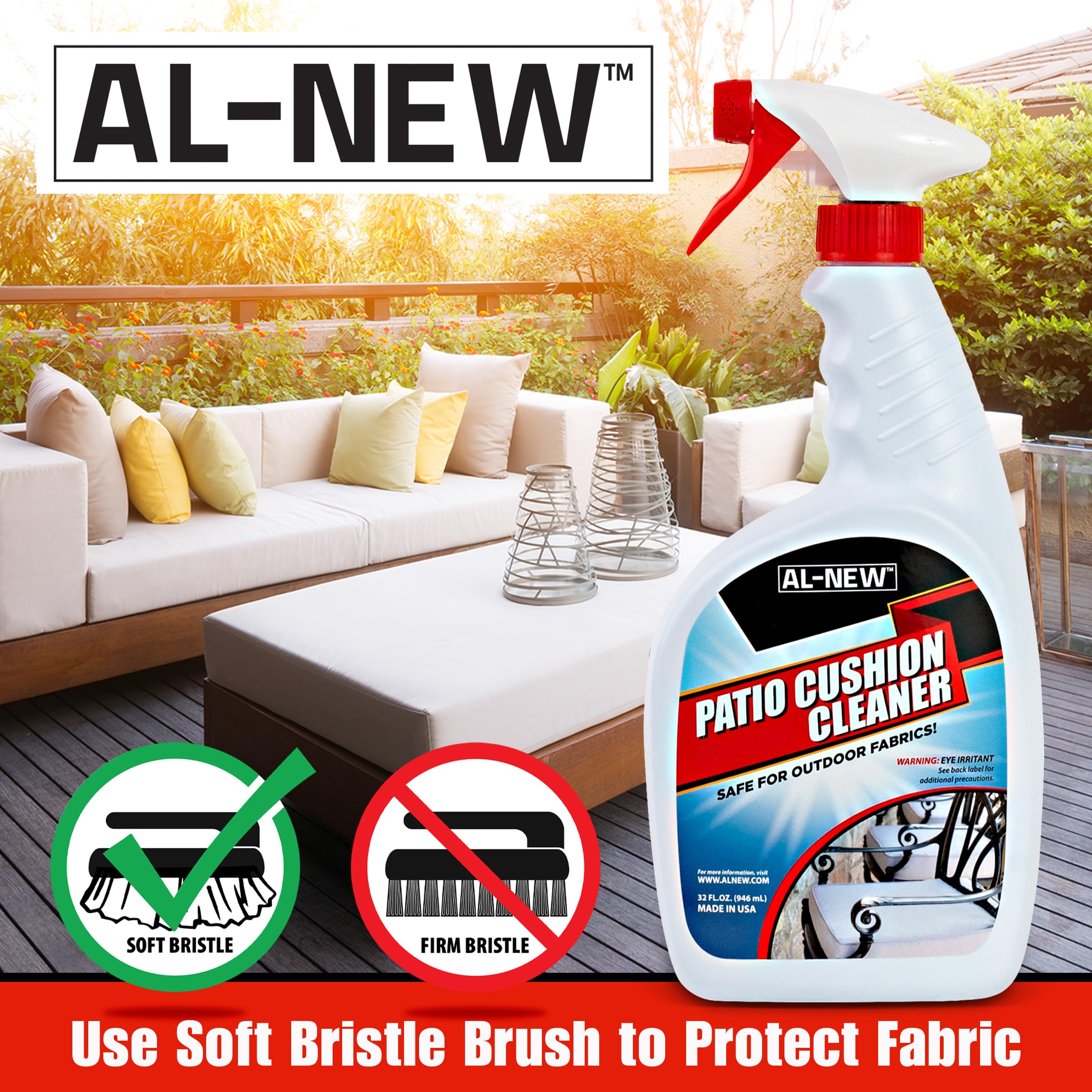
AL-NEW Patio Cushion Cleaner (32 oz) | Bleach-Free Spray for Outdoor Fabrics, Awnings, Umbrellas & Furniture Covers
Pros
- Bleach-free chemistry is safer for delicate and colored outdoor fabrics
- Versatile across many outdoor fabric types, not just cushions
- Affordable price point for a dedicated outdoor fabric cleaner
- Manufacturer encourages spot-testing and offers support if fading occurs
Cons
- Struggles to remove organic stains like mold, mildew, or algae without scrubbing with a soft brush
- Requires a color-fastness spot test before each use, which adds a step
- A 4.1 rating reflects mixed results, with some users finding it underwhelming on set-in stains
If your patio cushions have gone from crisp and colorful to dull and grimy, this AL-NEW cleaner is the kind of low-effort fix that brings a backyard back to life. It is made specifically for outdoor fabrics, so it tackles the everyday dust, pollen, and grime that settle into cushions and awnings over a season outside.
What makes it stand out for a home decor buyer is the bleach-free formula. It is gentler on the colors and weave of your fabric, which matters when you have invested in a coordinated patio set you do not want to fade. One bottle stretches across cushions, umbrellas, sail shades, and furniture covers, so your whole outdoor space can look pulled together again with a single product.
If you want to refresh faded outdoor cushions and fabrics without replacing your whole patio set, this one delivers.
Styles it works with: Modern Farmhouse, Coastal, Boho outdoor living, and Transitional patio setups
Best placed in: backyard patios, covered porches, poolside lounge areas, and outdoor dining spaces
May not suit: homes battling heavy mold or mildew buildup that needs a bleach-based cleaner, or fabrics whose manufacturer discourages any scrubbing
Buy it if:
- You want to refresh general dirt and grime on patio cushions before the outdoor season
- You prefer a bleach-free cleaner that is gentler on colored outdoor fabrics
- You need one product that works across cushions, awnings, umbrellas, and covers
Consider waiting if:
- Your main problem is set-in organic stains and you are not willing to scrub with a soft brush
Skip it if:
- You need a heavy-duty bleach-based cleaner to remove mold, mildew, or algae without scrubbing
Check the latest price and availability on Amazon before it sells out.
Frequently Asked Questions
Can I use a pressure washer on my outdoor furniture frames?
No, not on most of them. Anything above roughly 1,500 PSI can strip powder coat, force water into hollow metal tubes where it corrodes from the inside, and blow apart glued wood joints. A garden hose at 40 to 60 PSI does the same rinsing job without the risk. If you own one, use the widest fan tip from at least three feet back on resin or HDPE only.
Is bleach safe to clean wood outdoor furniture?
No. Chlorine bleach breaks down lignin, the compound that binds wood fibers, and it lightens the grain unevenly so you end up with blotchy patches. For teak, eucalyptus, or acacia, use a wood-safe cleaner or soapy water with a soft brush. If you have mildew on wood, oxygen bleach is the safer alternative.
How do I stop aluminum patio furniture from oxidizing?
It depends on how much white chalk has formed. Light oxidation wipes off with a mild acidic cleaner. To prevent it returning, apply a coat of automotive paste wax once a season, which seals the surface against moisture and UV. Store or cover the furniture during long wet stretches, since standing water accelerates the chalky bloom.
What removes tree sap from metal furniture frames?
It depends on how fresh it is. Fresh sap softens with warm soapy water. Hardened, sticky sap needs rubbing alcohol on a cloth, dabbed on and given a minute to break the bond before you wipe. Avoid scraping with anything metal, which scratches the finish and creates a rust entry point.
How often should I clean outdoor furniture frames?
It depends on your climate and tree cover. A light hose-down every two to four weeks during peak season prevents acidic pollen and bird droppings from etching the finish. Do two full deep cleans a year, spring and fall. Homes under heavy tree canopy or coastal salt air should lean toward the more frequent end.
Will vinegar damage my powder-coated frame?
No, a diluted vinegar solution is fine for occasional use on powder coat and it lifts hard-water spots well. Don’t let it sit for long stretches or use it daily, since repeated acid exposure can dull the finish over years. Rinse thoroughly afterward and follow with wax if you want extra protection.
Do I need to reseal my teak furniture every year?
It depends on the look you want. Reseal with a teak or marine-grade sealer once a year, in spring, if you want to keep the warm golden tone. If you’re fine with teak weathering to a silvery gray, you can skip sealing entirely, because the color change is cosmetic and doesn’t reduce the wood’s durability or lifespan.






Write Your Review
No reviews yet. Be the first to share your experience!