

> Editorial Note: I’m Liam Wright, an outdoor and garden editor. I grew up in my family’s landscaping business and now cover what actually survives a season of UV, rain, and freeze-thaw cycles. The picks here are evaluated against ASTM weatherability standards and manufacturer durability ratings.
The most common mistake isn’t skipping the cleaning. It’s scrubbing cold grates with a wire brush and calling it done, then wondering why the next burger tastes like last month’s salmon. A gas grill needs heat to loosen grease and a real routine to keep the burners firing evenly, and neither takes long once you know the order of operations. If your setup lives on a patio, the same seasonal care applies to the best gas fire pit table, the best wood burning fire pit, the best outdoor sofa, the best patio umbrella, and even the best raised garden bed nearby. Here’s how to get a grill genuinely clean without wrecking the grates or the finish.
How Often Should You Actually Clean It?
There are two jobs here, and mixing them up is why people burn out on grill maintenance. The quick clean happens every single cook. The deep clean happens a few times a season.
After each session, burn the grates hot for 10 to 15 minutes with the lid closed, then scrape them while they’re still around 400°F. That heat carbonizes stuck-on food so it flakes off instead of smearing. Thirty seconds of scraping per side. That’s the whole quick clean.
The deep clean is a different animal. Plan on it every 6 to 8 cooks, or roughly once a month during heavy grilling season. This is when you pull the grates, lift out the flavorizer bars or heat tents, empty the grease tray, and check the burner ports. Skip it too long and grease pools in the firebox, which is the single biggest cause of flare-ups and, in worst cases, a grease fire. Wirecutter’s grill maintenance guidance lines up with this: frequent light cleaning beats rare heavy scrubbing every time. If you grill weekly, a full teardown at the start and end of each season plus monthly touch-ups keeps a mid-range gas grill running 10-plus years instead of 4.
What’s the Right Way to Clean the Grates?
Start with the grates hot, not cold. A brush glides through softened residue but just skates over cold, hardened grease. Fire the grill to high, close the lid for 10 minutes, then get to work.
For the tool, you’ve got a real choice to make. Traditional wire brushes clean fast but shed bristles, and a stray 0.5-inch wire in a burger is a genuine ER risk. Bristle-free coil brushes and scraper-style tools solve that without giving up much scrubbing power. Whatever you use, brush along the length of each bar, not across, so you don’t push gunk into the gaps.
Once a season, give cast-iron or coated grates a deeper treatment. Pull them, let them cool, then soak in warm water with a few drops of dish soap for 20 to 30 minutes. Scrub with a nylon pad. Rinse and dry completely. Cast iron rusts fast, so wipe a thin layer of high-smoke-point oil (grapeseed or canola) over the bars and heat them for 15 minutes to re-season. Stainless grates skip the oil but still need to be bone dry. Never soak porcelain-coated grates in anything harsh. The coating chips, and once it’s gone the metal underneath corrodes within a season.
How Do You Deep-Clean the Inside?
This is the part people avoid, and it’s the part that actually matters for performance. Cool grill, gas off, tank disconnected. Then work top to bottom.
Lift out the grates and set them aside. Under them sit the flavorizer bars or heat tents. Pull these too and scrape off carbon buildup with a putty knife or plastic scraper. If they’re rusted through or flaking, replace them. They’re cheap, usually 15 to 30 dollars a set, and warped bars scorch food unevenly.
Now the burners. Look at the small ports along each tube. Clogged ports cause weak or uneven flames and yellow tips instead of blue. Clear them with a straightened paper clip or a stiff brush, working perpendicular to the tube. Don’t poke debris deeper in.
The firebox floor collects grease and carbon flakes. Scrape it toward the grease tray hole with a putty knife, then wipe with paper towels. Don’t blast it with water. You want debris out, not washed into the burner venturi tubes where spiders love to nest and block gas flow.
Empty the grease tray and drip pan every deep clean, non-negotiable. Replace the disposable foil liner or scrub the metal tray with hot soapy water. A full grease tray is a fire hazard, plain and simple. Reassemble in reverse, then run the grill on high for 15 minutes to burn off any residue before you cook.
What About the Exterior and Rust Prevention?
The outside gets ignored until it looks bad, but finish care is what protects your investment against weather. Stainless steel exteriors wipe down with a microfiber cloth and warm soapy water. Always rub with the grain, never against it, and finish with a stainless-specific polish to resist fingerprints and water spots.
Skip abrasive pads and bleach-based cleaners on any painted or stainless surface. They scratch the protective layer and accelerate corrosion. For the cart, wheels, and side shelves, the same warm-water wipe handles most grime.
Weather is the real enemy outdoors. ASTM G154 weatherability standards evaluate how coatings hold up to UV, moisture, and temperature swings, and a decent grill cover is your cheapest defense against all three. A fitted cover cuts rust risk dramatically, especially through freeze-thaw cycles that work moisture into every seam. Just let the grill cool fully before covering, and make sure it’s dry underneath so you’re not trapping humidity against the metal.
Helpful Picks
These three cleaning tools clear a 4.4-plus owner rating and cover the two safest scrubbing styles: bristle-free coil brushes and cordless powered heads. Start with #1 if you want a no-shed brush for weekly use; jump to #3 if hand-scrubbing large grates wears you out.

Pros
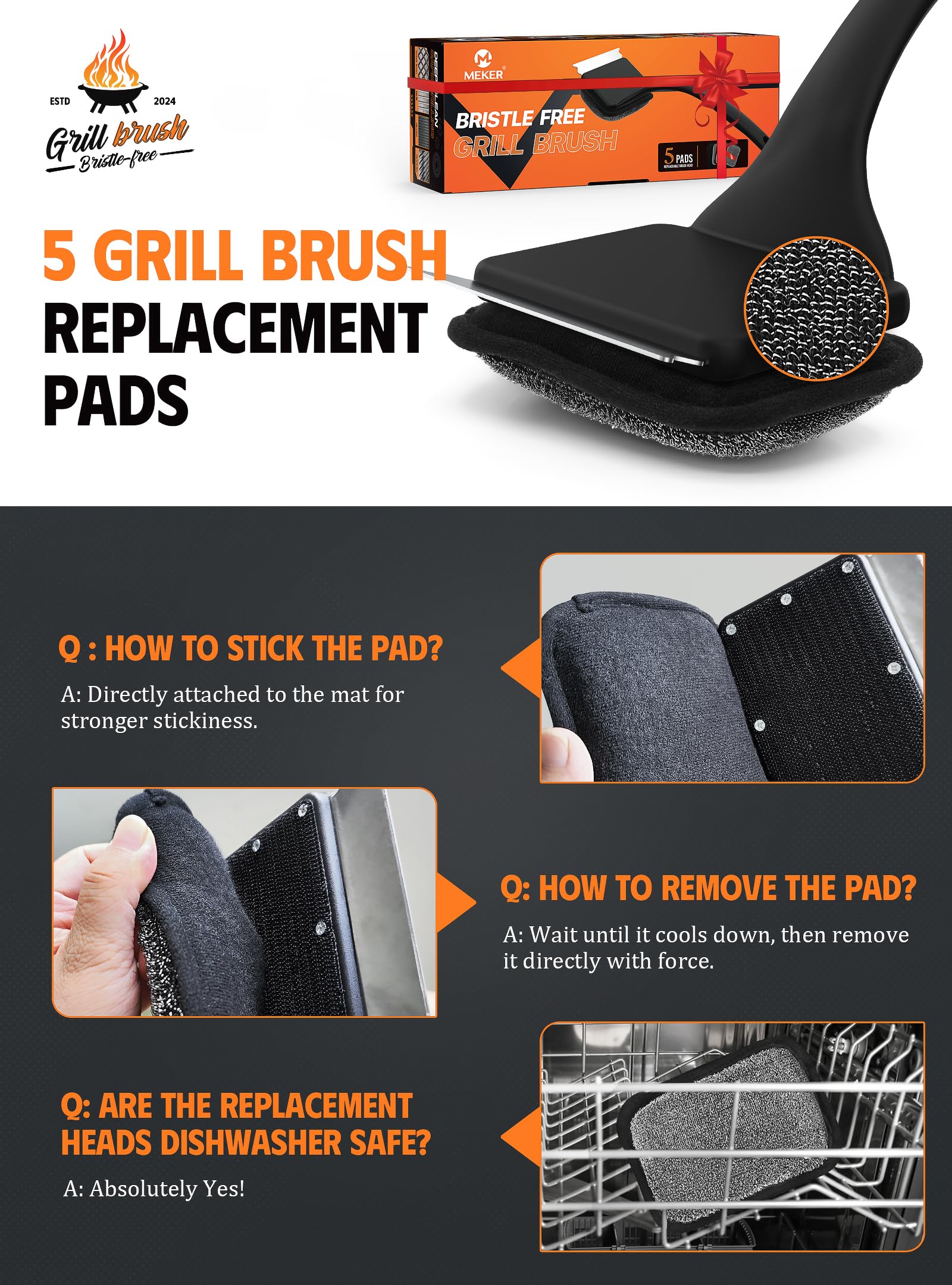
- Bristle-free design removes the top safety concern associated with traditional wire grill brushes
- Five replacement pads included deliver exceptional value compared to single-head competitors
- Screw-locked pad attachment prevents the head from loosening mid-clean, a common complaint with rival models
- Built-in scraper handles thick grease deposits without needing a separate tool
- Dishwasher-safe pads simplify maintenance and extend the usable life of the brush
Cons
- The grill must be preheated to at least 400F before cleaning, which adds 15 minutes to your post-cook routine
- Replacement pads must fully cool before removal, so you cannot swap heads quickly between uses
- The steel fiber pad may wear faster on heavily textured cast iron grates compared to smoother stainless steel surfaces
Most grill brushes ask you to choose between cleaning power and safety. The MEKER flips that trade-off by replacing loose metal bristles with a tightly woven steel fiber pad that clings to grime without leaving behind wire fragments that could end up in your food. That alone makes it stand out on a crowded shelf of BBQ accessories.
Beyond safety, the five included replacement heads are a genuinely practical touch. Rather than buying a new brush every season, you simply swap the pad when it wears out, which keeps the per-use cost remarkably low. The 8-point screw-lock system means the head stays put during vigorous scrubbing, and the built-in scraper is sharp enough to handle the kind of carbonized buildup that accumulates after a summer of weekend grilling.
If you want a safer, longer-lasting grill brush without sacrificing the scrubbing power that actually gets your grates clean, this one delivers.
Styles it works with: Outdoor Modern, Rustic Backyard, Industrial Patio, Classic American BBQ setups
Best placed in: Beside a freestanding gas or charcoal grill, hung on an outdoor kitchen pegboard, stored in a grill tool caddy on a deck or patio
May not suit: Apartment dwellers with small indoor grills or grill pans, as the steam-clean method requires an open outdoor setup and high heat; households looking for a quick cold-clean solution without a preheat step
Buy it if:
- You grill frequently and want to stop worrying about metal bristles ending up in your food
- You are tired of replacing cheap wire brushes every season and want a multi-pad kit that lasts
- You own a cast iron or stainless steel grate and need a brush that works safely on both surfaces
Consider waiting if:
- You prefer a brush that works on a cold grill, since this one requires a 400F preheat before use
Skip it if:
- You exclusively use a small indoor grill pan where high-heat outdoor cleaning is not practical
- You want a single lightweight scraper with no replaceable parts to manage
Check the latest price and availability on Amazon before it sells out.

TNTOR 18" Adjustable Grill Brush with Scraper – Stainless Steel BBQ Cleaner for Gas, Charcoal & Smoker Grills
Pros
- Upgraded handle design prevents the wobble and detachment common in cheaper grill brushes
- Rust-resistant stainless steel bristles hold up to repeated outdoor use and wet conditions
- Adjustable length adds versatility for different grill sizes and user heights
- Exceptional value under $13 with a warranty that most competitors at this price skip
- Highly rated by a large pool of verified buyers, reflecting consistent real-world performance
Cons
- Bristle-style brushes require periodic inspection; any loose wires should be replaced immediately as a safety precaution
- The plastic handle body may feel less premium compared to all-metal competitors at higher price points
- Compact collapsed length of 12.5 inches may still be bulky for very small outdoor storage areas
At under $13, the TNTOR grill brush punches well above its price. The combination of three stainless steel bristle layers and a purpose-built scraper means you are not choosing between scrubbing and chipping away residue. You get both in one tool, which is exactly what a post-cookout cleanup calls for.
The adjustable handle is the detail that separates this brush from the sea of fixed-length options on Amazon. Being able to extend to 18 inches keeps your hand away from residual heat, and collapsing it back down to 12.5 inches makes it easy to tuck into a grill caddy or hang on a patio hook. That kind of everyday practicality adds up over a grilling season.
The two-year warranty and a seller that responds to issues rounds out what is already a well-thought-out package. If you want thorough grill cleaning without paying for a specialty tool, this one delivers.
Styles it works with: Outdoor Industrial, Rustic Backyard, Modern Patio, Classic Americana BBQ setup
Best placed in: Hanging on a patio pegboard, stored in a grill side-table drawer, or hooked directly to the grill handle between uses
May not suit: Very compact balcony setups where even the collapsed 12.5-inch length creates storage challenges, or households that prefer wire-free brush alternatives due to safety concerns around young children or pets
Buy it if:
- You grill at least a few times a month and want a dependable cleaning brush that will not fall apart after a single season
- You need a thoughtful, practical gift for a dad or grill-lover and want something under $15 that comes with a real warranty
- You own multiple grill types and want one brush that works across charcoal, gas, smoker, and porcelain grates
Consider waiting if:
- You are holding out for a bristle-free or coil-style brush design as a safer alternative for households with small children
Skip it if:
- You have already committed to wire-free grill cleaning tools and do not want any stainless steel bristles in your grilling kit
- You need a heavy-duty commercial-grade brush for a large restaurant smoker or professional pit setup
Check the latest price and availability on Amazon before it sells out.

Pros
- 80W motor delivers noticeably stronger scrubbing power than manual wire brushes
- IPX7 waterprofing makes rinsing and storage genuinely easy
- LED lighting is a practical touch that most competing brushes skip
- Broad grill compatibility means it works whether you upgrade your grill or not
Cons
- At $59.99 it costs significantly more than standard manual grill brushes, which may not suit occasional grillers
- Only 15 reviews available, so long-term durability and brush head replacement options are still unproven
- No mention of replacement brush heads being sold separately, which matters once the bristles wear down
If grill cleanup is the part of barbecue season you dread most, the iFunSky Electric Grill Brush is built specifically to solve that problem. The dual-head design and 80W motor work together to scrub stuborn burnt-on residue in a fraction of the time a wire brush and elbow grease would take. It feels well-built in hand, with a grip that does not vibrate uncomfortably even during extended use.
The built-in LED light is a genuinely useful feature rather than a gimmick. If you grill into the evening or keep your grill in a shaded area, it clearly shows you spots you would otherwise miss. Paired with the IPX7 waterproof rating, cleaning the brush head after each session takes seconds rather than minutes.
If you want fast, thorough grill cleaning without scrubbing by hand every time, this one delivers.
Styles it works with: Outdoor contemporary, backyard entertaining setups, utilitarian patio layouts, modern farmhouse outdoor kitchens
Best placed in: Outdoor kitchen storage drawer, grill station accessory hook, covered patio storage cabinet
May not suit: Apartment dwellers without outdoor grill access, households that grill fewer than a few times per season where a $60 tool is hard to justify
Buy it if:
- You grill regularly throughout the season and want to cut post-cook cleanup to under five minutes
- You cook after dark or on a shaded patio and need to actually see what you are cleaning
- You own multiple grill types or plan to upgrade your grill and want one tool that covers all of them
Consider waiting if:
- You want to see more long-term reviews before committing to a newer brand at this price point
Skip it if:
- You grill only a handful of times per year and a basic manual brush does the job fine
- Replacement brush head availability is important to you and you need confirmed sourcing before buying
Check the latest price and availability on Amazon before it sells out.
Frequently Asked Questions
Can you clean gas grill grates with soap and water?
Yes, but only for the deep clean, and rinse thoroughly. Soap works fine on cool grates during a monthly soak. Don’t use it for the every-cook quick clean. Burn-off and a scraper handle that better, and residual soap can leave a taste if you don’t rinse well.
Is it safe to use a wire brush on a gas grill?
It depends on the brush. Old, worn wire brushes shed bristles that can end up in food, which is a documented injury risk. If you use one, inspect it before every cook and replace it the moment bristles look loose. Bristle-free coil or scraper tools remove that hazard entirely.

How do I clean the burners on a gas grill?
No water needed here. Clear each burner port with a straightened paper clip or stiff brush, working across the tube, not into it. Look for even blue flames afterward. Yellow or weak flames mean clogged ports or blocked venturi tubes underneath.
Can I pressure wash my gas grill?
No, don’t do it. High-pressure water forces debris into burner tubes and gas lines, and it strips protective coatings. It also traps moisture in places that won’t dry, which invites rust. Stick with scraping, wiping, and a soapy soak for removable parts.
Should I clean my grill after every use?
Yes, but keep it quick. A 30-second burn-off and scrape while the grates are hot prevents 90% of buildup. The full teardown only needs to happen every 6 to 8 cooks. Little and often beats one dreaded marathon scrub.
Will a dirty grill make my food taste bad?
Yes, eventually. Carbonized grease goes rancid and transfers off-flavors, and clogged burners cook unevenly so some spots char while others stay raw. Old residue can also flake onto food. A clean grate and clear ports fix the taste and the hot spots.
How do I stop my grill from rusting?
It depends on your climate, but a cover does most of the work. Dry the grill fully, oil cast-iron grates after cleaning, and use a fitted cover rated against UV and moisture per ASTM weatherability guidance. Store it out of standing water, and check seams each spring for early corrosion.

Write Your Review
No reviews yet. Be the first to share your experience!