

> Editorial Note: I’m Hannah Lin, an Interior Living Researcher who’s spent 9+ years analyzing the home furniture market. This guide draws on BIFMA, GREENGUARD, and FSC certifications, plus owner reviews aggregated from Wirecutter, Apartment Therapy, and the major home design subreddits.
Most people clean the lint screen after every load and think the job’s done. It isn’t. The real buildup hides in the 4-to-15 feet of ductwork running from the back of your dryer to the exterior wall, and that’s the part that starves airflow, doubles your drying time, and turns into a fire risk. Cleaning it takes 20 minutes and a cheap brush kit, no pro required. While you’re tackling home maintenance, it’s worth sorting the rest of the room too, so browse our guides to the best gallery wall frames, best console table for entryway, best large floor mirror, best wall mirror for living room, and best table lamp for living room once the laundry area is sorted.
How Often Should You Actually Clean It?
Once a year for most households. That’s the baseline, and it holds for a two-person home running three or four loads a week. Beyond that, frequency scales with use, not the calendar.
Run the numbers on your own setup. A family of four doing 8-10 loads weekly should clean the vent every six months. Pet owners cut that even shorter, because fur binds with lint and packs the duct faster than fabric fibers alone. If your dryer sits in a basement with a long run to an upstairs exit, the extra bends collect more debris and need attention sooner.
The duct length matters more than most people realize. ASTM guidance on dryer exhaust systems flags runs over 25 feet, and every 90-degree elbow effectively adds several feet of resistance. A short, straight 4-foot run stays clean far longer than a winding 20-foot path with three turns.
Don’t wait for a full year if the signs show up early. Clothes taking two cycles to dry, a hot dryer cabinet, or a burning smell all mean the vent’s clogged now. Those symptoms override any schedule. When in doubt, pull the exhaust hose off the back and look. If you see a gray mat of lint, it’s overdue.
What Tools Do You Need?
Less than you’d expect. The core kit is a flexible rod-and-brush set, and most run 20 to 35 feet so they reach the full duct length. The brush head threads onto segmented rods that snake around bends the vacuum hose can’t.
Here’s the short list. A rotary brush kit that connects to a cordless drill spins the head and grabs packed lint far better than pushing by hand. A vacuum with a hose attachment pulls loose debris out before and after brushing. A screwdriver or nut driver to loosen the clamp on the exhaust hose. That’s the whole setup.
Drill-driven kits earn their keep on long or angled runs. The spinning action lets the brush claw through compacted buildup at each elbow, which is exactly where clogs form. Apartment Therapy’s home-maintenance coverage points to these rotary kits as the single upgrade that turns a frustrating job into a quick one.
Skip the specialty gadgets. You don’t need a leaf blower rig or a wet-vac. A 4-inch brush head matches standard residential duct diameter, and a kit with 25-plus feet of rod covers the vast majority of home layouts. If your run is unusually long, buy one extra extension rod rather than a whole second kit. Keep a trash bag nearby. The lint comes out in surprisingly large clumps.
How Do You Clean It, Step by Step?
Start by killing the power. Unplug an electric dryer, or shut the gas valve on a gas model before you move anything. Safety first, every time.
Pull the dryer 2-3 feet from the wall so you can work behind it. Loosen the clamp holding the exhaust hose to the wall duct, then slide the hose free. Vacuum the loose lint from the hose, the dryer’s exhaust port, and the opening in the wall.
Now thread the brush. Feed the rod into the wall duct and add extensions as you go, twisting to lock each segment. If you’re using a drill, run it on low speed and let the spinning head do the work, pushing gently until you reach the exterior vent. Pull the brush back slowly and repeat two or three passes.
Go outside and clean the exterior vent flap. Lint collects at the hood where the duct exits the wall, and a clogged flap traps everything upstream. Brush it clear and check that the flap opens freely. Reconnect the hose, tighten the clamp, plug the dryer back in, and run a 10-minute cycle on air-only to blow out anything you loosened. Done.
What Are the Warning Signs You Missed One?
Your clothes tell you first. If a normal load needs two cycles to dry, airflow’s restricted and the vent’s the usual culprit. That’s the earliest and most reliable signal.
Feel the dryer cabinet after a load. A unit that’s hot to the touch on top or sides is working against a blockage, and that heat stresses the motor and heating element over time. A burning or musty smell points the same direction: trapped lint scorching against hot air, or moisture that can’t escape.
Watch the outside vent while a load runs. Weak or no airflow at the exterior hood means the duct’s packed somewhere between the dryer and the wall. The lint screen filling up faster than usual is another tell, since a blocked duct forces more fibers back toward the trap.
One more. If the laundry room feels humid or the automatic-shutoff sensor keeps ending cycles early, the dryer’s venting into the room instead of outside. Any of these signs means clean the vent now, regardless of when you last did it.
Helpful Picks
These three kits all clear a 4.4-plus owner rating and include the flexible rods and brush heads that reach the full duct length. Start with the Sealegend if you want the most complete set with a vacuum attachment; grab the Holikme if you’ve got a drill and a long, angled run to clear.

Pros
- All-in-one kit eliminates guesswork about which tools you need for completevent maintenance
- Flexible nylon rods connect quickly and navigate bends without getting stuck
- Compatible with most vacuum cleaners for deep lint trap cleaning
- Included lint collection bags keep removed debris contained for easy disposal
- Strong4.6-star rating across 7,000+ verified purchases confirms consistent performance
Cons
- Vacuum attachment is not compatible with some Dyson and Shark vacuum models
- Requires a power drill (not included) to operate the rotary brush effectively
- Rod connections can losen in tightvent turns if not firmly secured
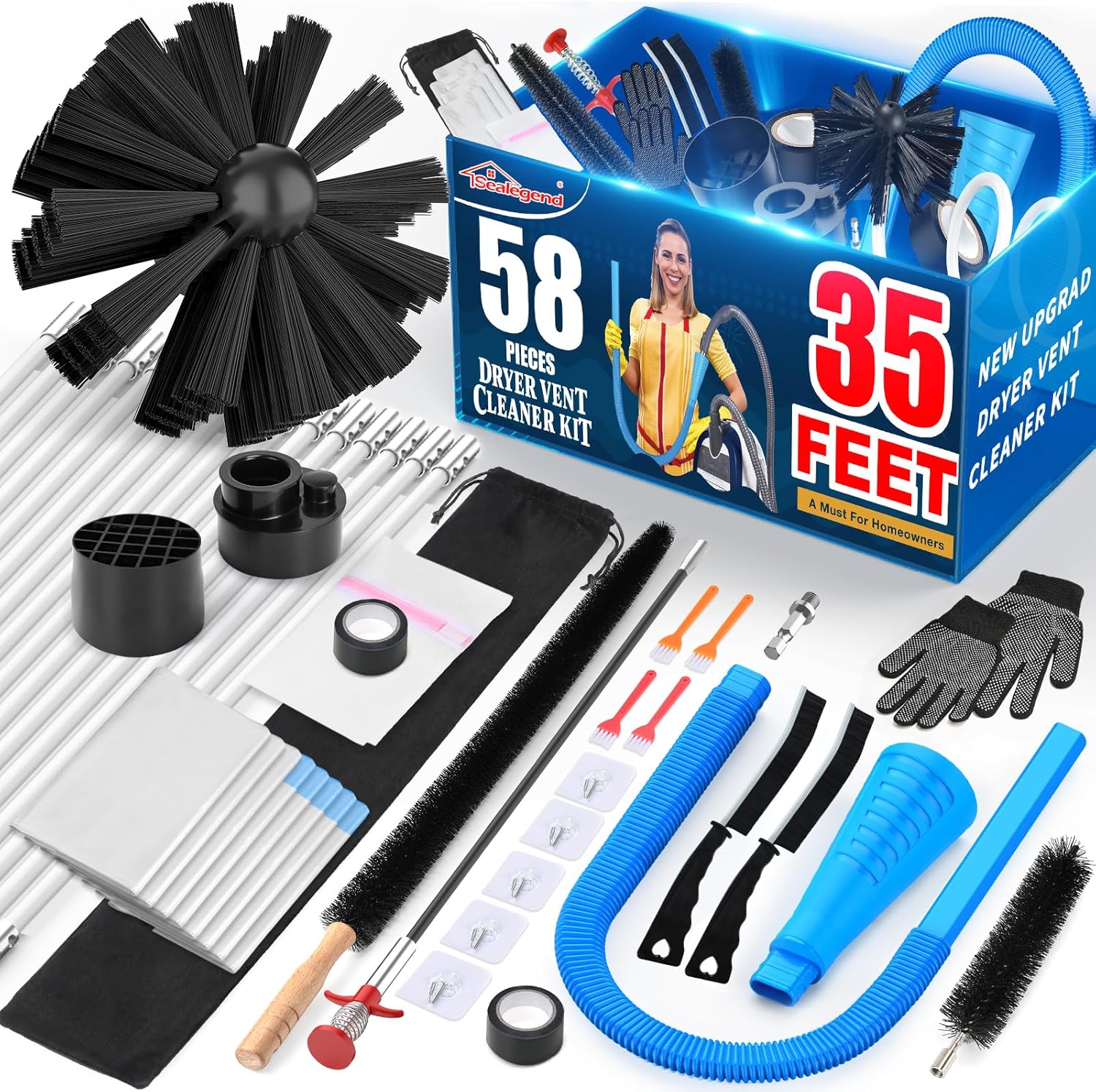
Dryer lint buildup is one of those invisible home hazards that quietly drives up your energy bill and poses real fire risk. This Sealegend kit gives you everything you need to handle it yourself, from the 35-foot rotary brush that powers through long vent runs to the vacuum attachment that sucks years of hidden lint from deep inside the machine.
What sets this apart from basic brush kits is the sheer completeness. You get 58 pieces covering every scenario: gap brushes for tight spaces, a lint graber for stuborn clogs, collection bags to keep the mess contained, and adapters that let you use your existing vacuum or the dryer's own airflow to flush debris out. It feels like hiring a professional, except you own the tools forever.
If you want a safer, more efficient laundry setup without paying $150 every time your dryer starts running hot, this one delivers.
Styles it works with: Any home with a vented dryer, including single-story ranches, multi-level homes, townhouses, and condos with longer vent runs
Best placed in: Laundry room utility shelf, garage storage area, or basement cleaning supply closet (includes a rod collection bag for compact storage)
May not suit: Apartments with ventless condensing dryers that have no external ductwork, or households without a power drill to operate the rotary brush
Buy it if:
- Your dryer takes multiple cycles to fully dry clothes, signaling a clogged vent
- You have a long vent run (up to 35 feet) with multiple bends that trap lint
- You want to stop paying for annual professional dryer vent cleaning services
Consider waiting if:
- You already own a basic kit and only need a vacuum attachment upgrade sold separately
Skip it if:
- You have a ventless dryer with no external ductwork to clean
- You own a Dyson or Shark vacuum and have no alternative vacuum for the attachment
Check the latest price and availability on Amazon before it sells out.

PetOde Dryer Vent Cleaner Kit with Vacuum Hose Attachment and Lint Brush - Universal Fit for Most Vacuums
Pros
- Universal connector genuinely fits most vacuum cleaner models without extra adapters
- Slim0.73-inch outer height slides into narrower gaps than competing hoses
- Lint brush is long enough to reach deep into standard residential dryer vents
- Extremely affordable at under $8 for a complete two-piece kit
- Flexible design makes it easy to navigate bends inside vent ductwork
Cons
- Hose material can kink if bent at sharp angles, limiting suction in tight turns
- Brush bristles may flatten over time with heavy repeated use
- Not a replacement for professional cleaning on severely clogged or very longvent runs
This is one of those small, practical purchases that makes a surprisingly big difference in how your home functions day to day. The PetOde kit lets you clear out hidden lint buildup from your dryer vent in just a few minutes, and you do not need any special vacuum or tools get started. The universal stretch connector snaps onto most standard vacuums, so there is no guessing about compatibility.
Beyond the dryer, the flexible hose and long brush earn their keep in other hard-to-reach spots: behind the fridge, along radiator fins, or deep in sofa cushion gaps. It is the kind of tool that quietly keeps your home cleaner and safer without demanding storage space or a big investment.
If you want peace of mind about dryer safety without paying for a professional cleaning service, this one delivers.
Styles it works with: Any home style. This is a utility tool that stores out of sight in a laundry closet, utility drawer, or garage shelf.
Best placed in: Laundry room, utility closet, or stored near your vacuum cleaner for easy access during routine cleaning.
May not suit: Homes with commercial-length dryer vent runs (over 25 feet) or those neding a rotary brush system for heavily compacted lint clogs.
Buy it if:
- You have never cleaned your dryer vent and want a simple, affordable way to start
- You want a universal vacuum attachment that works without hunting for brand-specific parts
- You need a flexible tool reach behind appliances and into tight gaps around the house
Consider waiting if:
- You want a powered rotary brush kit for extremely long or heavily clogged vent runs
Skip it if:
- Your dryer vent exceds 20 feet and has multiple90-degree bends requiring professional-grade equipment
- You need a rigid rod system for vertical roof-exit vents
Check the latest price and availability on Amazon before it sells out.

Holikme 30 Feet Dryer Vent Cleaner Kit with Drill Attachment - Flexible Lint Brush for Dryer Ducts and Chimney Pipes
Pros
- Extends up to 30 feet, covering longer-than-average residential dryer duct runs
- Dual-purpose design works for both dryer vents and fireplace chimneys
- No drill required, though a drill makes the job significantly faster
- Affordable alternative to $100+ professional cleaning services
- Includes two synthetic brush heads for different pipe diameters
Cons
- Rod connections can tighten during use and require pliers to separate afterward
- Brush diameter may not fit all vent sizes, requiring you to match brush head to yourduct
- No storage case included, making it awkward to store 30 feet of flexible rods
This is one of those tools you never think about until your dryer starts taking two cycles to finish a single load. The Holikme 30-foot kit makes what feels like a daunting maintenance task surprisingly simple. Connect the flexible rods, attach the brush, hook it up to your drill, and within minutes you are pulling out lint clogs you did not know existed.
What sets this apart from shorter kits is the 30-foot reach. Most homes have duct runs between 15 and 25 feet, so this covers the full length without leaving debris behind. The dual brush heads also let you tackle chimney pipes when fireplace season rolls around, making it a year-round home maintenance essential.
If you want professional-level vent cleaning without the recurring service fees, this one delivers.
Styles it works with: Any home with a vented clothes dryer or wood-burning fireplace. Practical for all interior styles since it is a maintenance tool stored out of sight.
Best placed in: Laundry room utility closet, garage tool storage, or basement workshop where you can grab it for seasonal cleaning.
May not suit: Homes with very short (under 3 feet) dryer vents where a simple handheld brush would suffice, or homes with metal chimney liners narrower than the included brush heads.
Buy it if:
- Your dryer takes noticeably longer to dry clothes than it used to
- You have a long dryer duct run (10 to 30 feet) that a short brush cannot reach
- You want to reduce fire risk from lint buildup without paying for professional service
Consider waiting if:
- You recently had your vents professionally cleaned and do not need another pass for 6 to 12 months
Skip it if:
- Your dryer vent is less than 3 feet long and already easy to clean by hand
- You need a rigid chimney brush for heavy creosote in a masonry flue
Check the latest price and availability on Amazon before it sells out.
Frequently Asked Questions
Can I clean a dryer vent myself without a professional?
Yes. A standard residential run of under 25 feet with one or two bends is a straightforward DIY job with a 20-to-35-foot brush kit and 20 minutes. Call a pro only if the duct runs through a finished ceiling, exceeds 25 feet with multiple elbows, or you can’t reach the exterior vent safely.
How long does it take to clean a dryer vent?
It depends on your duct length, but most people finish in 15 to 30 minutes. A short, straight run behind an accessible dryer takes closer to 15; a longer run with bends and an exterior flap to clear runs nearer 30. Add time if you haven’t cleaned it in over a year and the buildup’s heavy.

Do I need a drill to clean my dryer vent?
No, but it helps. You can push a manual rod-and-brush kit through by hand and it works fine on short runs. A cordless drill spins the brush head and clears compacted lint at bends far faster, so it’s worth using if your duct has 90-degree turns or a run over 10 feet.
Is a clogged dryer vent really a fire hazard?
Yes. Lint is highly flammable, and a blocked vent traps heat against that buildup, which is a documented cause of home dryer fires. Cleaning the vent on schedule and clearing the exterior flap removes the fuel source and lets heat escape as designed.
How do I know if my dryer vent goes straight outside or into the room?
It depends on the exhaust setup, so trace the hose. A properly vented dryer connects to ductwork exiting through an exterior wall or roof with a visible hood outside. If the hose ends at an indoor lint box or dumps into an attic or crawlspace, it’s venting improperly and needs rerouting to the outside.
Will cleaning the vent lower my energy bill?
Yes, usually. A clogged vent forces the dryer to run longer and hotter, and multiple cycles per load add up on the meter. Restoring airflow cuts drying time back to a single cycle, which trims both electricity or gas use and wear on the machine.
Can I use a leaf blower or shop vac to clean the duct instead?
It depends on the tool and layout. A shop vac pulls loose lint from the ends well but can’t scrub packed buildup mid-duct, so pair it with a brush. A leaf blower can push debris out on short straight runs, though it risks packing lint tighter at bends, so a rotary brush kit is the more reliable choice.









Write Your Review
No reviews yet. Be the first to share your experience!