

> Editorial Note: I’m Liam Wright, an outdoor and garden editor. I grew up in my family’s landscaping business and now cover what actually survives a season of UV, rain, and freeze-thaw cycles. The picks here are evaluated against ASTM weatherability standards and manufacturer durability ratings.
Most deck cleaning goes wrong before the first bucket is filled: people treat gray wood, green algae, composite boards, and old stain like the same problem. They aren’t. Start by identifying the surface, then work with the grain, not against it. If you’re comparing outdoor upkeep projects, keep best wood burning fire pit, best outdoor gas fire pit, best waterproof outdoor storage box, patio furniture with fire pit, and best cushions for outdoor furniture close while you plan the rest of the space.
What Should You Do Before Cleaning a Deck?
Clear everything off the deck first: furniture, planters, grills, rugs, storage bins, and anything with metal feet that can leave rust stains. Sweep dry debris out of board gaps with a stiff broom or a plastic putty knife. Leaves packed between boards hold moisture against the edges, which is exactly where rot starts on older wood decks.
Check the surface before water hits it. Look for raised nail heads, loose screws, splintered boards, soft spots near stair treads, and wobbly rail posts. Cleaning won’t fix structural movement. If a board flexes under one foot or feels spongy near the joist line, repair that first.
Wet nearby plants with plain water before you apply any cleaner. That dilutes accidental overspray and helps protect leaves from detergent residue. Cover delicate shrubs if the deck cleaner contains sodium percarbonate or a stronger brightener. Not glamorous. Still worth doing.
Move slowly around outlets, lighting, and door thresholds. Tape off exposed electrical covers if water could splash upward. A deck should shed water away from siding, not push it into trim seams.
What Is the Safest Cleaner for a Wood Deck?
Oxygen bleach is the safest general cleaner for most unfinished or weathered wood decks. Look for sodium percarbonate, mix it according to the label, and give it a 10-15 minute dwell time before scrubbing. That dwell time matters because the cleaner needs contact time to lift mildew film and gray surface dirt.
Use oxygen bleach for cedar, pine, pressure-treated lumber, and most older stained decks that need a mild reset. It cleans without the fiber damage that chlorine bleach can cause. Chlorine bleach may lighten mildew fast, but it can also strip color unevenly, dry out wood fibers, and corrode metal fasteners if it sits too long.
Don’t let any cleaner dry on the boards. Work in sections about 6×6 feet, especially in direct sun. Wet the section, apply cleaner, wait, scrub with the grain, then rinse before moving on. Simple rhythm.
Skip harsh acids unless you’re correcting tannin stains or iron marks with a product made for that purpose. Oxalic acid brighteners can help after cleaning, but they aren’t everyday soap. Use gloves, eye protection, and the label’s dilution ratio.
Can You Use a Pressure Washer on a Deck?
Yes, but use less pressure than you think. For softwood decks like cedar or pine, stay under 1200 psi if you use a pressure washer at all. A wide fan tip, usually 40 degrees, is safer than a narrow jet because it spreads force across more surface area.
Keep the wand moving and hold it about 12 inches from the boards. Start in an inconspicuous corner. If the spray raises fuzz, leaves tiger stripes, or cuts pale lines into the grain, stop and switch to hand scrubbing. Water pressure can carve soft springwood faster than dirt.
Composite decking can usually handle a careful rinse, but manufacturer durability ratings matter here. Some brands allow pressure washing within a stated psi limit; others warn against it near board ends, seams, or capped surfaces. Read the deck brand’s care guide before assuming composite means indestructible.
Never use a zero-degree nozzle on deck boards. That pin-point stream can etch wood, force water into seams, and leave marks that sanding won’t fully hide. The faster shortcut becomes the visible mistake.
How Do You Scrub a Deck the Right Way?
Scrub with the grain, not across it. Deck boards have long fibers, and cross-grain scrubbing can raise fuzz or leave uneven abrasion lines after the boards dry. A stiff synthetic bristle brush works better than a wire brush for most decks because it cleans without gouging softer wood.
Start at the farthest point from the stairs or exit and work backward. That keeps you from walking through cleaner and tracking it over finished sections. Use overlapping passes, about 2 feet wide, so you don’t leave clean-and-dirty stripes in the middle of a board.
Put more effort into shaded areas, stair edges, and the first 18 inches near planters. Those zones stay damp longer and collect the most algae. Around rail posts, scrub from several angles because dirt collects where horizontal decking meets vertical trim.
Rinse from the house outward. Push dirty water toward open edges, not against siding or door thresholds. If suds keep appearing, rinse again. Cleaner residue can interfere with stain, sealer, and even the way bare boards weather over the next few months.
How Is Cleaning Composite Decking Different from Cleaning Wood?
Composite decking needs less aggressive scrubbing, but it isn’t maintenance-free. Most capped composite boards clean best with warm water, mild dish soap, and a soft-to-medium bristle brush. The cap layer is the protective skin, so abrasive pads and metal brushes are a bad trade.
Wood absorbs stains into open grain. Composite usually holds grime on the surface, especially in embossed texture lines. That means a lighter cleaner can work, but you need to spend more time in the grooves. Classic toothbrush work around seams. Annoying, but effective.
Avoid solvent cleaners unless the manufacturer specifically approves them. Grease from grills, sunscreen, and tree sap may need a composite-safe degreaser, but acetone-style shortcuts can dull or haze some capped boards. Apartment Therapy’s outdoor-care coverage often makes the same point in plainer language: match the cleaner to the material before you scrub.
Mold can still grow on pollen, leaf dust, and dirt sitting on composite boards. If the deck looks spotted, you’re often cleaning the debris layer, not the decking itself. Rinse after windy pollen weeks and after fall leaf drop, and the deep clean gets much easier.
How Long Should a Deck Dry Before Staining or Sealing?
Wait 24-48 hours after cleaning before staining or sealing a deck. The exact timing depends on temperature, shade, humidity, and board age. A sunny pressure-treated deck may dry in a day; a shaded cedar deck under trees may need the full 48 hours or longer.
Moisture trapped under stain causes poor absorption, tacky patches, and early peeling. That’s why a deck can look dry on top and still be damp between boards or near knots. If water beads in board gaps the next morning, give it more time.
Use the simple tape-and-plastic check if you’re unsure. Tape a 12×12 inch square of clear plastic to the deck for a few hours. If condensation appears underneath, the boards aren’t ready for coating. Not scientific lab work. Good enough for a homeowner decision.
Wirecutter’s outdoor maintenance guidance tends to emphasize the same sequence: clean first, let materials dry, then apply coatings only within the product’s temperature and humidity range. That order matters more than the brand on the can.
How Often Should You Clean a Deck?
Clean a deck lightly two or three times per year and deep clean it once per year. Spring is the best time for a full clean because winter leaves behind grit, mildew film, and trapped organic debris. A fall rinse also helps because wet leaves can stain boards in less than a week.
High-shade decks need more attention than full-sun decks. North-facing boards, tree-covered patios, and areas under outdoor rugs can stay damp long enough for algae to return quickly. If the surface feels slick under shoes, don’t wait for a calendar date.
Coastal and freeze-thaw climates need extra rinsing. Salt air, deicing residue, and repeated moisture cycles stress finishes, fasteners, and board edges. ASTM weatherability standards focus on how materials handle UV, moisture, and temperature cycling; your maintenance routine should respect those same forces.
Don’t over-clean with strong chemicals. A deck that gets a mild rinse every month usually needs less aggressive annual scrubbing. Small habits beat rescue projects.
Frequently Asked Questions
Can I clean a deck with dish soap?
Yes. Mild dish soap works for light dirt, pollen, and surface grime on both wood and composite decks. Mix a small amount into warm water, scrub with a synthetic bristle brush, and rinse completely so residue doesn’t make the surface slick.
Is chlorine bleach safe for deck cleaning?
Usually no. Chlorine bleach can lighten mildew, but it may damage wood fibers, discolor boards, and corrode metal fasteners. Oxygen bleach is the better first choice for most wood decks because it cleans with less surface damage.
Should I sand after cleaning a deck?
It depends. Sand only if cleaning raises wood fibers, leaves splinters, or exposes rough patches where bare feet catch. Use light pressure and follow the grain; aggressive sanding can create uneven stain absorption.
Can I clean a deck without a pressure washer?
Yes. A pump sprayer, oxygen bleach solution, stiff synthetic brush, and garden hose handle most homeowner deck cleaning. Pressure washers save time on large decks, but they also create the most expensive mistakes.
What temperature is best for cleaning a deck?
Aim for 50-85°F with no direct midday sun if possible. Cleaner dries too fast in heat, and cold weather slows dwell time. A cloudy morning gives you the longest working window.
How do I remove green algae from deck boards?
Use oxygen bleach, let it dwell for 10-15 minutes, then scrub with the grain before rinsing. Algae returns fastest in shaded, damp areas, so trim back plants and move rugs that trap moisture.
Can I stain my deck the same day I clean it?
Almost never. Wait 24-48 hours so moisture leaves the boards. Stain applied over damp wood won’t bond evenly, and that usually shows up as blotches, peeling, or tacky spots.
Helpful Products
A deck brush should be stiff enough to move algae film without chewing up softwood or composite cap layers. Prioritize an adjustable handle, synthetic bristles, and a scraper edge for packed debris between boards. The Yocada works when you want reach and a scraper in one tool; SetSail suits longer passes; AIRU fits stair edges and stuck-on grime.

Yocada 2-in-1 Floor Scrub Brush with Telescopic Handle and Scraper - Stiff Bristle Cleaning Brush for Bathroom, Patio, Kitchen
Pros
- Dual-function head eliminates the need for separate scruber and squeegee
- Telescopic pole locks securely and accommodates different user heights
- Stiff bristles hold up well against textured tile and outdoor concrete
- Lightweight iron pole feels sturdy without adding fatigue during long cleaning sessions
- Wide brush head covers good surface area for faster cleaning
Cons
- Bristles may be too stiff for delicate sealed hardwood or luxury vinyl plank
- Brush head is not replaceable, so heavy use will eventually wear it down
- Pole connection point can losen over time with aggressive scrubbing
Keeping tile grout, shower floors, and outdoor patios truly clean usually means getting on your hands and knees with a handheld brush. The Yocada floor scrub brush removes that chore entirely. The stiff bristles do the heavy lifting while the built-in scraper edge handles anything left behind, all from a comfortable standing position.
What sets it apart from basic push broom is the 2-in-1 design and the ergonomic 45-degree angle that channels your effort directly into the floor surface. The telescopic pole adjusts to your height, so whether you are 5'2" or 6'1", you get full leverage without awkward posture. It is one of those tools that makes a dreaded task feel manageable.
If you want sparkling tile and grout without kneeling on a wet bathroom floor, this one delivers.
Styles it works with: Any home style where clean floors matter. Practical tool storage in Farmhouse, Minimalist, or Industrial utility spaces.
Best placed in: Bathroom and shower cleaning rotation, garage or patio tool rack, laundry room utility hook
May not suit: Homes with only delicate sealed hardwood or luxury vinyl floring where stiff bristles could cause surface scratching; very small bathrooms where the long handle becomes unwieldy
Buy it if:
- You have textured tile, grout lines, or concrete that collects grime no mop can handle
- Back or knee issues make kneeling to scrub floors painful or impossible
- You need one tool for both indoor bathrooms and outdoor patios or decks
Consider waiting if:
- You want a brush with a replaceable head for long-term use
Skip it if:
- Your floors are exclusively delicate hardwood or soft luxury vinyl that could scratch
- You need a soft-bristle option for gentle daily sweping rather than deep scrubbing
Check the latest price and availability on Amazon before it sells out.
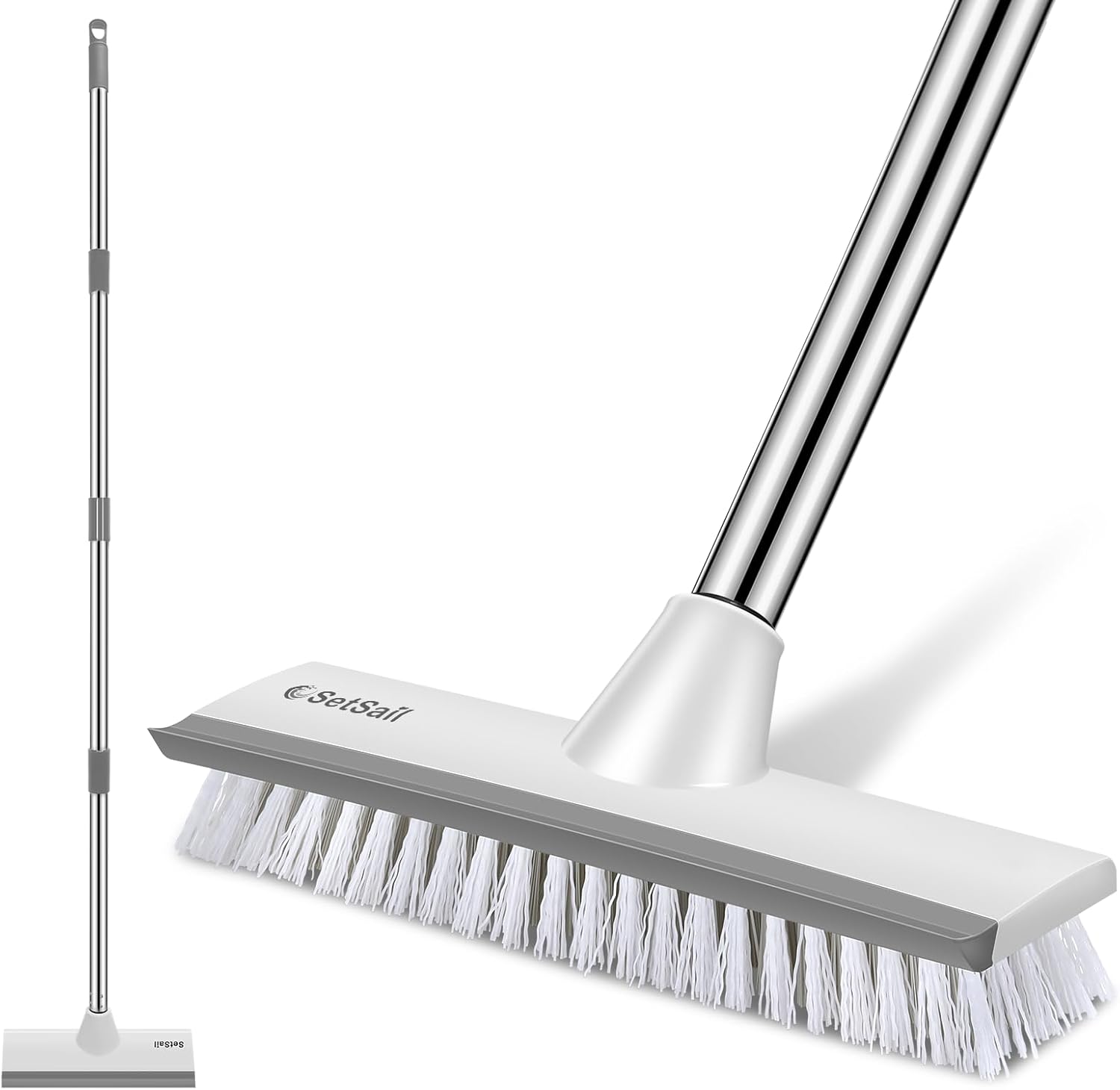
SetSail 2-in-1 Floor Scrub Brush with 51-Inch Adjustable Stainless Handle | Stiff Bristle Scrubber for Tile, Grout, Bathroom and Garage
Pros
- 2-in-1 scrub and scrape design reduces the number of tools you need for floor cleaning
- Handle extends to 51 inches, making it comfortable for users of all heights without bending
- Stiff bristles handle heavy-duty grime on tile, grout, concrete, and carpet
- Versatile enough for indoor and outdoor use including patios, garages, and pool decks
- Brand offers repair or replacement support if issues arise
Cons
- Stiff bristles may be too aggressive for delicate floring like luxury vinyl plank or polished hardwood
- The scraper attachment is functional but may feel less sturdy than a dedicated floor squegee on very wet surfaces
- Handle adjustment mechanism may losen over time with frequent heavy-duty use
If your cleaning routine still involves hunching over a hand brush or wrestling with a short-handled scrubber, the SetSail Floor Scrub Brush is the kind of simple upgrade that makes you wonder why you waited. The telescoping stainless steel handle is the standout feature here. It locks firmly at any length between 26.5 and 51 inches, so whether you are scrubbing a compact apartment bathroom or sweping across a wide garage floor, you are working upright and in control.
The 2-in-1 design is genuinely useful rather than gimmicky. The stiff bristle head handles the scrubing pass, and the integrated scraper lets you push dirty water toward a drain without switching tools. It keeps the workflow clean and fast, especially in shower stalls and tiled utility rooms where water pools quickly. The stiff bristles have real bite on grout lines and textured tile, which is where most brushes give up early.
If you want thorough, stand-up floor cleaning across multiple rooms without spending more than a couple of grocery runs, this one delivers.
Styles it works with: Functional Farmhouse, Industrial, Minimalist, Coastal Casual
Best placed in: Utility closet or laundry room for easy grab-and-go access, garage wall hook, under-sink bathroom cabinet
May not suit: Homes with delicate enginered hardwood or polished marble floors where stiff bristles risk surface scratching, and very small bathrooms where a long handle becomes awkward to maneuver in tight quarters
Buy it if:
- You have tiled bathrooms, a shower with grout lines, or a garage floor that needs regular heavy scrubbing and you want to do it standing up
- You are looking for one brush that handles both indoor tile and outdoor surfaces like a patio, deck, or sidewalk
- You want a budget-friendly cleaning tool that does not sacrifice bristle stiffness or handle stability
Consider waiting if:
- You are remodeling and your floring type is not yet finalized, since bristle stiffness should be matched to your surface
Skip it if:
- Your home has exclusively soft or delicate flooring such as polished hardwood or luxury vinyl where stiff bristles would cause damage
- You need a brush primarily for vertical wall scrubbing at full extension, as the weight distribution at 51 inches may feel tiring over long sessions
Check the latest price and availability on Amazon before it sells out.

AIRU 3-in-1 Floor Scrub Brush with Long Handle,360° Rotating Head, Adjustable 30-50" Stiff Bristle Scruber for Bathroom, Kitchen, Patio
Pros
- 360-degree locking rotating head genuinely improves reach in corners and along baseboards
- Three adjustable handle lengths accommodate different users and cleaning tasks without extra tools
- Stiff bristles tackle outdoor grime and bathroom soap scum equally well, backed by a large and positive review base
- Built-in squeegee removes water and foam in the same pass, reducing overall cleaning time
- Modular rod design is easy to assemble and compact enough to store in a closet or hang on a hook
Cons
- The plastic connection points between handle rods can feel slightly loose over time with heavy-use outdoor scrubbing
- Bristles may be too stiff for delicate unsealed natural stone or softwood floors, limiting surface compatibility
- At just under50 inches fully extended, very tall users may still find the maximum length slightly short for wall cleaning
If your cleaning cabinet is overflowing with single-purpose brushes, the AIRU 3-in-1 is a genuinely satisfying consolidation. The rotating head clicks into place with a satisfying lock at every90 degrees, which sounds like a small thing until you are scrubbing grout lines behind a toilet or getting into the lip of a shower threshold and you realize you never have to flip or reposition the brush at all.
The ergonomic angle and adjustable handle length make a real difference too. Most people report noticing the absence of lower-back tension after switching from a short-handled scrubber to this one, and that quality-of-life improvement alone justifies the price for regular cleaners. The silicone squeegee on the third side is a bonus that feels genuinely useful rather than a gimmick -- it efficiently clears dirty water and soap foam so you are not just pushing grime around.
If you want deep-clean results across bathrooms, kitchens, and outdoor spaces without jugling three tools or bending over, this one delivers.
Styles it works with: Modern Farmhouse, Scandinavian Minimalist, Contemporary, Industrial
Best placed in: Utility closet or laundry room hung vertically on the built-in hook, bathroom cabinet or shower nook for daily use, garage wall storage for outdoor and patio cleaning sessions
May not suit: Homes with unsealed natural stone like travertine or unfinished hardwood where stiff bristles could cause surface damage; very compact apartments with no closet wall space, since the assembled handle is bulkier than a standard broom
Buy it if:
- You clean tile bathrooms, shower walls, and outdoor patios regularly and want one brush that handles all three without switching tools
- You have back pain or mobility issues and need a long-handled scrubber that eliminates the need to kneel or bend during floor cleaning
- You want a high-review, well-tested option under $25 that covers both wet scrubbing and surface squegee work in a single pass
Consider waiting if:
- You are hoping for a version with a wider brush head for faster coverage of large open floor areas like gym rooms or open-plan living spaces
Skip it if:
- Your floors are primarily unsealed natural stone, unfinished hardwood, or another delicate surface where stiff bristles pose a scratch risk
- You only need a light-duty duster or soft-bristle mop and have no need for heavy scrubbing capability
Check the latest price and availability on Amazon before it sells out.




Write Your Review
No reviews yet. Be the first to share your experience!