

> Editorial Note: I’m Olivia Bennett, a storage and organization contributor. I approach storage as a systems problem rather than a product one — fit to actual room dimensions, load ratings, and how the system holds up under daily use.
The first mistake is buying shoe rack by looks before measuring the space it has to serve. Start with the hard numbers, then compare materials, clearances, and daily use against best closet organizer for small closet, best narrow bookshelf, best storage baskets for small spaces, best shoe cabinet for small apartment, best waterproof outdoor storage box, and best built in entertainment center.
The Ground Rules Before You Start
Measure the usable zone first: width, depth, height, and the 24-inch path people need to move without turning sideways. For shoe rack, the right choice is usually the one that fits the smallest daily action, not the biggest fantasy setup. BIFMA storage guidance, OEKO-TEX textile labels, ASTM weatherability references, and owner notes from Apartment Therapy and Wirecutter all point to the same rule: specs beat photos. Small space. Real constraints.
Step 1: Measure the Tightest Daily Path
Mark the main path with painter’s tape and keep at least 24 inches open; 30 inches feels better if two people pass. If shoe rack steals that clearance, it’s too large even when it technically fits. Write down the maximum footprint before shopping: width by depth by height. That’s the guardrail.
For shoe rack, this means setting one non-negotiable spec before you shop. Use 18 inches as the minimum reach zone, 24 inches as the walking zone, and 30 inches where doors or drawers open. Those numbers keep the setup from feeling cramped after the first week. Not glamorous. Useful.
Step 2: Match Material to Moisture and Wear
Choose material for the room’s hardest condition. Bathroom textiles need fast drying under 24 hours and OEKO-TEX or clearly labeled fiber content. Outdoor gear needs UV-stable finishes, drainage gaps, or IP65-rated electrical parts. Closet pieces need shelves that won’t bow under 15 to 30 lb loads.
For shoe rack, this means setting one non-negotiable spec before you shop. Use 18 inches as the minimum reach zone, 24 inches as the walking zone, and 30 inches where doors or drawers open. Those numbers keep the setup from feeling cramped after the first week. Not glamorous. Useful.
Step 3: Size for the Item You Use Most
Design around the object you touch every day, not the rare overflow item. A 40 x 80 inch towel needs a wider bar than a hand towel; a 50 ft light strand covers many 8 x 10 ft patios; a 30-pair shoe cabinet needs real door swing. Fit the repeat habit first.
For shoe rack, this means setting one non-negotiable spec before you shop. Use 18 inches as the minimum reach zone, 24 inches as the walking zone, and 30 inches where doors or drawers open. Those numbers keep the setup from feeling cramped after the first week. Not glamorous. Useful.
Step 4: Choose Access Over Capacity
Capacity that requires unloading three layers won’t last. Keep the front 6 inches clear for fingers, drawer pulls, hooks, or basket handles. If you can’t reach it in 5 seconds, you’ll stop using it by week three. Easy wins.
For shoe rack, this means setting one non-negotiable spec before you shop. Use 18 inches as the minimum reach zone, 24 inches as the walking zone, and 30 inches where doors or drawers open. Those numbers keep the setup from feeling cramped after the first week. Not glamorous. Useful.
Step 5: Check Assembly, Anchoring, and Cleaning
Look for wall anchors, rust-resistant hardware, washable covers, or wipeable surfaces before you compare colors. A small-space product works harder because every inch is visible. Plan 2 inches around vents, baseboards, trim, and door casing so the piece sits square instead of fighting the room.
For shoe rack, this means setting one non-negotiable spec before you shop. Use 18 inches as the minimum reach zone, 24 inches as the walking zone, and 30 inches where doors or drawers open. Those numbers keep the setup from feeling cramped after the first week. Not glamorous. Useful.
Mistakes That Shrink a Small Space
Do not order from the product photo alone. A photo can hide a 14-inch depth, a 72-inch height, or a cord that needs a grounded outdoor outlet within 6 feet. Measure the wall, floor, door swing, and the path people use every morning. Then compare that outline to the assembled dimensions, not the shipping box.
Watch the material language closely. Cotton towels behave differently from microfiber, polypropylene rugs drain differently from fabric-backed rugs, and engineered-wood organizers need weight limits before they need pretty finishes. If the listing does not show a load rating, water rating, or fiber content, treat that as a reason to slow down. Better to pause than return a bulky box.
Small spaces punish complicated systems. If the product needs two hands, a step stool, or a full drawer pullout every day, it will annoy you. Choose the option you can use in 5 seconds while half awake, carrying laundry, or walking in with wet shoes. That is the real standard.
Maintenance and Fit Check
Do a 30-day fit check after setup. Look for rubbed paint, curled corners, loose wall anchors, sagging shelves, damp fabric, or a walkway that has narrowed below 24 inches because baskets and shoes drifted outward. Those signs mean the size is wrong or the system needs fewer items, not more accessories.
Cleanability matters as much as capacity. Outdoor pieces should shed water and dry in one sunny afternoon. Bathroom pieces should survive weekly washing or wiping without trapping moisture against tile. Closet and entry pieces should handle a 10 lb daily load without leaning, squeaking, or pulling away from the wall. If it fails that basic use, replace the layout before adding another container.
The Right Products Make It Easier
The three options below were chosen to give you clear size and use-case differences, not three copies of the same idea. Start with KNOWORLD if you want the broadest everyday fit; look at Homleke when the listed dimensions match a tighter layout; choose ONBRILL when its material or rating solves the harder wear problem.

Pros
- Exceptional capacity for such a narrow footprint, fitting up to 32 pairs
- Walnut and rattan combo looks upscale and suits multiple decor styles
- Includes anti-tip hardware for family-safe wall anchoring
- Adjustable shelves let you customize compartment heights for different shoe types
- Hollow rattan design promotes ventilation so shoes stay dry
Cons
- Only 2 customer reviews so far, making long-term durability unproven
- At 63 inches tall, it may look imposing in very small entryways with low ceilings
- Enginered wood construction may not hold up as well as solid wood in humid environments
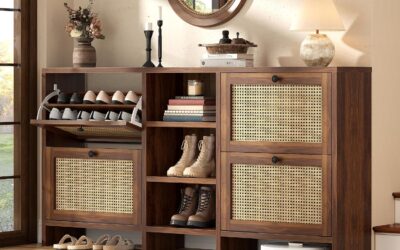
This KNOWORLD cabinet solves the age-old entryway problem: too many shoes, not enough space, and no one wants to look at them. The four flip-drawer design keeps everything tucked away while the rattan panels give it a warm, textured look that feels intentional rather than purely functional. It reads more like a piece of furniture than a shoe rack.
In a real room, the walnut finish and woven rattan sit comfortably alongside mid-century, boho, or modern coastal pieces. The gold handles add a subtle premium detail without being flashy. At just over 9 inches deep, it hugs the wall and leaves your hallway open for traffic.
If you want serious shoe storage without a bulky closet-like cabinet dominating your entryway, this one delivers.
Styles it works with: Mid-Century Modern, Boho, Coastal, Japandi
Best placed in: Narrow entryway wall, hallway between rooms, foyer beside the front door
May not suit: Very small entryways where63 inches of vertical furniture would feel overwhelming, or ultra-minimalist spaces where rattan texture conflicts with a clean-line aesthetic
Buy it if:
- You have20+ pairs of shoes and a narrow entryway that cannot fit a standard depth cabinet
- You want your shoe storage to look like a real piece of furniture, not a utility rack
- You have kids or pets and need the peace of mind of anti-tip wall anchor
Consider waiting if:
- You prefer a color other than walnut, as no alternate finishes appear available yet
- You want to see more customer reviews before committing to a newer product
Skip it if:
- You need a cabinet deeper than 10 inches to store boots upright without folding them
- Your entryway is in a high-humidity area like a garage or uncovered porch
Check the latest price and availability on Amazon before it sells out.

Homleke Farmhouse Shoe Cabinet with 2 Barn Doors, 5-Tier Tall Shoe Storage Organizer, White
Pros
- Holds 15 plus pairs of shoes in a small footprint
- Adjustable shelves accommodate tall boots and heels in the same cabinet
- Barn doors and black U-shaped handles give genuine farmhouse charm
- Anti tip kit included for safety around kids and pets
- All assembly tools and step-by-step instructions come in the box
Cons
- Particleboard construction is lighter and less durable than solid wood
- White finish may show scuffs and marks from dirty shoes over time
- Assembly is required and the 36 pound size suggests two people make it easier
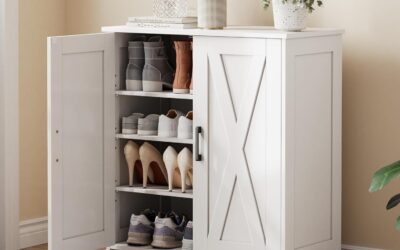
If you have been living with a pile of shoes by the front door, this Homleke farmhouse cabinet is the kind of upgrade that quietly transforms a chaotic entry into a calm, styled space. The two barn doors and black U-shaped handles give it that cozy modern farmhouse character, while the white finish keeps it fresh enough to blend with almost any decor.
Inside, the three adjustable shelves do the heavy lifting. You can raise one shelf for tall winter boots, lower another for flats, and still have room for 15 or more pairs without the clutter spilling out. At just 27.6 inches wide and 31.5 inches tall, it tucks neatly beside a console table or against a hallway wall without eating your floor plan.
If you want hidden shoe storage that looks like intentional decor without spending solid wood furniture money, this one delivers.
Styles it works with: Modern Farmhouse, Scandinavian, Cottagecore, Minimalist
Best placed in: entryway wall, hallway, beside the bed in a bedroom closet
May not suit: small studio apartments with very tight walkways or homes that need a cabinet under 31 inches tall to clear a low window sill
Buy it if:
- You want hidden shoe storage that doubles as farmhouse style decor in your entryway or hallway
- You need adjustable shelves to fit a mix of boots, sneakers, and heels in one cabinet
- You have kids or pets and want the included anti tip kit for extra safety
Consider waiting if:
- You need a color other than white to match your existing furniture
- You have more than 15 pairs of shoes and need a second unit or a larger cabinet
Skip it if:
- You want solid wood construction that can take heavy daily abuse
- Your space cannot fit a cabinet that is 31.5 inches tall and 27.6 inches wide
Check the latest price and availability on Anthropic before it sells out.

ONBRILL 3-Door Farmhouse Shoe Cabinet with Adjustable Shelves, 30-Pair Entryway Storage Organizer, 40" Tall, Black
Pros
- Holds 30 pairs across three separate compartments including a taller section for boots and heels
- Cross-molding doors look polished and give the cabinet genuine farmhouse appeal beyond a plain flat-front box
- Spacious countertop is reinforced to hold decor, plants, or daily-use items without wobbling
- Soft-close hinges and adjustable legs add quality-of-life details that cheaper cabinets skip
- Labeled parts and step-by-step instructions make assembly manageable even for first-time furniture builders
Cons
- At 40 inches tall it may feel proportionally short in entryways with high ceilings or wide open walls, where a taller unit would look more balanced
- Capacity listed as roughly 30 pairs depends heavily on shoe size, so larger households or those with many size 12-plus shoes will find it fills up faster than expected
- Assembly is faster with two people, so solo builders should expect a longer setup time
Most shoe cabinets make you choose between storage and style, but the ONBRILL 3-door cabinet does not ask you to compromise. The cross-shaped molding on each door panel gives it a character that reads as intentional furniture rather than utility storage, and the matte black finish ties cleanly into a wide range of modern and farmhouse interiors.
Beyond the looks, the layout is genuinely practical. The taller left compartment keeps boots and heels upright and easy to grab, while the two remaining sections handle everyday flats, sneakers, and dress shoes. The countertop is a quiet bonus that earns its keep as a drop zone for keys, sunglasses, and small potted plants near the front door.
If you want a tidy, organized entryway that actually looks like it belongs in a styled home without paying custom furniture prices, this one delivers.
Styles it works with: Modern Farmhouse, Industrial, Transitional, Rustic Minimalist
Best placed in: Entryway or foyer wall, mudroom beside a coat rack, living room corner used as a secondary storage console
May not suit: Very compact entryways under 36 inches wide where the three-door span feels tight, or homes decorated in a strict Scandinavian or ultra-modern style where the cross-molding detail may feel too ornate
Buy it if:
- Your entryway has scattered shoes and you want one piece that solves the problem completely and looks good doing it
- You have a mix of footwear including boots and heels that need a taller storage section than a standard shoe rack provides
- You want a countertop surface at the door for keys, mail, or small decor without buying a separate console table
Consider waiting if:
- You are still deciding on your entryway color scheme and want to see if a white or natural wood finish option becomes available
Skip it if:
- Your household has more than 30 pairs of regularly worn shoes and you need a higher-capacity solution from the start
- Your entry space is narrower than 36 inches, making a three-door cabinet difficult to open fully without obstruction
Check the latest price and availability on Amazon before it sells out.
KNOWORLD — knoworld 63″ Wood Rattan Shoe Storage Cabinet for Entryway, Walnut | Slim Hidden Shoe Cabinet,
This KNOWORLD option earns its place because it gives a defined use case instead of vague storage. The listed owner rating is 5, so read recent reviews for the same room size and installation surface you have. Its title points to the key spec: knoworld 63″ Wood Rattan Shoe Storage Cabinet for Entryway, Walnut | Slim Hidden Shoe Cabinet, . Match that to your measured width, depth, and clearance before price enters the decision.
Homleke — Homleke Farmhouse Shoe Cabinet with 2 Barn Doors & Wood Legs, 5-Tier Shoe Storage Cabinet with
This Homleke option earns its place because it gives a defined use case instead of vague storage. The listed owner rating is 4.6, so read recent reviews for the same room size and installation surface you have. Its title points to the key spec: Homleke Farmhouse Shoe Cabinet with 2 Barn Doors & Wood Legs, 5-Tier Shoe Storage Cabinet with . Match that to your measured width, depth, and clearance before price enters the decision.
ONBRILL — ONBRILL Shoe Cabinet with 3 Doors and Adjustable Shelves, 30 Pairs Shoe Storage Cabinet, 40 Inc
This ONBRILL option earns its place because it gives a defined use case instead of vague storage. The listed owner rating is 4.6, so read recent reviews for the same room size and installation surface you have. Its title points to the key spec: ONBRILL Shoe Cabinet with 3 Doors and Adjustable Shelves, 30 Pairs Shoe Storage Cabinet, 40 Inc. Match that to your measured width, depth, and clearance before price enters the decision.
Frequently Asked Questions
Should I buy the biggest option that fits?
No. Leave at least 24 inches of movement space and 2 inches around trim, vents, or door swing.
What measurement matters most?
The limiting depth. Width looks obvious, but depth is what blocks knees, doors, drawers, and traffic.
Are higher ratings enough?
No. Ratings help, but size, material, and the surface you install on decide whether it works.
How much clearance should I leave?
Use 24 inches for a walkway, 30 inches near doors, and 18 inches for comfortable reach.
What should I check before ordering?
Check the return window, assembled dimensions, hardware type, and whether the material can handle moisture or weight.




Write Your Review
No reviews yet. Be the first to share your experience!