

> Editorial Note: I’m Maya Chen, a bedroom and sleep editor covering mattresses, bed frames, and bedding. The picks here are evaluated against CertiPUR-US foam standards, Sleep Foundation evaluation protocols, and owner durability reports from r/Mattress.
The first night on a new mattress is rarely the best night. It feels firm, almost hard, and you wake up wondering whether you bought the wrong bed. Most of the time you didn’t. A new mattress needs a break-in period, just like new shoes, because the foam and springs haven’t softened to your body’s shape yet. The same attention you’d bring to choosing a best memory foam mattress, sizing a best mattress topper, protecting it with a best waterproof mattress protector, pairing it with a best bed frame, or grounding it with a best area rug for bedroom applies here. Give it time and the right technique, and the mattress you’re doubting becomes the one you love.
How Long Does a New Mattress Take to Break In?
It depends on the mattress type, but most need 30 to 60 nights of regular sleep to fully break in. Memory foam and hybrid mattresses take the longest because the foam layers have to soften and contour to your body’s pressure points. Innerspring mattresses break in faster, often within 2 to 4 weeks, because the springs settle more quickly than foam softens.
The first week is the stiffest. New foam is dense and rigid from the factory, and it hasn’t been compressed under your weight yet. Each night of sleep pushes the foam a little more, and by week two or three you’ll feel the difference. Sleep Foundation’s evaluation protocols note that owners who judge a mattress on the first week are the most likely to return one that would have been perfect by night 40.
Most sleep trials run 100 nights or more for exactly this reason. A mattress that still feels wrong after 60 nights of real use is a return candidate, but one that’s just firm in the first two weeks usually isn’t. Patience is the single biggest factor in whether you end up liking the bed you bought.
Why Does a New Mattress Feel So Firm at First?
A few things stack up to make a new mattress feel harder than it will. First, the foam is fresh from the factory and at peak density, which means it hasn’t softened or lost any of its initial firmness. Foam softens with repeated compression, so a mattress that’s never been slept on is as firm as it will ever be.
Second, your body adapted to your old mattress. If you slept on a sagging, softened bed for years, your spine and pressure points got used to sinking in. A new, supportive mattress feels firm by comparison because it holds you up instead of letting you sink.
Third, the materials are still settling. Foam layers, quilted covers, and comfort fibers all need to compress and conform before they feel plush. r/Mattress owner reports describe the first two weeks as the adjustment hump, after which the mattress starts to feel like it was supposed to in the showroom.
The fix isn’t a softer mattress, it’s time and use. The firmness you feel at week one is not the firmness you’ll feel at week six.
What’s the Fastest Way to Soften a New Mattress?
The most reliable method is simply sleeping on it every night, because your body weight is what softens the foam. Consistency matters more than anything else, since skipping nights resets the compression cycle. Walk on the mattress gently for a few minutes a day to speed the softening, focusing on the areas where you sleep.
If the mattress has a quilted or pillow-top layer, press it down with your hands across the surface to break in the fibers. Don’t use sharp objects or excessive force. The goal is even compression, not concentrated pressure in one spot.
Temperature plays a role. Memory foam softens in warmth and firms up in cold, so keeping the bedroom around 68 to 72 degrees helps the foam relax to your body heat. A few nights under a warm comforter, your body heat builds up in the foam, and the mattress softens faster.
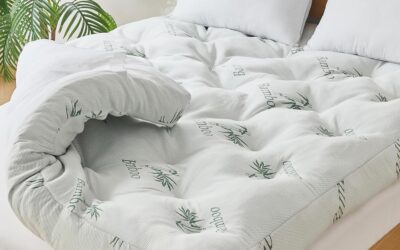
For a mattress that’s still too firm after 30 nights, a mattress topper is the practical bridge. A 2 to 4 inch memory foam or latex topper adds a plush layer while the mattress underneath continues to break in. Apartment Therapy’s editors recommend this as the fix for a supportive mattress that isn’t yet comfortable.
Should I Rotate or Flip My Mattress While Breaking It In?
Yes, rotation helps, and most mattresses should be rotated during break-in. Rotate the mattress 180 degrees, head to foot, every two weeks for the first three months, then every three to six months after that. This distributes your body’s compression evenly instead of concentrating it where you sleep.
Rotation prevents the body impression that forms in one spot, and it helps the entire mattress break in uniformly. Check whether your mattress is flip-able before flipping it. Most modern memory foam and hybrid mattresses are single-sided, with a specific top and bottom, and flipping them ruins the support. The label tells you.
If your mattress is double-sided, flip and rotate it each time. If it’s single-sided, rotate only. Wirecutter’s mattress care coverage notes that rotation is the single most overlooked maintenance step, and it extends mattress life by years while making break-in more even.
Does the Smell Mean the Mattress Isn’t Ready Yet?
Partly. A new mattress often off-gasses volatile organic compounds from the foam and adhesives, which read as a chemical or paint smell. The off-gassing and the break-in happen on overlapping timelines, and ventilating the room helps both. CertiPUR-US certified foam is evaluated for low VOC emissions, so a certified mattress off-gasses less, but even certified foam has a brief period.
The smell usually fades in 2 to 14 days with good airflow, while the break-in takes 30 to 60 nights. They’re separate processes, but the ventilation that clears the smell also helps the foam settle. Open windows, run a fan, and strip the bed during the day so air moves across the bare surface.
If the smell is strong enough to bother you, air out the mattress in a spare room for a few days before sleeping on it. That clears the worst of the off-gassing without disrupting your sleep, and you start the break-in once the odor is tolerable. Don’t seal the room up, because trapped VOCs slow both the smell clearing and the foam settling.
When Should I Give Up and Return the Mattress?
It depends on the issue, but the honest threshold is 60 nights of real use. A mattress that’s just firm in the first two weeks almost always softens into the right feel by night 40. A mattress that causes pain, numbness, or genuinely worse sleep after 60 nights of consistent use is the wrong bed for you.
The signs that point to a return rather than more patience are specific. Persistent lower back pain that wasn’t there on your old mattress, hip or shoulder pain for side sleepers, or numbness in your arms and legs all suggest the firmness or support profile is wrong for your body. These don’t resolve with break-in, because they’re fit problems, not stiffness problems.
A mattress that’s supportive but too firm is the one to ride out, since a topper bridges the gap. A mattress that’s the wrong firmness for your sleep position, soft for a stomach sleeper or firm for a side sleeper, is the one to exchange. Most sleep trials require you to sleep on the mattress for a minimum period before a return, so use that window fully before deciding.
Helpful Picks
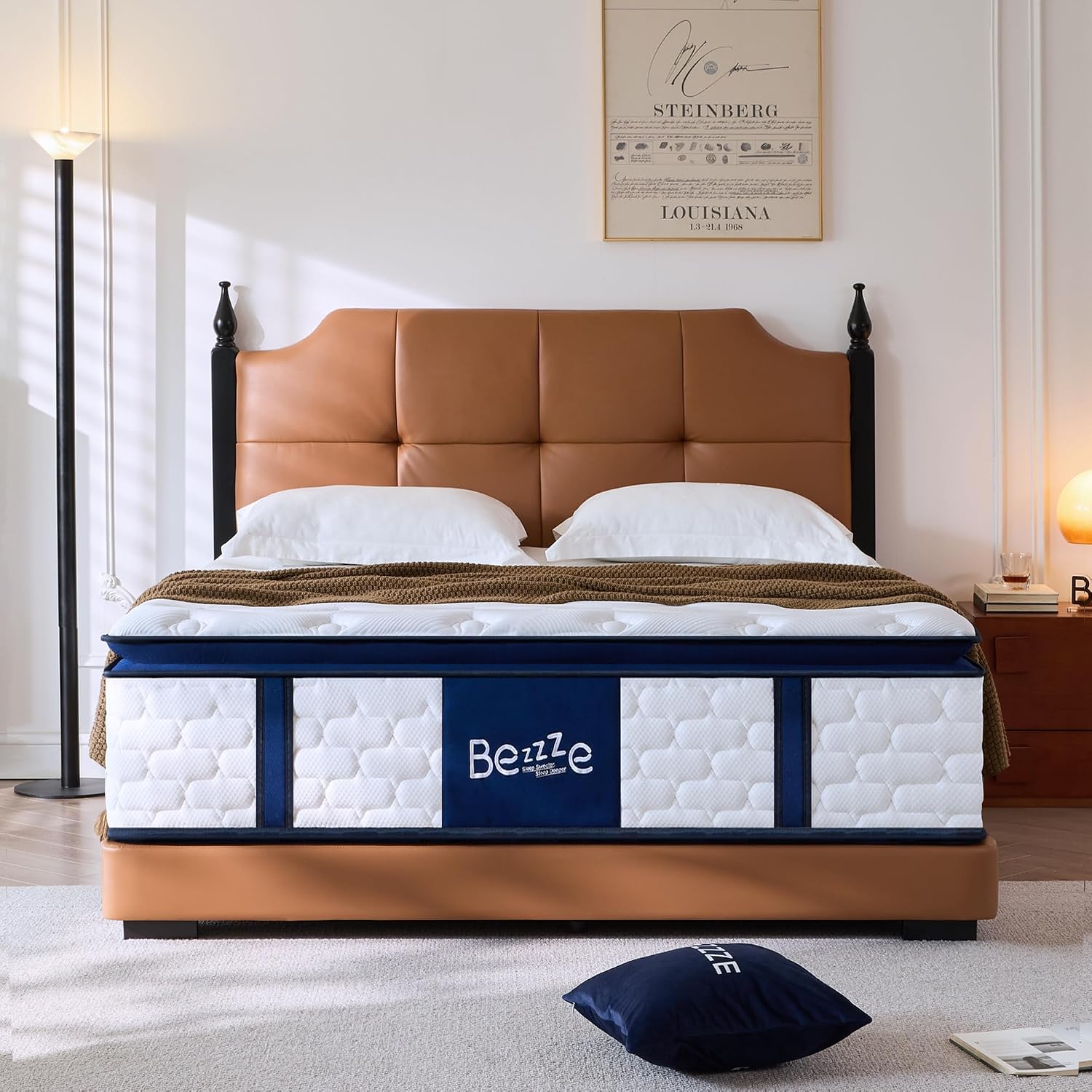
If you’re breaking in a mattress that’s too firm, a topper is the fastest bridge while the bed settles. These three clear real owner-review scrutiny for comfort and support across firmness levels. Start with the Bezzze 14-inch hybrid if you want a firm mattress that breaks in to medium. Grab the Ailis 12-inch hybrid for a medium-firm balance, and the EGOHOME 10-inch memory foam for a softer contouring feel.
Pros
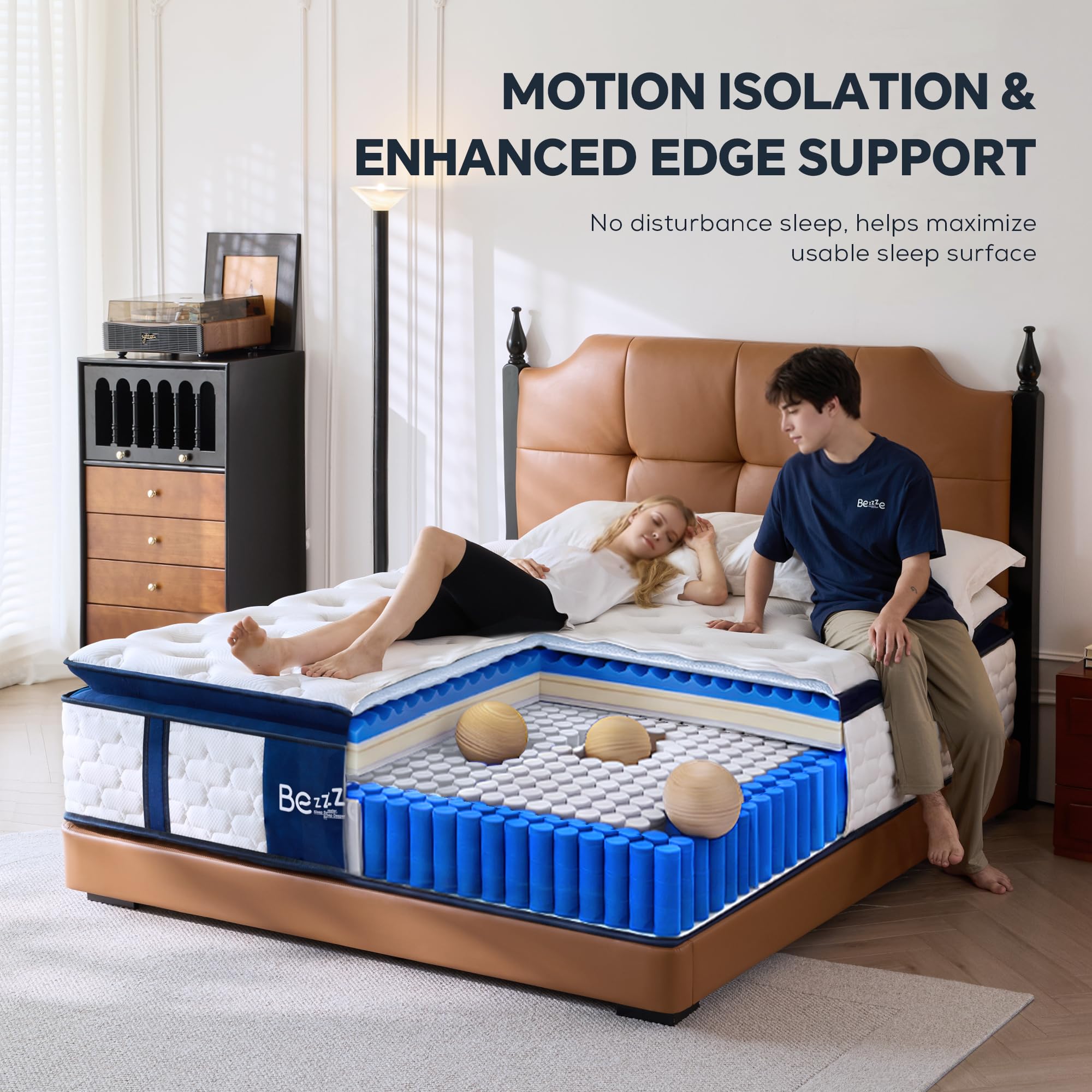
- Multi-layer cooling system with ice silk fabric and open-cell foam keeps temperature regulated
- Independent pocket coils provide targeted support and near-silent motion isolation
- Heavy-duty edge support system prevents sagging and extends usable sleep surface
- CertiPUR-US certified foams with no fiberglass for safer indoor air quality
- Competitive price for a 14-inch hybrid with zoned support technology
Cons
- Only 2 customer reviews available, making long-term durability hard to verify
- Firm feel may not suit slepers who prefer a plush or medium-soft mattress
- Relatively new brand with limited track record compared to established mattress companies
The Bezzze hybrid mattress hits a sweet spot that is hard to find at this price: genuine firm support paired with enough cushioning that side sleepers will not wake up with sore shoulders. The zoned pocket spring system means your hips and lumbar get different levels of support, which is something you typically see in mattresses costing twice as much.
What stands out most is the cooling package. Between the ice silk cover, ventilated coils, and open-cell foam layers, this mattress actively works to move heat away from your body. If you or your partner run hot at night, that is a real quality-of-life upgrade over a standard memory foam bed.
If you want hotel-firm support with genuine cooling performance without spending over $500 on a queen, this one delivers.
Styles it works with: Modern Minimalist, Contemporary, Transitional, Scandinavian
Best placed in: Master bedroom on a platform frame, guest bedroom with a simple bed base, adjustable base setup for couples
May not suit: Slepers who prefer a plush sinking feeling, very lightweight individuals under 130 lbs who may find the firm surface too rigid, or low-profile bed frames where a14-inch mattress would sit too high
Buy it if:
- You sleep hot and need a firm mattress that will not trap body heat
- You share a bed and partner movement currently wakes you up
- You have back pain and need zoned lumbar support without sacrificing comfort
Consider waiting if:
- You want to see more long-term reviews before committing to a newer brand
- You are comparing multiple options and want to wait for a seasonal sale
Skip it if:
- You prefer a soft or medium mattress that lets you sink in deeply
- You need a twin, full, or king size as this listing is queen-specific
Check the latest price and availability on Amazon before it sells out.
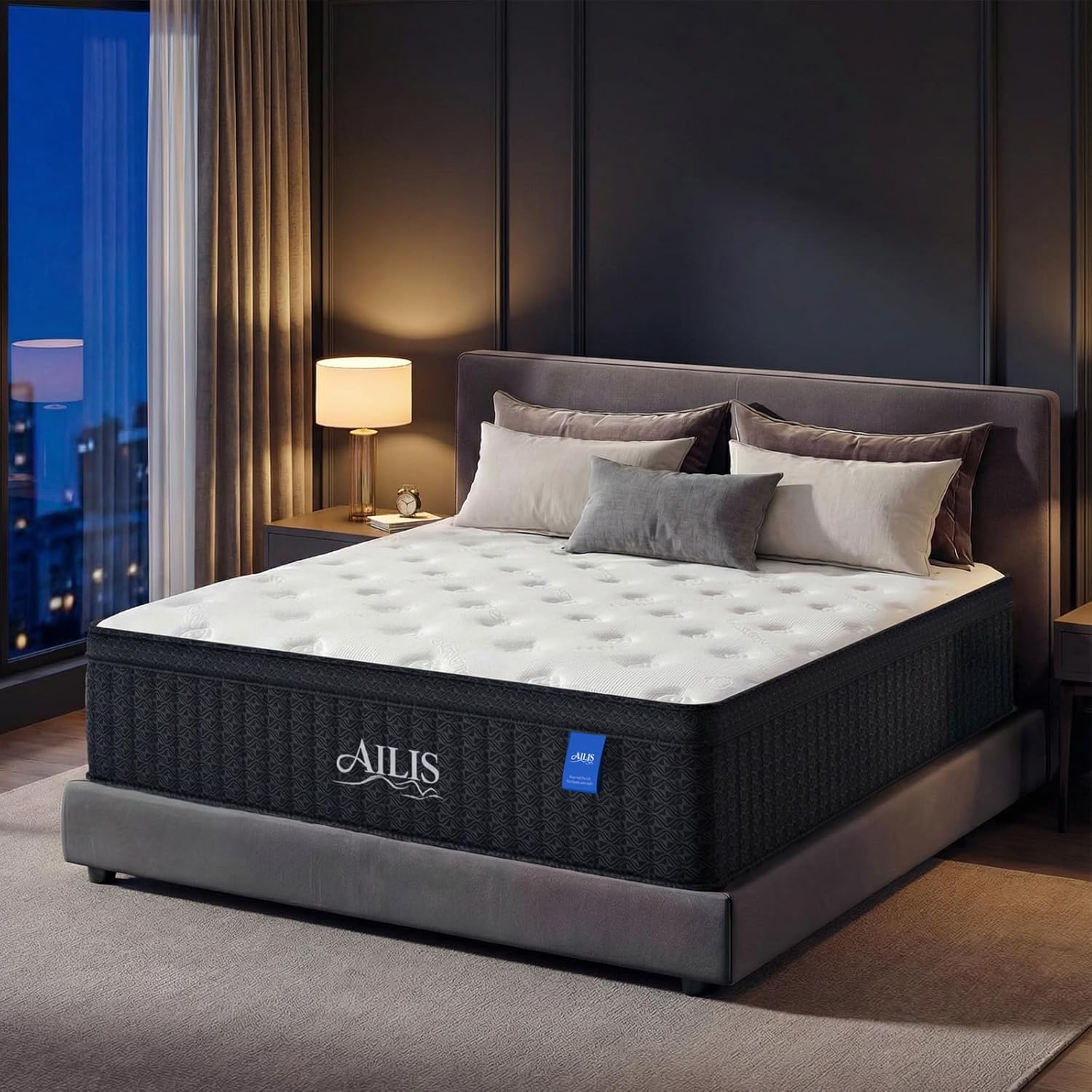
Ailis 12 Inch Queen Hybrid Mattress in a Box | Pocket Springs + Cooling Gel Foam | Medium Firm
Pros
- Competitive hybrid build with pocket springs and cooling gel foam at a budget-accessible price
- Strong reinforced edge support across the full perimeter, which is uncomon at this price point
- Cooling gel layer and ventilated cover make a practical difference for warm and hot sleepers
- Pocket spring system provides low-motion transfer that works well for couples sharing a bed
- Works with platform frames, slatted bases, and floor placement without additional accessories
Cons
- Requires 24to 72 hours to fully expand before sleeping, which can be disruptive if you need the mattress immediately after delivery
- Medium firm feel will not satisfy sleepers who strongly prefer a plush, pilow-top, or ultra-firm surface
- No listed sleep trial or white-glove delivery, which is worth factoring in before committing to the purchase
At under $200, the Ailis queen hybrid delivers a construction that usually commands a much higher price. The combination of individually wrapped pocket springs and cooling gel memory foam gives the mattress a substantive, well-enginered feel from the first night, not the flat or spongy experience common in budget foam-only options.
The medium firm comfort level is one of the most livable choices across sleeping positions. It supports your lower back on your side, holds shape when you shift to your stomach, and provides just enough give at the shoulders to prevent that rigid, slab-like feeling. The 3D honeycomb cover and gel layer are not just marketing language here as they genuinely keep the sleep surface cooler, which matters in warmer bedrooms or for anyone who runs hot.
For couples, the independently wrapped coils are the headline feature. Motion stays local to one side of the bed, so a restless partner does not ripple across to you. If you want deep, undisturbed sleep without stretching your budget, this one delivers.
Styles it works with: Scandinavian, Modern Minimalist, Contemporary, Transitional
Best placed in: Primary bedroom, guest bedroom, studio apartment bedroom
May not suit: Adjustable base setups since compatibility is not confirmed by the manufacturer, or buyers furnishing a luxury master bedroom where a pilow-top or premium profile mattress would better match the aesthetic
Buy it if:
- You share a bed and need reliable motion isolation without upgrading to a high-end mattress
- You sleep hot and want active cooling built into the mattress at an accessible price point
- You need a queen mattress for a guest room, rental property, or first apartment and want solid quality without overspending
Consider waiting if:
- You want to test firmness in person before buying, as this is a compressed box delivery with no listed sleep trial period
Skip it if:
- You strongly prefer a soft or ultra-plush feel, since this mattress is designed around a medium firm support profile
- You use or plan to use an adjustable base and need confirmed compatibility before purchasing
Check the latest price and availability on Amazon before it sells out.

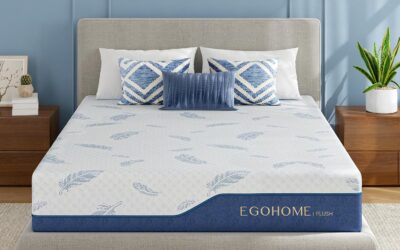
EGOHOME 10 Inch Queen Memory Foam Mattress with Cooling Green Tea Gel - Medium Firm Support, CertiPUR-US Certified
Pros
- Green tea gel and breathable design address the main complaint about memory foam (sleeping hot)
- Medium-firm feel works for back, side, and stomach sleepers without needing to choose
- Temperature-stable foam maintains consistent support year-round
- Motion isolation reduces partner disturbance during the night
- Affordable price point for a queen mattress under $250
Cons
- No customer reviews yet to verify real-world performance and durability
- 10-inch profile may feel thin compared to 12-14 inch premium mattresses
- Mattress-in-a-box may need 48-72 hours to fully expand and off-gas before use
This EGOHOME mattress tackles the two biggest complaints about memory foam: sleeping hot and feeling stuck. The green tea gel infusion isn't just a gimmick; it genuinely helps regulate temperature while the bubble hole structure lets air flow through the foam. You get that pressure-relieving memory foam hug without waking up sweaty at 3am.
The medium-firm feel hits a sweet spot that works whether you sleep on your back, side, or stomach. It contours enough to cushion your shoulders and hips, but stays supportive enough to keep your spine aligned. The foam also adapts quietly when you shift positions, so you won't wake your partner every time you move.
If you want memory foam comfort without the heat trap or the premium price tag, this one delivers.
Styles it works with: Modern Minimalist, Scandinavian, Contemporary, Transitional
Best placed in: Master bedroom on a platform bed frame, guest bedroom for versatile comfort, spare room that doubles as home office
May not suit: Buyers who prefer ultra-plush pillow-top feel, those needing extra height for getting in and out of bed easily, sleepers over 250 lbs who need firmer edge support
Buy it if:
- You sleep hot on traditional memory foam and want better temperature control
- You need a versatile mattress that accommodates different sleep positions and body types
- You're furnishing a guest room or first apartment and want quality without breaking the bank
- You want CertiPUR-US certified foam without paying luxury mattress prices
Consider waiting if:
- You prefer to read verified customer reviews before purchasing (this is a newer model)
- You want to try the mattress in-store before committing
Skip it if:
- You need a thicker mattress (12+ inches) for maximum plushness or health conditions
- You weigh over 250 lbs and need extra-firm support with reinforced edges
- You require hypoallergenic or organic-certified materials
Check the latest price and availability on Amazon before it sells out.
Frequently Asked Questions
How many nights does it take to break in a memory foam mattress?
Most memory foam mattresses need 30 to 60 nights of regular sleep to fully break in. The first two weeks are the firmest, and the mattress softens steadily as your body weight compresses the foam. Sleep on it every night for the fastest break-in.
Can I walk on my new mattress to break it in faster?
Yes, gently. Walking on the mattress for a few minutes a day compresses the foam evenly and speeds the softening. Avoid sharp objects, shoes, or concentrated pressure in one spot, which can damage the cover or the foam layers.

Why does my new mattress hurt my back at first?
Often because your body adapted to your old, softened mattress and the new one holds you up instead of letting you sink. The discomfort usually fades in 2 to 4 weeks as your spine adjusts. If back pain persists past 60 nights, the firmness or support may be wrong for you.
Should I flip or rotate my new mattress during break-in?
Rotate it 180 degrees every two weeks for the first three months, then every three to six months. Most modern mattresses are single-sided, so don’t flip unless the label says it’s flip-able. Rotation distributes compression and prevents body impressions.
Will a mattress topper help if my new bed is too firm?
Yes, and it’s the best bridge during break-in. A 2 to 4 inch memory foam or latex topper adds a plush layer while the mattress underneath continues to soften. It lets you keep the bed and sleep comfortably through the adjustment period.
Does heat help break in a memory foam mattress?
Yes. Memory foam softens in warmth, so keeping the bedroom around 68 to 72 degrees helps the foam relax to your body heat. A cold room makes the mattress feel firmer than it is. A warm comforter speeds the softening.
Is it normal for a new mattress to smell during break-in?
Yes, for the first 2 to 14 days. New foam off-gasses volatile organic compounds, which read as a chemical smell. Ventilate the room and the odor fades. CertiPUR-US certified foam off-gasses less. The smell clearing and the break-in happen on overlapping timelines.



Write Your Review
No reviews yet. Be the first to share your experience!