

> Editorial Note: I’m Liam Wright, an outdoor and garden editor. I grew up in my family’s landscaping business and now cover what actually survives a season of UV, rain, and freeze-thaw cycles. The picks here are evaluated against ASTM weatherability standards and manufacturer durability ratings.
You hear it before you see it. That scrape of metal legs skidding across the patio, then the whole canopy leaning, then over it goes — in a gust that honestly didn’t feel that strong. A gazebo that tips isn’t broken. It’s under-anchored, and a 10-by-10-foot top catches wind like a sail whether you planned for it or not. Anchoring is the same instinct that keeps a gust from toppling your best patio umbrella or scattering the cushions off your best outdoor sofa, and it’s worth sorting before you build the rest of the yard around a best gas fire pit table, a best wood burning fire pit, or a best raised garden bed. Here’s why gazebos blow over, and how to stop yours from ending up at the curb after the next storm.
Reason 1: It Lifts the Second the Wind Picks Up (No Anchoring at All)
The most common reason is also the simplest: nothing is holding it down. A pop-up gazebo weighs 30 to 50 pounds on its own, and that’s no match for moving air. At 20 mph, wind pushes roughly 100 pounds of force against a 10-by-10-foot canopy top. Push that to 30 mph and the load jumps to more than 230 pounds. Classic sail effect.
The canopy doesn’t slide sideways first. It lifts. Wind flowing over and around the top creates lift, the same principle that gets an airplane wing off the ground. So the frame goes light, one corner rises, and once a single leg leaves the ground the other three follow in about a second. That’s why a gazebo can flip in wind that barely moves your hair.
Most people assume the pegs in the box are enough. They’re not, not against the surface area you’re fighting. Four 6-inch plastic pegs might hold the frame steady on a calm afternoon, but they’ll shear or pull the instant real lift kicks in. You need downward mass, anchoring force, or both — pegs alone treat a lift problem like it’s a sliding problem, and it isn’t.
Reason 2: The Stakes Pull Straight Out of the Ground (Wrong Anchor for Your Surface)
You staked it down, you did everything by the book, and the stakes slid out anyway like they were greased. This one’s about surface, not effort. The anchor has to match what’s under the gazebo, and the pegs in the box assume dry, packed soil that most yards don’t actually have.
In loose or wet soil, a straight 6-inch peg has almost nothing to grip. Rain saturates the top few inches, and the stake lifts out under load like a fork out of mashed potatoes. Length fixes most of it. Switch to 10- to 12-inch galvanized or auger-style spiral stakes that drive past the soft layer and thread into firmer ground. Drive them at a 45-degree angle away from the leg, not straight down, so the pull works against the whole length of the stake instead of its tip.
On a patio, deck, or driveway, staking isn’t even an option — there’s nothing for the stake to bite. That’s where weight becomes the only real answer. A lot of blow-overs happen on hard surfaces precisely because owners keep hunting for a stake solution the concrete will never give them. Match the method to the ground, or you’ll keep resetting the same gazebo after every storm.
Reason 3: Three Legs Hold and One Always Gives (Partial or Uneven Anchoring)
The frame’s still standing, but the same corner keeps popping loose while the other three hold fine. That’s a load-distribution problem, and it’s sneaky because the gazebo looks anchored. Wind doesn’t push evenly. It finds the least-secured corner and works it like a lever.
Anchor all four legs, every time, even the one tucked against the house or fence. An unweighted leg is a hinge, and once it lifts it transfers force straight into the joints and the canopy seams — which is how you end up with a bent frame or a torn top even when the gazebo never fully flips. The failure usually shows up at the connection, not the leg itself.
Uneven weight causes the same thing. Two heavy bags on the windward side and nothing on the leeward corners means the light end sails up first. Spread the anchoring so every leg carries a similar share, and add guy lines from the top corners to ground stakes at a 45-degree angle for anything over 25 mph. Even coverage beats heavy coverage in one spot. Every single time.
How to Fix It Fast: The 3-Layer Anchoring System
Stack three layers and almost nothing short of a named storm will move your gazebo.
Layer one is weight on every leg. Leg weights or weight plates give you downward mass that works on any surface, grass or concrete, and they’re the only thing that helps on a hard patio. Aim for 40 pounds per leg minimum on a 10-by-10 top, and go heavier if you’re exposed or near the coast.
Layer two is ground anchoring wherever you have soil. Drive 12-inch spiral or auger stakes at an angle through the leg plates or straps. Weight plus stakes together resist both the lift and the slide.
Layer three is guy lines for storm days. Run ratchet-tightened lines from the top corners out to stakes set 3 to 4 feet away at 45 degrees. They kill the sway that loosens everything else. And if the forecast tops 40 mph, take the canopy top off entirely. A bare frame has almost no sail area. That’s not defeat. That’s knowing when the wind wins.
The Products That Actually Help
Weight is the one fix that works on every surface, which makes a proper weight set the smartest first buy for a gazebo that keeps tipping. Outdoor-gear coverage from Wirecutter routinely traces canopy failures back to skipped anchoring rather than weak frames. All three sets below clear a 4.0 owner rating and clamp onto standard gazebo legs without drilling.
Get the USWeight 40-pound set (4.7 stars, 160 pounds total across four legs) if your gazebo lives on a deck or patio and stays put. The Mrsenloi water-weight bags (4.2 stars, up to 220 pounds filled) suit grass setups and anyone who wants to empty and store them flat between uses. The Hatway water bags (4.0 stars) cover occasional or event use on a tighter budget.


Pros
- Prefilled design requires zero setup time and eliminates the hassle of filling weights with sand or water
- No-Pinch pole mechanism makes one-person installation genuinely easy and safe
- Durable recycled plastic shell resists rust and weather, extending the product lifespan
- Carry strap with heavy-duty metal buckle simplifies transport across markets, festivals, and events
- Made in the USA with environmentally friendly materials adds confidence in build quality
Cons
- At 40 lbs total, the set may not provide enough anchoring in extreme high-wind conditions where staking is still recommended
- Only fits poles up to 1.25 inches in diameter, so it will not work with heavier-duty commercial canopy frames
- The plastic shell aesthetic is purely functional and may feel out of place at upscale or formal outdoor settings
Setting up a canopy for a backyard party or farmers market should not feel like a two-person engineering project. The US Weight set solves the most frustrating part of outdoor canopy use: anchoring it safely without fighting clips, filling sandbags, or worrying about a gust of wind taking the whole thing down mid-event. The prefilled concrete shells simply clamp onto the poles, and the no-pinch mechanism means you are not sacrificing a fingertip every time you pack up.
What sets this apart from cheaper alternatives is the build quality. The recycled high-density polyethylene shell feels solid and does not flex or crack under pressure. The carry strap with a metal buckle is a small but genuinely useful detail that keeps all four weights together rather than rolling around in the back of your car. For anyone who does outdoor events more than once or twice a year, this kind of durable, low-fuss solution pays for itself quickly.
If you want dependable canopy security without the mess of sandbags or the frustration of pinched fingers, this one delivers.
Styles it works with: Outdoor Casual, Farmhouse Market, Modern Outdoor Living, Functional Minimalist
Best placed in: Backyard patio canopy setups, farmers market or craft fair vendor booths, outdoor wedding or event tent anchoring
May not suit: Upscale or formal outdoor events where aesthetics are a priority, as the utilitarian plastic design is purely functional. Also not ideal for canopies with non-standard poles wider than 1.25 inches or for permanent outdoor structures.
Buy it if:
- You host regular outdoor events, markets, or parties and need a reliable, reusable canopy anchoring system that is ready to go without prep
- You want a one-person setup solution that does not require a partner to hold the canopy while you wrestle with clamps
- You are replacing old sandbags or water weights and want a cleaner, longer-lasting option made from durable recycled materials
Consider waiting if:
- You are not sure whether your canopy poles fall within the 1.25-inch diameter limit and need to verify measurements first
Skip it if:
- You need anchoring for a commercial-grade canopy with thick or square poles that exceed the 1.25-inch fitting
- You are setting up in extreme wind conditions where ground stakes are the required safety standard
Check the latest price and availability on Amazon before it sells out.
Pros
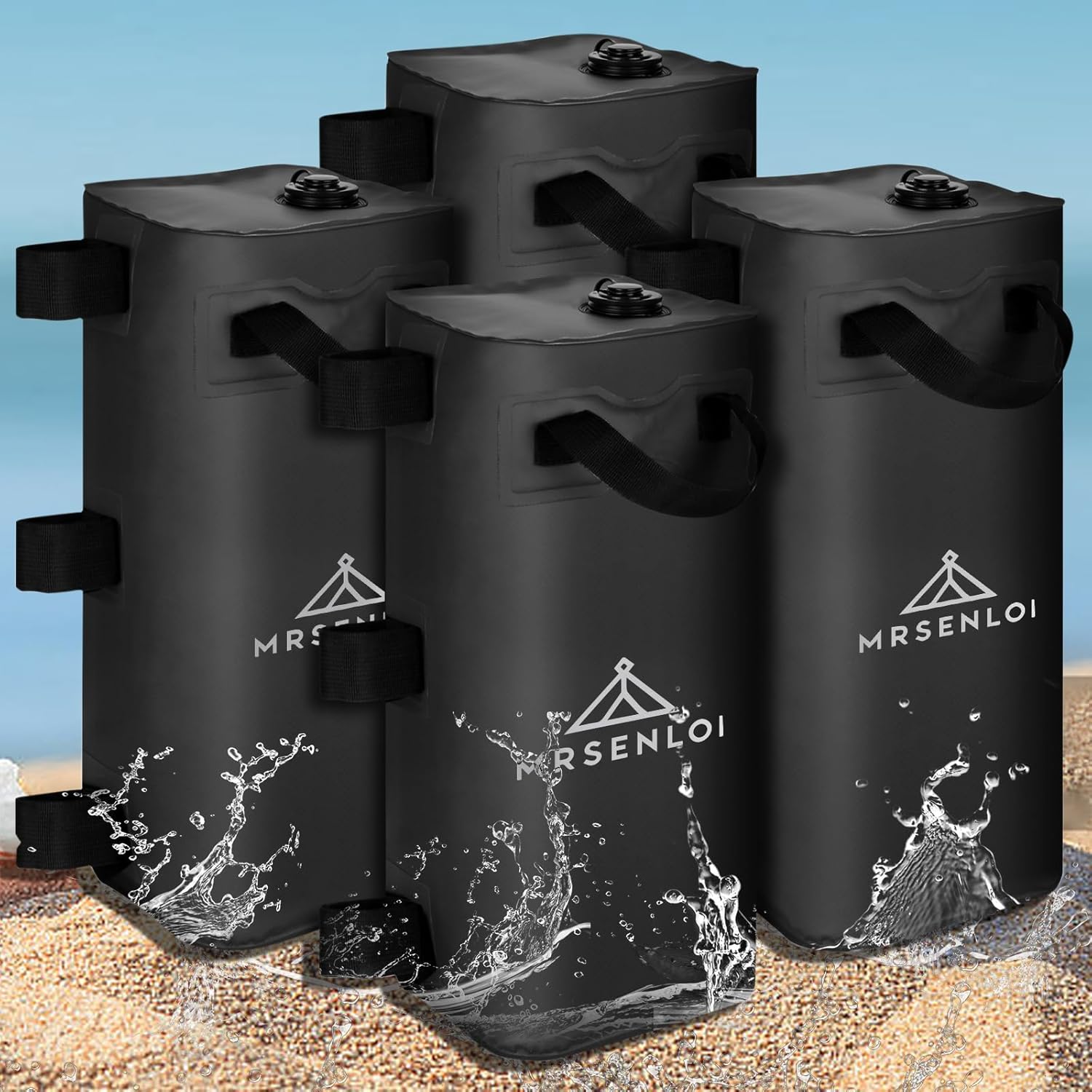
- High total weight capacity (220 lbs) provides serious anchoring power
- Velcro attachment system makes setup quick and tool-free
- Compact when empty - much easier to transport than concrete or metal weights
- Durable PVC construction holds up to rough outdoor surfaces
- Square shape prevents bags from rolling away when positioned
Cons
- No customer reviews yet to verify long-term durability claims
- Requires access to water source on-site to fill the bags
- May take several minutes to fill all four bags before your event
If you host outdoor gatherings or set up market tents regularly, you know the stress of watching your canopy shift in the wind. These water weight bags solve that problem without the hassle of lugging heavy concrete blocks from your garage every time. The square design is smarter than typical round weights because it won't roll around on uneven ground, and the three Velcro straps per bag grip tent legs securely without any fumbling with hooks or carabiners.
What makes these especially practical is how they pack down completely flat when drained. Toss them in your trunk, fill them with a hose when you arrive, and you have 220 lbs of anchoring power in minutes. The waterproof PVC feels substantial and the seams look reinforced, which matters when you are dragging these across gravel driveways or concrete patios.
If you want reliable canopy stability without hauling permanent weights back and forth, this set delivers.
Styles it works with: Outdoor Living, Patio & Garden, Event Setup, Backyard Entertaining
Best placed in: Backyard patios under pop-up canopies, driveways during garage sales or parties, beach or park setups for family events, vendor tents at outdoor markets
May not suit: Indoor use or homes without outdoor event needs, situations where you cannot access water to fill the bags, renters who lack hose access at event locations
Buy it if:
- You regularly set up pop-up canopies for parties, markets, or outdoor events
- You are tired of transporting heavy concrete weights or sandbags
- You need a anchoring solution that works on any surface including grass, gravel, or pavement
- You want something that stores flat in your garage or car trunk between uses
Consider waiting if:
- You need to see more verified customer reviews before committing to this brand
- You are hoping for a different color option to match your canopy setup
Skip it if:
- You rarely use outdoor canopies and would not benefit from reusable weights
- You need a solution that works without access to water (consider sandbags or concrete blocks instead)
Check the latest price and availability on Amazon before it sells out.

Pros
- Much cleaner and easier to use than sandbags
- Square design provides better stability than round water weights
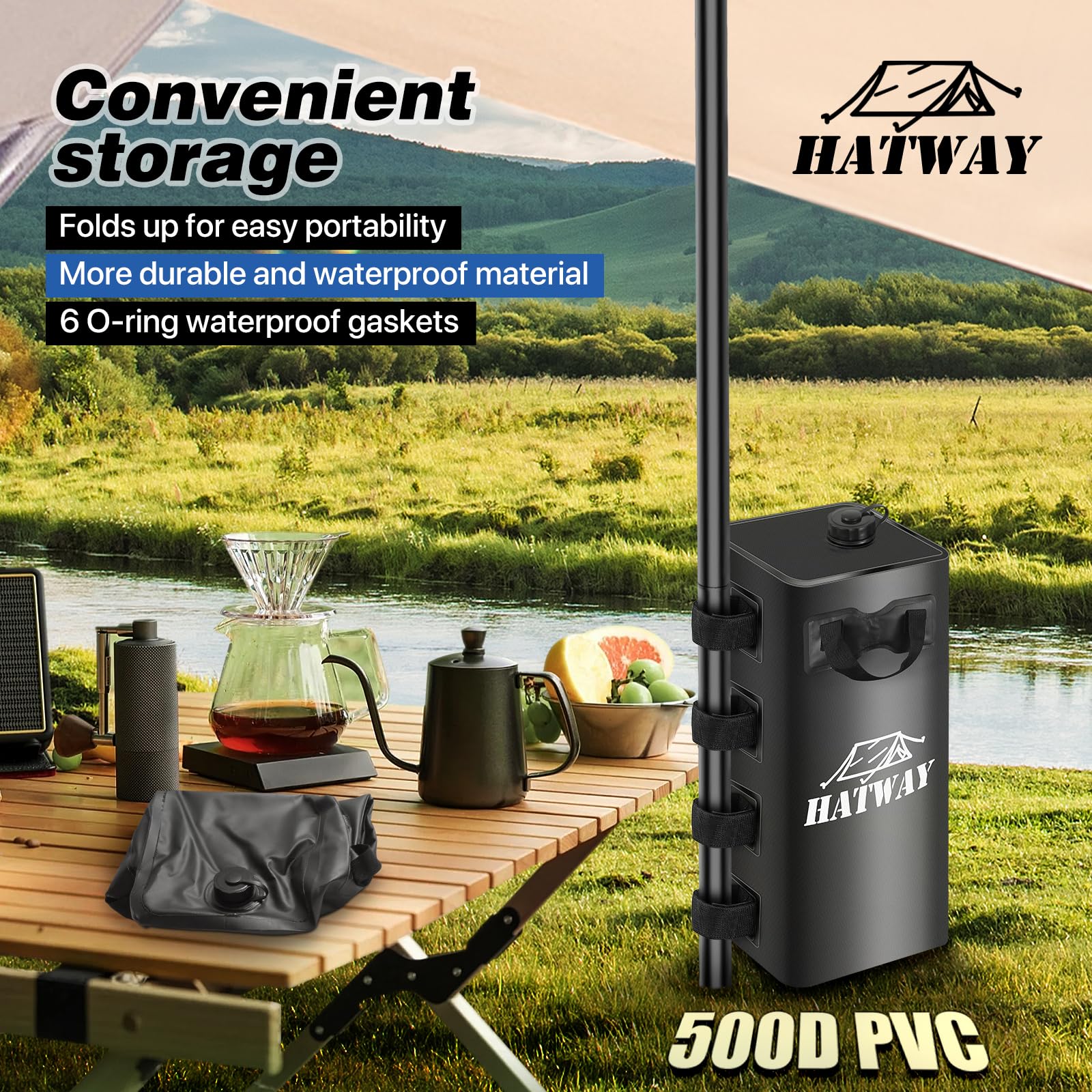
- Heavy-duty 500D PVC construction with 6 waterproof gaskets prevents leaks
- Extremely portable when empty and folds flat for storage
- Quick setup with built-in hook-and-loop straps
Cons
- No customer reviews yet to validate long-term durability claims
- Requires access to water source for filling, which may not always be convenient at remote locations
- At $49.99, more expensive than basic sandbag options
If you've ever wrestled with sandbags at a tailgate party or watched your canopy take flight at a kids' soccer game, these water weights solve that problem elegantly. The square design is smarter than traditional round weights because it sits flush against tent legs and doesn't roll around. Fill them at home or at your destination, secure them with the built-in straps, and you're done in minutes.
The 500D PVC material feels substantial, and the six waterproof gaskets give us confidence these won't spring leaks mid-event like cheaper options. When you're done, just empty them out and fold them flat. They take up about as much space as a folded beach towel, which means you'll actually bring them instead of leaving them in the garage.
If you want serious anchoring power without the back-breaking hassle of sand, this set delivers.
Styles it works with: Outdoor entertaining spaces, backyard patios, tailgate setups, beach outings, camping sites
Best placed in: Attached to pop-up canopy legs, gazebo corners, camping tent stakes, beach shelter poles
May not suit: Permanent outdoor structures that can use concrete anchors, situations where you cannot access water for filling, ultra-lightweight tents that don't need this much weight
Buy it if:
- You regularly set up pop-up canopies for tailgates, craft fairs, sporting events, or backyard parties
- You're tired of dealing with messy sand or concrete-filled weights that are impossible to transport
- You need reliable anchoring in windy conditions and want the peace of mind of 220 lbs total weight
Consider waiting if:
- You want to see more verified customer reviews before investing $50
- You're waiting for a sale or promotional discount
Skip it if:
- You only use your canopy once or twice a year and basic stakes work fine
- You camp in remote locations without reliable water access for filling
- Your tent or canopy is so lightweight that 220 lbs would be overkill
Check the latest price and availability on Amazon before it sells out.
Frequently Asked Questions
How much weight do I need to anchor a gazebo?
It depends on canopy size and wind exposure, but 40 pounds per leg is the working minimum for a 10-by-10-foot top. That’s 160 pounds total. Bump it to 50 or more per leg on an open lawn or near the coast, where 30-plus-mph gusts are routine. Water and sand weights that reach 220 pounds per set exist for exactly that reason.
Can I anchor a gazebo on concrete or a deck?
Yes, but not with stakes — there’s nothing for them to grip. Use leg weights or weight plates instead, since those work on any hard surface. For a permanent deck setup you can also bolt the legs down with L-brackets, though that leaves holes. Weights are the no-damage option most people actually want.
Are the stakes that come with the gazebo enough?
Almost never. The 6-inch plastic or thin-wire pegs in the box hold on a calm day, but they shear or pull out once real wind lift starts. Swap them for 10- to 12-inch galvanized spiral or auger stakes, and drive them at a 45-degree angle. Treat the boxed pegs as placeholders, not anchors.
Should I take the canopy down before a storm?
Yes, if the forecast tops 40 mph. The canopy top is the sail; a bare frame has almost no wind-catching surface and stays put far more easily. It takes five minutes and saves the whole structure. ASTM weatherability ratings describe material durability, not wind survival, so don’t count on the fabric to hold on for you.
Will guy lines alone keep my gazebo from blowing over?
No, not by themselves. Guy lines control sway and add holding force, but they need weighted or staked legs to pull against. Used together with weight and stakes, they’re excellent. Used alone, a guy line just drags a light leg sideways and buys you nothing.
Bottom Line
Most gazebo blow-overs come down to one thing: not enough downward weight on the legs. Wind treats the canopy as a sail, and a 30-pound frame can’t argue with 100-plus pounds of lift. Add 40 pounds per leg and you’ve solved it for most of the year, then let stakes and guy lines handle the storm-season extremes. If your gazebo is bolted down and still racking or twisting in wind, stop and call a contractor. That’s a structural fix, not an anchoring one. Weight first. Everything else second.




Write Your Review
No reviews yet. Be the first to share your experience!