

> Editorial Note: I’m Maya Chen, a bedroom and sleep editor covering mattresses, bed frames, and bedding. The picks here are evaluated against CertiPUR-US foam standards, Sleep Foundation evaluation protocols, and owner durability reports from r/Mattress.
Most people flip their mattress because that’s what their parents did — and on a modern bed, that single habit can wreck it in one season. Almost every mattress sold today is built one-sided, with a soft comfort layer on top and a firm support core underneath, so turning it over presses the hard base straight against your spine. Before your next bed lands, sort out the room around it too: a best platform bed frame gives even support, a best nightstand for bedroom keeps your sleep gear close, a best dresser for bedroom clears the floor, the right best memory foam mattress rewards proper care, and some wall art for bedroom finishes the space. Here’s how often you should actually flip, and when you shouldn’t flip at all.
Should You Flip Your Mattress or Rotate It?
Start here, because the answer surprises people: most modern mattresses should never be flipped. Memory foam, gel foam, and hybrid beds are single-sided by design. The plush comfort layers sit up top; a dense polyfoam or pocket-coil base sits below. Turn that over and you’re sleeping on the structural base while the good foam gets crushed under the mattress’s own weight.
What these beds need instead is rotation — a 180-degree turn, head to foot, same face up. Rotating spreads out the body impressions that form where you lie every night, mostly at the hips and shoulders. The Sleep Foundation recommends rotating every 3 to 6 months for exactly that reason.
Flipping only applies to true double-sided mattresses, the kind with comfort layers on both faces. Those were standard before the early 2000s and are rare now. So the honest answer to “how often should you flip” is this: for roughly 90% of beds bought in the last decade, never. You rotate. Get it wrong and you don’t just lose comfort — you can void the warranty, because many one-sided beds require rotation-only care.
How Do You Know If Your Mattress Is Flippable?
Check the build before you touch it. A flippable mattress feels the same on both faces, quilted and cushioned top and bottom. A one-sided mattress has an obvious “up” side: pillowy and soft, with a flat, firm base underneath meant to face the foundation.
Three quick tells. First, read the law tag or the brand’s care page; single-sided beds say “rotate, do not flip” right on it. Second, press both surfaces, and if one side is rock-hard, that’s the base and it stays down. Third, check the type: almost all boxed memory foam and gel-foam beds ship single-sided, while some latex and old-school innerspring models are genuinely two-sided.
The mattresses further down are all one-sided beds. The 14-inch pocket-spring hybrid and the 10-inch gel-foam bed both stack cooling comfort layers over a firm base, so you rotate them and never flip them. And a certification won’t tell you either way. CertiPUR-US covers the foam’s content and emissions, not whether the bed is reversible, so don’t read a foam certificate as permission to turn it over.
How Often Should You Rotate a One-Sided Mattress?
Set a calendar reminder, because feel is a bad guide. Impressions deepen slowly enough that you adjust to the sag without noticing it. For memory foam and gel-foam beds, rotate every 2 to 3 months through the first year while the foam settles, then every 3 to 6 months after. Softer, higher-loft foams want the tighter end of that range.
Hybrids with pocket coils are more forgiving thanks to the spring layer, so every 3 to 6 months holds up fine. Traditional innersprings without individually wrapped coils sag fastest, so rotate those every 2 to 3 months year-round. Latex is the most stable of the bunch and can stretch to 6 months between turns.
Heavier sleepers and couples should stay on the tighter schedule; more load means faster impressions, which is why beds rated for higher weight capacities still call for regular turning. Owner reports on r/Mattress consistently tie premature sagging to skipped rotation in that first year. A queen runs roughly 70 to 100 pounds, so grab a partner. Two minutes, four times a year. That’s the entire maintenance routine for a bed you’ll keep 7 to 10 years.
How Do You Flip or Rotate Without Hurting Your Back?
Clear the deck first. Strip the sheets, pull the pillows, and slide the nightstand out of the way so you’ve got room to walk the mattress around. Boxed foam and hybrid queens are floppy and heavy, so a second person saves both your lower back and your wall paint.
To rotate, stand at one long side, walk the mattress a quarter-turn off the foundation, then swing it 180 degrees so the head end lands where the foot was. Keep the same face up the whole time. To flip a genuine two-sided bed, turn it head-to-foot and over at once so the opposite face is up — doing both moves together keeps wear even.
While it’s off, wipe the foundation and check the slats. A slat gap wider than 3 inches lets foam sag between the boards and can void support warranties, so this is the moment to catch it. Vacuum the surface, spot-clean any marks, and let the bed air a few minutes before you remake it. Rotate your topper and wash the protector on the same schedule, and the whole sleep stack wears evenly.
Helpful Picks
These three are one-sided beds chosen for rotation-friendly builds: CertiPUR-US foam, cooling covers, and coil or high-density support cores that hold their shape between turns.

Rakoide 14-Inch Queen Hybrid Mattress | Memory Foam + Pocket Springs | Medium Firm | CertiPUR-US Certified
Pros
- Zoned support system specifically reinforces the hip and lumbar zone, a meaningful design detail often missing at this price
- 14-inch profile with thick comfort layers offers a plush feel that does not sacrifice spinal alignment
- Motion isolation from individually wrapped coils makes it genuinely couple and pet friendly
- CertiPUR-US certification confirms the foam meets strict standards for content, emissions, and durability
- Boxed delivery simplifies setup in tight spaces or upper-floor bedrooms
Cons
- Only 4 reviews at time of writing makes it hard to assess long-term durability and how the foam holds up after 12 plus months of use
- Rakoide is a lesser-known brand without the established reputation of competitors like Saatva or Nectar, which may concern buyers who prioritize brand trust
- 72-hour expansion window means you cannot sleep on it the same day it arrives, which is inconvenient if you need an immediate replacement
At $299 for a queen, the Rakoide 14-inch hybrid does something most budget mattresses skip: it actually thinks about where your body needs support most. The zoned coil system reinforces the center third of the mattress, right where your hips and lower back sit, so you are not just floating on foam but getting targeted relief where it counts. That is a feature you typically find on mattresses costing two or three times as much.
The layering here is thoughtful. Gel memory foam on top manages heat and pressure while the high-compression pocketed coils underneath give the mattress a responsive, lifted feel rather than that sinking-into-quicksand sensation some all-foam beds create. The result is a medium-firm surface that genuinely works whether you sleep on your side, back, or stomach, without needing to buy a separate topper to correct the feel.
For a guest room upgrade, a first apartment, or a growing kid's room that needs a real adult-quality mattress without a luxury price tag, this one fits the bill. If you want targeted lumbar support and motion isolation without spending over $500, this one delivers.
Styles it works with: Minimalist, Scandinavian, Modern Farmhouse, Contemporary
Best placed in: Primary bedroom as a budget-conscious upgrade, guest bedroom for occasional use, first apartment or starter home setup
May not suit: Couples who both have very different firmness preferences and cannot compromise on a medium-firm feel; sleepers who require a soft or ultra-plush surface due to pressure point sensitivities may find this too supportive for their needs
Buy it if:
- You are furnishing a guest bedroom or rental property and need a quality hybrid mattress under $300 that will hold up for years
- You or your partner are a light sleeper who gets woken up by movement, since the individually wrapped coils handle motion isolation well
- You have lower back or hip discomfort and want zoned lumbar support without paying premium mattress brand prices
Consider waiting if:
- You prefer to read a larger set of long-term customer reviews before committing, since the review count is currently very low and durability data is limited
Skip it if:
- You need a soft or plush mattress for pressure point relief, as the medium-firm feel may feel too firm for side sleepers with joint sensitivity
- You are replacing a mattress urgently and cannot wait the full 72-hour expansion period before sleeping on it
Check the latest price and availability on Amazon before it sells out.

Dyonery 10 Inch Queen Gel Memory Foam Mattress - Cooling, CertiPUR-US Certified, Fiberglass Free, Medium Feel
Pros
- Fiberglass-free construction sets it apart from most mattresses in the under-$200 category
- Dual certifications (CertiPUR-US and Oeko-Tex Standard 100) confirm independently verified material safety
- Medium feel is versatile enough for side, back, and combination sleepers
- Foam made in the USA adds a layer of quality confidence rarely seen at this price
- Broad bed frame compatibility makes setup straightforward regardless of your existing bedroom setup
Cons
- Requires up to 12 hours of off-gassing and expansion time before first use, so same-day sleep is not realistic
- Non-quality-related returns are not accepted once opened, which removes the risk-free trial option many competing brands offer
- With only 96 reviews, the long-term durability track record is still limited compared to more established budget mattress brands
At a glance, the Dyonery Queen Mattress looks like just another rolled-up foam mattress, but a few details make it stand out in a crowded budget category. The gel-infused charcoal foam actively works to pull heat away from your body rather than just passively resisting warmth, which is a meaningful difference if you or your partner tend to sleep hot. The jacquard fabric cover adds a subtle texture that feels more premium than the plain white covers common at this price point.
What really earns this mattress a place in our bedroom recommendations is the fiberglass-free build paired with two independent certifications. Most mattresses under $200 cut corners on material safety, but the Dyonery clears both the CertiPUR-US and Oeko-Tex Standard 100 bars. That matters most in a bedroom, the room where you spend roughly a third of your life breathing in whatever your mattress is made of.
The medium-firm feel threads the needle between contouring softness and lumbar support, landing around a 6-7 on the firmness scale. Side sleepers get enough give at the shoulder and hip, while back sleepers get the spinal alignment they need. If you want genuinely cool, certified-safe sleep on a tight budget without the fiberglass risk, this one delivers.
Styles it works with: Minimalist, Scandinavian, Modern Farmhouse, and Clean Contemporary bedrooms where simplicity and function take priority over ornate design.
Best placed in: Primary bedroom on a platform frame or slatted base, guest bedroom where a reliable all-position mattress is needed, or a spare room doubling as a home office with a daybed setup.
May not suit: Shoppers who need a firm mattress (7+ firmness) for strict orthopedic needs may find the medium feel too soft over time. It is also not the right fit for buyers who anticipate needing easy returns, since opened mattresses cannot be sent back for non-quality reasons.
Buy it if:
- You are furnishing a guest room or secondary bedroom and need a certified, fiberglass-free option without spending over $200
- You or your partner sleep hot and want a mattress engineered specifically for temperature regulation rather than one that just markets itself as cool
- You are replacing an older foam mattress and want USA-made foam with verifiable safety certifications at a budget price
Consider waiting if:
- You want a longer customer review history to validate long-term durability claims before committing
Skip it if:
- You need a risk-free sleep trial with hassle-free returns, since non-quality returns are not accepted after opening
- You require a firm mattress (7 or higher on the firmness scale) for strict back or orthopedic support needs
Check the latest price and availability on Amazon before it sells out.
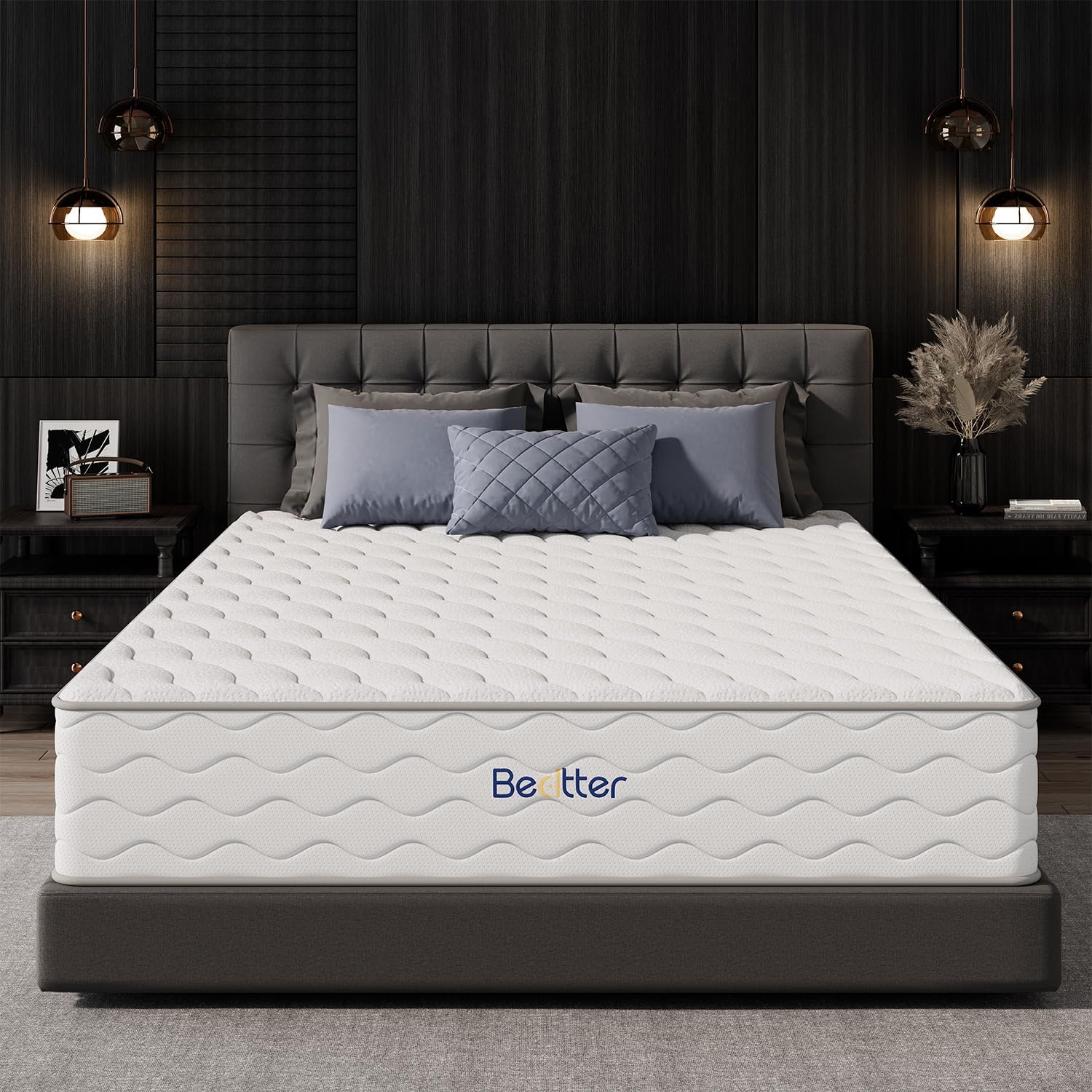
Bedtter 14-Inch Queen Hybrid Mattress for Heavy Sleepers | Cooling Gel Foam, 7-Zone Support, Extra Firm
Pros
- Specifically engineered for heavier sleepers with reinforced coils and foam layers that resist body impressions over time
- Ice silk cooling cover addresses one of the most common complaints about memory foam mattresses: sleeping hot
- 7-zone support system offers targeted relief for the shoulders, hips, and spine rather than uniform firmness throughout
- Individually wrapped pocket coils reduce motion transfer, making it a practical choice for couples
- Strong edge support expands the usable sleep surface and makes it easier to sit on the edge of the bed without sinking
Cons
- No verified customer reviews yet, so long-term durability and real-world performance claims cannot be confirmed by buyer experience
- Extra firm feel may not suit side sleepers under 150 lbs who need softer contouring at the shoulder and hip
- At 14 inches thick, deep-pocket fitted sheets are required, which adds an extra purchase for buyers with standard sheet sets
Finding a quality mattress for heavier sleepers that does not cost over a thousand dollars is genuinely hard. The Bedtter 14-inch Queen closes that gap with a thoughtful hybrid build that layers cooling gel memory foam over charcoal foam and individually wrapped pocket coils. Each layer has a specific job, and together they deliver the kind of firm, supportive sleep surface that larger-framed sleepers often cannot find at this price point.
What stands out most is the attention to temperature regulation. The ice silk cover is not just a marketing term here. It is a fabric technology that actively pulls heat away from the surface, which matters enormously if you have ever woken up in the middle of the night sticking to an all-foam mattress. Pair that with the breathable coil layer underneath and you have a sleep environment that stays noticeably cooler than most foam-only options.
The 7-zone ergonomic design also deserves a mention because it goes beyond simple firmness. It maps support to the parts of your body that carry the most pressure, which means less back pain in the morning and less tossing at night. If you want durable, cool, full-body support without spending over a thousand dollars, this one delivers.
Styles it works with: Modern Minimalist, Contemporary, Scandinavian, Transitional
Best placed in: Master bedroom on a platform frame or standard box spring, guest bedroom where durability and low maintenance matter, or a shared bedroom for couples who need motion isolation
May not suit: Sleepers who prefer an ultra-plush or pillow-top feel, since the extra firm rating prioritizes support over sink-in softness. Also worth noting for buyers in smaller rooms: at 14 inches tall, this mattress adds visible height to your bed setup, so low-profile bed frames may look disproportionate.
Buy it if:
- You weigh over 200 lbs and your current mattress has developed a permanent body impression in the center
- You sleep hot and have been putting off a mattress upgrade because most cooling options are priced above $500
- You share a bed and need motion isolation so that your partner moving at night does not wake you up
Consider waiting if:
- You prefer to buy after reading a large pool of verified customer reviews, since this listing currently has none to reference
Skip it if:
- You are a lightweight side sleeper under 150 lbs who needs a soft to medium feel for shoulder and hip pressure relief
- Your bed frame or foundation is not rated to handle a 14-inch mattress, as the added height and weight may not be compatible
Check the latest price and availability on Amazon before it sells out.
Frequently Asked Questions
Can you flip a memory foam mattress?
No. Memory foam beds are single-sided, with the comfort foam on top and a firm base underneath. Flipping puts that hard base up and crushes the foam you actually sleep on. Rotate it head-to-foot instead, every 3 to 6 months.
How do I know if my mattress is one-sided or two-sided?
It depends on the build, but the check is fast. Press both faces: if one is soft and quilted and the other is flat and firm, it’s one-sided and rotate-only. A bed that’s cushioned both ways is flippable, and the care tag confirms it.
Does rotating a mattress actually make it last longer?
Yes. Rotating spreads out the body impressions that otherwise deepen in the same spots at your hips and shoulders. Owner reports on r/Mattress repeatedly link skipped first-year rotation to early sagging. It’s the cheapest way to protect a 7-to-10-year purchase.
How often should I rotate a new mattress in the first year?
It depends on the foam, but plan on every 2 to 3 months for the first year, then every 3 to 6 months after that. Foam and gel-foam beds settle most early on. Hybrids and latex can lean toward the 6-month end.
Will flipping a one-sided mattress void the warranty?
Yes, it can. Many single-sided beds specify rotation-only care, and flipping counts as improper use, a common warranty exclusion. Read the care page before you turn anything, and follow the rotation interval the maker lists.
Do I need to rotate a mattress on an adjustable base?
It depends. Rotation still evens out wear, but a head-to-foot turn can misalign the bed with the hinge points. Check the maker’s guidance first; some adjustable-friendly beds are built to skip rotation, while others still want it every 6 months.
Can one person rotate a queen or king mattress alone?
Almost never comfortably. A queen runs 70 to 100 pounds and a king weighs more, and the floppy boxed-foam build is awkward solo. You can drag a quarter-turn in a pinch, but a second set of hands protects your back and the mattress edges.


Write Your Review
No reviews yet. Be the first to share your experience!