

> Editorial Note: I’m Olivia Bennett, a storage and organization contributor. I approach storage as a systems problem rather than a product one — fit to actual room dimensions, load ratings, and how the system holds up under daily use.
A folding room divider is the fastest way to carve a home office out of a studio without touching a single wall. Before you buy, measure the run you need to cover and check the panel count against it. If you’re still shaping the wider space, our guides on what size rug for a bedroom? a room, how to choose a room divider, how to arrange living room furniture with a tv, living room lighting ideas defining, and faux plants for the living room cover the pieces that surround a good screen. Here are five that earn the footprint.
How We Evaluated
We ranked by four measures: panel count versus coverage width, freestanding stability on hard floors, hinge and frame material, and mobility. Screens with wide feet or lockable casters scored higher because they hold a fold angle without drifting. We favored six-foot heights for genuine sightline blocking. Fabric-panel models were weighed on frame gauge, since thin tubing bows under a wide span.
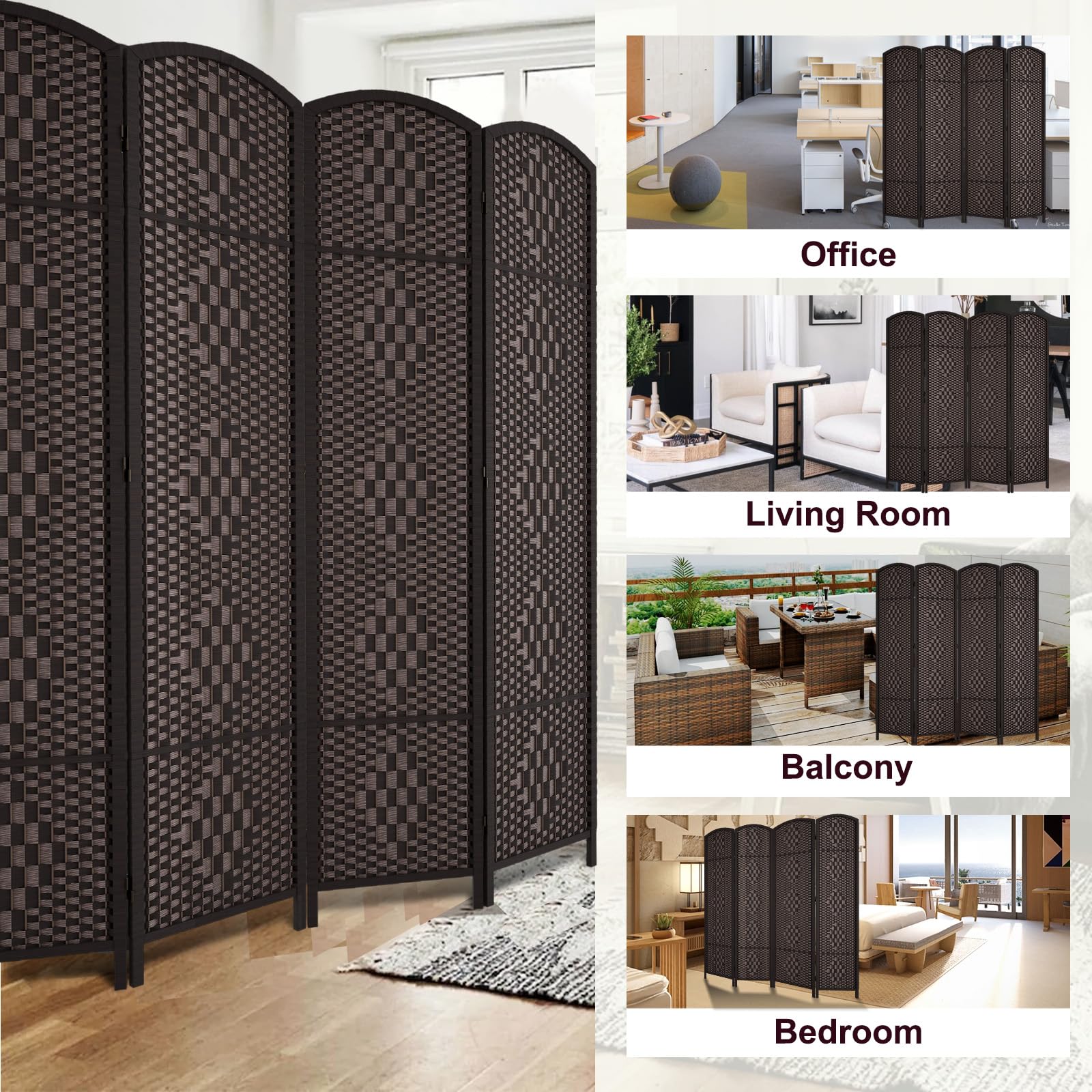


HOMSCREENER 6FT Folding Room Divider 4 Panel 88" Wide Fabric Privacy Screen Steel Frame
Pros
- Wide 17.7-inch base feet provide noticeably better stability than standard narrow-foot dividers
- 240g PA-coated polyester is genuinely opaque and easy to wipe clean
- Triple buckle hinges allow flexible panel angles, so it curves around furniture or fits corners
- Competitively priced for a 4-panel steel-frame unit at this coverage width
Cons
- Assembly requires two people because the fabric panels are tight to stretch onto the frame during installation
- At 17.5 lbs it is portable but not truly lightweight for frequent daily repositioning
- Provides no meaningful sound dampening, so noise passes through freely
When you need to carve out a home office corner in the living room or add privacy to a studio apartment without touching a single wall, this divider does the job cleanly. The 240g polyester fabric is noticeably thicker than cheaper alternatives, and it holds its shape well rather than sagging over time. The neutral colorways mean it reads as intentional decor rather than an afterthought.
What sets it apart at this price is the wider base. Most budget dividers use thin foot pads that wobble on hardwood floors, but the 17.7-inch spread here keeps things steady even when someone brushes past. The triple-buckle hinges also let you bend the panels into a gentle curve, which looks far more polished in a room than a rigid flat line.
If you want an instant, flexible privacy wall that looks put-together without spending over $100, this one delivers.
Styles it works with: Minimalist, Scandinavian, Modern Farmhouse, Contemporary
Best placed in: Living room corner to define a home office zone, alongside a bed in a studio or open-plan bedroom, open-plan dining area to create separation from a workspace
May not suit: Very small rooms under 120 sq ft where 88 inches of width will dominate the space; homes with ornate traditional or maximalist decor where the clean fabric panels may feel too plain
Buy it if:
- You work from home and need a visual barrier between your desk and the rest of the room during video calls
- You live in a studio or open-plan apartment and want to create a sleeping zone without a permanent partition
- You need a temporary privacy screen for a guest room, nursery corner, or changing area that can fold away when not in use
Consider waiting if:
- You need a specific color not currently in stock, as availability on black and beige can fluctuate
Skip it if:
- You need acoustic privacy as well as visual privacy, since the fabric does not reduce noise meaningfully
- You plan to use it outdoors or on a covered patio regularly, as it is built for indoor use only
Check the latest price and availability on Amazon before it sells out.
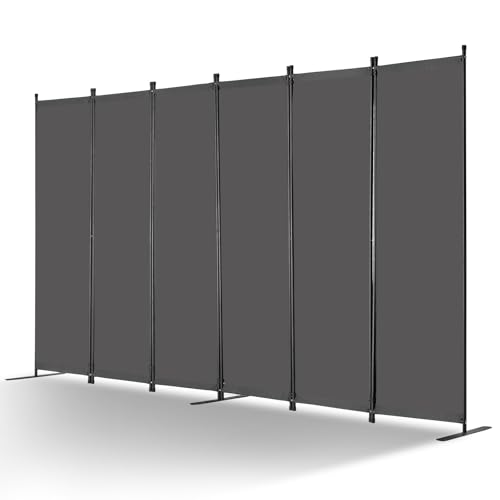

Pros
- Lockable wheels make it genuinely portable without floor damage
- Thick 240gsm fabric provides real privacy, not just visual suggestion
- Sturdy powder-coated steel frame resists rust and scratches
- Folds flat for compact storage between uses
- No tools or wall mounting required for setup
Cons
- Some units arrive with fabric stains that require airing out before use
- Fixed 88-inch width offers no adjustability compared to telescoping alternatives
- 4.2 rating suggests occasional quality control inconsistencies
This SUNALLY divider solves a real problem for anyone sharing space: it gives you privacy without asking your landlord for permission or putting holes in the wall. The 240gsm fabric is noticeably thicker than cheaper alternatives, and the PA coating means you are not just getting a visual barrier but actual opacity that blocks shadows and silhouettes.
What sets it apart from basic folding screens is the lockable wheel system. You can glide it into place when you need separation for a video call or a nap, then roll it aside and fold it flat when you want the room back. The steel frame feels solid without being heavy, and the widened base keeps it from tipping if someone bumps it.
If you want flexible, movable privacy in a rental or shared space without sacrificing floor space permanently, this one delivers.
Styles it works with: Modern Minimalist, Industrial, Contemporary, Scandinavian
Best placed in: Studio apartment sleeping area, home office corner in a living room, shared kids' bedroom for study zones
May not suit: Rooms narrower than 8 feet where the 88-inch span would feel overwhelming, or traditionally styled interiors where the plain black fabric may look out of place
Buy it if:
- You need a no-drill privacy solution for a rental, dorm, or shared apartment
- You want something you can move daily between rooms without hassle
- You work from home in an open-plan space and need a visual boundary for video calls
Consider waiting if:
- You need a width smaller or larger than the fixed 88 inches and would prefer an adjustable telescoping divider
Skip it if:
- You need a ceiling-height partition for full sound isolation
- You want a decorative accent piece with patterns or colors beyond solid black
Check the latest price and availability on Amazon before it sells out.
1. Rose Home Fashion RHF 4-Panel Partition — the fixed-spot privacy wall
The RHF Dark Mocha runs four solid panels for a continuous, opaque block. This is the pick when you want a divider that stays put and reads like furniture, not a temporary prop. Solid construction means no light bleed, useful for a bedroom corner or a video-call backdrop. The trade-off is weight and no wheels, so plan its position once. At roughly six feet tall, it clears standing sightlines. Best for renters who want a permanent-feeling zone without drilling anything into the wall.
2. RANTILA 4-Panel with Wide Feet — the anti-tip freestander
RANTILA’s differentiator is the wide-foot base, which spreads the load and resists tipping on hardwood or tile. At six feet tall across four panels, it covers roughly a 5.5-foot span when angled. The feet mean you skip the wall entirely and still get a stable line. Fabric panels keep it light for repositioning between rooms. If your floor is uneven or you have kids and pets moving through, the base geometry here matters more than the print. A practical freestanding partition for room separation.

3. HOMSCREENER 6FT Fabric Divider — the lightweight repositioner
HOMSCREENER leans portable. The fabric-over-frame build keeps weight down, so moving it from bedroom to living room is a one-person job. Six feet of height blocks standing sightlines while the soft panels dampen a little sound. Expect a lighter frame gauge than the metal-heavy models, so it’s better for light daily use than a high-traffic doorway. Good for a rental where you reconfigure often. If you want quick coverage that folds flat against a closet wall between uses, this earns its spot.
4. VEVOR 6-Panel Freestanding — the widest coverage span
VEVOR’s six panels give you the longest continuous run here, ideal for splitting an open-plan area or hiding a full workstation. More panels mean more angling flexibility to self-support in an S-curve. That width is the whole point. It also means more weight and a larger folded footprint for storage. If your goal is masking a wide zone rather than a single corner, the extra two panels beat any four-panel model on raw coverage. A strong freestanding partition for larger rooms.
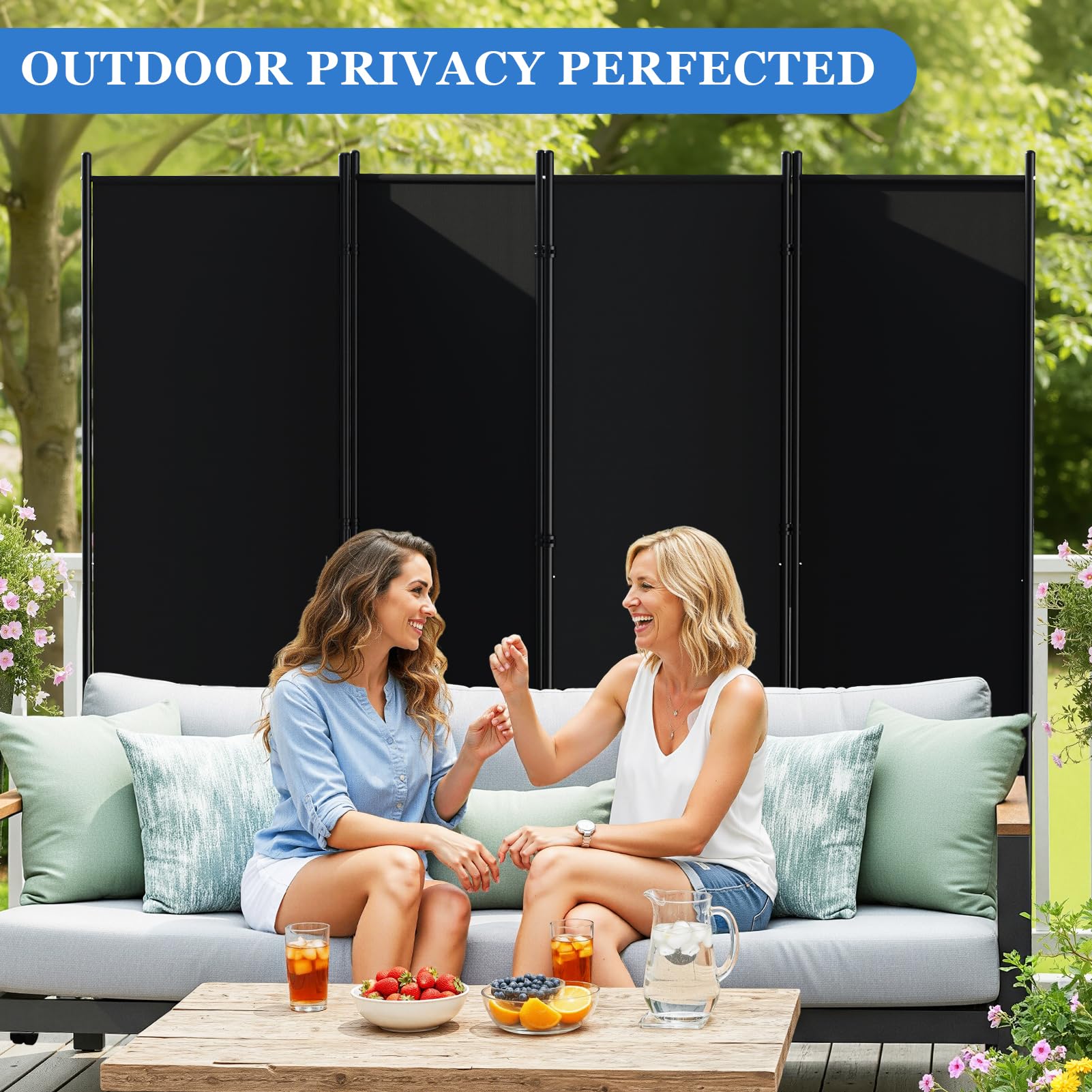
5. SUNALLY 6FT with Lockable Wheels — the roll-and-park mover
SUNALLY is the mobility pick. Lockable casters let you roll the 88-inch-wide screen into place, then lock it flat. That’s the divider for a space you reconfigure daily, a shared room, a shifting studio layout. Four panels at six feet give solid coverage, and the wheels remove the drag-and-scratch problem on hard floors. The caveat: wheels add a little height off the ground, so a sliver of floor gap stays visible. Worth it if you move the screen more than once a week.
Comparison Table
| Model | Panels | Height | Base | Best for |
|---|---|---|---|---|
| Rose Home Fashion RHF | 4 | ~6 ft | Fixed | Opaque permanent zone |
| RANTILA | 4 | 6 ft | Wide feet | Tip resistance |
| HOMSCREENER | 4 | 6 ft | Standard | Lightweight moves |
| VEVOR | 6 | 6 ft | Freestanding | Widest span |
| SUNALLY | 4 | 6 ft | Lockable wheels | Daily repositioning |
How to Choose a Folding Room Divider
Start with coverage math. A four-panel screen spans roughly 5 to 6 feet when angled; six panels reach 8 feet or more. Measure the opening, then subtract for the fold angle you need for the screen to self-support. Height matters too. Six feet blocks a standing sightline, while shorter screens only hide a seated area.
Then weigh the base. Fixed and wide-foot models win on stability; wheeled models win on mobility but leave a floor gap. For frame durability, ASTM F2057 tipping guidance is a useful reference point for freestanding furniture stability, and heavier metal tubing resists the bowing that plagues thin fabric frames.
Solid Panels vs Fabric Screens
Solid-panel dividers like the RHF block all light and read as built furniture, but they’re heavy and awkward to move. Fabric screens over a metal frame, the RANTILA, HOMSCREENER, and SUNALLY, cut weight and add slight sound absorption, at the cost of some light bleed at the seams.
Your call comes down to permanence. Want a divider that stays put and looks solid? Go panel. Reconfiguring weekly? Fabric on wheels. Apartment Therapy has long flagged repositionability as the deciding factor in small-space setups, and that holds here. Wirecutter’s small-space coverage echoes the same rule for renters.
Frequently Asked Questions
How wide an area does a four-panel divider cover?
Roughly 5 to 6 feet when angled for self-support. A straight run reaches wider but won’t stand on its own. For an 8-foot span, step up to a six-panel model like the VEVOR to keep the fold stable.
Will a freestanding divider tip over?
Wide-foot bases like RANTILA’s resist tipping best on hard floors. ASTM F2057 offers tipping guidance for freestanding furniture. Keep the fold angled rather than flat, and the divider stays put under normal daily contact.
Are folding room dividers good for renters?
Yes. None of these five require drilling or wall anchors. They’re freestanding, so you avoid holes and keep your deposit. Wheeled and fabric models fold flat for storage when you move.
Do fabric dividers block sound?
They dampen a little, not much. Fabric over a frame absorbs some high frequencies but won’t stop conversation. For real noise control you’d need mass, which these lightweight screens don’t provide. Treat sound reduction as a minor bonus.
Which divider is easiest to move?
The SUNALLY, thanks to lockable wheels on its 88-inch frame. Roll it into place, lock the casters, done. Fabric models like HOMSCREENER are also light enough for one person to carry between rooms.
How tall should a room divider be?
Six feet blocks a standing sightline, which is why all five run near that height. Shorter screens only hide a seated zone. For a video-call backdrop or bedroom corner, six feet is the practical floor.
Bottom Line
The RANTILA 4-Panel wins for most rooms. Its wide-foot base solves the one problem that sinks cheaper screens, tipping, and it stays put on hardwood without a wall. Pick the SUNALLY instead if you reconfigure your space weekly and want lockable wheels doing the work. One honest caveat: every fabric model here leaks a little light at the seams, so choose the solid RHF panel when total opacity is the goal.




Write Your Review
No reviews yet. Be the first to share your experience!