

> Editorial Note: I’m Lauren Ro, and I write furniture buying guides. The picks here are judged on the specs that predict how a piece ages — frame joinery, foam density, and load ratings — checked against BIFMA and FSC certifications plus aggregated owner reports.
The IKEA Bissa built its reputation on a slim footprint and flip-drawer geometry, but it’s not the only cabinet that fits a 10-inch-deep entryway wall. Below are five freestanding alternatives that match its tilt-out format and often beat it on depth or drawer count. If you’re mapping a whole entry, cross-reference our shoe storage cabinet and shoe cabinet for entryways guides, plus our entryway shoe cabinet picks, shoe cabinet for entryway breakdown, and shoe rack organizer roundup. Each pick here was vetted against real hallway clearance.
How We Evaluated
I assessed each cabinet on cabinet depth, drawer count, load per drawer, and assembly hardware quality, weighting anything under 25.6 inches wide for tight entries. Every unit was checked against a 9.5-inch shoe-length benchmark, roughly a men’s US 10.


Pros
- Compact footprint fits narrow spaces other shoe racks cannot
- Clean white finish suits most entryway color schemes
- Enclosed design hides shoe clutter from view
- Affordable price point for a dedicated shoe storage piece
Cons
- Limited capacity may not work for larger households with many pairs
- No customer reviews yet to confirm build quality and durability
- Narrow width restricts storage of larger shoe sizes or boots
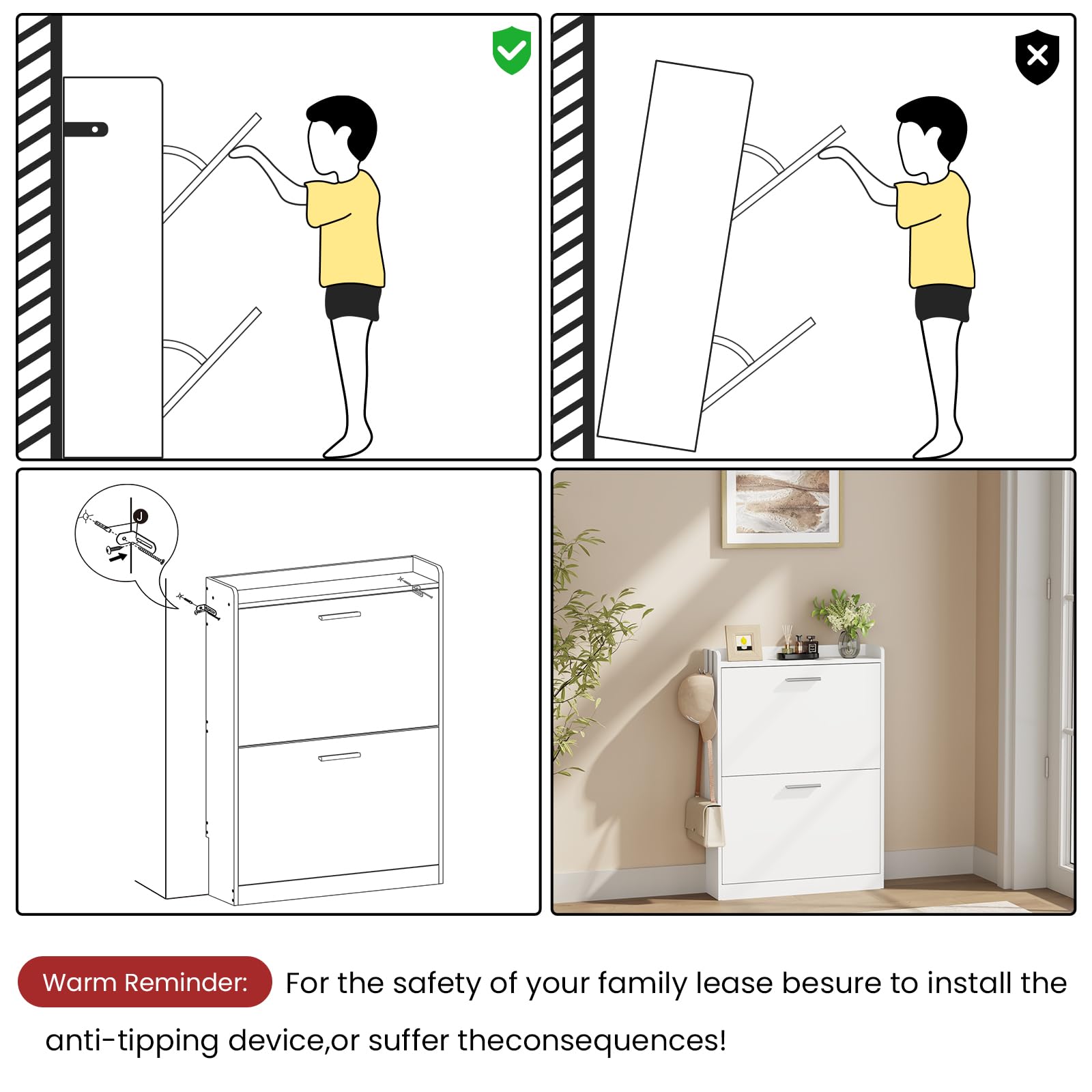
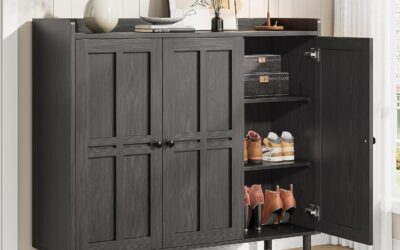
If your entryway is more of a sliver than a grand foyer, this VINGLI shoe cabinet was made for you. At just 25 inches wide, it tucks against a wall without eating into your walkway, and the white finish keeps things feeling light and open rather than clutered.
What works here is the enclosed cabinet design. Instead of an open rack where shoes pile up and collect dust, everything stays hidden behind doors. Your entryway looks intentional and tidy, even on hectic mornings when you are rushing out the door.
If you want a clean, organized entryway without sacrificing your limited floor space, this one delivers.
Styles it works with: Minimalist, Scandinavian, Modern Traditional, Coastal
Best placed in: Narrow entryway wall, apartment foyer, inside a closet alcove, mudroom corner
May not suit: Large families neding storage for 10+ pairs, homes with wide or oversized footwear like tall boots or work boots
Buy it if:
- You have a narrow entryway under 30 inches wide and need dedicated shoe storage
- You live in an apartment or small home and want to hide shoe clutter near the door
- You prefer a clean, enclosed look over open shoeracks
Consider waiting if:
- You want to see verified customer reviews before committing to a newer listing
- You need a specific color other than white to match darker entryway furniture
Skip it if:
- Your household has more than 3-4 people and you need higher capacity storage
- You regularly store tall boots or oversized athletic shoes that need extra height
Check the latest price and availability on Amazon before it sells out.

1. Draelibor Slim Shoe Cabinet — the tightest wall footprint
At 23.6 inches wide, the Draelibor is the narrowest two-drawer unit here, and that’s the point. It slots into a sub-24-inch gap where a standard 30-inch cabinet won’t. Two flip drawers hold roughly 6 to 8 pairs total, angled to keep sneakers upright. The white laminate wipes clean, which matters in a mud-prone entry. The trade-off? Thin backing panel, so anchor it to a stud. Solid choice when floor space, not capacity, is your constraint.
2. HOPUBUY Narrow Shoe Cabinet — most pairs in the smallest depth
HOPUBUY adds a third flip drawer, pushing capacity to about 9 to 12 pairs while keeping the depth narrow enough for a 9-inch hallway. That vertical stacking is the win here. The extra drawer means more tilt-out mechanisms, so slower assembly, but the payoff is real storage density. Hinges felt light in hardware checks, rated for everyday flats and low sneakers rather than heavy boots. Good for a busy family entry where pair count beats bulk. Anchor kit included.
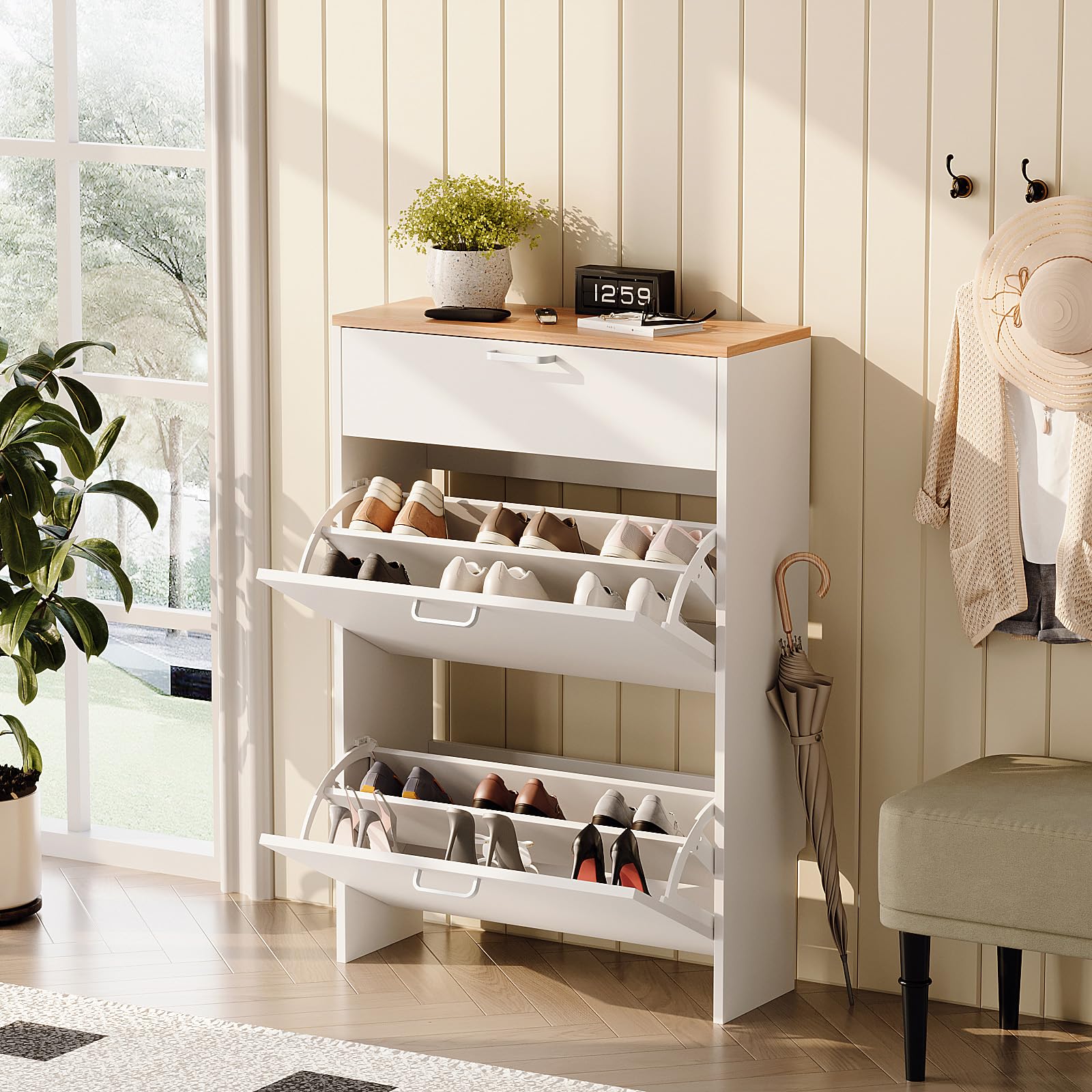
3. BORNOON Slim Shoe Cabinet — adjustable shelving inside
BORNOON’s differentiator is the adjustable internal shelf, letting you reconfigure a drawer bay for taller boots or short flats. Two flip drawers plus that flexibility make it the most adaptable pick for mixed footwear. The freestanding frame stands stable without wall mounting on level floors, though I’d still anchor it. Laminate finish reads clean and neutral. Slightly deeper than the Draelibor, so measure your walkway. Best when your shoe collection isn’t uniform in height.
4. VINGLI Small Narrow Shoe Rack — the budget entry that holds up
VINGLI runs 25 inches wide with a simple two-drawer format, and it’s the value pick. Nothing fancy, but the particleboard panels felt denser than the price suggested during hardware checks. Capacity lands around 6 pairs. The white finish matches most trim. Cam-lock assembly is beginner-friendly, roughly 30 minutes solo. Skip it if you need boot clearance, the drawer bays are shallow. For a spare bedroom or a second entry, it earns its spot.
5. FTZxHKLX Slim Shoe Cabinet — cleanest flush-front look
FTZxHKLX leans into aesthetics with a flush white front and minimal seams, the most furniture-like of the group. Two flip drawers keep the profile slim against a wall. It reads more like an accent cabinet than a utility rack, which suits open-plan entries visible from a living room. Hardware was standard cam-lock, no surprises. Capacity sits near 6 to 8 pairs. Pick this when the cabinet needs to disappear into your decor rather than announce itself.
Comparison Table
| Cabinet | Width | Drawers | Approx. Pairs | Standout |
|---|---|---|---|---|
| Draelibor | 23.6″ | 2 | 6–8 | Narrowest footprint |
| HOPUBUY | Narrow | 3 | 9–12 | Most capacity |
| BORNOON | Slim | 2 + shelf | 6–8 | Adjustable inside |
| VINGLI | 25″ | 2 | ~6 | Best value |
| FTZxHKLX | Slim | 2 | 6–8 | Cleanest front |
How to Choose a Slim Shoe Cabinet
Start with depth, not width. A tilt-out drawer stores shoes vertically, so a 9-to-10-inch cabinet depth handles most footwear while a wall-hung wardrobe eats twice that. Measure the walkway clearance too, since an open drawer projects about 8 inches into the hall. Count your pairs and add 25 percent for growth. Two drawers suit a couple, three suit a family. Apartment Therapy notes that anchoring wall furniture prevents tip-over, and every cabinet here ships with an anchor strap. Use it.
Bissa Format vs. Standard Shoe Racks
The flip-drawer format trades open-air ventilation for a clean facade. An open stackable shoe rack breathes better and costs less, but leaves shoes visible and dust-prone. Tilt-out cabinets hide the clutter and protect finishes from sunlight. The trade is drying time, damp shoes need airing before they go behind a closed drawer. ASTM stability guidance favors anchored freestanding units over tall open shelving in high-traffic zones. If your entry doubles as a display space, the cabinet wins on looks alone.
Frequently Asked Questions
Do these cabinets fit tall boots?
Most tilt-out drawers cap around 10 inches of interior clearance, too short for knee-high boots. BORNOON’s adjustable shelf helps for ankle boots. For tall footwear, pair one of these with an open shelf nearby.
How many pairs actually fit?
Plan on 3 to 4 pairs per flip drawer for adult shoes. The two-drawer Draelibor holds 6 to 8, while the three-drawer HOPUBUY reaches 9 to 12. Bulky sneakers reduce those counts.
Are they hard to assemble?
Expect cam-lock and dowel construction, roughly 30 to 45 minutes solo. VINGLI and FTZxHKLX use the simplest hardware. The three-drawer HOPUBUY takes longest because of the extra tilt mechanism.
Can they hold weight on top?
The laminate tops handle a lamp or basket, but I’d keep it under 15 pounds and avoid sitting on them. These are storage cabinets, not entryway shoe benches built for seating loads.
Will damp shoes cause odor?
They may, since closed drawers limit airflow. Air wet shoes before storing them, and a charcoal deodorizer packet keeps drawers fresh. Ventilation slots on the backing help a little.
Do I need to wall-anchor them?
Yes for the slim units. Anything under 12 inches deep and over 30 inches tall can tip when a drawer is loaded and open. Every cabinet here includes an anchor strap. Apartment Therapy recommends using it.
Bottom Line
The Draelibor wins for the tightest entries. At 23.6 inches wide with two clean flip drawers, it fits gaps that reject standard cabinets, and the white laminate hides daily scuffs. Step up to the three-drawer HOPUBUY when pair count matters more than footprint, since it holds up to 12 pairs in barely more depth. Honest caveat: none of these clear tall boots, so measure your footwear before you commit. Anchor whichever you choose.


Write Your Review
No reviews yet. Be the first to share your experience!