

> Editorial Note: I’m Liam Wright, an outdoor and garden editor. I grew up in my family’s landscaping business and now cover what actually survives a season of UV, rain, and freeze-thaw cycles. The picks here are evaluated against ASTM weatherability standards and manufacturer durability ratings.
Most people line their porch plants up in a single row against the wall, every pot the same height, like a lineup waiting to be photographed. That’s the mistake. A flat row reads as unfinished no matter how healthy the plants are, because your eye has nothing to climb. Arranging plants is about height, rhythm, and negative space long before it’s about which fern you pick, and the same instinct that anchors a best gas fire pit table, a best wood burning fire pit, a best outdoor sofa, a best patio umbrella, or a best raised garden bed applies here too. Get the arrangement right and a $40 collection of big-box nursery plants can look styled. Get it wrong and $400 of specimen plants still looks like a garden-center overflow shelf.
The Ground Rules Before You Start
Before a single pot goes down, protect the path. Leave at least 36 inches of clear walkway from the top step to the front door; that’s the width someone carrying groceries needs, and the clearance most fire codes assume. Never let foliage cover the house numbers or block the door’s swing arc. If your porch is a raised wood deck, keep heavy grouped pots over a joist rather than floating mid-span, since a large ceramic planter full of wet soil can top 50 lbs.
Path first, plants second.
Porch groupings can lean on weather for variety. Indoors the light does all that work, and the indoor arranging guide covers layering height and clustering in odd numbers.
Step 1: Anchor the Arrangement With One Bold Plant
Pick your biggest, boldest plant and place it first. This is your anchor: a 3- to 4-foot specimen like a boxwood, a fiddle-leaf fig in warm months, or a tall ornamental grass that gives the eye somewhere to land. Set it to one side of the door, not dead center, and offset it toward the side with more open floor. A single large plant flanking the door reads more current than the matched-pair topiaries you see on every builder-grade porch.
Size it to the door, not the porch. A good anchor stands roughly two-thirds the height of your door frame, so against a standard 80-inch door, aim for a plant-plus-pot height near 50 to 55 inches. Shorter than that and it disappears. Taller and it fights the entry.
Give the anchor at least 12 inches of breathing room on every side. Crowd it immediately and you lose the impact that made it the anchor in the first place. Everything else you place from here, the mid-height layers and the trailing accents, gets arranged in relation to this one plant. Nail the anchor and the rest falls into rhythm fast.
Step 2: Build Height in Layers, Not a Flat Row
Here’s where most porches fall flat: everything sits at one level. Fix it by staging plants across at least three height tiers. Floor level for the biggest pots, a mid-tier around 24 to 30 inches, and a high tier above 40 inches so the eye climbs from step to ceiling.
Three height tiers, minimum.
You don’t create those tiers with plants alone. A tiered plant stand does the heavy lifting, letting six small 6-inch nursery pots read as one full, layered display instead of a scattered row. Staggering pots on a 2- to 5-tier rack also improves airflow and lets water drain off each level rather than pooling on the boards below.
Stagger, don’t stack straight up. Offset each tier so foliage from the level above spills slightly over the one below, hiding pot rims and softening the metal frame. Keep the tallest tier toward the house wall and step heights down toward the stairs, matching the sightline of someone walking up.
One rule saves you real frustration: measure your vertical space first. A porch roof at 8 feet gives you room for a 5-foot stand plus a trailing plant on top. A low overhang under 7 feet means cap your tallest element near 40 inches.
Step 3: Cluster in Odd Numbers and Vary Pot Size
Odd numbers look intentional. Even numbers look like a store display. Group your plants in clusters of 3 or 5, never 2 or 4, and let each cluster share a loose triangle shape instead of a straight line.
Inside each group, borrow the container-garden formula: a thriller, a filler, and a spiller. The thriller is your tall vertical accent, the filler is a round mounding plant at mid-height, and the spiller trails over the pot edge. That combination gives a single grouping three textures at three heights, which is why it never reads flat.
Vary your pot diameters too. A good ratio is roughly 3:2:1. Pair a 14-inch pot with a 10-inch and a 6-inch rather than three identical planters, since matching pots read as a set and flatten the arrangement while mixed sizes create the rise and fall your eye wants.
Repeat one element for cohesion. Maybe every pot is terracotta, or every cluster includes one silver-green plant. Apartment Therapy calls this the “one repeated note” rule, and it’s what keeps a mixed grouping from tipping into clutter. Pick your note before you buy the plants.
Step 4: Match Plants to Your Light and Weatherproof the Setup
Now match plants to reality: how much sun your porch actually gets. Track it for one full day. Full sun means 6 or more hours of direct light and fits geraniums, lantana, or succulents; part shade means 3 to 6 hours and suits ferns, begonias, and coleus; deep shade under 3 hours needs hostas or pothos. Putting a sun-lover on a north-facing shade porch is the fastest route to a leggy, sad arrangement.
Then weatherproof the hardware. Every pot needs drainage holes, or roots rot after the first hard rain. Raise pots on 1-inch feet or a slatted stand so water clears the floor and doesn’t stain the boards.
Metal stands and racks should carry a powder-coat or galvanized finish rated to resist rust; ASTM B117 salt-spray standards are the benchmark manufacturers cite for outdoor-grade coatings. Skip untreated iron. It’ll bleed orange streaks down your porch within a season, and no arrangement survives that.
The Right Products Make It Easier
Step 2, the height layering, is the one people skip because they don’t own the gear to pull it off. All three stands below clear a 4.4 owner rating and use rustproof, powder-coated metal built for outdoor exposure. Start with the Kavlium if your porch is small and you need two tiers near the door; jump to the iDavosic.ly if you’ve got a big collection and a full corner to fill.


Kavlium 2-Tier Metal Plant Stand - 27" Tall Black Indoor/Outdoor Flower Holder for Modern & Farmhouse Decor
Pros
- Verified 100 lb weight capacity handles heavy ceramic planters
- Rustproof coating works for outdoor and indoor use
- 27-inch height creates vertical interest in tight spaces
- Fits standard 10-11 inch planters on both tiers
- Quick assembly with minimal hardware
Cons
- No customer reviews yet to verify long-term durability
- Limited to 10-11 inch planter sizes, won't fit larger pots
- Black finish only, no other color options available
This plant stand solves the problem of wanting more greenery without sacrificing precious floor space. At 27 inches tall, it draws the eye upward and creates dimension in any corner of your home. The two-tier design lets you layer different plant heights or mix trailing plants on top with bushier varieties below.
The black metal frame has that effortless modern farmhouse look that plays well with wood furniture, white walls, and natural textures. It is light enough to move around when you are rearranging but sturdy enough that you are not worrying about it tipping over. The powder-coated finish means you can start it indoors and move it to a covered porch in summer without rust concerns.
If you want a simple way to add vertical plant display without drilling holes or buying bulky furniture, this one delivers.
Styles it works with: Modern Farmhouse, Scandinavian, Industrial, Minimalist
Best placed in: Living room corner beside a sofa, entryway next to the door, bedroom near a window for light-loving plants, covered patio or balcony
May not suit: Homes needing extra-large planter capacity over 11 inches, spaces where a taller 36+ inch stand would fill vertical space better, outdoor areas with full weather exposure and no roof coverage
Buy it if:
- You need vertical plant display in a small apartment or tight corner
- You have 2-4 medium-sized planters (10-11 inches) looking for a home
- You want a piece that transitions easily from indoor to covered outdoor spaces
Consider waiting if:
- You prefer seeing verified customer reviews and photos before purchasing
- You are hoping for a white or gold finish to match existing decor
Skip it if:
- You need to display planters larger than 11 inches in diameter
- You are looking for a taller stand over 36 inches to fill high-ceiling spaces
- You need full outdoor weatherproofing for uncovered exposure to rain
Check the latest price and availability on Amazon before it sells out.

Bamworld 46" Tall Corner Plant Stand - 4-Tier Metal Indoor Outdoor Flower Pot Holder with Drainage Trays
Pros
- Tall 46-inch height maximizes vertical space without a large footprint
- Perforated drainage trays protect floors and prevent overwatering damage
- Staggered tier design gives each plant adequate light exposure
- Adjustable feet compensate for uneven floors or outdoor surfaces
- Affordable at $24.99 for a four-tier metal stand
Cons
- No customer reviews yet to verify real-world durability and stability
- Narrow 8.8-inch base may limit pot size options to smaller plants
- Metal construction may rust outdoors without protective coating in humid climates
This stand solves a problem every plant parent knows too well: running out of horizontal space while your collection keeps growing. The 46-inch height and corner-friendly design let you stack four plants vertically in a spot that would otherwise sit empty. The staggered tiers mean your trailing pothos on top won't block light from the snake plant below.
The drainage trays are a thoughtful touch that protects your floors from water rings and overflow. Unlike decorative stands that force you to use saucers under every pot, these integrated trays catch drips while keeping the look clean. The metal construction feels sturdy enough for indoor use, and the adjustable feet are surprisingly helpful on older floors that aren't perfectly level.
If you want to display multiple plants in a small space without cluttering your windowsills or buying bulky shelving units, this one delivers.
Styles it works with: Modern Farmhouse, Scandinavian, Boho, Industrial, Minimalist
Best placed in: Living room corner near a window, bedroom beside a dresser, covered patio or sunroom, kitchen corner with herbs
May not suit: Homes with toddlers or large dogs who might knock it over, outdoor areas with high humidity unless treated for rust prevention, spaces where you need to display large statement plants over 10 inches in diameter
Buy it if:
- You have an empty corner and a growing plant collection that needs vertical display space
- You rent and need a non-permanent solution that works in multiple rooms or moves with you
- You want drainage protection without placing individual saucers under every pot
- You're working with a budget under $30 and need a functional stand that looks clean
Consider waiting if:
- You want to see verified customer photos and reviews before purchasing since this is a newer listing
- You need a specific finish color and want to confirm it matches your decor in person
Skip it if:
- You need to display large planters over 10 inches wide, as the narrow base won't accommodate them
- You live in a very humid coastal area and plan to keep it outdoors year-round without rust treatment
- You have very uneven outdoor terrain where adjustable feet won't provide enough stability
Check the latest price and availability on Amazon before it sells out.

iDavosic.ly 5 Tier Metal Corner Plant Stand - Indoor/Outdoor Black Folding Display with Waterproof Trays
Pros
- Tool-free assembly takes under 5 minutes with clear instructions
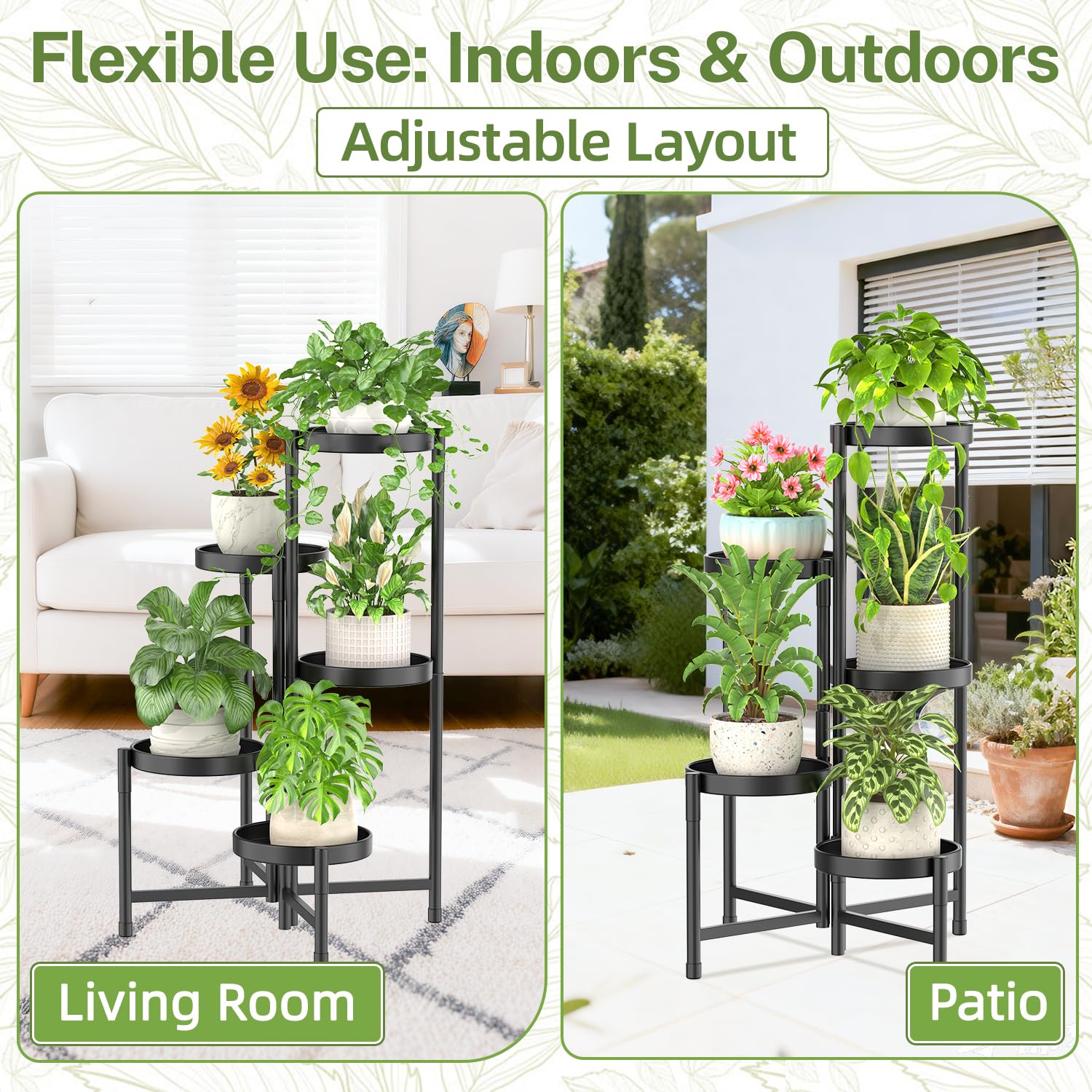
- Adjustable shape fits corners or straight walls, plus folds for storage
- Waterproof rust-resistant coating works both indoors and outdoors
- All-iron construction provides stable support for multiple plants
- Seamless trays prevent water and soil from spilling onto floors
Cons
- 0 customer reviews means no real-world feedback on durability yet
- 7.5-inch max pot size limits plant variety compared to wider stands
- Triangular leg design may not sit flush against all wall shapes
This plant stand solves the biggest pain point for apartment plant lovers: finding vertical display space without permanent installation. The rotating leg design means you can tuck it into a corner when you need floor space, then swing it out for watering without moving every single plant. That flexibility is rare at this price point.
The seamless trays are the unsung hero here. Most budget stands have wire shelves or perforated trays that drip everywhere. These catch runoff water and stray soil, which matters when you are renting and trying to protect hardwood or carpet. The waterproof coating also means you can move it outside during summer without worrying about rust spots on your patio.
If you want a no-drill plant display that adapts to small spaces without leaving water rings on your floor, this one delivers.
Styles it works with: Modern, Minimalist, Urban Jungle, Scandinavian
Best placed in: Living room corner near a window, covered balcony or patio, bedroom beside a dresser, kitchen nook with natural light
May not suit: Homes with toddlers or large pets who might tip it over, rooms with very low ceilings under 8 feet where a 5-tier stand feels cramped, traditional or farmhouse interiors where black metal looks too industrial
Buy it if:
- You rent and need plant storage that does not require drilling or wall anchors
- Your space has awkward corners that standard rectangular furniture cannot fill
- You want something that moves between indoors and outdoors seasonally without rusting
Consider waiting if:
- You prefer white or natural wood finishes and want to see if those colors restock
- You need verified reviews from other buyers before committing
Skip it if:
- Your plant collection includes pots wider than 7.5 inches that would not fit the trays
- You need a stand rated for heavy ceramic or concrete planters beyond typical houseplant weight
Check the latest price and availability on Amazon before it sells out.
Kavlium 2-Tier Plant Stand (KavliumPlantStand)
Step 2 asks you to build three height tiers, and this is the simplest way in. The Kavlium is a 27.1-inch, 2-tier black metal stand that lifts two pots off the floor without eating up space, so a small porch instantly gains a mid and high level. Its rustproof coating handles rain and UV, and the wide base keeps it stable on the uneven boards of older porches. At a 4.6 owner rating it’s the highest-rated pick here, best for a compact entry where you want one clean vertical accent beside the door.
Bamworld 4-Tier Corner Plant Stand (Bamworld)
When your best open space is a porch corner, the Bamworld earns its spot. It’s a 4-tier heavy-duty rack that stacks pots vertically in a footprint barely wider than a single planter, which is how you get a full layered look on a narrow porch. The staggered shelves give you the stepped-down sightline Step 3 calls for, and the heavy-gauge frame carries bigger mid-size pots without wobble. Owners rate it 4.5 and praise its stability once loaded, so reach for it if you’ve got vertical room but limited floor.
iDavosic.ly 5-Tier Corner Plant Stand (iDavosicly)
Got a big collection? This is the workhorse. The iDavosic.ly is a 5-tier folding corner stand, the most levels of the three, and it turns one corner into a wall of staggered greenery that runs a true height gradient from floor pots up past 40 inches. It folds flat for winter storage, and the metal shelf frame resists rust through wet seasons. At 4.4 owners rate it the lowest of the trio, usually citing tight assembly, but it holds the most plants, so pick it when volume is the goal.
Frequently Asked Questions
What if my porch only gets a few hours of sun a day?
It depends on how few. Under 3 hours of direct light, skip flowering annuals and lean on shade-tolerant foliage like ferns, hostas, and pothos, which hold color in low light. If you get 3 to 6 hours, begonias and coleus give you flowers without scorching. Track the light for one full day before you buy anything.
What if my porch is tiny and has almost no floor space?
No problem, as long as you build up instead of out. A narrow corner stand or a 4- to 5-tier rack fits a footprint under 16 inches square while holding six or more pots, and railing planters free the floor entirely. Keep a 36-inch walkway clear no matter how small the porch, and let the plants climb the walls instead of creeping into the path.
What if my porch faces north and stays cold and shady?
No true sun-lover will thrive there, so don’t fight it. North-facing porches suit hostas, ferns, ivy, and heucheras that actually prefer cool shade. Choose frost-hardy containers too, because ceramic and terracotta can crack in freeze-thaw cycles; a fiberglass or resin pot rated for outdoor winter use holds up far better.
What if my porch plants keep blowing over in the wind?
Yes, that’s fixable, and it’s almost always a weight problem. Move to wider, heavier-based pots or a low-center-of-gravity stand, and set the tallest plants closest to the house wall where wind hits softest. For exposed porches, fill the bottom third of large pots with gravel for ballast. A 4-tier rack loaded with soil-filled pots rarely tips once it’s weighted.
What if my porch floor is old wood I don’t want to stain or rot?
Yes, protect it, and this one’s easy. Raise every pot on 1-inch feet or a slatted stand so water drains underneath instead of sitting on the boards. Add plastic saucers under drainage holes, and slide a waterproof mat beneath heavy groupings. Move pots a few inches every few weeks so moisture doesn’t build a permanent ring.
Bottom Line
Start with one bold anchor plant, then build up in at least three height tiers instead of a flat row. That’s the difference between a styled porch and a garden-center overflow shelf. If your space is tight, a corner tiered stand does the layering for you and frees the floor. Match every plant to your actual sun hours, give each pot drainage, and repeat one color or material so the grouping reads composed, not cluttered. Skip untreated metal that rusts within a season. Height first. The rest follows.





Write Your Review
No reviews yet. Be the first to share your experience!