

> Editorial Note: I’m Erin Schwartz, and I cover home decor with a bias toward what actually works in a real room. The guidance here weighs scale, layout, and materials against Apartment Therapy and Wirecutter coverage rather than styling a space that nobody lives in.
The quickest way to make a carpet look worse is to leave it wet underneath. Heat can loosen surface grime, but carpet backing and pad need controlled moisture and fast drying, not a long, soaking pass. Start by identifying the fiber and whether your machine actually extracts water; those two details decide the method.
For adjacent care questions, see how to clean an area rug at home without a machine, how to clean a wool rug, how to clean a jute rug, how to clean an outdoor rug without ruining it, how to make a rug lay flat, and rug pad picks for 2026: grip, cushion, value.
First, Know What Your Machine Does
Many people use “steam cleaner” for two different machines. A pressurized steamer sends hot vapor through a nozzle but usually does not pull moisture back out. A carpet cleaner sprays cleaning solution or heated water into the pile, then uses suction to recover it. That difference matters. A wall-to-wall carpet can tolerate a careful extraction pass far better than repeated vapor passes that leave dampness below the fibers.
Read the carpet maker’s care label before starting. Wool, jute, sisal, seagrass, and many hand-tufted rugs should not be saturated or steam-cleaned. Their backing, dyes, and natural fibers can distort, shrink, or release color. For synthetic wall-to-wall carpet, use the machine instructions and keep water quantity low. Consumer Reports and Good Housekeeping both publish practical carpet-care guidance, but the carpet manufacturer’s limits take priority.
Check a hidden corner first, such as inside a closet or beneath a low piece of furniture. Apply a small amount of water, blot it with a white cloth, and look for dye transfer or a change in texture after it dries. If color comes off, stop. A professional cleaner is the better call.
Prepare the Carpet Before Adding Moisture
Vacuum slowly in two directions before bringing out any cleaner. Dry soil turns into muddy residue once water hits it, and that residue is harder to remove than the original dust. Take 2 or 3 slow passes over traffic lanes, along baseboards, and around furniture legs. Move lightweight furniture out of the way, but leave heavy pieces in place unless you can protect their feet from moisture.
Deal with visible spots separately. Blot spills from the outside toward the center with a white cloth. Don’t scrub in circles; that spreads the spot and can roughen the pile. Use only the cleaning solution approved for your machine and carpet. More solution doesn’t mean a cleaner result. It often means more residue, which can make the carpet feel stiff or attract soil sooner.
Open windows if weather allows, turn on ceiling fans, and plan to keep foot traffic off the cleaned area until it is dry. A 6 x 9 foot section is a sensible first zone for a portable machine because you can track your overlap and drying time without rushing through an entire room.
Use Short, Overlapping Passes
Fill the machine with the amount of water and formula its manual specifies. Don’t guess at dilution. Excess formula is a common reason a carpet feels crunchy after cleaning. Set up near an outlet, keep the cord behind you, and begin at the point farthest from the door so you can work your way out without walking over damp carpet.
For an extractor-style carpet cleaner, make one slow wet pass while pressing the trigger, then release the trigger and make 2 dry passes over the same strip. The dry passes are the important part. They pull out dirty water and shorten drying time. Overlap the next lane by roughly 2 inches so you do not leave a dirty stripe between passes.
With a handheld steamer, use an upholstery or carpet-safe attachment only when the manual permits it. Keep the head moving. Hold it in one place and you risk forcing too much heat and moisture into a small area. Work a section no larger than 2 x 2 feet, then immediately blot with a clean, absorbent towel. Never pour water onto the carpet to “help” the steam along.
Avoid Saturating the Backing and Pad
The visible fibers are only the top layer. Under them sit the primary backing, adhesive, and often a separate pad. Once the pad is wet, it can take far longer to dry than the carpet face. That’s when a simple cleaning session becomes a bigger problem.
Watch for warning signs as you work: a squishing sound underfoot, darkening that spreads beyond the cleaned lane, or water appearing at carpet edges. Stop adding moisture if any of those show up. Make repeated suction-only passes, press towels into the area, and increase airflow. A wet-dry vacuum can help recover surface water, but don’t use an aggressive brush head that can pull or fuzz the pile.
This is also why a true steam-only machine is usually a poor match for a broad carpet-cleaning job. It may refresh a tiny, sturdy synthetic area when used carefully, but it has no built-in recovery step. For whole-room work, extraction is the feature that matters most.
Dry the Carpet Completely Before Resetting the Room
Drying is not the last optional step. It’s part of cleaning. Leave windows open when the outdoor air is less humid than the room, run fans across the carpet rather than straight down at one spot, and use your HVAC system to keep indoor air moving. Lift the edges of a room rug only if its construction allows it; trapped air under a rug slows drying.
Most lightly cleaned carpet should feel dry within 6 to 12 hours. Dense pile, humid weather, a thick pad, and too much solution can push that longer. Keep children, pets, and furniture off the area until the fibers and backing feel dry. Metal furniture feet can mark damp carpet, while wood legs can transfer finish or stain.
When the carpet is dry, vacuum once more to lift the pile and remove loosened residue. If one section feels stiff, do not add more formula. Make a light water-and-extraction pass over that section, then dry it thoroughly. For carpet that stays damp into the next day, contact a carpet-cleaning professional rather than covering the area with furniture.
Frequently Asked Questions
Can you use a steam cleaner on all carpet?
No. Wool, jute, sisal, seagrass, antique rugs, and hand-tufted pieces can be damaged by heat or excess moisture. Check the care label and use a hidden-corner color check before cleaning any carpet with uncertain fiber content.
Should you vacuum before steam cleaning carpet?
Yes. Vacuuming removes dry grit before it can turn into residue. Two slow passes in different directions are more useful than one fast pass, especially on paths between doors, sofas, and dining chairs.
How wet should carpet be after cleaning?
It should feel lightly damp, not squishy or saturated. If water rises when you press the pile, make several suction-only passes and add airflow before continuing.
How many dry passes should you make?
At least two. After each wet pass, release the spray trigger and pull the machine over the same lane twice. Dense carpet may need another dry pass. That’s the step people skip.
Can you use tap water in a steam cleaner?
It depends on the machine manual. Some manufacturers permit tap water, while others specify distilled water to limit mineral buildup. Follow the manual rather than adding vinegar or another household liquid to the tank.
Why does carpet feel crunchy after cleaning?
Usually, too much cleaning formula dried in the fibers. Use less formula next time, then make a water-and-extraction pass to remove the residue. Let the area dry fully before judging the texture.
When should you call a professional carpet cleaner?
Call one when the carpet has a large water event, persistent odor, dye transfer, a delicate natural fiber, or dampness that remains the next day. A professional has stronger extraction equipment and can assess what is happening below the surface.
Helpful Products
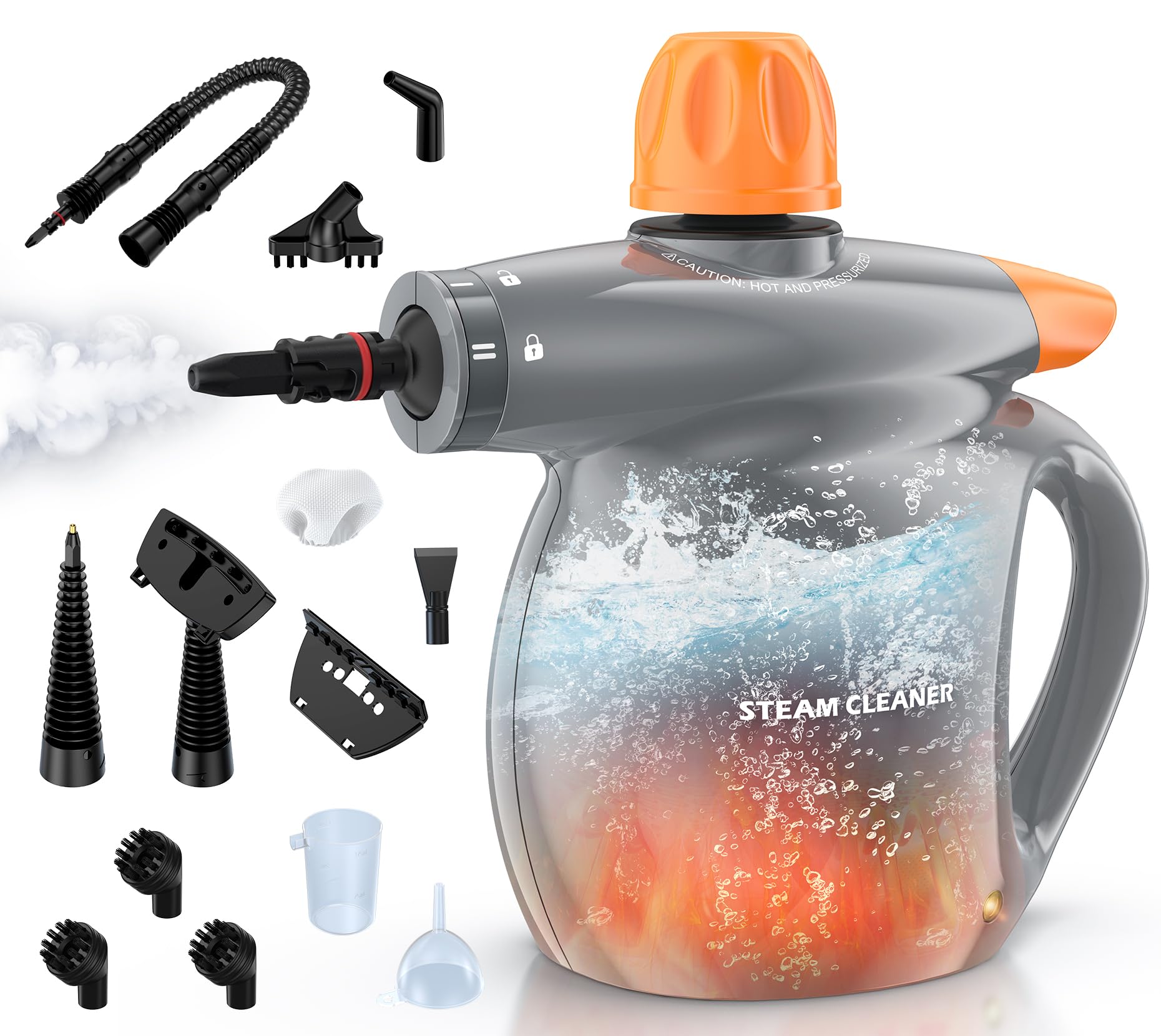
These three supplied listings are ordered as provided for this guide. The first two are carpet-cleaner listings, while the third is a handheld steamer; match the machine type to the moisture-recovery method described above and follow its manual.
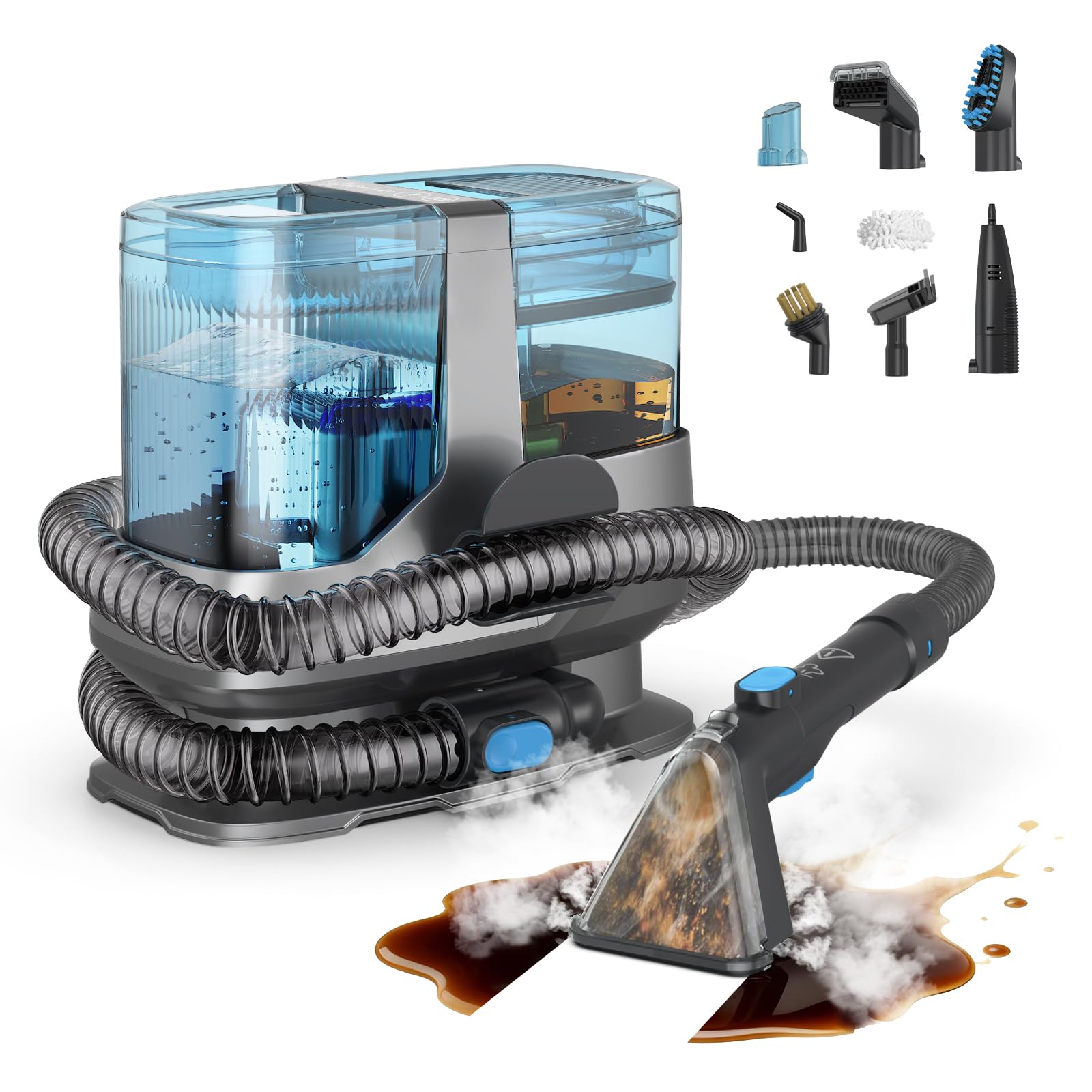

BISSELL Little Green Mini Portable Carpet Cleaner 4075 - Compact Spot & Stain Cleaner for Upholstery, Pet Messes & Cars
Pros
- Extremely compact and easy to store in small spaces
- Versatile cleaning across carpets, upholstery, car seats, and pet beds
- Includes tough stain tool and self-cleaning hose for maintenance
- Strong suction power despite small size
- Comes with 8oz cleaning formula included
Cons
- Small water tank requires frequent refills for larger jobs
- No customer reviews yet to confirm long-term durability
- May struggle with deeply set or old stains compared to full-size models
The BISSELL Little Green Mini 4075 is the spot cleaner we recommend to friends in apartments or anyone tired of dragging out a full-size carpet cleaner for small messes. It handles the everyday chaos of pet accidents, coffee spills on the couch, and muddy footprints on entryway rugs without requiring a storage closet or workout to move it around.
What sets it apart is the self-cleaning hose tool, which means you're not stuck scrubbing out gross residue after every use. The included tough stain tool with a removable lens lets you see exactly what you're lifting out of the fabric, and the 4-inch head fits into car cup holders and tight upholstery corners where larger machines give up.
If you want professional-level spot cleaning without sacrificing half your hall closet or your back, this one delivers.
Styles it works with: Modern Farmhouse, Scandinavian, Minimalist, Contemporary
Best placed in: Utility closet, under kitchen sink, laundry room shelf, coat closet near entryway
May not suit: Homes with wall-to-wall carpeting needing frequent deep cleaning, households with multiple large dogs requiring daily cleanups
Buy it if:
- You live in an apartment or small home without room for full-size cleaning equipment
- You have pets and need to tackle accidents and stains within minutes
- You want to detail your car interior or clean upholstered furniture regularly
Consider waiting if:
- You need to clean large carpeted areas frequently and would benefit from a full-size machine
Skip it if:
- You only have hard floors and no upholstered furniture or car seats to clean
- You need a machine with a heated drying function
Check the latest price and availability on Amazon before it sells out.



Write Your Review
No reviews yet. Be the first to share your experience!