

> Editorial Note: Our reviews aggregate manufacturer specifications, third-party certifications (CertiPUR-US, GREENGUARD, OEKO-TEX), owner reviews from major retailers (Amazon, Wayfair, West Elm, IKEA), and discussion threads from r/Mattress, r/HomeImprovement, and r/InteriorDesign. We are not interior designers, contractors, or sleep doctors; consult a licensed sleep specialist for persistent back pain, sleep apnea concerns, or any medical issue you suspect is tied to your sleep surface. Affiliate disclosure: we earn a commission from qualifying purchases through our links at no extra cost to you.
There isn’t a single best mattress — the right pick depends on sleeper position, body weight, and temperature regulation. For most adults, Sleep Foundation and Wirecutter consistently point to a medium-firm hybrid (pocketed coils plus a CertiPUR-US foam comfort layer, 12-14 inches thick) as the safest default. Side sleepers usually need more contouring, back sleepers want firmer support, and hot sleepers benefit from gel-infused or hybrid builds. Anyone shopping should match construction to body, not just price.
> Quick Answer: For most adults, a 12-14 inch medium-firm hybrid (pocketed coils + CertiPUR-US foam) is the safest default. Side sleepers lean toward softer memory foam, back and stomach sleepers toward firmer hybrids, and hot sleepers toward gel-infused or coil-heavy builds.
Before going deeper, a few related reads worth bookmarking. If you’ve narrowed it down to one construction, the best memory foam mattress roundup breaks down the all-foam category by sleeper type. The memory foam vs hybrid mattress comparison handles the most common build dilemma. For sleepers who run warm, the best sheets for hot sleepers guide pairs naturally with this one, and the best mattress toppers guide covers a cheaper interim fix. And before you replace anything, check how long does a mattress last — your current bed may have years left.
The Short Answer
The best mattress for the average adult in 2026 is a medium-firm hybrid, 12-14 inches thick, with pocketed coils and a CertiPUR-US-certified foam comfort layer. Side sleepers shift softer (medium-soft memory foam or pillow-top hybrid), back and stomach sleepers shift firmer (medium-firm to firm hybrid), and hot sleepers prioritize gel infusion or coil-dominant builds. Heavier sleepers (over 230 lbs) should add density and coil gauge, not just thickness.
Why It Works That Way
Mattress fit comes down to three variables, and editorial sources agree on what each one means. The first is pressure relief, governed by the comfort layer. Sleep Foundation summaries point to memory foam densities between 3.0 and 5.0 lbs/ft³ as the range where contouring is meaningful without bottoming out. Below 2.5 lbs/ft³ the foam packs down within a year or two; above 5.0 the bed sleeps hot and slow to move on. Side sleepers, who concentrate weight on shoulder and hip, generally need 3-4 inches of this comfort layer to keep pressure points under the threshold where blood flow drops.
The second variable is spinal support, which lives in the support core. Pocketed coils (typically 13-15 gauge in mid-tier hybrids, lower gauge for heavier sleepers) outperform older Bonnell or offset coils on motion isolation and edge support, according to Wirecutter’s mattress coverage. All-foam beds use a high-density polyfoam base (1.8-2.5 lbs/ft³) to do the same job. Both can work; coils tend to win on durability and airflow, foam wins on motion isolation and price.
The third variable is temperature regulation, which the American Academy of Sleep Medicine (AASM) flags as one of the most overlooked sleep-quality factors. Dense memory foam traps body heat, while pocketed coils channel airflow underneath the comfort layer. Gel infusions, phase-change covers, and copper-infused foams help, but Consumer Reports surveys consistently find that coil-based hybrids run cooler than equivalent all-foam beds. Hot sleepers in humid climates benefit more from coil construction than from any single cooling additive.
Layer these three onto sleeper position and weight, and the matrix narrows fast. A 150 lb side sleeper has different needs than a 230 lb back sleeper, and the same mattress won’t serve both well.
Best Mattress by Sleeper Type
Side sleepers need more cushioning at shoulder and hip. The sweet spot is medium-soft to medium, with 3-4 inches of memory foam or pillow-top hybrid comfort. Look for foam density of 3.0-4.0 lbs/ft³ in the top layer. Sleep Foundation’s side-sleeper guide and r/Mattress threads both flag pressure relief, not firmness, as the priority. Side sleepers under 130 lbs can go softer; those over 200 lbs need extra support underneath the plush comfort to avoid sinking.
Back sleepers want medium-firm. The lower back needs to stay supported in its natural curve, and too-soft comfort layers let the hips drop, creating waking lumbar pain. A medium-firm hybrid (6.5-7 on the industry firmness scale) with 2-3 inches of comfort foam over pocketed coils is the most-recommended build across Wirecutter and Consumer Reports for this group.
Stomach sleepers need firm. Soft mattresses let the abdomen sink, which arches the lower back. Firm hybrids or firm all-foam beds (7-8 on the firmness scale, 2 inches or less of comfort layer) keep the spine neutral. AASM guidance generally discourages stomach sleeping for spinal health, but if it’s your default, firmness matters more than for any other position.
Combination sleepers who switch positions through the night do best on a responsive medium-firm hybrid. Latex hybrids and pocketed-coil builds with quick-response foam (rather than slow-sinking memory foam) make rolling over easier without waking.
When to Choose Memory Foam vs Hybrid vs Latex
Choose memory foam if: You’re a side sleeper, you share a bed with a restless partner (motion isolation is unbeatable here), you prefer the slow-sinking hug feel, and you don’t run hot. Budget under $800 generally points here as well — the cheapest reliable beds in this category outperform equivalent-price hybrids.
Choose a hybrid if: You sleep hot, you weigh over 200 lbs, you want a bouncier feel, you need strong edge support (helpful for getting in and out of bed), or you’re a combination sleeper. The mainstream sweet spot is $800-$1,500, where pocketed coils and 3.0+ lb/ft³ foam comfort layers become standard.
Choose latex if: You want maximum longevity (12-15 years), you have foam-chemical sensitivities, you prioritize natural materials, and budget isn’t the binding constraint. Natural Talalay or Dunlop latex with GOLS organic certification is the premium tier. Synthetic latex is closer to memory foam in feel and lifespan.
Choose an innerspring if: Budget is the binding constraint and you’re replacing a guest-room or short-term bed. Lifespan will be shorter (5-8 years), but the entry price is unbeatable.
What Editorial Sources Say
Sleep Foundation’s 2026 mattress guides consistently recommend medium-firm hybrids as the safest default for the average adult, with separate breakdowns for side, back, stomach, and combination sleepers. Wirecutter’s long-running mattress coverage tracks owner-reported satisfaction across hundreds of brand-model combinations and arrives at similar conclusions, with foam density (3.0+ lbs/ft³ in comfort layer) and coil gauge (13-15 in mid-tier hybrids) flagged as the two specs most predictive of long-term satisfaction. Consumer Reports surveys mattress owners and reports that medium-firm hybrid beds receive the highest cross-sleeper-type approval ratings, while all-foam beds polarize more strongly by sleeper position. The r/Mattress community wiki and pinned buying guides converge on the same three-tier framework: hybrid as default, foam for side sleepers and budget shoppers, latex for premium longevity. CertiPUR-US certification appears across all three editorial sources as the minimum bar for foam safety and density verification.
Frequently Asked Questions
What firmness is best for most people?
Medium-firm — roughly 6 to 6.5 on the industry 1-10 firmness scale. Sleep Foundation and Wirecutter both arrive at this number as the broadest cross-sleeper recommendation. Side sleepers can drop to 5-6; back and stomach sleepers move to 7-8.
How thick should a mattress be?
12-14 inches is the modern mainstream, balancing comfort layer depth (3-4 inches) with a support core thick enough to handle most body weights. Heavier sleepers (over 230 lbs) often benefit from 14 inches or more. Thinner profiles (8-10 inches) work in guest rooms or for lighter sleepers.

Are bed-in-a-box mattresses as good as in-store options?
For most price tiers, yes. The bed-in-a-box category now spans the full quality range, from $300 budget foam to $2,500+ premium hybrids. The construction specs (foam density, coil gauge, certifications) matter more than the delivery format. Wirecutter and Consumer Reports rate top-tier bed-in-a-box models alongside traditional showroom brands.
How much should I spend on a mattress?
Queen-sized: $800-$1,500 buys a durable mid-tier hybrid or memory foam with CertiPUR-US foam and 7-10 year expected lifespan. Below $500, expect shorter lifespan and budget construction. Above $2,000, you’re paying for premium materials (natural latex, organic certifications) or brand markup.
Do I need a box spring?
Usually no. Modern mattresses are designed for flat platform bases or slatted frames with slats spaced 3 inches or less apart. Box springs are mostly a legacy from older innerspring designs. Check the manufacturer’s warranty — some void coverage if used on the wrong base.
How often should I replace my mattress?
Every 7-10 years for most builds, sooner for budget innersprings (5-8) and longer for natural latex (12-15). Replace immediately if you see a 1.5+ inch sag or wake with new back pain that fades by mid-morning.
Is a firmer mattress always better for back pain?
No. Sleep Foundation summaries point to medium-firm, not firm, as the optimal firmness for most chronic low-back-pain sufferers. Too-firm beds create pressure points; too-soft beds let the spine sag. Medium-firm splits the difference for most body types.
Bottom Line
For most adults in 2026, a medium-firm hybrid (12-14 inches, pocketed coils, CertiPUR-US foam, 6-6.5 on the firmness scale) is the safest default. Side sleepers shift softer with more memory foam contouring; back and stomach sleepers shift firmer with thinner comfort layers; hot sleepers prioritize coil-dominant builds. Match construction to body, not just price, and budget $800-$1,500 for a durable mid-tier queen.
Recommended Products as Reference
For readers shopping queen-sized options in 2026, three representative builds surface across owner reports and editorial coverage at different price points. They map to the framework above: one hybrid, one memory foam, one budget option. The hybrid sits at the medium-firm sweet spot most editorial guides recommend for the average adult, the memory foam suits side sleepers prioritizing pressure relief, and the budget pick illustrates the construction trade-offs at the entry tier (shorter expected lifespan, firmer feel out of the box).
Pair any of these with a supportive platform from the best upholstered bed with storage guide, rotate the mattress head-to-foot quarterly, and revisit the firmness fit after the first 30 nights of break-in.
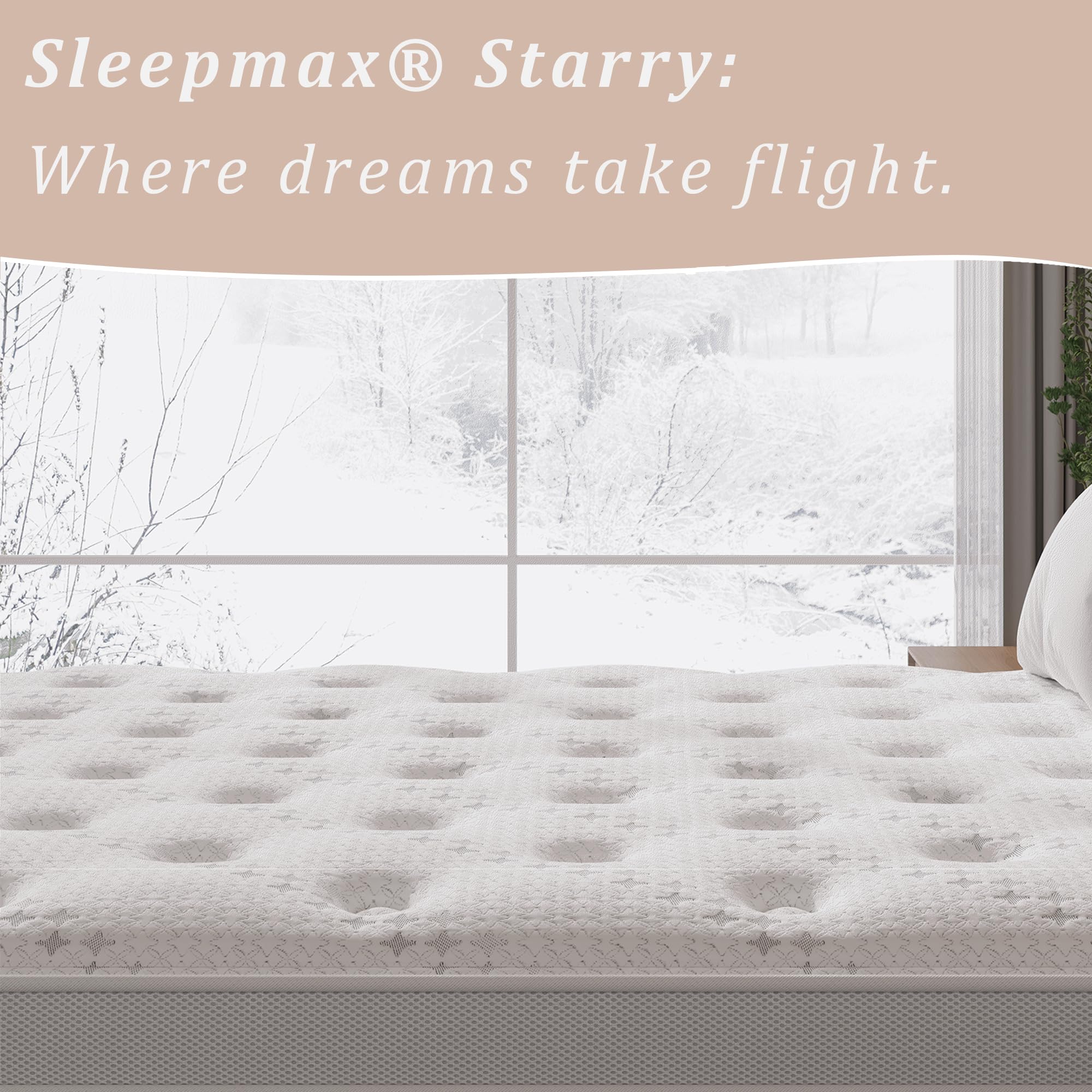

Sleepmax Queen Mattress 14" Hybrid - Hotel Collection with Cooling Gel, Pain Relief & 365-Night Trial
Pros
- Excellent motion isolation for couples and light sleepers
- Medium-firm feel suits back, side, and combination sleepers
- 365-night trial is far longer than most competitors offer
- CertiPUR-US and OEKO-TEX certified materials ensure safety
- Strong 4.3-star rating with over 200 verified customer reviews
Cons
- At 14 inches thick, it may not fit older bed frames or require deep-pocket sheets
- Some customers report off-gassing odor during the first few days after unboxing
- Medium-firm may feel too soft for strict stomach sleepers or those over 230 lbs
The Sleepmax Starry walks the line between supportive and soft better than most hybrids in this price range. The Euro-top layer gives you that hotel mattress plushness when you first lie down, while the pocketed coils underneath keep your spine aligned all night. If you share a bed, the motion isolation is genuinely impressive. One person can get up for water without disturbing the other.
We appreciate that Sleepmax skipped the fiberglass fire barrier that cheaper mattresses rely on. The CertiPUR-US and OEKO-TEX certifications mean you are not breathing in questionable chemicals while you sleep. The reinforced edges are a practical touch too, especially if you sit on the side of your bed to put on shoes or read.
If you want a mattress that feels premium without the luxury price tag and backs it up with a full-year trial, this one delivers.
Styles it works with: Modern Minimalist, Scandinavian, Contemporary, Transitional
Best placed in: Master bedroom with queen or full frame, guest room for visiting couples, studio apartment bedroom area
May not suit: Homes needing twin or twin XL sizes for kids' rooms, platform beds with less than 15 inches clearance underneath, renters with older standard-depth bed frames that cannot accommodate 14-inch mattresses
Buy it if:
- You share your bed and need motion isolation so movements do not disturb your partner
- You want a medium-firm feel that works for back and side sleeping positions
- You value a long trial period to truly test comfort over many months
Consider waiting if:
- You need a king or California king size and want to watch for a sale on larger dimensions
- You are waiting for deep-pocket fitted sheets to arrive before setting up a new mattress
Skip it if:
- You are a strict stomach sleeper or weigh over 230 lbs and need extra-firm support
- Your bed frame cannot accommodate a 14-inch mattress height
Check the latest price and availability on Amazon before it sells out.

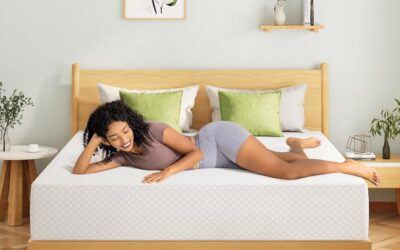
Neo Sleep 12 Inch Queen Hybrid Mattress with Pocket Springs, Motion Isolation & Cooling Foam for All Sleep Positions
Pros
- Motion isolation keeps couples from disturbing each other during sleep
- Cooling features address common overheating complaints with memory foam
- Edge support helps maximize usable sleeping surface
- Certified safe materials provide peace of mind
- Affordable price point for a hybrid mattress with these features
Cons
- No customer reviews yet to validate performance claims
- 72-hour expansion period required before full use
- May be too soft for those who prefer extra-firm support
This Neo Sleep hybrid mattress hits a sweet spot for couples who want comfort without the typical memory foam drawbacks. The pocket springs give you that responsive, supportive feel while the memory foam layers cushion pressure points at your shoulders and hips. You get the best of both worlds without paying luxury mattress prices.
The cooling features are well thought out. Instead of just relying on a gel layer, this mattress uses airflow foam plus the natural breathability of pocket springs to keep heat from building up. The fabric cover adds another layer of temperature regulation. In a real bedroom, that means fewer nights of flipping your pillow to the cool side or kicking off the covers at 3am.
If you want motion isolation and cooling performance without spending over $500 on a queen mattress, this one delivers.
Styles it works with: Modern, Minimalist, Scandinavian, Contemporary
Best placed in: Master bedroom, guest bedroom, dorm room, studio apartment
May not suit: Homes where extra-firm support is required for back issues, rooms with non-standard bed frames that cannot accommodate a 12-inch mattress, sleepers over 250 lbs who may need firmer support
Buy it if:
- You share a bed and need motion isolation so your partner's movements don't wake you
- You sleep hot and want a mattress that stays cool without a heated sleeping surface
- You need a quality hybrid mattress under $200 for a guest room or starter bedroom
- You sleep on your back, stomach, or side and want balanced support for all positions
Consider waiting if:
- You want to see verified customer reviews before purchasing since this is a newer product
- You need immediate use and cannot wait the 72-hour expansion period
Skip it if:
- You require extra-firm support or weigh over 250 lbs and need a more robust construction
- You have a non-standard bed frame or need a mattress height under 12 inches
Check the latest price and availability on Amazon before it sells out.

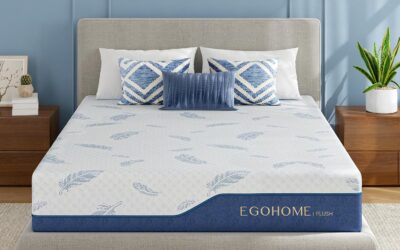
Novilla 12 Inch Queen Gel Memory Foam Mattress - Cooling, CertiPUR-US Certified, Medium Firm Support
Pros
- Enhanced cooling with 30% more NanoGel prevents overheating during sleep
- Three-layer foam construction provides balanced support and pressure relief
- Excellent motion isolation keeps sleep undisturbed
- CertiPUR-US and OEKO-TEX certified for safety and health
- Convenient mattress-in-a-box delivery and setup
Cons
- No customer reviews yet to verify long-term durability and comfort claims
- Requires 72-hour expansion period before first use
- May have initial off-gassing odor common with memory foam mattresses
This Novilla mattress tackles the two biggest sleep complaints: overheating and waking up with aches. The boosted NanoGel technology actually pulls heat away from your body instead of trapping it like traditional memory foam. You get that contouring comfort without feeling like you are sinking into a warm cocoon.
The three-layer design is smartly engineered. High-density base foam keeps your spine aligned, while the gel memory foam layer cradles pressure points at your hips and shoulders. The top comfort layer adds just enough cushioning without sacrificing support. Plus, the motion isolation means you will not feel your partner getting up for a midnight snack.
If you want cool, pressure-free sleep without spending $800 on a luxury mattress, this one delivers.
Styles it works with: Modern Minimalist, Scandinavian, Contemporary, Transitional
Best placed in: Master bedroom, guest room, teen bedroom, studio apartment
May not suit: Households needing an extra-firm mattress for back issues, buyers who prefer traditional innerspring bounce, those needing immediate use (requires 72-hour expansion time)
Buy it if:
- You sleep hot and wake up sweaty with your current mattress
- You need motion isolation because your partner tosses and turns
- You want memory foam comfort with certifications for safe materials
- You are upgrading from an old mattress on a reasonable budget
Consider waiting if:
- You want to see verified customer reviews before purchasing
- You are hoping for a seasonal sale or promotion
Skip it if:
- You need extra-firm support for serious back problems
- You prefer the traditional bounce of innerspring mattresses
- You need to use the mattress immediately (requires 72-hour setup)
Check the latest price and availability on Amazon before it sells out.



Write Your Review
No reviews yet. Be the first to share your experience!