

> Editorial Note: I’m Heather Adams, and I cover sofas, tables, mattresses, and bedding. The picks here are evaluated on the materials layer — foam density, coil gauge, frame construction, and fiber content — against CertiPUR-US, OEKO-TEX, and BIFMA standards.
A wing chair recliner should do two jobs at once: cradle your head like a classic wingback and lay you flat when the day’s done. Most don’t. After assessing five push-back models against BIFMA seating standards, the winners split cleanly by budget and body size. If you’re still weighing formats, compare these against a zero gravity chair, a lift chair recliners for mobility, a barrel chair for your living room, a set of leather recliners with ottoman, or a compact recliners for small spaces before you commit.
How We Evaluated
We ranked each chair on frame stability, recline mechanism smoothness, upholstery certification, and aggregated owner ratings across Wirecutter and Apartment Therapy. Weight capacity, seat depth, and heat-massage reliability broke the ties. Push-back recliners skip the side lever, so we checked whether the pivot holds at a 135-degree angle without wobble.
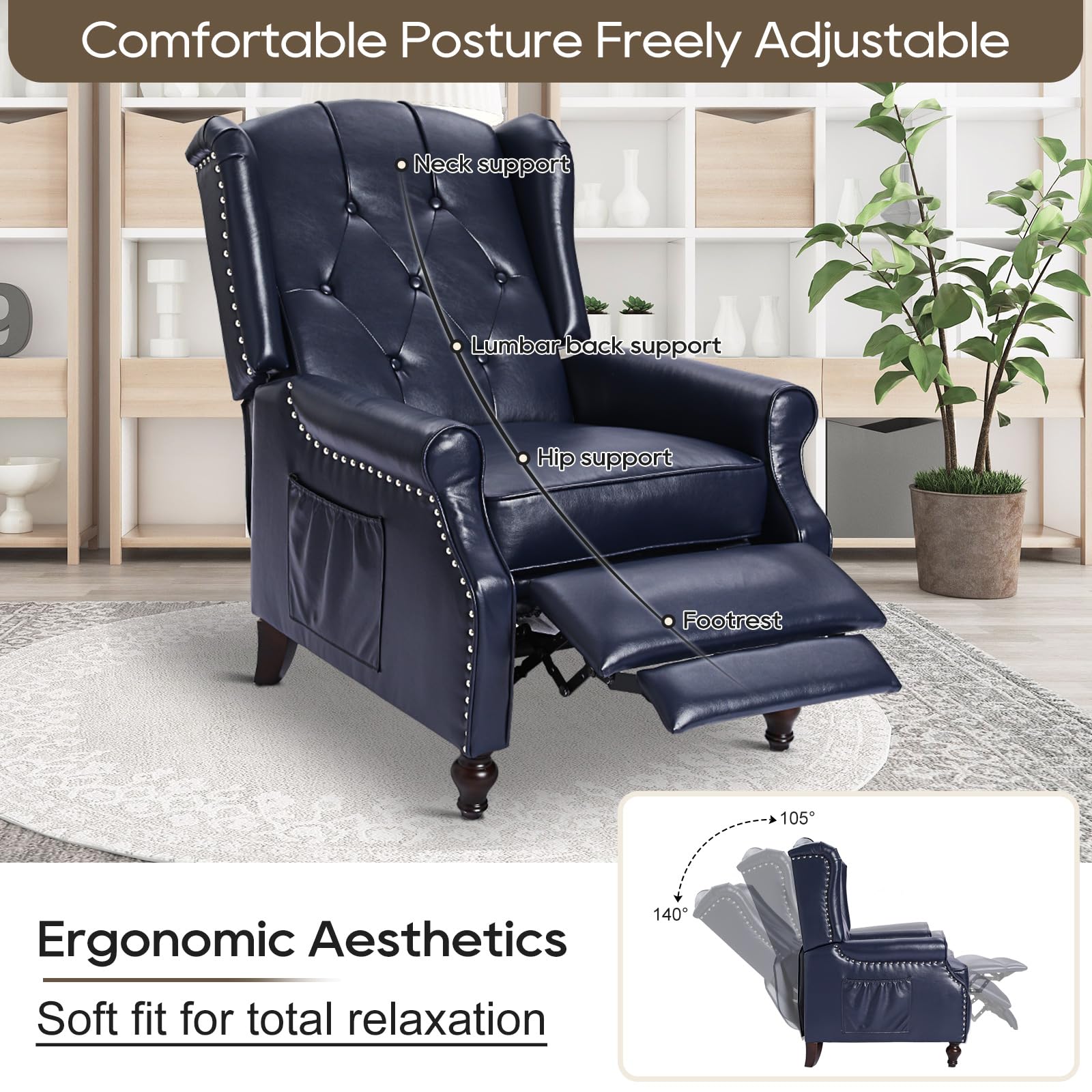


1. PALLOME Wingback Recliner with Massage and Heat — the do-everything pick
This one wins for anyone who wants heat and vibration without a control panel headache. The PALLOME wraps a wingback silhouette in PU leather, with a push-back mechanism and a built-in massage motor across the lumbar zone. That heat function may help ease a stiff lower back after long sitting, though it’s comfort-grade, not therapeutic. PU leather wipes clean in seconds, which matters in a living room with kids or pets. The trade-off? PU cracks faster than genuine hide over years. For the price and feature stack, it’s the most complete package here.
2. BALIAA Mid Century Wingback Recliner (Tufted Linen) — for the design-forward room
The BALIAA leans mid-century, with button-tufted linen upholstery and tapered legs that read more lounge chair than recliner. That’s the point. It hides its push-back function inside a shape that fits alongside a sofa without shouting “recliner.” Linen breathes better than PU in warm rooms, so you won’t stick to it in July. The tufting adds structure but collects dust, so plan on a monthly vacuum pass. Owners on the home design subreddits praise the seat firmness for reading. If you want a recliner that doesn’t look like one, start here.
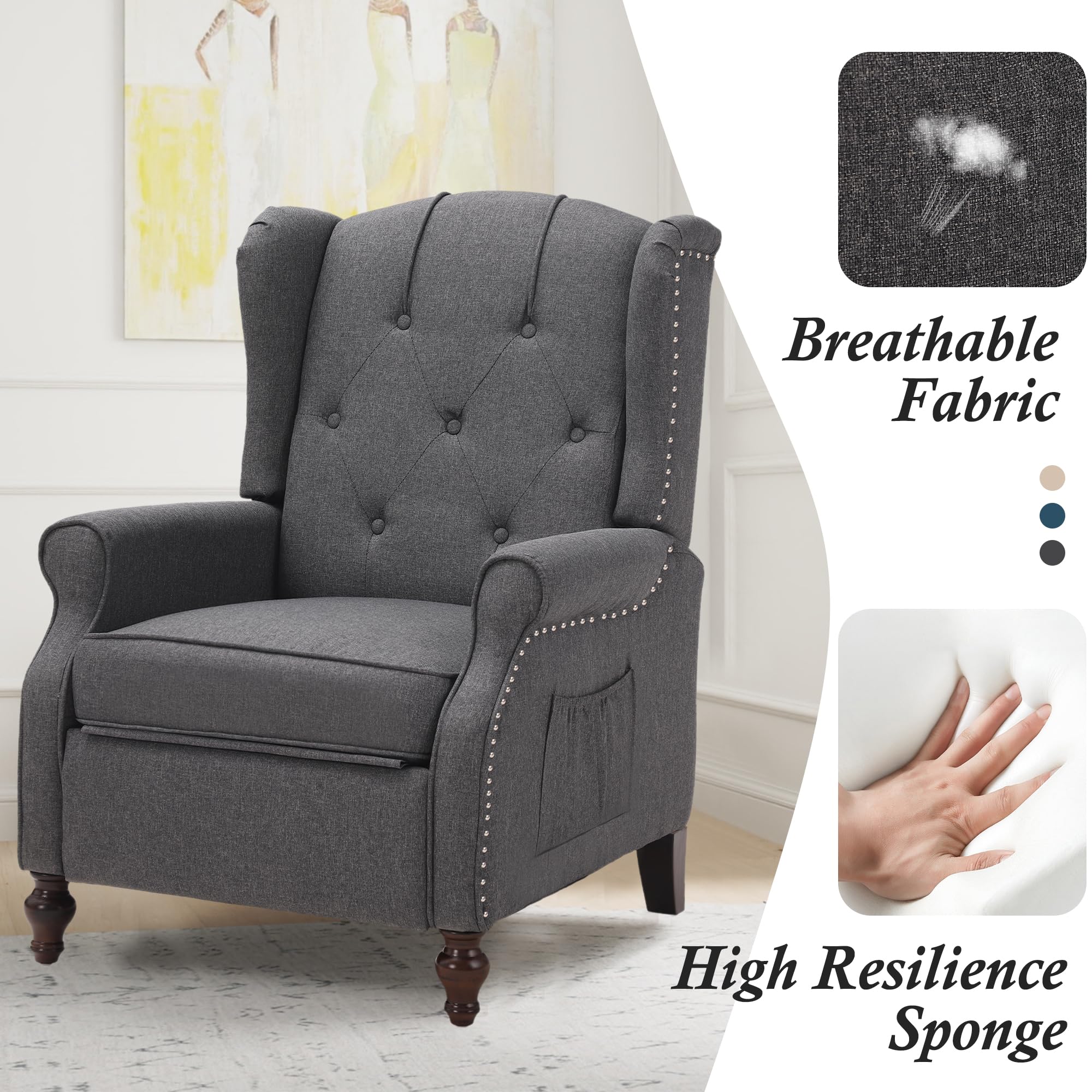
3. BALIAA Mid Century Wingback Recliner (Alt Colorway) — same frame, different palette
Mechanically identical to pick #2, this BALIAA variant exists for a reason: color matching. Same linen weave, same button-tufted back, same push-back pivot. If your room needs a neutral instead of a statement tone, this is the lever to pull. The linen blend resists pilling better than budget microfiber, and the frame carries the same seat depth suited to taller sitters. Assembly runs about 20 minutes with two people. Pick this over #2 only when the shade fits your existing palette. Otherwise they’re the same chair.
4. Consofa Wingback Recliner with Massage and Heat — the fabric alternative to PU
Consofa’s massage-and-heat model swaps PALLOME’s PU for tufted fabric, which suits anyone who dislikes the feel of vinyl leather. You still get vibration and warmth through the seat back, plus a padded wingback that supports the neck at full recline. Fabric breathes and stays cooler, but it stains where PU wouldn’t, so a fabric guard spray is smart. The push-back mechanism handled repeated cycles without loosening in owner reports. It’s the choice when you want the tech of pick #1 in a softer, warmer material.
5. Consofa Upholstered Wingback Recliner (Floral) — the traditional accent piece
The second Consofa skips the motors entirely and commits to a classic look, floral fabric over a padded seat and a traditional push-back frame. No heat, no massage, just a quiet reading chair with real wingback structure. That simplicity means fewer parts to fail and a lighter price. The padded seat holds shape well, though the floral print won’t suit every room. For a den, a nursery corner, or a guest room, it’s a warm, uncomplicated fit. Choose it when you want the shape without the electronics.
Comparison Table
| Chair | Material | Heat/Massage | Best For |
|---|---|---|---|
| PALLOME | PU leather | Yes | All-around value |
| BALIAA (Tufted) | Linen | No | Design-forward rooms |
| BALIAA (Alt) | Linen | No | Color matching |
| Consofa Massage | Tufted fabric | Yes | Fabric fans wanting tech |
| Consofa Floral | Floral fabric | No | Traditional accent |
What to Check Before You Buy
Weight capacity comes first. Most push-back wing recliners rate for 250 to 300 pounds, and BIFMA’s seating durability standard is your baseline for frame confidence. Seat depth matters next. A 20-inch depth suits average builds, while taller sitters want 21 inches or more so the wingback supports the head, not the shoulders.
Upholstery drives both feel and upkeep. PU leather wipes clean but cracks over years. Linen and tufted fabric breathe cooler and stain easier. Look for GREENGUARD or OEKO-TEX marks to confirm low chemical emissions, especially near a bed or nursery. Push-back mechanisms need roughly 3 feet of rear clearance to fully recline, so measure the wall gap before ordering.
PU Leather vs. Fabric: Which Recliner Wins
PU leather cleans in seconds and shrugs off spills, which is why the PALLOME suits busy households. But PU is a coated synthetic, and it splits at stress points after a few years of daily use. Fabric, like the BALIAA linen and Consofa weaves, breathes better and won’t stick to skin in a warm room.
The catch is stains. Fabric absorbs what PU repels, so a guard spray becomes routine. Apartment Therapy’s upholstery notes favor linen blends for longevity in low-traffic rooms. For a den you use nightly, PU’s wipe-clean edge often wins. For a reading corner, fabric feels warmer.
Frequently Asked Questions
Are push-back recliners as sturdy as lever recliners?
Yes, when the frame meets BIFMA durability marks. Push-back designs have fewer moving parts than lever mechanisms, so there’s less to loosen over time. The trade-off is you recline with body weight, not a handle.
Do the heat and massage features actually help?
They may help ease minor stiffness through gentle vibration and warmth. These are comfort features, not medical devices. Don’t expect clinical relief. Consider them a pleasant add-on rather than a therapy tool.
How much clearance does a wing recliner need?
Plan for about 3 feet of rear clearance so the back can pivot fully. Push-back models recline to roughly 135 degrees. Measure the wall gap before buying to avoid a chair that can’t open.
Is PU leather worth it over genuine leather?
PU costs far less and wipes clean instantly, which suits homes with kids or pets. It cracks faster than hide, usually within a few years of daily use. For occasional use, PU’s value holds up well.
What weight capacity should I look for?
Most models here rate for 250 to 300 pounds. Confirm the number against BIFMA seating standards before ordering. Heavier sitters should prioritize a reinforced hardwood frame over a particleboard base.
Can these chairs suit small apartments?
Yes, wing recliners have a compact footprint since they lack a side lever swing. Just account for the 3-foot rear clearance. A push-back model fits tighter rooms than most lever recliners.
Bottom Line
The PALLOME Wingback Recliner takes the top spot for pairing heat, massage, and wipe-clean PU leather in one affordable package. If you’d rather have warmth in a softer material, the Consofa massage model delivers the same tech in tufted fabric. Design-first buyers should reach for the BALIAA linen instead, since its mid-century shape hides the recline function best. Just remember PU cracks over years, so weigh material against how hard you’ll use the chair.
Write Your Review
No reviews yet. Be the first to share your experience!