

> Editorial Note: I’m Liam Wright, an outdoor and garden editor. I grew up in my family’s landscaping business and now cover what actually survives a season of UV, rain, and freeze-thaw cycles. The picks here are evaluated against ASTM weatherability standards and manufacturer durability ratings.
A patio umbrella that tips in a light breeze is not unlucky. It’s underweighted, overexposed, or sitting in a base that doesn’t match the canopy. The same stability math shows up in best patio umbrella, best patio furniture covers, best outdoor furniture for small patio, best outdoor lighting, best deck box for storage, and best patio dining set. Start with weight, then wind, then the pole fit.
Reason 1: The Slow Lean Before It Falls (Base Is Too Light)
A 9-foot market umbrella needs roughly 50 lbs of base weight when it sits through a table and more when it stands alone. A 10- or 11-foot cantilever can need 150 to 250 lbs, especially because the canopy hangs off-center.
If the umbrella slowly leans before it drops, the base lacks counterweight. Add pavers, sand-fill plates, or a heavier dedicated base. ASTM wind-load principles are plain here: the wider and taller the canopy, the more force it creates. A decorative 20-pound base might look fine, but it cannot hold a large canopy in moving air.
Pretty base, wrong job. That’s the usual failure.
Reason 2: The Sudden Flip in a Gust (Canopy Left Open in Wind)
Umbrellas are sails. Even a 15 mph breeze puts noticeable lift under a canopy, and a gust over 25 mph can flip a light setup before you cross the patio.
Close the umbrella whenever you leave the area, and use the tie strap so wind cannot sneak under the ribs. Cantilever umbrellas need this even more because their center of gravity sits outside the base. Consumer Reports has long warned that outdoor gear rated for weather still needs basic wind management, and umbrellas are the clearest example.
If you wouldn’t leave a sailboat sail open, don’t leave the umbrella open.
Reason 3: The Wobble at the Pole Collar (Loose Fit)
Grab the pole near the base and wiggle it. If the pole moves inside the collar, the base and umbrella are not working as one unit. Every gust multiplies that slack until the whole setup rocks.
Tighten the knob fully, then check whether the collar fits the pole diameter. Most market umbrellas use 1.5-inch poles, but not all bases clamp them equally. Use a sleeve adapter if the fit is loose. A table hole helps only if the table is heavy and the umbrella pole fits snugly through it.
No wobble at the collar. None.
Reason 4: The Tip Toward One Side of the Patio (Uneven Surface)
A base sitting on sloped pavers or a raised deck board starts the umbrella off balance. Add wind and the canopy follows the lean.
Set a small level on the base. If it’s off by more than a few degrees, shim the low side with a rubber pad or move the umbrella to flatter ground. Check pavers after winter freeze-thaw cycles; one lifted corner can be enough to destabilize the whole setup.
Level base first, umbrella second.
What Actually Helps Before You Replace Everything
The right fix depends on which part fails: base weight, canopy control, or pole fit. Choose a complete umbrella-with-base setup if your current pairing is mismatched, a heavier cantilever model if shade needs to sit off to the side, or a standard offset umbrella when budget matters and you can close it in wind. These three options all solve different stability problems, so match the product to the failure you see.

LAUSAINT HOME 11 FT Cantilever Patio Umbrella with Base | 360° Rotation, UV Protection, Heavy-Duty Offset Design
Pros
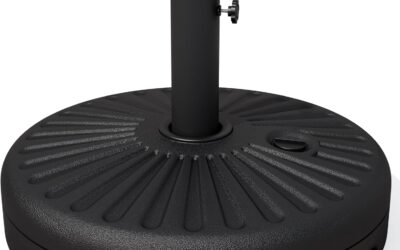
- Base is included in the box and rated at 308 lbs when fully filled, a rare value at this price point
- 360-degree foot-pedal rotation is a genuine convenience upgrade over fixed-post cantilever designs
- Premium polyester canopy offers heat insulation, UV protection, and fade resistance for multi-season use
- Crank-lift mechanism opens and closes quickly with minimal effort
Cons
- The base must be filled with sand on-site, which adds setup time and requires a sand source not included
- At 11 feet, the canopy footprint is large and may overwhelm smaller patios or compact balconies
- Product images on Amazon may show the older plastic base, which can create confusion at the time of purchase
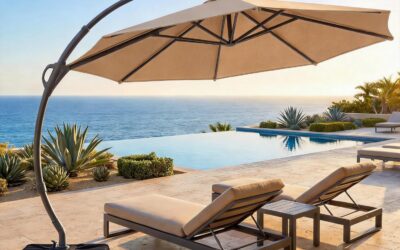
Finding a cantilever umbrella that actually comes with a functional, stable base under $200 is genuinely rare. The LAUSAINT HOME umbrella stands out because it bundles a 308-lb sand-filled weighted base into the package, which means no secondary order, no compatibility guessing, and no wobbly setup. The aluminum pole and polyester canopy feel built for real outdoor use, not just occasional weekend shade.
The 360-degree rotation controlled by a simple foot pedal is the kind of feature that sounds minor until you actually use it. Instead of dragging furniture or wrestling with the pole, you just tap and pivot the shade exactly where you need it. Combined with the tilt adjustment and top venting, this umbrella handles shifting sun angles and afternoon breezes without drama.
The neutral beige canopy pairs cleanly with most outdoor furniture without competing for attention, and the velcro strap detail for hanging string lights is a thoughtful touch that extends the umbrella's usefulness well into the evening. If you want full-coverage patio shade with a stable base included and genuine rotation flexibility without paying $300-plus, this one delivers.
Styles it works with: Coastal, Modern Farmhouse, Mediterranean, Transitional Outdoor
Best placed in: Backyard dining area, poolside lounging zone, large deck or patio with open center space
May not suit: Small apartment balconies where an 11-foot canopy would overhang into neighboring space; highly formal or contemporary outdoor setups where a sleek in-ground umbrella post is preferred over a freestanding base unit
Buy it if:
- You want a complete shade setup including a heavy base and do not want to source components separately
- You need to redirect shade throughout the day and want the convenience of 360-degree foot-pedal rotation
- You are furnishing a pool deck, backyard dining area, or large patio and need coverage for a full seating group
Consider waiting if:
- You need a specific color other than beige, as availability in other colorways may vary by season
Skip it if:
- Your outdoor space is under 10 feet wide, as the 11-foot canopy and offset base require meaningful clearance to function safely
- You already own a compatible weighted base and only need a replacement canopy or pole
Check the latest price and availability on Amazon before it sells out.

WikiWiki 10ft Offset Cantilever Patio Umbrella with Infinite Tilt, 98% UV Block, Fade-Resistant Recycled Fabric Canopy, Beige
Pros
- Wide 10.3-foot canopy covers a full patio seating area with room to spare
- Recycled polyester fabric with PU coating resists both UV fading and light rain up to 800 Pa
- Infinite tilt and smooth crank system make angle adjustments quick and tool-free
- Upgraded nylon-fiberglass composite hardware at high-stress joints improves longevity over standard plastic
- Velcro canopy straps add wind resistance without requiring extra accessories
Cons
- Does not include a weighted base, which is a required purchase sold separately and adds to the total cost
- Canopy must be closed during strong winds, which limits convenience during unpredictable weather
- Iron ribs with anti-oxidant coating are durable but heavier than aluminum alternatives, making repositioning more effort
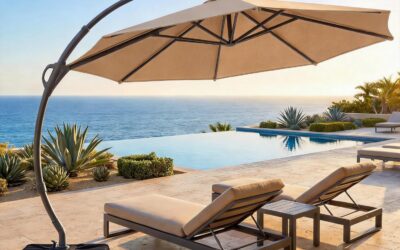
What stands out about the WikiWiki 10ft cantilever umbrella is how much thought went into the details that actually affect daily use. The infinite tilt mechanism is smooth and genuinely useful rather than a gimmick, letting you dial in shade coverage as the sun moves across the afternoon without touching the base. The beige colorway is neutral enough to complement almost any outdoor furniture palette, from rattan and teak to powder-coated metal.
The recycled fabric canopy is a quiet highlight worth calling out. GRS certification means the polyester yarn is traceable and responsibly sourced, and the AATCC Grade 5 colorfastness rating is the highest available, so the fabric holds its warm beige tone rather than yellowing or fading after a summer of direct exposure. For a sub-$70 umbrella, that material spec is genuinely competitive.
The center hub light socket is a small but smart addition that transforms the umbrella from a daytime shade piece into an evening focal point once you drop in a compatible bulb or solar insert. If you want wide cantilever shade with fade-resistant fabric and flexibility for evening use without crossing into the $150 bracket, this one delivers.
Styles it works with: Coastal Casual, Modern Farmhouse, Mediterranean Outdoor, Transitional
Best placed in: Freestanding patio seating area with a weighted base, poolside lounge zone, backyard deck dining space, or RV campsite setup with a stable anchor point
May not suit: Compact balconies or terraces under 8 feet wide where a 10-foot canopy would overhang railings or walls; households that leave outdoor furniture completely unattended through storm seasons, since the canopy requires manual closing in high winds
Buy it if:
- You have an open patio or deck and need a large cantilever umbrella that can cover a 4-6 person seating area without a center pole getting in the way
- You want a fade-resistant canopy in a neutral beige that will still look fresh after two or three seasons of regular sun exposure
- You are building out an outdoor space on a moderate budget and already own or plan to purchase a compatible weighted base separately
Consider waiting if:
- You need a color other than beige, black, or navy blue, as the current lineup does not extend beyond those options
Skip it if:
- You want an all-in-one purchase with base included, since this umbrella requires a separately purchased weighted base to function safely
- You live in a region with frequent high winds and need an umbrella rated to stay open in those conditions without manual intervention
Check the latest price and availability on Amazon before it sells out.

Best Choice Products 10ft Solar LED Offset Cantilever Patio Umbrella with 360 Rotation, 8 Ribs, Wind Vent - Tan
Pros
- 360-degree rotation via foot pedal makes repositioning effortless without lifting or tilting
- Solar LED lights add functional ambiance with no wiring or battery swaps required
- Water-, UV-, and fade-resistant fabric justifies long-term outdoor use
- Wind vent improves stability and airflow in moderate breezes
- Strong 4.1-star rating across a very large review base signals broad buyer satisfaction
Cons
- Requires a separately purchased weighted base of 100 lbs or more, adding to the total cost and setup effort
- LED brightness powered by solar may be limited on cloudy days or in partially shaded yards
- The tan color is the only option shown, which may not suit all outdoor decor schemes
This umbrella does something most budget patio shades do not: it lets you chase the sun. The 360-degree foot-pedal rotation means you are not rearranging furniture every few hours just to stay comfortable. It is a small mechanical detail that makes a real difference on long summer afternoons when the light shifts across your yard.
The solar LED lights are genuinely useful rather than just a marketing checkmark. Six to seven hours of ambient glow is enough to cover dinner, drinks, and a relaxed evening outside without a single cord in sight. The warm overhead lighting also gives an outdoor dining area a finished, intentional look that guests notice.
At 10 feet across with UV-resistant fabric and a rust-resistant pole, this umbrella is built to stay outside rather than live in your garage. If you want full-day shade coverage and evening ambiance without paying for a premium designer brand, this one delivers.
Styles it works with: Coastal, Transitional, Casual Contemporary, Farmhouse Outdoor
Best placed in: Over a patio dining set, beside a pool lounger area, or anchoring a backyard entertaining space
May not suit: Small balconies or compact patios where a 10-foot canopy and cross base would overwhelm the space; renters or apartment dwellers without a ground-level area to secure a 100-lb weighted base
Buy it if:
- You host regular outdoor gatherings and need shade that adjusts as the sun moves without manual effort
- You want to extend outdoor evenings with ambient lighting and do not want to deal with outdoor electrical outlets or extension cords
- You are outfitting a mid-size patio or backyard on a budget and need a durable, full-size umbrella under $150
Consider waiting if:
- You need a color beyond tan to match existing outdoor furniture or cushions
Skip it if:
- You do not have space or budget for a separate 100-lb weighted base, since this umbrella cannot be used safely without one
- Your only outdoor space is a small balcony or rooftop where a 10-foot offset canopy is physically too large to fit
Check the latest price and availability on Amazon before it sells out.
A heavier umbrella still needs closure in wind. Weight helps, but it doesn’t cancel physics.
How to Match Base Weight to Umbrella Size
Base weight is where most people guess wrong, so use numbers instead. As a working rule, a table umbrella needs about 10 lbs of base weight per foot of canopy diameter, and a freestanding umbrella needs more because the table isn’t sharing the load. A 9-foot table umbrella lands near 50 lbs; the same umbrella standing alone wants 75 lbs or more.
Cantilever and offset umbrellas change the math entirely. Because the canopy hangs to one side, the base has to counter a lever, not just hold a pole. That’s why an 11-foot cantilever often needs 150 to 250 lbs of ballast, usually a cross base loaded with sand plates or pavers. Under-loading a cantilever is the single most common tipping cause, and it looks fine until the first real gust.
Distribute weight evenly on the base. A cantilever with all its ballast on one plate still tips toward the empty side.
A 5-Minute Stability Check Before Storm Season
Walk through this once and you’ll catch most failures early. Push the open canopy gently from the side; if the base lifts or slides, it’s underweighted. Grab the pole at the collar and wiggle; movement there means a loose clamp or wrong pole diameter. Set a small level on the base to confirm it isn’t starting on a tilt.
Then look up at the ribs and the tilt mechanism. A bent rib or a stuck tilt joint changes how wind loads the canopy and can start a lean that ends in a fall. Consumer Reports notes that weather-rated outdoor gear still fails when the small hardware isn’t maintained, and umbrellas prove it every summer.
Finally, plan the close. Keep the tie strap within reach and the crank working smoothly, so closing takes seconds when the wind picks up. The best base in the world won’t save an open canopy in a 30 mph gust.
Table Umbrella vs. Cantilever: Different Stability Problems
The two common umbrella styles fail for different reasons, so the fix depends on which you own. A table umbrella runs its pole through a table and into a base, which spreads the load across three points and stays fairly stable once the base weight matches the canopy. Its usual failure is a base that’s simply too light, or a table that’s too flimsy to help.
A cantilever or offset umbrella hangs the canopy to one side of a freestanding base, which looks elegant and shades a seating area without a pole in the middle. The trade-off is stability. All the wind force acts on a lever arm, so the base must be heavy enough to counter both the weight and the sideways pull. This is why cantilevers need cross bases loaded with 150 pounds or more of sand plates or pavers.
If your patio is windy, a table umbrella is the more forgiving choice. If you want the open, pole-free look of a cantilever, budget for serious ballast and commit to closing it whenever you leave. Neither design is wrong; they just demand different habits, and matching the umbrella to how exposed your space is prevents most tip-overs before they start.
Frequently Asked Questions
How heavy should a patio umbrella base be?
It depends on umbrella size. A 9-foot table umbrella usually needs about 50 pounds; a freestanding 9-foot umbrella needs 75 pounds or more; an 11-foot cantilever often needs 150 to 250 pounds.
Can I use sandbags to stop tipping?
Yes. Sandbags or pavers add useful ballast, especially on cantilever bases with fillable plates. Place the weight evenly so the base stays level.
Should I leave my umbrella open all day?
No. Close it when you leave the patio, during gusty weather, or anytime storms are forecast. Open umbrellas fail because they catch wind.
Why does my umbrella wobble even with a heavy base?
The pole collar is probably loose or the pole diameter doesn’t match the base. Use an adapter sleeve and tighten the clamp until the pole has no side movement.
Is a cantilever umbrella more likely to tip?
Yes, if underweighted. Cantilever designs hang the canopy away from the base, so they need much more counterweight than center-pole umbrellas.
Bottom Line
Most patio umbrellas tip because the base is too light for the canopy, especially on freestanding and cantilever designs. Start by matching base weight to umbrella size, then eliminate pole wobble and close the canopy in wind. If your patio is sloped or exposed to gusts above 25 mph, even a good umbrella needs extra ballast and stricter closing habits. Physics wins every time.


Write Your Review
No reviews yet. Be the first to share your experience!