

> Editorial Note: I’m Hannah Lin, an Interior Living Researcher who’s spent 9+ years analyzing the home furniture market. This guide draws on BIFMA, GREENGUARD, and FSC certifications, plus owner reviews aggregated from Wirecutter, Apartment Therapy, and the major home design subreddits.
The middle seat sinks first because that’s where people land, lean, nap, and stand up from the same 24-inch zone every day. Before you blame the whole sofa, check the frame, cushion foam, decking, and support board path; the fix may be cheaper than replacing an 84-inch couch. For related living-room decisions, see best sofas for small apartments, best couch cushion support, how to clean couch cushions, best living room rugs, and best coffee tables for small spaces.
Reason 1: The Seat That Drops Like a Hammock
A couch that sags in the middle often has stretched decking under the cushions. Decking is the fabric, webbing, or spring layer that sits between the frame and the cushion. Once it loosens, the cushion still looks normal from above, but your weight pushes it into a low pocket. Classic hammock feel.
The quick check is simple. Pull the center cushion off and press down with your palm across a 12-inch path from front rail to back rail. If the surface dips more than about 1 inch while the side seats stay firmer, the support layer is doing less work than it should. BIFMA seating standards focus on load and durability because repeated compression changes how furniture behaves over time.
This happens faster on sofas with thin plywood rails, stapled webbing, or low-tension sinuous springs. A $600 sofa can show it in 2 years if the center seat gets daily use. A better frame may last 8 to 10 years before the same dip appears.
Don’t assume the cushion is ruined. If the cushion springs back on the floor but sinks on the sofa, the couch needs under-cushion support, not new foam. That’s the cheaper fix.
Reason 2: The Cushion That Looks Puffy but Feels Empty
Foam loses support before it loses shape. That’s why a couch cushion can look full at 10 a.m. and still swallow you by dinner. The outer wrap adds loft, while the inner foam core carries the real weight.
Most residential cushions use polyurethane foam in the 1.5 to 2.5 lb density range. Lower-density foam softens quickly under a favorite seat. Wirecutter’s sofa coverage often flags foam density because it predicts how a sofa ages better than showroom softness does.
Try the floor check. Put the cushion on a hard floor, sit in the middle for 30 seconds, then stand. If the cushion stays compressed or rebounds slowly, the foam core has softened. If it rebounds but the sofa still dips, the problem sits below the cushion.
Cushion rotation helps only if the damage is early. Rotate left, center, and right cushions every 2 weeks for a month. If the middle still collapses, rotation won’t rebuild foam. It only spreads wear.
Reason 3: The Crack You Feel Near the Front Edge
A sag that starts near the front rail points to a frame or rail issue. You may feel a hard line under your thighs, then a drop behind it. That front edge carries force every time someone sits down quickly.
Lift the cushions and look for a cracked rail, loose corner block, or staples pulling out of the support fabric. A minor staple pull can be reinforced. A cracked hardwood rail is different. That repair needs clamps, glue, screws, and enough access to hold the joint square.
FSC-certified hardwood frames and reinforced corner blocks exist for a reason. They resist twisting better than thin composite rails. But many budget couches hide the frame under black dust-cover fabric, so you won’t know until the sag appears.
If the rail moves when you press it with both hands, stop using that seat until it’s repaired. Foam and support boards won’t fix a broken rail. They just spread load over a weak structure.
Reason 4: The Dip That Gets Worse After Guests Leave
A middle sag that appears after company usually comes from load concentration. Three adults on a 78-inch sofa can place 450 to 650 lb across the center span. If the sofa has only side-to-side webbing and no center support, the middle takes the hit.
Look at the seating pattern. If everyone avoids the arms and sits toward the center, the sofa wears like a mattress with no center support. Apartment Therapy’s small-space sofa advice often points readers toward scale, but support matters just as much as footprint.
The fix is load spreading. A rigid support board under the cushions creates a flatter plane, so the center cushion doesn’t fall into the weakest area. It won’t make old foam new, but it can stop the sinking feeling if the frame is still square.
Measure before buying. Most standard sofas need a board around 21 to 24 inches deep and 66 to 72 inches wide. Deep-seat couches may need a 0.5-inch-thick board with more front-to-back coverage.
Fix 5: The Board That Makes the Seat Feel Level Again
Under-cushion support boards work best when the frame is intact and the cushion still has some rebound. They sit under the cushion and above the sagging deck. Simple idea. Big difference.
The board should cover the low span without blocking cushion seams or pushing the front edge too high. If your sofa is 72 inches wide inside the arms, a 70- to 72-inch support is usually the right range. If it’s a loveseat, cut down or choose a narrower insert.
These three options clear a 4.4 owner rating and solve the same core problem: the cushion needs a firmer plane under it. Start with Meliusly if you want the highest-rated 24×72 support board; choose LAVEVE if your sofa depth is closer to 21.5 inches; use BENSHOMEFamily if your couch is a deeper model and needs a 0.5-inch solid wood insert.

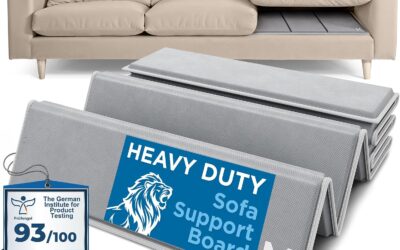
Meliusly Heavy Duty Couch Cushion Support Board 24x72 - Engineered Wood Sofa Saver for Sagging Seats
Pros
- Heavy duty 8mm engineered wood won't bow, bend, or compress over time
- Over 4,550 customer reviews with 4.6-star rating confirm real-world effectiveness
- Hinged slat design lays completely flat and invisible under cushions
- Rounded corners and industrial-grade fabric protect furniture from snags
- Backed by responsive small business support team
Cons
- Only works with sofas that have removable seat cushions, not attached cushions
- Requires accurate measurement of sofa frame interior before ordering to ensure proper fit
- At $44.99, it's a significant upfront cost compared to DIY cardboard solutions, though far more durable
This is one of those solutions that makes you wonder why you suffered through a sagging couch for so long. The Meliusly support board takes about 30 seconds to install and immediately transforms a sunken, uncomfortable sofa back into something you actually want to sit on. It's engineered wood wrapped in grippy fabric, so it stays put and won't damage your upholstery, and the hinged design means it conforms to your sofa frame without awkward gaps or pressure points.
What really sets this apart is the durability. Foam inserts compress within months, and cardboard alternatives bow under weight. This stays flat and firm through daily use, movie marathons, and kids jumping on the cushions. It's also completely invisible once installed, so your living room looks exactly the same, just with seating that actually supports you.
If you want to extend the life of your current sofa without spending thousands on a replacement, this one delivers.
Styles it works with: Modern Farmhouse, Transitional, Contemporary, Scandinavian, Boho, Traditional
Best placed in: Living room sofas and loveseats with removable cushions, family room sectionals, guest room seating, basement rec room couches
May not suit: Sofas with permanently attached or sewn-in seat cushions, futons or sleeper sofas with one-piece mattress pads, small apartment dwellers who need their couch to double as extra sleeping space and prefer a softer surface
Buy it if:
- Your couch cushions sink when you sit down and you feel like you're falling into a hole
- You have a quality sofa frame but the cushions have lost support and you're not ready to replace the entire piece
- You want firmer seating on a newer couch that feels too soft or lacks support
- You've tried stuffing towels or cardboard under cushions and need a permanent, professional-grade solution
Consider waiting if:
- You're unsure about your sofa's interior frame dimensions and want to measure carefully before ordering
- You're hoping for a sale or bundle discount on multiple sizes for a sectional
Skip it if:
- Your sofa has attached, non-removable seat cushions or a one-piece bench cushion
- You prefer a very soft, plush seating feel and don't mind the sink-in sensation
- Your couch frame itself is broken or damaged, which requires structural repair rather than cushion support
Check the latest price and availability on Amazon before it sells out.

LAVEVE Heavy Duty Couch Cushion Support Board 21.5x70 Solid Wood Insert for Sagging Sofa Repair with Anti-Slip Cover
Pros
- Multilayer solid wood construction provides firm, long-lasting support
- 600D Oxford fabric with silicone dots prevents sliding during use
- Available in 19 sizes to fit nearly any sofa configuration
- Tool-free installation takes less than a minute
- Over 5,500 verified reviews with 4.5-star rating show consistent performance
Cons
- Adds noticeable firmness, which may feel too stiff if you prefer plush seating
- Requires exact size match, and measuring your sofa frame depth is critical before ordering
- Does not fix torn upholstery or damaged cushion foam, only structural sagging
This support board solves one of the most frustrating furniture problems: a couch that looks fine but feels like sitting on a hammock. Instead of spending hundreds on a new sofa or professional repairs, you slide this solid wood insert under your cushions and get firm, supportive seating back in under a minute. The multilayer construction handles up to 400 lbs per board, so even your heaviest guests won't bottom out.
What sets this apart is the anti-slip Oxford fabric cover with silicone dots. Cheaper boards shift around or damage your sofa frame, but this one grips both the frame and the cushion bottoms to stay put through daily use. The rounded corners are a thoughtful touch for families with kids or pets who climb on furniture. With 19 size options, you can mix and match panels to fit sectionals, loveseats, or deep sofas perfectly.
If you want to extend your sofa's life by years without the stiffness of plywood boards or the hassle of professional upholstery work, this one delivers.
Styles it works with: Modern Farmhouse, Transitional, Contemporary, Minimalist (works invisibly under existing cushions, so it adapts to any decor)
Best placed in: Living room sofas with sagging center seats, family room sectionals with worn springs, home office loveseats that see daily use
May not suit: Sofas with built-in recliners or adjustable bases, ultra-plush cloud couches where firmness would feel out of character, rental furniture you plan to replace soon anyway
Buy it if:
- Your sofa cushions sag in the middle but the upholstery and frame are still in good condition
- You want firmer seating without the expense of reupholstering or replacing the entire couch
- You need a solution that installs in seconds and works immediately without tools or assembly
- You have kids, pets, or frequent guests who put heavy wear on your furniture
Consider waiting if:
- You are unsure of your exact sofa frame dimensions and need time to measure accurately first
- A holiday sale might bring the price down in the next few weeks
Skip it if:
- Your sofa cushions are torn or the foam is crumbling (this fixes structure, not upholstery or foam)
- You prefer very soft, sink-in seating and added firmness would ruin the comfort you love
- Your sofa has an unusual frame shape that does not match any of the 19 available sizes
Check the latest price and availability on Amazon before it sells out.

BEN'SHOME Couch Cushion Support Board for Sagging Sofas | 0.5" Solid Wood | 68-81" x 30" Deep | 400 LBS
Pros
- Thick solid wood build is noticeably sturdier than MDF or thin plywood alternatives
- Installs in about 60 seconds with zero tools and leaves no damage to your sofa frame
- Available in a wide range of sizes including options for sectionals, recliners, and deep loveseats
- Anti-slip Oxford fabric on both sides prevents sliding across the full seating area
- Lifetime replacement guarantee removes all purchase risk
Cons
- At $74.88 it costs more than basic foam or plywood alternatives, though the build quality justifies the gap
- Buyers must measure sofa width and depth carefully before ordering since the fit depends on precise dimensions
- May feel firmer than expected for shoppers who prefer a softer, more cushioned sit
There is a specific kind of frustration that comes from sinking into a couch that used to feel great. Cushions compress, frames sag, and suddenly your living room centerpiece feels like a pit. BEN'SHOME built this support board to solve exactly that problem, and what stands out is that they used real solid wood instead of the foam inserts or flimsy plywood panels you typically find at this price point. The difference is immediately noticeable the first time you sit down.
The board slides under your existing cushions in about a minute, grips both the frame and the cushions with its anti-slip fabric, and then disappears completely from view. No visible hardware, no awkward bulk, no disruption to how your sofa looks in the room. It works especially well on oversized and super-deep sofas in the 68-to-81-inch range, which are notoriously hard to find aftermarket support for.
What really builds confidence here is the combination of over 9,000 reviews at a 4.4-star average and a lifetime replacement guarantee from a small family business that clearly stands behind the product. If you want firm, lasting couch support without tearing apart your living room setup or spending hundreds on a new sofa, this one delivers.
Styles it works with: Modern Farmhouse, Transitional, Classic Traditional, Casual Contemporary
Best placed in: Main living room sofa, family room sectional, basement or media room couch
May not suit: Sofas shorter than 68 inches or shallower than the available depth options since fit depends on precise measurements; households looking for a decorative or visible upgrade rather than a hidden structural fix
Buy it if:
- Your long or deep sofa has developed a sag or sinking spot and you want a fast, tool-free fix that lasts
- You own an oversized sectional or super-deep couch that standard 19-inch support inserts do not reach across
- You want to extend the life of a sofa you love rather than spend $800 or more on a replacement
Consider waiting if:
- You have not yet measured your sofa base width and depth since ordering the wrong size means a return trip
Skip it if:
- Your sofa measures outside the available size ranges since this board will not span the full seat correctly
- You prefer a very soft or plush sitting surface since 0.5-inch solid wood adds noticeable firmness beneath your cushions
Check the latest price and availability on Amazon before it sells out.
What Not to Fix First
Don’t stuff towels under the cushion and call it repaired. Towels compress, bunch, and create pressure ridges. After 1 week, the seat usually feels lumpy instead of level.
Don’t buy new cushion foam until you’ve checked the deck. Replacement foam can cost $80 to $200 per cushion, and it won’t solve a support layer that drops under load. Do the floor check first.
Don’t flip a one-sided cushion if the zipper, seam, or crown tells you it wasn’t made for that. Some cushions have a shaped top layer. Flip it and you’ll feel the seam line every time you sit.
Frequently Asked Questions
Can a sagging couch be fixed without replacing it?
Yes. If the frame is square and the cushion still rebounds on the floor, an under-cushion support board can make the seat feel level again in minutes. If the rail is cracked or the foam stays flat after you stand, the repair needs more than a board.
How do I know if the couch frame is broken?
Check for movement, cracking sounds, or a rail that flexes when you press it with both hands. A frame problem usually feels sharp or uneven, not just soft. If one corner drops 1 inch lower than the other side, treat it as a structure issue.
Do couch support boards damage cushions?
No, not when sized correctly. A board that’s too short can create a ridge under the cushion, and a board that’s too thick can lift the seat awkwardly. Keep the board flat, centered, and close to the sofa’s inner width.
Is plywood a good DIY couch support?
Yes, if it’s sanded smooth and cut to the right depth. Use 0.375- to 0.5-inch plywood, round the corners, and cover rough edges so they don’t snag fabric. Finished boards are easier if you don’t have a saw.
How long should a sofa last before sagging?
It depends. A budget sofa with light foam may sag in 2 to 4 years under daily use. A hardwood-frame sofa with higher-density foam can stay supportive for 8 to 10 years. The middle seat always ages before the others.
Bottom Line
Most middle couch sag comes from stretched decking, tired foam, or load concentrated across the center seat. The Meliusly support board is the one most people should try first because it covers a standard 24×72 span and has the strongest rating here. If your sofa is shallower, choose LAVEVE instead. If the front rail moves or cracks, skip the board and repair the frame before anyone keeps sitting there.








Write Your Review
No reviews yet. Be the first to share your experience!