

> Editorial Note: I’m Hannah Lin, an Interior Living Researcher who’s spent 9+ years analyzing the home furniture market. This guide draws on BIFMA, GREENGUARD, and FSC certifications, plus owner reviews aggregated from Wirecutter, Apartment Therapy, and the major home design subreddits.
A squeaky accent chair usually isn’t dramatic. It’s a loose bolt, a dry wood joint, a rubbing spring, or a leg that doesn’t sit flat. The trick is matching the sound to the part before you start tightening everything at once. For related living room seating help, see best small accent chair, best accent chair for bedroom, best reading chair, best living room chair, best loveseat for small apartment, and how to choose a sofa fabric.
Reason 1: The Click When You Lean Back
A click or short squeak when you lean into the back usually points to loose fasteners. Accent chairs with bolt-on legs, arched arms, or a separate back panel depend on small connection points. One loose screw lets two surfaces move against each other, and movement makes noise.
Start with the underside. Flip the chair gently onto a rug and check every visible bolt, washer, and bracket. Use the right tool size so you don’t strip the head. Tighten in small turns rather than cranking down hard, especially on particleboard or MDF mounting blocks.
BIFMA seating durability protocols focus on repeated load and backrest cycling because chairs fail through motion, not one big event. Your reading chair may not meet contract-grade standards, but the physics is the same. A 180 lb person leaning back once isn’t the issue. Doing it 2,000 times loosens hardware. Classic little click.
Add washers if the bolt heads sit directly against wood or metal brackets. A thin washer spreads pressure over a wider area and stops the bolt head from digging into the mounting plate. If a bolt spins without tightening, the insert may be stripped. At that point, don’t force it; a furniture repair screw or threaded insert is cleaner than splitting the frame block.
Reason 2: The Dry Creak in the Wooden Arms
A long, dry creak often comes from wood joints moving. Solid wood expands and contracts as indoor humidity shifts. Below 30% relative humidity, wood shrinks enough to open tiny gaps at glued joints. Above 60%, it swells and presses against neighboring parts. Both can make an old chair complain.
Check the arms, back posts, and leg joints. Press each part gently while the chair is on the floor. If you can reproduce the sound by pushing on one arm, you’ve found the area. A tiny amount of wood glue in an opened joint may stop the movement, but only if the joint still closes cleanly.
Don’t soak the joint with oil. Oil can stain upholstery and weaken some adhesives. For exposed wood-to-wood contact, a small dab of paste wax on the rubbing surface is safer. FSC certification tells you the wood source was responsible, not that the joinery is immune to seasonal movement. Wood moves. Glue gets old.
Reason 3: The High-Pitched Chirp Under the Seat
A high-pitched chirp from under the cushion often points to a metal spring or bracket. Many accent chairs use sinuous springs, webbing clips, or metal support brackets beneath the seat deck. When metal rubs against metal or wood, it squeaks sharply.
Look under the chair with a flashlight. If the bottom has a dust cover, press around the seat while listening before you remove anything. A loose spring clip often sits slightly lower than the others or moves when you press on the cushion. A little tightening may solve it, but a popped clip sometimes needs replacement.
Apartment Therapy often recommends starting with reversible fixes before opening upholstery, and that’s smart here. Tighten visible brackets first. Add a thin felt washer where metal touches wood if the hardware allows it. If the spring has torn through the frame rail, stop. That’s no longer a squeak; it’s a support failure.
Reason 4: The Scrape That Happens on One Side Only
A one-sided scraping squeak usually means the chair isn’t sitting square. One leg may be shorter, one floorboard may be uneven, or one glide may be missing. That tiny height difference makes the frame twist when you sit, and twisting turns quiet joints into noisy ones.
Place the chair on a hard floor and press each corner. If one leg lifts even 1/8 inch, the chair rocks under load. Check felt pads, plastic glides, and screw-in levelers. A missing glide changes both height and friction, so the leg drags instead of sliding.
This is the fast fix. Add a new felt pad, replace a cracked glide, or use a thin furniture shim under the short leg. Don’t keep using a rocking chair as-is unless it’s built to rock. A fixed accent chair that twists every time you sit will loosen its joints faster.
Reason 5: The Squeak After a Move
If the chair started squeaking after delivery, a room move, or a storage period, the culprit is usually shifted hardware. Chairs take angled loads when they’re carried by the arms or tipped through a doorway. A joint that was quiet in the old room may start moving once the chair lands on a different floor.
Give the chair a full reset. Set it on a level surface, loosen each leg bolt by a quarter turn, press the chair flat, then tighten again in a cross pattern. This helps the frame settle square instead of locking in a twist. If the chair has removable legs, make sure every leg is in its correct corner.
Owner reviews on Wirecutter and major furniture forums often flag squeaks after assembly, not after months of sitting. That pattern matters. Assembly squeaks are usually hardware. Age squeaks are more often joints, springs, or worn glides.
How to Quiet the Chair Without Making It Worse
Use the sound to choose the fix: bolts for clicking, felt pads for scraping, and careful lubrication only for exposed contact points. If the chair’s frame feels solid but the noise won’t quit, replacement seating may be more practical than opening upholstery. The three options below are compact accent chairs with owner ratings around 4.0 or higher; start with the VINGLI if you want a fabric reading chair, the VASAGLE-style PU option if wipe-clean upholstery matters, and the Furniliving chair if you want a taller button-tufted back.

Pros
- 5.5-inch thick cushion with pocket springs stays supportive without excessive sinking
- Chenille fabric is soft, breathable, and resistant to wrinkling
- Solid wood legs and 380-pound capacity feel sturdy for the price
- Removable washable covers make maintenance easy
- Compact footprint works well in small spaces and apartments
Cons
- Olive green color may look slightly different in person than on screen
- Some buyers report the seat cushion firms up over time rather than staying plush
- Chenille fabric can attract pet hair and lint despite being easy to clean
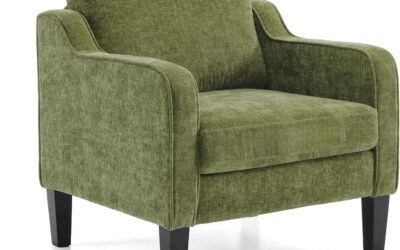
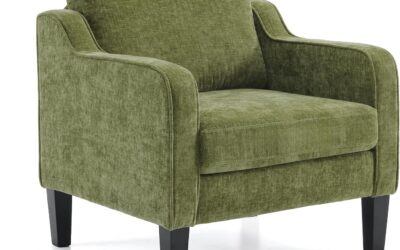
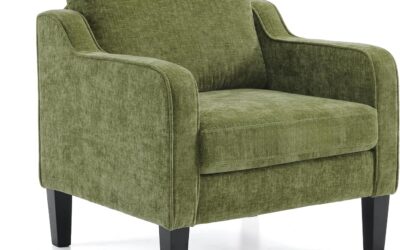
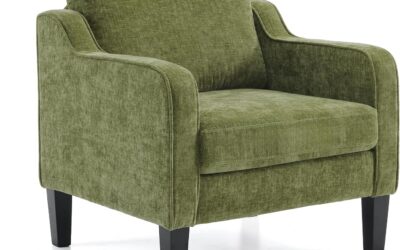
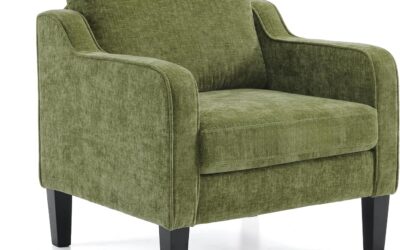
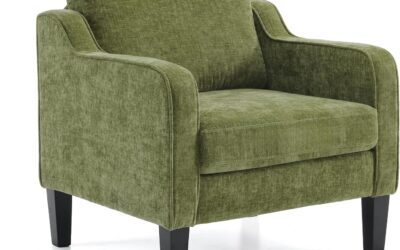
There is something instantly inviting about an olive green accent chair that knows exactly what it is. The VINGLI brings that relaxed mid-century silhouette into your space without demanding attention, which is exactly what you want from a supporting piece in a living room or bedroom. The scooped arms and fluffy chenille give it a cozy, lived-in feel from day one.
What surprised us most is how supportive the seat feels for the price. The 5.5-inch pocket-spring cushion holds you up instead of swallowing you, so you can stand without a struggle after a long reading session. The 6.7-inch wood legs give it visual lift, making a small room feel less crowded while letting your robot vacuum pass right underneath.
The removable washable covers are a quiet luxury we wish every chair had. Spills, pet hair, and everyday wear become a non-issue when you can zip off the cover and refresh it in a wash. If you want a supportive, stylish reading chair without committing to a $300+ investment, this one delivers.
Styles it works with: Mid-Century Modern, Scandinavian, Boho, Minimalist
Best placed in: living room corner, beside the bed in a bedroom, apartment reading nook
May not suit: large formal living rooms that need an oversized statement chair, or households wanting a wide lounging seat for curling up for hours
Buy it if:
- You are furnishing a small apartment, bedroom, or cozy nook and need a chair that does not overwhelm the space
- You want supportive seating with pocket springs rather than a mushy budget cushion
- You love mid-century style but do not want to spend $300+ on a designer replica
Consider waiting if:
- You need a specific color beyond the current olive, beige, or gray options
- You want a matching pair and want to confirm stock on both before ordering
Skip it if:
- You need an oversized lounger wide enough to curl up and nap in
- You are looking for genuine top-grain leather upholstery instead of fabric
Check the latest price and availability on Anthropic before it sells out.

Pros
- Attractive mid-century silhouette at a strong under-$100 price point
- Thick cushioning with spring support offers more comfort than similarly priced competitors
- Easy wipe-clean surface is genuinely low-maintenance for everyday use
- Compact size fits rooms where larger chairs simply will not work
Cons
- PU leather rather than genuine leather, so it may show wear or peling over time with heavy daily use
- Limited color options currently available, which may not suit every existing decor palette
- At 17.3 inches seat height, taller users may find the seating position lower than ideal for extended work sessions
There is a certain kind of chair that does not just fill a corner but actually makes the whole room feel more considered. The VASAGLE accent chair pulls that off with its classic button-tufted backrest, smooth brown faux leather, and those signature splayed legs that say mid-century without screaming it. For under $100, the aesthetic payoff is genuinely hard to argue with.
Beyond looks, the 6.3-inch foam seat with spring support puts this chair ahead of most in its price range. Whether you are curling up with a book, adding a seating option to a guest room, or just want something polished in your home office corner, it holds up comfortably for real use and not just as a decorative prop.
Assembly is straightforward, cleanup is a quick wipe, and the 300 lb capacity means it is built for actual everyday life. If you want a stylish accent chair that looks twice its price without committing to a genuine leather budget, this one delivers.
Styles it works with: Mid-Century Modern, Retro, Scandinavian, Minimalist
Best placed in: A living room corner paired with a floor lamp, beside a bed as a reading seat, or in a home office as a secondary chair
May not suit: Maximalist or heavily ornate traditional decors where the clean lines may feel out of place, or very small studio apartments where even a compact chair leaves little floor space to breathe
Buy it if:
- You want a mid-century modern accent chair under $100 that actually looks the part in photos and in person
- You need a comfortable occasional seat for a reading nook, guest room, or home office without a large footprint
- You prioritize easy cleaning and durability over the feel of genuine leather upholstery
Consider waiting if:
- You need a color beyond the current brown option to match your existing furniture palette
Skip it if:
- You plan to use it as a primary daily-use chair for 8 or more hours a day, where a purpose-built ergonomic chair would serve you far better
- Genuine leather texture and long-term material durability are non-negotiable for your household
Check the latest price and availability on Amazon before it sells out.

Furniliving Mid Century Modern PU Leather Accent Chair - Button Tufted Solid Wood Frame High Back Armchair, Brown
Pros
- Solid wood frame with reinforced joints supports up to 300 lbs
- Waterproof, scratch-resistant faux leather cleans easily with a damp cloth
- Ergonomic high back with lumbar curve reduces fatigue during extended sitting
- Quick 10-15 minute assembly with all hardware and screwdriver included
- FSC-certified wood sourcing for sustainability-minded shopers
Cons
- Zero verified customer reviews make real-world comfort and durability unproven
- PU leather can feel hot and sticky in warm climates compared to fabric options
- Compact 19.7-inch seat depth may feel shallow for taller users over 6 feet
This Furniliving accent chair brings that classic mid-century silhouette to your space at a price point that leaves room in the budget for a throw pillow or two. The square button-tufted backrest gives it a tailored, put-together look, while the warm brown tone and exposed wood legs add visual warmth to neutral rooms that need a little character.
In a real room, it reads as a purposeful design choice rather than a budget fill-in. The wide flat armrests double as a spot for your coffee mug, and the high-density foam seat keeps its shape through daily use. At just under20 pounds, it is easy to reposition when you are rearranging furniture on a whim.
If you want a vintage-inspired reading chair that cleans up easily and holds up to everyday life without costing more than a nice dinner out, this one delivers.
Styles it works with: Mid-Century Modern, Modern Farmhouse, Industrial, Minimalist
Best placed in: Living room corner as a reading nook seat, bedroom beside a nightstand, home office or waiting area as guest seating
May not suit: Very small spaces where the 29.3-inch height might visually crowd the area, or homes going for an all-fabric soft textile aesthetic where faux leather would clash
Buy it if:
- You need a stylish accent chair under $110 that looks more expensive than it is
- You have kids or pets and want upholstery you can wipe down without worry
- You want a compact reading chair with real lumbar support for daily use
Consider waiting if:
- You prefer to see verified buyer reviews before committing to a newer listing
- You want color options beyond brown to match your current palette
Skip it if:
- You are over 6 feet tall and need a deeper seat for comfortable leg support
- You strongly prefer breathable fabric upholstery over faux leather
Check the latest price and availability on Amazon before it sells out.
Frequently Asked Questions
Can a squeaky accent chair be fixed at home?
Yes. Most chair squeaks come from loose bolts, worn glides, or dry contact points. Tighten visible hardware first, then check whether the chair rocks. If the squeak comes from inside the upholstered seat deck, the repair may require opening the dust cover.
Should I use WD-40 on a squeaky chair?
No, not on upholstery or wood joints. WD-40 can stain fabric and attract dust. Use it only on exposed metal hardware where overspray can’t reach fabric. For wood-on-wood contact, paste wax or a proper furniture wax is safer.
Why does my chair squeak only when I lean back?
It depends, but the back bolts or rear leg joints are the first suspects. Leaning shifts your weight into the back posts, so loose fasteners there move more than they do when you sit still. Tighten rear brackets and check for cracks around the back frame.
Is a squeaky chair dangerous?
Almost never. A squeak by itself is usually friction. But if the chair also wobbles, drops on one side, or has a cracked rail, stop using it until you inspect the frame. Noise plus movement means the structure may be failing.
How often should chair bolts be tightened?
Every 6 to 12 months for a chair used daily. Check sooner after a move or after assembly. Small bolts loosen with repeated side loads, especially on chairs with angled legs or scooped arms.
Bottom Line
Most accent chair squeaks come from loose hardware or one leg sitting slightly off the floor. Tighten visible bolts, replace worn glides, and square the chair before adding wax or opening upholstery. If the squeak comes with wobble, a cracked rail, or a dropped spring clip, stop treating it as a noise problem. That’s a support problem, and a replacement chair may be the safer value than a complicated repair.

Write Your Review
No reviews yet. Be the first to share your experience!