

> Editorial Note: I’m Liam Wright, an outdoor and garden editor. I grew up in my family’s landscaping business and now cover what actually survives a season of UV, rain, and freeze-thaw cycles. The picks here are evaluated against ASTM weatherability standards and manufacturer durability ratings.
Nine times out of ten, a solar light that dies after dark isn’t broken. It’s just not getting enough sun to charge, or the battery has quietly worn out. A path light needs 6 to 8 hours of direct sun to run all night, and shade, dirty panels, or a three-year-old battery all cut that short. Work through the panel, the battery, and the switch before you toss anything. For related outdoor fixes, keep these nearby: best solar pathway lights, best outdoor string lights, best landscape lighting, best patio furniture cover, and best outdoor rug.
Reason 1: The Lights That Fade by Midnight (Weak Charge)
This is the most common one. The lights come on at dusk, glow for two or three hours, then quit well before morning. That’s a charging problem, not a failure.
A solar panel needs 6 to 8 hours of direct sunlight to fully top off the battery. If your lights sit under a tree, next to a fence, or in the shadow of the house for half the day, they’re running on a half-charge every night. Move one light to an open, south-facing spot for two days and watch it. If it lasts longer there, sunlight was the issue all along.
Partial sun means partial runtime. Simple as that.
Reason 2: The Cloudy Film on the Panel (Dirty Solar Cells)
Look at the little panel on top. If it’s hazy, dusty, or coated in pollen, it can’t absorb light even in full sun. A grimy panel loses a big chunk of its charging power.
Wipe each panel with a damp cloth, then dry it. Pollen in spring and dust in late summer build up faster than people expect. For a cloudy plastic panel that stays dull after cleaning, a thin coat of clear nail polish or a plastic restorer can bring back some clarity. Clean panels charge faster. That’s the whole point.
The loss adds up more than it looks. A film of pollen or hard-water spotting can cut a panel’s output by 15 to 25 percent, which is often the exact margin between running all night and dying at 1 a.m. Sprinkler spray is a quiet culprit here too: minerals in the water dry into a haze that a plain rinse won’t lift, so a damp cloth with a drop of vinegar clears it better than water alone. Skip abrasive pads. A scratched panel scatters light and never fully recovers.
Reason 3: The Battery That Won’t Hold a Charge Anymore
Solar lights use small rechargeable batteries, usually AA or AAA NiMH cells rated around 600 to 1,000 mAh. Those wear out. Most last 1 to 2 years before they stop holding a full charge, and cheaper lights fade sooner.
Pop the housing open and check the battery. If it’s older than about 18 months, swap in a fresh rechargeable of the same type and voltage. Don’t use standard alkaline batteries. They aren’t built to recharge from a panel and can leak. A $10 pack of NiMH cells often revives a whole set of lights you were ready to replace.
Old battery. Dead light. New battery, and it’s back.
Fix 1: Reposition for Full Sun, Then Clean the Panel
Start with the two cheapest fixes together. Move any light that sits in shade to a spot with 6 or more hours of direct sun. South-facing beats east or west in most yards. Then wipe every panel clean and let the lights charge for two full days before you judge them.
Give each light some breathing room. A panel half-blocked by tall grass or a shrub charges like it’s in the shade. Trim around the base if you have to. Most “dead” solar lights come back to life after a reposition and a wipe-down, no parts required.
If they hold through the night after that, you’re done.
Fix 2: Pull the Pull-Tab and Flip the Switch
Brand-new lights that never turn on usually have a plastic pull-tab still under the battery cover, or an OFF switch nobody found. Manufacturers ship them switched off to save the battery in the box.
Open the housing on the underside. Remove any clear plastic tab between the battery and the contact. Find the small ON/OFF switch and set it to ON. Then cover the panel with your hand for a few seconds. A working light should flick on in the dark, which confirms the sensor and circuit are fine. Two-minute fix, and it’s the first thing to rule out.
Fix 3: Replace Worn Batteries or Whole Units
When cleaning and repositioning don’t help, the battery or the sealed unit is the real problem. Swap the rechargeable cells first, matching type and voltage. If the housing is cracked and water got into the circuit, that light is done. Replace it.
All three sets below clear a 4.6-plus owner rating and come with sealed, weather-rated housings that hold up better than bargain-bin lights. If you want the brightest, longest run, start with the ELECLINK 12-pack and its larger LED lens. For a mid-size yard, the TuyLuxeHome 8-pack carries an IP65 waterproof rating for wet climates. Choose the ELECLINK 8-pack if you want the larger-lens design in a smaller count for a shorter path.

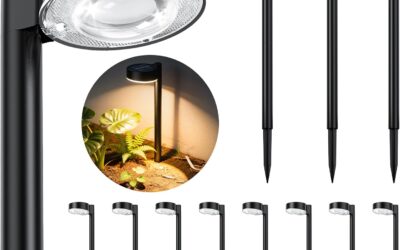
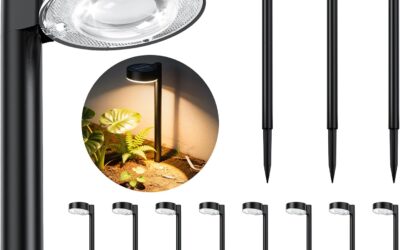
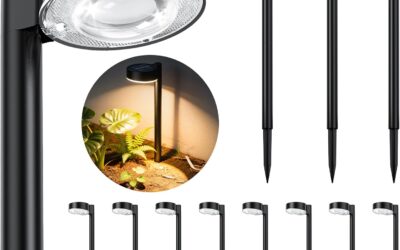
ELECLINK 12 Pack Solar Pathway Lights Outdoor: Brighter Warm White LED, 12Hr Runtime, IP65 Waterproof for Garden Yard Walkway Driveway
Pros
- 2X brighter output with precision reflective lens compared to standard solar path lights
- High-efficiency monocrystalline panel charges fully in 6-8 hours of sunlight
- IP65 waterproof ABS housing is rust-proof and corrosion-resistant
- Adjustable two-section stakes for custom height placement
- Near-perfect 4.9-star rating from early reviewers
Cons
- Requires 6-8 hours of direct sunlight for full charge, may underperform in shaded yards or cloudy regions
- Stakes must be pushed into soft ground, so hard or rocky soil may require pre-drilling
- ABS plastic housing may look less premium than metal alternatives at close range
There is something quietly satisfying about a well-lit pathway at night, and the ELECLINK solar pathway lights nail that warm, welcoming glow without any of the usual hassle. The 3500K warm white temperature hits the sweet spot between cozy and crisp, so your garden or walkway looks intentional rather than overlit. With 12 lights in a single pack, you can line a full driveway or wrap around a garden bed without running out mid-project.
What sets these apart is the precision reflective lens, which genuinely throws more light than typical solar stakes. The adjustable height stakes are a thoughtful touch, letting you raise or lower each light depending on whether you are illuminating a low flower border or a taller shrub line. Installation is as simple as pushing them into the ground: no tools, no wiring, no electrician.
If you want reliable, attractive pathway lighting without the cost and complexity of wired fixtures, this one delivers.
Styles it works with: Modern Minimalist, Contemporary, Farmhouse, Coastal
Best placed in: Garden paths, driveway edges, sidewalk borders, yard walkways
May not suit: Homes with predominantly hardscaped yards where soft ground is limited, or landscapes that require metal or copper fixtures for a premium architectural look
Buy it if:
- You want to line a long pathway or driveway with 12 matching lights in a single purchase
- You need solar lights that run 8-12 hours through the night without wiring or electricity costs
- You live in a rainy or snowy climate and need IP65-rated fixtures that survive year-round
Consider waiting if:
- Your yard gets heavy shade and may not provide the 6-8 hours of direct sunlight needed for a full charge
Skip it if:
- You need metal or brass construction for a high-end architectural landscape design
- You want smart-home integration or app-controlled lighting
Check the latest price and availability on Anthropic before it sells out.

TuyLuxeHome Solar Pathway Lights 8-Pack | IP65 Waterproof, 15-Hour Runtime, Retro Filament Bulb Design
Pros
- Monocrystalline solar panels charge faster and more efficiently than standard amorphous panels, especially on partly cloudy days
- The retro filament bulb aesthetic elevates the look well beyond typical plastic solar stake lights
- 2mm lampshade walls are 50% thicker than competitors, adding meaningful long-term durability
- Auto on/off at dusk and dawn removes any daily maintenance from the equation
- Eight lights in one package delivers strong value per unit compared to buying smaller sets
Cons
- No review history yet to confirm real-world performance claims like the 15-hour runtime in cloudy climates
- Warm white only -- buyers wanting cool white or color-changing options will need to look elsewhere
- Solar-dependent charging means performance will drop in low-sunlight regions or during heavy overcast winters
Most solar path lights look like an afterthought -- a row of identical plastic caps glowing faintly blue-white. The TuyLuxeHome lights take a different approach with warm tungsten filament bulbs inside high-transparency lampshades, and the result actually looks like something you chose on purpose. The retro glow is soft and amber-toned, the kind of light that makes your garden look like a magazine shot at dusk rather than a parking lot.
What makes these practical beyond their looks is the runtime. A 1000mAh battery paired with monocrystalline solar panels means these lights genuinely stay on through a full night, not just the first few hours after dark. The two brightness modes are a small but useful detail -- dial up the intensity for entertaining outside, or keep it low for an everyday ambient look. Setup takes about ten minutes for all eight lights with no tools required.
If you want a pathway or garden border that looks polished and stays lit all night without paying an electrician, this one delivers.
Styles it works with: Cottage, Traditional, Modern Farmhouse, Mediterranean
Best placed in: Front walkway leading to the entrance, garden bed borders, along a driveway edge, or lining a backyard patio path
May not suit: Ultra-minimalist or industrial exterior aesthetics where the retro filament look may clash with clean, contemporary lines; also less effective in heavily shaded yards where solar panels cannot get consistent direct sunlight
Buy it if:
- You want to light a full walkway or garden path in one order without mixing multiple sets
- You prefer a warm, decorative glow over bright white functional lighting and care about how your yard looks after dark
- You want a no-wiring, low-maintenance lighting solution that turns itself on and off automatically every night
Consider waiting if:
- You live in a region with long stretches of overcast winter weather and want to see real-world battery performance data from verified buyers first
Skip it if:
- You need cool white or color-changing light to match an existing outdoor lighting scheme
- Your yard has heavy tree cover or limited direct sun exposure that would prevent reliable solar charging
Check the latest price and availability on Amazon before it sells out.

ELECLINK Solar Pathway Lights 8 Pack - 60LM Bright Warm White, 2 Modes, IP65 Waterproof Garden Walkway Lights
Pros
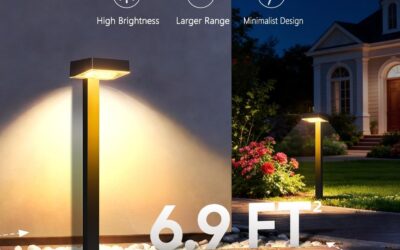
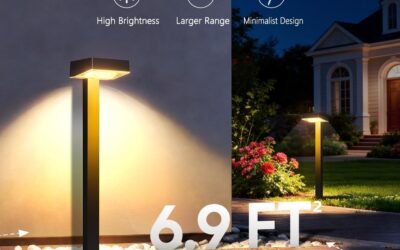
- Genuinely bright at 60 lumens with focused beam pattern that covers 6.9 sq ft per light
- Long10 to 15 hour runtime from the 1200mAh battery eliminates mid-night diming
- Durable ABS housing holds up across seasons without cracking or yellowing
- Slek square modern design blends with contemporary and traditional landscapes alike
- Adjustable height up to 20 inches accommodates different garden layouts
Cons
- Requires soft soil for stake installation, so hardscaped or rocky ground will need pre-drilled holes
- Limited to warm white 3500K only, no cool white or color temperature options
- 104 reviews is a relatively small sample, so long-term durability data is still limited
What stands out about the ELECLINK solar pathway lights is how much practical value you get for under $45. Eight lights is enough to line a full walkway or frame a garden bed, and the 60-lumen output with dual reflector lenses genuinely illuminates the path rather than just decorating it. The warm3500K glow feels inviting without being harsh, which is exactly what you want greeting you or your guests at night.
The design is clean and modern with a minimalist square shape that does not compete with your landscaping. They look intentional rather than cheap, which is rare at this price point. The two-pole height option is a nice touch that lets you customize the look depending on whether you are lighting a low flower bed or a taller walkway border.
If you want reliable dusk-to-dawn path lighting without running wires or hiring an electrician, this pack delivers.
Styles it works with: Modern Minimalist, Contemporary, Transitional, Mid-Century Landscaping
Best placed in: Along front walkways leading to the door, bordering a driveway, lining a backyard garden path, or framing a patio edge
May not suit: Very traditional ornate garden designs where lantern-style fixtures would look more cohesive, or homes with heavily shaded yards where solar panels cannot get adequate sunlight during the day
Buy it if:
- You need to light a full walkway or driveway and want enough lights in one purchase to do the job
- You want a zero-maintenance lighting solution with no wiring and no electricity costs
- You live in a climate with weather extremes and need lights rated for rain, snow, and heat
Consider waiting if:
- You prefer cool white or adjustable color temperature options for a specific landscape aesthetic
- You want to see more long-term reviews before committing to this relatively new listing
Skip it if:
- Your yard is heavily shaded by trees or structures and solar panels would not get enough direct sunlight
- You need to install in concrete, brick, or rocky terrain where stakes cannot be pushed into the ground
Check the latest price and availability on Amazon before it sells out.
Fix 4: Match the Light to the Season and Climate
Solar output drops in winter. Shorter days and a low sun angle mean less charge, so lights that ran all night in July may fade by 2 a.m. in December. That’s physics, not a defect.
Angle matters too. A panel lying flat collects less winter sun than one tilted toward the low southern sky. If your lights have adjustable heads, tilt the panel up a bit for the cold months. For freeze-prone yards, look for units rated to survive freeze-thaw cycles. ASTM weatherability guidance is a useful benchmark here: lights vetted against UV and moisture standards last more seasons than uncertified ones. Consumer Reports has noted the same pattern in outdoor lighting, where sealed housings outlive open ones.
The 5-Minute Solar Light Diagnosis
Run this quick check before you replace anything. First, cover the panel with your hand in daylight. A healthy light turns on. If nothing happens, the switch is off, the tab is still in, or the battery is dead. Second, check where each light sits. Anything in shade for more than half the day won’t charge fully. Third, feel the panel. Grime and haze block light even in full sun.
Most problems trace back to one of three things: not enough sun, a dirty panel, or a tired battery. You can confirm all three in five minutes without tools. Only after those checks should you assume the unit itself failed.
One more habit helps. Clean the panels twice a year, spring and fall, when pollen and dust peak. It takes ten minutes for a whole path and keeps the lights charging at full strength. Neglected panels lose brightness so gradually you don’t notice until they’re crawling.
Frequently Asked Questions
Do solar lights work in winter?
Yes, but with less runtime. Shorter days and a low sun angle cut charging, so expect fewer hours per night in December than in July.
How long do solar light batteries last?
Usually 1 to 2 years. Once a battery stops holding a charge, a fresh NiMH cell of the same type and voltage often revives the light.
Why do my new solar lights not turn on?
Almost always a pull-tab still under the battery cover or an OFF switch. Open the housing, remove the tab, and flip the switch to ON.
Can I use regular batteries in solar lights?
No. Standard alkaline batteries aren’t made to recharge from a panel and can leak. Use rechargeable NiMH cells only.
How much sun do solar lights need?
Six to 8 hours of direct sunlight for a full night’s charge. Shade or partial sun cuts runtime in proportion.
Bottom Line
Most solar lights that quit at night are starved for sun or running on a worn battery, not truly broken. Reposition them for 6 to 8 hours of direct light, wipe the panels clean, and swap tired NiMH cells before you replace anything. If a housing is cracked and water got in, that unit’s finished. The ELECLINK 12-pack is the best pick for brightness and runtime, and the TuyLuxeHome 8-pack is the runner-up for wet, IP65 climates. Sun and a fresh battery fix most of these.

Write Your Review
No reviews yet. Be the first to share your experience!