

> Editorial Note: I’m Maya Chen, a bedroom and sleep editor covering mattresses, bed frames, and bedding. The picks here are evaluated against CertiPUR-US foam standards, Sleep Foundation evaluation protocols, and owner durability reports from r/Mattress.
You run your hand across the sheet and feel it. Tiny rough bumps scattered across the fabric, the kind that snag on dry skin and turn a smooth bed into sandpaper. That’s pilling, and it almost always traces back to the fiber blend, not the wash cycle you blamed. Short-staple cotton mixed with polyester is the chief offender, and the fix starts at the label, not the laundry aisle. While you’re rethinking the bed, these go hand in hand: best bed sheets, linen vs cotton sheets, best cooling sheets for hot sleepers, best comforter set queen, and best cooling mattress topper.
Reason 1: The Bumps That Appear After the Third Wash (Fiber Blend)
Pilling is a fiber problem before it’s a laundry problem. When short cotton fibers rub against stronger synthetic threads, the weaker cotton breaks and tangles into little balls on the surface, while the polyester holds firm and keeps the pills anchored. The result is a sheet that feels rough only on the areas that move most, the hips, heels, and shoulders.
A 100 percent long-staple cotton sheet pills far less because the fibers are long enough to stay locked in the weave. Blends are the reverse. A 60/40 cotton-poly sheet is built to pill, because the two fibers have different tensile strengths and one always frays faster than the other. A long-staple cotton fiber runs about 1.5 inches long, while a short-staple fiber under 0.5 inches breaks loose at the first rubbing. Sleep Foundation’s bedding guidance makes the same point: staple length and fiber purity do more for long-term hand feel than thread count ever does.
Check the fiber content on the care tag, not the marketing copy. If polyester or microfiber appears anywhere in the blend, expect pills within the first 20 to 30 washes, regardless of how gently you launder it.
Reason 2: The Rough Patch Only Where You Sleep (Friction)
Pills cluster where friction clusters. The spots your body rubs most, the heel zone at the foot of the bed and the shoulder zone near the top, are where the fabric gets worked the hardest every single night. A restless sleeper can pill a sheet in weeks where a still sleeper takes months.
Friction gets worse with heat and dry skin. Coarse skin and dry winter air act like fine sandpaper against the weave, so the same sheet pills faster in January than in July. A mattress protector with a textured or quilted surface can add friction too, since the sheet slides over a rough backing instead of a smooth one. A fitted sheet that’s 60 inches wide on a 60 inch mattress fits flat and shifts less, while a sheet that’s 58 inches rides up and rubs.
Feel the sheet with your eyes closed. If one patch is rough and the rest is smooth, friction is the cause, not the material. Rotate the sheet 180 degrees each week so the wear spreads across the whole surface instead of concentrating at the heels.
Reason 3: The Pills That Show Up After a Hot Wash Cycle (Heat Damage)
Heat is the quiet accelerant. Cotton and cotton-blend fibers soften and swell in hot water, which loosens the twist that holds them in the yarn, and a loosened yarn pills faster under the same friction. A wash at 140 degrees Fahrenheit that feels like it’s cleaning deeper is actually weakening the fibers it’s supposed to care for.
The dryer is worse. High heat bounces wet fabric against a drum for an hour, and that constant mechanical rubbing does in 60 minutes what would take weeks in normal use. Fabric softener sheets add another layer of trouble, because their waxy coating builds up on fibers and makes them stick together into pills.
Cold or warm water, a gentle cycle, and line drying or a low-heat tumble are the laundering habits that keep a good sheet smooth. Owners on r/Mattress who swapped to cold washes report a visible drop in pilling within a month on the same sheets. The fibers weren’t bad. The wash was.
Reason 4: The Set That Pilled Right Out of the Package (Low Quality)
Sometimes the sheet was doomed before you slept on it. A sheet woven from short-staple or waste cotton, often sold under thread-count claims that don’t hold up, has loose fibers baked in from the start. No wash habit rescues a fabric that was never tightly spun to begin with.
The tell is how it pills. If a brand-new sheet pills after the first wash before it’s even been slept on, the yarn is the problem, and no amount of fabric shaver work keeps up with it. Combed cotton, which mechanically removes short fibers before weaving, is the spec to look for on the label when you want to avoid this from the start.
Thread count is the misleading number here. A 1000-thread-count sheet made from short-staple cotton pills faster than a 300-thread-count sheet made from long-staple cotton, because density doesn’t compensate for weak yarn. A queen fitted sheet should measure about 60 inches by 80 inches to fit flush, and a sheet that’s an inch short on each side pulls taut and rubs at the corners all night, which is friction that pills the fabric exactly where you sleep. Apartment Therapy’s bedding editors flag this regularly: look for combed, long-staple, or Egyptian-grown cotton over a high thread count.
The Right Gear Makes a Difference
Pilling is mostly a fiber and friction problem, but the right bedding layers reduce the rubbing and heat that accelerate it. The picks below were chosen for owner ratings above 4.4 and for materials that resist the short-staple and synthetic-blend pitfalls behind most pills.
Start with the Bedsure prewashed comforter set if you want a soft all-season top layer that won’t add friction against the sheet beneath it. Choose the Bedsure quilted duvet insert if you prefer a down-alternative fill that stays smooth through weekly washes. Pick the Utopia box-stitched comforter if you want a budget-friendly insert with corner tabs that keep the fill from shifting and creating rough spots.
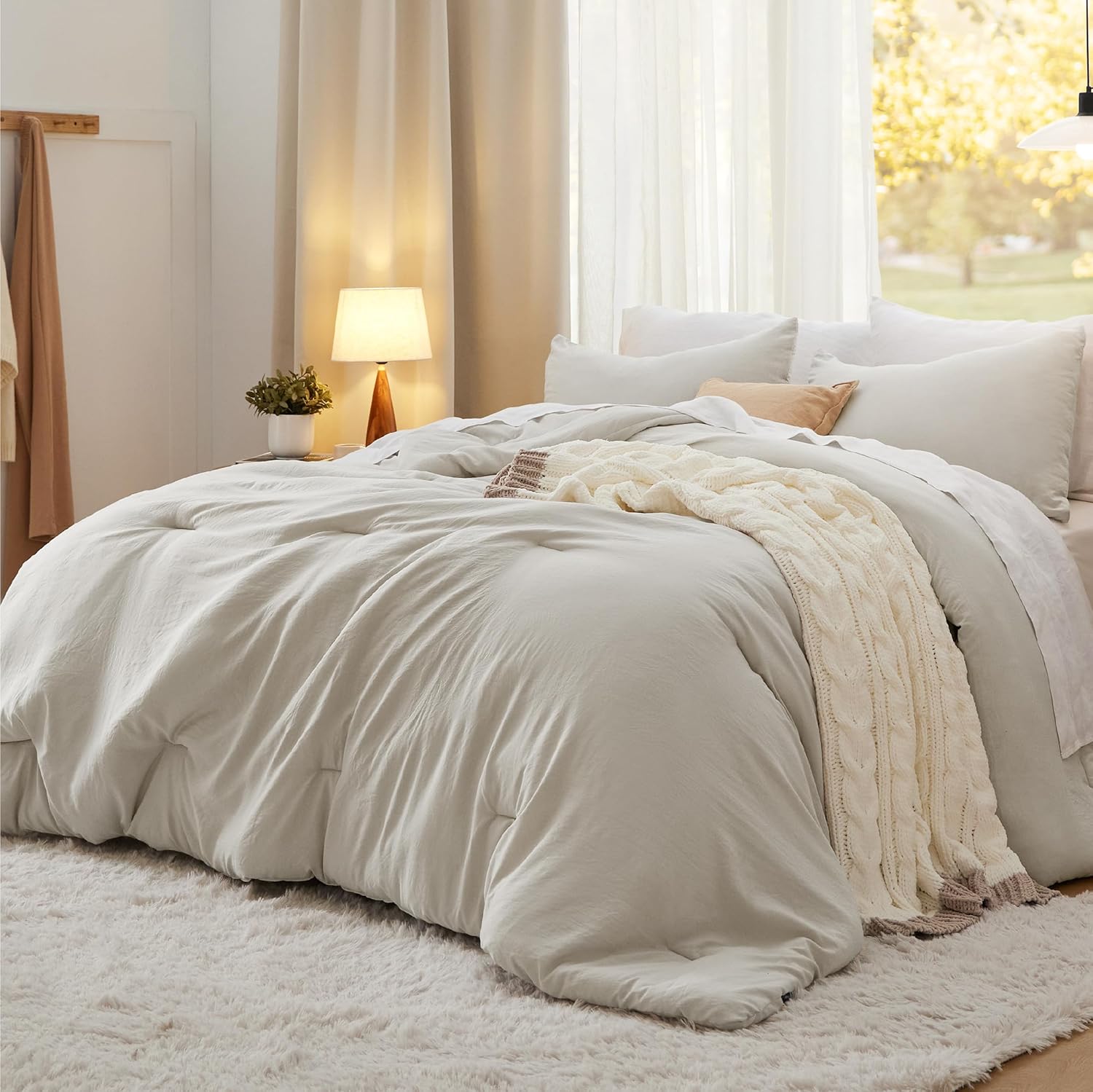
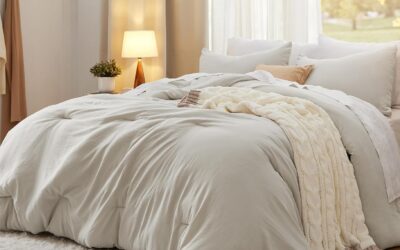
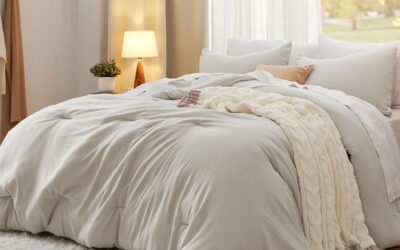
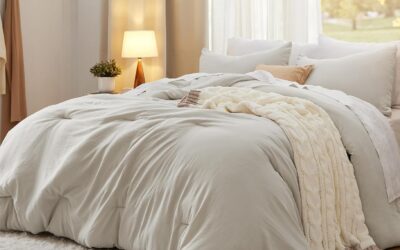
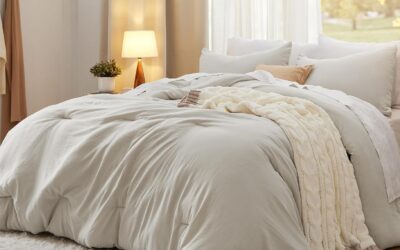
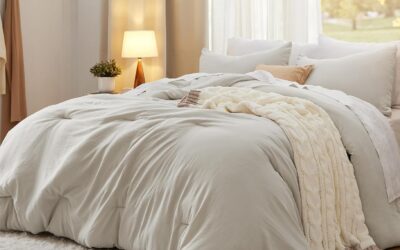
Bedsure Queen Comforter Set - Prewashed Soft Beige Bedding, 3-Piece Lightweight All-Season Set with Pillowcases
Pros
- Exceptionally soft cotton-like texture right out of the package
- All-season weight works for both warm and cool months
- Reversible two-tone design adds versatility without buying a second set
- OEKO-TEX certified for chemical safety
- Easy machine-wash care with no special handling required
Cons
- 100% polyester may not satisfy shopers who prefer natural fiber beding
- Does not include a fitted sheet or flat sheet, so you need existing bed linens
- Limited warmth for very cold climates since the fill is lightweight
This Bedsure comforter set hits a sweet spot that is hard to find at this price: it feels genuinely soft without that slippery, synthetic sheen you get from cheaper polyester beding. The prewashed finish means you can skip the break-in period and settle right into comfort on night one.
In a real bedroom, the beige tone reads clean and neutral. It pairs easily with textured throw pillows, a chunky knit blanket, or a patterned headboard without competing for attention. The reversible side gives you a quick seasonal refresh whenever you want a subtle change.
If you want year-round softness and a polished bedroom look without spending more than a dinner out, this one delivers.
Styles it works with: Modern Farmhouse, Scandinavian, Coastal Casual, Minimalist
Best placed in: Primary bedroom queen bed, guest room for a welcoming neutral look, college dorm or apartment bedroom refresh
May not suit: Rooms styled in bold maximalist patterns where a solid neutral would get lost, or households neding a heavier duvet for frigid winter climates
Buy it if:
- You want a soft, coordinated bedding set that looks put-together without spending over $35
- You sleep warm and need lightweight coverage that will not trap heat
- You prefer low-maintenance bedding you can toss in the washer without worry
Consider waiting if:
- You want a specific color that is currently out of stock in queen size
- You are hoping for a bundle that includes sheets for a complete bed makeover
Skip it if:
- You need heavy winter warmth or insulation for cold-climate bedrooms
- You strongly prefer natural fibers like cotton or linen against your skin
Check the latest price and availability on Amazon before it sells out.

Bedsure Queen Comforter Duvet Insert - All Season Down Alternative, GentleSoft Fill, Box-Stitch, 8 Corner Tabs, White 88x88
Pros
- Exceptional value at under $30 with over 76,000 reviews averaging 4.7 stars, one of the highest review counts in its category
- Box-stitch design keeps the GentleSoft fill evenly distributed so there are no cold spots or thin patches
- 8 corner and side tabs make it compatible with any duvet cover, adding styling flexibility
- All-season fill weight balances warmth and breathability so it works in both heated and air-conditioned bedrooms
- Wide size range including oversized and Alaskan King options that are hard to find at this price point
Cons
- 100% polyester fill may sleep warm for hot sleepers during summer in non-air-conditioned rooms compared to a dedicated cooling comforter
- Requires 24 to 48 hours of fluffing out of the box before it reaches full loft, which can be inconvenient if you need it immediately
- Only available in white, limiting options for shoppers who want a comforter that stands out without a duvet cover
The Bedsure Queen Comforter punches well above its price tag. The GentleSoft polyester fill feels genuinely plush on first use, and the box-stitch stitching is tight and even across the whole surface, giving it a structured, tailored look that holds up after repeated washing. It does not look cheap on a bed, especially layered under a duvet cover.
What makes it stand out for everyday home life is how low-maintenance it is. Toss it in a standard front-loader, tumble dry on low, and it comes out looking nearly new. For households that want a fresh, well-made bed without a complicated care routine, that matters more than any single feature on the spec sheet.
It also earned a Best Comforter nod from Apartment Therapy and has accumulated over 76,000 reviews at 4.7 stars, which means the quality is consistent across a massive sample of real buyers, not a lucky batch. If you want a cloud-soft all-season comforter without paying three times the price for a brand name, this one delivers.
Styles it works with: Minimalist, Scandinavian, Modern Farmhouse, Classic Transitional
Best placed in: Master bedroom as a primary comforter, guest bedroom for a clean hotel-style look, teenager or college dorm bed needing a durable all-season layer
May not suit: Decor-forward bedrooms where bold color or pattern is the focal point, since this only comes in white and relies on a duvet cover for visual interest. Also may not be the best fit for very warm climates without air conditioning if you run hot at night.
Buy it if:
- You want a high-rated, machine-washable comforter under $30 that works in any season without needing a seasonal swap
- You already own or plan to buy a duvet cover and need a quality insert with tabs that will stay put inside it
- You are furnishing a guest room or second bedroom and need reliable comfort without overspending
Consider waiting if:
- You are looking for a colored comforter to use without a duvet cover, as this only comes in white
Skip it if:
- You are a confirmed hot sleeper who needs a dedicated cooling comforter with moisture-wicking or temperature-regulating materials
- You have a down allergy and also react to polyester microfiber fills, in which case you need a specialty hypoallergenic option
Check the latest price and availability on Amazon before it sells out.
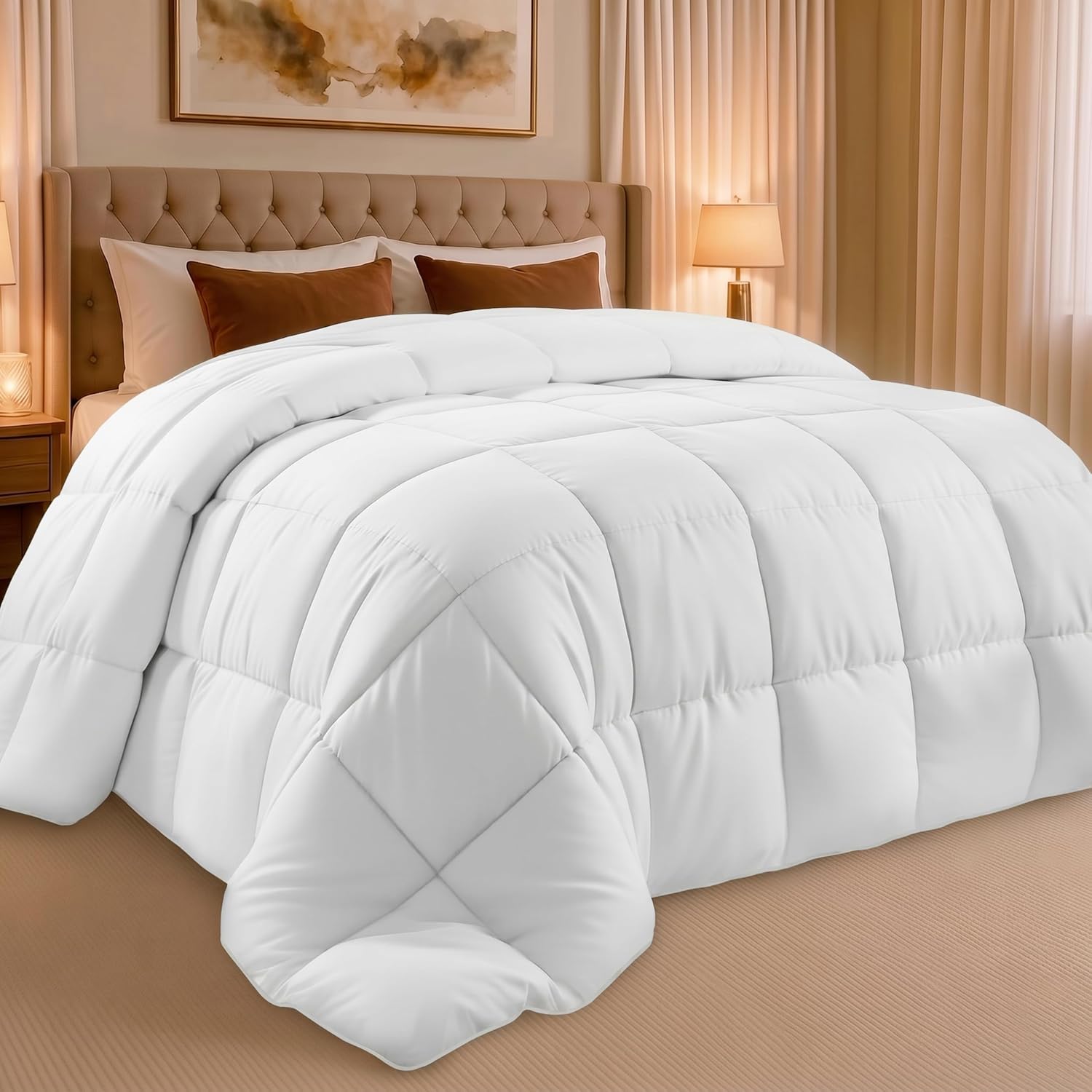
Utopia Bedding Queen Comforter Duvet Insert – Quilted White Down Alternative, Box Stitched, 88x88 Inches
Pros
- Exceptional value backed by one of the largest review counts in the bedding category
- Box-stitch design prevents clumping and maintains loft through repeated washes
- Corner tabs make it compatible with virtually any standard duvet cover
- Lightweight yet warm construction works across all four seasons
- Allergy-friendly polyester fill suits sensitive sleepers and pet-friendly homes
Cons
- Available only in white, so shoppers who want a colored insert for standalone use have no options here
- Line dry or no-heat tumble dry instructions add drying time compared to comforters that tolerate machine heat
- Polyester fill does not replicate the breathability of natural down, which may feel warmer to hot sleepers in summer
At under $25 for a queen size, the Utopia Bedding Comforter does something rare: it genuinely delivers on its promise. The box-stitch quilting gives it a structured, tailored look that photographs beautifully on a made bed, and the soft microfiber shell feels smooth from the first night, not scratchy like cheaper alternatives.
What makes it stand out for everyday living is how low-maintenance it is. Toss it in the washing machine, line dry it, and it bounces back to its original loft without any special care. The corner tabs are a small detail that makes a real difference, keeping your duvet cover anchored so your bed stays looking tidy even after a restless night.
If you want a consistently fluffy, clean-looking bed without spending a lot or fussing over dry-clean labels, this one delivers.
Styles it works with: Minimalist, Scandinavian, Modern Farmhouse, Classic Traditional
Best placed in: Primary bedroom as a standalone comforter, inside a patterned duvet cover in a guest bedroom, or layered under a quilt for a cozy, textured bed look
May not suit: Sleepers who run very hot and prefer a cooling insert specifically engineered for temperature regulation; also not ideal if you want color variety since it only comes in white
Buy it if:
- You want an affordable, reliable duvet insert to pair with a decorative cover you already own
- You need a machine-washable comforter that holds its shape and loft over many wash cycles
- You are furnishing a guest bedroom and want a fresh, hotel-style look without a large investment
Consider waiting if:
- You are looking for a colored insert rather than white, as the brand offers color options in other comforter styles that may suit you better
Skip it if:
- You sleep extremely hot and need a comforter with active cooling or moisture-wicking technology
- You specifically want natural down fill for its breathability and compressibility
Check the latest price and availability on Amazon before it sells out.
The Two-Minute Sheet Check
Check the label first. If the fiber content lists polyester, microfiber, or a blend, pilling is baked in and no wash habit fully prevents it. Pure long-staple or combed cotton is the only material that resists pills from the start.
Next, feel where the rough patches sit. Pills at the heels and shoulders point to friction, while pills spread evenly across the whole sheet point to wash heat or low-quality yarn. Where the bumps are tells you which fix to make first.
Then check your wash temperature. Anything above 105 degrees Fahrenheit is softening the fibers and speeding up the fraying. Drop to warm or cold, skip the softener, and tumble on low. Label, friction, heat. Get those three right and most sheets stay smooth.
What to Try Before Replacing the Sheets
Start with a fabric shaver, not the trash can. A $15 battery shaver lifts the existing pills off the surface in minutes and restores the hand feel, though it won’t stop new ones from forming. Cheap fix, real relief.
Lower the wash heat next. Switching from hot to warm or cold slows the fiber loosening that makes pills form, and owners on r/Mattress report the change shows up within a few wash cycles. Skip the dryer sheets too, since the waxy residue binds loose fibers into fresh pills.
Then rotate the sheets weekly. Flipping the fitted sheet 180 degrees and swapping which side faces up spreads the friction across the whole surface instead of one patch. If the pills keep coming after all three, the fiber blend is the cause and a replacement is the only real fix.
When It’s the Protector, Not the Sheets
Sometimes the sheet is fine and the layer beneath it is the culprit. A quilted or textured mattress protector creates a rough surface the sheet rubs against all night, and that constant grinding pills the underside of the sheet you never see until you strip the bed.
Feel the protector’s top surface with your hand. If it’s noticeably textured or scratchy, it’s working against your sheets. A smooth, thin waterproof protector reduces that friction, and the CertiPUR-US and OEKO-TEX certifications on better protectors confirm low-chemical, smooth-face materials that play nice with good cotton.
Rotate or replace the protector if it’s the friction source. A smooth protector under a long-staple cotton sheet is the combination that stays soft for years, and it’s a cheaper fix than replacing the sheets every season.
Frequently Asked Questions
Can pilling be removed once it starts?
Yes. A battery-powered fabric shaver lifts existing pills off the surface in a few minutes and restores the smooth feel. It removes the bumps but doesn’t stop new ones, so pair it with cooler washes and gentler drying to slow the pilling down.
Is pilling a sign of bad sheets?
Sometimes. A sheet that pills after the first wash, before it’s been slept on, is made from short-staple or loosely spun yarn and is low quality. A sheet that pills only at the heels after months of use is more likely a friction or wash-heat issue, not a bad sheet.
Do higher thread count sheets pill less?
No, not on their own. A high thread count made from short-staple cotton pills faster than a lower count made from long-staple cotton. Staple length and whether the cotton is combed matter more than the thread count number on the package.
Will fabric softener stop sheets from pilling?
No, it usually makes it worse. Liquid softener and dryer sheets leave a waxy residue that binds loose fibers together into pills. Skip the softener and wash in warm or cold water with a gentle detergent instead.
Should I replace pilled sheets or try to fix them?
It depends on the fiber. If the sheet is pure long-staple cotton and the pills are from friction or heat, a shaver plus cooler washes fixes it. If the sheet is a cotton-poly blend pilling everywhere, replacement is the only real solution because the fiber mismatch keeps producing new pills.
Bottom Line
Most pilling traces back to a cotton-poly blend, short-staple yarn, high wash heat, or friction from a rough protector, and the fiber blend is the one that decides whether any fix works. A fabric shaver and cooler washes handle friction and heat pills on good cotton, but a blend that pills everywhere needs replacing. If the rough patches only sit at the heels and shoulders, smooth out the mattress protector before you blame the sheets.


Write Your Review
No reviews yet. Be the first to share your experience!