

> Editorial Note: I’m Olivia Bennett, a storage and organization contributor. I approach storage as a systems problem rather than a product one — fit to actual room dimensions, load ratings, and how the system holds up under daily use.
The bench is too long. That’s the mistake almost everyone makes, and it’s the one that turns a tidy entryway into a bottleneck you squeeze past every morning. People measure the wall, buy a bench that fills it, then discover the door swing, the coat hooks, and the walking path all needed that space more than the seat did. Before you shop, walk your entry the way you actually use it, then check the sizing math below. If your entry storage plan also touches closets and shelving, these related guides help: best closet organizer system, best closet rod, best floating shelves for living room, best hanging closet organizer, best shoe rack.
Quick Reference: Entryway Bench Size Chart
| Entry Type | Available Wall Width | Recommended Bench Width | Seat Height | Seat Depth |
|---|---|---|---|---|
| Narrow hallway / apartment | Under 36 inches | 24–30 inches | 17–19 inches | 14–16 inches |
| Standard entry (one door) | 36–60 inches | 30–42 inches | 17–19 inches | 15–17 inches |
| Wide foyer (two people seating) | 60–84 inches | 42–60 inches | 18–19 inches | 16–18 inches |
| Mudroom bench run | 84 inches or more | 60 inches or more | 18 inches | 16–18 inches |
Leave at least 3 inches of clearance on each side of the bench so it doesn’t wedge against a wall or trim. Keep 30 inches of open walking path in front of it. Those two numbers matter more than the bench width itself.
Standard Single-Door Entry: How to Measure
Start with the wall, but don’t stop there. Measure the full wall width, then subtract anything that steals usable space: baseboard trim (usually 3–5 inches total), a light switch you don’t want blocked, and the arc of the door swing. A standard 32-inch interior door sweeps a 32-inch radius, so a bench placed inside that arc gets clipped every time the door opens.
Here’s the working formula: usable bench width = wall width − door swing − 6 inches of side clearance. For a typical 48-inch wall with the door swinging in, you’re realistically looking at a 30–36 inch bench. That fits one adult comfortably plus a basket at the end. Seat height should land at 17–19 inches, the same range as a dining chair, so tying shoes doesn’t fold you in half.
Narrow Hallway or Apartment Entry: How to Measure
Tight entries live and die by depth, not width. A bench deeper than 16 inches will catch hips and bags in a hallway under 42 inches wide, so measure the hall width first and keep the walking path at 30 inches minimum. That leaves you roughly 12–16 inches of depth to work with.
Go vertical instead of long. A 24–30 inch bench with a shoe cubby underneath and a seat height of 17–18 inches stores more per square foot than a low, wide bench that eats floor space. Wall-mounted or floating designs help here too, since a few inches of visible floor under the seat makes a narrow entry read larger. Cap the footprint at about 30 inches wide by 15 inches deep and the hallway still breathes.
Wide Foyer or Mudroom: How to Measure
Wide spaces flip the problem: now the risk is a bench that looks lost against too much wall. In a foyer with 72 inches of open wall, a 30-inch bench floats awkwardly. Scale up to 48–60 inches so the piece anchors the space, and plan seating for two at roughly 24 inches of width per person.
For a mudroom run, measure the number of people who need a landing spot each morning and multiply. Four family members means about 60 inches of bench, plus a hook or cubby every 12–14 inches above it. Load rating becomes real here: a bench two adults sit on daily should hold at least 400–500 pounds. ASTM furniture-strength methods and BIFMA seating-durability guidelines both point to solid joinery and a reinforced center support once a bench passes 48 inches, because unsupported spans sag over time.
Our Size-Matched Picks
I sorted these by the entry sizes most people are working with, checking each against seat height, footprint, and owner-reported load durability rather than looks alone. Start with the first pick if you have a standard single-door entry. Jump to the third if you have a wider wall and want a longer, curved silhouette that seats more.
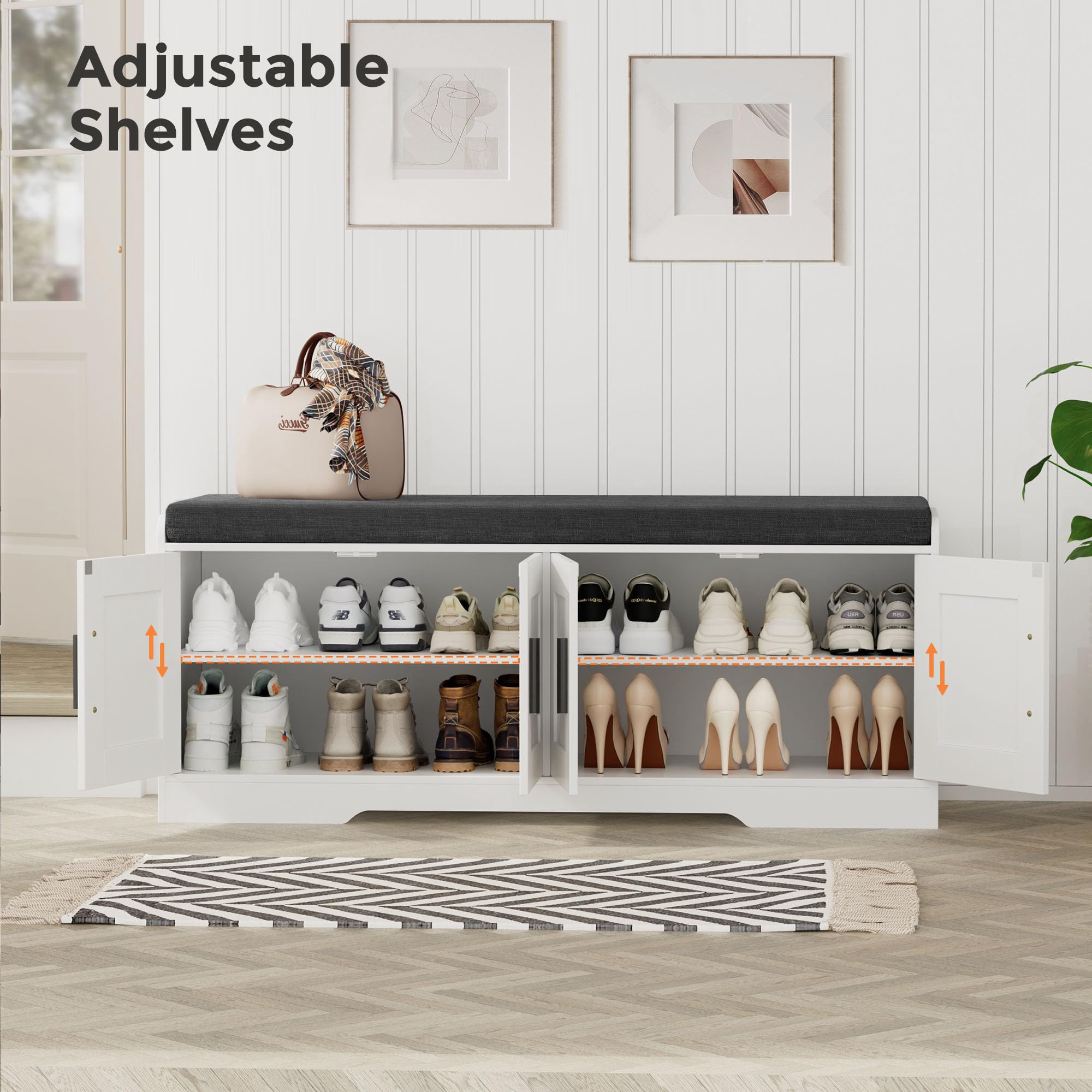

Homleke 4-Door Shoe Storage Bench with Padded Seat - Entryway Organizer Holds 300 lbs, Adjustable Shelves
Pros
- Extra-thick 2-inch cushion more comfortable than typical storage benches
- Closed door design hides clutter and keeps dust off shoes
- Adjustable shelving adapts to different shoe heights
- 300 lb weight capacity handles multiple users
- EPA-certified materials meet safety standards
Cons
- No customer reviews yet to confirm real-world durability
- Assembly required, though manufacturer claims it is straightforward
- May be too deep for very narrow hallways under 15 inches wide
This bench solves the universal entryway problem: shoes everywhere and nowhere comfortable to sit while putting them on. The 2-inch padded top is noticeably thicker than most storage benches, so you actually want to sit on it instead of perching awkwardly. The four-door design means shoes stay hidden and dust-free, which is huge if your entryway is visible from the living room.
We appreciate the adjustable shelves because real households have a mix of sneakers, boots, and flats. The 13.8-inch depth is deep enough for men's shoes without wasting space. The removable cushion cover is a practical touch that makes this feel like furniture you will still like in two years, not a temporary fix.
If you want a shoe storage solution that looks like real furniture without tripping over piles of footwear every morning, this one delivers.
Styles it works with: Modern Farmhouse, Scandinavian, Minimalist, Contemporary
Best placed in: Entryway or mudroom near the front door, at the foot of the bed in a primary bedroom, inside a walk-in closet
May not suit: Very narrow hallways under 15 inches wide, homes needing more than 8-12 pairs of shoe storage, spaces requiring open shelving to display decorative items
Buy it if:
- You need hidden shoe storage that doubles as comfortable seating
- Your entryway is visible from the main living area and you want a tidy look
- You have a mix of shoe heights and need adjustable shelves
Consider waiting if:
- You prefer to see customer reviews and photos before committing to a new product
Skip it if:
- You need open shelving or cubby-style storage to quickly grab shoes
- You require storage for more than 12 pairs of adult shoes
Check the latest price and availability on Amazon before it sells out.

Homleke 2-Tier Entryway Storage Bench with Padded Seat, 4 Doors & Adjustable Shelf, 45.3" Wide, Black
Pros
- Generous 45.3-inch width accommodates a family's worth of shoes behind four neatly paneled doors
- Thick padded cushion is secured with Velcro so it stays put during daily use and unzips for washing
- Adjustable middle shelf makes it flexible enough for tall boots or stacked flats
- 440 lb static load capacity means it holds up as everyday seating, not just decorative furniture
- EPA-certified particleboard construction addresses off-gassing concerns common with flat-pack furniture
Cons
- At 13.8 inches deep, it may feel tight for larger men's shoes or wide winter boots stacked side by side
- Particleboard construction means it will not hold up to moisture-heavy environments like mudrooms without a rug or mat underneath
- Assembly is required and some reviewers note the hardware instructions could be clearer for first-time builders
If your entryway currently looks like a shoe explosion, this bench is the reset button your home needs. The four-door design keeps everything out of sight without requiring a separate cabinet and separate bench. It is the kind of furniture that makes guests think you have your life together.
The padded cushion is genuinely useful, not a decorative afterthought. It is thick enough to sit on comfortably every morning, and because the cover zips off, cleaning it takes about 30 seconds. The black finish is a neutral that leans modern without being cold, and it photographs well in both bright and moody interior shots if that matters to you.
Day to day, this piece quietly earns its space. Kids can sit, lace up, and drop their shoes inside without being reminded. That is a real quality-of-life upgrade. If you want organized shoe storage and a functional seat without sacrificing style for a budget-friendly price, this one delivers.
Styles it works with: Modern Minimalist, Contemporary, Scandinavian, Industrial
Best placed in: Entryway wall opposite the front door, foot of the bed in a master bedroom, along a bedroom or hallway wall as shoe storage with seating
May not suit: Very small entryways under 5 feet wide where 45.3 inches would block traffic flow, or heavily rustic and traditional decors where the clean-lined black finish may feel out of place
Buy it if:
- You want a tidy entryway and need seating plus shoe storage but have a single piece of furniture worth of space
- You have a household of two or more people and shoes pile up at the door daily
- You want a finished, furniture-grade look at under $150 without assembling a separate bench and separate cabinet
Consider waiting if:
- You need a color other than black or gray, as the current palette is limited
- You are furnishing a mudroom that gets wet or muddy regularly, since particleboard benefits from a moisture barrier
Skip it if:
- Your entryway or target wall space is narrower than 46 inches, as the bench will not fit safely
- You exclusively wear large-sized boots and need a deeper cabinet shelf than 13.8 inches
Check the latest price and availability on Amazon before it sells out.

Homleke Modern Curved Shoe Storage Bench 39.4" | Hidden Handle Cabinet, 8 Pairs, Light Gray Oak, Entryway & Bedroom
Pros
- Curved top design is a genuine visual upgrade over flat-top competitors at this price point
- Adjustable and removable shelf makes it practical for households with mixed footwear, including boots
- 440 lb static load capacity means it holds up to stacked storage on top without risk
- Handle-free front keeps the aesthetic clean and requires zero hardware maintenance over time
Cons
- No customer reviews yet, so real-world durability and assembly difficulty are unconfirmed at time of writing
- Particleboard construction means it is not suitable for damp entryways or high-humidity mudrooms near exterior doors
- Only one color option available, which limits compatibility if your space leans toward darker or warmer wood tones
Most shoe benches make a compromise: you get storage or you get style, rarely both. The Homleke Curved Bench is one of the few options under $150 that actually looks like it belongs in a thoughtfully decorated home. The curved top is not just a design gimmick. It gives the piece a sculptural quality that makes your entryway feel considered rather than purely functional.
The handle-free doors are the detail that keeps giving. There are no knobs to snag bags, no hardware to tighten over time, and no visual break in that clean front face. Open the doors and you get a well-proportioned interior with a shelf you can reposition or remove entirely, which matters when your household has a rotation of sandals, sneakers, and ankle boots that never quite fit standard shelving.
In daily life, this bench earns its place by being the spot where your mornings get a little less chaotic. You sit, you put on your shoes, you close the doors and your entryway looks calm again. If you want a genuinely stylish entryway anchor that hides clutter without looking like flat-pack furniture, this one delivers.
Styles it works with: Scandinavian, Japandi, Modern Minimalist, Contemporary
Best placed in: Entryway wall opposite the front door, end of a bedroom hallway, along a living room accent wall used as a storage console
May not suit: Rustic farmhouse or heavily warm-toned interiors where a cool gray oak finish can feel disconnected; also a tight fit for very narrow entryways under 42 inches wide where the 39.4-inch footprint leaves little clearance on either side
Buy it if:
- You have a modern or Japandi-leaning entryway and want a bench that looks intentional, not just utilitarian
- Your household has 2 to 4 people and you need a dedicated spot for up to 8 pairs of shoes that can be closed away out of sight
- You want a dual-purpose piece that gives you a seated spot to put on shoes without dedicating extra floor space to a separate bench and cabinet
Consider waiting if:
- You want to read verified buyer reviews before committing, since this product is newly listed and real-world assembly and durability feedback is not yet available
Skip it if:
- Your entryway has moisture exposure, such as a mudroom that connects directly to an outdoor space, since particleboard does not hold up well in humid or wet conditions
- You need a color outside Light Gray Oak, as there is currently only one finish option and a mismatch will stand out in a warm-toned or dark wood interior
Check the latest price and availability on Amazon before it sells out.
Best for a Standard Single-Door Entry (Homleke 2-Tier Storage Bench, B0DJ8YMKKF)
This Homleke 2-tier bench hits the size sweet spot for the most common entry: enough seat to sit and lace up, a compact footprint that clears a door swing, and two tiers of enclosed shoe storage behind four doors. The thickened padded seat cushion sits in that comfortable 17–19 inch range, so it works as a real bench and not just a shelf you perch on. At a 4.4 owner rating, it’s the highest-rated of the three, and reviewers consistently call the assembly straightforward. The adjustable shelving lets you fit boots on one side and flats on the other. If you have 36–48 inches of usable wall, this is where I’d start.
Best Value Alternative (Homleke 2-Tier Storage Bench, B0DNZ9NYV8)
Nearly identical in dimensions to the first pick, this Homleke variant carries a 4.3 rating and the same 2-tier, 4-door layout with a padded seat. The practical difference comes down to finish and price positioning rather than size, so if the first pick is out of stock or the color doesn’t match your trim, this one slots into the same 30–42 inch footprint without any measuring changes. The adjustable interior shelf handles the same boot-plus-shoe split. It’s the safe backup that won’t force you to redo the layout math you already did for entry number one.
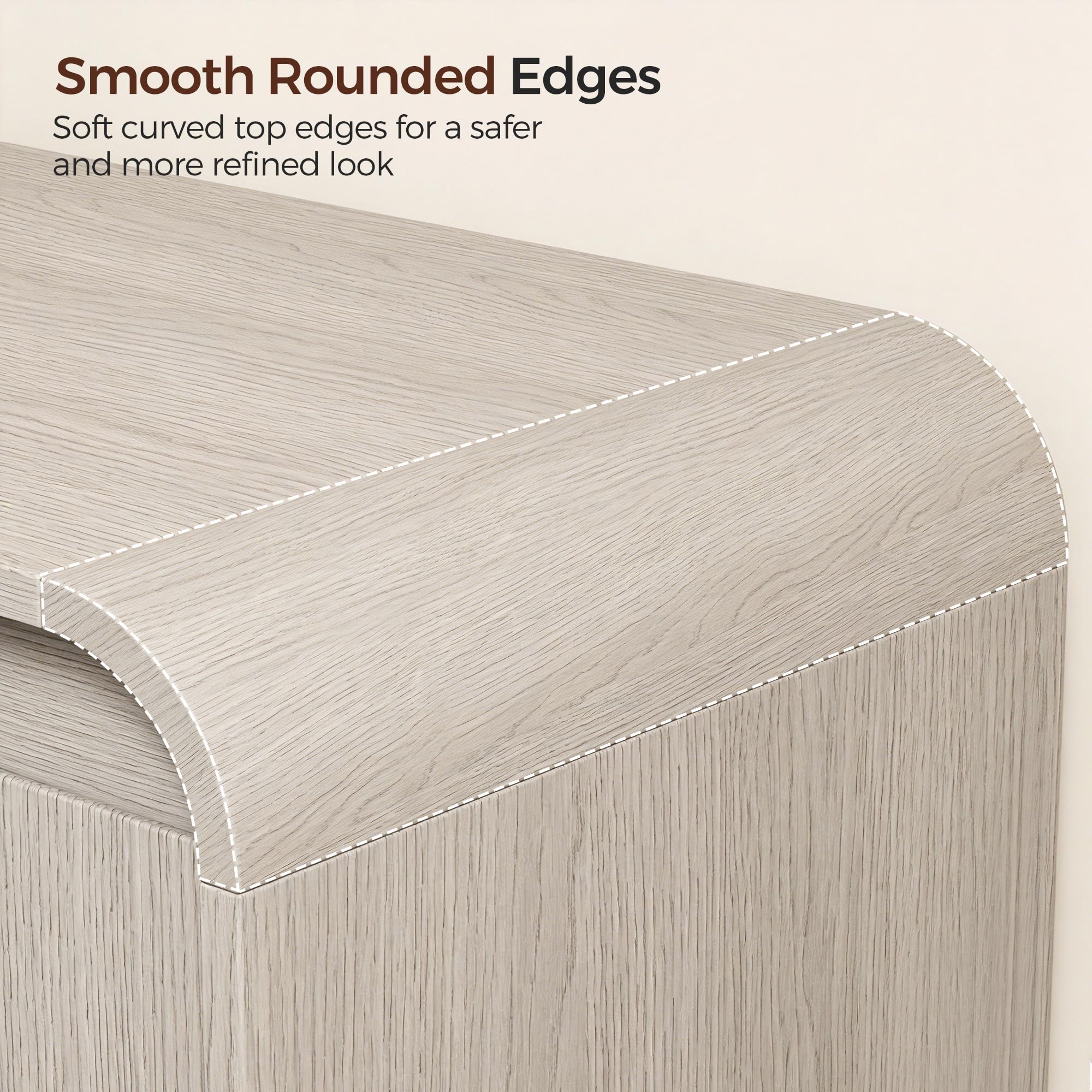
Best for a Wider Wall (Homleke Modern Curved Entryway Shoe Storage Bench, B0GTV7TMCB)
At 39.4 inches wide, this curved Homleke bench is the one to reach for when you’ve got a wider wall and want the piece to anchor the space. The hidden-handle door design keeps the front clean, and it holds up to 8 pairs of shoes behind closed doors, so clutter stays out of sight. The curved silhouette softens a boxy entry and reads more like furniture than a utility cabinet. It needs a bit more wall than the two-tier picks, so confirm you have at least 45 inches of clear span before committing. For foyers and generous single-door entries, the extra width earns its place.
Frequently Asked Questions
What is the standard height for an entryway bench?
17 to 19 inches. That matches a dining chair, so your knees bend at roughly 90 degrees and tying shoes stays comfortable. Below 16 inches you’re crouching; above 20 inches most people’s feet dangle.
How wide should an entryway bench be?
For a single-door entry, 30 to 42 inches fits one person plus a basket. Plan on 24 inches of width per seated person, so a two-person bench needs at least 48 inches of clear wall.
How much clearance do I need in front of an entryway bench?
At least 30 inches. That’s the minimum walking path that lets someone sit and lace shoes while another person passes without turning sideways. Tight halls can drop to 28 inches, but not less.
How deep should an entryway bench be?
15 to 17 inches for a standard entry, and no more than 16 inches in a hallway under 42 inches wide. Deeper than 18 inches and the front edge starts catching hips and bags in tight spaces.
How much weight should an entryway bench hold?
A daily-use bench for two adults should hold 400 to 500 pounds. ASTM and BIFMA durability guidelines link that capacity to solid joinery and a reinforced center support once the bench passes 48 inches wide.
Bottom Line
Size an entryway bench from the walking path in, not the wall out. Keep 30 inches of clear path in front, cap depth at 16 inches in tight halls, and land the seat at 17–19 inches. For most single-door entries, a 30–42 inch bench like the Homleke 2-tier is the right call. If your wall runs wider, step up to the 39.4-inch curved model instead. Measure the door swing before you buy anything; it’s the step people skip and regret.





Write Your Review
No reviews yet. Be the first to share your experience!