

> Editorial Note: I’m Liam Wright, an outdoor and garden editor. I grew up in my family’s landscaping business and now cover what actually survives a season of UV, rain, and freeze-thaw cycles. The picks here are evaluated against ASTM weatherability standards and manufacturer durability ratings.
Stamped concrete looks expensive when the pattern is crisp, the release color settles right, and the sealer doesn’t turn cloudy after the first wet week. The trouble is that most patio failures start before anyone opens the sealer: weak surface prep, rushed stamping windows, and mats that don’t match the slab size. If you’re building out a full backyard setup, pair the hardscape plan with best gas fire pit table, best outdoor lounge chair cushions, best patio umbrella with lights, best l shaped outdoor couch, and best folding lounge chair outdoor so the patio dimensions serve the furniture, not the other way around.
How We Evaluated
Stamped concrete products were assessed by the job they can actually do on a patio: imprinting wet concrete, adding a decorative texture, or protecting a cured stamped surface. We looked for polyurethane stamp mats thick enough to hold pattern definition, practical mat sizes such as 24 x 24 inches and 36 x 36 inches, roller formats that can reach edges and narrow walkways, and water-based sealers suited to decorative concrete. ASTM C309 curing-compound guidance, ASTM C1315 liquid membrane standards, and Portland Cement Association placement guidance shaped the evaluation. Owner feedback mattered too, especially around pattern depth, mat flexibility, cleanup, and whether the finish stayed clear after rain.
The five products below serve different parts of the stamped-concrete workflow. Start with the 24-inch VEVOR set if you’re imprinting a small patio section; jump to the larger VEVOR kit if the slab is wide enough to reward bigger mats. The RimCereal roller handles narrow runs, MasonryDefender protects already-cured decorative concrete, and GlobMarble is the wood-plank look for people who don’t want stone.

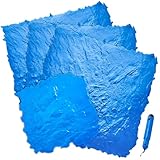


1. VEVOR 24 x 24 in Concrete Stamps Mat Set — Best for First Patio Sections
The VEVOR 24 x 24 in Concrete Stamps Mat set is the most approachable starting point because the mat size is big enough to cover ground but small enough for one person to reposition carefully. A 7-piece polyurethane kit gives you enough pieces to rotate across wet concrete without repeating the same exact edge every 2 feet. That matters on stamped patios, where a too-obvious grid makes the slab look printed instead of textured.
This is still a stamp-mat kit, not a concrete crew in a box. You’ll need properly placed concrete, a release agent, a tamper, clean edges, and a stamping window that usually lands after bleed water disappears but before the slab gets too firm. Miss that window and even a good mat won’t save the pattern. Classic patio mistake.
The biggest advantage is control. On a 10 x 12 foot patio landing or a walkway feeding a fire-pit zone, 24-inch mats let you work around posts, forms, and tight corners without dragging a 36-inch skin across the surface.
2. VEVOR 36 x 36 in and 18 x 18 in Concrete Stamps Mat Set — Best for Bigger Slabs
The larger VEVOR concrete stamp set uses 36 x 36 inch and 18 x 18 inch mats, which makes it better for patios where speed and pattern continuity matter more than tight-edge maneuvering. A 36-inch mat covers 9 square feet per placement, so it can reduce visible repetition on a larger slab compared with smaller 24-inch skins. The included 18-inch pieces help near borders, steps, and wall lines.
This is the set to consider when the patio is open, rectangular, and at least 12 feet wide. Bigger mats need more careful handling because dragging one across soft concrete can smear the surface paste and flatten the release color. You also need enough people to place, press, lift, and rotate without panic. Two sets of hands minimum.
The trade-off is storage and learning curve. Large polyurethane mats take room, and they punish sloppy timing. But for a full outdoor dining patio or broad lounge area, the scale looks more natural than a small stamp repeated too often.
3. RimCereal Concrete Texture Roller Stamp — Best for Edges and Narrow Runs
The RimCereal Concrete Texture Roller Stamp fills the gap between full stamp mats and hand-texturing tools. A roller can move along walkways, border bands, and narrow patio extensions where square mats feel awkward. It also suits decorative touch-ups on small concrete projects where buying a full mat set feels excessive.
A roller won’t create the same deep, varied stone impression as a multi-mat stamp layout. That’s the honest limit. It works best when you want consistent surface texture across a strip, not a full random-stone field with multiple grout-line variations. For a 3-foot walkway or the perimeter band around a patio, that consistency can be useful.
Surface timing still matters. The concrete has to be firm enough to hold the roller pattern but soft enough to accept the texture without tearing. Keep the handle pressure steady, overlap lightly, and don’t roll back and forth over the same line. One clean pass beats three nervous ones.
4. MasonryDefender Stamped Concrete Sealer — Best for Protecting Finished Patios
MasonryDefender Stamped Concrete Sealer is the maintenance product in this group, not a stamping tool. The clear water-based satin finish is made for decorative concrete after the surface has cured and been cleaned. For homeowners refreshing an existing stamped patio, that’s the product category that usually matters most.
A 1-gallon sealer can often cover roughly 90 to 150 square feet per coat on decorative concrete, but stamped texture changes the math. Deep grout lines, porous concrete, and older unsealed surfaces absorb more. Plan for two thin coats instead of one heavy coat, and check the label’s recoat window before you start. Heavy coats are how clear sealers turn milky.
This is the pick for patios that already have the pattern but have lost the color pop. Clean the surface, let it dry fully, avoid sealing in direct afternoon heat, and don’t apply if rain is likely inside the cure window. Simple rules. Expensive consequences if ignored.
5. GlobMarble 9 in Wood Concrete Stamps Mats Set — Best for Wood-Plank Texture
The GlobMarble 9 inch Wood Concrete Stamps Mats set takes stamped concrete in a different direction: plank texture instead of stone or slate. The 6-piece set is built to create a wood-grain pattern for patios, driveways, and walkways where real wood would need too much upkeep. It makes the most sense for transitional spaces, like a concrete patio outside a modern farmhouse kitchen or a pool-adjacent area where wood decking would weather fast.
The narrower 9-inch plank format gives the pattern its character. It also means the layout has to be more intentional. If the planks drift out of line, the patio won’t look rustic; it’ll look crooked. Snap reference lines, plan the plank direction before the pour, and keep border cuts in mind.
Compared with stone-texture mats, this set is less forgiving of random placement. But when the goal is warm visual texture without actual boards, it’s the clearest choice here.
Comparison Table
| Pick | Product Type | Key Spec | Best Use | Rating |
|---|---|---|---|---|
| VEVOR 24 x 24 in Concrete Stamps Mat Set | Polyurethane stamp mats | 7 pieces, 24 x 24 in mats | Small patios and controlled sections | Not listed |
| VEVOR 36 x 36 in and 18 x 18 in Concrete Stamps Mat Set | Polyurethane stamp mats | 36 x 36 in and 18 x 18 in mats | Larger open slabs | Not listed |
| RimCereal Concrete Texture Roller Stamp | Texture roller | Stone-pattern rolling format | Edges, bands, and narrow walkways | Not listed |
| MasonryDefender Stamped Concrete Sealer | Water-based satin sealer | 1 gallon, clear finish | Protecting cured stamped concrete | Not listed |
| GlobMarble 9 in Wood Concrete Stamps Mats Set | Wood-grain stamp mats | 6 pieces, 9 in plank pattern | Wood-look concrete patios | Not listed |
Buying Guide: What Stamped Concrete Patio Products Can and Can’t Do
Stamped concrete is a timing job first and a tool job second. The mats or roller create the pattern, but the slab has to be ready: properly mixed concrete, stable forms, compacted base, correct slope, and enough hands on site. For patios, a 1/8 to 1/4 inch per foot slope away from the house is common so water doesn’t sit against the foundation.
Stamp mats matter most during the short window after bleed water is gone and before the concrete surface hardens. If the mat sinks too deeply, the slab is too wet. If the imprint looks shallow and dusty, it’s too late. That’s why big patios are often better left to contractors, especially if the slab is more than 150 square feet or has stairs, drains, curves, or multiple pours.
Mat size should match the work area. A 24 x 24 inch mat gives better control around small patios, posts, and borders. A 36 x 36 inch mat covers more surface per placement and can look more natural on a broad slab, but it’s harder to move cleanly. A roller is different: it adds texture efficiently along strips and edges, yet it won’t mimic a full random-stone layout.
Sealer is its own decision. Decorative concrete usually needs a clean, dry surface and a thin, even application. The American Concrete Institute warns that moisture trapped under film-forming coatings can cause whitening, peeling, or poor adhesion. Wait for the right weather. No shortcuts.
Stamping vs Sealing: Choose the Product for the Stage You’re In
If you’re pouring new concrete, start with stamping tools. The VEVOR sets and GlobMarble mats are for wet concrete, while the RimCereal roller is useful for narrow decorative sections. These products need release agent, planned pattern direction, and careful timing. They don’t fix a slab that’s already cured flat.
If the patio already exists, buy sealer, not stamp mats. MasonryDefender is for cured decorative concrete that needs protection and color refresh. Surface prep decides whether it works: pressure washing, degreasing when needed, removing failed old coating, and letting the slab dry. A damp patio can make even a good sealer haze.
Here’s the practical split: stamps create texture, sealer protects texture. Confuse those stages and you’ll spend money twice.
Frequently Asked Questions
Can I stamp a concrete patio myself?
Yes, but only if the project is small and simple. A square 6 x 8 foot pad is realistic for a careful DIYer with help. A 16 x 20 foot patio with curves, steps, and drainage is contractor territory because the concrete won’t wait while you learn the pattern.
When should stamped concrete be sealed?
It depends on the product and the concrete condition. Many decorative concrete sealers are applied after the slab has cured, often around 28 days for new concrete unless the manufacturer allows earlier use. Existing patios should be clean, dry, and free of loose old coating before resealing.
How much stamped concrete sealer do I need?
A 1-gallon container often covers about 90 to 150 square feet per coat on textured concrete. Smooth concrete may stretch farther, but stamped grout lines and porous surfaces drink more material. Plan two thin coats for better clarity and durability.
Are stamp mats better than a texture roller?
Yes for full patio patterns. Stamp mats create deeper, more varied impressions across broad slabs. A texture roller is better for borders, narrow walkways, and small decorative strips where square mats are hard to place.
Will stamped concrete products replace a contractor?
No. They replace specific tools, not concrete judgment. You still need base prep, proper slope, control joints, release agent, finishing skill, and enough people to stamp before the slab sets. For large patios, the crew matters as much as the pattern.
Why does stamped concrete sealer turn white?
Moisture is the usual cause. Sealer can haze when water gets trapped under the coating, when the coat is too thick, or when the surface wasn’t dry enough. Apply thin coats, avoid humid rain windows, and follow the recoat timing on the label.
Bottom Line
The VEVOR 24 x 24 in Concrete Stamps Mat set is the one most DIY patio owners should start with because it’s manageable, repeatable, and sized for controlled sections. If you’re covering a larger open slab, the 36 x 36 inch VEVOR set makes more sense. For an existing stamped patio, skip the mats and use MasonryDefender after proper cleaning and drying. Stamped concrete rewards patience. Rushed prep shows forever.






Write Your Review
No reviews yet. Be the first to share your experience!