

> Editorial Note: I’m Liam Wright, an outdoor and garden editor. I grew up in my family’s landscaping business and now cover what actually survives a season of UV, rain, and freeze-thaw cycles. The picks here are evaluated against ASTM weatherability standards and manufacturer durability ratings.
Solar pathway lights vs wired landscape lights is really a choice between low-effort flexibility and dependable light you can design around. If you’re lighting a rental walkway, a side garden, or a patio edge you may move next year, solar keeps the project simple. If you’re lighting front steps, a long driveway, mature trees, or a house facade, wired low-voltage fixtures give you stronger output and fewer dark surprises after three cloudy days. This guide is for homeowners deciding whether the no-trench route is enough, or whether a 12V transformer, cable run, and planned fixture spacing will pay off. For the rest of the yard plan, match lighting with best patio umbrella, best outdoor rug, best solar outdoor lights, how to choose a patio conversation set, and how to choose a patio dining table so the space works after sunset, not just in photos.
The Key Differences at a Glance
| Factor | Solar Pathway Lights | Wired Landscape Lights |
|---|---|---|
| Power source | Built-in panel and rechargeable battery; no outlet | 12V or 24V transformer, buried cable, outdoor GFCI outlet |
| Typical brightness | Accent-level path glow, often 5-30 lumens per stake | Task and architectural light, often 100-300+ lumens per fixture |
| Color temperature | Commonly 3000K warm white or 6000K cool white | More controlled 2700K-3000K warm white, plus RGBW systems |
| Install depth | Stake into soil, usually 18-24 inches apart | Cable trench or mulch tuck, with weatherproof connectors |
| Reliability | Drops after cloudy weather or shaded placement | Consistent nightly output if transformer capacity is sized correctly |
| Best use | Garden beds, rental patios, temporary paths | Steps, driveways, trees, permanent curb appeal |
When Solar Pathway Lights Win
Solar pathway lights win when the job is wayfinding, not security. A 4-foot garden path, an apartment patio edge, or a short run from driveway to porch doesn’t need a hardwired system if the fixture can sit in direct sun for 6 hours. The appeal is obvious: push the stake into soil, set spacing around 18 to 24 inches, and adjust the line until it looks balanced from the street. No trench. No electrician.
They also make sense for renters and seasonal layouts. If you move planters, rotate patio furniture, or change beds every spring, solar stakes move with the design. Apartment Therapy often frames outdoor rooms around flexible layers, and solar lighting fits that approach because you can shift glow without rebuilding the site plan.
The trade-off is control. Solar fixtures dim as batteries age, shaded panels under shrubs won’t recharge well, and cold weather can shorten runtime. You’ll notice it after back-to-back gray days. Classic backyard compromise. But for edging mulch beds, marking a short walkway, and adding low-level sparkle around a patio, solar is usually enough.
When Wired Landscape Lights Win
Wired landscape lights win when the light has a job to do every night. Front steps, driveway edges, retaining walls, and gate paths need predictable output, especially if someone arrives home after 10 p.m. A 12V low-voltage setup can run multiple fixtures from one transformer, and a 300W transformer leaves room for future path lights, spotlights, or color fixtures if the total wattage stays inside capacity.
They also win on design quality. Wired fixtures let you hold a consistent 2700K to 3000K warm tone across the yard, which matters if you’re lighting stone, brick, or wood siding. A 155-lumen path light is strong enough to define a walkway without turning the lawn into a parking lot. Wirecutter’s outdoor gear coverage often emphasizes weatherproofing, serviceability, and replacement parts; wired systems tend to be easier to maintain fixture by fixture because the power source isn’t sealed inside every stake.
The cost lands higher. You’ll buy cable, connectors, a transformer, and possibly pay for outlet work. Still, the result is steadier. That’s the point.
Cost, Durability, and Maintenance
Solar looks cheaper because the first box includes everything. An 8-pack or 10-pack can handle a short garden path in one afternoon, and there are no cable runs to hide. The real cost shows up later in battery fade, cloudy-season dimming, and plastic stakes that crack when soil freezes. For mild climates and open sun, that’s acceptable. For shaded yards under maples, it’s frustrating.
Wired lighting costs more up front, but the math changes over 3 to 5 years. Low-voltage cable can stay in place while fixtures are replaced, upgraded, or repositioned. The transformer becomes the backbone of the system. ASTM weatherability standards are useful here because outdoor materials face UV exposure, water intrusion, and freeze-thaw cycling. A fixture doesn’t have to look industrial to survive, but it does need sealed electrical contact points and corrosion-resistant housings.
Maintenance differs too. Solar asks you to clean panels and replace failing stakes. Wired asks you to check connectors, keep mulch from burying lenses, and confirm the transformer timer hasn’t drifted. Neither is zero-maintenance.
Our Top Picks for Each
The five picks below were selected for side-by-side relevance: solar options with strong owner ratings, weather-ready housings, and useful pack counts; wired options with 12V low-voltage hardware, published lumen output, or transformer capacity. Start with solar if you need fast path marking this weekend. Start with wired if the path has steps, turns, or safety stakes.

Pros
- Genuinely bright at 60 lumens with focused beam pattern that covers 6.9 sq ft per light
- Long10 to 15 hour runtime from the 1200mAh battery eliminates mid-night diming
- Durable ABS housing holds up across seasons without cracking or yellowing
- Slek square modern design blends with contemporary and traditional landscapes alike
- Adjustable height up to 20 inches accommodates different garden layouts
Cons
- Requires soft soil for stake installation, so hardscaped or rocky ground will need pre-drilled holes
- Limited to warm white 3500K only, no cool white or color temperature options
- 104 reviews is a relatively small sample, so long-term durability data is still limited
What stands out about the ELECLINK solar pathway lights is how much practical value you get for under $45. Eight lights is enough to line a full walkway or frame a garden bed, and the 60-lumen output with dual reflector lenses genuinely illuminates the path rather than just decorating it. The warm3500K glow feels inviting without being harsh, which is exactly what you want greeting you or your guests at night.
The design is clean and modern with a minimalist square shape that does not compete with your landscaping. They look intentional rather than cheap, which is rare at this price point. The two-pole height option is a nice touch that lets you customize the look depending on whether you are lighting a low flower bed or a taller walkway border.
If you want reliable dusk-to-dawn path lighting without running wires or hiring an electrician, this pack delivers.
Styles it works with: Modern Minimalist, Contemporary, Transitional, Mid-Century Landscaping
Best placed in: Along front walkways leading to the door, bordering a driveway, lining a backyard garden path, or framing a patio edge
May not suit: Very traditional ornate garden designs where lantern-style fixtures would look more cohesive, or homes with heavily shaded yards where solar panels cannot get adequate sunlight during the day
Buy it if:
- You need to light a full walkway or driveway and want enough lights in one purchase to do the job
- You want a zero-maintenance lighting solution with no wiring and no electricity costs
- You live in a climate with weather extremes and need lights rated for rain, snow, and heat
Consider waiting if:
- You prefer cool white or adjustable color temperature options for a specific landscape aesthetic
- You want to see more long-term reviews before committing to this relatively new listing
Skip it if:
- Your yard is heavily shaded by trees or structures and solar panels would not get enough direct sunlight
- You need to install in concrete, brick, or rocky terrain where stakes cannot be pushed into the ground
Check the latest price and availability on Amazon before it sells out.

Pros
- Pack of 10 provides excellent coverage for pathways and garden borders right out of the box
- Tool-free battery replacement extends usability when solar capacity degrades over time
- Fully weatherproof design with no exposed metal parts handles year-round outdoor conditions reliably
- Simple push-in installation takes minutes with no tools or wiring knowledge required
Cons
- 6000K cool white is strictly decorative brightness, not bright enough to illuminate steps or entry points for safety
- Ni-CD battery technology is older chemistry and will hold less charge over time compared to Ni-MH alternatives
- Solar performance depends heavily on sun exposure -- shaded yards or cloudy climates will see shorter nightly runtime
There is something quietly satisfying about a well-lit garden path, and the DenicMic 10-Pack delivers exactly that without any of the usual hassle. The diamond-cut acrylic shades throw a gentle snowflake pattern across the ground at night, giving your yard that finished, intentional look that separates a cared-for garden from a forgotten one. It is the kind of detail visitors notice even if they cannot quite explain why.
What makes this set practical for real homeowners is the combination of quantity and simplicity. Ten lights cover a full driveway approach or an extended garden border in one purchase. There is no conduit to run, no GFCI outlet to locate, and no electrician to schedule. You press them into the soil, and by the following evening they are doing their job. The stainless steel poles hold their finish through wet seasons, and when the batteries eventually fade after a year or two, you swap them out in seconds.
If you want a pathway that looks well-designed and welcoming at night without dealing with outdoor wiring or ongoing maintenance, this one delivers.
Styles it works with: Modern Farmhouse, Contemporary, Minimalist, Coastal
Best placed in: Front walkway from sidewalk to door, garden bed border along a backyard patio, driveway edge leading to garage
May not suit: Heavily shaded yards with tree cover that blocks consistent sun exposure; homes with very young children who may pull stakes from the ground; formal or traditional estate-style landscaping where warmer brass or copper finishes would be expected
Buy it if:
- You want to line a full driveway or garden path and need enough lights to make it look intentional without multiple orders
- You rent your home or move frequently and need outdoor lighting that installs and removes without tools or permanent fixtures
- You want decorative nighttime curb appeal on a budget and are not relying on these for safety or task lighting
Consider waiting if:
- You are in a region with limited winter sun and want to verify seasonal performance before committing to a full landscape layout
Skip it if:
- You need bright functional lighting for steps, entry doors, or dark corners where visibility and safety are the priority
- Your yard is heavily shaded and gets fewer than four hours of direct sunlight daily, as solar runtime will be significantly reduced
Check the latest price and availability on Amazon before it sells out.

Mancra Solar Pathway Lights 8 Pack | 3000K Warm White LED Filament | Glass Metal Waterproof Outdoor Garden Stake Lights
Pros
- Glass housing resists yellowing and corrosion better than standard ABS plastic alternatives
- LED filament bulb produces a softer, more aesthetically pleasing glow compared to typical solar LED beads
- Monocrystalline panel with 25% conversion efficiency charges faster and performs better in partial sun than entry-level polycrystalline panels
- Eight-pack coverage is generous enough for a full garden path or driveway border at under $40
- No-screw stake design makes repositioning or seasonal storage genuinely quick
Cons
- No manual override or brightness settings, so output is fixed once the light turns on
- Performance depends heavily on daily sun exposure, making them less reliable in cloudy climates or shaded yards
- No reviews yet available to confirm long-term durability of the glass housing or battery life beyond one season
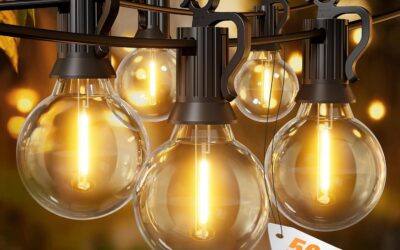
Most solar path lights look like an afterthought, cheap plastic caps on thin metal rods that fade to yellow after one summer. The Mancra set takes a different approach with a real glass lampshade and a stainless steel pole, giving your garden the kind of warm, considered glow you usually only see in professionally landscaped yards. The LED filament bulb is the key detail here. It casts a soft 3000K light that feels more like a candle flame than a harsh floodlight, which makes a big difference when you are sitting outside in the evening.
The dusk-to-dawn automation is genuinely useful for daily life. You stake them in, flip the switch once, and they handle themselves from that point forward. No timers to program, no forgetting to turn them on before guests arrive. For a front walkway or garden border, that kind of set-it-and-forget-it reliability is exactly what you want from an outdoor light.
If you want a warm, decorative path lighting setup that looks like it cost twice as much without running electrical cable through your yard, this one delivers.
Styles it works with: Traditional, Craftsman, Modern Farmhouse, Cottage Garden
Best placed in: Front walkway from driveway to door, garden bed borders, landscape edges along a lawn, backyard patio perimeter
May not suit: Very heavily shaded yards where the solar panel cannot receive 6 or more hours of direct sun daily; ultra-modern or industrial exterior styles where the warm filament aesthetic may feel out of place
Buy it if:
- You want a full driveway or garden path lined with warm, attractive lighting and do not want to deal with wiring or an electrician
- You have been disappointed by cheap plastic solar lights that faded or stopped working after one season and want something with a glass and steel build
- You are decorating for a housewarming, holiday season, or outdoor gathering and need a set that looks intentional and polished right out of the box
Consider waiting if:
- You are shopping during late fall or winter in a low-sunlight region, since solar performance will be limited until sunnier months return
Skip it if:
- Your installation area is shaded by trees, eaves, or structures for most of the day, as the panel will not charge adequately for a full night of runtime
- You need adjustable brightness or color temperature options, since these lights offer a fixed output only
Check the latest price and availability on Amazon before it sells out.
ELECLINK represents the solar pathway side for homeowners who want a simple garden run without committing to cable. The 8-pack format is enough for a short front walk or two small bed borders, and the 4.6 owner rating is a useful signal in a category where cheap stakes fail fast. Its larger LED lens matters more than the box photo suggests because path lights need spread, not a narrow dot on the ground. Use this when the path gets direct afternoon sun and you want warm, low-effort guidance.
DenicMic is the solar pick for a brighter, cooler look. The 10-pack stainless-steel stake set uses 6000K cold white LEDs, so it reads crisp rather than cozy. That works along modern concrete paths, gravel strips, and drive edges where visibility matters more than amber ambiance. It won’t be the gentlest choice beside warm wood furniture, and that’s the caveat. But if you want more fixtures per box and a clean stake profile for a long, straight run, DenicMic makes sense.
Mancra sits between decorative garden lighting and practical solar path marking. The 8-pack glass-and-metal design feels more finished than basic plastic stakes, which helps near a front entry or formal planting bed. It still belongs on the solar side: placement depends on sun exposure, and runtime will follow the weather. The advantage is appearance. If the lights are visible during the day, Mancra is easier to live with than utility-looking stakes pushed every 2 feet along a walkway.
EDISHINE is the wired pick for people who want low-voltage reliability without going huge. The published 3.4W, 155-lumen, 12V, 3000K spec tells you what you’re buying: warm path light with enough output for steps, walkways, and low garden walls. That 155-lumen level is much more useful than most solar accent stakes, especially in winter. You still need a transformer and cable plan, but this is the side to choose when the lights need to turn on at the same brightness every night.
SUNVIE is wired lighting for a yard that may grow beyond path markers. The 12-pack RGBW kit includes a 300W low-voltage transformer and supports 12-24V landscape lighting, which gives it more system potential than a few standalone stakes. Color-changing fixtures aren’t for every facade, but they work for patios, holiday scenes, and outdoor dining zones where one warm-white setting isn’t the whole story. Pick SUNVIE if you want a powered backbone now and room to experiment later.
The Verdict
Solar pathway lights win for renters, small garden paths, and patios where the main goal is soft edge lighting. They’re cheaper, faster, and easier to move, and a sunny 20-foot walkway doesn’t need a transformer to look finished. Wired landscape lights win for front steps, long driveways, shaded yards, and any route people must use safely after dark. For curb appeal, wired also wins because the color temperature and brightness stay consistent across the whole house. My practical split: use solar for atmosphere and temporary layouts; use wired for safety, architecture, and anything you don’t want to revisit after the first cloudy week.
Frequently Asked Questions
Are solar pathway lights bright enough for a front walkway?
It depends. For a short, straight walkway with no steps, yes, solar can be bright enough as visual guidance. For stairs, uneven pavers, or a 30-foot path used nightly, wired low-voltage lights are safer because the brightness doesn’t depend on yesterday’s sun.
Do wired landscape lights use a lot of electricity?
No. Low-voltage LED landscape fixtures are modest loads. A 3.4W path light running 8 hours uses about 27 watt-hours per night. Even a 12-fixture run stays far below what old halogen systems used, as long as the transformer is sized correctly.
Which lasts longer, solar or wired outdoor lighting?
Wired usually lasts longer as a system. Solar lights have batteries and panels built into each fixture, so failure often means replacing the whole stake. Wired systems separate the transformer, cable, and fixture, which makes repairs more practical over several seasons.
Can I mix solar and wired lights in the same yard?
Yes. Use wired lights for the high-stakes zones: steps, the front walk, driveway edges, and architectural accents. Use solar stakes around seasonal planters, side beds, or patio borders. Mixed systems look best when you keep color temperature close, ideally around 3000K.
What color temperature is best for outdoor path lights?
Warm white wins for most homes. Aim for 2700K to 3000K near patios, brick, wood, stone, and planting beds. Cool 6000K light can help visibility on modern paths, but it can make landscaping look harsher and less inviting.








Write Your Review
No reviews yet. Be the first to share your experience!