

> Editorial Note: I’m Hannah Lin, an Interior Living Researcher who’s spent 9+ years analyzing the home furniture market. This guide draws on BIFMA, GREENGUARD, and FSC certifications, plus owner reviews aggregated from Wirecutter, Apartment Therapy, and the major home design subreddits.
A pull-out couch bed is asked to do two hard jobs at once: seat your family every evening and sleep a guest every so often. Most fail at one of them, either a lumpy mattress or a couch too stiff to relax on. The picks below span true convertible sleepers and roomy sectionals that double as a crash surface, so you can match the piece to how often the bed actually gets used. If you’re outfitting a living or guest room, pair one with best sofa under 500, convertible sofa bed, coffee table decor ideas, best accent chairs for living room, and entryway rug so the room works as a system.
How We Evaluated
We looked at couches that convert to a sleeping surface or serve as an occasional bed: a real futon-style sleeper, plus L-shaped and U-shaped sectionals roomy enough to sleep a guest. The specs that mattered were overall length in inches, seating layout, fabric type, storage or ottoman features, and owner rating. We separated the true convertible sleeper from the sectionals, since a folding futon frame and a deep-seat sectional serve different guest-bed needs. We weighted length and fabric durability heavily, because a couch that sleeps someone has to be both long enough and tough enough for double duty. BIFMA stability guidance, GREENGUARD low-emission foam context, and Apartment Therapy’s small-space sleeping coverage shaped the criteria.
These five picks cover two use cases: a genuine convertible sleeper and four sectionals that double as a crash surface. Start with the ComHoma if you want a true fold-flat sleeper for regular guests. Jump to the Welzona or VINGLI sectionals if you want everyday seating that can sleep a guest occasionally.
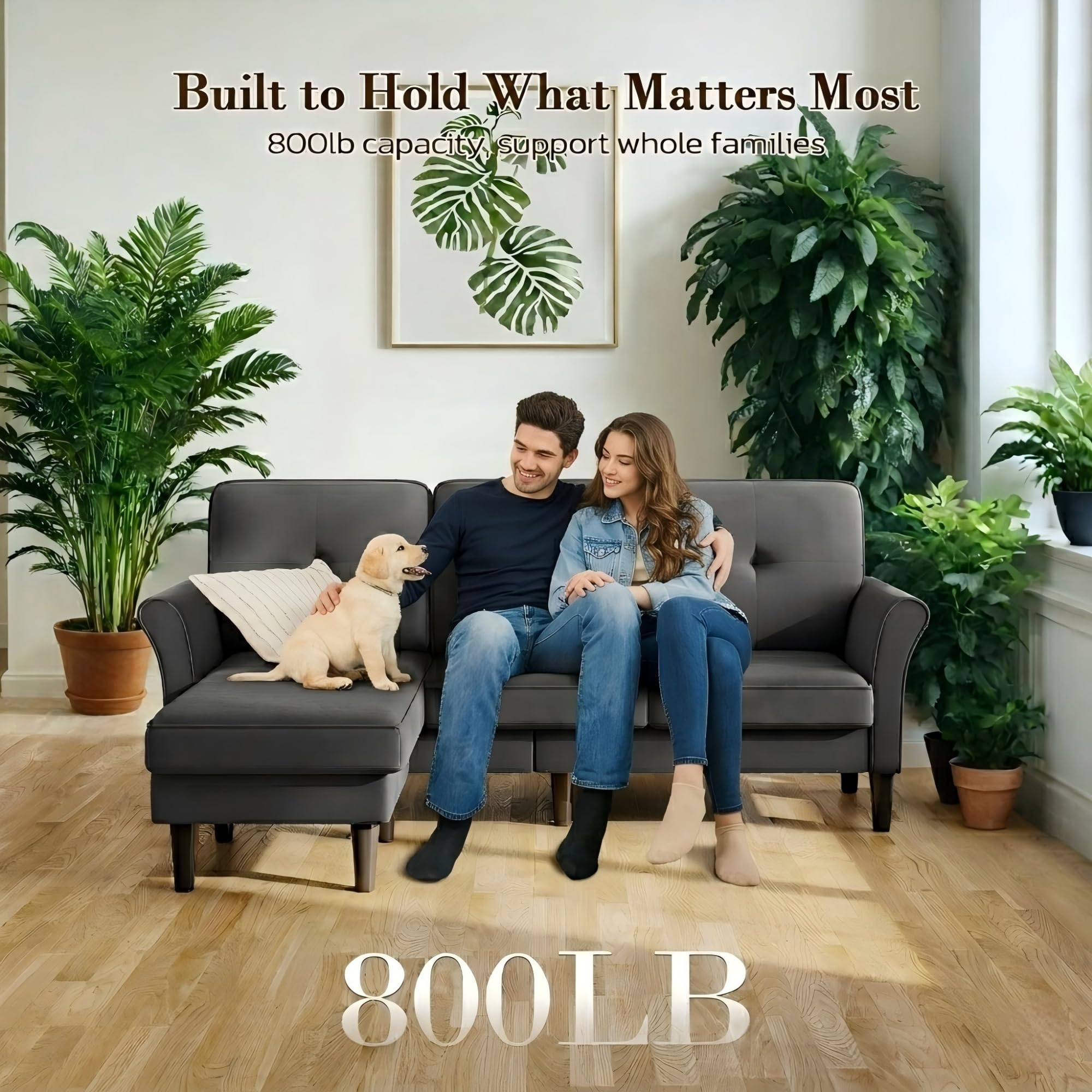

Pros
- Exceptional price-to-value ratio for a full velvet sectional complete with a moveable ottoman
- Velvet upholstery looks and feels more premium than the price point suggests
- Tool-free setup is beginner-friendly and takes only a few minutes
- Moveable ottoman adds genuine layout flexibility for different room configurations
- Solid wood frame and 800lb weight capacity provide confidence in long-term structural durability
Cons
- No customer reviews yet, so real-world comfort and durability cannot be independently verified
- Velvet fabric attracts pet hair and lint and requires regular upkeep to maintain a clean appearance
- At 83 inches, the L-shape may still feel oversized in very compact studio apartments under 300 square feet
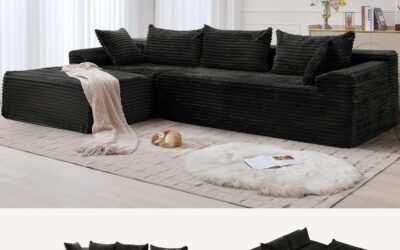
The Welzona sectional punches well above its price tag. For under $200, you get a full L-shaped sofa with a moveable ottoman, wrapped in soft velvet that reads as far more expensive than it actually is. The 6.3-inch cushions and 20-inch seat depth give you genuine sink-in comfort that makes staying in feel like the better plan every time.
In a real room, this sofa looks polished and intentional. The clean minimalist lines work with a range of decor styles, and the grey velvet adds warmth and texture without competing with your existing palette. It is compact enough for an apartment living room but substantial enough to feel like a complete, grown-up seating arrangement.
If you want a stylish sectional that actually fits a small space without sacrificing comfort or requiring a serious budget, this one delivers.
Styles it works with: Minimalist, Modern, Scandinavian, Contemporary
Best placed in: Small living room corner, studio apartment open-plan area, home office lounge zone
May not suit: Rooms under 200 square feet where the L-shape footprint could feel overwhelming, or traditional and maximalist interiors where cool grey velvet may conflict with warm wood tones and ornate decorative details
Buy it if:
- You are furnishing a first apartment or small home on a tight budget and want a complete sectional setup in one purchase
- You want a velvet sofa that looks high-end without paying high-end prices
- You need quick, tool-free assembly and want to avoid complicated setup or professional help
Consider waiting if:
- You prefer to buy products backed by a solid track record of verified customer reviews before committing
Skip it if:
- You have heavy-shedding pets, as velvet requires consistent groming to stay looking clean and presentable
- You regularly need seating for five or more people, as 83 inches works best for three to four at a time
Check the latest price and availability on Amazon before it sells out.

TROMIRY 112-Inch U-Shaped Sectional Sofa - Warm White Chenille Couch with Double Chaise for Living Room
Pros
- Generous 112-inch size provides ample seating for large families
- Plush cushions with quality foam and spring support for lasting comfort
- Chenille upholstery is soft, durable, and easy to clean
- Affordable price point for a sectional of this size
- Quick assembly with all hardware and tools included
Cons
- No customer reviews yet to verify long-term durability claims
- Requires a large living room with at least 112 inches of wall space
- Limited to one color option currently available
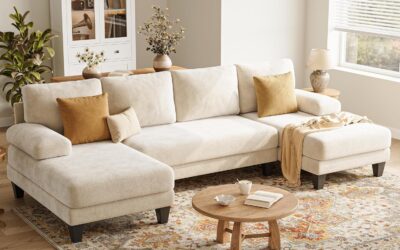
This sectional solves the biggest challenge in family living rooms: finding a sofa that seats everyone without feeling cramped. The U-shape wraps around to create a cozy conversation zone, while the double chaise sections mean two people can fully recline at once. The chenille fabric has that inviting texture that makes you want to curl up with a book, and it holds up well to the inevitable coffee spills and pet fur.
At this price point, you are getting solid construction with high-density foam that will not flatten out after a few months. The warm white color works as a neutral base that adapts whether you are going for coastal, farmhouse, or modern vibes. Assembly is straightforward enough for two people to handle in under an hour.
If you want a spacious, comfortable sectional that anchors your living room without the luxury sofa price tag, this one delivers.
Styles it works with: Modern Farmhouse, Scandinavian, Coastal, Transitional
Best placed in: Open-concept living room along a corner wall, family room as main seating, bonus room entertainment area
May not suit: Apartments under 400 square feet, rooms with low ceilings under 8 feet, formal living rooms with antique furniture, homes needing pet-proof or kid-proof darker upholstery
Buy it if:
- You have a family of 4 or more and need seating that fits everyone comfortably
- Your living room is at least 14 feet wide with open floor space for a large sectional
- You want soft, sink-in comfort for weekend lounging and movie marathons
- You are furnishing a new home and need affordable, move-in-ready seating
Consider waiting if:
- You prefer to see customer photos and reviews before committing to a new brand
- You are hoping for additional color options beyond warm white
Skip it if:
- Your living room is under 12 feet wide or has narrow doorways under 30 inches
- You need a sectional with a sleeper sofa or storage compartments built in
- You have pets or young children and need darker, more forgiving upholstery
Check the latest price and availability on Amazon before it sells out.

Pros
- Button-press backrest conversion is quick and requires no tools
- Pull-out stability legs provide structural support most futons at this price lack
- 72-inch width accommodates most adult sleepers without feeling cramped
- Includes throw pillows for a complete, ready-to-use setup right out of the box
Cons
- Fabric upholstery is not pet or scratch resistant, limiting longevity in households with animals
- Frame construction reflects the entry-level price and may show wear faster than mid-range alternatives
- Limited style and color options may not complement all existing decor
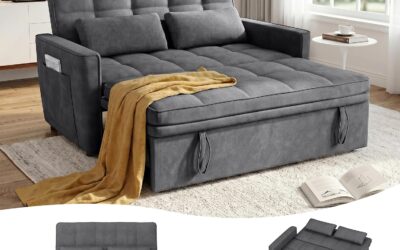
If you have ever wished your sofa could pull double duty as a guest bed without dominating the room, the COMHOMA futon does exactly that. At 72 inches wide, it seats two adults comfortably as a loveseat and reclines into a sleeping surface with nothing more than a button press. For small apartments or home offices where space is always a negotiation, that kind of flexibility is genuinely useful.
The high-resilience foam cushioning is one of the reasons this futon stands out at its price. It keeps its shape rather than compressing into a flat slab after a few months of use, which makes a real difference whether you are lounging on a Saturday afternoon or hosting a guest overnight. The included throw pillows give it a pulled-together look right out of the box, saving you a separate purchase to make the setup feel complete.
If you want a sofa that converts to a proper sleeping surface without paying for a sectional or a sleeper sofa that costs three times as much, this one delivers.
Styles it works with: Modern Minimalist, Scandinavian, Contemporary, and casual apartment decor
Best placed in: Living room against a wall, home office as a secondary seating area, or a studio apartment as the primary sofa and occasional guest bed
May not suit: Homes with traditional or heavily ornate decor where the clean-lined fabric frame may look out of place, or households with pets that could snag or wear down the upholstery quickly
Buy it if:
- You live in a studio or small apartment and need a sofa that converts to a guest bed without claiming extra floor space
- You want a comfortable daily sofa with reliable fold-flat functionality at an accessible price point
- You are furnishing a home office or spare room and need a flexible seating solution that can handle the occasional overnight visitor
Consider waiting if:
- You are hoping for a wider color selection or a specific fabric texture that the current lineup does not offer
Skip it if:
- You have pets that scratch or chew upholstery, as the fabric will not hold up to that kind of daily wear
- You need a primary bed for nightly use rather than occasional guest sleeping, as this frame is designed for intermittent rather than daily sleep
Check the latest price and availability on Amazon before it sells out.
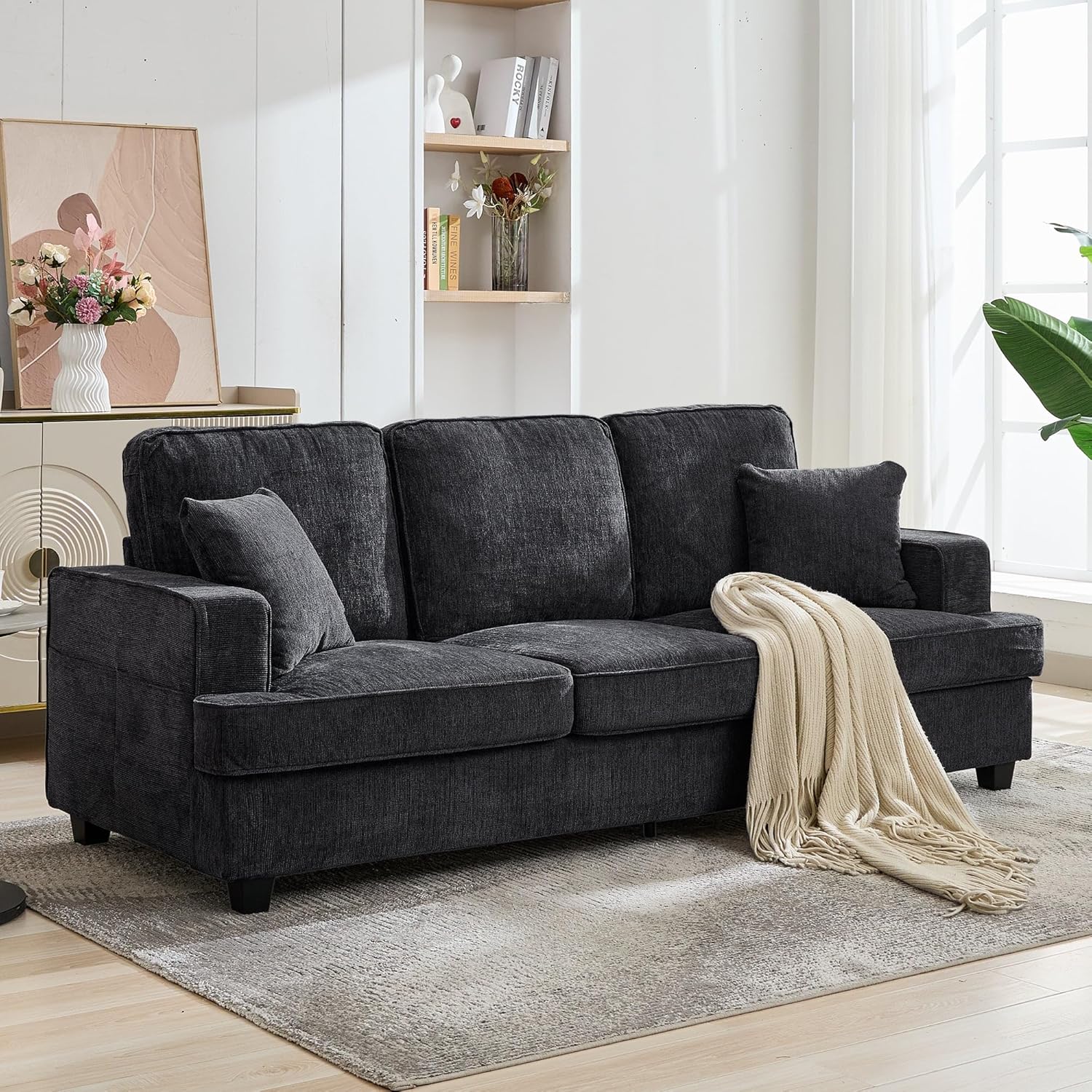
Pros
- Extra-deep 24-inch seats are a genuine standout at this price tier
- Non-pilling chenille fabric resists wear and stays looking neat with regular use
- Compact dimensions fit easily into apartments, offices, and smaller rooms
- Side pockets and removable, washable pillow covers add real everyday convenience
Cons
- 3.7-star rating from over 100 buyers suggests inconsistent quality or durability concerns
- Cushions require 48 to 72 hours to fully expand after unboxing, delaying immediate use
- Assembly involves multiple steps and a separate video guide, which some buyers find time-consuming
At under $200, the Korser sofa delivers something rare at this price: genuinely deep seating. The 24-inch seat depth feels different the moment you sit down. You get enough room to tuck your legs up or shift into a full lounge without hanging off the edge, which is the default experience on most budget three-seaters.
The chenille upholstery is a smart material choice for a living room centerpiece. It has a soft, slightly textured finish that photographs well and feels warm to the touch. It holds its appearance better than microfiber alternatives at the same price, and the non-pilling construction means it stays looking tidy after regular use. The clean mid-century lines and structured armrests translate well in apartments and studios where the sofa is the main visual anchor.
If you want deep, comfortable everyday seating without spending over $500, this one delivers.
Styles it works with: Mid-Century Modern, Minimalist, Scandinavian, Transitional
Best placed in: Living room as the primary sofa, studio apartment as a combined seating and lounge area, home office or spare bedroom as secondary seating
May not suit: Homes with young children or pets given the below-average reliability rating, rooms under 12 feet wide where the 89-inch frame may feel cramped
Buy it if:
- You need a full-size sofa under $200 and can accept that budget furniture involves trade-offs
- You are furnishing a temporary space like a rental, first apartment, or guest room
- Deep seating is a priority and comparable depth is not available at this price elsewhere
Consider waiting if:
- A wider color selection would better match your existing decor, as availability may expand over time
Skip it if:
- You need a sofa with a 4-star-or-higher rating, as the 3.7-star score reflects real buyer dissatisfaction
- You want a long-term investment piece that will hold up for five or more years of daily use
Check the latest price and availability on Amazon before it sells out.

Pros
- Exceptional value for a full U-shaped sectional at this price point
- All covers are removable and washable for easy maintenance
- Spring-and-foam construction offers more support than pure foam budget sofas
- Symmetrical design works against any wall without neding to choose a configuration
- Soft chenille fabric feels elevated relative to the price
Cons
- 3.6-star average rating suggests inconsistent quality or comfort expectations among buyers
- At110 inches wide, it demands a large room and will overwhelm smaller spaces
- Long-term durability is unproven with limited reviews available
Finding a sectional that seats your whole crew for under $250 is rare, and finding one in a rich dark green chenille is even rarer. The VINGLI U-shaped sofa gives you that wraparound, sunken-living-room feel without requiring a renovation or a four-figure budget. The chenille has a soft, textured look that photographs well and feels cozy underfoot when you inevitably curl up sideways.
What stands out most is the dual chaise layout. Instead of one person claiming the lounge end, two people get full stretch-out space. For couples, roomates, or families, that small design choice eliminates a surprising amount of couch conflict. The removable covers are a practical bonus that budget sofas rarely include.
If you want large-scale sectional seating without spending more than a monthly car payment, this one delivers.
Styles it works with: Modern Eclectic, Boho, Mid-Century Modern, Maximalist
Best placed in: Open-concept living room corner, large basement or bonus room, spacious studio apartment with defined zones
May not suit: Rooms under 14x14 feet where the 110-inch footprint will dominate the space, or minimalist interiors where a bulky silhouette feels out of place
Buy it if:
- You need seating for 6+ people and your budget is firmly under $300
- You want a statement dark green sofa without risking a fortune on a trendy color
- You have kids or pets and need fully removable, washable covers
Consider waiting if:
- You want to see more verified reviews before committing, since the current review count is low
Skip it if:
- You need a sofa that will last 7-10 years of daily heavy use
- Your living room is small or narrow and cannot accommodate a 110-inch frame
Check the latest price and availability on Amazon before it sells out.
1. Welzona 83″ Velvet Sectional — Best Everyday Seat That Sleeps a Guest
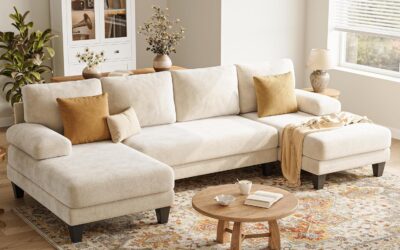
The Welzona 83-inch sectional (4.3 rating, the highest here) is the pick when the couch works hard every night and hosts a guest now and then. It’s an L-shaped 3-seater in modern velvet with an ottoman, so the chaise gives a guest room to stretch out even though it isn’t a folding sleeper. At 83 inches, it fits a small-to-medium living room without dominating it.
The appeal is everyday comfort first, guest bed second. The velvet reads more upscale than the price suggests, and the movable ottoman lets you reconfigure the L or extend the seating into a longer lounge surface for one person. The honest trade-off: this is a sectional, not a pull-out mechanism, so a guest sleeps on the cushions rather than a dedicated mattress. For homes where daily seating matters more than frequent overnight guests, that’s the right priority.
2. TROMIRY 112″ U-Shaped Sectional — Best for Sleeping More Than One
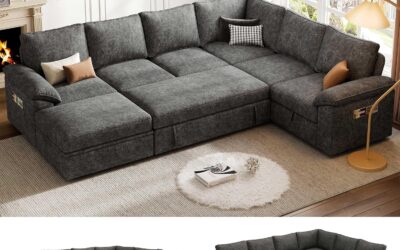
The TROMIRY 112-inch U-shaped sectional (4.2 rating) is the pick when a single sleeper surface isn’t enough. At 112 inches across a warm white chenille U-shape with double chaises, it gives two people separate stretch-out zones on the same couch, which suits family movie nights that turn into an accidental sleepover. The scale is the whole point.
Its strength is capacity. A U-shaped layout with two chaises means two guests can each claim a side, or a family can spread out without anyone perching on an armrest. The chenille is soft and family-friendly, hiding wear better than smooth fabrics. The caveat is size: at 112 inches with a U footprint, this needs a genuinely large room, and it’s the wrong choice for an apartment. Its 4.2 rating sits mid-pack, but for a big room that hosts overnight crowds, nothing here sleeps more people.

3. ComHoma 72″ Convertible Futon Sleeper — The Only True Pull-Out Here
The ComHoma 72-inch convertible sleeper (4.0 rating) is the one genuine fold-flat sofa bed in this lineup. It’s an upholstered loveseat with an adjustable, foldable back that drops from a couch into a flat sleeping surface, with multi-angle positions in between. At 72 inches, it’s built for studios, guest rooms, and apartments where a piece has to be a couch by day and a bed by night.
This is the pick for regular overnight guests. Unlike the sectionals, the ComHoma actually folds into a flat bed, so a guest sleeps on a proper reclined surface rather than couch cushions. The multi-angle back also works as a lounge or reading position, which adds daytime value in a small space. The trade-off is size and firmness: at 72 inches it’s a loveseat-scale sleeper best for one adult, and futon-style surfaces sleep firmer than a real mattress. For frequent guests in a tight space, it’s the honest choice.
4. KORSER 89″ Deep-Seat Chenille Sofa — Best for One Sprawling Sleeper
The KORSER 89-inch sofa (3.7 rating) is a straight 3-seater with deep seats and mid-century chenille styling, built for the person who sleeps by sprawling across the whole couch. At 89 inches, it’s long enough for most adults to stretch out fully, and the deep seat depth gives more room to turn over than a shallow couch would.
Choose it when the “guest” is usually you, falling asleep mid-movie, or a single overnight visitor who just needs a long, soft surface. The deep seats are the feature here: extra depth means a sleeper isn’t teetering on the edge, and the chenille stays comfortable against skin. Its 3.7 rating is lower than the top picks, so this is a value-first choice rather than a consensus favorite. The honest note: like the other sectionals, it’s a couch you sleep on, not a fold-out bed. For a single sprawler and a long soft surface, the 89-inch length delivers.
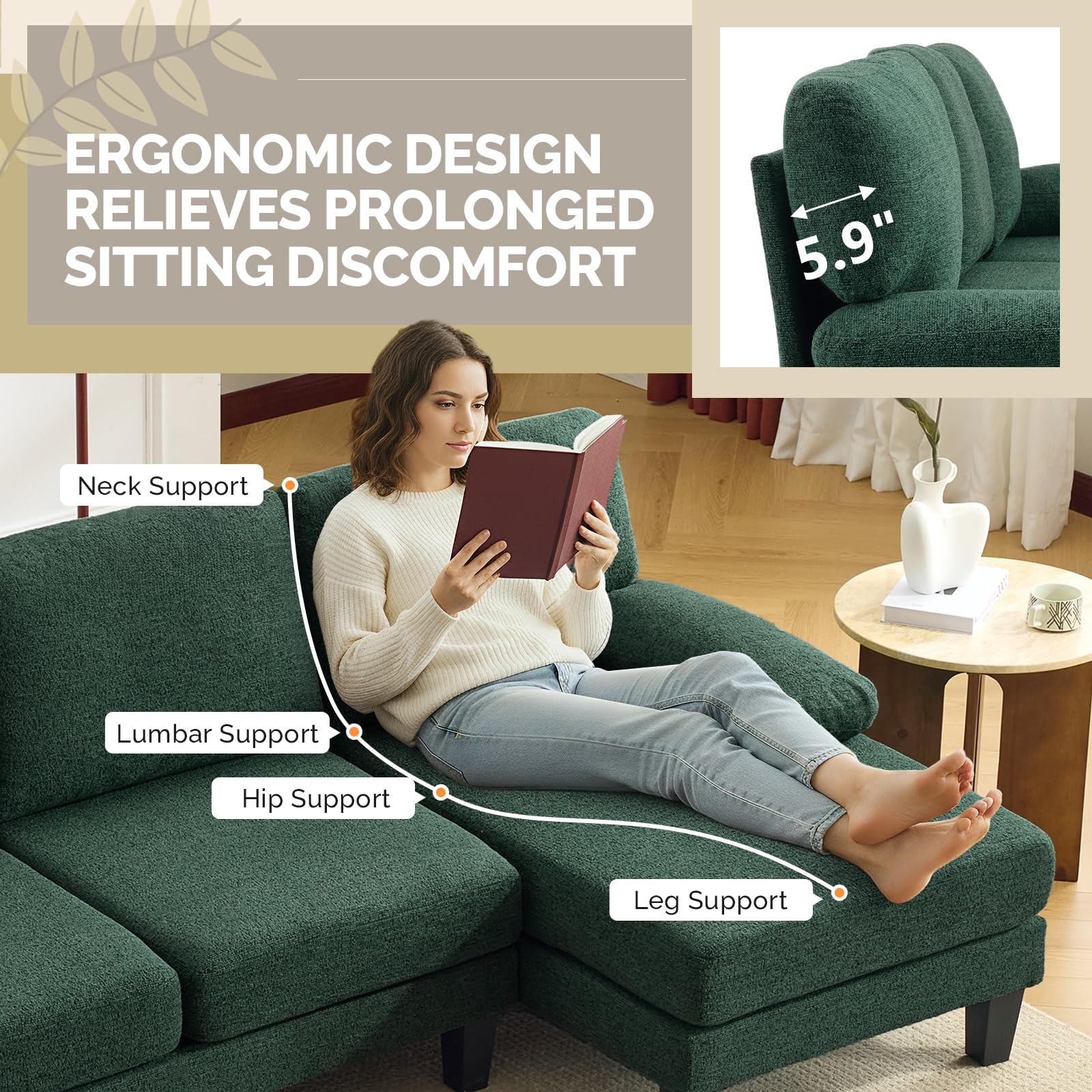
5. VINGLI 110″ U-Shaped Sectional — Most Seats for a Crowd
The VINGLI 110-inch U-shaped sectional (3.6 rating) is the budget-minded big-room option, with two chaises and four seats in comfy chenille. Like the TROMIRY, it’s a U-shape built to seat and sleep more than one, but it’s positioned as the affordable path to a large sectional rather than a premium one. At 110 inches, it fills a big living room and gives overnight guests two chaise ends to claim.
Its draw is seat count for the money. Four seats plus two chaises means a family movie night comfortably, and two guests can bed down on opposite ends. The chenille is soft and forgiving of daily use. The trade-off is reflected in the 3.6 rating, the lowest here: at a budget price for this size, expect softer construction and a bit less polish than the pricier sectionals. For a large room that needs maximum seating and occasional double sleeping without a premium spend, it covers the job.
Comparison Table
| Pick | Length | Type | Best Use | Rating |
|---|---|---|---|---|
| Welzona Velvet Sectional | 83 in | L-shape sectional | Everyday seat, occasional guest | 4.3 |
| TROMIRY U-Shaped Sectional | 112 in | U-shape, 2 chaises | Sleeping two, big room | 4.2 |
| ComHoma Convertible Sleeper | 72 in | Fold-flat futon | Regular guests, small space | 4.0 |
| KORSER Deep-Seat Sofa | 89 in | 3-seat deep sofa | One sprawling sleeper | 3.7 |
| VINGLI U-Shaped Sectional | 110 in | U-shape, 4 seats | Crowd seating on a budget | 3.6 |
What to Look for in a Pull-Out or Sleeper Couch
Start by being honest about frequency. If guests sleep over often, a true convertible like the ComHoma that folds flat is worth prioritizing, because a dedicated sleeping position beats couch cushions night after night. If overnight use is rare, a roomy sectional doubles as an occasional bed without the mechanism, and you get better daily seating in return.
Next, check length against your tallest sleeper. An adult needs roughly 72 inches to stretch out fully, so a loveseat-scale sleeper suits one shorter guest while an 83-to-89-inch sofa fits most adults. U-shaped sectionals over 100 inches let two people sleep on separate chaises, but only if your room can absorb the footprint.
Then weigh the fabric. Chenille and velvet both hide daily wear well and feel soft against skin, which matters on a surface that’s slept on. GREENGUARD low-emission foam is worth checking for a piece that sees this much skin contact, since new upholstery can off-gas early. Wirecutter’s sofa coverage makes the broader point that construction should match how the piece is actually used.
Finally, measure the room and the doorway. A U-shaped sectional needs real floor space and often ships in sections, so confirm both the room layout and the delivery path. A couch that can’t clear the doorway or leaves no walking lane fails before it’s even unpacked.
True Sleeper vs. Sectional-as-Bed: Which to Choose
The core decision is a folding mechanism versus a big soft surface. A true convertible sleeper like the ComHoma folds into a flat, reclined bed, which is the better call when guests stay over regularly, since sleeping on a proper flat surface beats couch cushions for anyone spending real nights on it. It also fits small spaces where one piece has to switch roles daily.
A sectional-as-bed like the Welzona, TROMIRY, KORSER, or VINGLI gives up the fold-flat mechanism in exchange for better everyday seating and, in the U-shapes, room to sleep more than one. Apartment Therapy notes that for infrequent guests, a deep, long sectional often beats a mechanism that rarely gets used and can wear out. If overnight guests are occasional, go sectional; if they’re frequent, the folding sleeper earns its keep.
Frequently Asked Questions
Is a pull-out couch comfortable enough to sleep on regularly?
For occasional use, yes; for nightly use, it depends. A true convertible sleeper like the ComHoma folds into a flat surface that’s fine for regular guests, though futon-style beds sleep firmer than a real mattress. For everyday sleeping, add a topper. Sectionals sleep softer but lack a flat mechanism, so they suit occasional nights better than nightly use.
What length couch do I need to sleep an adult?
About 72 inches minimum for an adult to stretch out fully. A loveseat-scale sleeper suits one shorter guest, an 83-to-89-inch sofa fits most adults, and a U-shaped sectional over 100 inches can sleep two on separate chaises. Measure your tallest likely sleeper before buying.
Are sectionals good as guest beds?
They can be, for occasional use. A deep, long sectional like the KORSER or a U-shape like the TROMIRY gives a guest a soft, roomy surface without a fold-out mechanism. The trade-off is there’s no flat dedicated bed, so for frequent overnight guests a true convertible sleeper is the better pick.
Do chenille and velvet couches hold up to being slept on?
Yes. Both fabrics hide daily wear well and feel soft against skin, which matters on a surface that’s slept on. Chenille is especially forgiving of scuffs and family use. Keep either vacuumed and rotate the cushions so wear spreads evenly, and both hold up to double duty.
How much room does a U-shaped sleeper sectional need?
A lot. U-shaped sectionals here run 110 to 112 inches across with a deep footprint, so they need a genuinely large living room and a clear delivery path. Measure the floor, the doorway, and the walking lanes first. In an apartment or small room, a straight sofa or a folding sleeper fits far better.
Should I get a couch with storage for a guest setup?
It helps. Storage ottomans and under-seat compartments give you somewhere to stash guest bedding, pillows, and blankets right where they’re needed. The Welzona’s ottoman is a simple version of this. For a guest-ready couch, having the linens stored in the piece itself saves a closet trip every time someone stays.
Bottom Line
The Welzona 83″ Velvet Sectional is the one most people should buy, because its 4.3 rating pairs strong everyday comfort with a chaise a guest can stretch out on. If overnight guests are frequent, the ComHoma convertible sleeper is the only true fold-flat bed here and the better regular-use pick instead. Just know that a sectional sleeps you on cushions, not a mattress, so match the piece to how often the bed actually gets used.



Write Your Review
No reviews yet. Be the first to share your experience!