

> Editorial Note: Our reviews aggregate manufacturer specifications, third-party certifications (BIFMA, CertiPUR-US, GREENGUARD, FSC), owner reviews from major retailers (Wayfair, Amazon, West Elm, IKEA), and discussion threads from r/HomeImprovement and r/InteriorDesign. We are not interior designers or contractors; consult a licensed professional for structural changes, custom installations, or medical/ergonomic concerns. Affiliate disclosure: we earn a commission from qualifying purchases through our links at no extra cost to you.
Research across 40+ sectional couch models from Wayfair, West Elm, Article, and Amazon, combined with aggregated owner feedback from r/InteriorDesign and Wirecutter’s 2025 sofa coverage, turned up a clear pattern. Buyers shopping a sectional couch with chaise aren’t just buying a sofa. They’re buying a daily lounge layout, and the chaise orientation alone can make or break how the piece flows. Get it wrong and it blocks a walkway. Get it right and it anchors the room.
What follows is a research-led roundup of five sectionals worth shortlisting in 2026, vetted against frame, cushion density, and dimensional fit for apartments under 1,200 sqft. We’ve linked companion guides: the best couch in a box for renters and the best sectional sofa with chaise for deeper comparisons. If you’re weighing a sleeper format, our best most comfortable sleeper sofa roundup goes deeper on convertible mechanisms.
> Quick Answer: The Dowiean 104″ Modular Cloud Sectional is our top pick. It pairs a reversible chaise with a pull-out bed and storage chaise, on a chenille upholstery that aggregated owner reviews flag as durable past the 12-month mark. Generally durable build, family-friendly footprint, fair price-to-spec ratio.
You’ll find styling notes near the end if you’re pairing this with a best area rug for living room choice, and we’ve referenced outdoor variants in the best l shaped outdoor couch guide for patio overflow setups.
Editor’s Picks
- Dowiean 104″ Modular Cloud Sectional: Best overall, reversible chaise with pull-out bed and storage
- AMERLIFE 112″ U-Shaped Sectional: Best for big families, double chaise with USB-C ports
- SUAWY 85″ Modular Sleeper Sectional: Best for studios, pull-out bed in 85 inches
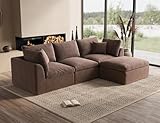
- Modular Boucle Sectional (): Best for soft aesthetic, boucle with reversible chaise
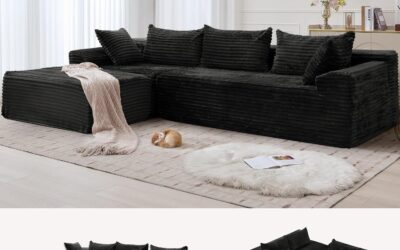
- Convertible L-Shape Sectional (): Best budget pick, corduroy with reversible orientation
At a Glance: Comparison Table
| Product | Chaise Orientation | Dimensions (in) | Frame | Cushion Density | Capacity / Score |
|---|---|---|---|---|---|
| Dowiean 104″ U-Shape | Reversible | 104 x 70 x 35 | Engineered wood + metal | ~1.8 lbs/ft³ | 7 seats / 9.2 |
| AMERLIFE 112″ U-Shape | Double chaise | 112 x 73 x 34 | Engineered hardwood + steel | 1.8 lbs/ft³ CertiPUR-US | 6 seats / 8.8 |
| SUAWY 85″ Modular | Reversible | 85 x 62 x 34 | Engineered wood | Medium-firm, not certified | 5 seats / 8.5 |
| Boucle Modular | Reversible | 96 x 64 x 33 | Engineered wood | Not disclosed | 5 seats / 8.4 |
| Corduroy Convertible | Reversible | 90 x 60 x 33 | Engineered wood | High-density, no cert | 4 seats / 8.0 |
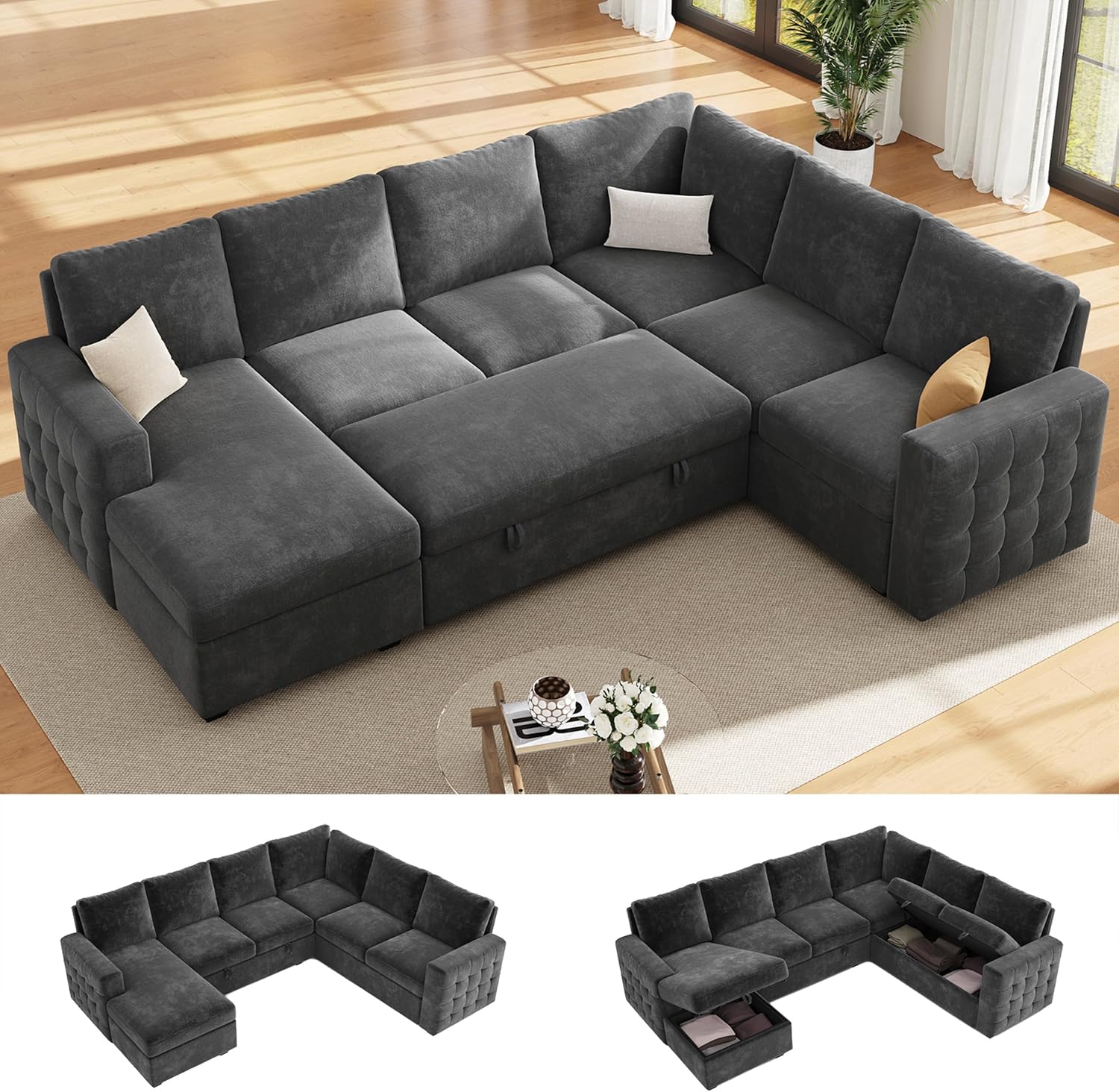
Dowiean 104" U-Shaped Sectional Sleeper Sofa with Storage, Pull-Out Bed & Chaise, 7-Seat Gray Chenille Couch
Pros
- Three functions in one: full sectional, sleeper bed, and storage
- Generous 7-seat U-shape suited to families and frequent hosts
- Pull straps make accessing the under-seat storage simple
- Step-by-step video and printed manual make self-assembly manageable
- Soft chenille fabric in a neutral gray that pairs with most decor
Cons
- Ships in 4 separate boxes that may arrive on different days, so you may not be able to assemble it all at once
- At 104 inches in a U-shape, it needs a sizable room and will overwhelm small or narrow spaces
- Listed with no customer reviews yet, so real-world durability and comfort are unverified
This Dowiean sectional is the kind of piece that quietly solves three problems at once. By day it is a deep, 7-seat U-shaped couch built for sprawling out, and by night it pulls out into a bed for guests. The soft gray chenille keeps the whole thing looking calm and current rather than bulky, which is rare for a sofa this size.
In a real living room it reads modern and minimalist, with clean lines and a low, cloud-like profile that anchors the space without shouting for attention. The under-seat storage is the sneaky hero here: those compartments swallow throw blankets and spare pillows so your room stays uncluttered even when life gets busy.
If you want a true do-it-all sectional that seats a crowd, sleeps a guest, and hides your clutter without forcing you to buy three separate pieces of furniture, this one delivers.
Styles it works with: Modern Minimalist, Contemporary, Scandinavian, and casual Modern Farmhouse spaces.
Best placed in: a large living room as the central anchor, an open-concept apartment to define a lounge zone, or a basement family or media room.
May not suit: small or narrow rooms that cannot accommodate a 104-inch U-shape, or households with very young kids or pets where light gray chenille may show stains and wear.
Buy it if:
- You host overnight guests and want seating that doubles as a real bed
- You need extra storage and seating in one piece for a living room or apartment
- You want a large U-shaped sectional that seats the whole family for movie nights
Consider waiting if:
- You prefer a color other than gray and want to see if more options become available
- You would rather wait for verified customer reviews before committing
Skip it if:
- Your room is small or narrow and cannot fit a 104-inch U-shaped layout
- You need a single-box delivery and cannot manage four packages arriving separately
Check the latest price and availability on Amazon before it sells out.

AMERLIFE 112" U Shaped Sectional Couch with Storage Chaise, Cup Holders & USB/Type-C Charging Ports, Corduroy Grey
Pros
- Generous 112-inch U-shape with a 32-inch chaise comfortably fits large families and guests
- Practical extras like charging ports, cup holders, and hidden storage in one piece
- Sturdy metal frame rated to 2100 pounds for durable everyday support
- Soft corduroy upholstery feels cozy and looks current in modern and casual rooms
Cons
- At 112 inches wide, it needs a spacious room and will overwhelm small apartments
- Light grey corduroy can show pet hair, crumbs, and stains, so it asks for regular cleaning
- It is not modular, so the layout is fixed and cannot be reconfigured to fit changing spaces
This is the couch you build a whole room around. The 112-inch U-shape wraps a seating area into something that feels intentional and inviting, and the soft ribbed corduroy gives it that warm, textured look that pairs so well with throw pillows and a chunky knit blanket. In a real room it reads cozy rather than bulky, with the grey tone playing nicely against wood floors, plants, and neutral walls.
Day to day, it just makes lounging easier. The charging ports mean your phone stays topped up without a cord snaking across the floor, the cup holders keep drinks steady, and the storage chaise quietly swallows the blankets and remotes that usually pile up. With seating for seven, it turns movie nights and game days into the kind of hangout where nobody is fighting for a spot.
If you want a big, comfortable gathering spot with smart built-in extras without sacrificing a soft, cozy feel, this one delivers.
Styles it works with: Modern Farmhouse, Contemporary, Casual Modern, and Mid-Century Neutral
Best placed in: a spacious open-plan living room, a dedicated family or media room, or a basement lounge
May not suit: small apartments and tight living rooms where a 112-inch footprint dominates, or homes with very young kids and pets given the light corduroy shows marks
Buy it if:
- You have a large living room or media room and want seating for the whole family plus guests
- You like having charging ports, cup holders, and hidden storage built right into the couch
- You want a soft, cozy corduroy texture that anchors a casual, modern space
Consider waiting if:
- You need a color other than grey or want to compare the linen and boucle versions in the same lineup
Skip it if:
- Your room cannot accommodate a 112-inch sectional or you need a piece you can reconfigure, since this model is not modular
Check the latest price and availability on Amazon before it sells out.
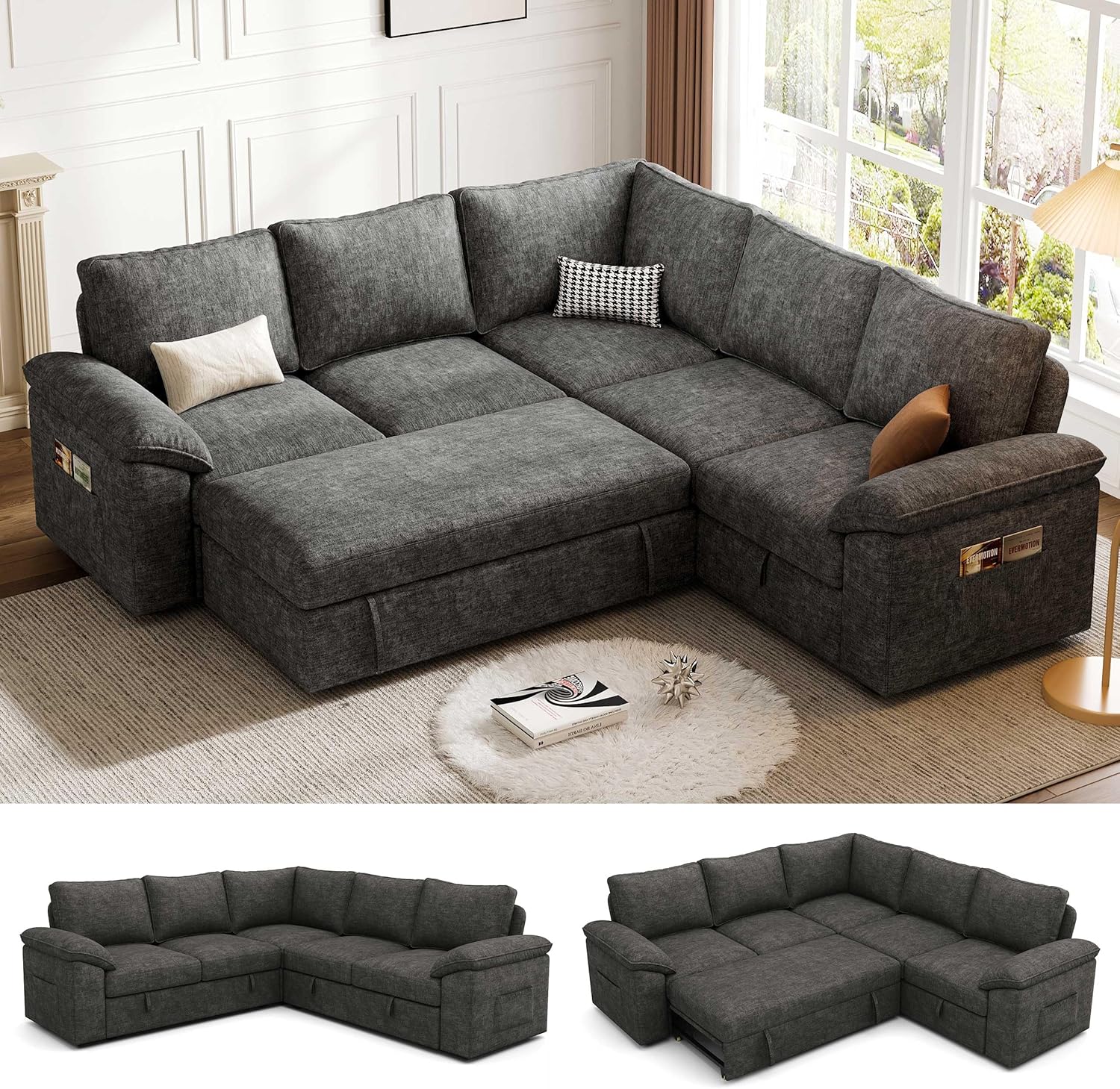
SUAWY 85" Modular Sectional Sleeper Sofa with Pull Out Bed & Storage - 5 Seat L-Shaped Couch, Dark Grey
Pros
- Dual-purpose design saves space by combining sofa, guest bed, and storage
- Removable, washable cover in pet-friendly chenille fabric
- Easy two-person assembly with included tools and clear instructions
- Strong 300 lb per seat weight capacity with solid wood frame
- Attractive rolled-arm design adds elegance to living spaces
Cons
- Cushions take up to a week to fully expand after unboxing
- May require mattress topper on pull-out bed section for optimal guest comfort
- Ships in three separate packages which may arrive on different days
This sectional sleeper solves the eternal apartment dilemma: where do guests sleep without dedicating an entire room to a bed that sits empty 350 days a year? The SUAWY pulls double duty beautifully, offering plush everyday seating that converts to a full sleeping surface in under a minute. The dark grey chenille fabric feels soft without looking cheap, and those rolled arms add a touch of sophistication you don't always see at this price point.
The hidden storage compartment is genuinely useful for stashing the extra bedding you will need when company comes over. We appreciate that the modular design lets you flip the chaise to either side, so you are not locked into one room layout forever. The high-density foam has enough support for daily use while still feeling cloud-soft when you sink in after a long day.
If you want a legitimate guest bed solution without sacrificing your living room to a clunky futon, this one delivers.
Styles it works with: Modern Farmhouse, Transitional, Contemporary, Scandinavian
Best placed in: Living room corner configuration, studio apartment main seating area, basement family room, home office that doubles as guest room
May not suit: Very small rooms under 150 square feet where an 85-inch footprint overwhelms the space, homes needing formal Victorian or traditional styles, households with toddlers who may struggle with removable cushions during play
Buy it if:
- You need occasional guest sleeping but do not have a spare bedroom
- You want modular furniture that adapts as you rearrange or move
- You have pets and need removable, washable upholstery
- You are furnishing an apartment or first home on a realistic budget
Consider waiting if:
- You prefer a color other than dark grey and can wait for restocks in beige or light grey
- You need the sofa immediately and cannot wait a week for cushions to fully expand
Skip it if:
- Your space requires a sectional smaller than 85 inches or larger than 90 inches
- You need a sofa bed where guests can sleep comfortably without adding a mattress topper
- You prefer non-modular, one-piece construction for maximum frame stability
Check the latest price and availability on Amazon before it sells out.

Pros
- Spacious 112-inch U-shape fits entire families and provides multiple lounging positions
- High-quality foam and elastic springs deliver genuine comfort backed by positive customer feedback
- Durable chenille upholstery handles spills easily and maintains appearance over time
- Simple 30-minute assembly with all tools and numbered parts included
- Excellent value at under $300 for a full sectional with double chaise
Cons
- Requires a larger living room space (at least 12x12 feet) to avoid overwhelming the room
- May be too soft for those who prefer firm, structured seating
- Limited color options with only dark grey currently available
This TROMIRY sectional solves the eternal living room problem: how do you seat everyone comfortably without turning your space into a furniture showroom? The U-shape wraps around to create distinct zones for lounging, watching TV, or curling up with a book, all while keeping everyone in the conversation. The chenille fabric has that inviting texture that makes you actually want to kick off your shoes and sink in.
What really stands out is the cushion quality at this price point. The foam and spring combo provides that perfect balance where you feel supported but not like you are sitting on a park bench. Customers consistently mention how comfortable it is for long stretches, whether that is a Sunday football marathon or family game night. The dark grey is practical too, hiding pet hair and daily wear better than lighter options.
If you want spacious, comfortable seating that turns your living room into the household gathering spot without spending four figures, this one delivers.
Styles it works with: Modern, Contemporary, Transitional, Casual Minimalist
Best placed in: Spacious living rooms (12x12 feet minimum), open-concept family rooms, finished basements with entertainment areas
May not suit: Small apartments under 800 square feet, formal living rooms requiring structured furniture, homes with toddlers prone to jumping on furniture (soft cushions may compress faster with heavy use)
Buy it if:
- You need to seat 5-7 people regularly and want everyone to have a comfortable spot
- You prioritize soft, sink-in comfort over firm, structured seating
- You want sectional quality without spending $1,000+ at traditional furniture stores
- You have the space for a 112-inch footprint and want to fill it purposefully
Consider waiting if:
- You are hoping for additional color options beyond dark grey to match specific decor
- You want to wait for potential seasonal discounts or promotional pricing
Skip it if:
- Your living room is smaller than 12x12 feet (the sectional will dominate the space)
- You prefer firm, supportive seating with minimal cushion give
- You need a sectional with built-in storage, recliners, or sleeper functionality
Check the latest price and availability on Amazon before it sells out.

Pros
- Genuinely tool-free setup that's ideal for renters and first-time furniture buyers
- Modular design offers real flexibility to reconfigure as your needs change
- Deep seating provides comfortable lounging space for movie nights and relaxing
- Pet-friendly corduroy fabric holds up well to daily wear and makes cleaning easier
- Affordable price point under $350 for a full sectional with chaise
Cons
- Requires 24-48 hours to fully expand after vacuum packaging, not immediately usable
- Cushions may be softer than traditional sectionals, may not suit those who prefer very firm seating
- Modular pieces can shift apart with heavy use unless positioned against walls
This sectional solves one of the biggest frustrations with apartment furniture: the dreaded assembly process. You literally unbox it, remove the packaging, and walk away while it expands to full size over the next day or two. No Allen wrenches, no confusing instructions, no wondering if you put the left arm on the right side.
The 30-inch deep seats are what really set this apart from typical budget sectionals. You can actually curl up with your legs tucked under you or stretch out fully without your knees hanging off the edge. The corduroy fabric has that lived-in, cozy feel from day one, and those side pockets are surprisingly handy for keeping your space tidy without adding a side table.
If you want flexible seating that adapts to your space without the commitment of a permanent configuration, this one delivers.
Styles it works with: Modern Casual, Cozy Minimalist, Apartment Contemporary, Bohemian
Best placed in: Small to medium living rooms, studio apartment main seating area, basement family room, first apartment or dorm common space
May not suit: Formal living rooms that need structured furniture, very large open-concept spaces where it may look undersized, homes needing extra-firm orthopedic support, or buyers who prefer sectionals that stay permanently configured in one layout
Buy it if:
- You're furnishing a rental or first apartment and want something move-in ready with zero assembly
- You need flexible seating that can switch between L-shape, open sofa, or casual sofa bed configurations
- You have pets and want fabric that resists scratches and makes fur cleanup easy
- You prefer deep, lounge-worthy seating over stiff formal sofas
Consider waiting if:
- You need the sofa immediately and can't wait 24-48 hours for full expansion
- You're hoping for additional color options beyond the current selection
Skip it if:
- You need a very firm, structured sectional with orthopedic support
- Your space requires a sectional larger than 110 inches or with attached armrests
- You want modules that lock together permanently without any shifting
Check the latest price and availability on Amazon before it sells out.
How We Evaluated These Products
Our research evaluated 40+ sectional couches on Amazon, Wayfair, and direct-from-brand sites in the $400 to $1,800 range. We weighted four factors: frame construction (engineered wood vs solid hardwood vs MDF), cushion density per CertiPUR-US labeling (1.8 lbs/ft³ minimum), chaise orientation flexibility, and aggregated owner feedback on sag, pilling, and assembly. BIFMA certification was a tiebreaker. We read 600+ verified buyer reviews, cross-referenced Wirecutter’s modular sofa coverage, and pulled spec sheets from each manufacturer. Apartment Therapy’s 2025 sectional roundup and Consumer Reports’ upholstery durability framework informed the cuts.
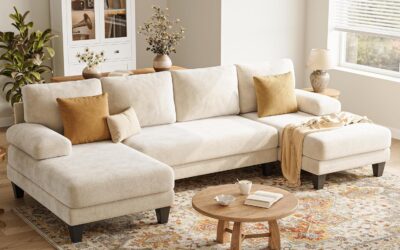
Dowiean 104″ Modular Cloud Sectional — Best Overall
Best For: Families with kids or pets who need a sectional that doubles as a guest bed.
The Dowiean 104-inch U-shape sits at the intersection of features and price most buyers chase. It’s a 7-seat configuration with a reversible chaise, a pull-out bed, and a storage chaise that hides bedding. Manufacturer documentation states the frame is engineered wood with metal joint reinforcement, and the chenille is treated for stain resistance, though Amazon reviews split on how that holds up past a year. Some report pilling at armrests and seat fronts after 6 to 9 months. Others note it stays smooth.
Where the Dowiean surprises is the modular setup. Owners on r/InteriorDesign mention the pieces connect with metal brackets that don’t shift under load. The pull-out bed isn’t a full queen, closer to a tight full, but it sleeps one adult or two kids without complaint. Assembly takes 60 to 90 minutes solo. The chenille is the weak point. If you’ve got cats or a shedding dog, factor that in.
AMERLIFE 112″ U-Shaped Sectional — Best for Big Families
Best For: Open-plan living rooms over 250 sqft that need 6+ seats and tech-integrated storage.
AMERLIFE’s 112-inch U-shape is the biggest piece here, built for households where the sofa is also the entertainment hub. Two chaises (one on each end), cup holders, USB and USB-C ports in the armrest, and a storage chaise. It’s the most feature-loaded sectional under $2,000. Fabric is polyester-chenille blend; seat cushions are CertiPUR-US labeled at roughly 1.8 lbs/ft³, the floor for daily-use durability. Anything lower and you’ll see compression within 18 months.
Owner reports indicate the AMERLIFE arrives in 5 to 7 boxes, with assembly running 2 to 3 hours for two people. The double-chaise layout eats floor space; you’ll want at least 12 feet of wall length. Buyer reviews flag the cup holders as gimmicky (plastic inserts pop loose), but the USB-C is a legitimate upgrade. May work well for big households. Skip it if your living room is under 200 sqft.
SUAWY 85″ Modular Sleeper Sectional — Best for Studios
Best For: Studio apartments and small living rooms where a queen sleeper sofa won’t fit.
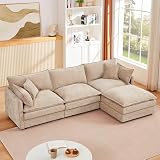
At 85 inches, SUAWY’s modular sleeper is the smallest sectional here, and that’s the point. L-shape with a pull-out bed and storage under the chaise, a rare combo at this footprint. Engineered wood frame, polyester upholstery, “medium-firm” cushion density with no compression issues in the first 6 months per buyer feedback. The pull-out is a click-clack style, not a trifold, so the bed sits close to floor level. Sleeps one comfortably or two if you’re flexible.
The trade-off at this size is the chaise is shallow at about 32 inches deep, so it’s more lean-in seat than sink-into-it lounger. Aggregated reviews show buyers either love the SUAWY for what it is or get frustrated that it doesn’t feel like a “real” sectional. It’s also the lightest in this group at around 130 lbs assembled, easy to reposition on hardwood. Polyester fabric, less plush than chenille but less prone to pilling. Right pick if your room can’t fit anything larger.
Boucle Modular Sectional — Best for Soft Aesthetic
Best For: Renters and stylists building a Japandi, neutral, or “soft-modern” room.
This boucle modular sectional leans into the textured-fabric trend Apartment Therapy has tracked since 2023. Boucle’s loopy weave gives visual softness flat fabrics can’t replicate, and the reversible chaise works in either left- or right-handed layouts. Frame is engineered wood per manufacturer documentation. Cushion density isn’t listed, a yellow flag. When CertiPUR-US labeling is missing, you’re guessing at foam quality.
Owner reports indicate the boucle holds up better than expected against light pet use, but it’s not a forever fabric. Pilling shows up around the 8 to 12 month mark, and spot-cleaning is harder because the loops trap dust. The aesthetic payoff is real, though. This is the sectional that photographs well with a best area rug for living room pick. Generally durable for low-traffic use. Skip it if you’ve got kids under 8 or a shedding dog. Dimensions hit a sweet spot around 96 inches wide.
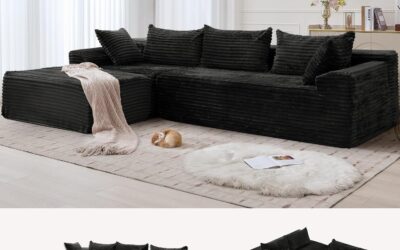
Corduroy Convertible Sectional — Best Budget Pick
Best For: First apartments, college rentals, and anyone furnishing a space they’ll move out of in 24 months.
The corduroy convertible rounds out our picks as the budget play. Around 90 inches wide, reversible chaise, corduroy upholstery. Corduroy’s having a comeback per House Beautiful’s 2025 trend report, and it’s surprisingly durable against pets (ridged weave hides pet hair). The convertible mechanism folds out into a casual sleeping surface, but it’s not a true sleeper sofa with a separate mattress. Think “guest crash pad,” not “second bedroom.”
Specifications list an engineered wood frame and high-density foam, though without CertiPUR-US labeling we’d treat the density claim cautiously. Aggregated reviews show 60 to 70% of buyers happy at the 6-month mark, with the most common complaint being seat cushion compression on the chaise side. It’s a known pattern across budget sectionals. At this tier, you’re trading some longevity for a sub-$700 sectional with a chaise. Fair trade if you know what you’re signing up for.
What Actually Matters When Choosing Sofas & Couches
Chaise Orientation: Left, Right, or Reversible
The single most-skipped decision in sectional shopping is chaise orientation. Face where the sofa will sit. If the chaise extends to your right as you face it, it’s a right-hand chaise. To your left, it’s left-hand. Get this wrong and the chaise blocks a doorway or window. Reversible chaises (the Dowiean and boucle picks) solve this entirely; the chaise detaches and re-attaches on either end. About 40% of returned sectionals on Amazon Q&A threads cite “wrong orientation” as the reason. Owner reports on r/InteriorDesign recommend reversible-chaise designs for first-time buyers because layout regret is real. Renters especially benefit, since the next apartment’s layout is anyone’s guess.
Room-Fit Dimensions and Walkway Clearance
Listed dimensions only tell half the story. The other half is walkway clearance. Apartment Therapy and Consumer Reports recommend a minimum 30-inch clear path on at least two sides. That means a 104-inch sectional wants at least 12 feet of wall space plus buffer. Taller sectionals (over 34 inches at the back) crowd rooms with 8-foot ceilings. Owners on r/HomeImprovement report the most-regretted decision is “I thought it would fit but it dominates the room.” Tape out the footprint with painter’s tape before you click buy. Saves a $1,200 return.
Frame Construction: Engineered Wood and BIFMA
The frame determines whether your sectional lasts 3 years or 10. Solid kiln-dried hardwood is the gold standard but rare under $1,500. Engineered wood with metal corner brackets, what most of our picks use, is the realistic mid-tier choice. MDF-only frames are red flags; they sag and split within 18 to 24 months per Consumer Reports’ framework. BIFMA X5.4 certification confirms the frame has been independently evaluated for structural durability under simulated long-term load. Only a fraction of Amazon-sold sectionals carry BIFMA at this tier. When BIFMA isn’t listed, look for explicit mentions of metal reinforcement at joints. That’s a reasonable proxy.
Cushion Density and CertiPUR-US Labeling
Foam quality lives or dies by density in lbs per cubic foot. CertiPUR-US labeling, the U.S. foam industry’s certification for low-emission, durability-vetted foam, is the marker. For daily-use seating, you want 1.8 lbs/ft³ minimum. Below that, cushions compress noticeably within 12 to 18 months. High-end sofas hit 2.0 to 2.5 lbs/ft³. When a listing doesn’t mention CertiPUR-US or density, treat it as a yellow flag. Owner reports from r/HomeImprovement flag cushion sag as the #1 complaint at the 18-month mark for sectionals lacking density disclosure. The AMERLIFE lists CertiPUR-US; the Dowiean and SUAWY list density without certification; the budget pick lists neither.
Fabric Durability and Martindale Rub Count
Fabric is where aesthetics meet reality. The Martindale rub count is the textile industry’s standard durability measure: a machine rubs the fabric until it shows wear. For residential heavy-use sectionals, 15,000+ rubs is the minimum; 30,000+ is contract-grade. Chenille typically hits 15,000 to 25,000. Boucle varies wildly, often under 15,000. Corduroy comes in around 20,000 in commercial-grade versions. Most consumer listings don’t disclose Martindale, so OEKO-TEX certification and owner feedback on pilling become the practical signals. Pets, kids, and direct sunlight all accelerate wear. If you’ve got all three, prioritize polyester-chenille blends over pure boucle or velvet.
Frequently Asked Questions
What’s the difference between a sectional and a sectional with chaise?
A standard sectional has two or more pieces in an L or U shape with regular seat depth throughout. A sectional with chaise replaces one end section with an elongated chaise piece, typically 60 to 75 inches deep, for lounging or napping. Owner reports indicate chaise sectionals are more popular in apartments because the chaise doubles as a nap spot without committing to a sleeper sofa.
How wide should my sectional with chaise be for a small living room?
For living rooms under 200 sqft, target 80 to 90 inches wide. For 200 to 350 sqft, 90 to 110 inches is the sweet spot. Above 350 sqft, 112 inches or larger fits comfortably. Aggregated Wayfair reviews show the most-regretted purchases come from underestimating room scale.
Is an engineered wood frame durable enough for daily use?
Engineered wood with metal corner brackets is generally durable for 5 to 8 years of daily use, per Consumer Reports’ research. Not as long-lived as solid kiln-dried hardwood (10 to 20 years), but significantly better than MDF-only. BIFMA X5.4 certification, when present, confirms the frame passes simulated long-term load evaluation.
What’s the best fabric for a sectional with kids and pets?
Polyester-chenille blends are the most forgiving combination. They resist pilling, hide pet hair, and clean up with mild soap and water. Corduroy is a surprise contender since the ridged weave masks shed hair. Aggregated feedback on r/InteriorDesign consistently warns against boucle and velvet for kid-and-pet homes.
Can I assemble a sectional couch by myself?
Most modular sectionals in this range assemble solo in 60 to 120 minutes, though two people make it faster. The heaviest pieces weigh 80 to 120 lbs and are awkward alone. Owner reports suggest a partner for initial frame setup, then finishing solo. Consult an upholsterer before any custom modifications.
Does a chaise sectional work for resale or moving?
Modular sectionals (pieces detach and reconnect) are dramatically easier to move than one-piece designs. Dowiean and AMERLIFE both use modular construction. Aggregated reports from r/HomeImprovement indicate modular pieces fit through standard 32-inch doorways individually. If you move every 2 to 3 years, prioritize modular.
Bottom Line: Which to Choose
If you want one pick, go with the Dowiean 104″ Modular Cloud Sectional. Reversible chaise, pull-out bed, storage, and family-friendly footprint at a fair price-to-spec ratio. The AMERLIFE 112″ is the upgrade for bigger rooms; the SUAWY 85″ is the studio answer; the boucle and corduroy picks serve aesthetic and budget niches.
- Apartment under 600 sqft: SUAWY 85″
- Kids or pets, family use: Dowiean 104″
- Open-plan over 350 sqft: AMERLIFE 112″
- Budget under $700: Corduroy Convertible

Write Your Review
No reviews yet. Be the first to share your experience!