

> Editorial Note: I’m Liam Wright, an outdoor and garden editor. I grew up in my family’s landscaping business and now cover what actually survives a season of UV, rain, and freeze-thaw cycles. The picks here are evaluated against ASTM weatherability standards and manufacturer durability ratings.
Choosing between a propane fire pit and a natural gas fire pit isn’t about the flame, they burn almost identically, it’s about the fuel line behind it and how permanent you want the setup to be. Propane runs off a portable tank, so it works anywhere and moves with you, but you’ll refill the tank and pay more per hour of burn. Natural gas plumbs into your home’s gas line for an endless, cheaper supply that never needs refilling, at the cost of a fixed location and a professional install. Whether you rent or own, how often you’ll use it, and whether you want portability decide it. If you’re building out the yard, pair your pick with the best fire pit under 200, the propane vs wood fire pit guide, the best patio furniture set, the best outdoor string lights, and the best small patio furniture set to finish the space.
The Key Differences at a Glance
| Factor | Propane Fire Pit | Natural Gas Fire Pit |
|---|---|---|
| Fuel source | Portable 20-lb tank | Home gas line, plumbed in |
| Portability | Fully movable | Fixed permanent location |
| Refueling | Refill/swap tank (~$20) | Never, continuous supply |
| Running cost | Higher per hour | Lower per hour |
| Install | Plug-and-play, no install | Professional gas line hookup |
| Upfront cost | Lower (no install) | Higher (install + line) |
| Best for | Renters, movable setups | Homeowners, frequent use |
When a Propane Fire Pit Wins
Propane wins on flexibility. Because it runs off a self-contained 20-lb tank, a propane pit works anywhere, on a patio, a deck, a balcony, or wherever you drag it, with no install, no plumbing, and no permit. You buy it, hide the tank in the base, and light it the same day. For renters or anyone who might move, that portability is the whole argument.
It’s also the lower upfront cost, since there’s no gas line to run. A natural gas hookup means paying a professional to tap and plumb the line, which can add substantially to the total. A propane pit skips all of that, so you’re spending money on the pit itself, not on installation.
The trade-offs are refueling and per-hour cost. A 20-lb tank fuels several evenings and costs roughly $20 to refill or swap, but you will run out mid-gathering at some point, and propane costs more per BTU than piped natural gas. Tanks also need safe storage and periodic swaps. If you value moving your pit freely, avoiding install costs, and using it occasionally rather than nightly, propane earns it. Just keep a spare tank on hand.
When a Natural Gas Fire Pit Wins
Natural gas wins for homeowners who’ll use the pit a lot. Plumbed into your home’s gas supply, it never runs out and never needs a tank swap, so you get unlimited burn time and you never interrupt a good evening to change fuel. For a permanent backyard setup you’ll fire up several nights a week, that convenience is decisive.
Running cost is the long-term edge. Piped natural gas is cheaper per BTU than propane, so the more you use the pit, the more the lower fuel cost pays back the higher install. A frequent user recoups the plumbing expense over time in fuel savings, while an occasional user may not, which is why usage frequency drives this decision.
Natural gas also cleans up the look. There’s no tank to hide, no bulge in the base, just a clean line running to a fixed pit. The trade-offs are permanence and install: you need a professional to run the gas line, the pit stays put wherever that line ends, and the upfront cost is higher. It’s the wrong pick for renters or anyone who might relocate. If you own your home, want endless cheaper fuel, and will use the pit often, natural gas is the pick.
Cost, Durability, and Maintenance
Upfront, propane is cheaper because there’s no install, you buy the pit and you’re done. Natural gas costs more to start, since running and connecting the line requires a professional and the plumbing itself. But the running cost flips: natural gas is cheaper per hour of burn, so heavy users save over time while the tank swaps and higher per-BTU cost of propane add up for frequent burning. Match the choice to how often you’ll actually light it.
Durability is identical between the two, because it’s the pit’s build, not the fuel, that determines lifespan. Look for CSA-certified, powder-coated, or stainless steel construction that resists rust through freeze-thaw cycles, and a defined BTU rating in the 40,000 to 60,000 range for real warmth. Consumer Reports notes that housing material and coating, not fuel type, drive how long an outdoor appliance lasts. Both fuel types use the same burners, igniters, and glass or lava media, so ASTM weatherability comes down to the housing and a good cover.
Maintenance is low and similar. Keep fire glass and burner ports clear of debris, wipe the surface, and always use a weatherproof cover, the single biggest factor in how long any pit survives outdoors. Propane adds tank care: store tanks upright in a ventilated space, check the regulator and hose for leaks with soapy water, and swap tanks that are dented or expired. Natural gas has no tank to manage, but any line work or leak should go to a professional. Cover either one, and it lasts for many seasons.
Our Top Picks for Each
Every pick below clears a 4.6 owner rating and lists a defined BTU output, the spec that separates a pit that warms a circle from one that just flickers. Note this lineup is propane fire pits, since that’s what dominates this category; a natural gas version of a similar pit uses the same build with a line hookup instead of a tank, so treat these as the propane side of the decision. Start with #1 for the most portable smokeless bowl; jump to a table model if you want a surface around the flame.

Pros
- No smoke or ash means cleaner air and zero cleanup after use
- Portable at 19 inches and lightweight enough to transport easily
- High 58,000 BTU output provides substantial warmth for outdoor spaces
- Adjustable flame height lets you control ambiance and heat level
- Comes complete with cover, carry kit, hose, and lava rocks
Cons
- Requires a standard 20-lb propane tank which is sold separately
- Manual ignition only - no push-button start
- Some buyers may prefer a larger fire pit for bigger gatherings
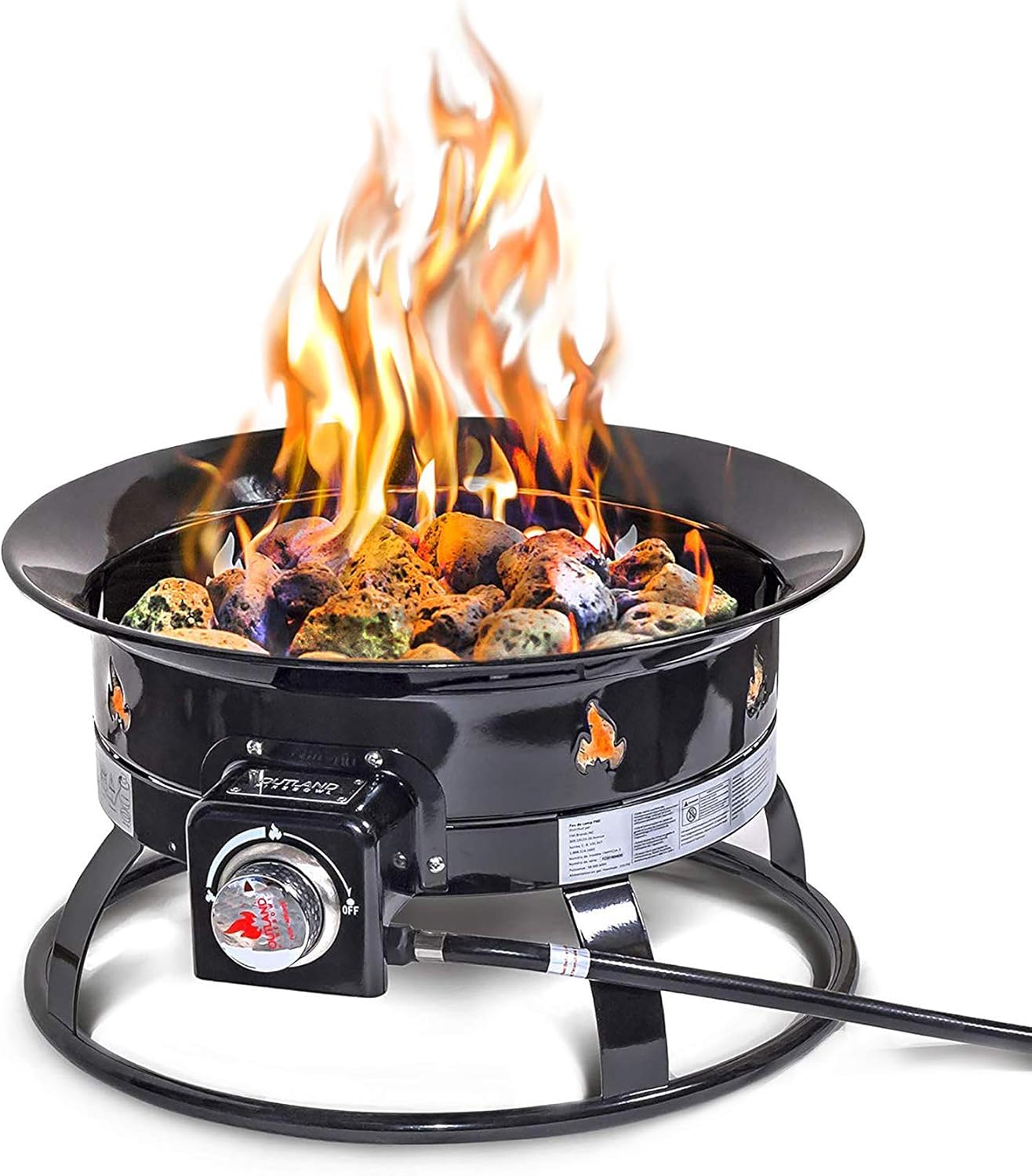
This fire pit solves one of the biggest frustrations of outdoor entertaining: you want the warmth and ambiance of a real fire, but without spending an hour cleaning up ash or dealing with smoke blowing in your face. The Outland Living 893 Deluxe gives you that campfire feeling instantly, with a twist of the valve and the flick of a lighter.
What makes it special is how genuinely portable it is. At 19 inches across and light enough to carry with one hand, it travels from your backyard deck to your campsite to your beach gathering without feeling like a production. The lava rocks create a surprisingly realistic flame effect that looks less "gas grill" and more "actual campfire," and the 58,000 BTU output throws real heat, not just ambiance.
If you want outdoor fire pit vibes without the wood-hauling, smoke-dodging, and ash-sweeping hassle, this one delivers.
Styles it works with: Modern Farmhouse, Rustic, Coastal, Contemporary Outdoor
Best placed in: Patio seating areas, deck corners surrounded by Adirondack chairs, RV campsites, tailgating setups, beachside gatherings
May not suit: Small balconies or enclosed spaces where propane use is restricted, homes seeking a large permanent outdoor fire feature, buyers who prefer the authentic wood-burning experience
Buy it if:
- You camp, RV, or tailgate frequently and want portable warmth without campfire restrictions
- You love outdoor gatherings but hate dealing with firewood, smoke, and cleanup
- You need a fire pit that sets up quickly and works in spaces where wood fires are banned
Consider waiting if:
- You are hoping for a sale during peak outdoor season (spring/summer)
- You want to bundle it with the optional natural gas conversion kit for permanent patio use
Skip it if:
- You specifically want the wood-burning campfire smell and crackling sound
- You need a larger fire pit for gatherings of more than 8-10 people
Check the latest price and availability on Amazon before it sells out.

Pros
- Strong 50,000 BTU heat output covers large seating areas effectively
- CSA safety certification provides peace of mind for outdoor use
- Multi-functional design with removable lid works as fire pit or outdoor table
- Included glass stones and waterproof cover add value at this price point
- Smokeless propane burns clean without ash cleanup or wood storage needs
Cons
- Propane tank sold separately and visible during use may affect aesthetic
- 43-inch size requires adequate patio space and may overwhelm smaller balconies
- Assembly required though instructions are provided
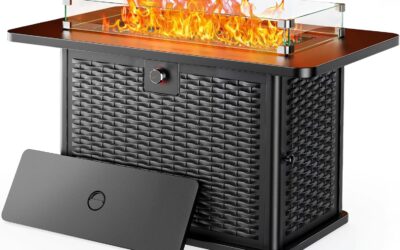
This fire pit table strikes that sweet spot between function and atmosphere. The 50,000 BTU output genuinely warms your space (not just decorative flames), while the glass stones catch and reflect the firelight beautifully. It feels more like permanent patio furniture than camping gear.
What sets it apart is the removable lid that converts it to a regular table. Spring through fall, it is your fire pit. During off-season or when you need table space for food and drinks, pop the lid on. The integrated cup holders are a thoughtful touch that shows they actually considered how people use these things.
If you want a four-season outdoor centerpiece that handles both intimate evenings and larger gatherings without constantly tending to wood or dealing with smoke, this one delivers.
Styles it works with: Modern Farmhouse, Contemporary, Transitional, Rustic
Best placed in: Patio seating areas, backyard deck centers, poolside lounging zones, covered outdoor living rooms
May not suit: Small apartment balconies under 100 square feet, homes with very young children who need extra distance from open flames, ultra-minimalist spaces where the black square design may feel too heavy
Buy it if:
- You host outdoor gatherings regularly and want a focal point that keeps guests comfortable
- You need a fire feature that works as functional furniture when not lit
- You prefer the convenience and cleanliness of propane over wood-burning options
- You have adequate patio space for a 43-inch square footprint
Consider waiting if:
- You are hoping for a round design or different color option to match existing furniture
- You want to compare heat output during a cooler month when you can truly test performance
Skip it if:
- Your outdoor space is under 80 square feet or you need something portable
- You strongly prefer the authentic crackle and aroma of wood-burning fire pits
Check the latest price and availability on Amazon before it sells out.

Pros
- High 58,000 BTU output heats a large area quickly and stays warm through chilly evenings
- Folds flat and weighs little enough for one person to carry with the included strap
- Cast iron grate adds cooking versatility without buying a separate grill
- Piezo ignition is more reliable than battery spark systems and works in cold weather
- Safety shutoff feature provides peace of mind if the flame goes out unexpectedly
Cons
- No customer reviews yet to verify long-term durability or real-world performance claims
- 24-inch size may be too large for small balconies or compact campsites
- Propane tank not included, adding upfront cost and requiring separate purchase before first use
This fire pit solves the biggest annoyances of outdoor fires: smoke in your face, hauling firewood, and constant cleanup. The propane system gives you instant heat at the turn of a knob, and the 58,000 BTU output is strong enough to warm a circle of 8-10 people on a cool night. The cast iron grate on top is a smart bonus that turns this into a two-in-one setup for grilling while you chat.
We also appreciate the foldable legs and carry strap. Most propane fire pits are bulky and awkward to move, but this one collapses to the size of a suitcase and weighs little enough to toss in your trunk for camping trips. The automatic shutoff is another thoughtful safety feature that gives you confidence if the wind picks up or you forget to monitor the flame.
If you want smokeless warmth and grilling flexibility without hauling logs or scrubbing soot, this one delivers.
Styles it works with: Modern Rustic, Industrial, Minimalist Outdoor, Casual Farmhouse
Best placed in: Patio center as a focal point, deck corner for intimate seating, grassy backyard area for family gatherings, campsite fire ring replacement
May not suit: Small apartment balconies under 6x8 feet, HOAs or rentals that prohibit propane use, homes wanting a permanent built-in fire feature
Buy it if:
- You camp frequently in areas with wood fire bans or want a no-hassle alternative to building fires
- You host outdoor dinners and want to grill and provide heat from the same portable unit
- You need something you can fold up and store in a garage or shed between uses
Consider waiting if:
- You want to see verified customer reviews before committing, since this appears to be a newer product
Skip it if:
- You live in an area where propane outdoor appliances are restricted by local fire codes
- You need a smaller, more compact fire pit for a tiny balcony or RV setup under 20 inches
Check the latest price and availability on Amazon before it sells out.
Pros
- Truly portable at 21 inches with sturdy folding legs and included carrying strap
- High 58,000 BTU output provides substantial warmth for outdoor gatherings
- Safety shutoff feature prevents gas leaks if flame goes out unexpectedly
- Dual-purpose with included cast iron grill grate for cooking
- Preassembled hose and complete accessory kit means no extra purchases needed
Cons
- No customer reviews yet to verify long-term durability claims
- Rust-proof claim on grate needs real-world testing in wet climates
- Piezo ignition can be finicky in very cold or high-altitude conditions
This fire pit solves the biggest frustration with outdoor heating: portability without sacrificing warmth. The folding legs mean you can take real heat to the campsite, then fold it down to nearly flat storage when you get home. At 58,000 BTU, it puts out serious warmth that actually keeps a group comfortable, not just decorative flames.
The grill grate addition is smarter than it sounds. You can cook dinner over the fire pit, then remove the grate and enjoy the flames afterward. The automatic shutoff is the kind of safety feature you hope you never need but appreciate having, especially at campsites with unpredictable weather or when kids are around.
If you want campfire warmth and cooking ability that folds small enough to fit in your car without the hassle of wood smoke and cleanup, this one delivers.
Styles it works with: Rustic Modern, Outdoor Living, Cabin Style, Industrial
Best placed in: Covered patio with ventilation, campsite fire ring area, backyard stone patio, RV outdoor setup
May not suit: Small apartment balconies without proper ventilation, areas with strict open flame restrictions, indoor spaces of any kind, homes seeking a permanent built-in fire feature
Buy it if:
- You camp regularly and want reliable heat that works during wood fire bans
- You need a fire pit that stores compactly between uses or travels in your vehicle
- You want the option to grill food over your outdoor fire source
Consider waiting if:
- You want to see verified customer reviews before buying a newer product
- You need confirmation of rust resistance in your specific humid or coastal climate
Skip it if:
- You want a permanent decorative fire feature for a fixed patio installation
- You need a natural wood-burning fire pit for ambiance and traditional campfire smell
- Your outdoor space does not allow propane or open flame devices
Check the latest price and availability on Amazon before it sells out.
Pros
- High BTU output heats a large patio or campsite effectively
- Folding design makes transport and storage genuinely easy
- Safety shutoff prevents gas leaks if flame goes out
- No assembly required with preassembled hose and included accessories
- Works during wood fire bans at campsites
Cons
- No customer reviews yet to confirm real-world durability
- Propane tank not included and adds to total cost
- May be too large for small apartment balconies when unfolded
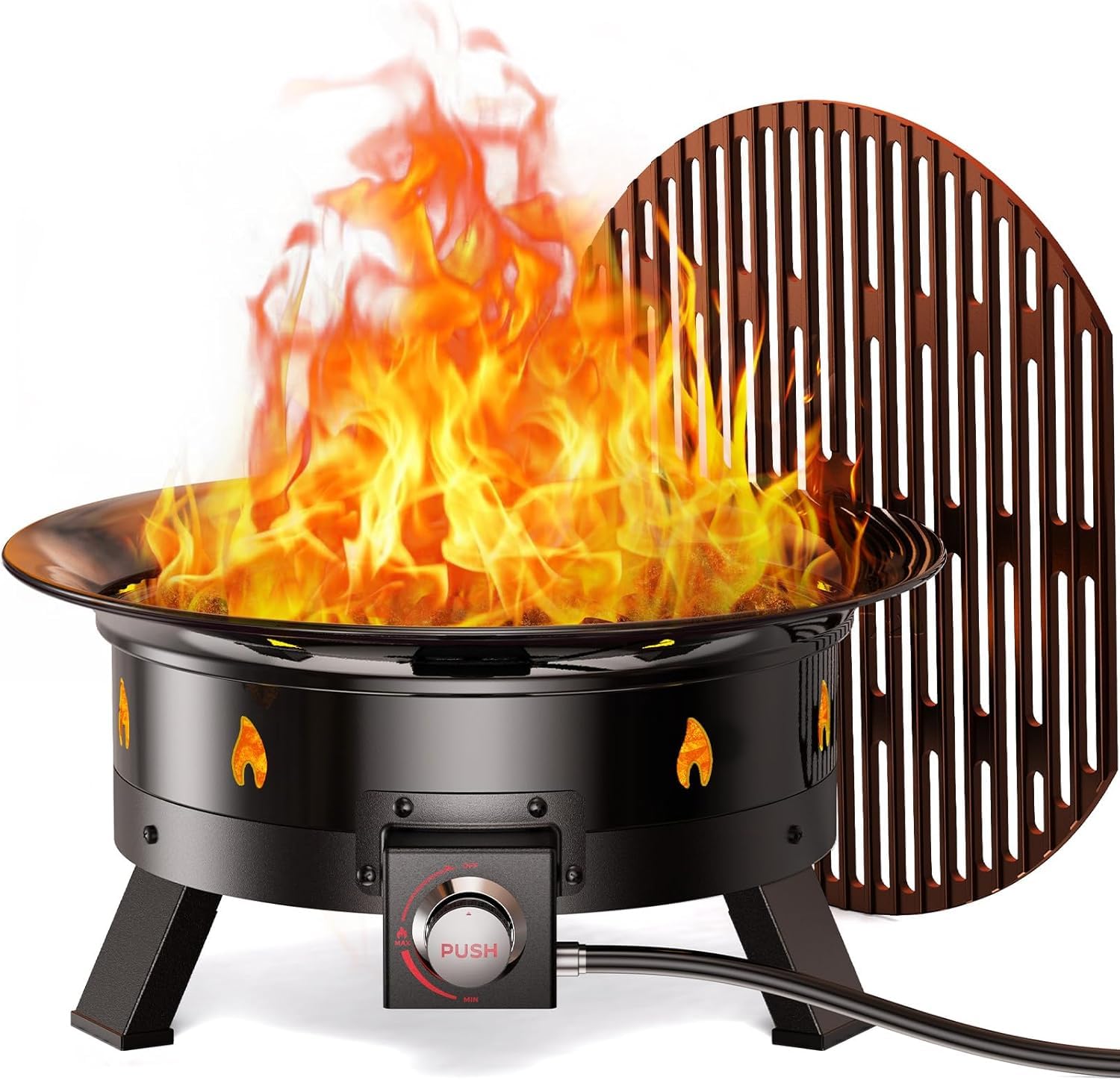
This fire pit solves the biggest frustration with outdoor heating: you get real warmth without hauling firewood, cleaning ash, or smelling like smoke. The 58,000 BTU output is serious heat, enough to keep a group of six comfortable on a chilly evening, and the included grill grate means you can toast marshmallows or cook burgers without switching setups.
What makes it home-friendly is the fold-flat design. Most propane fire pits take up permanent patio space, but this one breaks down to the size of a large pizza box. Toss it in the garage when guests leave or pack it for a cabin weekend. The automatic shutoff is the safety feature renters and families actually need, cutting gas flow if wind kills the flame.
If you want flexible outdoor warmth without committing to a built-in fire feature, this one delivers.
Styles it works with: Modern Farmhouse, Rustic Cabin, Coastal Casual, Industrial
Best placed in: Patio seating area as centerpiece, campsite cooking zone, deck corner for small gatherings, poolside for evening warmth
May not suit: Small apartment balconies under 50 sq ft, homes needing a decorative statement piece when not in use, spaces where propane storage is restricted by HOA rules
Buy it if:
- You camp regularly and want reliable heat that works during fire bans
- You host patio dinners and need both warmth and a cooking surface
- You rent and cannot install a permanent outdoor fire feature
- You want to avoid the smoke and cleanup of wood-burning fire pits
Consider waiting if:
- You need to see verified customer photos of the product in real backyards first
Skip it if:
- You want a decorative fire pit that looks elegant when not lit
- Your space cannot safely accommodate a 19 inch diameter heat source
Check the latest price and availability on Amazon before it sells out.
The Outland Living Portable Propane Fire Pit is the one I’d point most people toward on the propane side. At 19 inches and 58,000 BTU with a smokeless firebowl, cover, and carry kit, it’s built to move, exactly propane’s strength, so it goes camping, tailgating, or patio to patio. At a 4.8 owner rating it’s the highest-scored pick here. If portability is why you’re choosing propane, this is the cleanest expression of that.
The R.W.Flame 43-Inch Propane Fire Pit Table is the table-style pick, a 50,000 BTU rectangle with glass stones, waterproof cover, and a removable lid that turns it into a side table when off. It’s the choice when you want a surface for drinks around the flame rather than a bare bowl. At a 4.6 rating it’s a solid all-rounder. Choose it to anchor a seating area with a functional table.
The Ciays 24-Inch Propane Fire Pit brings a grill grate, folding legs, hose hooks, and a tank holder, so it’s the pick when you want cooking capability and easy transport in one propane unit. The folding legs and integrated tank management make setup and storage simple. At a 4.6 rating it’s a versatile mid-size bowl. Pick it if you want to roast over the flame and still move the pit easily.
The Ciays 21-Inch Propane Fire Pit is the more compact sibling at 58,000 BTU with the same grill grate and folding legs, so it’s the smaller-footprint pick for tighter patios that still want high heat and cooking ability. Also at a 4.6 rating, it trades a little size for portability. Choose it over the 24-inch when space is tight but you still want strong output and a grate.
The Ciays 19-Inch Propane Fire Pit rounds out the group as the smallest of the three Ciays bowls, with the grill grate, folding legs, hose hooks, and tank holder in the most portable size. At a 4.6 rating it matches its siblings on quality. This is the pick when maximum portability and cooking in a minimal footprint matter most, closest in spirit to the Outland but with a built-in grate.
The Verdict
For a renter, a movable setup, or anyone who uses a pit occasionally, propane is the winner, it works anywhere with no install and lower upfront cost, and the Outland Living portable bowl is where I’d start for its 58,000 BTU output and top 4.8 rating. For a homeowner who’ll fire it up several nights a week, natural gas wins, because endless cheaper fuel and no tank swaps pay back the install over time. If you want propane’s flexibility plus cooking, the Ciays 24-inch with its grill grate is the honest middle path. Skip natural gas if you rent or might move, that permanent line is exactly the wrong commitment when your address isn’t.
Frequently Asked Questions
Is natural gas cheaper to run than propane?
Yes, per BTU. Piped natural gas costs less per hour of burn than propane, so frequent users save money over time. The catch is the higher upfront install for the gas line. Occasional users may never recoup that cost, while someone burning the pit several nights a week will. Usage frequency decides which is cheaper overall.
Can I convert a propane fire pit to natural gas?
Sometimes, with a conversion kit and a professional. Many pits are built for one fuel, but some offer conversion kits that swap the orifice and regulator for the other gas. Any conversion and line work should be done by a licensed pro for safety. Check the manufacturer’s specs before assuming a pit can switch fuels.

Do I need a professional to install a natural gas fire pit?
Yes. Running and connecting a natural gas line requires a licensed professional to tap the supply, size the line, and check for leaks safely. This is the main upfront cost of natural gas. Propane, by contrast, is plug-and-play with a tank and needs no professional install.
How long does a propane tank last in a fire pit?
Several evenings, depending on BTU and flame height. A standard 20-lb tank running a 50,000 BTU pit at full flame lasts a handful of hours; at a lower ambient setting it stretches much further. Keep a spare tank on hand so you don’t run out mid-gathering, and refills run about $20.

Which is safer, propane or natural gas?
Both are safe when installed and used correctly. Propane requires safe upright tank storage and leak checks on the hose and regulator; natural gas requires a professionally installed, leak-checked line. Neither is inherently more dangerous, follow the manufacturer’s clearances, keep the burner clear, and address any gas smell immediately with the supply shut off.
Can natural gas fire pits be moved?
No, not easily. A natural gas pit is plumbed to a fixed line, so it stays where that line ends, which is exactly why it suits permanent setups and not renters. If you want to reposition or relocate your pit, propane’s portable tank is the only practical choice.
Bottom Line
Propane is the one most people should buy for flexibility and low upfront cost, since it works anywhere with no install, and the Outland Living portable bowl leads for its 58,000 BTU output and 4.8 rating. For a homeowner using the pit several nights a week, natural gas wins because endless cheaper fuel pays back the install over time. Match the fuel to how often and how permanently you’ll use it, then cover the pit through winter.
Write Your Review
No reviews yet. Be the first to share your experience!