

> Editorial Note: I’m Heather Adams, and I cover sofas, tables, mattresses, and bedding. The picks here are evaluated on the materials layer — foam density, coil gauge, frame construction, and fiber content — against CertiPUR-US, OEKO-TEX, and BIFMA standards.
A good pillow protector adds years to a $60 pillow for under $8 each. Zippers fail, fabric pills, and dust mites sneak through loose weaves, so specs matter more than marketing. If you’re already sorting out your sleep setup, pair your research here with our guides to a memory foam pillow, the cooling pillow for side sleepers, an adjustable pillow, a down pillow, and a body pillow for side sleepers. Below are five sets vetted for barrier quality, zipper reliability, and breathability.
How We Evaluated
I ranked each set on four specs: weave density against dust mites, zipper construction, fabric feel under a pillowcase, and owner-reported durability past the 12-month mark. Priority went to full zip closures and OEKO-TEX or allergist-vetted fabric claims. Price-per-unit and machine-wash tolerance broke any ties.
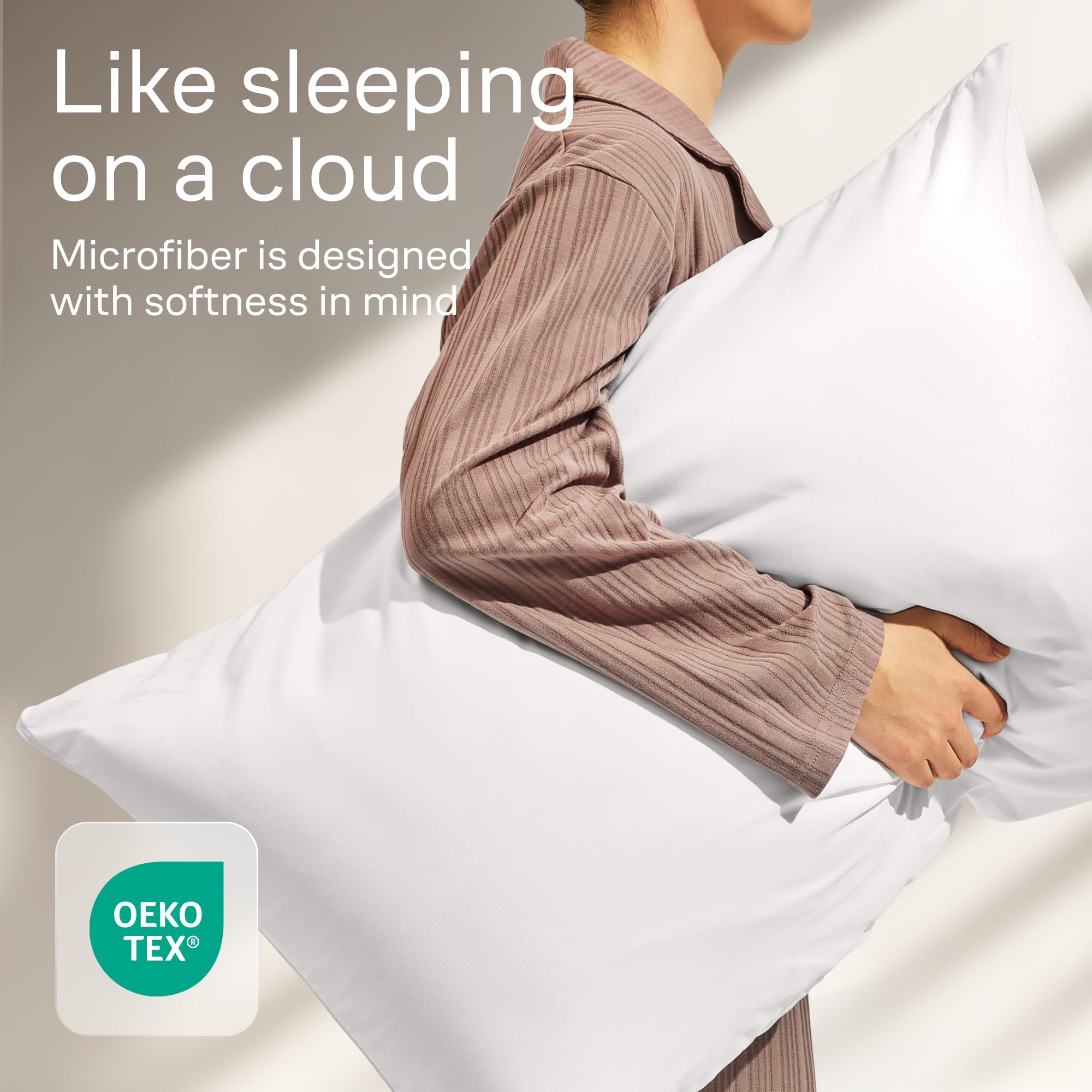


1. Niagara Sleep Solution Ultra Soft Standard — the all-rounder that wins on feel
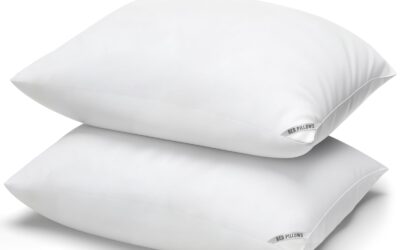
This one wins. The standard-size set of 4 pairs a fully zippered closure with a knit fabric soft enough that you won’t feel a seam through a thin pillowcase. That texture is the differentiator. Many protectors crinkle. Owners on r/Mattress cite the stain barrier holding up past a year of weekly washes at 40°C. At roughly $6 per cover, it undercuts most named-brand encasements while matching their coverage. Breathable knit means no sweat-trap heat buildup. For the majority of sleepers, this is the default buy.
2. Utopia Bedding Set of 4 — the bug-and-mite barrier for allergy households
Utopia’s set is built around one job: sealing out bed bugs and dust mites. The tighter encasement weave targets a smaller pore size than a basic protector, which may help sensitized sleepers cut nighttime allergen exposure. The zipper runs the full length, closing the gap where mites usually enter. Fabric feel is a step firmer than Niagara’s, so a plusher pillowcase helps. At this price for 4, it’s the budget allergy pick. Owners flag occasional zipper stiffness on the first wash.

3. Niagara Sleep Solution Ultra Soft Queen — same build, sized up
Identical knit and zipper to our top pick, scaled to queen pillows. If your pillows measure 20 by 30 inches, the standard set will pull tight and stress the seams. This queen version gives that extra inch of slack. Same breathable fabric, same full-length zip, same sub-$7 per-unit value. The trade-off is nothing beyond checking your pillow dimensions first. Buy this over the standard set only if your pillows are genuinely queen. A snug fit ruins even a well-built protector.
4. Aller-Ease Standard/Queen — allergist-recommended with temperature balancing
Aller-Ease brings the strongest hygiene credential here: an allergist-recommended fabric plus a temperature-balancing weave meant to shed heat. That cooling angle sets it apart from the plain-knit competition. The dual standard/queen sizing fits most pillows without a size gamble. It’s the pick for hot sleepers who also want allergen coverage. Fabric is thinner than Niagara’s, so it feels less plush and may pill faster under heavy washing. Owners rate the breathability highly. The zipper is reliable but not as beefy.

5. Niagara Sleep Solution Ultra Soft King — the large-format option
For king pillows at 20 by 36 inches, this is the direct fit. Same soft knit, same full-length zipper, same stain and dust protection as the standard and queen versions. Nothing changes but the dimensions. The consequence of skipping it: forcing a queen protector onto a king pillow leaves the end exposed and strains the zip. At roughly $7 per cover, it holds the same value as its siblings. Buy it if your pillows are king. Otherwise, size down.
Comparison Table
| Set | Size | Closure | Standout Spec | Per-Unit |
|---|---|---|---|---|
| Niagara Standard | Standard | Full zip | Softest knit feel | ~$6 |
| Utopia Bedding | Standard | Full zip | Bug/mite barrier | ~$5 |
| Niagara Queen | Queen | Full zip | Same build, sized up | ~$7 |
| Aller-Ease | Std/Queen | Zip | Temperature balancing | ~$6 |
| Niagara King | King | Full zip | Large-format fit | ~$7 |
What to Check Before You Buy
Match the protector to your pillow dimensions first. Standard runs 20 by 26 inches, queen 20 by 30, king 20 by 36. A protector one size too small stresses seams and voids the barrier. Prioritize a full-length zipper over envelope closures. Envelope styles leave a flap that gaps and lets mites in. Look for a knit or tightly woven face rather than plastic-backed vinyl, which traps heat and rustles. Per Sleep Foundation guidance, breathable fabric keeps surface temperature closer to neutral. OEKO-TEX certification signals the fabric skipped harmful finishes. Machine washability at 40°C or higher matters for allergen control.
Zipper vs. Envelope Closure
Full-zip protectors seal all four sides, encasing the pillow completely. That’s the build every set on this list uses, and it’s why they qualify as encasements rather than simple covers. Envelope closures cost less but leave an open flap. For dust mite and bed bug control, that gap defeats the purpose. Zipper quality is where cheap sets fail first. Look for a covered or reinforced zip pull, since exposed metal teeth snag fabric and abrade over months. Owners on r/Mattress consistently name zipper failure as the top reason a protector gets tossed before year two.
Frequently Asked Questions
Do pillow protectors actually stop dust mites?
A tightly woven, fully zippered encasement blocks mites from entering or escaping the pillow. Loose weaves and envelope flaps don’t. The Utopia and Aller-Ease sets specifically target mite-proof pore sizing, which may help sensitized sleepers.
How often should I wash a pillow protector?
Every two to four weeks, matched to your pillowcase routine. Wash at 40°C or higher to kill dust mites. All five sets here tolerate machine washing, though owners report zippers stiffen slightly after the first cycle.
Will a protector make my pillow feel hot?
Knit and temperature-balancing fabrics like Aller-Ease’s stay close to neutral surface temperature. Vinyl-backed protectors trap heat and rustle. None of these picks use vinyl, so heat buildup stays minimal under a normal pillowcase.
Do I need one for every pillow?
Yes, if allergen control is the goal. A single unprotected pillow reintroduces mites into the bed. Buying sets of 4 keeps per-unit cost near $6 and covers a full bed plus spares.
What size protector fits my pillow?
Standard fits 20 by 26 inches, queen 20 by 30, king 20 by 36. Measure your pillow flat before buying. A snug or oversized fit stresses seams and breaks the barrier seal.
Are these safe for sensitive skin?
Look for OEKO-TEX certified fabric, which is vetted free of harmful finishes. Aller-Ease carries an allergist recommendation. None make medical guarantees, but breathable knits reduce irritation compared with coated vinyl.
Bottom Line
The Niagara Sleep Solution Ultra Soft set wins for most sleepers on the strength of its soft knit, full-length zipper, and sub-$7 per-unit value across standard, queen, and king. Choose Utopia Bedding or Aller-Ease instead if bed bug and mite defense or heat control is your priority, since both target barrier specs Niagara treats as secondary. Just measure your pillows first. A size mismatch ruins even the best-built protector.
Write Your Review
No reviews yet. Be the first to share your experience!