

> Editorial Note: I’m Liam Wright, an outdoor and garden editor. I grew up in my family’s landscaping business and now cover what actually survives a season of UV, rain, and freeze-thaw cycles. The picks here are evaluated against ASTM weatherability standards and manufacturer durability ratings.
Real stone pavers need a compacted base, a mortar bed, and a weekend you’ll never get back. Renters can’t touch them at all. That’s why interlocking deck tiles have quietly taken over balconies, rentals, and DIY patios: they snap together over concrete or packed gravel, drain through the gaps, and pop back up when you move. The honest catch is UV fade and thickness, and that’s exactly what separates a tile that lasts five seasons from one that curls by August. Pair the right ones with your patio furniture, throw down an outdoor rug, stash cushions in a deck box, anchor a patio umbrella, and string up some outdoor lighting.
How We Evaluated
Every pick here is a 12″x12″ interlocking tile with a peg-and-loop base that snaps without tools, mortar, or adhesive. I weighted four specs: tile thickness (0.8″–1″ for rigidity underfoot), drainage slat count (more open channels shed water faster and resist mildew), coverage per pack (so your square-footage math is honest), and material stability against ASTM G154 UV weathering plus freeze-thaw cycling. Load matters too. A tile that flexes under a chair leg telegraphs every step. Rating threshold was 4.0 owner average minimum, no exceptions.

Pros
- Real acia wood offers authentic warmth and grain variation
- Tool-free interlocking install suitable for DIY beginers
- Waterproof rating allows year-round outdoor use
- Versatile placement on balconies, patios, mudrooms, or around pools
- 0.9-inch thickness provides a solid, stable underfoot feel
Cons
- 10-piece set covers only about 10sq ft, so larger spaces require multiple sets
- No customer reviews yet to confirm long-term durability claims
- Limited to one color and pattern option in this listing
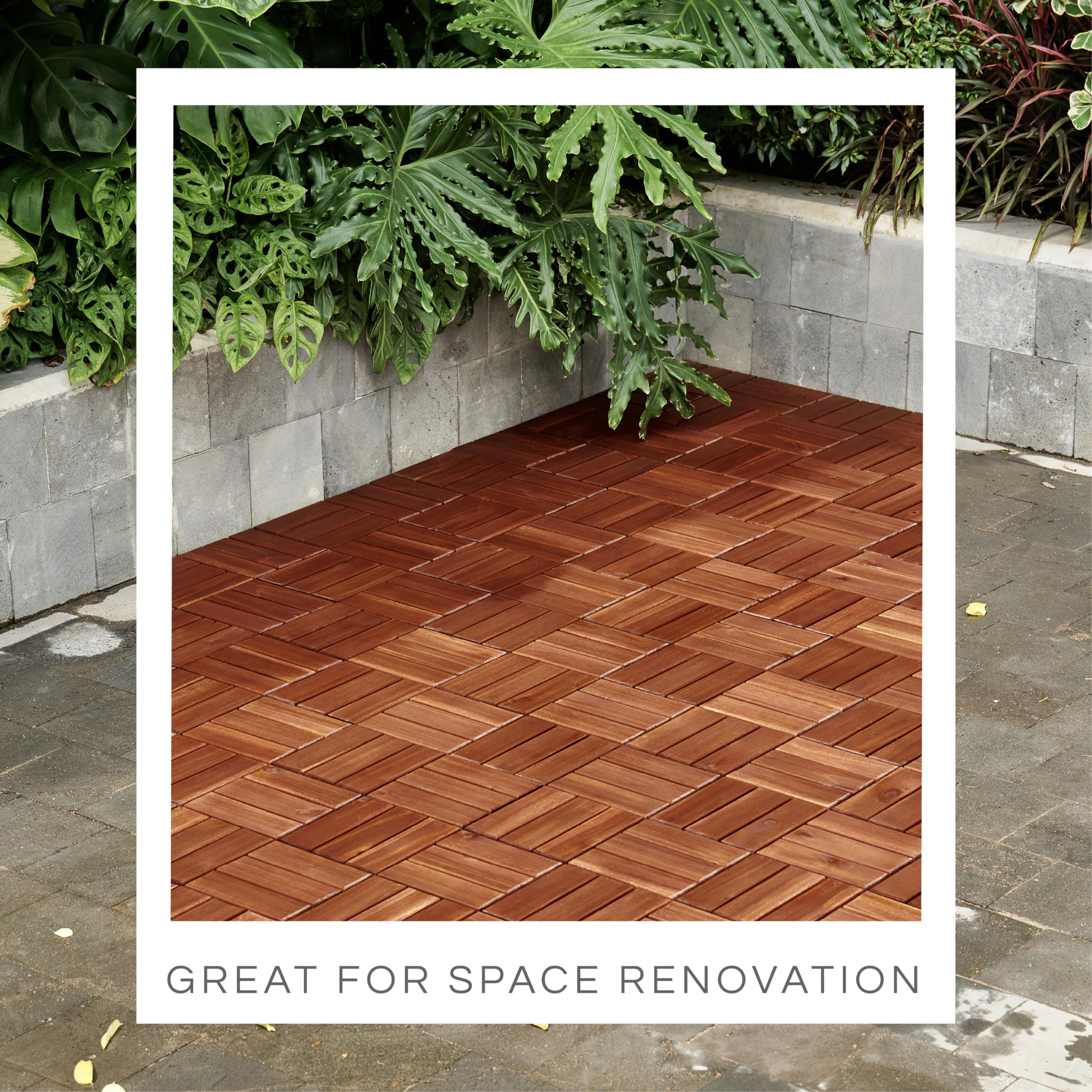
There is something satisfying about stepping onto real wood instead of cold concrete, and these THYOI deck tiles deliver that feeling without a renovation budget or a landlord's permission. The acia hardwood has natural grain variation that looks genuinely warm and inviting, not like the plastic snap-together tiles that scream temporary fix.
The crossed pattern is a smart design choice. It adds enough visual interest to make a small balcony or patio feel intentional and styled, while also being forgiving when it comes to dust and light debris between sweps. At 0.9 inches thick, they feel solid and stable underfoot rather than hollow or flimsy.
If you want a natural wood surface on your balcony or patio without committing to permanent installation or spending a full weekend on a project, this one delivers.
Styles it works with: Modern Farmhouse, Coastal Casual, Scandinavian, Tropical Resort
Best placed in: Apartment balcony floor, small backyard patio area, covered sunroom or mudroom entryway
May not suit: Very large deck areas where buying multiple sets becomes expensive, or shaded spots prone to moss buildup without regular maintenance
Buy it if:
- You have a small balcony or patio (under 10 sq ft) you want to upgrade quickly
- You are renting and need a floring solution you can remove when you move
- You prefer real wood over plastic or composite alternatives for a more natural look
Consider waiting if:
- You need a larger quantity and want to see if bundle pricing becomes available
- You prefer a different wood tone or pattern to match existing outdoor furniture
Skip it if:
- You need to cover a large deck area on tight budget since multiple sets add up fast
- You want a product with extensive verified customer feedback confirming multi-year durability
Check the latest price and availability on Amazon before it sells out.
Goovilla Interlocking Deck Tiles 9-Pack 12x12 Waterproof Outdoor Patio Flooring Dark Grey
Pros
- Tool-free snap-together installation on any flat surface
- Waterproof and weather-resistant for year-round outdoor use
- Easy to cut or reconfigure for irregular spaces
- Lightweight and portable, ideal for renters
Cons
- 9-pack covers only 9 square feet, so larger areas require multiple purchases
- Plastic surface lacks the warmth and texture of real wood or composite decking
- No customer reviews yet to confirm long-term durability claims
If you have a tired-looking concrete balcony or a plainatio slab that brings zero joy, these Goovilla deck tiles are an easy fix. They click together without tools, lay flat on any hard surface, and instantly make a small outdoor space feel more intentional and put-together.
The dark grey finish keeps things modern and pairs well with black metal furniture, poted greenery, or warm-toned outdoor rugs. Because each tile is only 12 inches square, you can mix and match patterns or leave gaps for drainage without overthinking the layout.
If you want a fast patio refresh without committing to permanent decking or spending a weekend on a DIY project, this one delivers.
Styles it works with: Modern Minimalist, Industrial, Contemporary, Scandinavian Outdoor
Best placed in: Apartment balcony floor, poolside walkway, small backyard patio section
May not suit: Large deck areas where multiple purchases add up in cost, or spaces where a natural wood grain look is essential to the design scheme
Buy it if:
- You rent and need a removable floring solution for a balcony or patio
- You want to cover a small concrete area quickly without hiring a contractor
- You need waterproof outdoor flooring near a pool or hot tub
Consider waiting if:
- You need a larger color selection to match existing outdoor decor
- You want to see long-term durability reviews before committing
Skip it if:
- You need to cover more than 30 square feet and want to keep costs low
- You strongly prefer the look and feel of real wood or composite decking
Check the latest price and availability on Amazon before it sells out.

VANCASTLE Interlocking Deck Tiles 9 Pack Dark Grey 12"x12" Patio Pavers

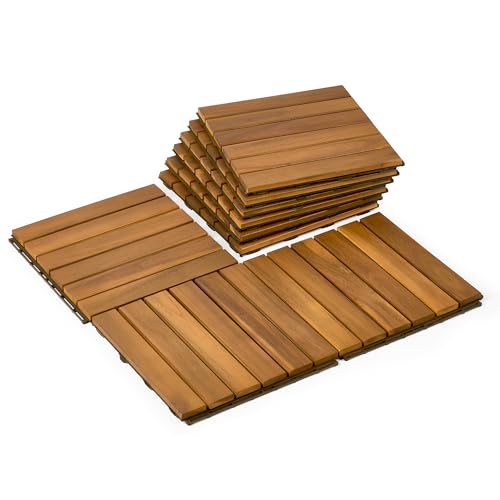
1. THYOI Premium Tiles — The One That Feels Solid Underfoot
The THYOI set ships 10 tiles at 12″x12″x0.9″, covering roughly 10 square feet per box at the thickest profile in this lineup. That extra 0.9″ of depth is the whole story here: it’s the difference between a floor that feels like flooring and one that feels like a mat. The peg base clicks firmly over concrete, and the slat spacing lets rainwater drain straight through instead of pooling. At a 4.5 owner rating, it’s the highest-scored pick on the list, and owners consistently note the tiles stay flat rather than cupping after summer heat. The trade-off is coverage. Ten tiles won’t stretch far, so a 100-square-foot patio means ten boxes and a bigger upfront spend. For a balcony, entryway landing, or a small seating zone where you want the surface to feel premium, this is where I’d start. It’s not the cheap route. It’s the one that reads as intentional.
2. Goovilla Interlocking Tiles — Best Everyday Starter Pack
Goovilla’s plastic tiles come 9 to a pack at 12″x12″, covering about 9 square feet, and they’re the sensible middle of the road. The connectors snap cleanly, the surface has a woodgrain-style slat texture that hides scuffs, and drainage runs through the open channels the way it should. At a 4.2 rating, owner feedback is steady rather than glowing, and the common note is honest: these are lightweight, so they suit low-traffic zones better than a busy grill station. The plastic construction keeps the price friendly and the weight low, which matters if you’re carrying boxes up to a third-floor balcony. Fade resistance is decent but not the strongest here, so a shaded or partly covered patio will get more years out of them than full afternoon sun. If you want a reliable first buy to see whether tile flooring suits your space before committing to a full patio, this is the pack to try.

3. VANCASTLE Heavy Duty Tiles — Made for Chair-Leg Loads
VANCASTLE ships 9 tiles at 12″x12″ and markets them heavy-duty, which shows up in the rib pattern on the underside that stiffens each tile against point loads. Nine square feet per pack puts it in the same coverage tier as Goovilla, so it competes on rigidity rather than value. The 4.1 rating is the lowest in this group, and the reason is consistency: most owners are happy, but a minority report connector tabs that snap if you force a misaligned tile instead of seating it square. Line them up right and they hold. The payoff is a surface that doesn’t bow under a dining chair or a heavy planter, which is where thinner tiles give themselves away. For a patio that hosts actual furniture with weight on four small feet, the extra structural ribbing earns its place. Just take the two extra seconds per tile to click it flat.
4. 60 Sq Ft Bulk Tiles — The Whole-Patio Coverage Play
This is the volume pick: 60 tiles at 12″x12″, a flat 60 square feet in one order. If you’re flooring an entire patio, deck, or rooftop terrace, buying by the box gets expensive fast, and this bundle solves the math in a single purchase. At a 4.4 rating, owners back up the value story, with repeated praise for uniform color across the batch, which is the quiet risk with bulk plastic. Nothing looks worse than a tile that’s a shade off in the middle of a floor. The interlocking system is standard peg-and-loop, tools-free, and the tiles trim with a jigsaw or hand saw for edges and corners. Thickness sits in the standard range rather than the thick THYOI tier, so this is coverage-first, not feel-first. For anyone tiling a large square footage on a budget per foot, it’s the clear efficiency choice. Order 10% extra for cuts and mistakes.
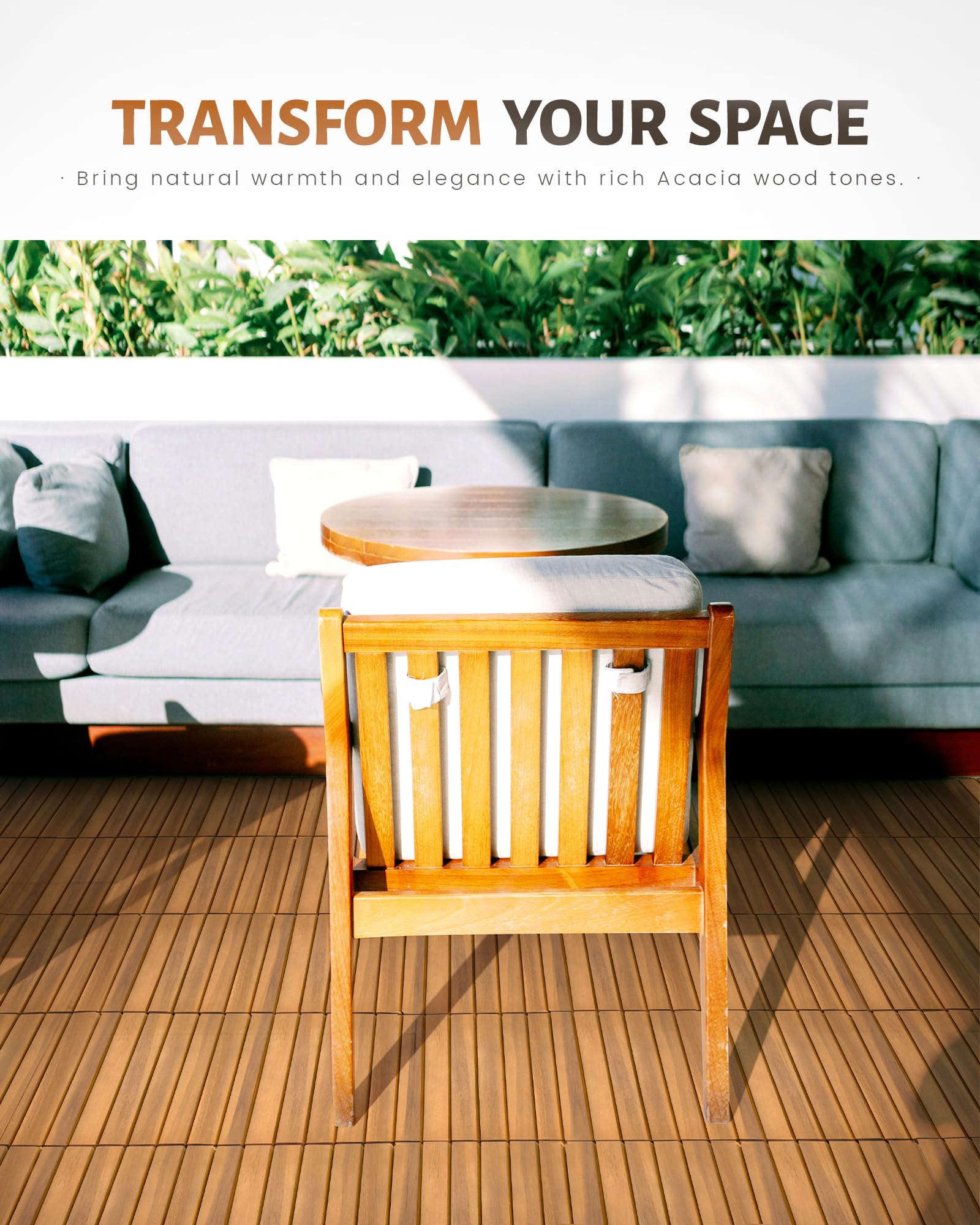
5. Upolana 6-Slat Tiles — Best Drainage Channel Design
Upolana rounds out the list with 9 tiles at 12″x12″, built around a 6-slat surface that’s the standout drainage design here. More slats mean wider open channels, so water sheds fast and the tiles dry quicker after rain, which cuts the mildew and slime that plague tightly-spaced flooring in damp climates. At a 4.4 rating, owners in rainy regions single out exactly that: the floor drains and dries instead of staying slick. Coverage is 9 square feet per pack, in line with the mid-tier picks, and the slat gaps do mean small debris can drop through, so this shines over gravel or a drain, less so over a surface you want to keep spotless underneath. For a poolside patio, a shaded spot that stays wet, or any climate with real rainfall, the drainage geometry is the reason to pick these over a flatter tile.
Comparison Table
| Pick | Coverage | Tile Size | Material | Rating |
|---|---|---|---|---|
| THYOI Premium | ~10 sq ft (10 pc) | 12″x12″x0.9″ | Composite | 4.5 |
| Goovilla | ~9 sq ft (9 pc) | 12″x12″ | Plastic | 4.2 |
| VANCASTLE Heavy Duty | ~9 sq ft (9 pc) | 12″x12″ | Plastic | 4.1 |
| 60 Sq Ft Bulk | 60 sq ft (60 pc) | 12″x12″ | Plastic | 4.4 |
| Upolana 6-Slat | ~9 sq ft (9 pc) | 12″x12″ | Plastic | 4.4 |
How to Measure, Prep, and Lay Interlocking Tiles
Start with square footage, then add 10%. Measure your patio’s length by width in feet, multiply, and divide by the coverage per pack. A 12’x10′ patio is 120 square feet, so at 9 square feet per pack that’s roughly 14 packs, and the 10% cushion covers edge cuts and the odd cracked tile. The surface underneath matters more than people expect. These tiles want a firm, reasonably flat base: existing concrete, pavers, compacted gravel, or hard-packed soil. They won’t fix a lumpy grade, and they won’t level a slope, so knock down high spots first. Drainage is the quiet win here. The slat gaps let water pass straight through to the surface below, which is why the base should already drain rather than trap water. Lay tiles from one corner, click each one square into the last, and check alignment every few rows so small errors don’t compound. Trim edge tiles with a jigsaw. That’s the whole install, and most patios come together in an afternoon with no mortar and no cure time.
Interlocking Tiles vs. Poured Pavers: The Honest Trade-Off
Let’s be straight about what these are. Interlocking deck tiles are not stone or concrete pavers, and they don’t pretend to be a permanent hardscape. Real pavers last decades, carry vehicle loads, and add resale value, but they demand a compacted base, edge restraints, and either a pro or a punishing weekend. Tiles win on speed, reversibility, and rentals: no digging, no mortar, no permission needed, and they lift out when you leave. The cost is longevity and feel. Plastic and composite fade under years of direct UV, they can shift on an uneven base, and no tile matches the dead-solid weight of stone underfoot. For a lifetime patio, pour pavers. For a fast, drainable, renter-friendly floor you can install yourself and take with you, tiles are the smarter call.
Frequently Asked Questions
Do interlocking deck tiles hold up in freeze-thaw climates?
It depends on the material and the base. Quality composite and UV-stabilized plastic tiles handle freeze-thaw cycling when they’re laid over a surface that drains, since trapped water is what cracks and heaves flooring. Standing water under a tile in winter is the real enemy. Lay them over gravel or sloped concrete so meltwater escapes, and most tiles ride out the season fine.
Can I install these directly on grass or dirt?
No, not on soft grass. These tiles need a firm, flat, draining base to stay level and connected. Hard-packed soil or compacted gravel works; loose lawn does not, because the tiles sink and separate under foot traffic. If you only have grass, lay down and compact a few inches of gravel first.
How many tiles do I need for my patio?
It depends on your square footage. Multiply your patio’s length by width in feet, then divide by the coverage per pack, and add 10% for edge cuts. A 100-square-foot patio needs about 11 packs at 9 square feet each, or roughly two of the 60-square-foot bulk boxes.
Will the tiles fade or discolor in direct sun?
Yes, over time, though quality varies. All plastic and composite flooring fades under prolonged UV, but tiles evaluated against ASTM G154 weathering hold color far longer than budget versions. Shaded and partly covered patios keep their color for years; full-sun rooftops fade faster, so lean toward the thicker composite picks there.
Are interlocking tiles slippery when wet?
No, not the slatted designs. The open-slat surface channels water away and gives grip, which is why higher slat counts like the 6-slat Upolana drain and dry quickly. Smooth tiles get slick; textured, well-drained ones stay reasonably safe underfoot even by a pool.
Can I reuse the tiles if I move?
Yes, and that’s their biggest advantage over poured pavers. The peg-and-loop connectors unclip as easily as they snap together, so you can lift the whole floor, stack it, and reinstall it at a new place. Renters and anyone trying out a layout get a patio that isn’t permanent.
Bottom Line
The THYOI Premium tiles are the ones most people should buy, because that 0.9″ thickness delivers a solid, flat floor that reads as intentional rather than temporary. If you’re covering a full patio and watching cost per foot, the 60-square-foot bulk set is the efficiency play, and the Upolana 6-slat design wins any spot that stays wet. Just remember what these are: a fast, drainable, renter-friendly alternative to pavers, not a lifetime hardscape. For the money and the weekend they save, that trade is worth making.



Write Your Review
No reviews yet. Be the first to share your experience!