

> Editorial Note: I’m Liam Wright, an outdoor and garden editor. I grew up in my family’s landscaping business and now cover what actually survives a season of UV, rain, and freeze-thaw cycles. The picks here are evaluated against ASTM weatherability standards and manufacturer durability ratings.
Most people budget for a full glass sunroom, then stall out when the quote lands north of $15,000. A DIY vinyl or screen enclosure does 80% of the job for under $100 — it blocks wind, keeps the rain off the furniture, and stretches your patio season by a couple of months on each end. The trick is picking material thick enough to survive a winter. If you’re outfitting the rest of the space too, start with a good patio furniture set, a patio umbrella for the shoulder-season sun, some outdoor lighting for the evenings, a low-maintenance outdoor rug, and a patio heater once the temperature drops.
How We Evaluated
Vinyl thickness is the number that matters most. Anything under 10 mil tears at the grommets within a season; the picks below run 14 mil or a measured 0.35 mm, thick enough to shrug off wind gusts and hold shape in cold. We checked grommet spacing (24 inches or tighter keeps the panel from billowing), edge reinforcement, and cold-crack resistance, since PVC that stiffens below freezing splits at the fold lines. For the screen option, we looked at mesh weight and magnet count. Clarity mattered too — a good clear tarp should still let light through after a summer of UV, not yellow into a fog. Owner ratings all clear 4.2, and four of the five sit at 4.5 or higher.


Pros
- Fiberglass mesh resists tearing better than cheaper nylon screens
- Standard 16x7 sizing fits most 2-car garage openings without triming
- Affordable entry point under $30 for garage ventilation
- Black color is subtle and does not stand out against typical garage frames
- Lightweight and easy to store when not in season
Cons
- No customer reviews available yet to confirm long-term durability
- Limited product details make it unclear what mounting hardware is included
- May not fit non-standard or oversized garage openings without modification
If you have ever wanted to open your garage door on a nice day without inviting every mosquito in the neighborhood inside, this screen door is a straightforward fix. At 16x7 feet, it covers a standard 2-car garage opening and uses fiberglass mesh, which holds up better than the flimsy polyester versions you will find elsewhere in this price range.
The black color keeps things looking clean and unobtrusive from the street. It is the kind of upgrade that quietly makes your garage more livable, whether you use it as a workshop, gym, or just a spot to sit and watch the rain without getting eaten alive.
If you want bug-free ventilation in your garage without spending more than the cost of a pizza dinner, this one delivers.
Styles it works with: Traditional, Modern Farmhouse, Industrial, Suburban Contemporary
Best placed in: Standard 2-car garage openings (16x7 ft), detached garage workshops, garage gym setups
May not suit: Oversized or custom-width garage doors, single-car garages, or homeowners in HOA communities with strict exterior appearance rules
Buy it if:
- You use your garage as a workshop, gym, or hangout space and want airflow without bugs
- You have a standard 16x7 ft 2-car garage opening and need an affordable screen solution
- You want a seasonal screen you can put up in spring and take down in winter
Consider waiting if:
- You want to see verified customer reviews before committing, since this product has none yet
- You need a magnetic-close or hands-free walk-through design for frequent foot traffic
Skip it if:
- Your garage opening is not a standard 16x7 ft size
- You need a heavy-duty, year-round enclosure rated for wind or weather resistance
Check the latest price and availability on Amazon before it sells out.
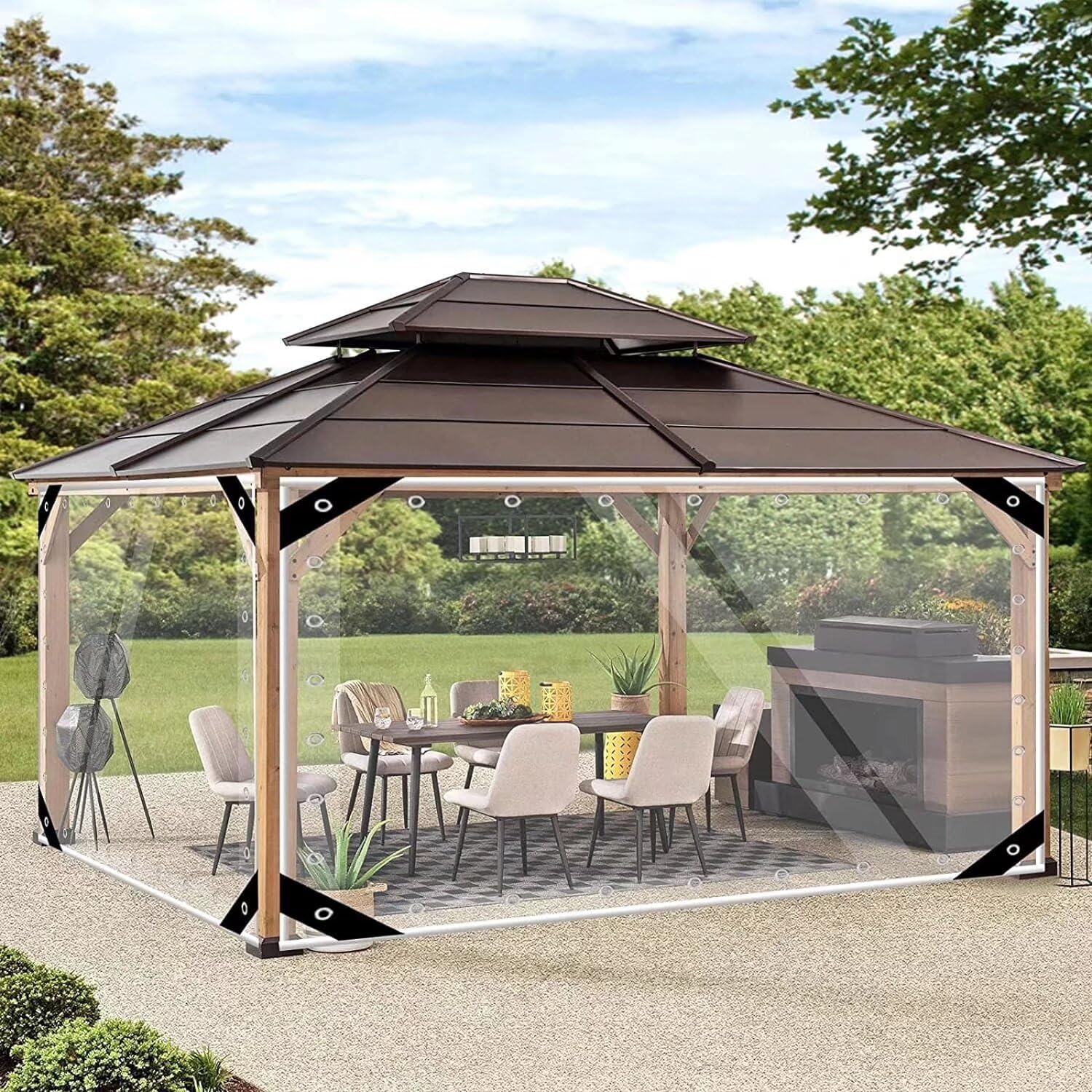
1. 14 Mil Clear Vinyl PVC Tarp, 6×12 ft — Best for Full-Wall Coverage
The 6×12-foot footprint is the reason this one leads. Most patios have at least one long open span facing the prevailing wind, and a single 72-square-foot panel closes it without seams that leak or flap. The 14-mil PVC is heavy enough to stay put in a stiff breeze but still rolls up when you want the view back. Reinforced edges and grommets run the full perimeter, so you’ve got tie-off points every couple of feet instead of a panel that sags in the middle.
At a 4.2 rating, it’s the lowest-scored pick here, and the honest reason is weight. This is a big, dense sheet, and hanging it solo is awkward — you’ll want a second person and a bungee kit. Once it’s up, though, it holds. The anti-tear construction and thickened body make it the panel I’d trust on the windward side of a porch, where a thinner tarp would have shredded at the grommets by November. For a large opening on a budget, nothing else here covers as much ground per dollar.
2. 14 Mil Clear Tarp, 3×6 ft — Best for Gaps, Railings, and Small Spans
Not every enclosure job needs a wall-sized sheet. This 3×6-foot panel is the one you reach for when there’s an 18-square-foot gap between a post and a railing, or a low knee-wall you want to top off with a windbreak. The smaller size makes it far easier to tension by yourself, and at 4.5 stars it’s the highest-rated of the clear tarps in this lineup.
Same 14-mil heavy-duty vinyl as the big panel, same reinforced edges and grommets, just scaled down. Water-resistant rather than fully submersible, which is exactly right for a vertical wind panel — it sheds rain running down the face without pooling. I’d buy two or three of these before I’d buy one oversized tarp and try to cut it down. Modular panels mean you can open one section for airflow on a warm afternoon and leave the rest sealed. The trade-off is seams: butt two panels together and you get a vertical gap that wind finds, so overlap them by a few inches and grommet through both.

3. 14 Mil Clear Vinyl Tarp, 8×10 ft — The One That Balances Size and Handling
This 8×10-foot panel splits the difference between the unwieldy 6×12 and the modular 3×6, and its 4.6 rating is the highest in the group. Eighty square feet covers a standard porch opening, but the more square proportion is easier to hang square and tension evenly than a long, narrow sheet that wants to twist.
The maker aims this one squarely at porches and outdoor enclosures, and the clear vinyl earns that. Grommets are set for outdoor tie-downs, the edges are reinforced against the constant flex that kills cheap tarps, and it stays genuinely transparent so a covered porch doesn’t turn into a cave. Waterproof rather than merely resistant, so it holds up as a roof panel over a pergola section as well as a wall. If you want one tarp that handles most residential patio jobs without a second set of hands fighting you, this is the pick. It’s the closest thing here to a do-everything panel.
4. 0.35 mm PVC Transparent Awning Canopy — Best for Overhead and Awning Runs
The other three tarps are wall panels first. This one is built to live overhead. The 0.35-mm transparent PVC is tear-resistant cloth rather than a stiff sheet, which matters when the material has to drape over an awning frame or canopy rib without cracking at the bends. It carries a 4.6 rating, tied for the top of this list.
Where it shines is a covered walkway or a patio roof that leaks light but not water. The waterproof PVC keeps the rain off while the transparency means you don’t lose daylight underneath — a common complaint with opaque canopy fabric. Tear resistance is the headline spec here; awning material takes constant UV and wind lift, and thinner films fatigue and split along the frame line. This is a more specialized buy than the flat wall panels, so match it to an existing canopy or awning structure. If you’re only closing off vertical openings, one of the wall tarps above is the smarter spend.

5. Elytsemoh Magnetic Garage Screen Door, 16×7 ft — Best for Airflow Without the Bugs
Vinyl seals the weather out. Sometimes you want the opposite — a breeze through, mosquitoes gone. This Elytsemoh magnetic screen is sized 16×7 feet for a two-car garage, which also makes it the right call for a wide patio or porch opening you want to walk through hands-free. The fiberglass mesh weighs 2,300 g (about 5.1 lb), heavy enough that it hangs straight instead of ballooning, and the magnets snap shut behind you automatically. It’s rated 4.6.
Fiberglass mesh resists the sag and stretch that ruins lightweight polyester screens by mid-summer, and it won’t melt or warp near a grill the way some synthetics can. This isn’t a weather barrier — rain blows straight through the mesh, and it won’t add a degree of warmth. What it does is turn an open patio into a screened one for a fraction of a contractor’s screen-room price, and it comes down in minutes when the season ends. For airflow-first porches in bug country, it’s the most livable option on this list.
Comparison Table
| Pick | Material | Size | Best Use | Rating |
|---|---|---|---|---|
| 14 Mil PVC Tarp 6×12 | 14-mil clear vinyl | 6×12 ft | Long windward wall | 4.2 |
| 14 Mil Clear Tarp 3×6 | 14-mil clear vinyl | 3×6 ft | Gaps & railings | 4.5 |
| 14 Mil Clear Tarp 8×10 | 14-mil clear vinyl | 8×10 ft | All-round porch panel | 4.6 |
| 0.35mm PVC Awning | 0.35-mm PVC cloth | Canopy roll | Overhead / awning | 4.6 |
| Elytsemoh Screen Door | Fiberglass mesh | 16×7 ft | Airflow + bug screen | 4.6 |
How to Size and Hang a DIY Patio Enclosure
Measure the opening, then add 6 to 8 inches on every side for overlap and tie-off slack. A panel cut flush to the opening has no material left to grommet through a post, so it flaps. For vertical wall panels, run a taut line of paracord or cable across the top of the opening and hang the tarp from that with carabiners through the grommets — it spreads the load so no single grommet tears out.
Tension is what separates a quiet enclosure from a tarp that snaps all night. Pull each panel drum-tight side to side before you fix the bottom, then anchor the lower grommets to a rail or weighted bar so wind can’t get behind it. On the windward face, double the tie-downs. In freezing climates, take vinyl panels down for the deep-winter months if you can — 14-mil PVC handles cold far better than thin film, but repeated flexing at sub-freezing temperatures shortens any tarp’s life. The screen door is the exception: leave it up all summer, take it down before the first hard frost.
Vinyl Panels vs. a Screen Enclosure: Which One You Need
Pick vinyl when the goal is weather. Clear PVC blocks wind and rain, traps a few degrees of warmth on a sunny day, and lets you use the patio in the shoulder seasons — March and October in most of the country. It’s the right answer for a west-facing porch that catches afternoon storms, or a space you want to furnish and protect.
Pick the magnetic screen when the goal is bugs and airflow. In humid, mosquito-heavy regions, a sealed vinyl enclosure in July is a sweatbox; the fiberglass mesh keeps the breeze and loses the insects. Plenty of patios want both, run seasonally — screen for summer, vinyl panels swapped in for the cold months. They mount the same way, so one set of hooks handles both.
Frequently Asked Questions
How thick should patio enclosure vinyl be?
Aim for 14 mil at minimum for vertical wall panels. Anything thinner tears at the grommets within a season and cold-cracks in winter. The 0.35-mm awning PVC is a comparable weight for overhead use where the material needs to drape.
Will a clear vinyl enclosure keep my patio warm?
It traps a few degrees on a sunny day and blocks wind chill, which is the bigger factor. Don’t expect it to replace a heater — pair it with a patio heater for genuine cold-weather use. It extends the usable season more than it heats the space.
Can I leave vinyl tarps up all winter?
In mild climates, yes, if they’re tensioned tight and rated 14 mil. In freezing regions, take them down for the coldest stretch. Repeated flexing below 32°F shortens the life of any PVC, even heavy-duty grades.
How do I stop the tarp from flapping in the wind?
Tension it drum-tight before fixing the bottom edge, keep grommets no more than 24 inches apart, and double the tie-downs on the windward side. Anchoring the lower grommets to a weighted bar or rail stops wind getting behind the panel.
Do magnetic screen doors actually keep bugs out?
Yes, when the magnets seal fully and the mesh is heavy enough not to sag. The fiberglass mesh here weighs about 5.1 lb, which hangs straight and closes clean. Lightweight polyester screens gap at the corners by mid-summer.
Is a DIY vinyl enclosure cheaper than a screen room?
Considerably. A contractor-built screen room runs into the thousands, while these panels sit under $100 each. You give up permanence and a rigid frame, but for seasonal weather protection the value is hard to argue with.
Bottom Line
The 8×10-foot 14-mil clear tarp is the one most people should buy — it covers a standard porch opening, hangs square without a fight, and holds a 4.6 rating. If your opening is wider than 10 feet, size up to the 6×12 panel and add a second set of hands. And if bugs are the real enemy, skip vinyl entirely and hang the Elytsemoh magnetic screen for the summer. No DIY panel matches a glass sunroom for insulation — but for a couple of extra months of patio season at under $100, none of these come close to being beaten on value.




Write Your Review
No reviews yet. Be the first to share your experience!