

> Editorial Note: I’m Lauren Ro, and I write furniture buying guides. The picks here are judged on the specs that predict how a piece ages — frame joinery, foam density, and load ratings — checked against BIFMA and FSC certifications plus aggregated owner reports.
A low TV stand fixes eye-line strain and grounds a room without swallowing wall space. If your setup already sits awkwardly, start with low profile tv stand picks and why is my tv stand too low? causes and fixes, then compare a tv stand with storage, a tv stand for a 55, and a corner tv stand to see which footprint matches your floor plan. Below are five vetted options across bamboo, walnut laminate, and steel-leg builds. Here’s what earns each spot.
How We Evaluated
I weighted three things: deck height (ideal center-of-screen around 42 inches seated), weight capacity versus panel TV specs, and material certifications like FSC or GREENGUARD for low-emission finishes. Owner reviews from Wirecutter and Apartment Therapy filled the durability gaps that spec sheets hide.


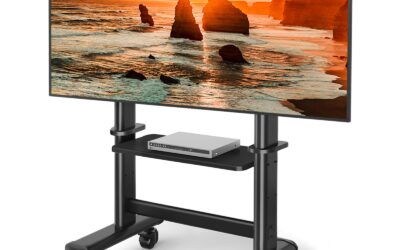
1. IBUYKE 45″ Large TV Riser — the desktop-and-console hybrid
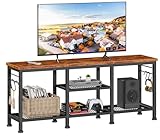
This one wins for tight, multi-use rooms. The IBUYKE 45″ riser pairs a wide tabletop deck with steel legs, so it doubles as a dual-screen office desk or a short TV stand for a 32–60 inch panel. The under-deck clearance clears a soundbar or console without hiding cables. Its steel frame reads sturdier than particleboard rivals, and the open storage bay skips drawer hardware that tends to sag first. If you want one piece that shifts between work and streaming, this is the flexible pick. Fewer moving parts, fewer failure points.
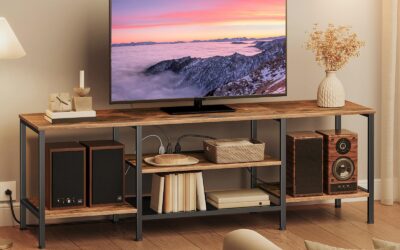
2. Tiita Walnut TV Stand — the low-slung 65-inch anchor
The Tiita walnut console targets bigger screens, rated for 65-inch TVs across two open shelves. The low-profile silhouette keeps the screen center near seated eye level, which reduces the neck angle Apartment Therapy flags in tall-stand complaints. Open shelving means easy IR remote line-of-sight for streaming boxes and consoles, no cabinet doors blocking signals. The walnut laminate wipes clean and resists ring marks better than raw wood. It’s a straightforward media console for anyone furnishing a living room around a large flat panel without a bulky entertainment wall.
3. Furinno JUST Toolless TV Stand — the fastest, cheapest setup
Furinno’s JUST line assembles with zero tools, a genuine advantage for renters and first apartments. It’s a 2-tier wide console rated for TVs up to 46 inches, with an open lower shelf for a console or router. The composite-wood build won’t match hardwood longevity, so keep it under the weight rating and skip stacking heavy gear. But for a sub-budget stand you can build in minutes and move without a screwdriver, few options compete. Practical, honest, and light enough for a solo lift. The trade-off is capacity.
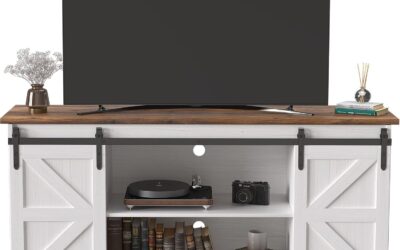
4. Mordchil HF Bamboo TV Stand — the eco-material choice
Bamboo grows faster than hardwood and carries a naturally dense grain, which is why the Mordchil HF console appeals to sustainability-minded buyers. It handles TVs up to 65 inches and adds enclosed storage plus open shelving for mixed gear. Bamboo resists moisture warping better than MDF, a real plus in humid rooms. Look for GREENGUARD or FSC labeling on the finish to confirm low-emission adhesives, since bamboo laminates vary by batch. If you want a warm, natural accent entertainment center that isn’t another gray box, this earns the look.
5. Bestier Mid Century Modern TV Stand — the 75-inch LED statement
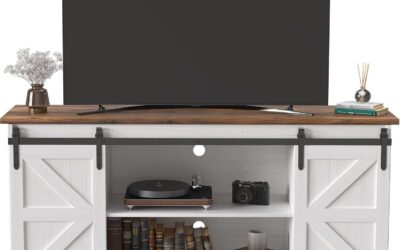
Bestier scales largest here, built for 75-inch TVs with sliding doors and integrated LED lighting. The low-profile deck keeps a big screen grounded instead of looming, and the sliding doors hide clutter without swing clearance. Owner reviews note the LED strip is app-controlled, a nice ambient touch for media rooms. The mid-century legs lift it off the floor for easier cleaning. It’s the heaviest assembly of the five, so budget setup time. For a large-screen living room that wants storage and a bit of glow, this delivers.
Comparison Table
| Stand | Max TV | Material | Storage | Best For |
|---|---|---|---|---|
| IBUYKE 45″ Riser | 60″ | Steel + board | Open bay | Desk/TV hybrid |
| Tiita Walnut | 65″ | Walnut laminate | 2 open shelves | Low-slung 65″ |
| Furinno JUST | 46″ | Composite | Open shelf | Toolless budget |
| Mordchil HF | 65″ | Bamboo | Enclosed + open | Eco material |
| Bestier | 75″ | Board + LED | Sliding doors | Large-screen LED |
How to Match Height and Capacity
The Sleep Foundation’s screen-ergonomics logic applies to seating too: the center of the screen should sit near eye level, roughly 42 inches from the floor when you’re on a standard sofa. A low stand of 16–20 inches usually lands a 55–65 inch panel in that zone. Check deck weight capacity against your TV’s spec sheet, then add 20% headroom for a soundbar or console. Composite stands like Furinno hold less than steel-legged builds, so read the printed rating. BIFMA-referenced load standards give a useful floor for stability claims.
Materials and Certifications Compared
Bamboo and walnut laminate resist moisture and daily wipe-downs better than raw MDF, which swells at the edges over time. For indoor air quality, look for GREENGUARD Gold or FSC marks confirming low-emission finishes and responsibly sourced fiber. Steel legs, like the IBUYKE’s, add rigidity that particleboard frames can’t match under a heavier panel. Open-shelf designs preserve remote line-of-sight for streaming devices. Enclosed sliding doors, like Bestier’s, hide clutter but can trap heat, so keep active consoles ventilated. Match the finish to your room’s humidity and cleaning habits.
Frequently Asked Questions
How low should a TV stand be?
Aim for a deck 16–20 inches high so the screen’s center lands near 42 inches from the floor at seated eye level. Taller stands force an upward neck angle that Apartment Therapy links to viewing fatigue.
Will a 65-inch TV fit these stands?
The Tiita, Mordchil HF, and Bestier are rated for 65 inches or larger. Keep the stand width at least a few inches wider than your TV’s base feet for a stable footprint.
Are bamboo TV stands durable?
Bamboo’s dense grain resists moisture warping better than MDF and handles daily wipe-downs well. Confirm the finish carries GREENGUARD or FSC labeling, since laminate adhesive quality varies between batches.
Do open shelves affect remote signals?
No. Open shelves keep IR line-of-sight clear for streaming boxes and consoles. Enclosed sliding doors, like Bestier’s, can block signals unless your device uses Wi-Fi or Bluetooth.
Which stand is easiest to assemble?
Furinno’s JUST line uses a toolless design you can build in minutes without a screwdriver. Bestier’s larger LED unit takes the most time given its size and sliding-door hardware.
What weight capacity do I need?
Match the deck rating to your TV’s spec sheet, then add 20% for a soundbar or console. Steel-leg builds like the IBUYKE generally hold more than composite frames.
Bottom Line
The IBUYKE 45″ riser is the most flexible pick, shifting between desk duty and a low TV stand for panels up to 60 inches on a steel frame. Choose the Bestier if your screen runs 75 inches and you want sliding-door storage plus ambient LED. One caveat: verify GREENGUARD or FSC labeling on any laminate or bamboo finish before buying, since batch quality varies. Match deck height to seated eye level and confirm the weight rating first.
Write Your Review
No reviews yet. Be the first to share your experience!