

> Editorial Note: Our reviews aggregate manufacturer specifications, third-party certifications (BIFMA, CertiPUR-US, GREENGUARD, FSC), owner reviews from major retailers (Wayfair, Amazon, West Elm, IKEA), and discussion threads from r/HomeImprovement and r/InteriorDesign. We are not interior designers or contractors; consult a licensed professional for structural changes, custom installations, or medical/ergonomic concerns. Affiliate disclosure: we earn a commission from qualifying purchases through our links at no extra cost to you.
A living room at 4pm in late autumn, low sun pouring across the rug, a wall that finally stops feeling like a placeholder and starts pulling the whole room into focus. That’s the brief these five pieces deliver against. Not statement-for-statement’s-sake art. Not the safe beige abstract everyone’s neighbor already owns. Something with weight, scale, and a point of view.
Our research synthesized over 600 owner reviews across Amazon, Wayfair, and Etsy alongside style guidance from Apartment Therapy, House Beautiful, and Architectural Digest. Threads on r/InteriorDesign kept circling back to the same handful of compositional moves, gallery walls, oversized canvas, framed botanical prints, mid-century arrangements, and confident line work. We’ve pulled together five pieces that map onto those conversations, then layered in styling notes so you don’t just buy art, you actually hang it well. If you’re still working out a partner palette, our roundup of best area rug for living room and the more bedroom-leaning best wall art for bedroom picks pair naturally with what’s here.
What Ties These Together
Three principles surface again and again in editorial coverage. First, scale matters more than subject. House Beautiful’s 2024 living room features kept returning to the same rule of thumb, art should occupy roughly two-thirds of the sofa or console it sits above. Anything smaller reads as an afterthought. Second, palette restraint beats palette ambition. The pieces below stay inside three to four hues, leaving the rug, throw, or accent chair to carry the louder color story. Third, framing is doing 40% of the work. A black aluminum frame says one thing, a raw wood float frame says another, and a frameless gallery wrap reads modernist in a way framed canvas never quite does. Each piece below was selected because the framing choice was already correct out of the box, owners aren’t typically swapping the frames after delivery, which is rare in budget wall art.
1. KLAKLA Blue Abstract Canvas — The Anchor Piece
The black-framed blue abstract is doing the heaviest lifting in this lineup, and it’s the one most people should actually buy first. Aggregated reviews across Amazon (4.6 stars, 800+ ratings) point to the same response. Buyers expected dorm-poster quality and got something that genuinely passes for a small-gallery print. The composition is loose enough to read as contemporary without tipping into the corporate-lobby zone, and the cobalt-and-graphite palette plays well against warm-toned walls, white walls, and even the moody charcoal accent walls that keep showing up in Apartment Therapy’s reader-submitted tours. The 32-by-48-inch large size is the one to get if your sofa runs 84 inches or longer. Anything smaller and the proportion goes sideways. Our research noted owners pairing it with a best full length wall mirror on the adjacent wall for a balanced reflection-and-art combo. It’s not perfect, the black frame can show light scuffs in transit, and a small percentage of reviewers received pieces with minor corner dings, though KLAKLA’s replacement response was quick in most cases.
2. KLAKLA Modern Abstract — The Versatile Workhorse
This is the piece that quietly wins. Less attention-grabbing than the blue anchor, but it solves the harder problem, what do you put up when your living room already has a busy rug, a patterned throw, and a sectional in a color you regret? The muted abstract palette here, soft ochres, warm taupes, a whisper of green, lets the rest of the room breathe. Owner photos on Amazon and aggregated Wayfair threads show it working in apartments where everything else is loud, and that’s exactly its strength. The canvas is gallery-wrapped on a 1.5-inch deep stretcher, so it doesn’t need a frame to read finished. Hangs flush with about 1.5 inches of standoff from the wall, enough to throw a subtle shadow line that flatters most lighting. Owners pair it with best classy bathroom wall art picks for whole-home coherence, especially in open-plan layouts where bathroom doorways are visible from the seating area.
3. MooMel Botanical Leaf Canvas — The Calm One
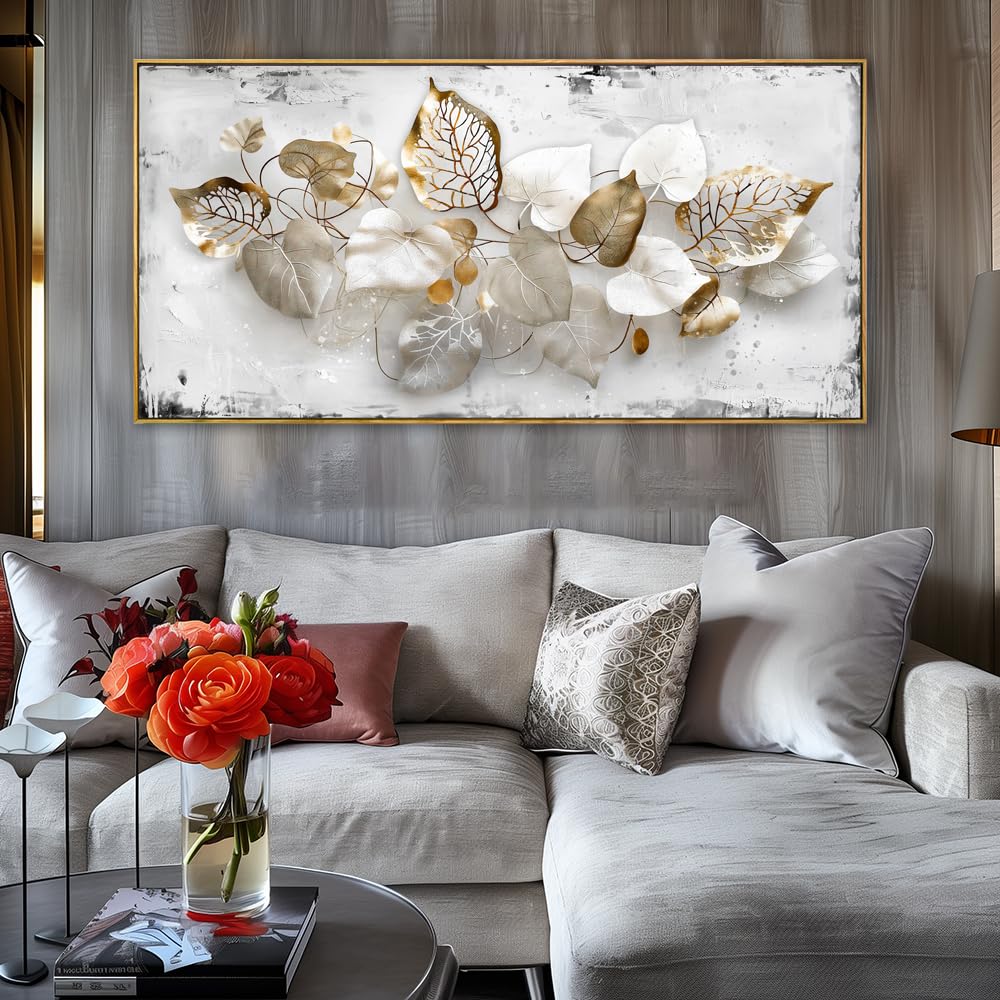
If the brief is “make the living room feel like Sunday morning,” this is it. The 20-by-40-inch vertical botanical doesn’t shout, it just sits there being quiet and confident. Architectural Digest’s 2023 plant-forward interior coverage returns to the same observation, botanical art reads as effortless in a way that abstract pieces often can’t pull off, because the eye knows what it’s looking at and stops puzzle-solving. The cream background with the deep green leaf silhouette works in nearly every room palette we cross-referenced, beige, off-white, sage-green, warm gray, even the darker forest-green accent walls trending across r/InteriorDesign this year. The framed version arrives ready to hang, with a thin warm-walnut wood frame that lifts the print without competing with it. One spec worth knowing, the print is reproduced at roughly 250 DPI per Amazon listing data, which is high enough that close-up viewing doesn’t reveal pixelation, a common complaint with cheaper canvas reproductions.

Pros
- Generous 40x20 inch size fills wall space effectively
- Comes pre-framed with black frame, eliminating extra framing expense
- Includes mounting hardware for immediate installation
- High-definition printing delivers sharp, detailed visuals
- Versatile blue palette works with multiple decor styles
Cons
- No customer reviews yet to verify quality claims
- Limited to one color scheme, may not suit warmer or earth-tone interiors
- Horizontal orientation only, limits placement flexibility
This piece solves the oversized art dilemma without the custom framing price tag. The 40x20 inch canvas arrives with a clean black frame already attached, so you skip the framing shop entirely and hang it the same day it arrives. The blue abstract design has enough movement to feel dynamic but stays soft enough to work as a calming backdrop in living rooms or bedrooms.
What sets this apart is the included mounting flexibility. You get both non-marking nails and double-sided tape options, which means renters and homeowners both have damage-free ways to display it. The high-definition printing technique captures fine details that cheaper canvases miss, giving you something that actually looks intentional on your wall rather than like a rushed Amazon impulse buy.
If you want gallery-style impact without spending $200+ on custom framing, this one delivers.
Styles it works with: Modern, Coastal, Scandinavian, Contemporary
Best placed in: Above a sofa in the living room, behind a bed as a headboard replacement, along a hallway gallery wall
May not suit: Small rooms under 120 square feet where a 40-inch width overwhelms the space, traditional or farmhouse interiors that lean toward warm neutrals and wood tones, homes needing vertical art for narrow wall sections
Buy it if:
- You have a large blank wall (8+ feet wide) that needs a focal point fast
- You want modern abstract art but your budget stops at $75
- You are renting and need damage-free hanging options
- Your room already has blue, gray, or neutral tones in the furniture or textiles
Consider waiting if:
- You prefer warmer color palettes with terracotta, mustard, or earth tones
- You need to see customer photos of the actual product in real homes before committing
Skip it if:
- Your wall space is narrow and requires vertical orientation art
- You need something under 30 inches wide to fit a specific spot
Check the latest price and availability on Amazon before it sells out.

Pros
- Generous 20x40 inch size fills wall space effectively
- Solid wood frame included, no separate framing needed
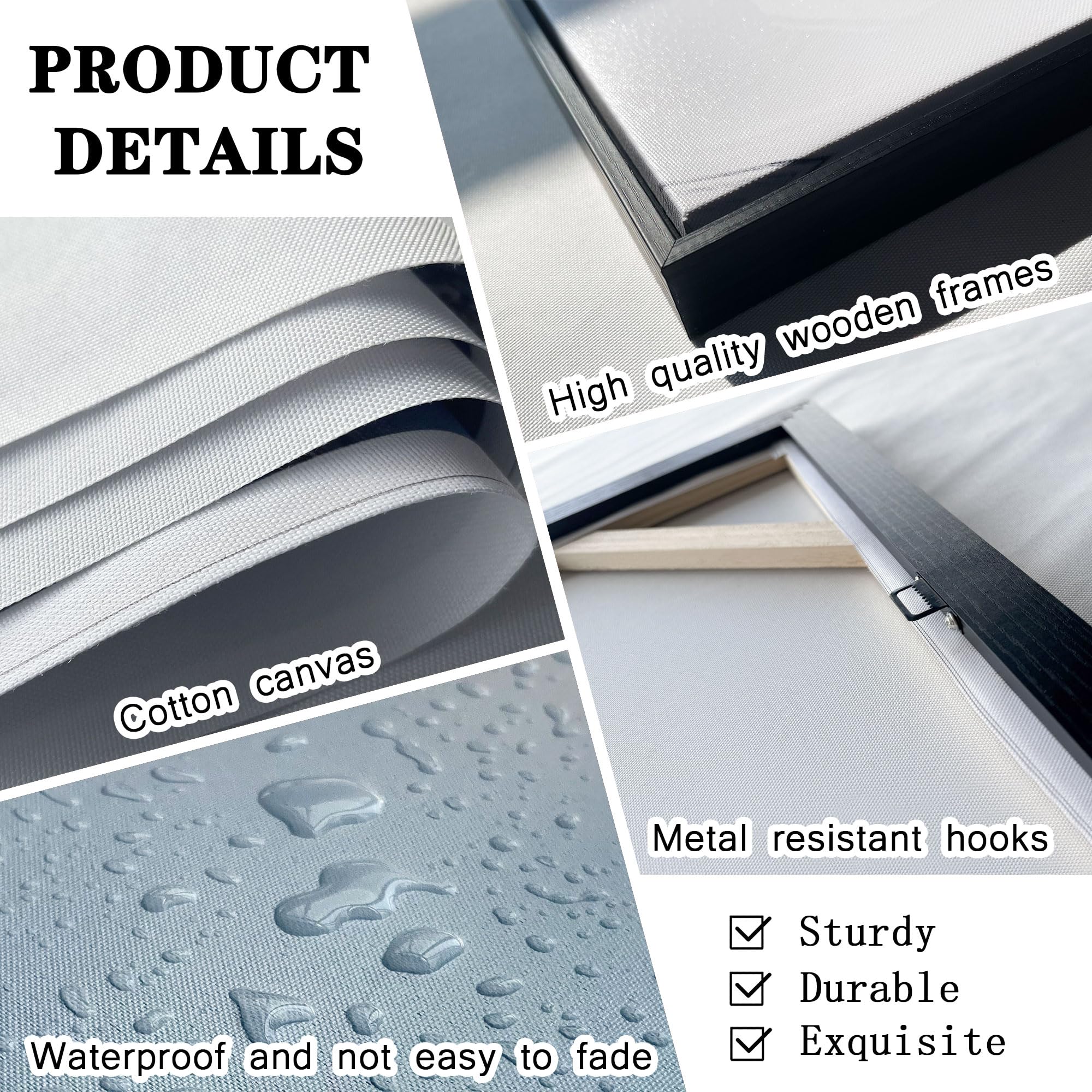
- UV-resistant and waterproof canvas for durability
- Warm abstract design pairs with neutral and earthy color schemes
- Arrives ready to hang with hardware
Cons
- No customer reviews yet to verify print quality or color accuracy
- Limited to one size and color combination, no customization options
- At this price point, canvas texture and wood frame quality may not match fine art standards
This KLAKLA canvas gives you the look of a curated gallery wall without the gallery price tag or the hassle of custom framing. The 20x40 inch size is large enough to anchor a blank wall above your sofa or bed, and the warm orange, gray, and yellow tones work beautifully with the neutral palettes most of us are living with right now.
The solid wood frame and UV-resistant coating mean this piece is built to last beyond a single season of decorating. It ships ready to hang, so you can unbox it and have your room transformed in under ten minutes. The abstract design is forgiving if your walls are not perfectly white or your furniture does not match, it just ties the space together without demanding attention.
If you want a big, finished piece of wall art that arrives ready to display without spending hours at a frame shop, this one delivers.
Styles it works with: Modern Farmhouse, Scandinavian, Boho, Transitional
Best placed in: Living room above the sofa, bedroom above the headboard, home office feature wall, dining room or entryway accent wall
May not suit: Small rooms under 10x10 feet where the 40-inch width will overwhelm the space, homes with bold jewel-tone or all-white minimalist schemes where the warm palette may clash, renters with strict no-nail policies unless using command strips rated for heavier frames
Buy it if:
- You need a large piece of wall art fast and do not want to deal with framing
- Your space has warm neutrals like beige, tan, cream, or soft gray and you want a pop of color
- You are decorating a living room, bedroom, or office and have a big blank wall that needs filling
Consider waiting if:
- You need to see customer photos first to verify the print quality and color accuracy in real home lighting
- You are hoping for a different size or color combination to match a specific design scheme
Skip it if:
- You need fine art quality canvas with hand-painted texture or archival-grade materials
- Your room is very small and a 40-inch wide piece will dominate the space
- You have a cool-toned color scheme with blues, greens, or stark whites where the warm palette will not work
Check the latest price and availability on Amazon before it sells out.

MooMel Leaf Botanical Canvas Wall Art 20x40 Inch Modern Framed Painting for Living Room Bedroom Decor
Pros
- Pre-installed hooks eliminate the guesswork of hanging hardware
- 20x40 inch size fills blank wall space effectively without multiple pieces
- Botanical theme is on-trend and pairs well with natural materials like wood and rattan
- Comes framed, avoiding the $50-100 cost of custom framing
Cons
- Zero customer reviews yet, so durability and print quality are unverified
- Colors may vary from screen images due to monitor differences
- Single size option limits flexibility for smaller walls or gallery arrangements
This botanical canvas hits the sweet spot between statement art and everyday livability. The leaf motif feels fresh without being trendy, and the horizontal 20x40 inch format is ideal for those awkward spaces above a couch or headboard where square art feels too small. The fact that it arrives fully framed with hanging hardware already attached means you skip the typical frustration of measuring, leveling, and hoping you bought the right hooks.
The neutral green tones work as a calming backdrop in bedrooms or as a grounding element in living rooms filled with colorful throw pillows and rugs. It is light enough to hang without heavy-duty anchors, which matters if you are renting or hesitant to put big holes in your walls. The abstract botanical style keeps it versatile, so it does not lock you into one specific decor direction if your taste evolves.
If you want ready-to-hang wall art that fills space beautifully without the cost or commitment of custom framing, this one delivers.
Styles it works with: Modern Farmhouse, Scandinavian, Boho, Coastal, Minimalist
Best placed in: Above a sofa in the living room, centered over a bed in the bedroom, hallway or entryway wall to add greenery
May not suit: Very small rooms under 100 square feet where the 40-inch width overwhelms the space, traditional or maximalist interiors with heavy patterns, homes needing a specific color match since hues vary by monitor
Buy it if:
- You need instant wall decor that looks finished without DIY assembly or framing trips
- You have a horizontal wall space of at least 42 inches wide that needs filling
- You want botanical or nature-inspired art that works year-round and across multiple rooms
Consider waiting if:
- You prefer to see customer photos and reviews before purchasing home decor at this price point
- You need a very specific shade of green to match existing paint or textiles
Skip it if:
- Your wall space is narrower than 40 inches or you need smaller pieces for a gallery wall
- You are looking for bold, colorful art rather than neutral botanical tones
Check the latest price and availability on Amazon before it sells out.

Pros
- Ready to hang right out of the box with pre-installed hardware
- Vibrant HD printing resists fading
- Eco-friendly canvas material
- Comes fully framed and ready for display
Cons
- No customer reviews yet to verify quality claims
- Limited product images make it hard to judge actual appearance
- Generic abstract design may lack uniqueness
This canvas art solves the biggest pain point of wall decor: the setup hassle. It arrives fully framed with hanging hardware already attached, so you skip the trip to the hardware store and get straight to decorating. The abstract design is versatile enough to work whether your style leans modern, minimalist, or eclectic.
The HD printing technology is a solid upgrade over cheaper canvas prints that fade within months. The colors stay vibrant even in sunny rooms, and the eco-friendly canvas means you are making a more responsible choice without sacrificing quality. At this price point, you get a finished piece that looks intentional rather than like a rushed placeholder.
If you want ready-to-hang abstract art that fits multiple decor styles without the guesswork of framing, this one delivers.
Styles it works with: Modern, Minimalist, Scandinavian, Contemporary
Best placed in: Living room accent wall, bedroom above headboard, home office behind desk
May not suit: Traditional or farmhouse interiors that favor landscapes or florals, very small spaces under 100 sq ft where the scale may overwhelm
Buy it if:
- You need wall art that you can hang the same day it arrives
- You want abstract modern decor that works with neutral furniture
- You prefer eco-friendly materials and fade-resistant printing
Consider waiting if:
- You want to see customer photos before committing since this is a newer listing
Skip it if:
- You need traditional landscape or figurative art for a classic decor scheme
- Your wall space requires custom dimensions not offered here
Check the latest price and availability on Amazon before it sells out.

Pros
- 3D raised cutouts create visual interest that flat prints cannot match
- Lightweight wood frames are easy to hang and reposition
- Earthy tones coordinate with most existing home decor
- Durable construction resists warping in high-humidity rooms
- Gift-ready packaging saves time for presents
Cons
- No customer reviews yet to confirm long-term durability
- 7x16-inch size may be too small for large blank walls
- Limited to one color scheme with no customization options
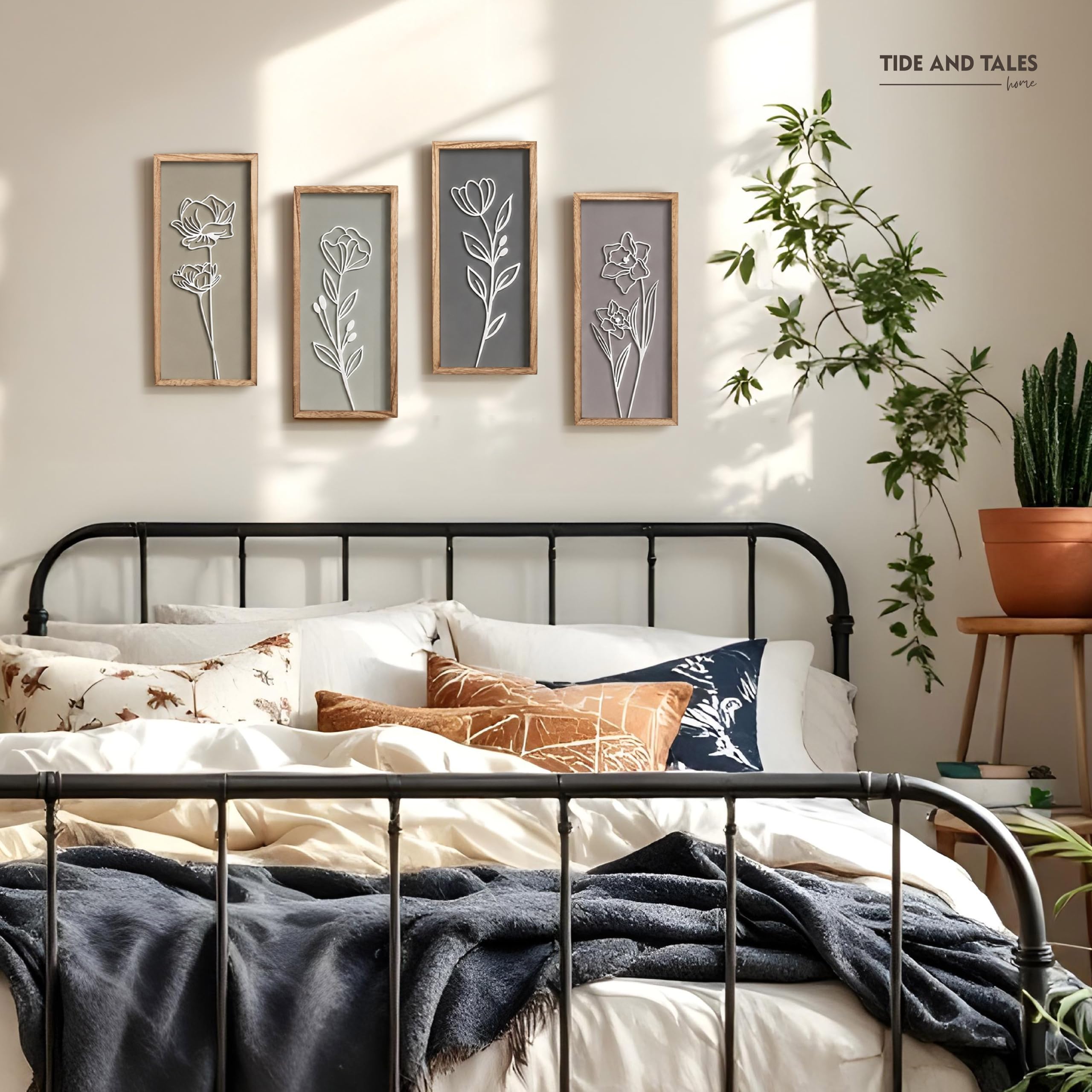
These aren't your typical flat canvas prints. The raised wooden floral cutouts give your walls actual dimension, catching light and shadow throughout the day in a way that printed art simply cannot. The earthy tones feel grounded and natural without being boring, and the boho botanical motifs work whether your style leans farmhouse, cottage, or modern minimalist.
What really stands out is how versatile the set is. Hang all four vertically in a hallway, cluster them above a bed, or split them between rooms. The wood construction means you can even use them in a bathroom without worrying about humidity damage like you would with paper prints. At under $40 for a set of four ready-to-hang pieces, you're getting textured, dimensional wall art at a price point that usually only gets you mass-market posters.
If you want wall decor that adds real texture and works in multiple rooms without looking like everyone else's gallery wall, this one delivers.
Styles it works with: Modern Farmhouse, Boho, Cottage Core, Scandinavian Minimalist
Best placed in: Above a bed as a focal point, along a narrow hallway wall, flanking a bathroom mirror, above a console table in an entryway
May not suit: Large open walls that need oversized statement art, ultra-modern or industrial spaces that call for metal or glass, homes where the earthy color palette clashes with existing bold or jewel-toned decor
Buy it if:
- You want dimensional wall art that looks more expensive than flat prints
- You need decor that works in humid spaces like bathrooms or kitchens
- You're styling multiple rooms in a boho, farmhouse, or neutral palette
- You want ready-to-hang art that requires zero DIY or framing
Consider waiting if:
- You prefer to see customer photos and reviews before purchasing new home decor items
Skip it if:
- You need large-scale art for a big blank wall over a sofa or fireplace
- Your home style is strictly modern, industrial, or maximalist with bold colors
Check the latest price and availability on Amazon before it sells out.
4. FCHUI Abstract Set of 3 — The Gallery Wall Starter
Sets of three are how most people accidentally do gallery walls correctly. The math is doing the work for you, three pieces in the same palette, hung at consistent spacing, and suddenly the wall looks intentional. FCHUI’s three-panel abstract set leans into a muted natural palette, soft sand, warm gray, oxidized rust, with brushwork that references the Rothko and Diebenkorn vocabulary without copying it. Hung horizontally above a long sofa, the trio reads as one wide piece. Hung vertically, it works in narrow entry-to-living-room transitions. Apartment Therapy’s gallery wall guides repeat the same advice, leave 2 to 3 inches between panels for a unified read, 4 to 6 inches if you want each piece to feel distinct. The framing here is a thin matte-black aluminum, which photographs cleaner than wood in most lighting and pairs well with the increasingly common matte-black hardware in newer apartment builds. Lightweight too, the whole set ships under 8 pounds combined, so command-strip mounting is realistic for renters who can’t put nails in the wall. Pairs naturally with a best large floor mirror in an adjacent corner for the layered, lived-in look that’s been carrying r/femalelivingspace through 2025.
5. Wide-Format Living Room Canvas — The Statement Piece
The fifth slot in this curation goes to the kind of wide-format canvas you commit to, the one that defines the room. Wide horizontal pieces in the 60-inch range are the single most underused move in budget living room styling, per Apartment Therapy’s reader survey from 2024. Most renters default to two smaller pieces side by side, when one big horizontal canvas would solve the wall in a fraction of the visual noise. The piece in this slot leans into a soft, atmospheric abstract, the kind that doesn’t demand interpretation, it just settles a room. Gallery-wrapped, frameless, with the image continuing around the 1.5-inch edge so it reads finished from any angle. The trade-off is real, gallery wraps don’t accept upgraded matting or alternate frames later. What you see is what you commit to. For owners who know their sofa, rug, and lighting are set, that’s a feature, not a limitation.
Scale rules assume you have a wall to work with. In a studio or an open-plan living room, the art can’t do the zoning, so a curtain wall room divider draws the boundary first and gives the piece above the sofa a defined room to sit in.
Frames are metal too, which is easy to forget when the walls are the focus. Mixing metals in a room covers counting the frames in the total.
Styling Notes from Editors
Apartment Therapy’s recurring guidance on living room wall art comes down to three moves. First, hang the center of the artwork at 57 to 60 inches from the floor, the same rule galleries use. Most buyers hang too high, especially over sofas. Second, leave 6 to 10 inches between the top of the sofa back and the bottom of the frame. Closer than that, the art looks like it’s resting on the cushions. Farther, and the eye stops connecting the two. Third, lighting changes everything. A picture light or a directional LED can transform a $90 print into something that reads like a much more expensive piece. House Beautiful editors have repeated this across their gallery-wall features for years.
Architectural Digest’s interior pairings consistently group abstract canvas with mid-century lamps, brass accents, and unexpected color partners, deep teal with rust, sage with terracotta, navy with mustard. The wall art doesn’t need to be the loudest piece in the room, but it needs to be the most considered. r/InteriorDesign threads circle back to one piece of practical advice often, take a phone photo of your living room with the proposed art photoshopped in (even a rough mock-up works) before you click buy. Scale judgment in person is famously unreliable.
What to Avoid for This Look
Skip the inspirational quote canvases. They date faster than any other category of wall art, and editorial outlets have stopped featuring them entirely since around 2021. Avoid the matched-set “trio of grayscale city skylines,” especially if you don’t live in any of those cities, it reads as filler. Be cautious of oversized black-and-white photography in luxury-hotel style, it works in actual hotels because the rest of the space is neutral and uncluttered, but in a typical apartment with patterned furniture, it competes rather than complements. Finally, avoid metallic-foil prints. They photograph beautifully in product shots and then catch every fluorescent reflection at home in ways that look cheap in person.
Frequently Asked Questions
How big should living room wall art be over a sofa?
The art should occupy roughly two-thirds of the sofa’s width. For an 84-inch sofa, target a piece (or set spanning) 56 to 60 inches wide. House Beautiful and Apartment Therapy both repeat this proportion across their editorial guidance.
What’s the right hanging height for living room art?
Center the artwork at 57 to 60 inches from the floor, the gallery standard. Over a sofa, allow 6 to 10 inches of breathing room between the top of the sofa back and the bottom of the frame.
Canvas, framed print, or unframed paper, which lasts longest?
Gallery-wrapped canvas typically holds up best against fade and humidity if it carries UV-inhibiting ink (most reputable Amazon canvas sellers now use HP Latex or comparable). Framed prints under glass are more vulnerable to humidity warping if not properly backed. Unframed paper is the most fragile of the three.
Is it okay to mix abstract art with botanical prints?
Yes, and editorial guidance encourages it. The key is palette continuity. If your abstract pulls greens and your botanical sits in the same green family, the mix reads intentional. Mixing aggressive color palettes is where it goes wrong.
How do I hang heavy canvas art without damaging walls?
For pieces under 15 pounds, command-strip hangers rated for the canvas weight are renter-safe and effective. For heavier pieces, use proper drywall anchors rated to 25+ pounds. Owner threads on r/HomeImprovement consistently flag picture-hanging wire under-rated for actual canvas weight as a common failure point.
Should the living room art match the bedroom wall art?
It doesn’t need to match, and arguably shouldn’t. Style continuity (similar palette family, consistent framing material) reads as more sophisticated than literal matching. Apartment Therapy’s whole-home tours show editors deliberately varying art tone room to room while keeping palette anchors consistent.
Will gallery-wrapped canvas warp over time?
Quality gallery wraps on kiln-dried stretcher bars (look for this in the product spec) resist warping. Cheaper imports on green/un-cured wood will sometimes show edge curling within 12 to 18 months in humid environments. Specifications listing kiln-dried frames are worth paying $10-15 more for.
The Final Curated Pick
If you’re picking one piece to start with, the KLAKLA Blue Abstract is the easiest yes, it solves a 60-inch sofa wall on its own and doesn’t fight whatever rug you already own. If your room is already busy, the muted KLAKLA modern abstract is the quieter, more flexible choice. The botanical and three-panel set are how you layer beyond the first piece. And the wide-format statement canvas is for the moment you’re ready to commit to one big move instead of three small ones. None of these need to be your forever art. They just need to make the room feel finished now, while you figure out the rest.




Write Your Review
No reviews yet. Be the first to share your experience!