

> Editorial Note: I’m Liam Wright, an outdoor and garden editor. I grew up in my family’s landscaping business and now cover what actually survives a season of UV, rain, and freeze-thaw cycles. The picks here are evaluated against ASTM weatherability standards and manufacturer durability ratings.
The biggest mistake with patio cushions is stashing them damp. Trap even a little moisture through a cold winter and you’ll unzip a mildewed, musty mess in spring. Do it right and the same cushions last 5 years or more. These guides pair with a full off-season plan: best patio furniture covers, best fire pit under 200, best outdoor furniture for small patio, best patio furniture for full sun, and best planters for patio.
The Ground Rules Before You Start
Two non-negotiables. First, cushions must be bone dry before storage, because trapped moisture is what breeds mildew, not the cold itself. Second, store them somewhere that stays under 50% humidity if you can, since damp basements defeat the whole effort. Give yourself a clear 24 hours of dry weather to work with.
Timing matters as much as method. Pull cushions in before the first hard frost, when daytime temperatures still clear 50 degrees and the sun can finish the drying job. Good Housekeeping recommends storing outdoor fabrics fully dry and loosely packed, since compression and trapped damp are the two fastest routes to a musty spring unpacking. Set aside an afternoon rather than rushing it in the 20 minutes before a storm rolls in.
Step 1: Clean Off the Season’s Grime
Before storing anything, wipe down every cushion. Mix a mild soap solution and scrub the fabric with a soft brush to lift pollen, sunscreen, and food residue that would otherwise set into stains over 4 months in storage. Rinse with a hose on low pressure.
Spot-treat any mildew with a 3 parts water to 1 part white vinegar solution. Let it sit 15 minutes, then scrub and rinse. Clean fabric resists mildew far better than grimy fabric, so don’t skip this even if the cushions look fine.
Check the care tag before you soak anything. Solution-dyed acrylic covers handle a scrub-down well, while some polyester covers should only be spot-cleaned. Apartment Therapy recommends unzipping removable covers and washing them separately from the foam, since the foam core takes far longer to dry than the fabric shell.
Step 2: Dry Them Completely
This is the step that makes or breaks winter storage. Stand each cushion on its edge in direct sun for at least 6 hours, flipping halfway through so both faces dry. Foam holds water deep inside, so surface-dry isn’t enough.
Press firmly on the thickest part. If you feel any coolness or dampness, give it another 2 hours. A cushion that goes into a bag with a damp core will grow mildew no matter how well you seal it. Dry days below 60% humidity work best.
Prop cushions on a rack or two chairs so air reaches both sides at once, rather than laying them flat on the ground where the underside stays wet. A box fan aimed at them cuts drying time roughly in half on a still day. The goal is a core that feels room-temperature dry, not just a dry surface.
Step 3: Bag Them the Right Way
Slide the dry cushions into breathable storage bags, not sealed plastic. Zippered cushion storage bags sized around 30 x 20 inches let trapped air escape while keeping dust and pests out. Sealed plastic bags trap the last trace of humidity and turn into a mildew chamber.
Toss a few silica gel packs into each bag to absorb residual moisture. Don’t cram cushions in. Overstuffing crushes the foam and leaves permanent dents that won’t spring back come spring.
Label each bag with what’s inside so you’re not unzipping five of them in April looking for the lounge cushions. Store them flat or standing on edge, never folded, since a hard crease in foam left for 4 months can set permanently. Stack no more than 3 bags high so the bottom cushions don’t compress under the weight.
Step 4: Choose the Right Storage Spot
Location matters as much as prep. Store cushions somewhere dry and temperature-stable, keeping them at least 4 inches off any concrete floor, since bare concrete wicks cold moisture straight into the fabric. A shelf, pallet, or plastic bin lifts them clear.
A garage, insulated shed, or basement closet all work if they stay dry. Avoid unheated spaces prone to condensation and anywhere mice can reach, because foam makes prime nesting material. A sealed deck box rated to ASTM weatherability standards works outdoors if indoor space is tight.
Add a cedar block or a few mothballs near the cushions to deter rodents, which chew foam for nesting all winter. Keep the storage area ventilated rather than sealed tight, so any stray humidity has somewhere to go. Check on the cushions once mid-winter to catch a damp spot before it spreads.
Step 5: Protect What Stays Outside
If some furniture can’t move indoors, cover it. A waterproof, breathable furniture cover keeps rain and snow off cushions left on the frame, and the breathable panel prevents the condensation a cheap tarp traps. Look for sealed seams and a cover that extends at least 6 inches below the seat.
Secure the cover against wind with the built-in straps or clips. A cover that blows off in January leaves cushions soaked, so anchor it well before the first storm.
Prop something under the cover’s center, like an upturned bucket, so snow and rain slide off instead of pooling into a sagging puddle. Standing water is what defeats most covers, since even waterproof fabric leaks under the weight of a frozen pool. A slight peak sheds it every time. In snow country, brush the cover off after each storm so 6 inches of wet snow never freezes into a heavy, cover-crushing slab.
The Right Products Make It Easier
The simplest all-season solution is a heavy-duty cover for anything staying outside, plus a dry bin or bag for what comes in. All three covers below use waterproof, UV-resistant fabric, carry a 4.5 or higher owner rating, and fit a range of furniture sizes. Start with the first for deep-seat lounge coverage, the second for full winter waterproofing, and the third for a multi-piece set.
Measure before you buy. A cover that stops 4 inches short of the frame base leaves the legs and lower cushions exposed to splashback, so size it to the furniture depth-down and add a couple inches of slack. For cushions coming indoors, a 30 x 20 inch breathable bag holds a pair of seat cushions without crushing them. Match the cover’s rating to your climate: a deep-winter, freeze-thaw region calls for the heaviest waterproof fabric, while a mild coastal patio does fine with a lighter UV-focused cover.


Vailge Heavy Duty Waterproof Patio Chair Covers 37x40x30" - Triple Layer Protection with Windproof Straps
Pros
- Triple waterproof protection with taped seams prevents leaks during heavy rain
- Windproof double-lock system with adjustable straps keeps cover anchored in storms
- Heavy-duty 600D Oxford fabric resists tears and UV damage better than standard covers
- Built-in ventilation reduces condensation and prevents mold growth
- Padded handles make fitting and removal easy even for one person
Cons
- Requires measuring your chair carefully as fit varies by furniture shape
- May be overkill if you only need seasonal coverage or live in mild climates
- No customer reviews yet to verify long-term durability claims
This cover solves the two biggest frustrations with outdoor furniture protection: water pooling on top and covers blowing off in wind. The triple waterproof system with taped seams means you can stop worrying about rain seeping through stitching and rotting your cushions. The dual-lock windproof system with both click straps and adjustable toggles keeps it anchored even during unexpected storms.
What sets this apart is the thoughtful design details. Built-in air vents prevent that musty smell and mold buildup that cheaper covers create. Padded handles mean you are not wrestling with stiff fabric when the weather turns. The heavy 600D Oxford fabric feels substantial in your hands, not like those flimsy covers that tear after one season.
If you want year-round furniture protection that actually works without constant adjusting and replacing, this one delivers.
Styles it works with: Modern Farmhouse, Coastal, Traditional, Contemporary Outdoor Spaces
Best placed in: Covered patios with occasional rain exposure, poolside seating areas, deck furniture that stays outside year-round, balcony chairs in windy locations
May not suit: Oversized club chairs or recliners (measure first), furniture stored in fully enclosed sheds or garages where heavy-duty protection is unnecessary, chairs with unusual shapes or extra-wide arms that exceed 35" width
Buy it if:
- Your outdoor chairs stay outside year-round and face rain, snow, or strong winds
- You are tired of replacing cheaper covers that rip or blow away after one season
- You have invested in quality patio furniture and want to protect that investment
- You live in an area with unpredictable weather or frequent storms
Consider waiting if:
- You need to see real customer reviews before committing to this price point
- You are unsure about your chair dimensions and want to measure twice before ordering
Skip it if:
- Your chairs are stored indoors during off-season and only need light summer protection
- Your furniture dimensions exceed 35"W x 38"D x 31"H
- You live in a mild climate where basic water-resistant coverage is sufficient
Check the latest price and availability on Amazon before it sells out.

Kipiea Heavy-Duty Waterproof Patio Furniture Cover 110x84x28 - 420D Oxford, UV & Wind Resistant, 3-Year Warranty
Pros
- Double-layer PU coating rated for 200,000 PA water pressure keeps furniture completely dry
- Reinforced windproof straps support over 1200N force, preventing blow-off in high winds
- High-density 420D Oxford fabric resists tears and UV fading better than standard polyester covers
- Includes storage bag for convenient off-season storage
- 3-year replacement warranty backed by 24-hour customer service
Cons
- No customer reviews yet to verify real-world durability claims
- Large 110-inch size may not fit smaller patio sets or bistro tables
- Drawstring closure requires manual adjustment after heavy wind events
If you've watched cheap patio covers rip apart after one season or wake up to soaked cushions after a storm, this Kipiea cover addresses those frustrations directly. The 420D Oxford fabric with double-layer PU coating feels noticeably thicker than standard covers, and the reinforced windproof straps with sliding buckles mean you're not chasing your cover across the yard after every windy night.
What stands out is the engineering focused on real outdoor challenges: waterproof seam tape to prevent leaking at stitching lines, UV coating that blocks 99.99% of rays to stop that chalky fabric fade, and a storage bag so you're not cramming it into a random bin come spring. It's sized generously at 110 inches to drape over a full dining set, which means fewer gaps where rain sneaks in.
If you want year-round furniture protection without replacing your cover every season, this one delivers.
Styles it works with: Modern Coastal, Contemporary Outdoor Living, Transitional Patios, Urban Deck Spaces
Best placed in: Covered or uncovered patio dining areas, poolside lounge furniture clusters, rooftop deck seating sets, backyard conversation groups with sectionals and tables
May not suit: Small balconies or bistro sets under 6 feet (cover is oversized at 110 inches), homes in very low-wind areas where the heavy-duty windproof features are overkill, renters who move frequently and need lightweight portable covers
Buy it if:
- You have a large patio dining set or sectional arrangement that measures close to 110 inches long and you need year-round protection
- You live in a climate with heavy rain, snow, or strong winds and have had cheaper covers fail on you
- You want a cover that will last multiple seasons without fading, tearing, or needing replacement every year
Consider waiting if:
- You need to measure your furniture first to confirm the 110x84x28 dimensions will provide proper coverage without excess pooling
- You're looking for a mid-season sale price, though $35.79 is already competitive for this durability level
Skip it if:
- Your patio set is under 8 feet long (you'll have too much excess fabric that collects water and debris)
- You need a cover with a full zipper or velcro closure system instead of drawstring and buckles
Check the latest price and availability on Amazon before it sells out.

Pros
- Complete 4-piece set eliminates the hassle of mixing and matching individual covers
- 420D oxford fabric with PU coating and seam taping offers genuinely solid waterproofing at this price point
- Windproof buckles and adjustable drawstrings create a secure fit that holds through high winds
- Lightweight and easy to put on or remove without tools or help
- Strong 4.5-star rating across nearly 1,000 reviews signals consistent real-world satisfaction
Cons
- Dimensions are fixed, so buyers with non-standard or oversized furniture may find the fit too snug or too loose
- Black color, while practical, offers no variety for shoppers who want a cover that blends with a specific patio aesthetic
- Long-term UV resistance of the fabric has not been independently tested and may degrade over multiple seasons in direct sun
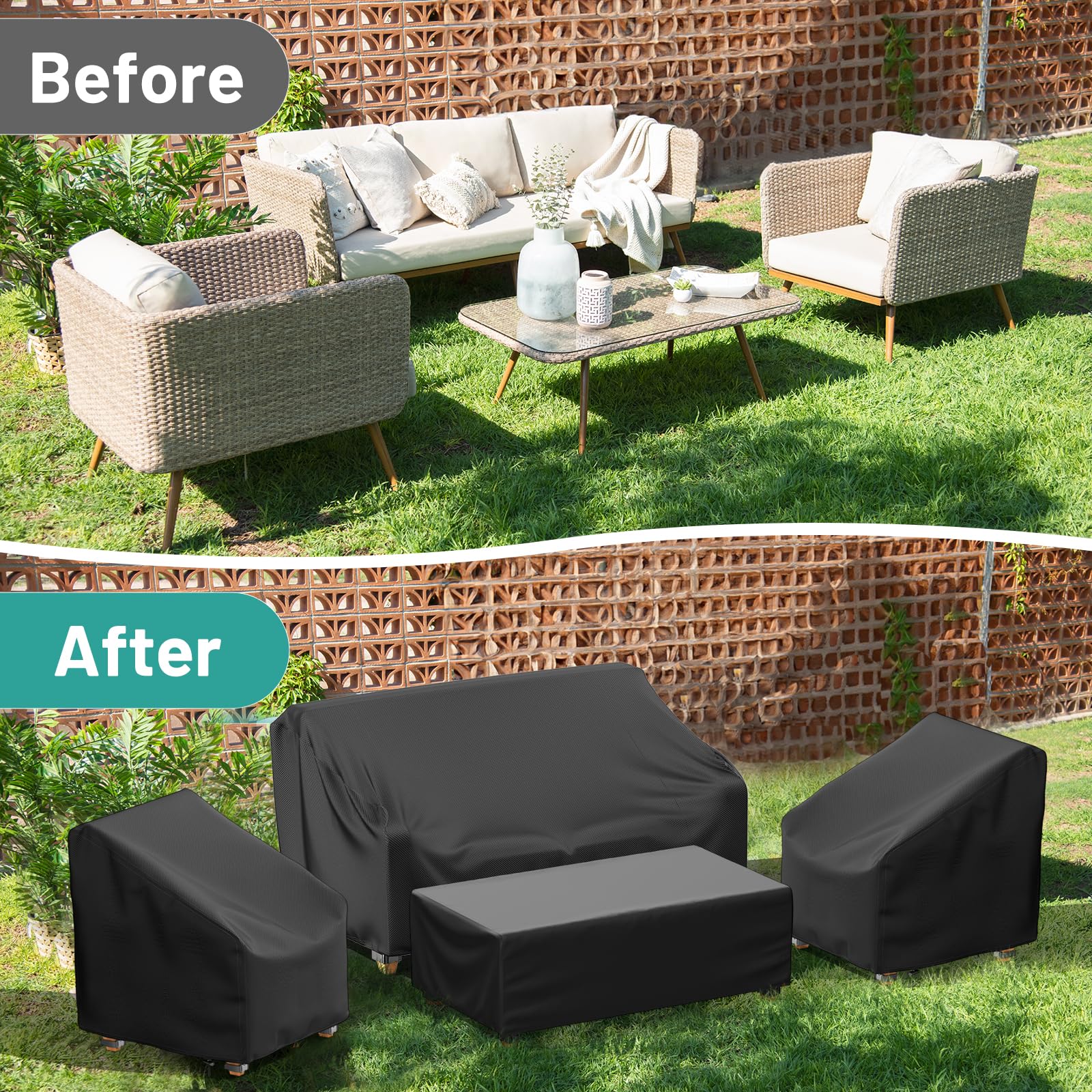
Shopping for patio furniture covers usually means buying each piece separately, hunting for compatible sizes, and still ending up with a mismatched set. Mrrihand solves that with one box that covers your entire seating area -- loveseat, two chairs, and the coffee table -- for well under $35. That kind of complete solution is genuinely rare at this price tier.
The fabric feels substantial straight out of the bag. The 420D oxford weave has the kind of weight you associate with covers that cost twice as much, and the PU-coated interior adds a layer of real waterproofing rather than the surface-level water resistance you get with budget alternatives. The buckle straps and adjustable hem cords are a thoughtful detail that make the covers feel secure rather than just draped over your furniture.
If you want full patio coverage that survives a full year of weather without hunting for multiple products, this one delivers.
Styles it works with: Modern Minimalist, Contemporary Outdoor, Industrial Patio, Classic Traditional
Best placed in: Open backyard patio seating areas, covered balconies, courtyard lounge setups
May not suit: Oversized sectional configurations that exceed the listed dimensions, patios with custom or unusually shaped furniture where a tailored cover would be a better fit
Buy it if:
- You have a standard loveseat, two accent chairs, and a coffee table set you want to protect through multiple seasons
- You live in a region with rain, snow, or heavy wind and need covers that actually stay put
- You want a complete set solution without the hassle of sourcing compatible individual covers
Consider waiting if:
- You are waiting for a color option beyond black that better blends with your outdoor decor
Skip it if:
- Your furniture is oversized or non-standard and falls outside the listed dimensions
- You need UV-rated, multi-season covers with a verified long-term durability rating for a high-sun climate
Check the latest price and availability on Amazon before it sells out.
Frequently Asked Questions
Can I leave patio cushions outside all winter?
It depends. If they’re covered by a waterproof, breathable cover and stay bone dry, they’ll survive a mild winter. But repeated freeze-thaw and trapped moisture shorten their life fast, so indoor storage is always safer.
Do cushions need to be fully dry before storing?
Yes, completely. Even a slightly damp foam core breeds mildew over months in storage. Dry each cushion in the sun for at least 6 hours and press-check the thickest section before bagging it.
Is it okay to store cushions in plastic bags?
No, not sealed ones. Sealed plastic traps humidity and creates mildew. Use breathable zippered storage bags instead, and add silica gel packs to pull out any residual moisture.
Where’s the best place to store patio cushions?
A dry, temperature-stable spot like a garage, insulated shed, or basement closet. Keep them at least 4 inches off concrete on a shelf or pallet, and away from anywhere mice can reach the foam.
How do I get musty smell out of stored cushions?
Scrub with a 3 to 1 water-and-vinegar solution, rinse, and dry fully in the sun. The vinegar neutralizes mildew odor. For lingering smell, sprinkle baking soda on the dry fabric, leave it a few hours, then vacuum it off. If the smell survives all that, the mildew has reached the foam core, and the insert needs replacing since surface cleaning won’t reach it. Prevent the repeat by drying the cushion for a full 6 hours next season before it ever goes into storage.
Write Your Review
No reviews yet. Be the first to share your experience!