

> Editorial Note: I’m Olivia Bennett, a storage and organization contributor. I approach storage as a systems problem rather than a product one — fit to actual room dimensions, load ratings, and how the system holds up under daily use.
Most people stack their holiday china flat, plate on plate, then wonder why the gold rims are worn and two dinner plates cracked by next December. That’s the single biggest mistake: raw stacking with no padding between pieces. Ceramic and porcelain don’t fail from a single drop as often as they fail from a year of micro-abrasion and pressure against each other in a hot attic or a garage that swings 40 degrees between seasons. Getting this right is the same discipline you’d bring to a best closet organizer system or a best closet rod holding weight overhead. If you already think in load and clearance for a best floating shelves for living room, a best hanging closet organizer, or a best shoe rack, you’re most of the way there. Holiday dishes just need the same logic applied to fragile, seasonal stock.
The Ground Rules Before You Start
Three non-negotiables. First, never stack more than 8 to 10 dinner plates in one column without a rigid divider, since the bottom plate carries the full compressive load. Second, leave at least 1 inch of soft padding on every side of a container so nothing touches the wall. Third, store between 50°F and 80°F with humidity under 60%. Attics that hit 120°F in July and garages that freeze can crack glaze over time. If the only space you have is a closet shelf, that’s fine. Stable beats spacious.
Step 1: Inventory and Group by Shape, Not by Set
Start by pulling everything out and sorting by shape and diameter, not by which holiday set it belongs to. Dinner plates go with dinner plates, salad plates with salad plates, mugs with mugs. This matters because same-shape pieces nest and pad evenly, while mixed stacks leave gaps that let pieces shift and chip in transit.
Measure your tallest stack and your widest piece before you buy or reach for any container. A standard dinner plate runs 10.5 to 11.5 inches across, so your container’s interior needs at least 12 inches of clearance to fit a padded plate without forcing it. Chargers can hit 13 inches. Count your pieces too. Knowing you have 12 dinner plates, 12 salad plates, and 8 mugs tells you exactly how many divided slots you need.
Photograph each group before packing. It’s a two-minute habit that saves you next year, since you’ll know what’s in each box without opening it. Label the outside with contents and count. “Dinner plates, 12, Grandma’s set” beats a mystery box every time.
Step 2: Pad Every Piece Before It Goes In
Here’s the rule that saves the most dishes: nothing metal-rimmed or hand-painted touches another piece directly. Slide a felt divider, an unprinted packing sheet, or a foam plate protector between each plate. Newspaper works in a pinch, but the ink transfers onto glaze and lands on porous unglazed foot rings, so use unprinted paper for anything you care about.
For plates, stack them on edge when you can rather than flat. Plates stored vertically, like records in a crate, distribute pressure across the strongest part of the piece instead of loading the center. If your container only allows flat stacking, cap each column at 8 plates and add a rigid board on top to spread weight.
Mugs and cups get individual wraps and go handle-to-handle in a single layer, never stacked inside each other where handles bear the load. Wrap stemware from the bowl down, and fill hollow interiors with a crumpled sheet so the walls can’t flex. A good rule: if you can hear a piece move when you gently shake the packed container, it isn’t padded enough. Add more until it’s silent.
Step 3: Load the Container by Weight, Heaviest on the Bottom
Load like you’d load a moving truck. Heaviest and most durable pieces on the bottom, lightest and most fragile on top. Serving platters and casserole dishes form the base layer. Dinner plates next, then salad and dessert plates, then cups, mugs, and stemware in the top tier where nothing presses down on them.
Keep total container weight under about 30 to 35 pounds so you can lift it without straining and without the bottom bowing. A quilted dish box packed with a full 12-place setting of stoneware can top 40 pounds fast, and that’s when handles tear and boxes get dropped. Split heavy sets across two containers instead of overloading one.
Fill every void. Empty space is where pieces slide and collide. Tuck folded towels or crumpled paper into gaps along the walls and corners so the load stays locked in place when the box tips during a lift. Give yourself 1 inch of clearance at the top for a padding layer before the lid closes, so nothing rubs the underside of the lid.
Step 4: Store Off the Floor in a Climate-Stable Spot
Where the container lives matters as much as how it’s packed. Keep dishes off concrete floors, which pull cold and wick moisture upward. Set containers on a shelf, a rack, or at minimum a 2-inch riser so air moves underneath and condensation can’t collect on the bottom.
Aim for the interior of the home. A hall closet, a bedroom shelf, or under a guest bed beats the garage or attic for anything valuable, since those spaces hold that 50°F to 80°F window and stay under 60% humidity year round. If you must use a shelf overhead, confirm the bracket load rating handles the packed weight. A 35-pound box on a shelf rated for 20 pounds is a slow disaster.
Stack no more than two or three containers high, and always put the heaviest on the bottom of the tower. Leave a 2-inch gap between the top box and the shelf above so you can slide it out without scraping. Label the front-facing side of every box so you never have to unstack the whole tower to find the gravy boat.
The Right Products Make It Easier
The containers below all clear a 4.5 owner rating and share the feature that actually protects dishes: quilted padding plus rigid dividers sized for standard dinnerware. Start with the OURUER hard-shell set if you need the most crush protection for a top-shelf or stacked storage tower. Reach for either HOLDN’STORAGE 5-piece set if you’re splitting a full china set across boxes by piece type and want dedicated slots for plates, mugs, and stemware.


OURUER Quilted China Storage Containers 2-Pack with 24 Felt Dividers, Stackable Plate Boxes12x12x8in
Pros
- Thick quilted padding on all interior surfaces genuinely cushions fragile dishes
- Sturdy 300D Oxford cloth and cardboard construction holds shape even when fully loaded
- Comes as a 2-pack with 24 felt dividers at under $26, strong value for the set
- Zippers feel secure and reduce risk of accidental openings during a move
- Neutral gray and black color fits neatly into any closet or storage area
Cons
- Only fits plates up to 12 inches in diameter, so large serving platers or chargers will not fit
- 8-inch height limits you to about 12 standard plates per container, not ideal for very large collections
- Soft-sided construction protects against bumps but offers less crush resistance than rigid plastic bins
Storing fine china or seasonal dinnerware has always been one of those tasks that feels riskier than it should. You wrap each plate in paper towels, stack them nervously, and hope for the best. These OURUER containers replace that anxiety with a properly enginered solution: quilted padding on all interior walls, a rigid cardboard frame to maintain shape, and individual felt dividers so plates never touch each other.
What stands out is how complete the package feels. You get two containers and 24 dividers for under $26, which means you can store a full dining set for four without buying anything extra. The gray fabric looks clean and unobtrusive whether it sits in a hallway closet, a garage shelf, or under a guest bed. The label window is a small but genuinely useful touch when you own multiple sets of dishes.
If you want real protection for your plates without spending on bulky plastic bins or wasting rolls of bubble wrap, this one delivers.
Styles it works with: Minimalist, Modern Farmhouse, Transitional, Scandinavian
Best placed in: Kitchen pantry top shelf, hallway linen closet, garage storage shelving, under-bed storage in a guest room
May not suit: Open-shelf kitchens where the container would be on permanent display, or homes that need to store oversized charger plates or platers larger than 12 inches
Buy it if:
- You are preparing for a move and need to transport dishes safely without excessive bubble wrap
- You rotate seasonal dinnerware and want a tidy, stackable way to store off-season sets
- You have inherited or collected fine china that deserves better than a cardboard box
Consider waiting if:
- You need a color other than gray to match a specific closet system or aesthetic
Skip it if:
- Your plates are larger than 12 inches in diameter or you need to store bowls and cups together
- You need crush-proof protection for extremely heavy stoneware stacks exceding 12 plates
Check the latest price and availability on Amazon before it sells out.

Pros
- Thick quilted padding genuinely prevents chips and scratches
- Clear window on each piece makes identification fast
- Fits a full 12-setting dinerware collection across 5 containers
- Lightweight yet sturdy enough for stacking in storage
- Well-reviewed with over 4,000 ratings averaging 4.6 stars
Cons
- Not rigid enough for heavy stoneware or oversized charger plates
- Limited color options may not blend into open-shelf storage setups
- Dividers are fixed size, so oddly shaped pieces may not fit neatly
If you have a set of holiday china or heirloom dishes that only comes out a few times a year, this storage set is a quiet lifesaver. The quilted microfiber feels genuinely protective, not flimsy, and the individual dividers keep each plate, glass, and mug isolated so nothing clinks together in the closet or during a move.
What sets it apart from tossing dishes in bubble wrap is the organization factor. Five distinct containers mean plates go in one, mugs in another, and stemware in a third. The clear windows are a small detail that saves real frustration when Thanksgiving rolls around and you need the gravy boat fast.
If you want reliable dish protection without spending on rigid plastic bins or wasting money on disposable packing materials, this one delivers.
Styles it works with: Traditional, Transitional, Classic Farmhouse, any home with seasonal entertaining routines
Best placed in: Hall closet top shelf, kitchen pantry, basement storage shelving, garage shelving unit
May not suit: Homes neding open-display storage solutions, or collectors with oversized artisan pottery that exceds standard dinner plate dimensions
Buy it if:
- You store seasonal or holiday dinnerware and want it protected year-round
- You are preparing for a move and need reliable dish packing without cardboard dividers
- You want to free up everyday cabinet space by relocating guest china to a closet
Consider waiting if:
- You only need storage for a single item type like mugs and want a smaller single-piece option
Skip it if:
- Your dinerware is heavy stoneware or includes pieces larger than standard 12-inch plates
- You need a hard-shell container for long-term atic storage in extreme heat
Check the latest price and availability on Amazon before it sells out.

Pros
- Complete 5-piece set covers every piece in a standard dinnerware service for 12
- Thick quilted microfiber with individual dividers offers meaningful scratch protection
- Clear identification windows save time when searching for specific pieces
- Zippered lid allows easy access and doubles as transport protection during moves
- Compact enough to stack in a cabinet, closet shelf, or storage bin
Cons
- Only available in blue, which may not blend with all closet or storage aesthetics
- Plate cases max out at 12 inches, so oversized charger plates will not fit
- No rigid structure means stacking heavy items on top could compress the cases
If you have a set of fine china that only comes out for holidays or special diners, you know the anxiety of pulling plates from a cabinet and finding new chips or dust buildup. This HOLDN STORAGE set solves that problem completely. Each piece gets its own quilted divider, and the soft microfiber lining means your grandmother's porcelain stays just as pristine as the day you inherited it.
What sets this apart from cheaper alternatives is how thoughtfully it covers an entire service for 12. You get five purpose-built cases, each sized to a specific dish type, so nothing rattles around or gets crammed in. The clear window on each case is a small detail that saves real frustration when you are hunting for dessert plates before a dinner party.
If you want full-service china protection without dedicating an entire cabinet to bulky hard-shell crates, this one delivers.
Styles it works with: Traditional, Transitional, Classic Farmhouse, any home with heirloom or formal dinerware collections
Best placed in: Kitchen pantry shelf, hallway linen closet, garage storage rack, or inside a moving box for transport
May not suit: Homes that need rigid stackable bins for heavy garage shelving, or households with oversized charger plates larger than 12 inches
Buy it if:
- You own a full dinerware set (up to 12 place settings) and want scratch-free seasonal storage
- You are planning a move and need a safer alternative to newspaper-wrapped plates in cardboard boxes
- You rotate between everyday dishes and formal china and want quick, organized access
Consider waiting if:
- You need a color that matches your existing closet organization system and blue does not work
Skip it if:
- Your plates exceed 12 inches in diameter or you need storage for serving platers and bowls
- You require hard-shell, crush-proof containers for long-term stacking under heavy items
Check the latest price and availability on Amazon before it sells out.
Hard-Shell Crush Protection (OURUER Quilted Dish Storage Containers)
This is the one to buy if your only storage is a stacked tower or an overhead shelf, since the hard shell resists the compressive load that flattens soft boxes. It ties back to Step 4: when you stack two or three containers high, the bottom box takes the whole weight, and a rigid shell keeps that force off the dishes inside. The quilted interior handles the Step 2 padding job so you don’t need as many separate dividers. At a 4.8 rating, it’s the highest-scored option here, and owners consistently note the lid stays snug through repeated moves. Size the interior against your widest charger before buying.
Split-a-Set Organizer (HOLDN’STORAGE 5-Piece China Storage Set)
Pick this 5-piece set when you’re following Step 1 and grouping by shape. Each box in the set is sized for a specific piece type: plates, glasses, mugs, saucers. That dedicated-slot design solves the “keep weight under 35 pounds” problem from Step 3, since splitting a 12-place setting across five boxes keeps any single box liftable. The quilted microfiber lining pads pieces without ink transfer, which matters for gold-rimmed and hand-painted china. At a 4.6 rating, owners call the construction sturdy through multiple seasons of pack and unpack.
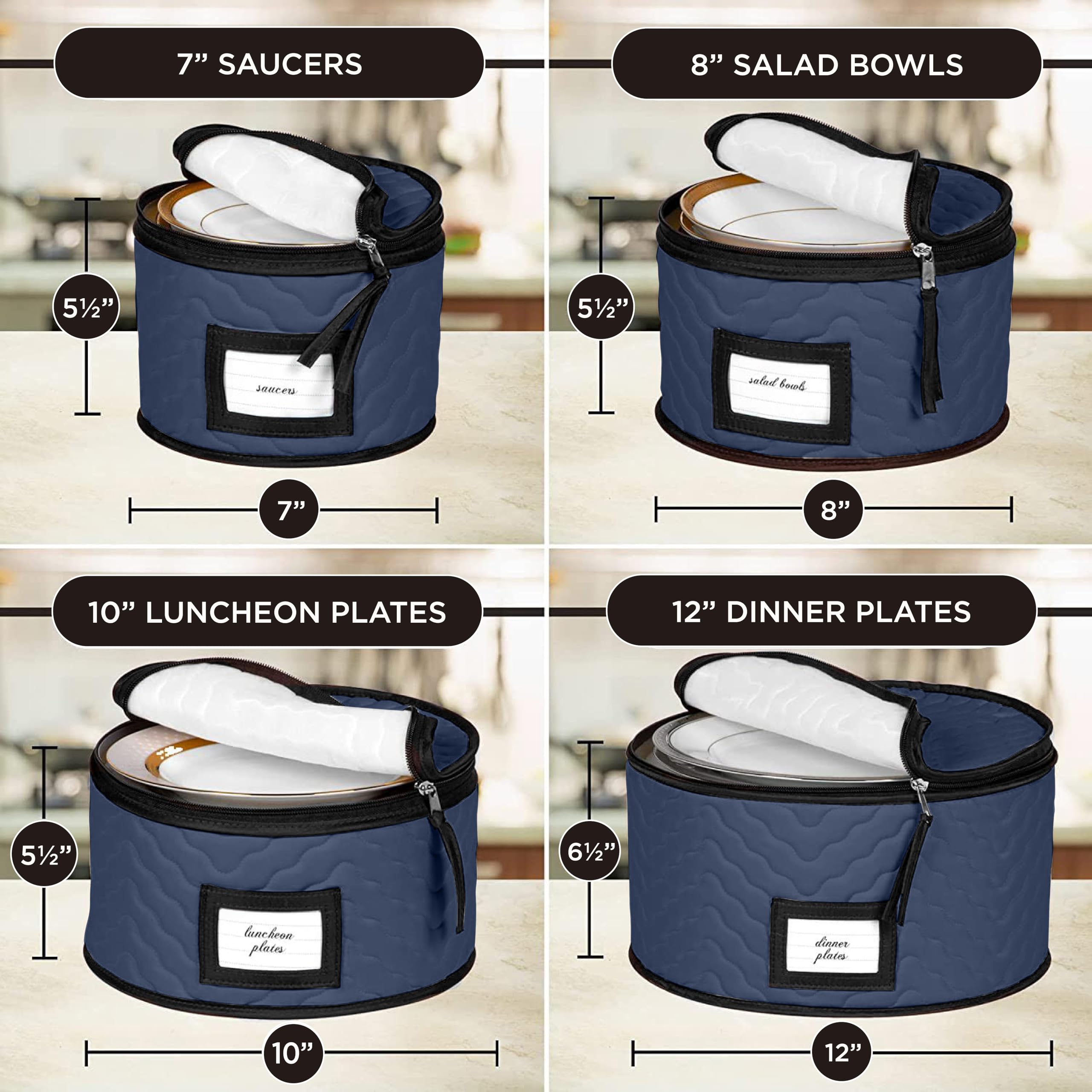
Extra Capacity for Larger Sets (HOLDN’STORAGE 5-Piece Set)
Reach for this second HOLDN’STORAGE 5-piece configuration when you’re storing a larger set or a full holiday spread with serving pieces. It runs the same quilted microfiber protection and sturdy build as the first set, so the difference is capacity, not quality. If you hosted 16 and own the platters, casseroles, and extra dinnerware to prove it, this gives you the slot count to keep everything padded in a single layer instead of overloading one box. Same 4.6 rating. Buy it alongside the first set when one 5-piece kit won’t hold your whole inventory.
Frequently Asked Questions
What if my closet shelf is too shallow for a full dish box?
It depends on the depth. Most quilted dish boxes need 14 to 16 inches of shelf depth. If yours is only 12 inches, store plates on edge in a narrower vertical container and skip flat stacking. A shallow shelf can still hold mugs and stemware boxes, which have a smaller footprint, so route the wide plates elsewhere.
What if my only storage space is the garage?
Almost never ideal, but workable if you control two things. Keep containers off the concrete floor on a 2-inch riser or shelf, and use a hard-shell box that resists temperature swings better than cardboard. Avoid the garage entirely for gold-rimmed or antique china, since the glaze can craze after repeated freeze-heat cycles below 40°F and above 100°F.
What if my dishes are all different sizes and won’t nest?
It depends on how mismatched they are. Group by closest diameter rather than by set, and pad the gaps with folded towels so odd sizes can’t shift. For pieces that truly won’t nest, store them on edge in a divided box where each slot holds one piece. The dividers do the stabilizing that nesting would otherwise handle.
What if my room stays humid year round?
No, high humidity won’t crack the glaze directly, but it invites musty odors and can spot metal rims over months. Add a few silica gel packs inside each container and target under 60% relative humidity. A small closet dehumidifier helps if the room runs above that. Keep boxes off the floor so trapped moisture can’t wick up from below.
What if I only have room to stack boxes two or three high?
Yes, that’s fine, and it’s actually the recommended maximum. Put the heaviest box on the bottom and cap the tower at three containers so the base box doesn’t bow. Leave a 2-inch gap to the shelf above for easy removal, and label the front of each box so you can find pieces without unstacking the whole column.
Bottom Line
Pad every piece, load heaviest on the bottom, and store between 50°F and 80°F off the floor. That sequence prevents the two failures that ruin holiday china: micro-abrasion from raw stacking and glaze damage from temperature swings. If you’re storing a full 12-place setting, split it across boxes by piece type so no single container tops 35 pounds. Skip the garage for anything gold-rimmed or antique. Do this once, do it right, and your dishes come out next December exactly as they went in.

Write Your Review
No reviews yet. Be the first to share your experience!