

> Editorial Note: I’m Liam Wright, an outdoor and garden editor. I grew up in my family’s landscaping business and now cover what actually survives a season of UV, rain, and freeze-thaw cycles. The picks here are evaluated against ASTM weatherability standards and manufacturer durability ratings.
Most people ruin the first seasoning pass by using too much oil. A grill or griddle needs a film so thin it almost looks wiped off, then steady heat until that film bonds to cast iron or carbon steel. If you’re setting up the rest of the cook space too, keep the same practical approach with best patio furniture, outdoor lighting ideas, best BBQ grills, small patio furniture, and outdoor storage bench.
The Ground Rules Before You Start
Seasoning is not a flavor trick. It’s a heat-and-oil process that builds a polymerized layer on bare or semi-bare metal, which is why it works on cast iron and carbon steel but doesn’t belong on porcelain-coated grates or most stainless grates.
Start with the surface type. Cast iron grill grates, carbon steel flat tops, and Blackstone-style griddles need seasoning. Porcelain grates need cleaning, not seasoning, because the coating already acts as the barrier. Stainless grates can be oiled lightly before cooking, but baking on 4 coats of conditioner usually leaves sticky residue instead of a useful layer.
Keep the numbers simple: thin oil, 350 to 450°F heat, 15 to 30 minutes per coat, and 2 to 4 coats for a new surface. Wirecutter’s cast iron care advice and many manufacturer durability ratings point to the same idea: light layers beat heavy ones. Thin wins.
Step 1: Confirm What Surface You’re Actually Seasoning
Look at the cooking surface before you open the oil. A black, heavy grate that can rust is usually cast iron. A flat, dark griddle plate is often carbon steel. A shiny silver grate is usually stainless steel, while a glossy grate may be porcelain-coated steel or cast iron.
That distinction matters because seasoning bonds to exposed metal. On cast iron and carbon steel, oil fills microscopic texture and darkens under heat. On porcelain, there’s no exposed metal to bond with unless the coating is chipped, and seasoning over the glaze can turn gummy after a few 400°F cooks.
Use the chip check. If you see bright metal or rust spots larger than 1/4 inch on a porcelain-coated grate, clean that spot and monitor it, but don’t season the whole grate like a skillet. For cast iron, season the cooking area plus the outer 1 inch where grease and steam collect.
Stainless is the middle case. It benefits from a quick oil wipe before food goes down, especially for fish or vegetables, but it doesn’t need a 4-coat seasoning build. Different job.
Step 2: Clean Down to Bare, Dry Metal
Seasoning sticks poorly to old grease. Scrape the surface first with a grill scraper or stiff brush, then wash removable cast iron grates or griddle plates with warm water and mild dish soap. Rinse well. Soap residue and seasoning oil don’t work together.
Drying is not optional. Put the grate or griddle over low heat for 5 to 10 minutes, or until no visible steam remains. Water trapped in corners can flash into rust under the first oil coat, especially on cast iron with rough texture.
For rust, use a grill stone, chainmail scrubber, or 80 to 120 grit sanding pad on the affected area only. Remove the orange layer, wipe away dust with a damp cloth, then heat-dry again for 5 minutes.
Apartment Therapy’s cast iron cleaning guidance is useful here because it separates everyday cleaning from restoration. Light residue needs a wash and heat-dry. Rust needs abrasion.
Step 3: Wipe on Less Oil Than You Think
Use a food-safe oil or conditioner with a smoke point near or above your seasoning temperature. Canola, grapeseed, avocado, and purpose-made griddle conditioners all work when applied thinly. Flaxseed oil can build a hard layer, but it can also flake if the coat is too thick.
The right amount is smaller than most people expect: roughly 1 teaspoon for a 12-inch skillet-sized area, or 1 to 2 tablespoons for a 36-inch flat top. Spread it with a folded paper towel or lint-free cloth, then wipe again with a clean towel until the surface looks almost dry. If you can see wet streaks, there’s too much oil.
Sticky seasoning comes from thick oil layers that never fully polymerize. They sit on top like varnish instead of bonding into the metal. That’s why the second wipe matters as much as the first.
Protect your hands. Use heat-resistant gloves or long tongs to hold the towel once the metal is warm. Oil can smoke before the surface looks dramatic, and a 400°F grate doesn’t forgive slow fingers.
Step 4: Heat Until the Smoke Tells You the Coat Has Set
Heat is what changes oil from slick to protective. Bring the grill or griddle to 350 to 450°F and hold it there until the oil smokes, darkens, and mostly stops smoking. That usually takes 15 to 30 minutes per coat.
Stay below the point where the metal is glowing or the oil is burning in black patches. You want controlled smoke, not a grease fire. For many vegetable oils, the smoke point sits around 400 to 450°F, which is why medium-high heat works better than a full-blast preheat.
On a gas grill, run the burners at medium or medium-high and close the lid. On a charcoal grill, bank coals so the seasoned grate sits over steady heat rather than direct flame. For a flat top, move the oil film across the corners and back edge because those cooler spots often lag by 50°F or more.
Watch the color. Cast iron turns from dull gray or patchy black to a more even satin black. Carbon steel may bronze before it darkens. That’s normal. Not pretty at first, but useful.
Step 5: Repeat 2 to 4 Thin Coats, Then Maintain After Cooking
One coat is a start, not a finish. For a new cast iron grate or carbon steel flat top, run 2 to 4 thin coats before the first real cook. Each coat should be wiped nearly dry, heated for 15 to 30 minutes, and allowed to cool before the next layer.
Stop when the surface looks evenly dark and feels slick without tackiness. If your finger drags or the towel grabs, the last coat was too thick or too cool. Heat it again for another 10 to 15 minutes and let the excess smoke off before adding more oil.
Maintenance is easier than the first build. After each cook, scrape while warm, wipe away food residue, and apply a pea-sized amount of oil to a grate section or about 1 teaspoon across a small flat-top zone. Heat for 2 to 5 minutes if the surface looks wet. Then shut it down.
Outdoor storage matters too. ASTM weatherability standards focus on how materials handle moisture, UV, and temperature cycling, and your grill surface faces the same enemies in miniature. A cover that sheds rain and a dry cooktop do more for seasoning life than one extra coat of oil.
The Right Products Make It Easier
The products below are useful only for cast iron grates, carbon steel flat tops, and griddle surfaces that need a bonded oil layer. I looked for food-safe seasoning conditioners, high owner ratings, and formulas meant for hot metal rather than porcelain-coated grates. Start with the Blackstone if you own a flat top, use GriddleMATe if you want a 2-in-1 griddle-focused conditioner, and pick CreationFarm for cast iron cookware that also moves between the grill and kitchen.

Blackstone 4146 Griddle Seasoning and Cast Iron Conditioner 15.3oz | 2-in-1 Non-Stick Protection Formula
Pros
- Exceptionally high 4.8-star rating across a large verified buyer base signals consistent, real-world performance
- 2-in-1 formula does the work of both a seasoning oil and a rust-protective conditioner in one affordable bottle
- Plant-based and vegan-friendly with no animal fats, making it accessible to a wider range of households
- Proprietary blend of palm oil shortening, beeswax, canola oil, and soy oil is purpose-formulated for gridle surfaces
- Wide compatibility means one product handles your entire cast iron and flat top collection
Cons
- Contains beeswax, which may not suit strictly vegan households despite the plant-based marketing on the label
- Requires repeating the seasoning process 3 to 5 times before the surface is fully ready, which demands patience and time upfront
- The 15.3oz jar, while long-lasting for maintenance, may feel pricey for buyers who only need a one-time re-seasoning
If you have ever coked on a poorly seasoned griddle and watched eggs glue themselves to the surface, you already understand exactly why the Blackstone 4146 exists. This is not a generic cooking oil dressed up in a jar. It is a purpose-built conditioner that layers a durable, easy-release coating onto flat top griddles and cast iron cookware, using a blend that resists rancidity and actually holds up to repeated high-heat cooking sessions.
What makes it stand out from improvised alternatives like vegetable shortening or flaxseed oil is the proprietary combination of palm oil shortening, beeswax, canola oil, and soy oil. That blend bonds to the metal surface instead of sitting on top of it, which is why seasoning done with this product tends to last longer and stay more even. The non-rancid formula also means your griddle will not develop that stale, unpleasant smell that cheaper conditioners leave behind after storage.
For anyone who takes outdoor cooking seriously or just wants their Blackstone to cook as well on year five as it did on day one, this is genuinely useful maintenance gear. If you want a professional non-stick surface without the frustration of constant re-seasoning, this one delivers.
Styles it works with: Outdoor kitchen setups, backyard entertaining spaces, rustic cabin cooking areas, and modern patio designs
Best placed in: Stored in an outdoor kitchen cabinet, kept on a garage utility shelf near the gridle station, or tucked into a BBQ accessory cady beside the griddle
May not suit: Indoor-only kitchens where gridle cooking is not part of the routine, or households without a flat top griddle or cast iron cookware collection to maintain
Buy it if:
- You own a Blackstone griddle and want to build or restore a reliable non-stick surface before your next cook
- Your cast iron pans or gridle top have started showing rust spots or sticking and need a proper re-seasoning
- You want a long-lasting maintenance product that handles both seasoning and rust protection in a single bottle
Consider waiting if:
- You are still in the process of purchasing your gridle and have not yet confirmed which model and surface type you will be seasoning
Skip it if:
- You follow a strict vegan lifestyle and are not comfortable with beeswax as an ingredient despite the plant-based positioning
- You do not own a flat top griddle or cast iron cookware and have no plans to acquire one
Check the latest price and availability on Amazon before it sells out.
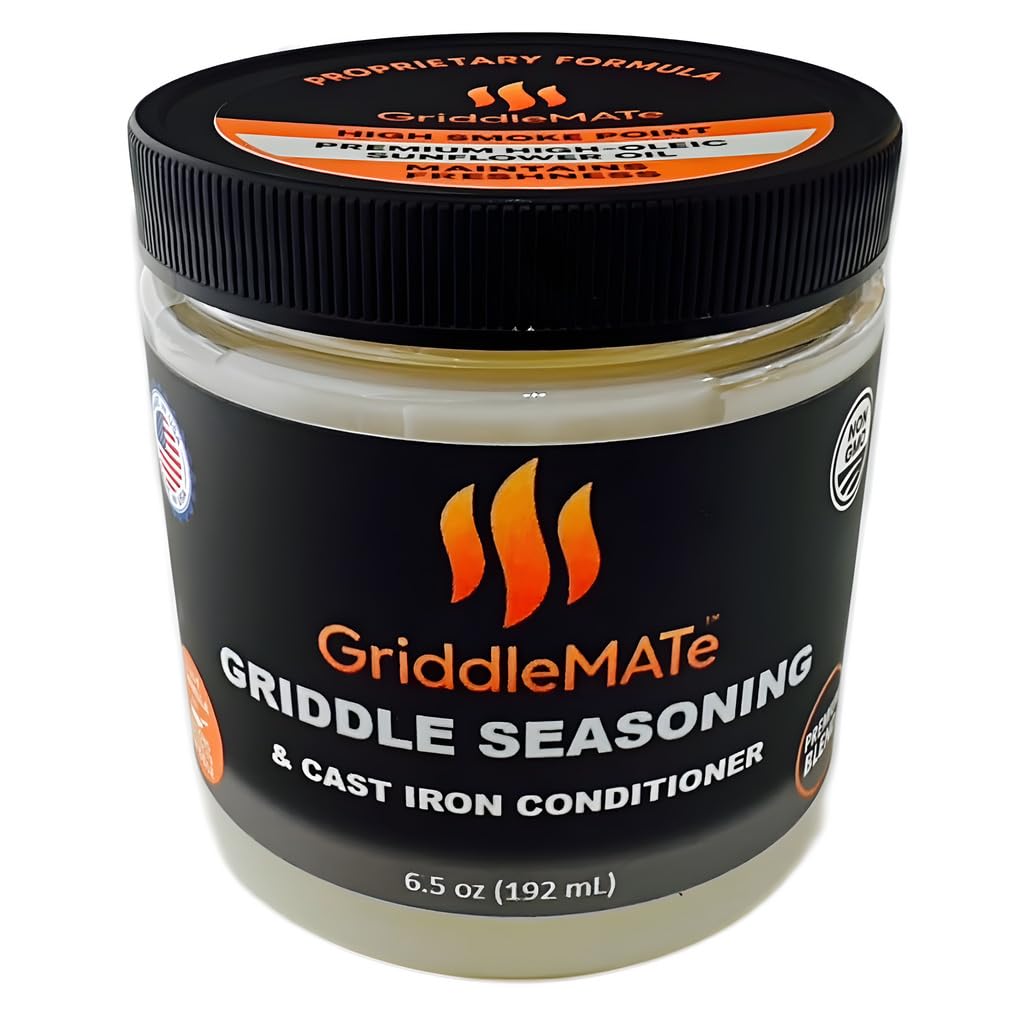
GriddleMATe 2-in-1 Gridle Seasoning & Conditioner for Blackstone, Cast Iron & Carbon Steel | Non-GMO, High Smoke Point, USA Made
Pros
- Dual-purpose formula seasons and conditions in a single application, saving time and cabinet space
- High smoke point ensures the oil polymerizes correctly on cast iron and carbon steel for a lasting non-stick layer
- Food-grade, Non-GMO formula is safe for all cooking surfaces without synthetic additives
- Strong customer satisfaction reflected in a 4.8-star rating signals consistent real-world performance
- Domestic manufacturing supports quality control and faster restocking compared to imported alternatives
Cons
- Product descriptions and reviews do not detail the specific oil blend, which may matter to buyers with dietary sensitivities or strict ingredient preferences
- Packaged volume is not prominently specified, so heavy gridle users who re-season frequently may go through it faster than expected
- Primarily designed for gridles and flat-top cookware, so buyers with traditional round cast iron skilets may find more specialized options available
If you have ever cooked on a poorly seasoned griddle, you know the frustration of food sticking, uneven browning, and the constant worry of rust forming between uses. GriddleMATe takes that problem off the table by combining seasoning and conditioning into a single, easy-to-apply product. It is the kind of practical solution that makes your outdoor cooking setup feel dialed in rather than improvised.
What stands out beyond the convenience factor is that this is a food-grade, Non-GMO formula made in the USA. For anyone cooking burgers, smash tacos, or breakfast spreads on a Blackstone for their family, knowing exactly what is going on your cooking surface matters. The high smoke point is not just a marketing phrase here -- it is what allows the oil to actually bond to the metal and form a proper protective layer rather than just burning off.
With a 4.8-star rating built on hundreds of real gridle owners, the performance reputation speaks for itself. If you want a properly seasoned, rust-resistant griddle surface without jugling multiple oils and conditioners, this one delivers.
Styles it works with: Outdoor kitchens, backyard entertaining setups, rustic farmhouse-style cooking spaces, and industrial-modern kitchen aesthetics where cast iron and carbon steel cookware are part of the decor.
Best placed in: Beside a Blackstone griddle station on a covered patio, stored near a cast iron collection on open kitchen shelving, or kept in an outdoor kitchen cabinet with other gridle accessories.
May not suit: Buyers who exclusively use non-stick coated pans with no cast iron or carbon steel cookware in their kitchen, or households with very limited storage who prefer multi-use kitchen products that go beyond cookware maintenance.
Buy it if:
- You own a Blackstone griddle or other flat-top and want a reliable, all-in-one product to keep it seasoned and rust-free year round.
- You cook regularly on cast iron or carbon steel and are tired of guessing which oil to use for seasoning versus conditioning.
- You care about food-grade, Non-GMO ingredients and want confidence that what touches your cooking surface is clean and safe.
Consider waiting if:
- You want to read through the full ingredient list before committing, and that information has not yet been confirmed available on the product listing.
Skip it if:
- Your cookware is exclusively non-stick coated and you have no cast iron, carbon steel, or bare metal gridle surfaces to maintain.
- You already have a seasoning routine with a specific oil blend that is working well and you have no reason to switch.
Check the latest price and availability on Amazon before it sells out.

Foodieville Cast Iron Seasoning Oil | Flax, Sesame & MCT Blend | 12 oz Trigger Sprayer | Skillet, Gridle & Dutch Oven Conditioner
Pros
- Convenient trigger sprayer eliminates the mesy rag-and-rub method
- Organic flax, sesame, and MCT oil blend is food-safe and additive-free
- Larger 12 oz bottle offers better value perounce than most competitors
- Versatile enough foroven seasoning, stovetop maintenance, and outdoor grill grates
- Strong 4.5-star rating across hundreds of reviews signals consistent real-world results
Cons
- MCT and flax oil blend can go rancid faster than refined oils if stored in a warm kitchen for extended periods
- At $18.89 it costs more upfront than a basic Crisco or shortening approach, though the convenience factor offsets this for most users
- Trigger sprayer has been noted by some buyers to clog over time if the bottle sits unused for weeks
If you have ever struggled to keep cast iron from rusting between uses or wondered why food sticks even on a "seasoned" pan, this oil is the kind of practical fix that actually changes your daily cooking routine. The blend of flax, sesame, and MCT oil hits the right balance between polymerization and flavor neutrality, meaning it bonds to the iron without leaving a greasy or rancid residue after oven curing.
The trigger sprayer is a genuinely smart design choice. Most seasoning oils come in plain bottles that force you to pour onto a cloth and guess the quantity. Here you spray a thin, even coat directly onto the surface, which is exactly what good seasoning requires. Less oil, more evenly spread, means a harder and slicker finish over time. It also makes the between-use wipe-down routine quick enough that you will actually do it after every cook rather than skipping it.
For anyone building a cast iron collection or trying to rescue a neglected skillet they found at a thrift store, this bottle covers both jobs well. If you want a reliable, food-safe seasoning oil with a no-mess applicator without spending hours researching individual oils and mixing your own blend, this one delivers.
Styles it works with: Farmhouse Kitchen, Rustic Cottage, Modern Homestead, Southern Traditional
Best placed in: Kitchen pantry shelf alongside cast iron cookware, camping and outdoor cooking gear cabinet, BBQ and grilling supply station in a garage or outdoor kitchen
May not suit: Households that cook exclusively on non-stick coated or stainless steel cookware and have no cast iron pieces to maintain; renters or minimalist kitchens with very limited storage who prefer multi-use oils already on hand like flaxseed from the grocery store
Buy it if:
- You own one or more cast iron skilets, griddles, or a Dutch oven and want a dedicated, food-safe oil to keep them properly seasoned year-round
- You cook outdoors on a flat top grill or BBQ grates and want one product that handles both indoor and outdoor cast iron maintenance
- You are new to cast iron and want a straightforward, chef-tested formula that removes the guesswork from the seasoning process
Consider waiting if:
- You are still deciding whether to invest in cast iron cookware and do not yet have a piece to season
Skip it if:
- You cook exclusively on non-cast-iron surfaces like stainless, ceramic, or coated non-stick pans that do not require oil seasoning
- You already have a large supply of food-grade flaxseed oil on hand and are comfortable with the manual application process
Check the latest price and availability on Amazon before it sells out.
Blackstone Griddle Seasoning and Cast Iron Conditioner
Blackstone is the obvious first stop for a Blackstone-style flat top because the conditioner is built around griddle maintenance, not just indoor skillet care. The 15.3-ounce container gives you enough product for the first 2 to 4 seasoning coats and post-cook touch-ups. Owner feedback is strong at 4.8, and the main advantage is predictable spreading when the griddle is warm.
Use it when the surface is clean, dry, and already preheated. A small scoop should melt fast, then disappear under a second wipe. If it sits in shiny streaks, you’ve used too much. Wipe it thinner and let heat do the work.
GriddleMATe Griddle Seasoning
GriddleMATe makes sense for people who want one conditioner for a Blackstone griddle, cast iron grate, and carbon steel pan. Its 2-in-1 positioning helps if your outdoor setup mixes a flat top with traditional grill accessories. The 4.8 rating suggests owners like the consistency after scraping down a warm cooktop.
This is the pick for regular upkeep rather than rescue work. Use it after the griddle is clean and dry, then heat the thin layer until smoking slows. Don’t use it on porcelain grates. It won’t fix a coating that was never meant to absorb oil.
CreationFarm Cast Iron Oil Non-Stick Conditioner
CreationFarm is the most flexible of the three because it’s aimed at skillets, griddles, BBQ grill surfaces, flat tops, and Dutch ovens. That range helps if you season cookware indoors during winter and move it onto the grill in summer. Its 4.5 rating is lower than the other two, but still solid for a general-purpose conditioner.
Use it for cast iron pieces that need a light protective coat after cleaning. It’s especially handy for grill grates that come off the firebox, because you can wash, dry, oil, and heat them without treating the entire grill body. Simple workflow.
Frequently Asked Questions
Can you season stainless steel grill grates?
Not in the same way you season cast iron. Stainless steel grates can take a light oil wipe before cooking, but they don’t build the same bonded black layer because the surface is less porous and already corrosion-resistant. Don’t run repeated seasoning cycles on stainless unless the manufacturer specifically calls for it.
Should you season porcelain-coated grill grates?
No. Porcelain-coated grates already have a protective glaze, so seasoning the full surface usually creates sticky residue instead of a durable layer. Clean them with a non-metal brush when possible, avoid hard scraping that chips the coating, and replace grates when large damaged areas expose rusting steel underneath. If a tiny chip appears, keep it clean and dry, but don’t treat the whole grate like bare cast iron.
What oil is best for seasoning a grill?
Use a food-safe oil or conditioner that handles 350 to 450°F heat without turning sticky. Canola, grapeseed, avocado, and griddle-specific conditioners are common choices. A thin coat heated until smoking slows will beat a thick coat of expensive oil every time.
How many times should you season a new grill grate?
For bare cast iron or carbon steel, 2 to 4 coats is the practical range before the first cook. Run each coat for 15 to 30 minutes at 350 to 450°F, then check the feel. The surface should look darker and feel slick, not wet or tacky. After that, maintain it with a tiny oil wipe after cooking.
Why is my grill sticky after seasoning?
Too much oil or not enough heat. Sticky patches mean the oil sat on top instead of bonding to the metal. Heat the grate or griddle for another 10 to 20 minutes until the tacky areas smoke and dull down, then wipe lightly once it’s safe. Next time, use half as much oil and wipe until the surface looks almost dry before heating.



Write Your Review
No reviews yet. Be the first to share your experience!