

> Editorial Note: I’m Hannah Lin, an Interior Living Researcher who’s spent 9+ years analyzing the home furniture market. This guide draws on BIFMA, GREENGUARD, and FSC certifications, plus owner reviews aggregated from Wirecutter, Apartment Therapy, and the major home design subreddits.
The single biggest mistake people make is pouring on too much oil. A thick, glistening coat doesn’t build a stronger seasoning; it bakes into a sticky, tacky film that peels off in your first stir-fry. The fix is counterintuitive: use less oil than feels right, then wipe most of it back out. Master that one habit and the rest of the process is repeatable in any kitchen. If you’re rethinking the whole space while you’re at it, our guides on the best gallery wall frames, best console table for entryway, best large floor mirror, best wall mirror for living room, and best table lamp for living room pair well with a cooking corner you’ll actually want to spend time in. Here’s the routine that works every time.
The Ground Rules Before You Start
Two non-negotiables. First, ventilation: seasoning smokes, so open a window and run your hood fan, because most oils hit their smoke point between 400°F and 450°F. Second, a bone-dry pan. Any moisture trapped under the oil turns to steam and leaves cloudy patches. Heat the empty pan on medium for 2 minutes until every drop evaporates. Keep a stack of lint-free cloths within arm’s reach, roughly 12 inches from the burner, so you’re never fumbling near a hot handle.
Step 1: Strip the Factory Coating and Wash
Most new carbon steel ships with a waxy or beeswax film that protects it in transit. It has to go before any oil will bond. Scrub the pan with hot water, a drop of dish soap, and a non-scratch pad, working the entire cooking surface plus the sloped sides. This is the one time soap is fine; you’re removing wax, not seasoning that doesn’t exist yet.
Rinse thoroughly, then dry the pan completely with a towel. Don’t trust air-drying. Carbon steel is around 99% iron and flash-rusts in minutes if water sits in it. To be safe, set the washed pan on a burner over medium heat for 2 to 3 minutes until it’s warm to the touch and fully dry.
A quick check: run a paper towel across the surface. If it comes up clean and slightly gray, you’re ready. If it drags or shows waxy residue, wash again. Merten & Storck pans arrive pre-seasoned, so this strip step is lighter for them, but a fresh wash still helps the first oil layer grip.
Step 2: Apply a Micro-Thin Layer of Oil
Now the part everyone overdoes. Pour about half a teaspoon of a high-smoke-point oil into the warm pan. Grapeseed, canola, and refined avocado oil all work; they smoke above 400°F, which is exactly where polymerization happens. Skip olive oil and butter here, since they burn too low to bond well.
Use a cloth to spread the oil across the entire interior, the rim, and the outside base. Then wipe it back off. Aggressively. The surface should look almost dry, with only a faint sheen catching the light. If you can see oil pooling or streaking, you’ve left too much, and that’s what creates the gummy finish owners complain about on Reddit.
Think of it as staining wood, not painting it. You’re depositing a molecular film measured in microns, not a visible coat. This wipe-down is the difference between a slick, glassy patina and a blotchy, peeling one. Two seconds of extra wiping now saves a full re-season later.
Step 3: Bake or Stovetop the Layer to Bond It
Heat drives the chemistry. Oil doesn’t dry; it polymerizes into a hard, plastic-like surface once it passes its smoke point. You’ve got two routes here.
Oven method: place the pan upside down on the center rack over a foil-lined tray to catch drips. Bake at 450°F for 30 minutes, then turn the oven off and let the pan cool inside for another 30. Upside-down prevents pooling. This is the most even approach and the one Wirecutter’s cookware editors recommend for a uniform base.
Stovetop method: set the oiled pan over medium-high heat. Within 3 to 5 minutes it’ll start to smoke and shift color from silver to bronze, then toward a warm brown. Tilt it so the sloped sides catch heat too. Once the smoking stops and the color holds, it’s bonded. Kill the heat and let it cool for at least 10 minutes before handling. The stovetop route is faster but less even, so rotate the pan as it darkens.
Step 4: Repeat Until You Hit a Dark Bronze
One layer isn’t enough. A durable, near-nonstick surface needs 3 to 4 thin cycles, and each one deepens the color. You’re chasing a consistent dark bronze-brown, not the patchy gold of a single pass.
Repeat Steps 2 and 3: micro-thin oil, wipe hard, heat until it stops smoking, cool. Between rounds, the pan should feel smooth and dry, never tacky. Tacky means too much oil or not enough heat. If that happens, wipe it down and give it more time at temperature rather than adding oil.
After the final round, let the pan cool fully before storing. The real seasoning keeps building through use anyway; searing steak, frying eggs, and cooking bacon all layer on more polymerized fat. The initial 3 to 4 coats just give you a head start so food releases from day one. Store it dry, and never leave it soaking in the sink.
The Right Products Make It Easier
The picks below all clear a 4.0 owner rating and ship either pre-seasoned or with a rust-resistant nitrided surface, so your first oil layer bonds faster. Start with #1 if you want a large everyday pan; jump to the 8-inch for eggs and single servings, or the nitrided option if you want the least fussy first-season.


Pros
- Half the weight of cast iron makes it easier to maneuver during cooking
- Pre-seasoned and ready to use out of the box with no prep required
- Compatible with all cooktops including induction and open flame
- Durable enough for metal utensils without surface damage
- Heritage brand with over 150 years of cookware engineering
Cons
- Hand wash only, which means no dishwasher convenience after meals
- Requires ongoing seasoning maintenance to keep the nonstick patina performing well
- Handle can get hot during oven or campfire use since it is all steel
If you have ever tried to flip a frittata in a heavy cast iron pan, you know the struggle. The Merten & Storck Carbon Steel Skillet solves that problem by cutting the weight roughly in half while keeping all the searing power you love. It heats fast, holds heat well, and builds character with every meal you cook in it.
This pan feels like an honest kitchen tool. There is no flashy coating to baby or complicated instructions to follow. It arrives pre-seasoned so you can start cooking eggs, fish, or steak right away. Over time, it develops a natural patina that only gets better, making it the kind of pan you keep for decades.
If you want professional-level searing and heat control without lugging around a heavy cast iron skillet, this one delivers.
Styles it works with: Modern Farmhouse, Industrial, Minimalist Kitchen, Rustic Cabin
Best placed in: Hanging pot rack display, open kitchen shelving, camping gear storage area
May not suit: Households that rely exclusively on dishwasher cleanup, or cooks who prefer completely maintenance-free nonstick pans
Buy it if:
- You love cast iron cooking but want something lighter and faster to heat
- You cook on multiple surfaces like stovetop, oven, grill, or campfire
- You want a pan that improves with age and develops natural nonstick properties
Consider waiting if:
- You prefer a 10-inch size for smaller meals or want to see a multi-pan set option
Skip it if:
- You want a fully dishwasher-safe pan with zero maintenance required
- You dislike the idea of re-seasoning cookware periodically to maintain performance
Check the latest price and availability on Amazon before it sells out.

Merten & Storck Pre-Seasoned Carbon Steel 8" Frying Pan | Induction-Safe, Lightweight Cast Iron Alternative
Pros
- Genuinely pre-seasoned and ready to use immediately, not just lightly coated like many competitors.
- Heats evenly and quickly, making it ideal for high-heat tasks like searing fish, browning meat, and crisping eggs.
- Compatible with all cooktops including induction, plus oven, grill, and campfire safe for versatile use.
- Lightweight enough for everyday cooking but durable enough for aggressive high-heat sessions.
- Metal-utensil safe surface removes a common frustration of nonstick cookware.
Cons
- Hand wash only requirement adds a small daily inconvenience compared to dishwasher-safe nonstick pans.
- The natural nonstick patina takes several uses to fully develop, so early cooks may experience more sticking than expected.
- The steel handle conducts heat and requires an oven mitt during stovetop use, which new users often overlook.
Carbon steel cookware has long been the secret of professional kitchens, and Merten & Storck makes that performance accessible to home cooks at a price that does not sting. This 8" skillet is compact enough for solo meals and egg cooking but powerful enough to put a serious sear on a steak. The pre-seasoned surface means there is no guesswork on first use, and the pan actually improves with every cook as it builds its own naturally nonstick patina.
What separates this from a standard nonstick pan is longevity and character. A coated nonstick pan degrades over time; this carbon steel pan gets better. It moves effortlessly from stovetop to oven to a campfire grate without missing a beat, which makes it one of the most genuinely versatile pans you can own at this price point. The slim profile and lighter weight compared to cast iron make it easy to reach for every day rather than reserving it only for special occasions.
If you want restaurant-quality searing and a pan that lasts years without babying it, and without spending $80 or more on French-made alternatives, this one delivers.
Styles it works with: Modern Farmhouse, Minimalist, Industrial, Rustic Kitchen
Best placed in: Hung on a kitchen pot rack, displayed on an open kitchen shelf, or stored in a cabinet drawer as a daily-use essential
May not suit: Cooks who prefer a completely hands-off nonstick experience without any seasoning maintenance; also not ideal for households that rely entirely on dishwasher cleaning for all cookware
Buy it if:
- You want cast iron performance and durability but find cast iron too heavy for daily use
- You cook on induction and need a pan that also works on a grill or campfire during outdoor trips
- You are building a cookware set on a budget and want a high-heat workhorse under $30 that will last for years
Consider waiting if:
- You are still deciding between the 8", 10", and 12" sizes and want to read more reviews on the larger versions before committing
Skip it if:
- You need a completely maintenance-free nonstick surface and are not willing to hand wash or occasionally re-oil the pan
- You primarily cook low-heat or delicate dishes and do not need high-heat searing capability
Check the latest price and availability on Amazon before it sells out.

Stackbear 10-Inch Nitrided Carbon Steel Frying Pan - Preseasoned, Rust Resistant, Induction & Oven Safe Skillet
Pros
- Nitriding treatment provides better rust resistance than standard carbon steel pans
- Lightweight at 2.4 lbs compared to similar-sized cast iron skilets
- Versatile cooktop compatibility including induction
- Affordable price point for a preseasoned carbon steel skillet
- Ergonomic handle with removable silicone grip adds comfort and safety
Cons
- 4.2 rating suggests some users experience uneven seasoning out of the box
- Lesser-known brand with limited long-term track record compared to De Buyer or Matfer
- Requires ongoing seasoning maintenance to keep nonstick performance at its best
Carbon steel is one of those kitchen upgrades that quietly changes how you cook every day. This Stackbear 10-inch skillet brings professional-level searing and heat response to a home kitchen without the wrist strain of cast iron. At just 2.4 pounds, it is genuinely easy to maneuver, flip, and toss with one hand.
The nitriding treatment is the real differentiator here. Traditional carbon steel pans demand careful drying and oiling after every wash, but the NitrOx process hardens the surface to resist rust and corrosion, even when cooking acidic sauces. It arrives preseasoned so the first meal is not a frustrating seasoning ritual.
If you want restaurant-quality searing without lugging around a heavy cast iron pan or worying about rust, this one delivers.
Styles it works with: Modern Minimalist, Industrial Kitchen, Scandinavian, Rustic Farmhouse
Best placed in: Everyday cooktop rotation, wall-mounted pot rack display, open kitchen shelving
May not suit: Kitchens where all cookware must be dishwasher safe, or households that prefer zero-maintenance nonstick coatings
Buy it if:
- You want to upgrade from nonstick coatings to a natural, chemical-free cooking surface
- You cook on induction and need a pan that also handlesoven finishing up to 600F
- You find cast iron too heavy for daily sauteing and stir-frying
Consider waiting if:
- You want to see the seasoning develop on a friend's pan first before committing to carbon steel care
- You prefer a more established brand and are willing to pay double for De Buyer or Lodge
Skip it if:
- You need fully nonstick performance from day one without any break-in period
- You want dishwasher-safe cookware with no hand-washing required
Check the latest price and availability on Amazon before it sells out.
Merten & Storck 12″ Carbon Steel Skillet (MertenStorck)
This 12-inch pan is the one to reach for when Step 4 feels tedious. It ships pre-seasoned, so the factory has already laid down a base layer, meaning your 3-to-4-cycle head start becomes more like 2. At a 4.2 owner rating, buyers consistently note even heating across induction, gas, and grill. The wide flat base gives you room to sear without crowding, which matters because a packed pan steams food instead of browning it. It’s the workhorse most kitchens should own first.
Merten & Storck 8″ Carbon Steel Skillet (MertenStorck)
The 8-inch version solves the small-batch problem. Seasoning a big pan for a two-egg breakfast wastes oil and heat, and this compact skillet, also rated 4.2, seasons in less time simply because there’s less surface to coat. It’s the pick for omelets, a single fried egg, or toasting spices. Owners praise how quickly it comes up to temperature on the stovetop method from Step 3. If you already own a large pan, this is the natural second buy for everyday quick cooking.
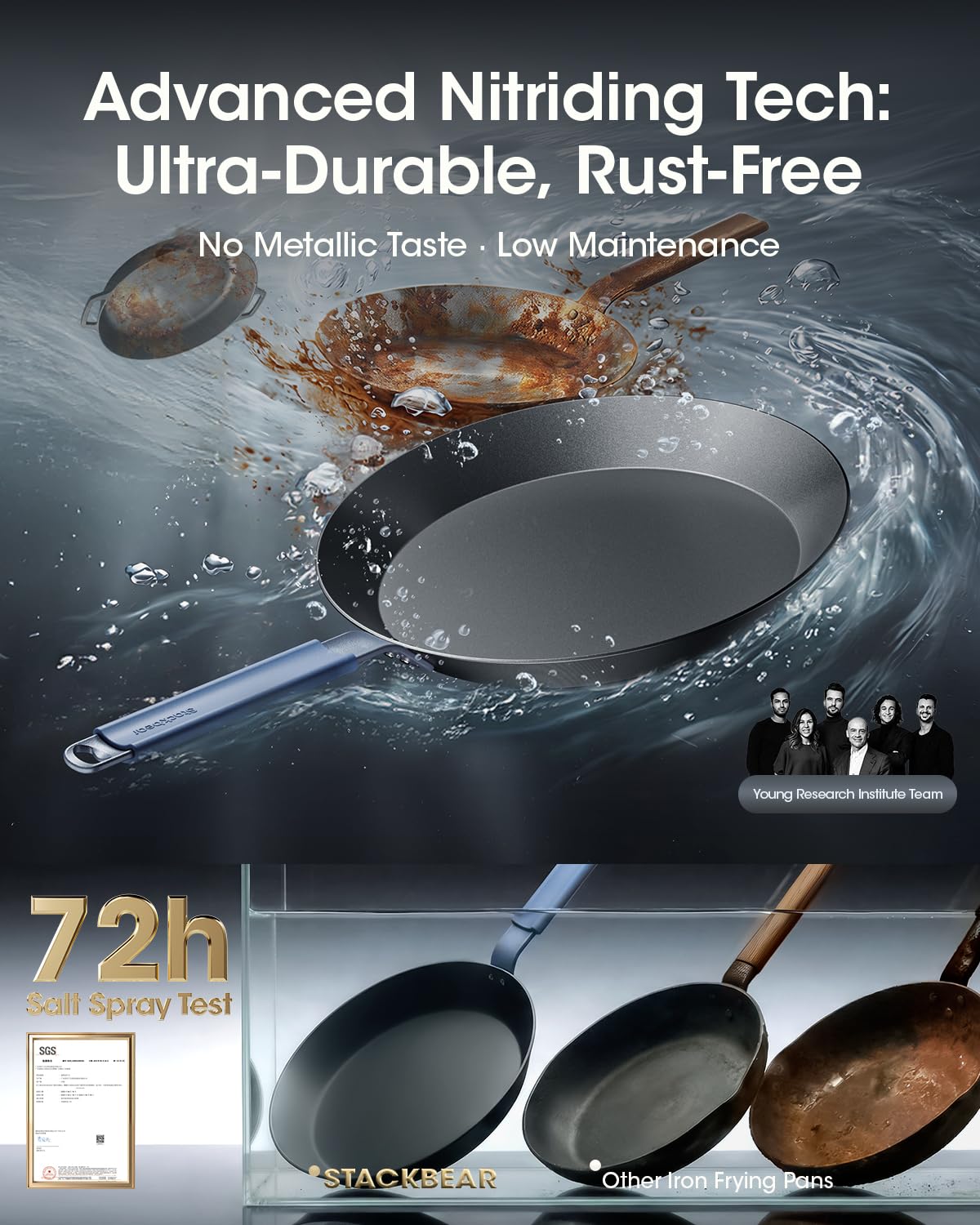
Stackbear 10″ Nitrided Carbon Steel Pan (Stackbear-DesignsmarterLiveeasier)
The Stackbear takes a different route. Its nitrided surface is rust-resistant out of the box, so the strip-and-wash worry in Step 1 is lighter, and first-time owners find it more forgiving. Rated 4.2, it splits the difference at 10 inches, big enough for a stir-fry, small enough to store easily. It’s oven-safe too, so the 450°F bake in Step 3 is fully supported. If you’re new to carbon steel and want the least intimidating entry, this is where to start.
Frequently Asked Questions
What if my pan turns out sticky and tacky after seasoning?
Almost always too much oil. Wipe the pan down hard while it’s warm, then re-bake at 450°F for another 30 minutes. The tack comes from oil that pooled instead of polymerizing, so the fix is heat and a thinner coat, not more oil.
What if I only have an electric or induction cooktop?
It depends on the method. The oven bake at 450°F works identically regardless of your cooktop. For the stovetop route, induction and electric both season carbon steel fine; just expect slightly slower, more even heating, and rotate the pan so the edges get equal time.
What if my seasoning looks patchy and uneven?
No problem, and it’s normal early on. Patchy color means uneven heat or thin spots in your oil layer. Do one more full cycle of Step 2 and Step 3, tilting the pan so the sides bake evenly. The color evens out as you cook.
What if rust spots show up later?
Yes, they happen, and they’re reversible. Scrub the rust off with steel wool, wash, dry completely over heat, then re-season that spot with a micro-thin oil layer. Rust means moisture sat on bare metal, so always dry the pan on a burner before storing.
What if I don’t have a high-smoke-point oil on hand?
It depends what you’ve got. Any refined oil above roughly 400°F works, including canola, grapeseed, or refined avocado. Avoid extra-virgin olive oil and butter for seasoning, since they burn below the polymerization point and leave a soft, gummy film instead of a hard patina.
Bottom Line
Seasoning carbon steel comes down to one rule: less oil, more heat, repeated 3 to 4 times. Strip the factory coating, wipe each layer nearly dry, and bake at 450°F until the surface stops smoking and darkens to bronze. The Merten & Storck 12-inch is the everyday pick that ships pre-seasoned to save you a round or two. If you want the most forgiving first-timer experience, the nitrided Stackbear is worth it. Just remember: a great patina builds through cooking, so your best seasoning is still ahead of you.




Write Your Review
No reviews yet. Be the first to share your experience!