

> Editorial Note: I’m Hannah Lin, Interior Living Researcher at thelastinghome.com. I don’t sell furniture — I research it. The fixes below come from hands-on work with actual wood pieces, not manufacturer copy. My goal is to help you make a confident repair decision before spending money on products that won’t match your specific scratch type.
That scratch running across your dining table isn’t the end of the world. But grabbing the wrong product will make it worse, or at least waste your time. The single most important thing to understand about wood furniture scratches: depth determines everything. A scratch that only catches your fingernail needs a completely different fix than one deep enough to catch your thumbnail. Get that wrong and no amount of walnut oil or wax stick is going to help.
Most tutorials skip the diagnostic step entirely. They assume all scratches are surface-level and walk you through the same oil-and-buff routine regardless. If you’ve got a medium or deep scratch, you’ve probably already tried that routine and been disappointed.
Before you reach for any product, check out best coffee table for living room for pieces worth protecting — and best dresser for bedroom if your scratched piece is bedroom furniture. Also worth knowing: wood odor issues are unrelated to surface damage — how to get rid of musty smell in furniture covers that separately. For entryway furniture taking daily abuse, best console table for entryway and how to fix sagging couch cushions round out common furniture care questions.
How Bad Is the Scratch? A Quick Diagnostic
Run your fingernail across the scratch. Then run your thumbnail. That two-step check tells you almost everything.

Surface scratch (finish only): Your fingernail catches slightly, but your thumbnail glides across. The scratch appears white or lighter than the surrounding wood — it’s reflecting light at a different angle because the clear finish layer is disrupted. The wood beneath is intact. Fix: oil, wax, or a furniture marker.
Medium scratch (into the wood grain): Your thumbnail catches. The scratch looks darker than the surrounding wood, not lighter — that’s exposed wood oxidizing on contact with air. The finish is fully breached and the wood grain itself is scratched. Fix: wax stick or markers to fill the channel, then a finish coat.
Deep scratch or gouge: You can see a visible channel, sometimes with raised wood fibers on the edges. Material has been removed, not just disrupted. Fix: wood filler, light sanding, and refinishing — or a furniture professional if the piece has significant value.
The frustrating truth: the vast majority of tutorials online address surface scratches. They’re written for the easiest case because it makes for clean before-and-after photos. If your scratch catches your thumbnail and has dark edges along the channel, those tutorials won’t do much. That’s not a knock on the products — it’s a mismatch between scratch type and solution.
Scratches sit in the finish; water rings can sit in it or under it, and the fix differs completely. Removing water rings from wood has the 10-minute diagnosis that tells you which one you are dealing with.
Furniture legs that drag mark floors and rumple rugs in the same motion. The rug bunching guide covers the pads that solve both.
Fix 1: Walnut Oil for Surface Scratches
Walnut oil is the least glamorous fix on this list. No kit to buy, no applicator tip, no color matching. And for genuine surface scratches — ones that haven’t breached the wood itself — it works surprisingly well.
Here’s why it works mechanically: a surface scratch disrupts the finish layer, creating micro-irregularities that reflect light at different angles than the surrounding intact finish. That’s what makes it visible. Oil fills those micro-irregularities and restores a more uniform surface angle, which makes the scratch visually disappear or dramatically fade. The scratch isn’t gone — you’ve just filled the gaps that were catching light.
Method: apply a small amount of walnut oil to a clean, lint-free cloth. Rub with the grain in long strokes — never across it. Let it sit for 5 minutes, then buff off the excess with a dry section of the cloth. Results show up immediately.
Olive oil works as a short-term substitute. Walnut oil is preferable because it polymerizes slightly as it cures, giving a more durable result. Either way, oil-based fixes are not permanent — plan to repeat every 6 to 12 months on a piece that gets regular use.
When it doesn’t work: deep scratches (nothing to fill), raw or unfinished wood (oil absorbs into the wood rather than the finish layer), and antiques with wax finishes where oil can darken unevenly and create a blotchy appearance. If your piece has a wax finish and you’re not sure, try it inside a drawer or on the underside first.
Fix 2: Wax Sticks and Wood Markers for Medium Scratches
Medium scratches — the kind that catch your thumbnail and show dark edges — need a filler. Oil won’t bridge a channel that deep. Wax sticks fill the scratch with a colored material that gets scraped flat and buffed smooth; markers stain the exposed wood to match the surrounding grain color before the wax goes in.
Most scratch repair kits include both. The 13-piece DAIXISM set covers brown, dark walnut, oak, and pine tones, plus a handful of mid-range browns for furniture that doesn’t fall neatly into a category. Having multiple shades matters even for a single piece — wood grain isn’t one uniform color, and different grain angles catch light differently. You’ll often need two shades and blend them.
Method: start with the marker if the exposed wood in the scratch has gone dark from oxidation. Stroke the marker along the scratch channel (with the grain), let it dry for 30 seconds. Then take the closest wax stick, press it firmly into the scratch, and drag a flat plastic card across it to scrape the excess level with the surface. Don’t use a metal card — it’ll scratch the finish around the repair. Buff with a clean soft cloth using circular motion.
Color selection tip: err lighter. You can apply a second coat of marker to darken a repair, but pulling color back out is difficult. If you’re between two shades, start with the lighter one.
Durability limit: wax stick repairs need refreshing. They’re not as hard as the surrounding finish, so heavy-use surfaces — dining tables, coffee tables — will show wear in the repair area within 6 to 12 months. Direct sun can soften the wax. That’s the honest tradeoff for a no-sand, no-refinish fix.
Fix 3: Rejuvenating Restorer for Overall Dullness and Minor Scratches
Sometimes the damage isn’t one dramatic scratch — it’s a dozen hairline scratches from daily use that make a tabletop look uniformly dull and lifeless. Trying to address each one individually with a wax stick is tedious and, frankly, unnecessary. This is the situation a furniture restorer is actually designed for.
Products like the Rejuvenate restorer work by filling micro-scratches in the finish layer and depositing a thin, glossy polymer coat over the surface. The result isn’t that individual scratches disappear — it’s that the surface looks consistently finished again rather than scratched in spots.
Method: clean the surface thoroughly first. Any dust or grease under a restorer coat will be sealed in. Apply the restorer with an included applicator pad or a clean foam pad, working in long strokes with the grain. Let it cure for the time listed on the product (typically 30 to 45 minutes), then buff lightly. Don’t apply in direct sunlight — the product dries too fast and can streak.
This approach won’t fix medium or deep scratches. It’s a surface treatment, and a medium scratch has a physical channel that polymer fill won’t bridge adequately. But for a tabletop that’s been in daily use for a few years and shows it, a restorer coat is a more practical solution than addressing 40 hairline scratches one by one.
About Water Marks and White Rings
White rings and cloudy hazes on wood furniture look similar to surface scratches, but they’re a different problem entirely. They’re not physical damage to the finish — they’re moisture trapped within the finish layer, usually from a cold glass or hot mug sitting directly on the surface.
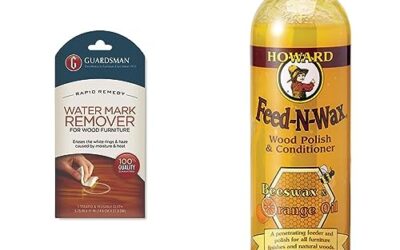
Because the problem is moisture, the fix is heat and absorption — not filler. A warm iron pressed through a thin cotton towel for 10 to 15 seconds drives the trapped moisture out. A hair dryer on low, held 6 inches from the surface and moved constantly, works similarly. The Guardsman water mark remover cloth handles the same problem through microfiber friction: gentle heat plus moisture absorption in one step.
Don’t reach for a wax stick or restorer on a water mark. There’s no physical channel to fill — you’d just be depositing wax over a moisture problem that’s still there.
Helpful Products

Pros
- 13 pieces provide multiple repair options for different scratch depths and wood tones
- Under $10 makes it an affordable first attempt before costly professional refinishing
- Markers dry quickly so furniture returns to use within minutes
- Wax sticks fill deeper damage that markers alone cannot address
- Compact blister pack packaging protects tools and keeps everything organized
Cons
- No customer reviews yet to verify real-world performance claims
- Color matching depends on user skill and may not perfectly blend with all wood finishes
- Wax sticks may require practice to achieve smooth, invisible fills on visible furniture surfaces
This repair kit solves that frustrating moment when you notice a fresh scratch on your dining table or a scuff on your bedroom dresser. Instead of living with the damage or paying someone to fix it, you have six wood tones ready to blend the mark away in minutes.
The dual approach is smart. Surface scratches disappear with a few marker strokes, while the wax sticks handle deeper nicks that need filling. The included sharpener keeps the wax precise for corners and edges. At under $10, it is worth keeping in your home maintenance drawer.
If you want quick furniture touch-ups that look professional without paying professional prices, this kit delivers.
Styles it works with: Farmhouse, Traditional, Transitional, Rustic
Best placed in: Kitchen utility drawer, bedroom nightstand drawer, entryway console storage
May not suit: Homes with very light or whitewashed wood that falls outside the six color range, or renters who cannot make permanent furniture alterations
Buy it if:
- You have wood furniture in maple, oak, cherry, walnut, mahogany, or black finishes
- You want to handle minor furniture damage yourself instead of hiring repair services
- You need a compact kit that covers both surface scratches and deeper gouges
Consider waiting if:
- You want to see verified customer reviews before purchasing since this has zero reviews currently
Skip it if:
- Your furniture has custom stains or painted finishes that will not match the six standard wood tones
- You need to repair large damaged areas rather than small scratches and nicks
Check the latest price and availability on Amazon before it sells out.

Rejuvenate Cabinet & Furniture Restorer 16oz - Fills Scratches, Restores Shine - Crystal Clear Finish for Wood & Laminate
Pros
- Fills minor scratches and surface wear effectively
- Large coverage area makes it economical for whole kitchens
- Safe for multiple surface types including laminate
- No heavy fumes or complicated prep work
Cons
- Only works on sealed surfaces, not raw or unfinished wood
- Results depend heavily on proper surface prep and cleaning first
- May require reapplication over time in high-touch areas
If your kitchen cabinets look tired but you are not ready to commit to a full remodel, this restorer is a smart middle ground. It is designed to fill in the fine scratches and dullness that accumulate over years of use, bringing back that showroom shine without the dust and expense of sanding or refinishing.
What stands out is how it works with your existing finish rather than covering it up. The crystal-clear formula lets the natural wood tone show through while adding a protective layer that makes cleaning easier going forward. It is especially effective on honey oak or cherry cabinets that have lost their luster.
If you want to refresh dated cabinetry without the commitment of paint or stain, this one delivers.
Styles it works with: Traditional, Transitional, Farmhouse, Classic Kitchen
Best placed in: Kitchen cabinets, bathroom vanities, wood furniture in living or dining rooms, built-in bookcases
May not suit: Homes with unsealed or distressed wood finishes that are meant to look worn, modern kitchens with matte or ultra-flat cabinet fronts
Buy it if:
- Your sealed wood cabinets have surface scratches or a cloudy, dull finish
- You want to delay a kitchen remodel by refreshing what you have
- You are preparing to sell and need cabinets to photograph better
Consider waiting if:
- You need to test it on a small area first and want to see user photos of results
Skip it if:
- Your cabinets are raw, unfinished, or intentionally distressed
- You are looking for a color-changing stain or paint alternative
Check the latest price and availability on Amazon before it sells out.

Pros
- Removes stubborn water rings and heat stains that other products cannot
- Reusable cloth provides value across multiple uses
- Also conceals surface scratches and removes paint or marker stains
- Works without damaging or stripping the wood finish
Cons
- Only works on finished, sealed wood, not raw or unfinished surfaces
- Cloth must be resealed after each use to maintain effectiveness
- May not work on deeply penetrated or very old stains
If you have wood furniture, you have water rings. A cold glass on the coffee table, a hot mug on the nightstand - these everyday moments leave behind white marks that make beautiful furniture look neglected. The Guardsman cloth handles what most home remedies cannot: it actually removes the damage instead of covering it up.
What sets this apart is how it works on multiple problems at once. Beyond water marks, it conceals scratches, lifts latex paint drips from DIY projects gone slightly wrong, and even removes permanent marker (a must-have for parents). The cloth is reusable, so you are not buying a new product every time your teenager forgets to use a coaster.
If you want to restore your wood furniture to its original condition without paying for professional refinishing, this one delivers.
Styles it works with: Traditional, Farmhouse, Transitional, Mid-Century Modern - any home with wood furniture
Best placed in: Kitchen drawer for quick access, living room console near coffee table, bedroom nightstand drawer
May not suit: Homes with only laminate or painted furniture, spaces with raw or unfinished wood pieces that require different treatment
Buy it if:
- You have water rings or heat marks on wood tables, dressers, or nightstands
- You want to fix furniture damage yourself without hiring a professional
- You have kids or guests who frequently leave marks on wood surfaces
Consider waiting if:
- You need to test on a hidden area first to ensure compatibility with your specific wood finish
Skip it if:
- Your furniture is raw, unfinished, or waxed wood rather than sealed
- The stains have penetrated deeply into the wood and need professional restoration
Check the latest price and availability on Amazon before it sells out.
First two: scratch repair tools for surface and medium scratches. Third: water mark and white ring removal — a different problem, different solution, but one that often shows up on the same piece.



Write Your Review
No reviews yet. Be the first to share your experience!