

> Editorial Note: I’m Sofia Reyes, a bathroom and wellness editor focused on small-bath organization and materials that hold up to real humidity. The evaluations here reference OEKO-TEX certifications, ASTM moisture-resistance standards, and aggregated owner reviews.
Orange-brown streaks under the soap dish. A rusty ring where a shaving cream can sat for a month. Stains creeping up the grout line near the drain. None of it means your tile is ruined, and none of it requires a contractor. Rust in a shower is almost always surface staining from metal meeting moisture, and the fix is usually something already in your kitchen. Before you start scrubbing, match the method to the surface and the severity of the stain. Here’s how to read your bathroom and clear it for good: how to get rid of hard water stains, how to clean grout, best shower caddy, best shower system, best bathroom rug.
Method 1: Lemon and Salt for Light Surface Rust
Fresh rust that wipes slightly when you rub it responds well to acid plus a mild abrasive. Cut a lemon in half, dip the cut side in table salt, and rub it directly over the stain. The citric acid dissolves the iron oxide while the salt crystals lift it off the surface. Let the lemon juice sit for 10 to 15 minutes before you wipe.
For flat tile, squeeze the juice into a small bowl, mix it 1:1 with salt into a paste, and spread it over the stain with an old toothbrush. The dwell time matters more than the scrubbing pressure. Citric acid needs minutes to break the bond between rust and glaze.
Rinse with warm water and dry the spot fully. Spot-check on a hidden area first if your tile is natural stone, since acid etches marble and travertine. This method handles light staining on porcelain, ceramic, and glazed tile. It won’t touch rust that’s already set into grout.
Method 2: Baking Soda Paste on Porcelain and Tile
When the stain has been there a few weeks but hasn’t darkened, baking soda gives you gentle lifting power without acid. Mix three parts baking soda to one part water until you get a spreadable paste about the texture of toothpaste. Cover the rust completely and leave it for 15 minutes.
Baking soda works mechanically rather than chemically. The fine particles abrade the stain loose when you scrub with a soft brush or a nylon-bristle toothbrush. Apartment Therapy recommends it as the first move on porcelain because it’s non-toxic and safe around kids and pets.
Never reach for a steel wool pad or a green scouring pad on chrome or glass. Those scratch the finish and create micro-grooves where rust takes hold faster next time. A soft brush is enough. Rinse thoroughly, then run your hand over the area. If it still feels rough, repeat once before moving to a stronger method. Baking soda is the safest choice for surfaces you’re unsure about.
Method 3: White Vinegar Soak for Fixtures
Faucet handles, drain covers, and shower arms collect rust at the base where water pools. White vinegar’s acetic acid dissolves it without harming most chrome or stainless plating. Soak a microfiber cloth in undiluted vinegar, wrap it around the fixture, and leave it for 30 minutes so the acid stays in contact instead of dripping away.
For removable parts like a drain cover or a soap dish insert, submerge them in a bowl of warm vinegar for one to two hours. The rust softens to a paste you can wipe off. Consumer Reports notes that vinegar handles light mineral and rust buildup on most bathroom metals, though it’s slower than commercial removers.
One firm rule: never mix vinegar or any acid cleaner with bleach. The combination releases chlorine gas, which is dangerous in a closed bathroom. Use one or the other, ventilate the room, and rinse the fixture with plain water afterward. Dry it completely. Standing moisture is what started the problem.
Method 4: A Commercial Rust Remover for Set-In Stains
Deep orange stains that have soaked into grout or sat for months need a dedicated rust remover. These use oxalic or hydrochloric acid concentrations far stronger than vinegar, so they clear in minutes what lemon can’t touch in an hour. A cling-gel formula is the move for vertical stains. It sticks to the wall instead of running into the drain.
Apply a thin layer, let it dwell for the time on the label (usually 5 to 10 minutes), and rinse without scrubbing on most formulas. Wear gloves and open a window. The fumes are strong in a small bath.
Spot-check on a hidden area before you coat a visible wall, especially on colored grout or older glaze. Stronger acids can lighten grout dye or etch a worn finish. These removers are the fastest path for stains that have won every gentler round, but the safety steps aren’t optional. Read the label, ventilate, and keep them well away from any bleach product.
Method 5: Stop the Source (Cans, Razors, Hard Water)
The rust ring under a shaving cream can isn’t really a tile problem. It’s a steel-bottom can left in a wet environment. Aerosol cans, disposable razors with metal blades, and bobby pins all corrode within weeks on a damp ledge, and the rust transfers straight to the surface beneath them.
Move every metal object off the shower floor and ledges. A wall-mounted or hanging caddy keeps cans and razors out of standing water, which is the single change that prevents most repeat staining. Switch to plastic-bottom containers where you can.
Hard water is the other source. Water with high iron content leaves rusty streaks even with nothing metal nearby. If you see staining spread evenly across the whole shower rather than under specific objects, your water is the culprit. A whole-house water softener or an iron filter solves it at the supply. Wirecutter covers softener options for households on well water or high-mineral municipal supply. Fix the source and the scrubbing stops being a monthly chore.
How to Keep Rust From Coming Back
Rust needs two things: metal and moisture. Remove either one and it can’t form. After every shower, squeegee the walls and wipe down fixtures with a dry towel, paying attention to the base of faucets and the drain cover where water collects.
Keep metal off wet surfaces. No aerosol cans on the floor, no razors balanced on the ledge, no bobby pins by the sink. A hanging caddy or a sealed plastic organizer handles this in one move. Run the exhaust fan for 15 to 20 minutes after each shower to drop the humidity, since standing moisture accelerates corrosion on any exposed metal.
If your water reads high for iron, treat it at the source with a softener or filter rather than fighting stains every week. Dry surfaces, no loose metal, controlled humidity. That’s the whole prevention plan.
The Right Products Make It Easier
Each pick below targets a different stain type, so match the product to your surface rather than buying all three. Start with the gel if your stains run down a vertical wall; reach for the polish only on metal fixtures.


Pros
- Highly effective on hard water stains that other cleaners cannot touch
- Versatile use across bathroom, kitchen, and laundry appliances
- Ready-to-use spray format requires no mixing or dilution
- Plant-based formula with no dyes for a cleaner ingredient profile
- Exceptional value at under $6 for a 22 oz bottle
Cons
- Strong chemical smell requires good ventilation during use
- Not safe for use on natural stone, marble, or unsealed grout
- May require a second application on very heavy long-term buildup
If your bathroom fixtures have that chalky white crust or your showerhead has slowed to a trickle, CLR is the one product that actually fixes it. It cuts through calcium and lime deposits that sit stubbornly through regular cleaning, and it does it fast enough that you can see results while you wait.
What makes it a staple in the cleaning cabinet is its range. One bottle handles the showerhead, the faucet, the toilet bowl ring, the dishwasher interior, and the washing machine drum. That kind of utility at under $6 is hard to argue with, and with 3,500-plus reviews averaging 4.5 stars, the results speak for themselves.
If you want gleaming fixtures and scale-free appliances without spending an afternoon scrubbing, this one delivers.
Styles it works with: Any home style benefits from clean fixtures; particularly useful in Modern, Minimalist, Farmhouse, and Transitional interiors where hardware finishes like chrome and stainless steel are visible design elements.
Best used in: Master bathroom and guest bath faucets and showerheads, kitchen sink and dishwasher, laundry room washing machine drum, humidifiers and small appliances.
May not suit: Homes with natural stone tile or marble countertops where the formula cannot be used safely; households that prefer fragrance-based cleaners may want the scented variant instead.
Buy it if:
- You have hard water and notice white or orange buildup on faucets, showerheads, or toilet bowls
- Your showerhead flow has weakened due to mineral deposits blocking the nozzles
- You want a single product that handles bathroom, kitchen, and appliance cleaning in one pass
Consider waiting if:
- You prefer a fragrance-free and dye-free version, which CLR sells separately as CLR Free & Clear
Skip it if:
- Your home has marble, travertine, or other natural stone surfaces where acid-based cleaners cause permanent damage
- You only need a light everyday surface cleaner with no hard water or rust staining to address
Check the latest price and availability on Amazon before it sells out.

Iron OUT Rust Stain Remover Spray 24oz - No-Scrub Gel Formula for Showers, Sinks & Tile
Pros
- No-scrub formula saves time and physical effort
- Cling gel stays put on vertical and hard-to-reach surfaces
- Works on various materials from porcelain to tile to carpet
- Septic-friendly and made in the USA
Cons
- Zero customer reviews makes it difficult to verify real-world effectiveness
- May require multiple applications for deeply set or old rust stains
- Chemical smell typical of rust removers may require ventilation
If you have hard water or well water, you know the frustration of orange-brown stains creeping into your shower grout, around faucets, and down sink drains. Iron OUT takes the physical labor out of rust removal with a gel formula that does the work while you wait. Unlike typical bathroom cleaners that slide right off before they can act, this one clings exactly where you spray it.
What makes this especially practical for home maintenance is its versatility. One bottle handles your shower tile, bathroom fixtures, kitchen sink, and even rust spots on colorfast carpet or concrete. At under $7 for 24 ounces, it's an affordable solution to keep on hand rather than scrubbing with abrasive tools that can damage surfaces over time.
If you want to remove visible rust stains without spending your weekend scrubbing, this one delivers.
Styles it works with: All home styles benefit since rust removal is about function, not aesthetics. Particularly useful in farmhouse, cottage, and traditional homes with well water systems.
Best placed in: Bathroom vanity cabinet, under kitchen sink, laundry room shelf, or basement utility area for quick access when stains appear.
May not suit: Homes without hard water or iron issues may never need this product. Not intended for decorative display, strictly a functional cleaning solution.
Buy it if:
- You have well water or hard water with high iron content causing orange stains
- Rust stains have appeared in your shower, tub, or sink despite regular cleaning
- You want a no-scrub solution for vertical surfaces that are hard to reach
Consider waiting if:
- You want to see verified customer reviews before purchasing since this listing shows zero reviews
Skip it if:
- You don't have rust or iron stains and need a general-purpose bathroom cleaner instead
- You prefer eco-friendly or natural cleaning solutions over chemical rust removers
Check the latest price and availability on Amazon before it sells out.

Pros
- Works instantly on heavy tarnish and oxidation without any rubbing or buffing
- Safe organic formula won't damage delicate finishes or release harsh fumes indoors
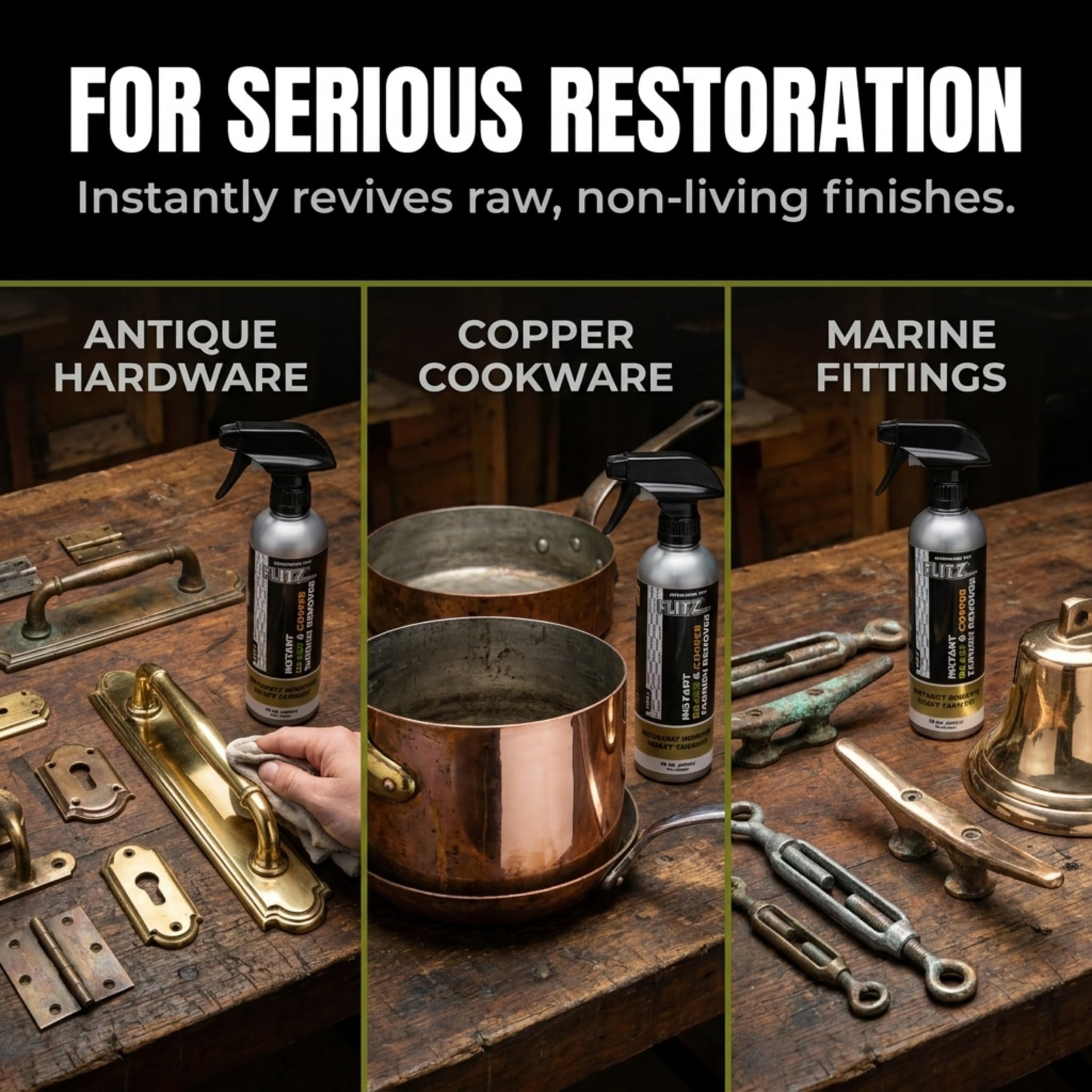
- Versatile enough for brass door hardware, copper pots, aluminum frames, and glass surfaces
- Made in USA with quality ingredients - reliable performance on tough cleaning jobs
- 4.8/5 rating shows strong customer satisfaction with real-world results
Cons
- Not a polish - requires follow-up with metal polish paste to prevent re-tarnishing
- At $21.95 for 16oz, it costs more than basic brass cleaners though you use less per application
- Limited reviews available to assess long-term performance across different metal types
If you have brass cabinet pulls, copper pots hanging in your kitchen, or vintage metal finds that have lost their luster, this cleaner brings them back to life without the elbow grease. The spray-and-rinse formula means you can tackle an entire set of door hardware or a collection of copper cookware in minutes, not hours.
What sets this apart is the organic salt formula. Unlike acid-based cleaners that smell harsh and require ventilation, you can use this throughout your home without worrying about fumes or damaging finishes. It works on everything from the brass chandelier in your entryway to aluminum window frames to glass shower doors with hard water stains.
If you want professional-level tarnish removal without scrubbing or harsh chemicals, this one delivers.
Styles it works with: Traditional, Modern Farmhouse, Vintage Industrial, Eclectic
Best placed in: Under kitchen sink for copper cookware maintenance, bathroom cabinet for fixture care, entryway closet for brass hardware upkeep
May not suit: Homes where you prefer natural patina on antique metals, renters who cannot modify fixtures, spaces with only stainless steel or chrome finishes
Buy it if:
- You have multiple brass or copper items throughout your home that need regular cleaning
- You are tired of scrubbing tarnished metal fixtures and want instant results
- You prefer safer, organic cleaning products over harsh acid-based formulas
- You have hard water stains on glass or aluminum that other cleaners have not removed
Consider waiting if:
- You only have one or two small brass items to clean and can use a lower-cost option
- You need both tarnish removal and long-term polish protection in one product
Skip it if:
- You prefer the aged patina look on your antique brass and copper pieces
- Your metal fixtures are stainless steel or chrome, which this product is not designed for
Check the latest price and availability on Amazon before it sells out.
CLR Lime & Rust Remover is the fast acid cleaner for tile and fixtures, and its 4.5 owner rating reflects how quickly it clears lime, calcium, and rust together. Iron OUT’s spray-gel formula clings to vertical surfaces, which is why it sits at a 4.4 rating for set-in bathroom stains that drip-on liquids miss. Flitz, USA-made and rated 4.1, is a metal polish built for brass, copper, and chrome fixtures rather than tile, so save it for the faucet handles and drain covers.
Frequently Asked Questions
Does vinegar really remove rust from a shower?
Yes, for light to moderate rust on chrome, stainless, and glazed tile. Acetic acid dissolves iron oxide given enough contact time, so soak a cloth and wrap it on for 30 minutes. It’s slower than a commercial remover and won’t clear deep grout staining in one pass.
Will rust remover damage my grout?
It can, especially colored or older grout. Strong acids lighten dye and etch worn finishes. Spot-check on a hidden area first, apply a thin layer, and rinse on schedule. Sealed grout in good shape usually handles a brief dwell time without harm.
Can I mix bleach with an acid cleaner to work faster?
No. Never do this. Mixing bleach with vinegar, CLR, or any acid releases chlorine gas, which is hazardous in a closed bathroom. Use one product, ventilate the room, rinse fully, and wait before switching to anything else.
Almost nothing works on my stains. Is it the pipes?
Almost never, but it’s possible. If rusty water comes from the showerhead itself or stains return within days of cleaning, corroded galvanized pipes may be the source. That’s a plumbing issue, not a surface one, and needs a plumber to inspect the supply line.
Is rust staining safe to leave on bathroom tile?
Yes, in the short term. Surface rust is cosmetic and won’t harm sealed tile or porcelain. Left for months it can stain grout permanently and corrode nearby metal faster, so clearing it early keeps the repair quick and cheap.
Bottom Line
Shower rust comes down to two causes: metal sitting on a wet surface, or hard water carrying iron. For most people the fix is moving cans and razors off the floor and clearing the stain with vinegar or a cling-gel remover, then drying surfaces daily. Spot-check any acid product on a hidden area first, and never combine it with bleach. If rusty water keeps returning from the showerhead or pipes, that’s corroded plumbing and needs a plumber, not another scrub.



Write Your Review
No reviews yet. Be the first to share your experience!