

> Editorial Note: I’m Hannah Lin, an Interior Living Researcher who’s spent 9+ years analyzing the home furniture market. This guide draws on BIFMA, GREENGUARD, and FSC certifications, plus owner reviews aggregated from Wirecutter, Apartment Therapy, and the major home design subreddits.
The most common mistake in a small room isn’t the color you choose. It’s judging that color from a two-inch chip under hardware-store fluorescents, then rolling it onto four walls and wondering why it went murky. Paint behaves differently at scale, and it behaves differently in your light. Before you commit a gallon, think about the whole room — the best large floor mirror that bounces daylight around, the best wall mirror for living room that opens a tight corner, the best table lamp for living room whose bulb temperature quietly shifts your wall color after dark, plus the best gallery wall frames and best console table for entryway that all read against whatever tone you land on. Here’s how to pick a color that actually works in a small space.
Should You Actually Paint a Small Room White?
Start here, because it clears up the biggest myth: white doesn’t automatically make a small room feel bigger. What makes a room feel open is contrast control and reflected light, and white is only one way to get there. The number that matters is Light Reflectance Value, or LRV — a 0-to-100 scale printed on most fan decks and manufacturer sites. Colors above LRV 60 bounce a lot of light and read airy; anything under 50 starts absorbing it.
But absorbing light isn’t always the enemy. A deep navy, charcoal, or forest green can make a cramped room feel deliberate instead of apologetic. Dark walls blur the corners, so your eye stops measuring the boundaries. Corners disappear. The room reads as one calm, enveloping shape rather than a small box with four visible edges. Apartment Therapy has documented this “cocoon” approach in windowless powder rooms and tiny offices for years.
So the real choice isn’t light versus dark. It’s committing fully to one strategy. A light room wants LRV 65-plus on walls, trim, and ceiling to erase the seams. A dark room wants saturation everywhere, including the ceiling, so nothing interrupts the wrap. Half-measures, like a medium beige with bright white trim, are what actually make small rooms feel choppy and boxed in.
How Does the Light in Your Room Change the Color?
Every color you pick is really a negotiation with your light — daylight during the day, bulbs at night. Get the direction of your windows first. North-facing rooms get cool, blue-tinted light that mutes warm colors and can push grays toward icy blue. South-facing rooms get warm, generous light that flatters almost anything. East rooms are warm at breakfast and cool by afternoon; west rooms do the reverse.
Then check your bulbs. Color temperature is measured in Kelvin: 2700K is warm and yellowish, 4000K is neutral, and 5000K mimics cool daylight. A greige that looks sophisticated under 2700K can turn flat and greenish under a 5000K LED. Since you’ll spend most evenings under artificial light, that after-dark reading matters as much as the noon one.
This is why you can’t judge a color once and move on. Paint your sample and look at it three times: morning, mid-afternoon, and at night with your actual lamps on. Small rooms magnify the effect, because there’s less square footage to average out a bad undertone. One wall of the wrong gray in a big living room reads as a design choice. The same gray in an 8-by-10 bedroom becomes the whole mood. Wirecutter’s paint guides make the same point: light is the variable people underestimate most.
How Big Should Your Paint Sample Be, and Where Do You Put It?
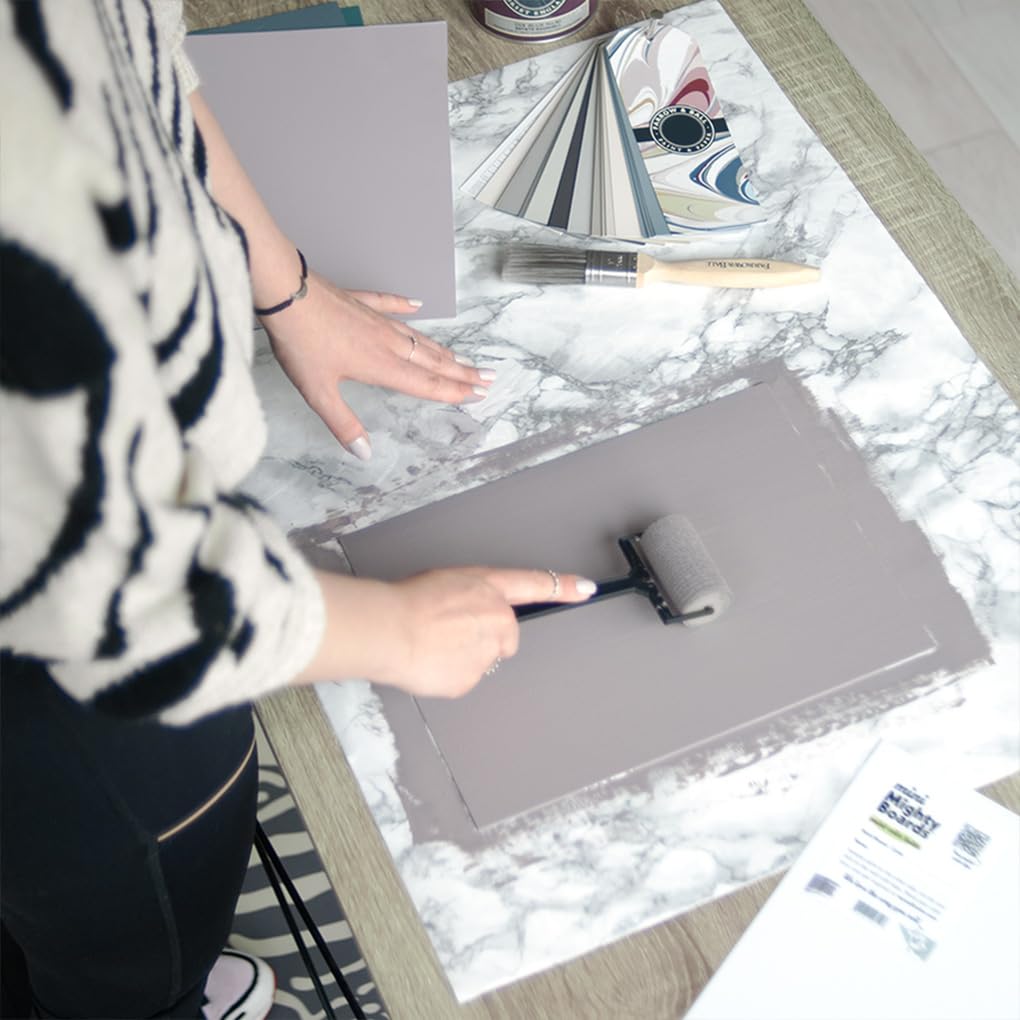
A two-inch paint chip is a rough draft, not an answer. Color reads more intense at scale, so a chip that looks like soft sage can roll on as a bright mint across a full wall. Give yourself real information: paint a patch at least 2 feet by 2 feet, or use a movable sample board you can hold against different surfaces.
Placement is half the battle. Put your sample on the wall opposite the window and the wall right beside it — they’ll look like two different colors because one faces the light and one hides from it. In a small room, also check the color near the floor and near the ceiling, since reflected light from your flooring can warm or cool the lower third of a wall.
Two coats, minimum. One coat almost always looks patchy and lighter than the finished result, which is how people talk themselves into the wrong shade. Let each coat dry fully before you judge it. And never paint a sample right next to a bright white wall or trim — the contrast tricks your eye into reading the new color as darker than it is. A movable board fixes that, because you can float it in the middle of the wall with space around it.
What Sheen Works Best in a Small Room?
Sheen is the decision most people skip, and it changes both how the color looks and how much light the room keeps. Flat and matte finishes hide drywall flaws beautifully, which matters in older small rooms with wavy walls. The trade-off is durability: matte scuffs and marks easily, and it’s harder to wipe clean in a tight hallway where shoulders and bags brush the walls.
Eggshell and satin are the practical middle for most small spaces. They reflect a little more light than matte, which helps an enclosed room feel brighter, and they wipe down without burnishing. Save semi-gloss and gloss for trim, doors, and cabinets, where the extra shine defines edges and takes abuse.
One caution for small rooms: the higher the sheen, the more it reveals. Glossy walls bounce light, but they also spotlight every roller mark, nail pop, and uneven patch of drywall. Every flaw, up close. If your walls aren’t perfectly smooth, lean matte or eggshell and let the color do the work. For lower fumes in a room with little airflow, look for GREENGUARD Gold-certified paint, which limits the emissions that linger in enclosed spaces.
Helpful Picks
You can’t evaluate a paint color honestly without seeing it at scale, in your own light, on more than one wall. The picks below all solve that, each with a slightly different approach: FoamPRO’s reusable color sample boards (4.5 stars) let you paint a large swatch and carry it around the room; SureSwatch’s paintable film envelopes (4.3 stars) stick a true-color sample flat to your wall without a mess; and Mighty Boards’ 12-by-9-inch polystyrene panels give you a rigid, movable surface for comparing several finalists side by side.


Pros
- Generous 24-board quantity handles whole-home renovation projects without running out mid-process
- Dual-sided design with a paint-out area on the front and an identification label on the back keeps your testing process organized
- Portable format lets you physically place swatches next to rugs, countertops, or upholstery for accurate color matching
- Made in-house by FoamPRO, a brand with a long track record in professional paint tools
Cons
- Very limited review base of only 2 ratings makes it difficult to assess long-term durability or performance across different paint types
- At $64 for 24 boards, the per-unit cost is higher than DIY cardboard alternatives, which may be a sticking point for budget-focused buyers
- No mention of surface texture specifications, so buyers using specialty paints like chalk or lime wash may need to verify compatibility
Choosing the wrong paint color is one of the most expensive and frustrating mistakes you can make in a home refresh. What looks perfect on a tiny paint chip at the hardware store can read completely differently once it hits your walls under natural light. The FoamPRO 120 Sample Boards solve that problem by giving you a proper canvas to test each color at scale, right in the room where it will actually live.
What sets this pack apart from grab-and-go paint chips is the thoughtful dual-sided layout. You paint out your swatch on the front, and flip it over to find a label where you can record the brand, color name, finish, and any notes. That detail matters more than it sounds when you are juggling six shades of greige across three rooms and a week has passed since you started. The portable format is equally practical, letting you carry boards to fabric stores or tile showrooms to check how a color plays against materials you have already chosen.
If you want confident, commitment-free color testing across an entire home renovation without losing track of what you tested, this one delivers.
Styles it works with: Modern Farmhouse, Scandinavian, Transitional, Minimalist
Best placed in: Living room walls during a full repaint, bedroom accent wall planning, open-concept kitchen and dining refresh where color continuity matters across zones
May not suit: Renters or anyone not actively planning a paint project who has no immediate use for 24 boards; buyers in very small single-room spaces where only 2 or 3 boards would ever be needed at one time
Buy it if:
- You are repainting multiple rooms and need to coordinate colors across different lighting conditions and existing furnishings
- You have been burned before by a paint color that looked great in the store but wrong on your walls and want a reliable way to test before committing
- You are working with an interior designer or contractor and need a portable, organized way to share color options across multiple sites or meetings
Consider waiting if:
- You are only painting one room and a smaller or less expensive sample board option would cover your needs without the extra quantity
Skip it if:
- You are not currently planning a paint project and have no near-term use for testing swatches, as these boards have no standalone decorative value
- Your budget is tight and free paint chip cards from the hardware store are sufficient for the scale of your project
Check the latest price and availability on Amazon before it sells out.

SureSwatch Paintable Sample Film Envelopes 3-Pack | Test Paint Colors Before Committing
Pros
- Lets you move paint samples around the room to check color in different lighting conditions throughout the day
- No-mess approach keeps your walls clean during the decision-making process
- Ready to use immediately with no setup required
- 3-pack provides enough surface area to test multiple paint colors at once
Cons
- Very limited product description and no specification details make it hard to know exact film dimensions before buying
- Only 19 reviews means there is not enough real-world feedback to fully validate long-term durability
- Not useful if you have already committed to a paint color or are not actively in a redecorating project
Choosing paint colors is one of the most stressful parts of redecorating. You grab a few swatches from the hardware store, hold them up in the store lighting, and make your best guess. Then you get home, roll the color onto your wall, and watch it turn into something completely different by afternoon light. SureSwatch Paintable Sample Film Envelopes exist to solve exactly that problem.
The concept is simple and clever. Instead of painting directly onto your wall, you paint onto the film, then carry that swatch from room to room, holding it against your existing trim, furniture, and flooring. You can check the color at 8am, at noon, and under your lamp at night before you ever open a full gallon. The soft, flexible material makes this feel natural and easy rather than like a workaround.
If you want to nail your paint color on the first try without repainting over test patches on your walls, this one delivers.
Styles it works with: Modern Farmhouse, Scandinavian, Minimalist, Traditional
Best placed in: Any room you are actively repainting, including living rooms with complex natural light, bedrooms where evening lamp light changes the mood, and entryways where color needs to work with flooring and door hardware
May not suit: Homes not currently in an active painting or redecorating project, or buyers who already use large peel-and-stick paint sample cards with satisfactory results
Buy it if:
- You are planning a room repaint and have struggled to choose between two or three similar shades
- Your home has rooms with dramatically different lighting throughout the day and you need to test colors across those conditions
- You want to avoid patching over test swatches painted directly on a freshly primed wall
Consider waiting if:
- You want to confirm the exact film dimensions before purchasing, and the listing does not yet show updated specifications
Skip it if:
- You are not currently planning a paint project and have no near-term use for paint color testing
- You already rely on large-format peel-and-stick paint sample cards from your paint brand and find them sufficient
Check the latest price and availability on Amazon before it sells out.

Mighty Board Minis White Polystyrene Paint Color Test Panels 12x9 Inch Set of 5 for Home Decor Projects
Pros
- Warp-free polystyrene holds its shape through multiple paint coats
- Non-absorbent surface keeps paint colors accurate and true
- Includes labels for tracking color names, brands, and room assignments
- Compatible with all paint brands, stains, and coatings
- Thin and lightweight for easy repositioning between rooms
Cons
- Only 5 panels included, which may not be enough for large projects with many color options
- 12x9-inch size may feel small when trying to visualize a full wall color
- No reviews yet to confirm long-term durability or real-world performance
Choosing paint colors is one of the most stressful parts of redecorating. You hold up tiny swatches, squint at them under different lights, and still end up second-guessing yourself after the first coat goes on the wall. These Mighty Board Minis solve that problem by giving you a proper-sized surface to test your colors on before you commit to anything permanent.
What makes these panels genuinely useful is their warp-free polystyrene construction. Unlike cardboard or foam core that buckles when wet, these stay perfectly flat. The non-absorbent surface means the paint dries exactly as it would on a primed wall, giving you an honest preview. Plus, each board has a label so you can jot down the brand and color name, which is a small detail that saves real headaches when you are jugling five or six options.
If you want to test paint colors confidently without painting directly on your walls or dealing with warped sample boards, this one delivers.
Styles it works with: Modern Farmhouse, Scandinavian, Minimalist, Traditional
Best placed in: Any room you plan to repaint, nurseries where color choices matter most, kitchens and bathrooms with tricky lighting
May not suit: Large open-concept spaces where a12x9-inch panel may look too small to judge a color accurately, or professional painters who need to test on dozens of surfaces at once
Buy it if:
- You are repainting a room and want to compare 3 to 5 colors side by side before buying a galon
- You have struggled with paint colors looking different on the wall than they did on the swatch card
- You want a reusable, portable way to test how colors look under natural and artificial light in different rooms
Consider waiting if:
- You need more than 5 panels for a whole-house color overhaul and want to buy in bulk
Skip it if:
- You have already committed to your paint color and do not need to compare options
- You prefer painting large poster-board-sized samples for a more immersive color preview
Check the latest price and availability on Amazon before it sells out.
Frequently Asked Questions
Do dark paint colors make a small room look smaller?
No. Dark colors don’t shrink a room; they blur its edges, which can make it feel intentional and cozy rather than cramped. What shrinks a small room visually is high contrast, like a medium wall color fighting bright white trim, or one accent wall that chops the space in half. If you go dark, carry the color onto the trim and ceiling so the boundaries soften instead of standing out.
What’s the best paint color for a small room with no natural light?
It depends on the mood you want. For an airy feel, pick a warm white or soft greige with an LRV above 65 and pair it with 2700K-3000K bulbs to keep it from going sterile. For a cozy den or powder room, lean into a saturated color; a windowless room can’t lose daylight it never had, so dark walls read as a choice, not a mistake.
Should the ceiling be the same color as the walls in a small room?
It depends on your goal. In a light room, painting the ceiling the same soft tone (or one shade lighter) erases the line where wall meets ceiling and makes the room feel taller. In a dark, cozy room, matching the ceiling completes the wrap. The one thing to avoid is a bright white ceiling over a medium-toned wall, because that hard line draws attention to how low the ceiling is.
How many paint colors should I sample before deciding?
It depends, but two or three finalists is the sweet spot. Any more and you’ll start second-guessing undertones that only a fan deck can tell apart. Narrow your options online by LRV and undertone first, then buy samples of your top few and view them on multiple walls, morning and night, before you commit to a gallon.
Is one coat of a paint sample enough to judge the color?
No. One coat almost always dries patchy and lighter than the final result, which misleads you into rejecting a good color or picking one that ends up too dark. Apply two coats, let each dry fully, and judge only the finished patch. This is the single most common reason a wall “doesn’t match the sample.”
Do peel-and-stick or paintable paint samples give an accurate color?
Yes, and they’re often more accurate than a brushed-on patch because there’s no white wall bleeding through a thin coat. Paintable film and rigid sample boards show the true color at full opacity and let you move the sample between walls and lighting. They’re also cleaner than brushing directly onto drywall you’ll have to prime over later.
Does a lighter floor make a small room feel bigger than lighter walls?
It depends on where the eye lands, but walls usually matter more. Light walls expand the vertical planes you see most, while a light floor mostly reduces contrast underfoot. In a small room, the strongest move is keeping walls, trim, and ceiling in one light tone; the floor is a supporting player, not the headline.







Write Your Review
No reviews yet. Be the first to share your experience!