

> Editorial Note: I’m Olivia Bennett, a storage and organization contributor. I approach storage as a systems problem rather than a product one, fit to actual room dimensions, load ratings, and how the system holds up under daily use.
The biggest mistake people make is buying the storage before measuring the space. They grab a bench, a rack, three baskets, and then discover the door won’t clear the bench or the coat hooks sit above where a jacket actually hangs. An entryway isn’t a place to store things. It’s a launch pad, and it fails the moment it can’t absorb the daily pile of shoes, keys, bags, and mail without help. Before you shop, read how the pros treat the whole zone as one system, the same way a best closet organizer system or a best closet rod gets planned around real dimensions rather than guesswork. If your entry doubles as a landing for coats and gear, borrow ideas from a best hanging closet organizer, a best shoe rack, and even a best floating shelves for living room setup. Here’s the order that actually works.
The Ground Rules Before You Start
Three non-negotiables. First, protect the swing path: a standard interior door needs at least 36 inches of clear arc, so nothing wider than the wall beside it should block that swing. Second, hooks belong at 60 to 66 inches off the floor for adults and around 40 inches for kids, so coats hang without dragging. Third, leave 30 inches of clear walking lane through the space. If the entry is under 4 feet wide, go vertical and skip the freestanding bench entirely.
Step 1: Measure the Zone and Map the Traffic
Start with a tape measure, not a shopping cart. Note the wall width available, the door swing arc, and the ceiling height. Most entryway furniture runs 30 to 47 inches wide and 70 to 72 inches tall, so a piece taller than your ceiling minus 4 inches will feel cramped.
Mark the traffic lane. Stand in the doorway and walk the path you take every day. That 30-inch lane is sacred, and furniture that pinches it turns a functional entry into an obstacle course. Tape the footprint of any bench or hall tree on the floor with painter’s tape before you commit. Live with it for two days.
Then count the daily load. How many people, how many pairs of shoes come off at once, how many bags land here? A two-person household drops about 6 to 8 pairs of shoes in rotation. A family of four can hit 15. That number decides your shoe-storage capacity, and it’s the spec most people skip. Design around the peak, not the average.
Step 2: Anchor the Wall With One Vertical Piece
Pick your anchor first, and make it vertical. A hall tree or a coat-rack-plus-bench combo does the work of four separate products in one footprint, which matters when you’ve only got 32 inches of wall. Look for a load rating on the hooks; quality hooks hold 15 to 20 pounds each, enough for a wet winter coat plus a bag.
Set the anchor against the longest uninterrupted wall, centered if the space allows. Screw it into a stud or use rated wall anchors, since a top-heavy hall tree loaded with coats can pull 40 pounds of force against the wall, and a drywall-only mount won’t hold. This is the piece everything else orbits, so get it plumb and secure before adding anything.
The anchor also sets your visual ceiling. A 72-inch hall tree reads as a wall of storage; a 40-inch bench reads as a place to sit. In a narrow entry, tall-and-thin beats wide-and-short every time. You’re buying vertical inches, not floor space.
Step 3: Solve Shoes at the Floor Level
Shoes are the mess that makes an entry look chaotic, so give them a dedicated tier. A bench with a lower shelf clears 3 to 5 pairs; a 5-tier rack holds 15 or more. Match the tier count to the peak number you counted in Step 1.
Keep shoes off the floor and off the walking lane. Open shelving works better than closed bins here because you will actually put shoes back if it takes zero effort, since a lidded box adds a step, and skipped steps are why systems collapse. Angle-slotted shelves let heels and sneakers sit at a 15-degree tilt, fitting more pairs in the same depth.
Reserve the very bottom shelf, roughly 6 inches off the floor, for the shoes worn daily. Boots and seasonal pairs go higher or elsewhere. If your entry sees snow or rain, add a boot tray with a raised lip, since a 24 by 16 inch tray catches meltwater before it warps the floor. That’s the difference between a system that stays dry and one that grows a puddle.
Step 4: Add the Catch-All for Small Stuff
Keys, mail, sunglasses, the dog leash. These are the items that vanish, and they need a single named home within arm’s reach of the door. A small tray, a wall pocket, or a shelf ledge at about 40 inches high works. Anything higher and you won’t drop things there on the way in.
Cap the catch-all at one container per category. One tray for keys, one slot for mail, one hook for the leash. The moment a surface holds two unrelated piles, it becomes a dumping ground, and dumping grounds spread. A ledge deeper than 5 inches invites clutter, so keep it shallow on purpose.
Finish with a mirror if the wall allows. A tall mirror near the door does double duty: a last-look check on the way out, and it bounces light to make a tight entry feel wider. Position it so a standing adult sees head to mid-thigh, roughly a 48-inch glass mounted at 54 inches to center.
The Right Products Make It Easier
The picks below all clear a 4.4 owner rating and pack multiple functions into one footprint, the exact fix for the measure-first, anchor-second approach above. Start with the first if you want a bench, hooks, and a shoe shelf in one piece. Jump to the third if a full-length mirror is on your must-have list.


VASAGLE 4-in-1 Hall Tree Coat Rack with Shoe Bench,9 Hooks & Hanging Rod, Rustic Brown and Black
Pros
- Exceptional value for a full entryway storage system under $40
- Compact footprint fits narrow halls and small apartments
- Bench is genuinely sturdy at 198 lb capacity
- Hooks are removable and repositionable for flexible storage
- Anti-tip hardware included for household safety
Cons
- Particleboard shelves may show wear over time in high-humidity areas
- At 28.3 inches wide, it holds fewer coats than full-size hall trees
- Limited to one color option in this model size
This VASAGLE hall tree solves the classic entryway problem: too much stuff, not enough space. It stacks a hanging rod, nine hooks, a shoe shelf, and a solid bench into a footprint barely wider than a kitchen chair. Everything you grab on your way out the door lives in one tidy vertical column.
In person, the rustic brown shelves paired with the matte black steel frame give it that industrial-meets-farmhouse look that works in almost any home. It does not look or feel like budget furniture, which is impressive given the price point. The bench is genuinely sturdy enough to sit on daily without any flex or wobble.
If you want a complete entryway organization station without sacrificing floor space or spending over $100, this one delivers.
Styles it works with: Industrial, Modern Farmhouse, Rustic, Transitional
Best placed in: Narrow entryway against a wall, apartment foyer, mudroom nook, garage entry door area
May not suit: Wide-open entryways where it may look undersized, homes with all-white or ultra-minimalist decor where the rustic brown clashes, or families neding storage for more than 4 to 5 coats at once
Buy it if:
- You have a narrow entryway or apartment foyer and need an all-in-one coat, shoe, and bag station
- You want a seat to put on shoes without adding a separate bench
- You prefer a budget-friendly option that still looks polished and holds up daily
Consider waiting if:
- You want a wider hall tree with more hanging capacity for a larger household
- You need a lighter color to match white or coastal decor (check the VASAGLE white models)
Skip it if:
- You need to hang more than 5 to 6 full-size coats at once
- You want solid wood construction for long-term durability in a damp mudroom
Check the latest price and availability on Amazon before it sells out.

HOOBRO Hall Tree with Shoe Rack, 5-Tier Entryway Coat Rack with 9 Hooks and Bench, Industrial Rustic Brown and Black
Pros
- Compact 31.5 x 12.6 inch footprint fits narrow entryways and closets
- Strong load capacity: 44 lb per shelf, 11 lb per hook, 88 lb on the top panel
- Includes anti-tip hardware for added safety
- Adjustable feet prevent floor scratches and correct for uneven surfaces
- Straightforward assembly with numbered parts and clear instructions
Cons
- 6.3 inch shelf spacing is tight for tall boots or high-top sneakers
- Particleboard panels may show wear over time in high-humidity entryways
- At 22.4 lb total, the frame can feel lightweight and may woble if not wall-anchored
This HOOBRO hall tree solves one of the most common entryway problems: too much stuff and not enough space. It stacks vertically to nearly75 inches tall, giving you five shoe shelves, a usable top surface, and nine hooks for coats and bags, all within a footprint barely larger than a doormat.
In a real room, the rustic brown particleboard paired with the black metal frame looks intentional rather than cheap. It reads as industrial-chic without trying too hard, and it blends quietly into most entryway setups. The staggered hook layout is a smart touch that keeps bulky coats from overlapping.
If you want a single piece that organizes your entire entryway without eating up floor space or requiring a renovation, this one delivers.
Styles it works with: Industrial, Modern Farmhouse, Urban Loft, Rustic Contemporary
Best placed in: Entryway wall, mudroom nook, apartment front door area, walk-in closet
May not suit: Entryways with ceilings below 78 inches (the unit is nearly 75 inches tall), or homes with an all-white minimalist aesthetic where the dark rustic finish would clash
Buy it if:
- Your entryway is narrow and you need vertical storage that handles coats, shoes, and bags in one spot
- You live in an apartment or rental where you cannot install built-in closet systems
- You want an industrial-style organizer under $70 that looks more expensive than it is
Consider waiting if:
- You need a wider unit with a proper sit-down bench for putting on shoes (HOOBRO makes a 51-inch version with a seat)
Skip it if:
- You regularly store tall boots; the 6.3-inch shelf gaps will not accommodate them without removing a shelf
- You need something rated for heavy-duty daily use in a household of4+ people with bulky winter gear
Check the latest price and availability on Amazon before it sells out.

Farmhouse Hall Tree with Bench, Shoe Storage, Mirror & Barn Door -60in Entryway Coat Rack with Hooks
Pros
- Genuinely multifunctional: coat rack, shoe cabinet, bench, and mirror in one footprint
- Barn door adds visual charm while practically hiding shoe clutter
- Includes 2 anti-tip devices for wall anchoring and family safety
- Removable cushion cover is machine washable for easy maintenance
- 117 reviews at 4.4 stars suggest consistent buyer satisfaction
Cons
- Assembly takes 2-3 hours and requires two adults due to size and weight
- Some buyers report shipping damage to parts, requiring replacement requests
- Brand name and instructions may reflect translation issues, which can complicate setup
This hall tree solves the eternal entryway problem: too many things, not enough space, and nothing that looks intentional. Instead of a mismatched coat hook, separate shoe rack, and mirror you hung crookedly, you get one cohesive piece that handles all of it. The sliding barn door is the design detail that elevates it from functional furniture to something guests actually notice.
In a real room, the white-and-black palette reads clean and deliberate without feeling sterile. The cushioned bench invites you to sit and pull on shoes rather than hopping around one foot, and the mirror means you can do a last check before walking out the door. It feels like a proper mudroom setup even if all you have is a hallway wall.
If you want a complete entryway system that looks like intentional decor without buying four separate pieces, this one delivers.
Styles it works with: Modern Farmhouse, Rustic Industrial, Cottage Core, Transitional
Best placed in: Entryway wall, mudroom, hallway nook, large foyer with open wall space
May not suit: Narrow hallways under 20 inches deep, ultra-modern or minimalist spaces where the barn door detail feels out of place, or renters who cannot wall-anchor the anti-tip hardware
Buy it if:
- Your entryway is a mess of shoes, coats, and bags with no unified storage solution
- You want farmhouse charm without committing to a full custom mudroom build
- You need a mirror near the door and do not have wall space for a separate one
Consider waiting if:
- You need a color other than white and black to match existing decor
- You want to wait for a seasonal sale since the price occasionally drops
Skip it if:
- Your entryway wall is less than 5 feet wide or you cannot anchor furniture to the wall
- You strongly dislike assembly projects or do not have a second person to help build it
Check the latest price and availability on Amazon before it sells out.
VASAGLE Hall Tree 4-in-1 With Bench and 9 Hooks
This is the Step 2 anchor for most entries. The 4-in-1 build combines a seating bench, a lower shoe shelf, an upper storage shelf, and 9 removable hooks in a single 72-inch-tall footprint, which is exactly the vertical-over-wide logic that wins in a narrow space. At a 4.7 owner rating, the highest here, it earns the top slot on durability feedback and hook strength. The removable hooks matter, since you can space them for adults at 60-plus inches and drop a couple to kid height. Best for a two-to-three-person household that wants one piece to handle coats, a seat, and daily shoes without eating the walking lane.
HOOBRO Hall Tree With 5-Tier Shoe Rack and 9 Hooks
Pick this one if Step 3 is your real problem, the shoe pile. The 5-tier rack swallows 15-plus pairs, roughly double a standard bench shelf, so it’s the family-of-four answer when the peak count from Step 1 runs high. It carries a 4.5 rating and the same 9-hook coat capacity as the VASAGLE, but trades bench seating for raw shoe volume. The open tiers keep the zero-effort return rule intact. Choose it when shoes outnumber everything and you’d rather have storage than a place to sit.
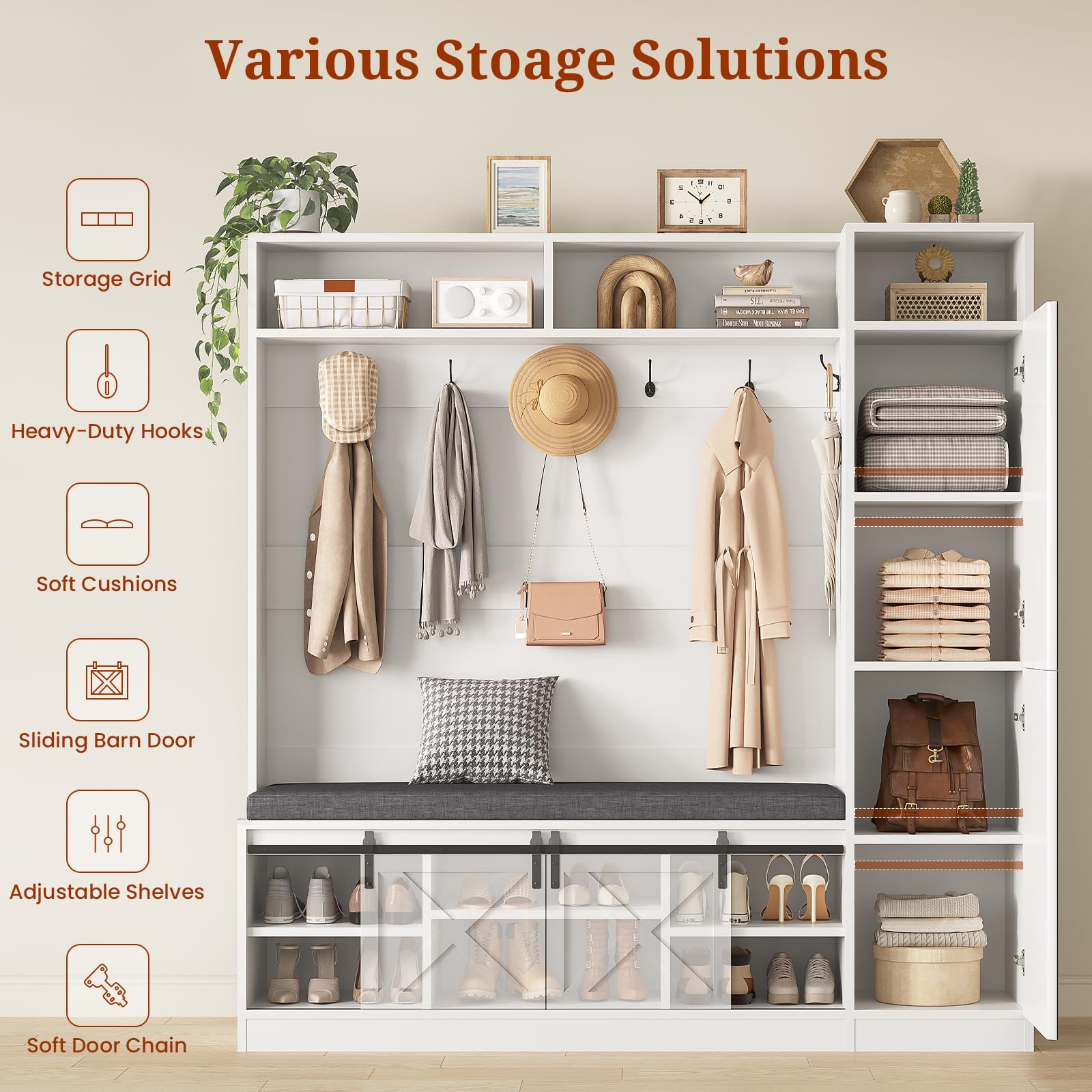
UPOSOJA Hall Tree With Tall Mirror and Barn-Door Storage
This is the Step 4 finisher for anyone who wants the mirror built in. The farmhouse barn-door design hides small clutter behind a panel while a tall mirror handles the last-look check and bounces light through a dim entry. At a 4.4 rating it’s the most style-forward of the three, and the enclosed storage suits an entry where you’d rather not see the mess. Best for a household that values a clean visual line and a full-length mirror over maximum open shoe tiers.
Frequently Asked Questions
What if my entryway is too narrow for a bench?
Go vertical and skip the bench. Under 4 feet of width, a freestanding bench pinches the 30-inch walking lane you need. A wall-mounted hook rail at 60 inches plus a slim 2-tier shoe rack under 10 inches deep gives you hanging and shoe storage without touching the floor path. A hall tree that’s tall and thin beats anything wide here.
What if my room has no wall space beside the door?
It depends on the door swing, but the ceiling and the back of the door are your options. A back-of-door hook rack holds 4 to 6 coats in zero floor space. If there’s a stretch of wall opposite the door, anchor there instead, since you do not need the storage adjacent to the door, just within a few steps of it. A narrow console under 12 inches deep can tuck against a perpendicular wall.
What if my entryway floods with shoes from a big family?
Yes, this is fixable with tier count. Count your peak load first, since a family of four often hits 15 pairs, then buy a 5-tier rack rated for that number rather than a bench with a single shelf. Reserve the bottom tier for daily shoes and rotate seasonal pairs to a closet. Open, angled shelving fits more pairs per inch of depth than flat bins.
What if my entry opens straight into the living room?
It depends on sightlines. When the entry has no walls, use a single freestanding hall tree as a visual divider and keep its back finished, since guests will see it from the living side. Match the wood tone to your living-room pieces so it reads as furniture, not a utility rack. Enclosed barn-door storage hides clutter better than open shelving in this open-plan case.
What if my entryway has low ceilings?
Almost always solvable by dropping the anchor height. Under an 8-foot ceiling, choose a hall tree no taller than the ceiling minus 4 inches so it doesn’t feel jammed. Mount hooks slightly lower, around 58 inches, and lean on horizontal shoe storage instead of stacking tall. A wall mirror stretched vertically tricks the eye into reading the space as taller than it is.
Bottom Line
Measure before you buy, then anchor with one vertical piece that does the work of four. The VASAGLE 4-in-1 hall tree is where most people should start: bench, hooks, and shoe shelf in one 72-inch footprint at the highest owner rating here. If your household drops 15-plus pairs of shoes, the HOOBRO 5-tier rack handles the volume better. Whatever you pick, protect the 30-inch walking lane and give keys and mail one named home. That’s the whole system.




Write Your Review
No reviews yet. Be the first to share your experience!