

> Editorial Note: I’m Olivia Bennett, a storage and organization contributor. I approach storage as a systems problem rather than a product one — fit to actual room dimensions, load ratings, and how the system holds up under daily use.
Most people buy the storage before they map the room, and that’s the mistake that turns a nursery into a pile of half-full bins by month three. You can’t organize a space you haven’t measured, and a newborn’s gear changes size every eight weeks, so the system has to flex. Before you shop, decide where the diaper zone lives, how the closet gets split, and what stays within one arm’s reach of the changing table. If you’re pulling ideas from a best closet organizer system, a best closet rod, best floating shelves for living room, a best hanging closet organizer, or a best shoe rack, anchor every choice to a real dimension in the room, not a Pinterest photo. That’s the whole game.
The Ground Rules Before You Start
Three non-negotiables. First, leave at least 30 inches of clear floor in front of the changing table so you can pivot with a baby in your arms. Second, keep everything you touch during a 3 a.m. change within an 18-inch reach of the table surface, since one-handed access is the only kind you’ll have. Third, don’t fill more than 70% of any drawer or bin at setup, because clothes sizing jumps fast and you’ll need the headroom by month four.
Step 1: Map the Zones Before You Buy Anything
Start with a tape measure and a rough floor sketch. A standard nursery runs 9×10 feet, and you’re fitting a crib, a changing surface, a dresser, and a seating spot into it without blocking the door swing or the window. Walk the room and mark four zones: sleep, change, dress, and feed. The sleep zone needs a crib set 3 feet from any heat vent or radiator per most manufacturer safety sheets, and Apartment Therapy’s small-nursery guides make the same clearance point, so measure it first.
The change zone is where organization lives or dies. Position it against a wall with a 24-inch-deep surface minimum, and reserve the 18 inches directly around it for daily-use items: wipes, two diaper sizes, a cream, a spare outfit. The dress zone is the closet plus dresser. The feed zone is a chair with a small side table, ideally near an outlet. Sketch it, then shop. Buying storage before you’ve assigned it a zone is how you end up with three bins nobody uses.
Step 2: Split the Closet Into Sizes, Not Categories
A baby’s closet fills with clothes in six sizes at once, and sorting by type (onesies, sleepers, jackets) falls apart the day something no longer fits. Sort by size instead. Hang a divider every few inches on the rod and label them Newborn, 0-3M, 3-6M, 6-9M, 12M. When a size gets outgrown, you pull the whole section in one motion.
Most nursery closets give you a single rod at around 66 inches high, which wastes the bottom 40 inches of vertical space. Add a second rod at 30 to 34 inches, and you’ve roughly doubled hanging capacity for garments that rarely run longer than 20 inches. Baby clothes are short, so the standard adult rod height is dead space. Fabric shelf bins slot onto the closet’s upper shelf for out-of-season or oversized items you’re storing ahead. Keep the current size at eye level, future sizes up high, outgrown sizes in a labeled bin bound for storage or the next kid.
Step 3: Turn the Dresser Into a Grab-and-Go System
The dresser does the heavy daily lifting, and an empty drawer is a chaos magnet. Fabric drawer dividers are the fix. They partition one drawer into 6 to 10 cells, so socks stop migrating under sleepers and you can see every item at a glance without digging.
Dedicate the top drawer to the change zone: it should hold folded outfits in the current size only, split into cells by garment type. A 10-cell divider set fits a standard 30-inch-wide drawer with room to spare. Load each cell to about two-thirds full, never packed, so you can lift one item without disturbing the rest. Reserve the second drawer for the next size up, pre-sorted, so a growth spurt is a five-minute swap and not a reorganization. Bottom drawers hold bulk: swaddles, extra crib sheets, blankets. Weight matters here, since a fully loaded drawer of sheets can hit 15 pounds, so keep heavy fabrics low to keep the dresser stable.
Step 4: Stage the 3 a.m. Reach
Nighttime is when a good system proves itself. Everything a diaper change needs has to sit within that 18-inch reach of the table, arranged so you never turn your back on the baby. Wipes and the current diaper size go on the surface or a shelf directly above it. A cream and a backup pack go in the top divided drawer.
Add one small basket or bin for the “grab and dump” items: a soiled outfit, a used burp cloth, whatever needs to leave the surface fast without waking anyone. Keep a stack of five spare outfits in the closest drawer cell, since middle-of-the-night blowouts don’t wait for laundry day. Position a soft night light under 10 lumens near the table so you can see without fully waking the room. The check of this zone is simple. Can you complete a full change one-handed, in near-dark, without taking a step? If yes, the staging works.
The Right Products Make It Easier
Every pick below earned a 4.5-star owner rating or higher and solves one specific step above: closet shelf storage, dresser cell dividers, and drawer partitioning for the change zone. Start with the drawer organizers if your dresser is the weak link, which it usually is. Reach for the shelf bins first if your closet shelf is the pile-up spot.
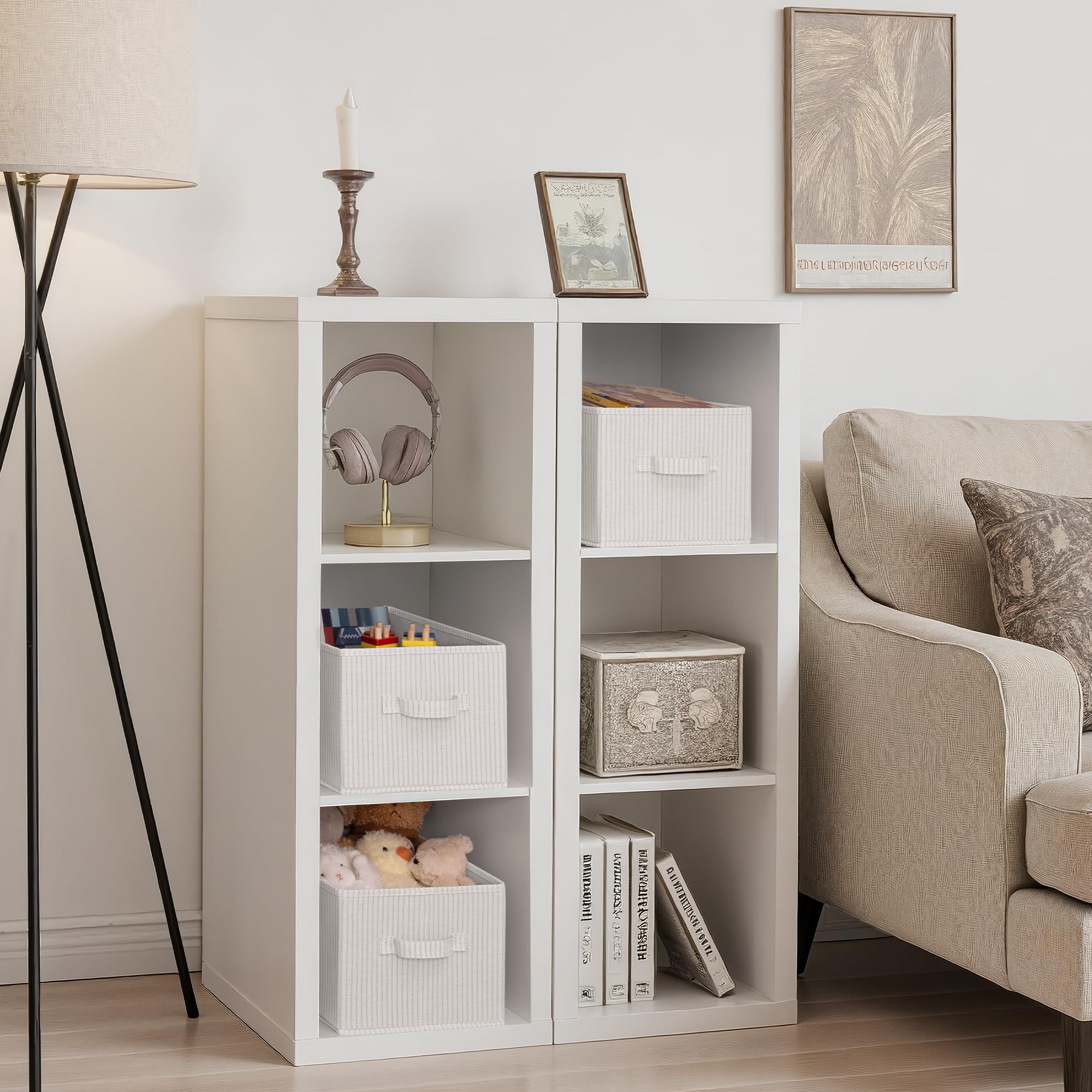

Pros
- Holds up to 25 lbs per bin without sagging or losing shape
- Folds flat when not in use, saving storage space between seasons
- Neutral beige stripe design fits most closet and shelf aesthetics
- Versatile sizing works on standard closet shelves, cube units, and pantry shelving
- Affordable 3-pack pricing for outfitting multiple shelves at once
Cons
- Fabric is not waterproof, so not ideal for damp basements or outdoor use
- No lid included, leaving contents exposed to dust on open shelving
- Limited color options may not suit bold or dark-toned decor schemes
These StorageWorks bins solve one of the most common home organization frustrations: shelves that look mesy no matter what you do. The beige stripe fabric has a subtle texture that reads as intentional decor rather than plastic-bin utility, and the reinforced boards inside mean they stay upright and structured even half-empty.
In a real closet or linen shelf setup, they look cohesive as a set of three and bring immediate visual calm to an otherwise chaotic space. The handles are genuinely useful for pulling them down from higher shelves without tipping contents everywhere.
If you want tidy, structured shelf storage without spending a fortune or sacrificing aesthetics, this one delivers.
Styles it works with: Modern Farmhouse, Scandinavian, Coastal, Minimalist
Best placed in: Bedroom closet shelves, bathroom linen cabinet, nursery bookshelf or cube organizer
May not suit: Homes with very narrow or shallow shelving (measure depth first), or spaces where a bold color accent is needed to tie the room together
Buy it if:
- You need to organize a closet, pantry, or linen shelf and want bins that look polished
- You prefer structured bins that hold their shape rather than floppy fabric totes
- You want a budget-friendly 3-pack that covers an entire shelf in one purchase
Consider waiting if:
- You need bins with lids to keep dust out on open shelving (StorageWorks makes a lided version)
Skip it if:
- You need waterproof or moisture-resistant storage for a garage or basement
- You require a rigid, stackable bin that can bear weight on top
Check the latest price and availability on Amazon before it sells out.

Criusia 10-Pack Foldable Drawer Organizer Set - 3 Sizes for Clothes, Baby Items & Accessories (Beige)
Pros
- 10-piece set covers multiple drawer sizes without neding separate purchases
- PP board is more durable and moisture-resistant than cardboard alternatives
- Lightweight and foldable for easy storage when not needed
- Odorless materials safe for baby clothing and sensitive items
- Tight stitching resists fraying even with frequent use
Cons
- Only available in beige, limiting options for bold or colorful interiors
- At 4.5 inches tall, may not fit deeper drawers efficiently without stacking
- Non-woven fabric is harder to wipe clean than solid plastic organizers
If your dreser drawers have become a jumbled mess of socks, baby onesies, and random accessories, this 10-piece set from Criusia is a practical reset button. The three different sizes mean you can dedicate large bins to folded shirts, medium ones to underwear, and small ones to socks or hair ties, all within the same drawer.
What sets these apart from flimsy cardboard alternatives is the PP board inner layer. It gives each bin just enough structure to stay upright without making the whole set heavy or bulky. The non-woven fabric feels soft enough that you won't worry about snagging delicate knits or baby clothes.
If you want a full drawer makeover for under $20 without dealing with rigid plastic bins that never quite fit, this one delivers.
Styles it works with: Scandinavian, Minimalist, Modern Nursery, Japandi
Best placed in: Bedroom dreser drawers, nursery changing table organizer, closet shelf dividers
May not suit: Very shallow drawers under 4.5 inches deep, or buyers who prefer hard-sided containers that can be wiped down with disinfectant
Buy it if:
- You have a nursery to set up and need affordable, odor-free organizers for tiny baby clothes
- Your sock and underwear drawer is a daily frustration and you want instant order
- You rent your home and need organizers that fold flat when you move
Consider waiting if:
- You need a specific color to match existing closet decor beyond neutral beige
Skip it if:
- You need waterproof or fully washable bins for mudroom or bathroom use
- Your drawers are shallower than 5 inches, as the 4.5-inch height may stick up above the drawer edge
Check the latest price and availability on Amazon before it sells out.

DIMJ Drawer Organizer 4-Pack Beige Foldable Fabric Bins for Clothes, Underwear, Socks and Baby Items
Pros
- Thickened cardboard inserts provide real structure unlike flimsy fabric-only alternatives
- Two different bin sizes accommodate both small accessories and folded garments
- Foldable design stores flat when not needed
- Neutral beige works in nurseries, adult bedrooms, and shared spaces
- Lightweight non-woven fabric protects delicate baby clothes from snags
Cons
- Non-woven fabric is not waterproof, so not ideal for bathroom or laundry use
- Only available in beige, limiting options for bold or colorful room schemes
- At 3.54 inches tall, these bins only suit shallow to mid-depth drawers
Drawer clutter is one of those low-key frustrations that eats at you every morning. These DIMJ bins solve it simply: drop them into your dreser, and suddenly socks, underwear, and baby onesies each have a home. The reinforced cardboard walls are what set these apart from cheaper fabric dividers that collapse the moment you pull something out.
In a real bedroom, theige tone disappears into most light-wood or white dressers. They feel sturdy enough for daily rummaging but light enough to pull out and reorganize when laundry day hits. The two-size combo is smart because it mirrors how drawer space actually works: you need small squares for socks and slightly wider slots for folded tees or leggings.
If you want tidy dreser drawers without spending more than a coffee costs, this set delivers.
Styles it works with: Scandinavian, Minimalist, Modern Farmhouse, Japandi
Best placed in: Bedroom dreser drawers, nursery changing table drawers, hallway console drawers
May not suit: Deep drawers over 10 inches tall where the3.54-inch bin height leaves wasted vertical space, or humid bathroom drawers where non-woven fabric could absorb moisture
Buy it if:
- You have a nursery dreser that needs quick, gentle organization for baby clothes and accessories
- Your sock and underwear drawer has become a tangled mess you dread opening each morning
- You want to test drawer organization at minimal cost before investing in a larger system
Consider waiting if:
- You need a color other than beige to match a darker dresser interior
Skip it if:
- Your drawers are deeper than 10 inches and you want bins that use the full vertical space
- You need waterproof or washable organizers for bathroom or garage use
Check the latest price and availability on Amazon before it sells out.
StorageWorks Foldable Shelf Organizer Bins (Beige, Small)
These beige fabric bins solve Step 2’s upper-shelf problem: the out-of-season and future-size storage that otherwise gets stacked loose and forgotten. At a 4.8 owner rating, they’re the highest-rated pick here, and owners consistently note the sides hold shape when partially filled, which loose fabric bins rarely do. They fold flat when empty, so the ones waiting for a size transition don’t waste space. Use them on the closet’s top shelf for the sizes you’re storing ahead, labeled by size the same way your rod dividers are. One bin per size keeps the transition to a single lift-and-swap instead of a full closet dig.
Criusia Drawer Organizer, 10-Pack (Foldable)
This 10-pack is built for Step 3’s grab-and-go dresser system, and the count is the point. Ten cells split one standard 30-inch drawer into a full grid, enough to separate socks, onesies, sleepers, and accessories without any two categories bleeding together. At a 4.7 rating, owners flag the foldable sides as the standout, since they stand up on their own in a deep drawer instead of collapsing. Load each cell two-thirds full and you keep the headroom for the next size jump. This is the pick if your dresser is the messiest zone in the room, which for most parents it is.

DiMJ Drawer Organizer Bins (Fabric)
The DiMJ fabric bins handle Step 4’s change-zone staging, where you need a couple of larger partitions rather than a fine grid. At a 4.5 rating, they’re the roomier option, sized for the top-drawer essentials: folded outfits, a cream, a backup wipe pack, all separated but reachable one-handed. Owners like the sturdier fabric weight for bins that get opened dozens of times a day. Pair them with the Criusia set in the same dresser: fine cells for small items below, larger bins up top for the 3 a.m. grabs. That split is what keeps the nighttime reach fast.
Frequently Asked Questions
What if my nursery is under 100 square feet?
It depends on the door swing, but you can absolutely make it work. In a tight room, drop the changing table and mount a contoured pad on top of the dresser instead, which reclaims 6 to 8 square feet of floor. Keep the 30-inch clear pivot space in front, and push vertical: a second closet rod and upper shelf bins let a small footprint hold a full wardrobe.
What if my nursery has no closet at all?
Not a dealbreaker. Use a freestanding garment rack or a slim dresser topped with the shelf bins to recreate the split-by-size system on an open wall. A rack 30 to 36 inches wide holds a newborn’s hanging clothes easily, since the garments are short. Label the shelf bins by size exactly as you would a closet, and you’ve kept the whole system without the built-in.
What if I’m organizing a shared room with an older sibling?
Yes, this works with a clear boundary. Give the baby a dedicated dresser and a defined closet section split by size, and keep the older child’s storage above the 40-inch line where a toddler can’t reach the small parts. A room divider or a bookshelf run perpendicular to the wall creates a visual break without adding walls.
What if my baby outgrows the sizes faster than expected?
Almost always, they will, which is why the pre-sorted next-size drawer matters. When a growth spurt hits, you pull the current-size cells into a storage bin and promote the drawer below in about five minutes. Keep one labeled shelf bin per upcoming size staged in the closet so the swap never requires a shopping trip mid-week.
What if the room gets damp or humid?
It depends on the climate, but fabric storage handles moderate humidity better than you’d expect if you leave airflow. Avoid packing bins flush against an exterior wall that runs cold, since that’s where condensation collects. Choose breathable fabric bins over sealed plastic for anything holding clothes, and check that the room stays under the 50% relative humidity range Wirecutter and most textile-storage guides recommend for stored fabrics.
Bottom Line
Map the four zones and split the closet by size before you spend a dollar, because that sequence prevents the two most common nursery failures: dead vertical space and a change table you can’t reach at night. Start with divided dresser drawers if your storage is chaotic, which it usually is, then add shelf bins for the sizes you’re staging ahead. If your room runs under 100 square feet, skip the changing table and go vertical instead. A nursery that’s organized by dimension, not by wishful thinking, is the one that still works at month six.





Write Your Review
No reviews yet. Be the first to share your experience!