

> Editorial Note: I’m Olivia Bennett, a storage and organization contributor. I approach storage as a systems problem rather than a product one — fit to actual room dimensions, load ratings, and how the system holds up under daily use.
The biggest mistake people make with a garage wall is hanging hooks before they’ve measured a single stud. They eyeball a spot, drill into drywall, and three months later a 40-pound ladder rips the anchor clean out. Wall storage isn’t about buying more hooks. It’s about matching load to structure, then building outward from there. The same discipline that makes a best closet organizer system work in a bedroom applies here: measure first, mount into framing, and leave clearance for the things you actually use. If you’ve ever wrestled with a best closet rod that sagged under coats, or watched a set of best floating shelves for living room pull loose from soft drywall, you already know the failure pattern. A garage wall is the same problem at a heavier scale — closer to a best hanging closet organizer or a wall-mounted best shoe rack than to freestanding furniture. Get the anchoring right and everything else follows.
The Ground Rules Before You Start
Three non-negotiables before you drill anything. First, find your studs — most garage framing sits on 16-inch centers, so a stud finder saves you from anchoring into hollow drywall that tops out around 5 pounds per screw. Second, keep the bottom of any hanging system at least 48 inches off the floor so lawn tools and cords clear the ground. Third, respect the manufacturer’s stated load rating and cut it in half for a working margin. A rack rated for 900 pounds should carry the weight you’d trust to 450.
Once the rail is up and you’re adding shelves for bins, load rating is the spec that decides how long they hold. Our picks for stud-mounted garage wall shelving run from 700 to 1,400 pounds per set and bolt into framing at 16-inch centers, never drywall anchors.
Step 1: Map the Wall and Find Your Studs
Start with a tape measure and a pencil, not a drill. Measure the full usable wall — length and height — and mark anything you have to work around: the garage door track, an electrical panel, a window, the water heater. You want a clear vertical zone at least 24 inches deep in front of the wall so you can walk the length of it without turning sideways.
Now find the framing. Run a stud finder across the wall and mark every stud with painter’s tape. In standard construction that’s a stud every 16 inches on center, though older garages sometimes run 24-inch spacing. This matters because a lag screw into a 2×4 stud holds roughly 200 pounds in shear, while a plastic drywall anchor gives you almost nothing by comparison. Sketch the wall on paper with the studs marked. That sketch becomes your mounting map. Every heavy item you hang should land on a stud, not between them.
Step 2: Zone the Wall by Weight and Frequency
Don’t hang things where they’ll fit. Hang them where they belong. Divide the wall into three horizontal bands. The bottom band, from about 24 to 48 inches, holds the heaviest gear — a wheelbarrow, bags of soil, a folded hand truck — because a low center of gravity keeps the pull off your anchors.
The middle band, roughly 48 to 72 inches, is prime real estate at eye and reach level. That’s where daily-use tools go: rakes, brooms, a leaf blower, the extension cord you grab weekly. The top band, above 72 inches, stores light and seasonal items — empty bins, folding chairs, holiday boxes. Keep anything over 15 pounds out of that top band entirely, since reaching overhead to unhook a heavy load is how people strain a back or drop a tool on the car. Group by category too. Garden together, power tools together, sports gear together. A wall that’s zoned by both weight and use gets tidier on its own because everything has a fixed address.
Step 3: Mount the Backbone Rail System
This is the anchor step, and it’s where a garage wall becomes a system instead of a scatter of hooks. Install a horizontal track or rail across the studs first, then hang everything from that. A rail spreads load across multiple studs instead of concentrating it on one screw, which is the whole reason wall-mount organizers outlast individual hooks.
Mount the rail into at least two studs — three is better on a run longer than 48 inches. Use the lag screws that ship with the system, not whatever’s in your junk drawer, and drive them until the mounting plate sits flush without crushing the drywall. Level matters here: a rail that’s off by even a half-inch over 4 feet will make every hanging tool tilt. Check it with a 24-inch level before the final tightening. Once the backbone is solid, adjustable hooks and shelf brackets clip on and reposition in seconds, so you can fine-tune spacing as your gear changes without drilling a single new hole.
Step 4: Add Hooks, Shelves, and a Buffer Zone
With the rail up, load it from heaviest to lightest and space hooks so nothing overlaps. Long-handled tools need about 4 inches of clearance between hooks so handles don’t clatter together. Bulky items like a coiled hose want a dedicated bracket rated for the wet weight, not a thin utility hook.
Add a shelf or two for the things that won’t hang — a car battery charger, a box of screws, spray cans. Keep at least 12 inches of vertical clearance above each shelf so you can lift items straight up and out. Then build in a buffer: leave one empty section, roughly 18 inches wide, for the stuff that always shows up later. New tool, kid’s bike helmet, the thing you can’t identify yet. A wall packed to 100 percent capacity fails within a month because there’s nowhere to put the next item. Leaving 15 to 20 percent open is what keeps the system usable a year in.
The Right Products Make It Easier
The picks below cleared a 4.0 owner rating and are built to mount into studs, which is the only anchoring that holds up under real garage loads. Start with the first if your Step 3 backbone needs to carry serious weight. Jump to the shelving option if your wall is mostly bins and boxes rather than long-handled tools.


Pros
- Exceptionally strong 900 lb load capacity for the price point
- Hooks are thicker than competing products and slide freely for easy rearrangement
- Modular track system allows flexible configurations for different wall sizes
- Rust-proof finish suitable for humid or unheated spaces
- Includes 3 different hook styles plus straps to secure oddly shaped items
Cons
- Requires an electric drill and level for proper installation on wall studs
- Tracks are only 16 inches each, so alignment across all 4 pieces takes patience
- Limited to wall-stud mounting, which may not work for all garage layouts
If your garage has turned into a chaotic pile of rakes, brooms, and extension cords, this wall organizer is the reset button you need. The 900 lb capacity is genuinely impressive at this price, and the thickened steel hooks feel substantial enough to trust with your heaviest tools. It is the kind of upgrade that makes you wonder why you waited so long.
What sets it apart is the adjustable track system. Instead of fixed positions that never quite fit your tools, these hooks slide along the rail so you can customize spacing on the fly. Need to hang a wide ladder next to a row of shovels? Just slide things over. It keeps your space looking intentional rather than improvised.
If you want a clutter-free garage floor without spending a weekend building custom storage, this one delivers.
Styles it works with: Industrial, Modern Farmhouse, Utilitarian, Minimalist Workshop
Best placed in: Garage back wall, garden shed interior wall, mudroom or utility hallway, basement workshop area
May not suit: Drywall-only walls without accessible studs, very small single-car garages where 64 inches of horizontal space is limited, or renters who cannot drill into walls
Buy it if:
- Your garage floor is buried under rakes, shovels, and sports equipment and you need it all off the ground
- You want a system that can adapt as your tool collection grows or changes
- You need something strong enough for heavy items like ladders, pressure washers, or bundled hoses
Consider waiting if:
- You are not sure your garage walls have accessible studs for secure mounting
- You want a color option other than black to match a custom garage setup
Skip it if:
- You rent and cannot drill into walls, since this requires permanent stud mounting
- You only have a few lightweight items to store and simple hook rack would suffice
Check the latest price and availability on Amazon before it sells out.

TIDYME 48" Garage Tool Organizer Wall Mount - Heavy Duty 300 lbs Capacity, Carbon Steel, 3 Racks 6 Hooks
Pros
- Impressive 300 lb weight capacity handles heavy-duty tools without sagging
- Carbon steel construction offers durability for long-term garage use
- Adjustable hooks slide along the rack for flexible organization
- 48-inch length provides ample storage in a compact footprint
- Pre-drilled holes simplify wall stud installation
Cons
- Zero customer reviews make real-world performance difficult to assess
- Requires 16-inch stud spacing, which may not work in all garage layouts
- At 8.5 inches deep, it protrudes further from the wall than some compact alternatives
This TIDYME organizer solves the eternal garage problem: tools scattered across the floor, leaning in corners, or buried in bins where you can never find them. The 48-inch carbon steel rack mounts securely to wall studs and handles the weight of your heaviest garden tools, power equipment, and cleaning supplies without bending or pulling away from the wall.
What sets it apart is the sliding hook system. Instead of fixed positions, you can adjust hook spacing as your needs change. Park your leaf blower next to long-handled tools, then slide things around when you add a new weed trimmer. The 300 lb capacity means you are not constantly calculating weight limits or worrying about overloading one section.
If you want to clear garage floor space for parking or projects without investing in an expensive cabinet system, this one delivers.
Styles it works with: Industrial, Modern Utilitarian, Minimalist Garage, Workshop Aesthetic
Best placed in: Garage wall near entry door, Workshop tool wall, Utility room or mudroom for outdoor equipment, Basement storage area
May not suit: Garages without standard 16-inch stud spacing, Homes needing decorative storage solutions for visible living areas, Renters who cannot drill into walls
Buy it if:
- You need to clear garage floor space currently occupied by leaning tools and equipment
- You have standard 16-inch wall stud spacing and can drill mounting holes
- You want adjustable storage that adapts as your tool collection changes
- You are storing heavy items like metal rakes, full-size shovels, or corded power tools
Consider waiting if:
- You want to see verified customer reviews and photos of the product in real garages first
- You prefer a shorter or longer rack size to match your specific wall space
Skip it if:
- Your garage has non-standard stud spacing or you cannot locate studs for secure mounting
- You need a freestanding solution that does not require wall installation
- You are looking for a decorative organizer for visible living spaces rather than utility storage
Check the latest price and availability on Amazon before it sells out.

ThreeHio 3 Pack Heavy Duty Wall Shelves -32.68" Metal Floating StorageRacks for Garage, Laundry Room & Living Room
Pros
- Excellent value with 3 full-size shelves in one package
- 66 lb weight capacity per shelf handles serious loads
- Thickened metal frame with anti-rust coating for long-term durability
- Flexible top or bottom mount options for different aesthetic needs
- Wide 32.68-inch span fits neatly between wall studs
Cons
- Wire shelf design is utilitarian and may look industrial polished living spaces
- Only 1 customer review so far, making long-term reliability unproven
- No color options listed, limiting decor flexibility
If you have been putting off organizing your garage, laundry room, or study because wall shelving always seems overpriced for what you get, this ThreeHio 3-pack changes the math. At under $40 for three full-size metal shelves, you can tackle multiple rooms in one purchase without breaking your budget.
What stands out is the 66 lb capacity per shelf. These are not flimsy decorative ledges. The thickened metal frame with anti-rust coating means you can load them up with heavy tools in the garage, detergent bottles in the laundry room, or stacks of books in your study without second-guessing whether they will hold. The dual mounting option (top or bottom fastening) is a thoughtful touch that lets you adjust the visual profile depending on the room.
If you want reliable heavy-duty wall storage across multiple rooms without spending $40 per single shelf, this one delivers.
Styles it works with: Industrial, Modern Minimalist, Utilitarian, Transitional
Best placed in: Garage walls above workbenches, laundry room above washer/dryer, home office or study walls for book storage
May not suit: Formally decorated living rooms where a wood-finish or painted shelf would blend better, or very narrow walls under 33 inches wide
Buy it if:
- You need to organize multiple rooms and want matching shelves throughout
- You store heavy items like power tools, paint cans, or large books and need real weight capacity
- You want a quick weekend project with straightforward installation
Consider waiting if:
- You prefer a wood-tone or colored shelf that blends with warmer decor styles
Skip it if:
- You need enclosed or concealed storage to hide clutter from view
- Your walls cannot support heavy anchoring (plaster-only or thin drywall without studs)
Check the latest price and availability on Amazon before it sells out.
The Heavy-Duty Backbone (YZSFMZGE 64″ Garage Wall Tool Organizer)
This is the Step 3 workhorse. At 64 inches wide with a stated 900-pound capacity, the YZSFMZGE steel rack spreads load across a long run of studs, which is exactly what you want for a wall carrying garden tools, a hand truck, and a coiled hose at once. Owners rate it 4.8, and the steel construction shrugs off the humidity swings that rust cheaper hooks. Cut that 900-pound number in half for a safe working load and you’ve still got 450 pounds of margin — more than most garage walls will ever hold. Mount it into at least three studs and it becomes the anchor everything else hangs from.
The Adjustable Mid-Wall Rail (Tidyme 48″ Garage Tool Organizer Wall Mount)
The Tidyme rail is the flexible middle-band option, sized at 48 inches to span three studs on standard 16-inch centers. Its adjustable hooks are the real draw: you can slide them along the track as your tool lineup changes, so the rakes-and-brooms zone from Step 2 stays organized even when you add a new leaf blower. Owners give it 4.7, and the anti-rust coating earns that score in damp garages. The easy-install mounting means you’re not fighting the hardware. It’s the pick for anyone whose wall is mostly daily-grab tools rather than heavy dead weight.
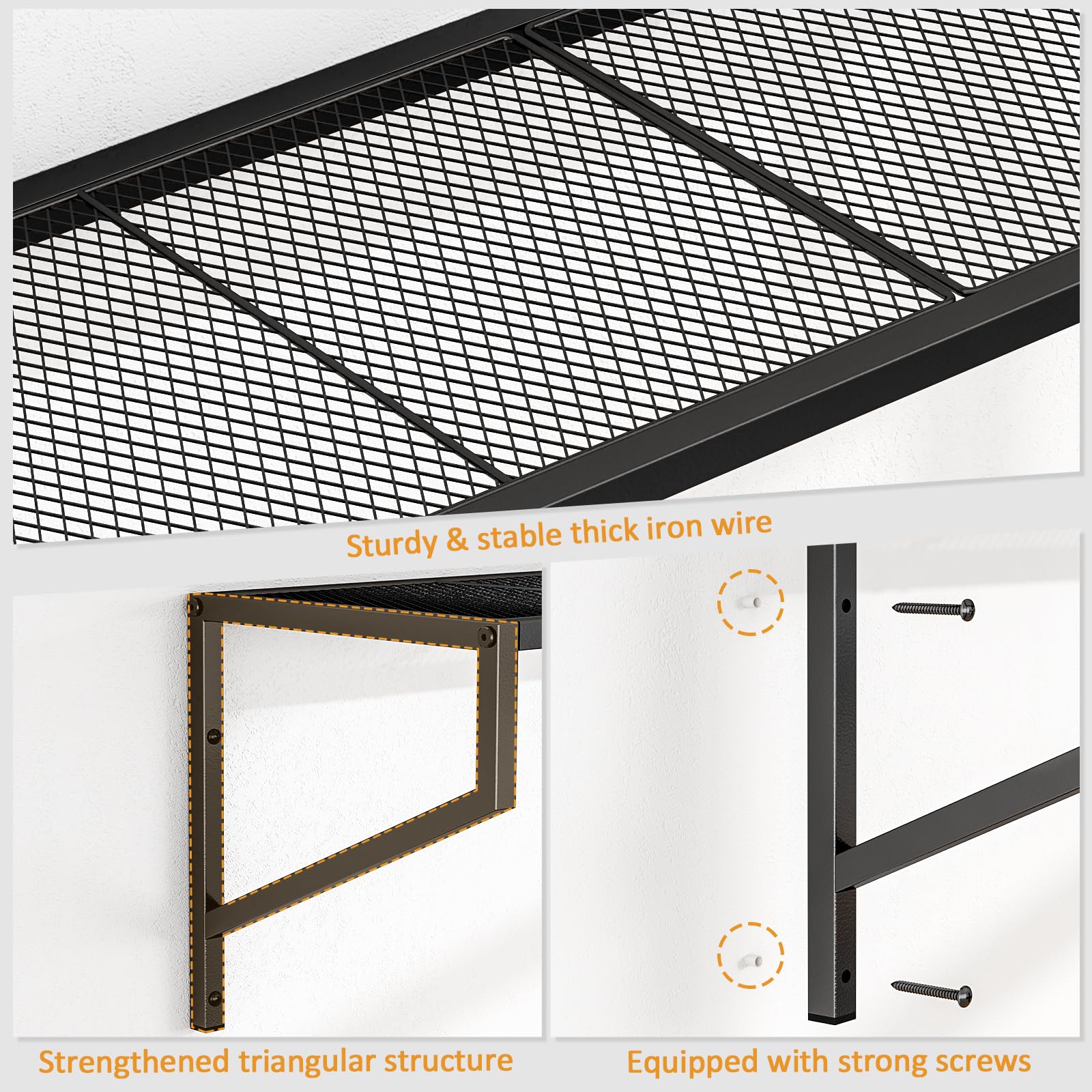
The Shelving Add-On (ThreeHio 3 Pack Garage Wall Shelving)
When your wall problem is bins and boxes instead of hanging tools, the ThreeHio 3-pack solves Step 4’s shelf need. The wire design keeps sawdust and debris from collecting on solid surfaces, and three shelves let you build the top-band storage for light, seasonal items without buying separate units. Its 4.0 rating reflects a lighter-duty build, so keep these to boxes, cleaning supplies, and gear under about 15 pounds per shelf rather than car parts. Space them with 12 inches of clearance above each and they round out a wall the rail system can’t cover alone.
Frequently Asked Questions
What if my garage wall is drywall over studs, not bare framing?
It depends on where you drill, but drywall changes nothing if you hit the studs. A stud finder locates the framing behind the drywall, and your lag screws pass through the drywall into solid wood. Never rely on drywall anchors for heavy loads — a plastic anchor in half-inch drywall holds around 5 pounds at best. Mount into the studs and the drywall is just a surface.
What if my garage wall is concrete or cinder block?
Yes, that works, but you’ll swap hardware. Concrete and block need masonry anchors — sleeve anchors or concrete screws rated for the load — driven with a hammer drill and a masonry bit. Skip the stud finder entirely and space your anchors evenly along the rail. Block walls hold weight well once anchored correctly, so the same three-band zoning from Step 2 still applies.
What if my wall is short and I can’t fit a 64-inch rail?
No problem — measure and size down. The 48-inch Tidyme rail fits shorter runs and still spans three standard studs. If you’re tighter than that, mount two smaller rails stacked vertically rather than forcing one long unit into a cramped span. The zoning logic matters more than the rail length. A 36-inch wall organized by weight beats an 8-foot wall packed at random.
What if my garage wall shares space with the electrical panel or water heater?
It depends on clearance codes. Keep at least 36 inches of unobstructed access in front of an electrical panel and never mount storage that blocks the panel door. Route your rail around it and treat that zone as off-limits. For a water heater, leave the manufacturer’s stated clearance and don’t hang anything that could fall against the unit or its venting.
What if my wall gets damp or the garage isn’t climate-controlled?
Almost every garage swings with the seasons, so plan for it. Choose steel racks with anti-rust coatings like the ones above, and keep moisture-sensitive items — cardboard boxes, fabric, paper — in sealed bins on the upper shelves rather than loose on hooks. ASTM salt-spray corrosion ratings are a useful benchmark if you want to compare finishes. Powder-coated or galvanized steel holds up far longer than raw metal in a humid, uninsulated space.
Bottom Line
Start with the studs and the rail — that backbone is what separates a garage wall that lasts from one that dumps its load in a month. Zone the wall by weight, keep the heavy gear low and the light stuff high, and cut every stated load rating in half for a safe margin. The YZSFMZGE 64-inch rack is the pick most people should build around for its capacity and 4.8 rating. If your wall is shorter or lighter, the adjustable Tidyme rail does the job. Leave 15 percent open. You’ll need it.









Write Your Review
No reviews yet. Be the first to share your experience!