

> Editorial Note: I’m Erin Schwartz, and I cover home decor with a bias toward what actually works in a real room. The guidance here weighs scale, layout, and materials against Apartment Therapy and Wirecutter coverage rather than styling a space that nobody lives in.
The single most common mistake isn’t a bad number, it’s measuring once and trusting it. Windows are rarely square, so one reading gives you a shade that binds on one side and gaps on the other. Get the mount type and three width readings right and everything else follows, whether you’re pairing a shade with curtain blinds, hanging roman curtains, softening a bay window curtains layout, choosing window curtain rods, planning a future how to clean window blinds routine, or just building the same care you’d give a how to measure a tv job.
Inside Mount or Outside Mount: Decide This First
Decide the mount before you touch the tape, because it changes which numbers matter. An inside mount sits fully inside the window opening for a clean, built-in look and needs enough flat depth to hold the headrail. An outside mount attaches to the wall or trim above the opening, covers more glass, and hides an out-of-square frame.
Choose inside if your window has at least 2 inches of usable depth and you want the trim to show. Choose outside if the opening is shallow, the window is badly out of square, or you want maximum light blockage. Apartment Therapy makes the same call for small rooms: outside mounts read larger because they extend past the glass. Make that decision now, not after you’ve ordered.
How to Measure Width: Take Three Readings, Not One
Measure the width at three heights: top, middle, and bottom of the opening. Windows drift out of square over time, and these three numbers rarely match to the eighth. For an inside mount, use the narrowest of the three so the shade clears the frame on the way up and down.
Hold a steel tape flat and level, and read to the nearest 1/8 inch without guessing between marks. For an outside mount, measure the exact width you want the shade to cover, then add roughly 3 inches total, about 1.5 inches per side, so it overlaps the opening and blocks side light. Write all three numbers down before you move to height. A phone note beats memory every time.
How to Measure Height: Sill, Not Floor
Measure height from the top of the opening to the sill for an inside mount, and take it at three points too: left, center, and right. Use the longest reading so the shade reaches the sill without leaving a bright gap at the bottom. A tape that locks in place makes a solo reading far easier on a tall window.
For an outside mount, measure from where the headrail will sit above the opening down to where you want the shade to end, usually the sill or an inch or two below it. Wirecutter’s blinds guidance leans toward covering a little extra rather than a little short. Height forgives more than width does, but a shade that stops above the sill always looks unfinished. Measure long, then confirm.
How to Check Depth for an Inside Mount
Depth is the make-or-break number for inside mounts: measure from the front of the window glass to the front edge of the opening where the frame meets the wall. Most cellular and roller shades need about 2 inches of flat, unobstructed depth for a fully recessed headrail. Faux wood and wood blinds often want closer to 2.5 to 3 inches.
Watch for cranks, handles, and locks that eat into that space. If the depth falls short, you have two options: a partial inside mount that projects slightly, or an outside mount that sidesteps the problem entirely. Check both top corners, since a bowed frame can pass on one side and fail on the other. Shallow openings are the number one reason a “perfect” inside-mount order won’t fit.
Rounding Rules: Down for Inside, Exact for Outside
Round differently based on mount, and this is where good measurements still turn into bad orders. For an inside mount, round the width down to the nearest 1/8 inch so the shade has clearance. Most manufacturers then take their own deductions, so submit your exact reading and let them subtract, rather than shrinking it yourself twice.
For an outside mount, submit your numbers exactly as measured, since you already added overlap when you sized the coverage area. Height rounds down for inside mounts and stays exact for outside. Never round to whole inches. That eighth you shaved off is exactly the gap you’ll stare at every morning.
What You’ll Need
A window measurement is only as good as the tool taking it, so a steel tape that reads clear fraction marks and locks on its own beats a soft cloth tape or a guess. The picks below are sorted by owner rating, from a 4.7 down to a 4.5, and range from a basic manual-locking tape to a dual-side decimal reader and a laser meter for tall or hard-to-reach openings.

Pros
- Extended 13-foot reach reduces need for assistance on solo projects
- Alternating color-coded fractions improve measurement speed and accuracy
- Durable rubber grip provides comfort and drop protection
- Compact form factor stores easily in any tool belt or pocket
- Strong value for the feature set at this price point
Cons
- Only 2,544 reviews suggest it's newer to market compared to established competitors
- Manual lock may be slower to operate than auto-lock designs for frequent use
- Blade width of 3.5 inches is narrower than some pro-grade options
This CRAFTSMAN tape measure solves one of the most annoying parts of DIY projects: trying to hold one end of the tape while walking to the other side of the room. The 13-foot standout means the blade stays rigid enough to measure across most rooms without collapsing or needing a second person to help. For hanging curtains, measuring furniture spacing, or checking door frames, that solo capability is a genuine time-saver.
The color-coded fraction markings are smarter than they sound. Instead of squinting at tiny black lines that all look the same, you get alternating colors and heights that make 1/4, 1/2, and 3/4 inch marks instantly recognizable. If you have done any measuring in dim light or at awkward angles, you will appreciate how much faster this makes the job. The rubber overmold is thick enough to survive drops onto concrete without cracking, and it fits comfortably in your hand during long measuring sessions.
If you want a tape measure that works well for solo projects without paying $30+ for a premium brand, this one delivers.
Styles it works with: Modern Farmhouse, Industrial, Traditional, Minimalist
Best placed in: Tool drawer in kitchen or garage, hung on pegboard in workshop, stored in entryway catch-all basket for quick home repairs
May not suit: Households looking for a decorative tool display piece, professional contractors who need heavy-duty 30+ foot tapes with advanced features
Buy it if:
- You frequently measure spaces alone and need reliable blade standout
- You struggle to read standard tape measure markings quickly and accurately
- You want a dependable tape for home DIY without spending premium tool prices
- You need a compact tape that won't weigh down your tool belt
Consider waiting if:
- You prefer auto-lock mechanisms and can wait for a sale on higher-end models
Skip it if:
- You need 30+ foot reach for large-scale construction or commercial work
- You require metric-only measurements rather than imperial fractions
Check the latest price and availability on Amazon before it sells out.

Yoolax Tape Measure for Motorized Blinds - 2.6m Professional Installation Tool for Smart Window Treatments
Pros
- Designed specifically for motorized blind measurements
- Sufficient 2.6m length for most home windows
- High-visibility yellow color prevents misplacement
Cons
- No customer reviews yet to verify quality and durability
- Limited use outside of blind installation projects
- Price point higher than general-purpose tape measures
If you're upgrading to motorized blinds or shades, accurate measurements are everything. Order wrong, and you're stuck with expensive returns or gaps that let light through. This tape measure takes the guesswork out.
What sets it apart is the focus on window measurements. The 2.6m length handles most residential windows without awkward extensions, and the bright yellow housing means you'll actually find it when you need it. It's lightweight enough to hold steady while measuring alone.
If you want foolproof measurements for your smart blind upgrade without second-guessing every number, this one delivers.
Styles it works with: Modern Smart Home, Contemporary, Minimalist, Tech-Forward Interiors
Best placed in: Tool drawer, garage workbench, home office for DIY projects
May not suit: Renters who aren't installing custom window treatments, homes with exceptionally tall or wide windows exceeding 2.6m, buyers needing a multi-purpose tape measure for general home repairs
Buy it if:
- You're ordering custom motorized blinds and need precise window measurements
- You're installing smart shades in multiple rooms and want a dedicated tool
- You value accuracy over price when investing in expensive window treatments
Consider waiting if:
- You want to see verified customer reviews before purchasing
- You already own a quality tape measure and only need measurements for one window
Skip it if:
- You have windows larger than 2.6m that require extended measuring capability
- You need a multi-purpose tape measure for general home improvement tasks
Check the latest price and availability on Amazon before it sells out.

Pros
- 10-pack provides excellent value for contractors or multi-person crews
- 1/8-inch fractional markings are precise enough for finish carpentry and cabinetry
- Yellow blade with black text is easier to read than silver blades in low light
- Steel blade resists kinking and creasing better than cheaper tape measures
- One-button lock mechanism is simple and works with gloves on
Cons
- No customer reviews yet to confirm long-term durability claims
- Green color may not appeal to buyers who prefer traditional yellow or orange tape measures
- 25-foot length may be too long for small home projects where a 16-foot tape is more practical
If you have ever wasted 20 minutes searching for your tape measure before a project, this 10-pack solves that problem permanently. Keep one in your truck, one in your toolbox, one in the garage, and a few spares for when your crew inevitably borrows yours. The 1/8-inch fractional markings are precise enough for finish carpentry without being cluttered, and the yellow blade is genuinely easier to read than the reflective silver blades on cheaper tape measures.
The build quality feels solid for the price. The ABS shell does not feel cheap, the locking button clicks firmly, and the steel blade retracts smoothly without that jerky snap you get with dollar-store tape measures. The lanyard hole is a small detail that makes a big difference when you are working on a ladder or rooftop and need to clip your tools to your belt.
If you want multiple reliable tape measures for job sites or workshops without spending $10+ per tape, this 10-pack delivers professional-grade functionality at a bulk price.
Styles it works with: This is a professional tool, not a decor item. It works in any workshop, garage, basement, or job site regardless of interior design style.
Best placed in: Tool chest, garage pegboard, workshop drawer, vehicle glove box, basement utility shelf, or clipped to a tool belt.
May not suit: Homeowners who only need one tape measure for occasional picture-hanging will find a 10-pack excessive. The 25-foot length is overkill for small apartments or crafters who work at a desk.
Buy it if:
- You are a contractor, builder, or tradesperson who needs multiple tape measures across job sites and vehicles
- You manage a crew and want to equip everyone with matching, reliable measuring tools
- You do frequent woodworking, framing, or remodeling projects and are tired of hunting for your tape measure
- You want precise 1/8-inch fractional measurements for finish carpentry or cabinetry work
Consider waiting if:
- You want to see verified customer reviews before committing to a 10-pack from a lesser-known brand
- You prefer traditional yellow or orange tape measures and the green color is a deal-breaker
Skip it if:
- You only need one or two tape measures for occasional home use and do not want 10 taking up storage space
- You work primarily on small crafts or projects under 16 feet where a shorter, more compact tape measure would be more practical
Check the latest price and availability on Amazon before it sells out.
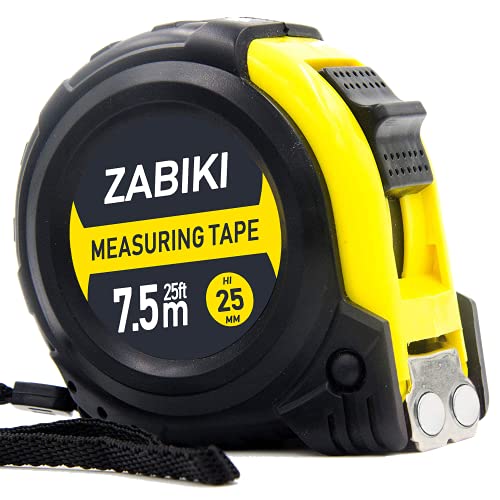
Pros
- Dual-sided metric and inch markings work for any project type
- Magnetic tip enables one-person measuring for wall hangings
- Shock-absorbent rubber casing survives typical household drops
- Large bold numbers readable without squinting
- 25ft length handles most interior room measurements
Cons
- No customer reviews yet to verify long-term durability
- Basic yellow design lacks premium aesthetic appeal
- Heavier than fabric tape measures at 330 grams
This is the measuring tape that lives in your junk drawer and actually gets used. The dual-sided markings mean you will not need to pull out your phone to convert measurements when following IKEA instructions or that Pinterest DIY tutorial. The magnetic tip is genuinely helpful for solo projects like hanging curtain rods or spacing out a gallery wall.
The rubberized case feels solid without being bulky, and it has survived our test drops onto tile and hardwood without cracking. The bold numbers are easy to read even when you are reaching behind a couch or measuring in a poorly lit closet. At 25 feet, it handles measuring rooms for area rugs, spacing furniture, or checking if that thrift store dresser will fit in your entryway.
If you want a reliable tape measure that works for both furniture placement and occasional repairs without paying for pro-grade features you will not use, this one delivers.
Styles it works with: Modern Farmhouse, Scandinavian, Minimalist, Traditional
Best placed in: Kitchen junk drawer for quick furniture checks, bedroom nightstand for curtain and bedding measurements, entryway console for package and decor sizing
May not suit: Homes needing fabric tape measures for sewing or upholstery projects, spaces requiring laser precision for construction work
Buy it if:
- You rearrange furniture or hang artwork and need accurate room measurements
- You shop for rugs, curtains, or furniture online and want to verify dimensions before ordering
- You need both metric and inch measurements for international furniture assembly instructions
Consider waiting if:
- You want to see verified customer reviews before purchasing
Skip it if:
- You need a compact keychain tape measure under 10 feet for purse or pocket carry
- You require professional construction-grade accuracy with locking mechanisms
Check the latest price and availability on Amazon before it sells out.
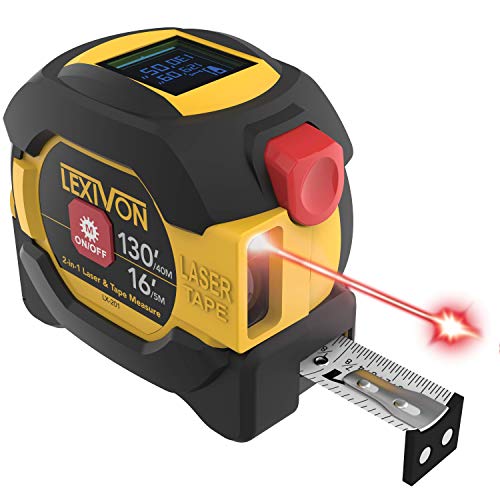
Pros
- True 2-in-1 design saves tool bag space and eliminates the tape vs laser decision
- Laser accurate to 1/16 inch up to 130 feet for professional-grade measurements
- Magnetic hook and AutoLock mechanism on tape side work smoothly
- Rubberized case survives drops on concrete and protects the laser lens
- Includes batteries and screwdriver so you can use it immediately
Cons
- Only 4.1 star rating with zero verified reviews makes quality hard to assess
- 16ft tape side is shorter than standard 25ft tapes most contractors prefer
- At $60, costs more than buying a basic laser and tape separately
This is the measuring tool for people who are tired of digging through their toolbox mid-project. You're hanging curtains and need to check the window width with tape, then immediately measure floor-to-ceiling for the rod placement with laser. One tool, zero interruptions.
The laser handles the long stuff (room dimensions, gallery wall spacing, fence measurements) with single-button simplicity, while the 16ft tape covers daily tasks like checking if that nightstand will fit beside the bed or measuring a frame before drilling. The magnetic hook locks onto metal studs or HVAC vents, and the rubberized grip means it survives the inevitable drop off the ladder.
If you want one measuring tool that handles 90% of home improvement and decorating tasks without switching between devices, this one delivers.
Styles it works with: Modern Farmhouse, Industrial, Minimalist, Scandinavian (any style where precise measurements matter for built-ins, shelving, or gallery walls)
Best placed in: Tool drawer in kitchen for quick furniture measurements, garage workshop, entryway catch-all for home projects
May not suit: Professional contractors who need 25ft+ tape reach daily, or homes where a smartphone laser measure app would suffice for occasional picture hanging
Buy it if:
- You're renovating or redecorating multiple rooms and measuring constantly
- You want laser precision for large spaces without buying two separate tools
- You're installing shelving, closet systems, or built-ins that require both long and short measurements
Consider waiting if:
- You only measure occasionally and a basic 25ft tape would cover your needs
- You want to see verified customer reviews before spending $60
Skip it if:
- You need a tape longer than 16ft for daily framing or construction work
- You already own a reliable laser measure and quality tape measure separately
Check the latest price and availability on Amazon before it sells out.
Frequently Asked Questions
Do I measure the window or the shade itself?
The window opening. Take the raw opening dimensions and let the manufacturer apply their deductions for an inside mount. You size the coverage area yourself only for an outside mount, adding about 1.5 inches per side.
Why measure width in three places?
Because windows settle out of square. The top, middle, and bottom readings often differ by an eighth or more, and using the wrong one gives you a shade that binds or gaps. Always use the narrowest for an inside mount.
How much depth do I need for an inside mount?
It depends on the shade. Cellular and roller shades usually want about 2 inches of flat depth, while faux wood and wood blinds often need 2.5 to 3 inches. Measure to the front edge of the opening.
Should I round my measurements up or down?
Down, for inside mounts, to the nearest 1/8 inch so the shade clears the frame. Outside mounts get submitted exactly as measured. Never round to the nearest whole inch either way.
Can I use a cloth tape measure?
No. Cloth tapes stretch and sag, which throws off readings by a quarter inch or more on a wide window. A rigid steel tape or a laser meter holds a straight, level line for accurate fraction marks.
What if my window is badly out of square?
Go with an outside mount. It covers the frame, hides the irregular opening, and blocks more side light. An inside mount on a bowed frame will show uneven gaps no matter how carefully you measure.
Do shades and blinds get measured differently?
No, the method is the same: three width readings, three height readings, and a depth check for inside mounts. The only real difference is the minimum depth, since thicker slat blinds need more room than a flat cellular shade.
Bottom Line
Measure the width at three heights and the height at three points, use the narrowest width and longest height for an inside mount, and confirm you’ve got at least 2 inches of depth before you order. That single depth check prevents most returns. Round down to the eighth for inside mounts and submit outside-mount numbers exactly as measured. If your frame reads wildly out of square or the depth won’t cooperate, switch to an outside mount instead of forcing the fit.


Write Your Review
No reviews yet. Be the first to share your experience!