

> Editorial Note: I’m Maya Chen, a bedroom and sleep editor covering mattresses, bed frames, and bedding. The picks here are evaluated against CertiPUR-US foam standards, Sleep Foundation evaluation protocols, and owner durability reports from r/Mattress.
Most narrow bedrooms go wrong because the bed gets centered before anyone measures the walking path. That creates a pretty floor plan and a daily obstacle course. Start with the route from the door to the closet, then build the room around a single clear lane. If you’re also comparing the anchor pieces, keep best platform bed frame, best down alternative comforter, best nightstand with charging station, best memory foam mattress, and best cooling mattress in the same planning pile so the bed, nightstand, and bedding don’t fight the room.
The Ground Rules Before You Start
Keep three numbers in your head: 24 inches for a usable walking lane, 30 inches if two people share the room, and 36 inches for the main route from the door to the closet. The bed is the anchor, not the dresser. Place it first, then decide what storage earns floor space. Anything deeper than 18 inches belongs on the long wall only if it doesn’t pinch the walkway. No zigzag route. One clean line beats two awkward side paths every time.
Step 1: Place the Bed First — the Anchor
Put the bed on the longest solid wall unless that blocks a window, radiator, or closet door. In a narrow bedroom, the usual centered-bed rule often wastes the room’s best lane. A queen mattress is 60 by 80 inches, so centering it in a 9-foot-wide room leaves roughly 24 inches on each side before trim, curtains, and nightstands steal another few inches. That works on paper and feels tight in real life.
Instead, decide which side needs full access. If two people use the bed, give each side at least 24 inches and keep the foot of the bed clear by 30 inches. If one person uses the room, push the bed 8 to 12 inches closer to the less-used wall and give the main side a better lane. That’s not a compromise. It’s the layout doing its job.
Avoid angling the bed in a narrow room. It eats the corners and turns every dresser drawer into a reach. Apartment Therapy often recommends starting with traffic flow in small rooms, and this is where that advice matters most: the bed should make the room calmer, not harder to cross.
Step 2: Choose One Nightstand Lane
A narrow bedroom rarely has room for two full nightstands. Choose one strong bedside zone instead of forcing a matching pair that blocks the path. The best width is usually 12 to 16 inches for a slim table, with 2 to 3 inches between the table and the mattress so bedding doesn’t snag every morning. Match the nightstand height to the top of the mattress, usually within 2 inches, so a lamp, phone, and glass of water sit within easy reach.
If two people share the bed, use one drawer nightstand on the main side and a wall shelf or plug-in sconce on the tighter side. That gives both sleepers a landing spot without using 28 inches of floor width. It also keeps the visual weight low, which matters in a room shaped like a hallway.
Put charging cords behind the nightstand, not across the walking lane. Wirecutter’s small-bedroom gear advice tends to favor fewer, better-functioning pieces, and that applies here. One piece that handles storage, charging, and a lamp beats three small items scattered around the bed.
Step 3: Move Storage to the Short Wall
The short wall is usually the storage wall. Use it for a dresser, wardrobe, or tall narrow chest so the long wall stays open enough for circulation. Before you move anything, measure the drawer swing. A dresser that is 18 inches deep may need another 18 to 22 inches of pull-out space, which means the real footprint is closer to 40 inches from the wall while you’re using it.
If that blocks the foot of the bed, switch to vertical storage. A 30-inch-wide tall chest often works better than a 54-inch-wide dresser because it gives you drawers without spreading across the room. For closets with sliding doors, keep a 24-inch clear zone in front. For hinged closet doors, open the door fully and mark the swing with painter’s tape. Classic mistake: buying storage for the wall, not for the door movement.
Don’t line every open wall with furniture. Narrow rooms need pauses. Leave at least one wall segment empty, even if it’s only 36 inches wide, so the room has a place to breathe.
Step 4: Keep the Foot of the Bed Clear
The foot of the bed decides whether the room feels narrow or simply compact. Aim for 30 inches between the bed and the opposite wall or dresser. If you can get 36 inches, better. If you have less than 24 inches, skip the bench, laundry basket, blanket ladder, and anything else that asks your knees to turn sideways.
This is also where rugs go wrong. A rug under a narrow bedroom bed should extend 18 to 24 inches beyond the sides you actually use, not disappear under furniture you never step near. For a queen bed, an 8 by 10 foot rug works only if the room has enough width. In a very narrow room, two 2 by 6 foot runners can make more sense than one large rug.
Lighting should follow the same rule. Use a wall sconce, a clip lamp, or a slim table lamp that stays inside the bedside zone. Don’t add a floor lamp at the foot unless the walkway still clears 30 inches.
The Right Products Make It Easier
The three pieces below were chosen for narrow-room utility: slim depth, drawer storage, owner ratings above 4.0, and bedside function without a full dresser footprint. Start with charging if outlets are scarce, choose the wood drawer style for a calmer look, and use the set only when both sides of the bed have enough clearance.


Pros
- Ultra-narrow 7.87-inch width genuinely fits where almost nothing else will
- Flush charging station with USB, Type-C, and AC outlets does not eat into usable tabletop space
- Sturdy steel frame supports up to 44 lbs per shelf without wobling
- Two fabric drawers keep small items organized and hidden from view
- Quick assembly with clearly labeled parts and included hardware
Cons
- Only available in black, limiting options for lighter color schemes
- Fabric drawers are compact and won't hold larger items like full-size tablets or thick books
- At under8 inches wide, the tabletop surface is too small for anything beyond a lamp and phone
This LOAKEKEL end table solves a problem most furniture ignores: that awkward 8-inch gap between your sofa and the wall, or beside a recliner where nothing standard fits. Instead of leaving that space empty or craming in something that sticks out, this slim table slides right in and immediately becomes useful.
What makes it more than just a skiny shelf is the built-in charging station recessed flush into the top. Your phone charges flat on the surface while the cord stays contained. The two fabric drawers below quietly swallow up the clutter that usually ends up scattered across cushions or stuffed between couch pillows. It looks clean, modern, and intentional in a room.
If you want a functional nightstand or side table for a tight space without sacrificing charging convenience or storage, this one delivers.
Styles it works with: Modern Industrial, Minimalist, Contemporary, Urban Apartment
Best placed in: Narrow gap beside a sofa or recliner, tight bedside as a slim nightstand, small hallway or landing where a full table won't fit
May not suit: Rooms with light or neutral wood furniture where an all-black piece would clash, or spaces where you need a surface wider than 8 inches for table lamps with broad bases
Buy it if:
- You have a narrow gap (8+ inches) beside your couch, bed, or recliner that's currently wasted space
- You want a bedside or sofa-side charging station without running extension cords across the floor
- You need hidden storage for remotes, glasses, or medication in a small footprint
Consider waiting if:
- You prefer a lighter wood tone or white finish to match your existing decor
Skip it if:
- You need a surface wide enough for a full-size lamp, large books, or a coffee mug and phone side by side
- You want deep drawers that can store bulky items like blankets or large electronics
Check the latest price and availability on Amazon before it sells out.

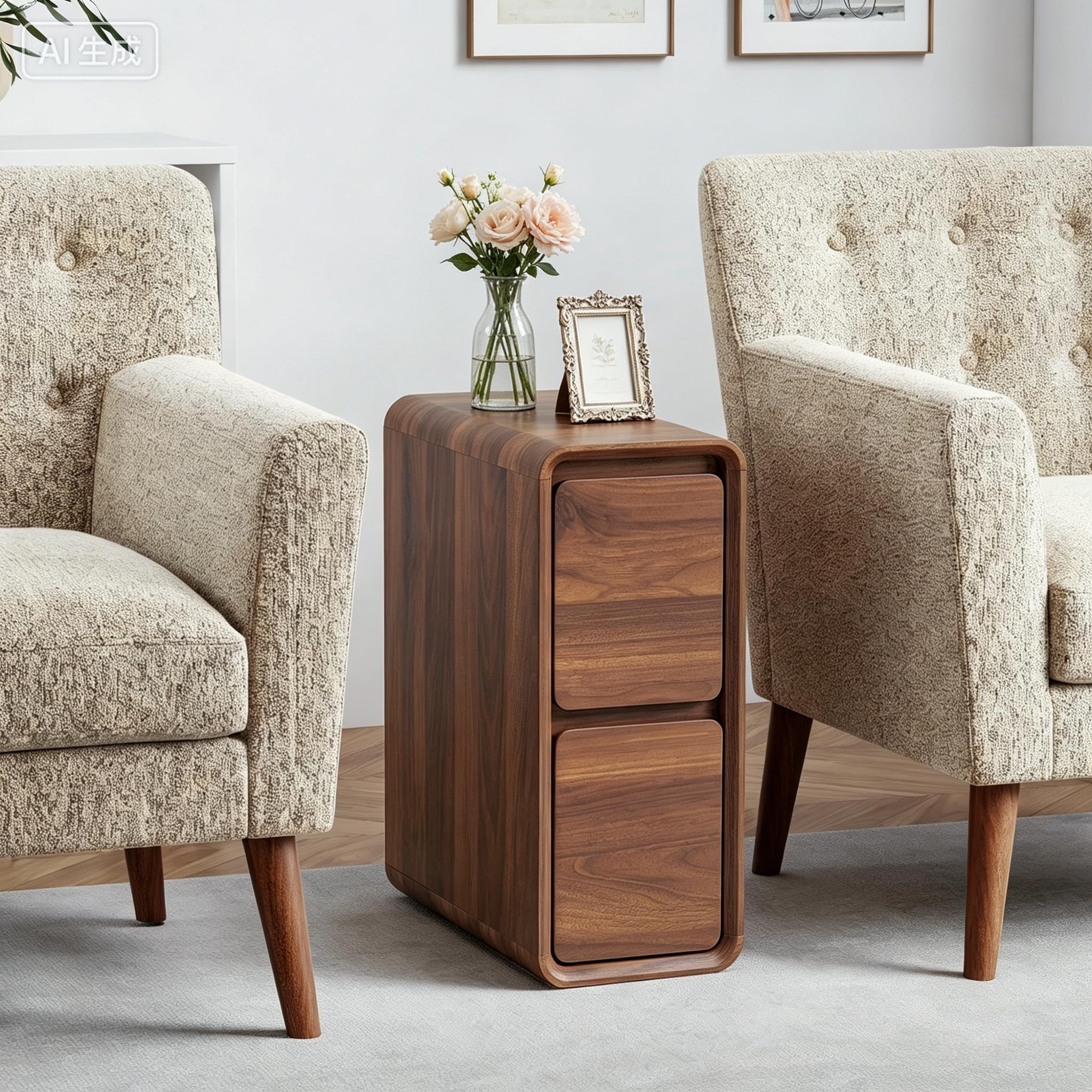
FurSchFurniture Narrow 2-Drawer Nightstand for Small Spaces - Mid Century Modern Walnut Bedside Table
Pros
- Ultra-narrow profile fits in spaces most nightstands cannot
- Curved surface edges reduce injury risk for kids and pets
- Guard rail on top prevents items from falling off overnight
- Easy assembly with clear instructions included
- Versatile enough to use in bedrooms, living rooms, or entryways
Cons
- Walnut finish is a laminate, not solid wood, so it may show wear over time
- 4.2-star rating suggests some buyers experienced quality control issues with drawer alignment
- Limited to one color option, which may not match lighter decor schemes
This narrow nightstand solves one of the most common small-space frustrations: neding bedside storage without eating up precious floor space. The walnut finish gives it a warm, mid century modern look that photographs well and blends into most bedroom palettes without clashing.
In a real room, it feels purposeful rather than cheap. The metal knobs, smooth-gliding drawers, and curved edges give it more character than the typical flat-pack furniture at this price point. The open bottom shelf is a nice touch for books or a small basket, and the guard rail on top means your phone and water glass stay put even if you bump the table at night.
If you want a functional bedside table that fits in a narrow gap without sacrificing style or storage, this one delivers.
Styles it works with: Mid Century Modern, Scandinavian, Minimalist, Boho
Best placed in: Tight bedside gaps, narrow hallways as a catchall table, beside a sofa arm in a compact living room
May not suit: Rooms with heavy traditional ornate furniture where the slim modern profile could look out of place, or households neding a nightstand with more than two drawers of storage
Buy it if:
- Your bedside space is too narrow for a standard nightstand and you need something slim that still has drawers
- You move frequently and want furniture that is lightweight and easy to disassemble
- You want a budget-friendly mid century modern look without spending over $100
Consider waiting if:
- You prefer a lighter wood tone or painted finish that better matches your current decor
- You want to see if a multi-pack discount becomes available since the listing suggests set options
Skip it if:
- You need deep drawers for bulky items like books or tablets
- You require solid hardwood construction for long-term durability
Check the latest price and availability on Amazon before it sells out.

Pros
- Ultra-slim 7.8" width fits beside beds in studio apartments and dorm rooms
- Sold as a matched set of 2 for a cohesive bedside look
- Handless design with curved fronts gives a premium, seamless appearance
- Each unit has two drawers plus a usable top surface for display items
- Works in multiple rooms beyond the bedroom
Cons
- No customer reviews yet, so long-term durability and drawer quality are unverified
- Very narrow top surface limits what you can place on it to small items only
- Assembly required and the brand recommends two people for installation
Finding nightstands that actually fit in a small bedroom is surprisingly difficult. The AVZEAR set solves this with a genuinely slim 7.8-inch profile that tucks into spaces most furniture simply cannot reach. The curved, handle-free fronts give these a designer look that punches well above the price point, and the warm walnut finish adds richness without overwhelming a small room.
In a real room, these read as intentional and curated rather than "we bought the smallest thing we could find." The two-drawer setup is practical for stashing chargers, journals, and personal items out of sight, while the top holds a small lamp or your morning coffee. Getting a matched pair in one purchase also means your bedroom looks pulled together from day one.
If you want a mid-century modern bedside look without giving up precious floor space in a compact bedroom, this set delivers.
Styles it works with: Mid-Century Modern, Scandinavian, Minimalist, Japanese-Inspired
Best placed in: Beside the bed in a small bedroom, flanking a sofa in a narrow living room, in a tight hallway as accent storage
May not suit: Rooms with bulky traditional furniture where the slim profile would look undersized, or households neding substantial bedside storage for larger items like books or tablets
Buy it if:
- Your bedroom has less than 10 inches of space between the bed and the wall
- You want a matching pair of nightstands without shopping for two separate pieces
- You prefer a clean, handle-free aesthetic and are drawn to mid-century walnut tones
Consider waiting if:
- You want to see real customer reviews and photos before committing to a newer listing
- You need a color other than walnut to match your existing bedroom set
Skip it if:
- You need a nightstand wide enough to hold a full-size book, tablet, and lamp side by side
- You want built-in features like USB charging ports or open shelving for quick access
Check the latest price and availability on Amazon before it sells out.
LOAKEKEL is the most useful match for Step 2 because it combines a skinny bedside footprint with charging and fabric drawers. That matters when the only outlet sits behind the bed and you don’t want cords crossing a 24-inch walking lane. Use it on the main access side, especially if the room has no room for a separate charging station. The 4.4 owner rating is solid for this type of slim furniture, and the narrow profile fits the one-nightstand strategy better than a bulky matching set.
FurSchFurniture fits the calmer version of the same plan. The narrow wooden nightstand works best when the bed is pushed slightly toward one wall and the visible side needs to look intentional, not squeezed in. Connect it to Step 1 by keeping 2 to 3 inches between the mattress and the table, then align the top within 2 inches of the mattress height. It won’t replace a dresser, but the two drawers handle the small things that usually pile up beside the bed. Not piles. Drawers.
AVZEAR makes sense only if the room can handle two slim pieces without breaking the walking lane. Use the set for a shared bedroom where each side of the bed still has at least 24 inches clear after placement. If one side drops below that number, split the set and use the second piece elsewhere. The mid-century profile keeps the room lighter than a blocky nightstand, and the 4.3 owner rating gives it enough credibility for a narrow-bedroom plan built around measured clearance.
Frequently Asked Questions
What if my narrow bedroom is only 8 feet wide?
Use a full bed if you can. A queen at 60 inches wide leaves only 18 inches on each side before trim and furniture, which is too tight for two real walking lanes. If you already own a queen, push it closer to one wall and protect one 30-inch route instead of chasing symmetry.
What if the bed has to go under the window?
Yes, it can work. Keep the headboard below the sill when possible, or leave 3 to 4 inches between the headboard and curtains so fabric can move. Don’t block a heat register. If the window wall is the only long solid wall, use low bedside tables and keep the curtain rods simple.
What if my closet doors open into the walkway?
Plan around the doors first. Open each door fully and measure the swing, then keep that arc free by at least 2 inches. If the bed blocks the swing, move storage to the short wall or use one slim nightstand instead of two. Closet access beats bedside symmetry in a narrow room.
What if I need a desk in the bedroom too?
Use a wall-mounted desk or a 16- to 20-inch-deep writing table on the short wall. Keep 30 inches behind the chair when it’s pulled out, or the desk becomes a nightly roadblock. If you can’t clear that, use the nightstand as the work surface and store the laptop vertically.
What if the room feels like a hallway after layout changes?
Break the tunnel with height, not more floor furniture. Hang art centered 57 to 60 inches from the floor, use a tall lamp on the bedside table, or add curtains close to the ceiling. Keep the floor path clear. The eye needs stops, but your feet need space.
Bottom Line
The rule that matters most is simple: protect one clear walking lane before you chase symmetry. In a narrow bedroom, 30 inches of uninterrupted movement beats matching nightstands, a bench, or a wide dresser every time. The main exception is a shared bed, where both sides need at least 24 inches to function without resentment. Start with the bed, choose one strong bedside zone, and move storage to the wall that doesn’t steal the route.







Write Your Review
No reviews yet. Be the first to share your experience!