

> Editorial Note: I’m Maya Chen, a bedroom and sleep editor covering mattresses, bed frames, and bedding. The picks here are evaluated against CertiPUR-US foam standards, Sleep Foundation evaluation protocols, and owner durability reports from r/Mattress.
You smoothed the comforter flat this morning. By bedtime it’s slumped into one corner, with a limp, empty flap of duvet cover on one side and a thick wad bunched against your shin on the other. You shake it out, re-stuff it, and it’s back to sliding within two nights. If you’ve fought this fight for months, the cause usually isn’t your technique. It’s three specific things, and all of them are fixable. A calm bedroom setup helps too, whether you’re shopping for a best platform bed frame, a best nightstand for bedroom, a best dresser for bedroom, a best memory foam mattress, or the right wall art for bedroom. But a beautiful room falls apart the second your bedding won’t cooperate. Here’s why the comforter keeps sliding, and how to pin it down for good.
Reason 1: The Lump That Pools at the Foot of the Bed (No Corner Ties)
This is the big one. Most duvet covers hide four thin fabric loops sewn into the inside corners, and most comforters have matching loops or tabs. You tie them together, and the insert can’t migrate. Skip that step, and the comforter floats free inside a fabric bag, sliding downhill toward the foot of the bed every time you move.
Two problems show up here. Either your cover has no inner ties at all (common on budget covers under $40), or it has ties but your comforter has no loops to attach them to. Both leave the insert unanchored. The Sleep Foundation flags corner ties as the single most effective built-in feature for holding an insert in place, and covers with eight anchor points (one per corner plus one mid-side) grip noticeably better than the standard four.
The fix is quick if the parts exist: turn the cover inside out, thread each corner tie through the comforter’s loop, and double-knot it. No loops on your comforter? Clips solve that, covered below. If your cover has no ties either, hand-sew four twill-tape loops into the corners in about ten minutes for a cheap, permanent fix.
Corner ties keep the insert in place; they do not keep the fill spread evenly inside it. Why a duvet goes lumpy covers the baffle-box construction that stops fill sliding to one end.
Reason 2: One Side Goes Flat and Empty by Morning (Insert Too Small for the Cover)
If you’ve tied every corner and the comforter still drifts, measure both pieces. A duvet cover only holds an insert snugly when the two are within about 2 inches of each other. A queen cover runs roughly 90×90 inches; a king is about 104×90; a twin sits near 68×88. Drop a queen comforter into a king cover and you’ve built in four inches of slack the insert will slide around inside every night.
This mismatch happens more than you’d think. Comforter and duvet-cover sizing isn’t standardized across brands, so a “queen” from one maker can run 4 to 6 inches smaller than a “queen” cover from another. Apartment Therapy recommends sizing the insert slightly larger than the cover, not smaller, so the fill pushes into the corners and fills the shell.
Measure your insert flat, corner to corner, then measure the cover the same way. If the insert is more than 2 inches smaller in either direction, no amount of tying fully fixes it, because the extra fabric still shifts. Size up the comforter, or size down the cover. When they match, the ties finally have something firm to hold, and the empty-flap problem disappears.
Reason 3: It Slides Even After You’ve Tied Everything (Slippery Fabric)
Sometimes the ties are knotted, the sizes match, and the comforter still creeps. Look at your fabric. Sateen, silk, TENCEL, and cheap polyester microfiber all have a low-friction surface, so the insert glides against the cover lining the way a book slides off a glossy table. The smoother and shinier the weave, the less grip it has.
Fill type matters too. A slick down or down-alternative insert inside a sateen cover is the worst-case combo, because neither surface grabs the other. Percale cotton, linen, and washed-cotton covers have a rougher hand and hold an insert far better, and Wirecutter has pointed to percale’s crisp, textured weave as the reason it grips more even though it wrinkles more. Note that OEKO-TEX certification only tells you the fabric is free of harmful substances, not that it holds an insert, so don’t assume a premium cover grips better.
You don’t have to replace slippery bedding you otherwise love. Clips and ties both work through the fabric to create fixed anchor points, overriding the low friction entirely. That’s the practical fix for silky covers. Pin the corners mechanically and the surface texture stops mattering.
How to Fix It Fast: The 5-Minute Reset
Need it done tonight? Use the burrito method. It’s the fastest way to reload a cover without the insert bunching. Turn the duvet cover inside out and lay it flat with the opening at the foot of the bed. Set the comforter on top, corners aligned, and tie or clip the top two corners to the cover first.
Then roll both layers together from the head of the bed toward the opening, like a burrito. Reach into the opening, flip the cover right-side out over each end of the roll, and unroll. The insert comes out evenly spread with its corners already anchored.
This takes about five minutes solo, two with a partner. Snap or button the opening closed, then give the whole thing a firm shake to settle the fill. If you clipped the corners, check that each clip bit through both layers. Same trick hotels use. Minus the nightly fight.
The Products That Actually Help
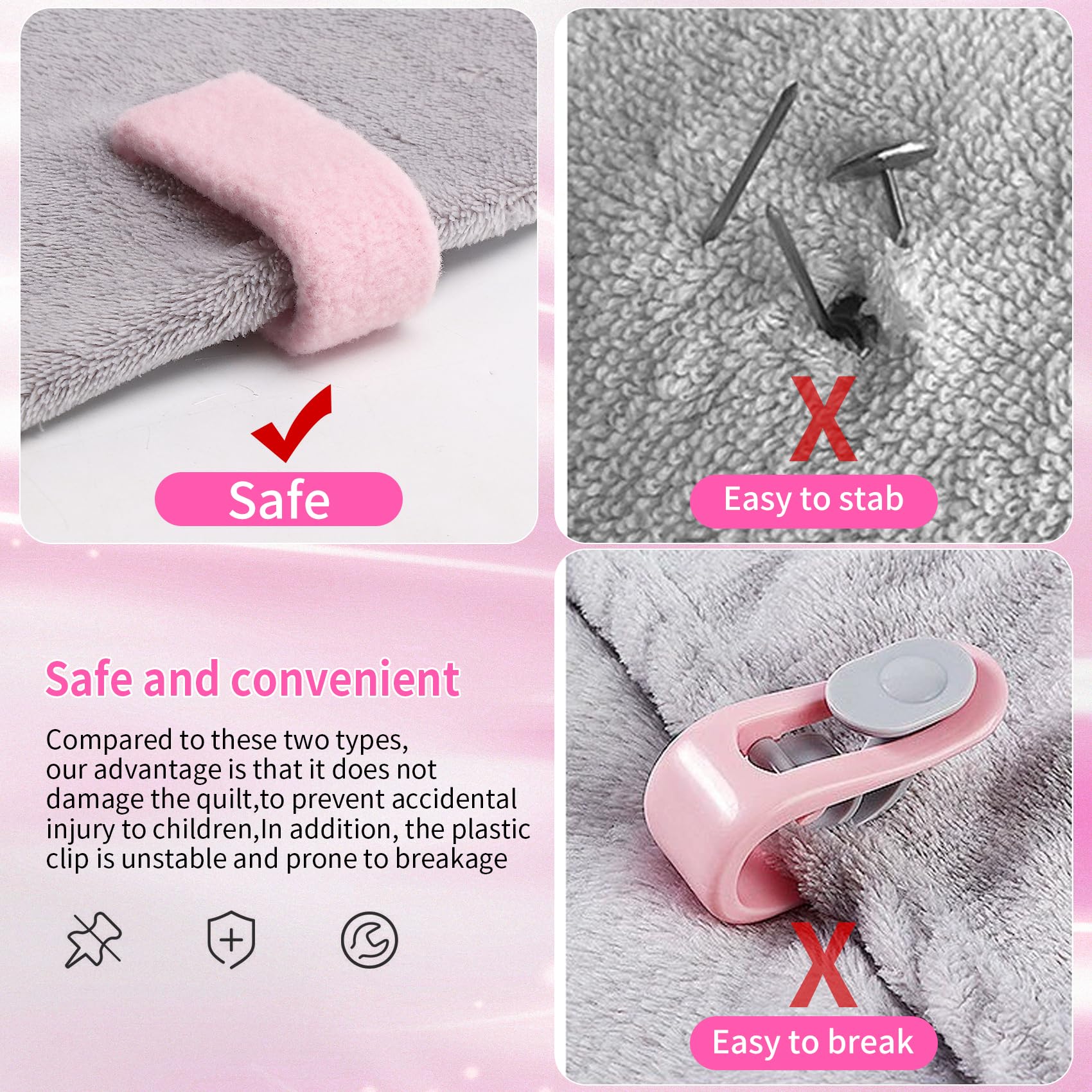
Ties and the burrito roll handle most cases, but if your comforter has no loops or your cover has no ties, clips are the real solve. All three sets below clear a 4.2 owner rating and grip through the cover fabric, so you don’t need sewn-in anchors to lock the insert down. Match the pick to your bed: the Fresh Ideas 4-pack pins four corners on a twin or full, the Patelai 12-piece gives you padded fasteners for a king plus spares, and the Lyxtiorn 8-pack sits in the middle with a non-slip grip built for silky sateen covers.


FRESH IDEAS Comforter Clips for Duvet Covers 4-Pack - Secure Anti-Shift Bedding Corner Fasteners
Pros
- Discreet and invisible once clipped inside the cover, preserving the clean look of your made bed
- Padded clip design is gentle on all fabric types including cotton, linen, and microfiber
- Extremely simple to install with no learning curve, even for first-time users
- Compact size means they store easily and add no noticeable weight to bedding
Cons
- Only four clips included, which covers corners only and may not be enough for larger comforters that shift in the middle
- Plastic construction raises questions about long-term durability through frequent washing and daily use
- No color or size variations available, which could be a limitation for thicker or oversized comforter fills
There is one bedroom problem almost everyone has dealt with but rarely talks about: the comforter that slowly migrates inside its duvet cover until one side is a thick lumpy mass and the other is just fabric. Fresh Ideas Comforter Clips exist to fix exactly that, and they do it without any fuss. Four small clips, four corners, done in under two minutes.
What makes these genuinely useful in a real bedroom setting is how invisible they are. Once tucked inside the cover, there is nothing to see, nothing that changes how your bedding looks or feels from the outside. You get a smooth, evenly filled duvet every morning without having to shake, re-stuff, or readjust anything. For anyone who uses a duvet cover daily, that small quality-of-life improvement adds up fast.
They are also fabric-friendly, which matters if you have invested in quality linen or cotton bedding. The padded clips grip without snagging, so your duvet stays protected alongside your comforter. If you want a consistently neat, hotel-style bed every morning without fighting your bedding every night, this one delivers.
Styles it works with: Minimalist, Scandinavian, Modern Farmhouse, Classic Traditional
Best placed in: Master bedroom, guest bedroom, any room where a duvet cover and comforter combo is used
May not suit: Beds using a non-removable comforter without a separate duvet cover, or households that prefer a simple top sheet setup without a duvet; also may require more than four clips for king-size or extra-thick baffle-box comforters that tend to shift in multiple spots beyond just the corners
Buy it if:
- Your comforter constantly bunches to one end of the duvet cover and you re-adjust it multiple times a week
- You want your bed to look neat and evenly filled every morning with minimal effort
- You are looking for a low-cost, immediate fix that works with bedding you already own
Consider waiting if:
- You have an oversized or king-size comforter and suspect you will need more than four clips for full stability
Skip it if:
- You do not use a separate duvet cover, since the clips are designed specifically for the inside of a cover and serve no purpose without one
- You are looking for a solution that also addresses comforter shifting on top of the bed rather than inside the cover
Check the latest price and availability on Amazon before it sells out.

Patelai 12-Pack Padded Duvet Clips White Comforter Fasteners to Stop Shifting Inside Duvet Cover
Pros
- Foam-padded jaws grip fabric gently without leaving marks, creases, or snags on expensive duvet covers
- 12-piece quantity covers all four corners plus interior attachment points on most bed sizes
- Low-profile design sits flat under the duvet cover and is completely undetectable when the bed is made
- Simple clip-on installation means no sewing skills or tools required
Cons
- The 0.2-inch opening may be too narrow to grip very thick or heavily filled comforters with dense quilting
- White color only, so they may show through lighter or sheer duvet cover fabrics
- No reviews available to validate long-term durability of the foam padding after repeated washing
If you have ever remade your bed at midnight because your comforter slid into a lumpy pile inside its cover, you already understand exactly why these clips exist. Patelai's padded fasteners clip directly onto your comforter and anchor it to the inner corners of the duvet cover, keeping everything flat, even, and in place from the moment you tuck in until morning.
What sets these apart from basic metal binder clips or safety pin workarounds is the foam padding on the jaws. That soft coating means the grip is firm enough to hold all night but gentle enough to use on fine linen, embroidered cotton, or lightweight percale without leaving any marks or pulling at the weave. They sit so flat under the cover that your bed still looks like it belongs in a catalog photo.
At ten dollars for a dozen, this is a small investment that solves a genuinely annoying daily problem. If you want to wake up with a perfectly laid-out duvet every morning without pinning or sewing anything, this one delivers.
Styles it works with: Scandinavian minimalist, Modern Farmhouse, Classic Coastal, and Clean Contemporary bedrooms where a neatly made bed is part of the overall aesthetic.
Best placed in: Inside a duvet cover on the primary bed, guest room duvet, or a daybed with a duvet-style throw cover.
May not suit: Households using very thick, heavily quilted comforters with seam padding over 0.2 inches thick, as the clip opening may not accommodate the bulk. Also less useful if you use a flat comforter without a cover, since the clips are designed to attach inside a duvet shell.
Buy it if:
- Your comforter consistently shifts or bunches inside its duvet cover overnight and you want a no-sew fix
- You have a guest room bed that needs to stay looking tidy between visits with minimal maintenance
- You own a lightweight or medium-fill comforter with a linen, cotton, or microfiber cover that you want to protect from snags
Consider waiting if:
- You need clips in a color other than white to avoid any chance of show-through on a very thin or sheer duvet cover
Skip it if:
- Your comforter has very thick quilt stitching or heavy batting that exceeds the 0.2-inch jaw opening, as the clips will not close properly
- You prefer a permanent built-in solution like sewn-in corner ties, which offer a cleaner long-term fix
Check the latest price and availability on Amazon before it sells out.

Lyxtiorn Duvet Clips Pack of 8 | Non-Slip ABS Fleece Comforter Grippers | No Pins, No Magnets, Gray
Pros
- ABS plastic construction is noticeably sturdier than typical thin plastic clips that snap after a few uses
- Fleece-covered gripping surface is gentle on fabric and comfortable against skin
- Versatile enough to use on duvets, curtains, and sheets so the pack earns its value quickly
- Storage box included is a thoughtful touch that keeps the set together between uses
Cons
- Only available in gray, so buyers who want a color-matched or invisible solution may be disappointed
- The card-insertion installation method is straightforward but requires two hands and a little patience the first time
There is a specific kind of frustration that comes from straightening your duvet every single morning because it has shifted, bunched, or twisted overnight. The Lyxtiorn clips solve that problem quietly and without fuss. They grip the duvet to the cover firmly, and the fleece lining means they do their job without scratching fabric or feeling like a cold chunk of plastic when you roll over at night.
What sets these apart from cheaper alternatives is the ABS plastic core. Most budget duvet clips feel brittle right out of the bag. These have a reassuring stiffness that suggests they will hold up through hundreds of wash-day on-and-off cycles. The included storage box is a small but genuinely useful detail that keeps all eight clips together when they are not in use.
If you want your bed to look hotel-neat every morning without fumbling with pins or worrying about magnets near electronics, this one delivers.
Styles it works with: Minimalist, Scandinavian, Modern Farmhouse, Classic Traditional
Best placed in: Master bedroom duvet, guest bedroom comforter, bedroom curtain panels where fabric tends to slip
May not suit: Households looking for a completely invisible solution since the gray clips are visible when the duvet cover is folded back; also less ideal for very thin or loosely woven duvet covers where the clip grip area may be too narrow to hold securely
Buy it if:
- You remake your bed daily because your duvet keeps shifting inside the cover and want a one-time fix under $12
- You have a king or queen duvet that needs four or more clips to stay secure and want enough in one pack to do the job properly
- You want to use the same product to keep curtain panels or sheets in place elsewhere in the bedroom
Consider waiting if:
- You prefer a white or neutral clip that blends with light-colored bedding, as a different colorway may suit you better
Skip it if:
- Your duvet cover has built-in corner ties that already work well, making additional clips unnecessary
- You need a completely pin-free and clip-free solution due to sensory sensitivity, as the clips are still physically present inside the cover
Check the latest price and availability on Amazon before it sells out.
The Levinsohn Fresh Ideas 4-Pack is the highest-rated of the three at 4.3 and the simplest option, with four clips that snap onto the corners to stop the bunching and shifting that drags a comforter to one side. Patelai’s 12-piece set leans padded and gentle, a smart pick if you’re clipping a delicate or high-fill-power insert and want extra fasteners on hand for a king. The Lyxtiorn 8-pack is the upgraded non-slip choice, built to hold on the slick covers that defeat basic clips.
Frequently Asked Questions
Do all duvet covers come with inner corner ties?
No. Plenty of budget covers under $40 ship without them, and some minimalist brands skip ties to cut cost. Check the inside corners before you buy. If there are no loops, plan on adding twill-tape loops yourself or using clips, because a tie-free cover almost guarantees a sliding insert.
Can I use clips if my comforter has no sewn-in loops?
Yes. That’s exactly what clips are built for. They pinch through both the cover and the insert to create an anchor point where no loop exists, so you’re not limited to comforters that came with tabs. Padded clips like the Patelai set do this without leaving a mark on delicate fill.
Should the comforter match the duvet cover size exactly?
It depends, but aim for equal or slightly larger. An insert within 2 inches of the cover fills the shell and resists sliding. Going smaller leaves slack the comforter drifts around in; going slightly larger pushes fill into the corners and actually helps it stay put.
Do padded duvet clips damage bedding?
Almost never, if you use padded ones. The foam or fabric-wrapped versions grip without crushing fill or snagging thread. Bare metal clips on a fine sateen or silk cover carry a small snag risk, so match the clip to the fabric and you’ll avoid it.
Will a heavier comforter stop the sliding on its own?
No. Weight doesn’t anchor an insert; connection does. A dense down-alternative comforter still slides inside an untied, oversized, or slippery cover. Fix the ties, the size, and the fabric grip first, then let the fill weight be about warmth, not staying power.
Bottom Line
Most sliding comforters trace back to one thing: an insert that was never anchored to the cover. Tie the corners, match the insert to within 2 inches of the cover size, and you’ve solved it for roughly 80% of beds. No ties or no loops? A padded clip set is the five-minute fix that does the rest. If your cover has neither ties nor a matching insert and you’re tired of fighting it, replace the cover with an eight-tie version instead of chasing clips forever. Anchor first. Everything else follows.







Write Your Review
No reviews yet. Be the first to share your experience!