

> Editorial Note: I’m Liam Wright, an outdoor and garden editor. I grew up in my family’s landscaping business and now cover what actually survives a season of UV, rain, and freeze-thaw cycles. The picks here are evaluated against ASTM weatherability standards and manufacturer durability ratings.
You don’t need glyphosate to win the weed fight. Boiling water, horticultural vinegar, a thick mulch layer, and old-fashioned hand-pulling clear most weeds without poisoning the soil they grow in. The catch is technique and timing — get those wrong and you’re back out there in two weeks. Pair these methods with the right tools like a best raised garden bed, a best garden kneeler, a solid best garden tool set, the best mulch, and a best raised garden bed kit.
What Actually Kills Weeds Naturally?
Four methods do the heavy lifting: heat, acid, salt-free smothering, and physical removal. Each kills differently, so match the method to the weed.
Boiling water cooks plant cells on contact. It’s fast and free, and it works best on weeds in cracks where the heat stays concentrated. Horticultural vinegar at 20% acetic acid burns foliage down to the stem within hours on a sunny day. That’s roughly four times stronger than the 5% vinegar in your kitchen, which barely scratches a mature dandelion.
Smothering starves weeds of light. A 3-inch mulch layer or a sheet of cardboard topped with wood chips blocks photosynthesis until the plant gives up. It’s slower but it prevents new weeds too.
A quick word on salt. People reach for it because it works — too well. Salt doesn’t break down, so it sterilizes soil for months and leaches into nearby beds. Skip it anywhere you want plants to grow later. The University of Maryland Extension flags salt and homemade brine sprays as long-term soil hazards for exactly this reason.
The honest truth? No natural method is one-and-done. They kill what’s above ground; persistent roots send up new shoots. That’s why combining methods beats relying on any single one.
How Does Vinegar Weed Killer Work?
Acetic acid is the active ingredient, and it works by burning. The acid strips the waxy coating off leaves and dries out the cells, so the foliage browns and collapses. It’s a contact killer — it hits what it touches and nothing else.
Timing makes or breaks it. Spray on young weeds under three weeks old, before they’ve built deep root reserves. Mature perennials with taproots will brown on top and resprout from the root in days. Wirecutter’s gardening coverage notes the same limitation: vinegar handles annual weeds well but rarely finishes off established perennials in one pass.
Sun is your friend here. Acetic acid works fastest on a hot, dry day above 70°F, when the acid and sunlight together cook the leaf. Spray in morning so the foliage has full daylight to wilt. Avoid windy days — overspray browns whatever it drifts onto.
Two cautions. First, vinegar lowers soil pH right where it lands, so don’t soak the root zone of plants you’re keeping. Second, 20% horticultural vinegar is far stronger than table vinegar. Wear gloves and eye protection. It’ll sting skin and irritate eyes on contact.
For driveway cracks and gravel paths, repeat applications every couple weeks keep regrowth down without any synthetic residue.
When Should You Pull Weeds by Hand?
Pull by hand when the soil is wet and the weed has a taproot. There’s no better moment than the day after rain or a deep watering. Damp soil releases the root instead of snapping it off at the crown.
The whole game is getting the root. Dandelions, dock, and thistle store energy in a deep taproot, and a fragment left behind regrows within a week. Grip low at the base, rock the plant gently to loosen it, then pull straight up and slow. A weeding fork or hori-hori knife helps you pry under the crown.
Beat the seed clock. A single pigweed plant can drop tens of thousands of seeds, so pull before flowers turn to seed heads. Apartment Therapy’s garden guides make the same point — fifteen minutes of pulling before weeds go to seed saves hours of work next season.
Protect your knees and back. Kneeling on bare ground for an hour wrecks both, which is where a padded kneeler earns its keep. Work in short sessions, and drop pulled weeds straight into a bag so stray seeds don’t reseed the bed.
Hand-pulling is the most reliable method for getting the entire plant. It’s just labor-intensive, so reserve it for beds and borders where precision matters most.
How Do Mulch and Ground Cover Stop Weeds?
Mulch stops weeds by blocking light. Without sunlight, weed seeds in the top layer of soil can’t sprout, and the few that do are easy to pull from loose mulch.
Depth is everything. Aim for a 3-inch layer of wood chips, bark, straw, or shredded leaves. Thinner than 2 inches and light still gets through; thicker than 4 and you risk smothering shallow plant roots and trapping too much moisture. Keep mulch a couple inches off plant stems and trunks to prevent rot.
For stubborn areas, sheet mulch first. Lay plain cardboard or several layers of newspaper over the weeds, wet it down, then top with 3 inches of mulch. The barrier blocks light completely while it breaks down over a season, and it smothers established weeds that loose mulch alone won’t stop.
Living ground covers do the same job permanently. Creeping thyme, clover, and low sedums crowd out weeds by claiming the soil and shading it. Consumer Reports recommends dense ground cover as a long-game strategy precisely because it cuts ongoing weeding once it fills in.
Refresh mulch yearly. Organic mulch breaks down into the soil, which is good for your beds, but it means the weed barrier thins out and needs topping up each spring.
What About Boiling Water and Flame Weeding?
Both are for hardscape, not garden beds. Boiling water and flame weeders kill indiscriminately, so they belong on driveways, sidewalk cracks, gravel paths, and patio joints — anywhere there’s nothing nearby you want to keep.
Boiling water is the simplest weapon you own. Heat a kettle, pour it directly on the weed and crown, and the heat ruptures the cells. One pour handles small weeds in cracks. Bigger taproots may need a second pour a few days later. Pour carefully and keep it off your feet.
Flame weeding uses a propane torch to wilt cells with heat, not to burn the plant to ash. You pass the flame over the weed for a second or two until the leaves darken slightly, and that’s enough to kill the cells. Never torch dry brush, mulch beds, or anything near wood fencing. Fire risk is real, and a propane flame near bark mulch is a bad afternoon waiting to happen.
Neither works in planting beds. The heat doesn’t distinguish your tomatoes from the crabgrass beside them. For cracks and driveways, though, both are cheap, chemical-free, and immediate. Keep a hose nearby when you flame, and never use either method during a burn ban or drought.
What Natural Methods Should You Avoid?
Skip table salt and homemade salt brine. Salt does kill weeds, but it stays in the soil and sterilizes it for months, killing future plants and leaching into neighboring beds with every rain. It’s a tool for permanently barren spots only, never anywhere you’ll plant again.
Go easy with vinegar near plants you’re keeping. Acetic acid is non-selective — it browns your perennials and lowers soil pH right where it pools. Spot-spray on calm days, shield nearby plants with a piece of cardboard, and never broadcast it across a bed.
Be skeptical of the salt-vinegar-dish-soap recipe floating around online. The salt is the part that lingers and damages soil, and the mix is no more effective than straight horticultural vinegar on young weeds. You’re trading a controllable problem for a long-term one.
Don’t expect any natural method to fix a neglected bed overnight. Persistent perennials and grasses with running roots need repeat treatment across a season. One pass browns the tops; the roots fight back.
Avoid spraying before rain too. A downpour washes vinegar off the leaves before it works and dilutes whatever’s left. Check the forecast, give it a dry 24-hour window, and you’ll get far better results with far less product.
Helpful Products
These three lean on natural-leaning and organic formulas for cracks, driveways, and mulched areas where you want results without synthetic residue. Start with the Spruce spray for versatility, or the vinegar-based ECO Garden PRO if you want the gentlest option around kids and pets.
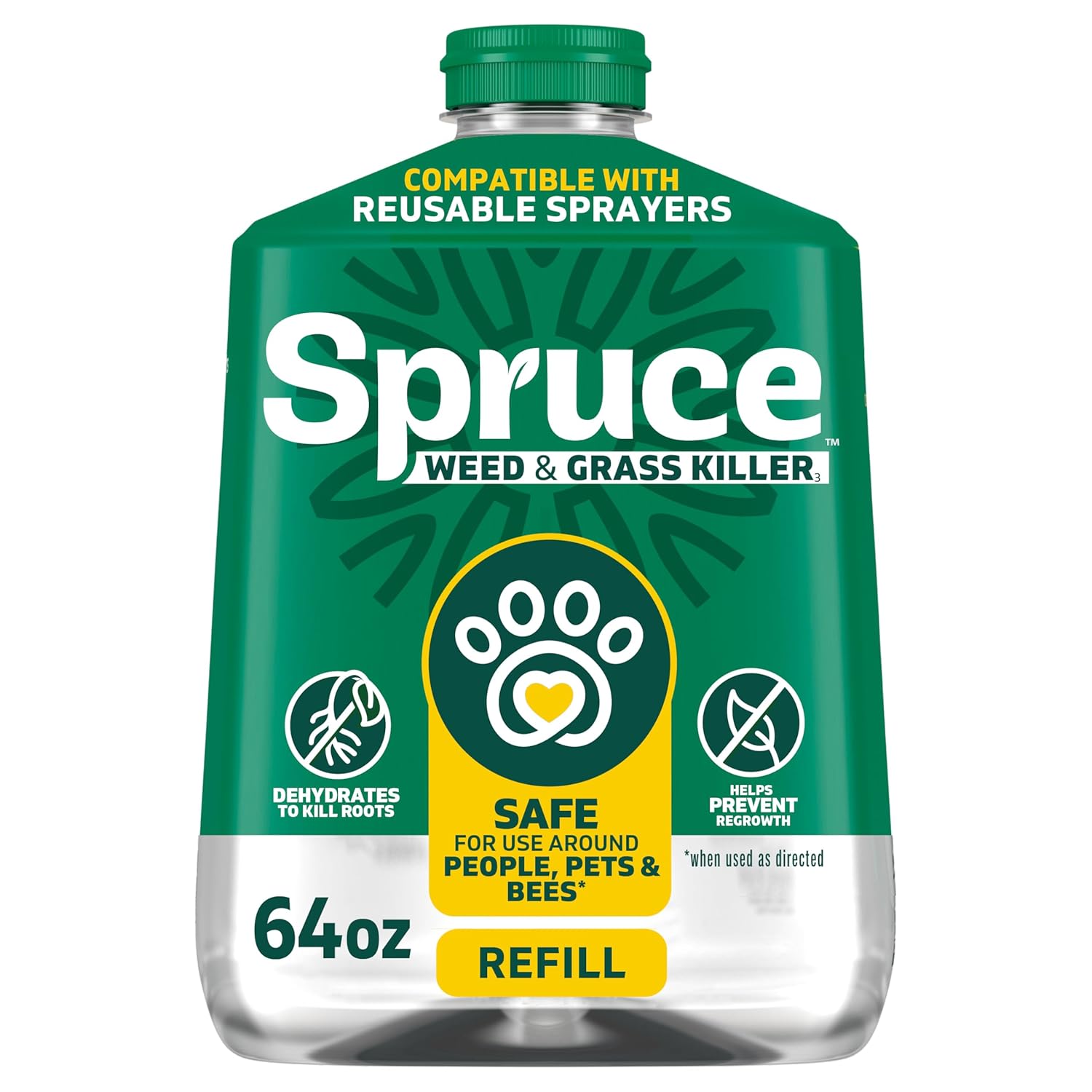
Spruce Weed Killer Refill 64 oz - No-Mix Formula for Flower Beds, Driveways & Mulch Beds, Kills Weeds in 1 Hour
Pros
- Fast visible results with browning and wilting typically seen within one hour of application
- Snap-on refill design eliminates mess and reduces plastic waste compared to full replacement bottles
- Broad weed coverage including dandelions, crabgrass, white clover, dollarweed, and morning glories
- Pet and people safe formula gives peace of mind for households with children or animals
Cons
- Requires owning the Spruce Powerwand separately -- the refill alone will not work without it
- Some users report the Powerwand nozzle can take up to a minute to prime before spraying, which slows down treatment sessions
- Not suitable for use on lawns where you want to preserve grass, as it kills all plant types it contacts
If your driveway cracks, mulch beds, or garden borders are starting to look untidy, the Spruce Weed Killer Refill is the kind of product that quietly fixes the problem without making your weekend harder. The snap-on handle design means you spend zero time measuring, pouring, or cleaning up spills -- you just attach and spray. For anyone who has wrestled with a leaky concentrate bottle or mixed ratios incorrectly, that alone feels like a genuine upgrade.
The essential oil-based formula is a real differentiator here. It does not carry the sharp chemical smell that lingers after traditional herbicide applications, which matters when you are treating areas near a patio or front entry where people actually spend time. Knowing it is formulated to be safe around pets and kids once dry adds another layer of comfort for busy households.
Results within an hour mean you can treat a section of pavers before guests arrive and actually see a difference the same day. If you want clean, weed-free outdoor spaces without the hassle of mixing concentrates or worrying about rain washing everything away, this one delivers.
Styles it works with: Modern Farmhouse, Cottage Garden, Minimalist Outdoor, Traditional Landscaping
Best placed in: Driveways and pavers with crack weeds, mulch and flower beds alongside the home exterior, garden borders and raised bed perimeters
May not suit: Households looking for a lawn-safe weed killer since this formula will damage grass on contact; buyers without an existing Spruce Powerwand who are not prepared to purchase the starter kit separately
Buy it if:
- You already own the Spruce Powerwand and need a refill that snaps on without any setup time
- You have pets or young children and want a weed killer that is safer to use around them once dry
- You need to treat driveways, mulch beds, or garden edges and want visible results within the same day
Consider waiting if:
- You are still deciding between the Spruce system and a traditional pump sprayer with concentrate, as the starter kit cost changes the overall value equation
Skip it if:
- You need a selective weed killer that leaves lawn grass unharmed, as this formula kills all vegetation it contacts
- You do not own the Spruce Powerwand and are not interested in the brand ecosystem
Check the latest price and availability on Amazon before it sells out.

Natural Elements Weed Killer 1 Gallon | Pet Safe, Child Safe, Fast-Acting Natural Herbicide Ready to Use
Pros
- Fast visible results within 1 to 24 hours depending on temperature and weed type
- No mixing required, making it genuinely convenient for quick spot treatments
- Pet and child safe right after application, which matters for households with outdoor activity
- Broad application range covers most common yard and garden areas
- Strong 4.3-star rating across a large number of verified buyers confirms consistent real-world performance
Cons
- Will kill grass on contact, so precise application is required near lawn edges and turf areas
- Effectiveness slows noticeably in cooler temperatures, with results potentially taking up to 5 days in cold weather
- A 1-gallon bottle may not cover large infestations, and frequent use could add up in cost compared to concentrated conventional herbicides
Keeping a tidy yard is part of maintaining a home you feel good about, and Natural Elements Weed Killer makes that easier without forcing you to choose between effectiveness and safety. The vinegar-based formula is derived from ingredients you are already familiar with, which gives it a transparency that synthetic sprays simply do not have. For anyone who has felt uneasy about conventional herbicides around their garden beds or near kids and pets, this product removes that friction entirely.
What stands out in practice is the speed. Most weed killers ask you to wait and wonder. This one starts showing results within an hour under warm conditions, and the weeds are typically dead within a day. That immediate feedback makes it satisfying to use, and it fits naturally into a weekend yard routine without requiring protective gear or a waiting period before letting the dog back outside.
The ready-to-use format is also genuinely appreciated. There is no concentrate to dilute, no sprayer to calibrate, and no wasted product from getting the mix wrong. You grab the bottle, spray the weeds, and move on. If you want a fast-acting, natural weed solution without the anxiety of synthetic chemicals near your family and pets, this one delivers.
Styles it works with: Natural and organic landscaping, cottage gardens, modern farmhouse yards, and eco-conscious outdoor spaces where low-chemical maintenance is a priority.
Best placed in: Garden beds and flower borders where you want precise weed control without harming ornamentals nearby, gravel or rock beds along the side of the house, paved pathways and driveway cracks, and mulched areas around trees and shrubs.
May not suit: Lawns where the spray could drift onto desirable grass, or properties in consistently cool climates where soil temperatures rarely exceed 60 degrees Fahrenheit, as results will be slower and less predictable in those conditions.
Buy it if:
- You have pets or young children who use the yard regularly and need a product that is safe to be around shortly after application
- You want a ready-to-use weed killer for garden beds, rock areas, or paved paths without the hassle of mixing concentrates
- You are dealing with broadleaf weeds or unwanted grasses in landscaped areas and want to see results within 24 hours
Consider waiting if:
- You are shopping during a cold season and your outdoor temperatures are consistently low, since results will be significantly slower and you may not see the full benefit until warmer months
Skip it if:
- You need to treat a large lawn area, as this formula kills grass on contact and is not suitable for broadcast application over turf
- You are managing a large-scale or commercial weed problem where a 1-gallon ready-to-use bottle would be impractical and a concentrated formula would be more cost-effective
Check the latest price and availability on Amazon before it sells out.

ECO Garden PRO Organic Vinegar Weed Killer 1 Gallon | Pet & Kid Safe | Glyphosate-Free Spray | Kills Dandelions, Clover, Moss & More
Pros
- Completely glyphosate-free and made with natural ingredients like white vinegar and rock salt
- True ready-to-use spray bottle eliminates any prep work before application
- Covers a broad spectrum of weed types including moss and poison ivy, not just common lawn weeds
- Marketed as safe for pets, kids, bees, fish, and livestock which is a meaningful differentiator
Cons
- A 3.6 out of 5 rating suggests inconsistent real-world results that may not match the 24-hour claim
- Vinegar-based formulas can temporarily raise soil acidity, which may affect nearby desirable plants if over-applied
- At $24.25 for one gallon, cost per application is higher than conventional herbicides that cover larger areas
For families who want a cleaner yard without the worry of toxic residue, ECO Garden PRO fills a real gap. The formula skips glyphosate entirely and leans on natural white vinegar, organic rock salt, and biodegradable plant activators to do the heavy lifting. That ingredient list is straightforward enough to actually trust, which is not something you can say about most weed killers on the shelf.
The ready-to-use format is a genuine convenience win. There is no diluting, no measuring, no accidental over-concentration. You pick it up, walk outside, and start spraying. That matters a lot on a busy weekend when you just want the dandelions gone before guests arrive. The 24-hour turnaround claim also gives you a clear timeline to work with rather than waiting and guessing.
It is versatile enough to use on driveways, sidewalks, mulch beds, and flower borders, which means one bottle handles most of the spots around your home where weeds pop up uninvited. If you want effective weed control without glyphosate or synthetic chemicals, this one delivers.
Styles it works with: Cottage Garden, Modern Farmhouse, Organic Minimalist, Naturalistic Landscape
Best placed in: Garage or garden shed for easy grab-and-go access, near the back door for quick driveway and patio touch-ups, alongside other lawn care tools in a utility area
May not suit: Households without outdoor space or those living in apartments with no garden access; also not ideal for large-scale farm or acreage use where a single gallon would be quickly exhausted
Buy it if:
- You have kids or pets who regularly play in the yard and you want to eliminate chemical exposure from conventional herbicides
- You need a no-prep solution for spot-treating weeds on driveways, garden borders, or between paving stones
- You are committed to an eco-friendly or organic lawn care routine and want a biodegradable option that handles a wide weed variety
Consider waiting if:
- You have a very large property and need a concentrate that can be diluted to cover more ground at a lower cost per application
Skip it if:
- You need a product with a strong, consistent track record backed by a high volume of verified reviews before committing
- You are treating a large lawn area where vinegar-based products risk affecting soil pH and harming surrounding grass
Check the latest price and availability on Amazon before it sells out.







Write Your Review
No reviews yet. Be the first to share your experience!