

> Editorial Note: I’m Sofia Reyes, a bathroom and wellness editor focused on small-bath organization and materials that hold up to real humidity. The evaluations here reference OEKO-TEX certifications, ASTM moisture-resistance standards, and aggregated owner reviews.
Black speckles creeping up the grout. A musty smell that comes right back the day after you clean. Pink film on the caulk where the tub meets the wall. If that sounds like your bathroom, the mold isn’t a cleaning failure. It’s a moisture problem wearing a stain. Scrub it without fixing the humidity and it returns in two weeks, every time. Here’s the full sequence: find it, kill it, dry it out, and stop it at the source. Before you start, skim these related guides: how to remove mold from shower curtain, how to clean grout, how to get rid of hard water stains, best bathroom exhaust fan, best shower curtain liner.
Step 1: Find Every Spot the Mold Is Hiding
Mold on the visible tile is the part you can see. The colony is usually bigger. Before you clean anything, spend five minutes inspecting the whole room with a flashlight, because surface treatment only works if you treat all of it at once.
Check the obvious places first: grout lines, the caulk bead around the tub and shower, the bottom edge of the shower curtain liner. Then check where people forget. Behind the toilet tank. Under the sink where a slow drip lands. The ceiling above the shower, where steam condenses and never dries. Inside the exhaust fan cover if you have one.
Pay attention to color. Black or dark green speckles in grout are common surface mold. Pink or orange film is usually Serratia bacteria, not mold, and wipes off easily. Soft, spreading black patches on drywall are different. If mold covers more than roughly 10 square feet, the EPA recommends calling a remediation pro rather than handling it yourself. That’s a hard line. Don’t cross it.
Open a window and run the fan before you do anything else.
Step 2: Scrub Surface Mold With Vinegar or a Cleaner
For mold on hard, nonporous surfaces like tile, glass, and sealed countertops, start with white vinegar. Mix it 1:1 with water in a spray bottle, or use it straight on stubborn spots. Vinegar’s acidity kills most common surface mold and it won’t leave the harsh fumes bleach does.
Spray the area until it’s wet, then wait. Vinegar needs a 10-minute dwell time to actually work. Spraying and immediately wiping just moves the spores around. After it sits, scrub with a stiff nylon brush, then rinse with clean water and dry with a microfiber cloth.
One safety rule that matters more than any cleaning tip: never mix bleach with vinegar or ammonia. The combination releases toxic chlorine gas. Pick one product and stick with it. Wear waterproof gloves and keep the fan running the entire time. Wirecutter and Consumer Reports both note that ventilation during cleaning matters as much as the cleaner itself, since you’re disturbing spores into the air.
If vinegar doesn’t lift it after two passes, move to a dedicated mold remover in the next step.
Step 3: Treat Grout and Caulk With a Mold Gel
Grout and caulk are porous. That’s why mold keeps coming back there even after you scrub the surface clean. The stain you see is rooted below the surface, and a thin spray runs right off a vertical grout line before it can penetrate.
This is where a cling-gel earns its place. A heavy-duty mold gel sticks to vertical caulk and grout, holds contact for hours, and works down into the pores where the colony lives. Apply a thin bead directly along the moldy seam, then let it dwell per the label, usually a few hours for set-in stains. Rinse thoroughly when done.
For broader wall and tile areas where you don’t want to scrub, a spray-and-wait remover does the same job hands-free. You wet the surface, walk away, and rinse later. No brush.
If the caulk is old, cracked, or the mold has worked all the way through it, no cleaner will fully save it. Cut it out and re-caulk with a mildew-resistant silicone instead. A $6 tube of new caulk beats fighting a stain that’s living inside the old bead.
Step 4: Kill the Musty Smell and Dry It Out
The smell is the giveaway. That damp, earthy odor that returns after every shower means moisture is still trapped somewhere, feeding what’s left. Cleaning the stain without drying the room is half a fix.
After treating every spot, dry the entire area completely. Wipe down walls and the tub surround with a dry cloth or a squeegee. Run the exhaust fan for at least 30 minutes after you finish, and longer if you can. A fan that shuts off the second you flip the light is the single most common reason bathroom mold comes back.
If the musty smell lingers in soft materials, the bath mat, towels, or a fabric shower curtain are likely holding it. Wash them hot. OEKO-TEX certified textiles tend to handle repeated hot washes without breaking down, which matters in a humid bathroom.
For chronically damp rooms with no window, a small dehumidifier set to hold humidity below 50% does what a fan can’t. Apartment Therapy points to sub-50% humidity as the threshold where mold growth stalls. Stay under it.
Step 5: Fix the Moisture Source So It Stops Coming Back
Every step above is treatment. This one is the cure. Mold needs moisture to live, so the only permanent fix is taking the water away.
Find the source. A dripping faucet or showerhead keeps a surface wet 24 hours a day, which is all mold needs. A slow leak under the sink soaks the cabinet floor where you never look. Tighten fittings, replace a worn washer, or call a plumber for anything behind the wall. Check the toilet base for seepage too.
Then look at airflow. Bathrooms with poor ventilation trap steam for hours after a shower, and that steam condenses on every cool surface. If your fan is weak, undersized, or missing, that’s the real problem. ASTM moisture-resistance standards exist precisely because bathroom surfaces face constant humidity cycling, and no surface survives standing water forever.
Small changes add up. Leave the door open after showering. Squeegee the glass. Crack a window. The goal is simple: never let a surface stay wet long enough for spores to settle in.
How to Keep Mold From Returning
Prevention is mostly about humidity, and humidity is mostly about habits. Run the exhaust fan during every shower and for 30 minutes after, the same way you’d never skip a seatbelt. If your fan can’t clear the steam in that time, it’s undersized for the room and worth upgrading.
Squeegee the shower walls and glass after each use. It takes 20 seconds and removes the water film mold needs to start. Wipe the caulk and tub seam dry once a day. Wash bath mats and fabric liners weekly in hot water.
Fix leaks the day you notice them, not the month after. Keep room humidity below 50% with a fan, an open window, or a small dehumidifier. Re-caulk with mildew-resistant silicone every few years before the old bead fails. Stay ahead of it and you’ll rarely scrub again.
The Right Products Make It Easier
These three cover the jobs vinegar can’t finish: a cling-gel for set-in grout and caulk stains, a full kill-and-prevent kit, and a scrub-free spray for broad wall areas.

Vigorder Mold Stain Cleaner Gel 8oz Heavy-Duty Cleaner for Washing Machine Gasket, Shower Caulk, Bathroom Grout & Front Loader Seal
Pros
- Gel consistency sticks to rubber gaskets and grout lines without dripping, maximizing dwell time on stains
- Multi-surface formula reduces the need to buy separate cleaners for the bathroom and laundry room
- Compact size and easy-to-apply format make it accessible for regular maintenance cleaning
Cons
- No customer reviews available yet, so real-world performance and scent intensity cannot be independently verified
- At 8 oz the bottle may not last long for households with heavy mold issues across multiple areas
- Effectiveness on deeply set or long-standing mold stains is unconfirmed without user feedback
Mold in the bathroom and laundry room is one of those problems that never looks good and never fixes itself. The Vigorder Mold Stain Cleaner Gel stands out because its thick gel formula actually stays where you put it. On a rubber washing machine gasket or a vertical caulk seam, that matters more than most shoppers realize. Thin sprays run off before they can work. This one clings.
Beyond the laundry room, this cleaner pulls double duty in the bathroom on grout lines and shower caulk, two surfaces that are notorious for trapping mold and resisting casual scrubbing. Having one product that addresses both spaces simplifies your cleaning routine and keeps your home looking and smelling fresher with less effort.
If you want to eliminate black mold stains from your washing machine seal and bathroom grout without scrubbing yourself tired, this one delivers.
Styles it works with: Modern, Minimalist, Farmhouse, Transitional -- any home where a clean and well-maintained bathroom or laundry room is a priority
Best placed in: Under the bathroom sink for easy access, in a laundry room cabinet near the washing machine, or in a cleaning caddy kept in the shower area
May not suit: Households looking for a fully natural or fragrance-free cleaning product, or renters in spaces where landlord-approved products are required before applying to caulk or grout
Buy it if:
- Your front-loading washing machine gasket has visible black mold stains that regular detergent cycles have not removed
- You have grout or caulk in your shower that has darkened from mold and you want a low-effort, soak-and-wipe solution
- You want one affordable product that covers both laundry room and bathroom mold maintenance
Consider waiting if:
- You prefer to read verified customer reviews before trying a newer product with no ratings history yet
Skip it if:
- You need a certified non-toxic or fragrance-free formula due to allergies or sensitivities in your household
- You are dealing with mold that has penetrated behind tiles or inside walls, which requires professional remediation rather than a surface cleaner
Check the latest price and availability on Amazon before it sells out.

RMR Brands DIY Mold & Stain Remover Bundle - Complete Mold Killer, Stain Remover & Mildew Prevention Kit (2 x 32 oz)
Pros
- Two-product system addresses both active mold and leftover staining that single-product cleaners miss
- EPA-registered RMR-141 RTU claims to kill over 141 microorganisms including bacteria and fungus
- Ready-to-use format saves time and eliminates the guesswork of diluting concentrates
- Effective on a wide range of porous and non-porous surfaces throughout the home
Cons
- Contains sodium hypochlorite, so ventilation is required and it is not safe around colored fabrics or finished wood
- Two-bottle system requires two separate applications rather than a single-pass clean
- Smell during application is strong and lingers until the treated area is fully dry
If you have ever scrubbed a moldy grout line only to watch the dark staining return a week later, this kit finally explains why: killing the mold and removing the stain it leaves behind are two separate jobs, and most sprays only do one. RMR solves this by pairing a disinfectant that destroys live mold at the root with a stain eliminator that pulls the discoloration out of porous surfaces almost instantly.
For anyone refreshing a bathroom, finishing a basement, or prepping a laundry room before a renovation, this bundle makes the prep work feel manageable. The spray-and-go format means you are not measuring concentrates or wearing a hazmat suit, just spraying, waiting, and wiping. The EPA registration is also a quiet reassurance that the formula does what the label claims.
If you want a clean, stain-free surface that stays mold-free longer without paying for a professional remediation visit, this one delivers.
Styles it works with: Any home style benefits since this is a maintenance product, but it is especially useful in older homes with Traditional, Farmhouse, or Coastal interiors where natural materials like grout, wood, and drywall are common.
Best placed in: Bathroom tile and grout lines, basement walls and ceilings, laundry room surrounds, garage drywall, and outdoor vinyl siding or deck areas.
May not suit: Homes without adequate ventilation during application, or households with pets or young children who cannot be kept out of treated areas until fully dry.
Buy it if:
- You have visible black or green mold staining on grout, drywall, or caulk and scrubbing alone has not cleared it
- You are prepping a bathroom or basement before painting or tiling and need a clean, treated surface
- You have had recurring mold in the same spot and want a solution that also lays down a preventive barrier
Consider waiting if:
- You only need a general-purpose bathroom cleaner for routine maintenance and do not have an active mold problem
Skip it if:
- You are treating a surface that cannot be ventilated, such as a sealed closet or interior room with no airflow
- You need a color-safe or fabric-friendly formula near upholstered furniture or clothing
Check the latest price and availability on Amazon before it sells out.
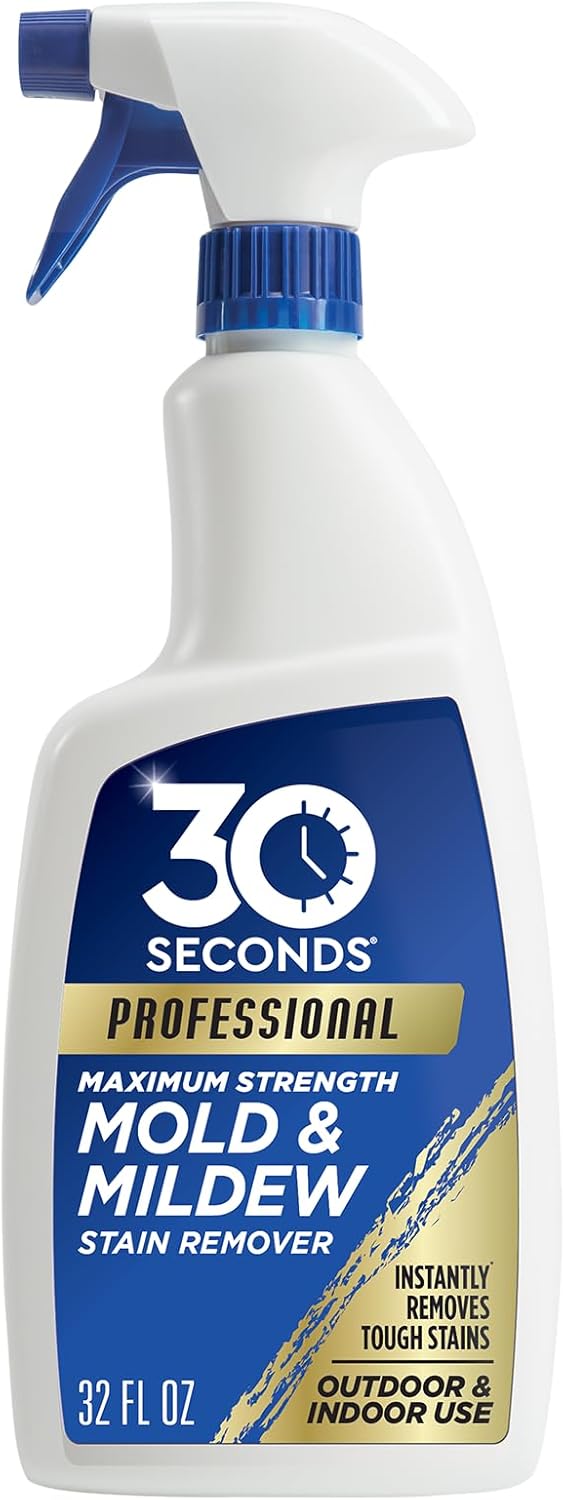
30 SECONDS Pro Mold and Mildew Stain Remover, Scrub Free, Ready to Use, 32 Fl. Oz. Indoor and Outdoor Spray
Pros
- Removes stains without scrubbing, ideal for hard-to-reach or textured surfaces
- Noticeable brightening results right after application
- Simple spray-and-go application with no prep work
- Versatile for indoor and outdoor mold and mildew jobs
- Strong overall customer satisfaction across thousands of reviews
Cons
- Not bleach free, so it may not suit households wanting a gentler formula
- Heavy or deeply set stains may need a second application
- Strong cleaning agents mean you should ventilate the area and protect nearby fabrics
If you have ever stared at a stubborn patch of mildew creeping along your shower grout or shaded patio tile, you know how much it drags down an otherwise tidy space. This 30 SECONDS Pro spray takes that frustration off your plate. You spray it on, let the formula do the lifting, and watch the staining fade without dragging out a brush and scrubbing until your arm aches.
What makes it feel worth keeping under the sink is how quickly it brightens a surface. Damp corners, bathroom tile, and outdoor stone start looking cared for again in minutes, which matters when you want your home to feel clean and put together rather than neglected. The 32 oz size means you can hit several trouble spots in one go.
If you want fast, scrub free stain removal without spending your weekend on your hands and knees, this one delivers.
Styles it works with: Modern Farmhouse, Coastal, Minimalist, and any well-kept home where clean surfaces are part of the look
Best placed in: bathroom tile and grout, laundry and mudroom corners, and outdoor patios or entryways prone to damp build-up
May not suit: homes wanting only bleach free cleaners, or delicate finishes and fabrics that react poorly to strong cleaning agents
Buy it if:
- You are battling recurring mold or mildew in a bathroom, basement, or shaded outdoor area
- You want results without scrubbing textured or hard-to-reach surfaces
- You prefer a ready-to-use spray with no mixing or measuring
Consider waiting if:
- You only have light surface stains a basic all-purpose cleaner could handle
Skip it if:
- You need a strictly bleach free formula for your home
- You are cleaning delicate surfaces that can be damaged by strong cleaners
Check the latest price and availability on Amazon before it sells out.
Frequently Asked Questions
Does bleach actually kill bathroom mold?
No, not on porous surfaces. Bleach lightens the stain on grout and caulk but doesn’t reach the roots below, so the mold regrows in days. It works on sealed tile and glass. For grout, a penetrating gel or vinegar beats bleach.
Can I just paint over moldy bathroom walls?
No. Painting over active mold traps it, and it keeps growing under the new layer, then bleeds back through. Kill the mold, dry the surface fully, and only then prime with a mold-resistant primer before painting.
Is bathroom mold dangerous to my health?
It can be. Mold may aggravate allergies and asthma in sensitive people, with symptoms like congestion or irritated eyes. Reactions vary widely. If symptoms persist, see a doctor. Remove the mold promptly and keep the room dry either way.
How often should I clean to prevent mold?
A quick squeegee after each shower plus a weekly wipe-down of grout and caulk keeps most bathrooms clear. Deep-clean monthly. Wash fabric liners and bath mats hot every week. Consistency beats intensity here.
When should I call a professional instead?
When mold covers more than about 10 square feet, keeps returning after proper treatment, or appears alongside a hidden leak inside a wall. The EPA sets that 10-square-foot mark as the DIY ceiling. Spreading black mold on drywall also warrants a pro.
Bottom Line
Bathroom mold is a humidity problem, not a cleaning problem. The root cause is trapped moisture, so the fix most people actually need is better ventilation plus a penetrating grout gel for the stains that already set in. Run the fan, squeegee the glass, fix the leaks, and hold humidity under 50%. If black mold has spread past roughly 10 square feet or keeps coming back through fresh caulk, stop scrubbing and call a remediation pro. That’s not DIY territory.




Write Your Review
No reviews yet. Be the first to share your experience!