

> Editorial Note: I’m Maya Chen, a bedroom and sleep editor covering mattresses, bed frames, and bedding. The picks here are evaluated against CertiPUR-US foam standards, Sleep Foundation evaluation protocols, and owner durability reports from r/Mattress.
Bed bugs spread fast and hide well, so the sooner you act, the easier they are to clear. This guide walks through identification, treatment, and prevention in plain steps you can follow tonight. While you’re sorting out your sleep setup, it’s worth reviewing how to get rid of dust mites, picking the best mattress protector, learning how to clean a mattress, checking the best mattress for side sleepers, and reading how to keep a mattress from sliding.
How Do You Know If You Have Bed Bugs?
The first clue is usually on your skin. Bed bug bites tend to show up in small clusters or a rough line, often on arms, shoulders, and legs that stay exposed overnight. They’re itchy red welts, and they can take a few days to appear, which makes them easy to blame on something else.

Look at the bed itself next. Tiny rust-colored or dark spots on your sheets and mattress seams are digested blood, and they’re one of the clearest signals. You may also spot pale, translucent shells, which are the skins nymphs shed as they grow. These shed casings collect along seams and in the corners of the box spring.
A heavy infestation sometimes carries a faint musty, sweet odor that owners on r/Mattress describe as overly sweet or like coriander. Don’t rely on smell alone, though. The EPA notes that visual confirmation, a live bug or its eggs, is the only sure way to identify a problem.
Grab a flashlight and a stiff card. Run the card along your mattress piping and headboard joints and watch for anything that scatters. Adults are about 4 to 5 mm long, flat, and oval, roughly the size of an apple seed. That’s small, but visible. If you find even one, treat the whole room as affected.
Where Do Bed Bugs Hide?
Bed bugs want to stay within about 5 feet of where you sleep, so the mattress and frame are ground zero. Start with the seams, piping, and tags on the mattress, then move to the box spring, where they often nest underneath the thin fabric layer on the bottom.
The headboard is the next big hiding spot, especially if it’s upholstered or bolted to the wall. Check every screw hole and joint. Wooden frames give them cracks to wedge into, and that’s exactly what they prefer, since tight spaces help them feel secure.
From there they spread outward. Baseboards, the edges of carpet, and the gaps where trim meets the wall all give cover. Apartment Therapy points out that electrical outlets and switch plates are common overlooked spots, so unscrew the covers and peek inside. They’ll also tuck into nightstand drawers, alarm clocks, and stacks of books near the bed.
The hard truth is that clutter multiplies hiding places. Every pile of clothes, every cardboard box under the bed, gives them more cracks to use. The fewer the cracks, the fewer the places you have to treat.
How Do You Get Rid of Bed Bugs Step by Step?
Work the problem in order, and don’t skip the boring steps. They matter most.
First, strip the bed and wash all bedding, sheets, and any nearby clothing on hot. Dryer heat at 120°F or above kills bugs and eggs, so a full hot cycle of at least 30 minutes is your friend. Bag anything you can’t wash and set it aside.
Second, vacuum everything. Mattress seams, box spring, frame, baseboards, and carpet edges. Use the crevice tool and go slow. When you’re done, seal the vacuum bag in plastic and put it in an outdoor trash can right away.
Third, encase the mattress and box spring in a zippered, bed-bug-proof cover. This traps anything you missed inside, where it starves over the months ahead.
Fourth, treat the cracks and seams with a residual spray labeled for bed bugs, following directions exactly. Then repeat the wash-vacuum-treat cycle every 1 to 2 weeks. Eggs hatch in about 6 to 10 days, so repetition catches the next generation.
What Kills Bed Bugs and Their Eggs?
Heat is the most reliable killer. Sustained temperatures around 120°F destroy bed bugs at every life stage, including eggs, which is why hot laundry and steamers work so well on fabrics you can’t spray.
Liquid residual sprays handle the surfaces you can’t heat. Look for products that stay active for weeks so bugs pick up a dose as they cross treated seams and baseboards. Coverage matters more than volume here. A thorough 16 oz application beats a sloppy gallon.
Diatomaceous earth is a slower mechanical option. The fine powder scratches a bug’s outer shell so it dries out, but it can take days to work and needs to stay dry to keep killing. Dust a thin layer into cracks, not thick piles, since bugs walk around visible mounds.
Foggers can knock down what’s out in the open, though they don’t penetrate deep cracks well on their own. The eggs are the real challenge. They’re coated and resist many contact treatments, which is the whole reason you repeat applications over 2 to 3 weeks rather than treating once and hoping.
How Do You Prevent Bed Bugs From Coming Back?
Prevention starts with the barrier you already installed. Keep that zippered mattress and box-spring encasement on for at least a full year, since bed bugs can survive months without feeding. A quality encasement also makes future inspections quick.
Travel is the most common way they return. Inspect hotel mattress seams and headboards before you unpack, keep your suitcase on the luggage rack rather than the bed, and run your clothes through a hot dryer cycle when you get home. Good Housekeeping recommends storing checked luggage away from the bedroom until you’ve cleared it.
Watch secondhand furniture closely. That free couch or thrifted nightstand is a classic carrier, so inspect every seam and joint before it crosses your threshold. When in doubt, skip it.
Finally, keep clutter down. Fewer boxes, fewer piles, fewer hiding spots. A clean perimeter around your bed makes it far easier to catch a stray bug early, before one becomes a hundred.
When Should You Call a Professional Exterminator?
DIY works for small, early infestations, but there’s a point where it’s smarter to bring in a pro. If you’ve run the wash-vacuum-treat cycle for 3 to 4 weeks and still see live bugs, the colony is likely too established for spot treatment.
Professionals can use whole-room heat treatment, raising the space to roughly 120 to 135°F for several hours so heat reaches every crack at once. That single pass may resolve what repeated sprays can’t, especially in cluttered or multi-room situations.
Apartment dwellers should also call early, since bed bugs travel through shared walls and outlets to neighboring units. Loop in your landlord so the whole building can be assessed. It’s not a personal failing, it’s just biology, and coordinated treatment is the only thing that holds.
Helpful Products for Tackling Bed Bugs
These picks cover the spray-and-fog side of the plan, the part you pair with hot laundry and a good encasement. Match the product to your situation: residual sprays for ongoing coverage, a fogger for open-room knockdown.
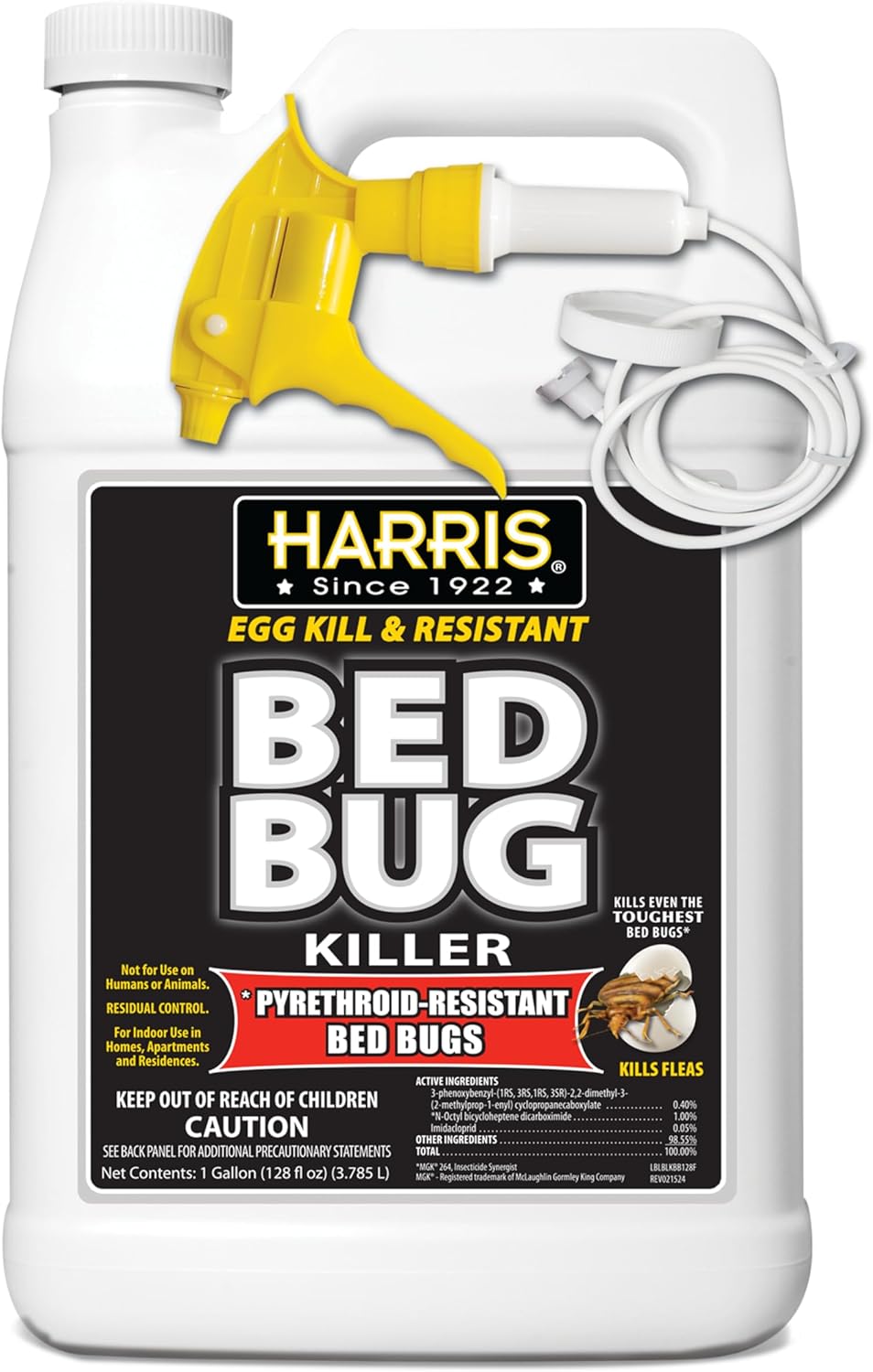
Pros
- Kills all life stages including eggs and resistant strains that other sprays miss
- Long 16-week residual protection reduces how often you need to reapply
- Gallon size offers strong cost-per-ounce value for whole-home treatment
- Odorless and non-staining formula is safe to use on furniture, carpet edges, and mattress seams
- 4.4-star rating across a large review base reflects consistent real-world performance
Cons
- Gallon size is more than most single-room or light infestations require, which may feel like overkill for minor cases
- Application requires careful technique including drying time before use and layering with powders, which adds steps compared to simpler aerosol options
- No EPA-approved time-to-kill claim on the label, so results may vary depending on infestation severity
If you have ever dealt with a bed bug problem that kept coming back despite repeated treatments, this is the product that changes the equation. Harris Black Label is not a quick-fix aerosol -- it is a concentrated liquid formula built to handle infestations that have already developed resistance to standard pyrethroids. That distinction matters more than most shoppers realize when they are standing in the aisle comparing labels.
What sets it apart in everyday use is the combination of residual protection and egg-killing capability. Most contact sprays kill what they touch and stop there. This formula keeps working for up to 16 weeks, which means it is still active in cracks, crevices, and along baseboards long after the initial application. The odorless, non-staining formula also means you are not airing out the room for hours or worrying about marks on your upholstered bed frame.
At the gallon size, it covers a full home comfortably, and the price per ounce is significantly lower than buying multiple smaller bottles. If you want complete, lasting control over a serious bed bug problem without cycling through weaker products, this one delivers.
Styles it works with: This is a functional pest control product, not a decor item, so style compatibility applies to where it can be safely used rather than aesthetic fit. It works in traditionally furnished bedrooms, modern minimalist spaces, upholstered room setups, and carpeted living areas.
Best placed in: Primary bedroom along mattress seams and bed frame joints; living room baseboards and furniture crevices; closets, luggage storage areas, and entryway seating where bed bugs can hitch a ride inside.
May not suit: Households looking for a light-duty or low-volume solution for a single small area; homes where the only concern is prevention rather than active treatment, since the gallon volume is sized for broader infestations.
Buy it if:
- You have had a recurring bed bug problem and previous sprays have not held
- You want to treat an entire home or multiple rooms in one purchase without running out mid-treatment
- You need a product that kills eggs and resistant strains, not just adult bugs on contact
Consider waiting if:
- You are dealing with a very minor or early-stage infestation where a smaller bottle would be sufficient
Skip it if:
- You need a ready-to-use aerosol with no prep steps and a confirmed kill time claim on the label
- You are looking for a purely preventative spray and do not have an active infestation to address
Check the latest price and availability on Amazon before it sells out.

EcoVenger Bed Bug Killer Spray 16oz - 100% Kill Rate, Plant-Based, Safe for Kids & Pets, Kills Eggs & Resistant Bugs
Pros
- University-tested 100% kill rate on bed bugs including eggs and resistant strains
- Two-week residual protection reduces need for constant reapplication
- Genuinely safe for direct mattress and furniture use without harsh chemicals
- 21,000+ reviews with 4.2-star rating show real-world effectiveness
- Non-staining formula and pleasant natural scent unlike conventional pesticides
Cons
- Requires thorough application to all cracks and hiding spots for full effectiveness
- 16oz bottle may require multiple purchases for severe infestations in larger homes
- Weekly reapplication recommended until activity stops, not a true one-and-done solution
When you discover bed bugs in your home, panic sets in fast. This spray stands out because it actually works without forcing your family to breathe toxic fumes or vacate your bedroom for days. University research backs up the 100% kill rate claim, and over 21,000 buyers confirm it delivers in real-world situations where other natural products fail.
What really matters is the residual protection. Unlike most green alternatives that only work while wet, this continues killing newly hatched bugs for two full weeks after drying. That breaks the reproduction cycle without daily retreatments. The mild cedarwood scent fades within an hour, and you can spray it directly on your mattress where you sleep that same night.
If you want proven bed bug elimination without exposing your kids and pets to harsh pesticides, this one delivers.
Styles it works with: Any bedroom style, nurseries, guest rooms, dorm rooms, vacation rentals
Best placed in: Bedrooms with mattresses and box springs, living rooms with upholstered furniture, any room where bed bugs are detected or suspected
May not suit: Homes needing pest control for insects other than bed bugs and carpet beetles, situations requiring immediate professional-grade fumigation for extreme infestations spanning multiple rooms
Buy it if:
- You need to treat bed bugs in a bedroom where children or pets sleep
- You want a solution you can apply yourself without hiring an exterminator
- Previous natural products failed and you need research-proven effectiveness
- You need to spray mattresses and bedding directly without toxic residue
Consider waiting if:
- You want to compare the 128oz size for better per-ounce value if treating multiple rooms
Skip it if:
- You have a severe multi-room infestation requiring professional heat treatment or fumigation
- You need pest control for insects other than bed bugs and carpet beetles
Check the latest price and availability on Amazon before it sells out.

Hot Shot BedBug & Flea Fogger 3-Pack 2oz Cans with Nylar IGR - Kills Bed Bugs, Fleas, Ticks & 20+ Insects
Pros
- Broad-spectrum kill list covers bed bugs, fleas, ticks, lice, cockroaches, ants, wasps, and more
- Nylar IGR adds meaningful long-term flea control beyond a basic contact kill
- Each can covers a generously sized room at 2,000 cubic feet of unobstructed space
- Three-can value pack makes multi-room treatment affordable at under $12
Cons
- Requires full evacuation of the treated area for at least 2 hours plus additional ventilation time, which is disruptive
- Cannot be used in small enclosed spaces like closets or under counters, limiting precision targeting
- No residual kill effect on surfaces after the fog clears, so crawling pests entering later are unaffected
When a flea or bed bug problem shows up, the last thing you want is a complicated solution. Hot Shot BedBug & Flea Fogger keeps things simple: place the can, activate it, leave the room, and come back to a treated space. For renters or homeowners dealing with a surprise infestation, that kind of low-effort deployment is genuinely valuable.
What sets this fogger apart from basic contact-kill sprays is the inclusion of Nylar, an insect growth regulator that targets fleas at the egg and larval stage. That means you are not just killing the adults you can see -- you are interrupting the reproductive cycle and buying yourself up to 7 months of reinfestation protection. For households with pets, that is a meaningful upgrade.
The three-can pack is smartly sized for a typical apartment or small home, giving you enough coverage to treat a bedroom, living room, and a secondary space all in one session. If you want broad pest control without spending $50 on a professional treatment, this one delivers.
Styles it works with: This is a functional pest control product, not a decor item, so it is style-neutral and suitable for any home interior including Modern, Traditional, Farmhouse, or Minimalist.
Best placed in: Bedrooms with upholstered furniture or mattresses, living rooms with fabric sofas and area rugs, basements or garages where pests tend to enter, and pet sleeping areas or crates where flea activity is common.
May not suit: Very small rooms under 5 feet by 5 feet where the fogger cannot safely discharge, and homes where full evacuation for 2-4 hours is not practical due to mobility limitations or schedules.
Buy it if:
- You have confirmed flea or bed bug activity and want an affordable, whole-room treatment you can deploy today
- You have pets and want the added protection of Nylar IGR to prevent fleas from cycling back after treatment
- You need to treat multiple rooms in a single session and want enough cans to cover a small apartment or multi-room area
Consider waiting if:
- You are not sure whether you have an active infestation and want to confirm the pest type before committing to a fogger treatment
Skip it if:
- You only need to treat a small enclosed space like a single closet or cabinet, where fogger use is explicitly unsafe
- You are looking for a residual barrier treatment that keeps killing pests after the fog has cleared and dissipated
Check the latest price and availability on Amazon before it sells out.




Write Your Review
No reviews yet. Be the first to share your experience!