

> Editorial Note: I’m Hannah Lin, an Interior Living Researcher who’s spent 9+ years analyzing the home furniture market. This guide draws on BIFMA, GREENGUARD, and FSC certifications, plus owner reviews aggregated from Wirecutter, Apartment Therapy, and the major home design subreddits.
The ripple starts as one small wave near the coffee table, then the whole rug looks like it’s trying to crawl across the room. Furniture weight doesn’t always flatten a rug; sometimes it locks the wrinkle in place. For the broader setup, compare best rug pad for hardwood floors, how to keep rug from sliding, best area rugs for living room, what size rug for living room, and how to flatten a rug.
Apartment Therapy’s rug-layout advice and Wirecutter’s rug-pad coverage both come back to fit, friction, and material memory. A rug needs a flat surface, enough pad coverage, and room to relax after shipping.
Reason 1: The Wave That Starts Under One Leg
A rug ripples when one part is pinned and another part keeps moving. Sofa legs, coffee-table feet, and dining chairs create fixed points. Foot traffic pulls the loose section around those points until a small buckle becomes a visible wave.
This happens more with thin rugs under 0.25 inches because they don’t have enough mass to resist sideways movement. It also happens on slick hardwood, tile, and low-pile carpet. Low friction. Easy slide.
Move the furniture off the ripple and pull the rug flat from the center outward. Then reset the furniture after the rug sits flat for at least 24 hours. If the wave comes back, the rug needs a grippy pad or targeted tape at the moving edge.
Don’t just drag the table back over the bump. That sets the crease.
Reason 2: The Edge That Curls After Vacuuming
Vacuum brushes can pull a light rug forward by half an inch at a time. The edge curls first, then the curl turns into a ripple across the field. You see it most near doorways and traffic lanes.
Use suction-only mode if your vacuum has it. If not, raise the beater bar to the highest setting. A 5-by-8 rug can shift several inches over a month when a strong brush roll grabs the pile twice a week.
The fix is grip across the full rug, not one corner. A pad cut 1 inch smaller than the rug on all sides keeps the edge from showing while still holding the field. Too-small pads create a shelf that turns into another ripple.
Clean the floor before you add anything sticky. Dust kills grip faster than wear.
Reason 3: The Crease That Came From Shipping
Many area rugs arrive folded or tightly rolled. Synthetic fibers can hold that memory for days, especially in cool rooms below 68 degrees F. The rug isn’t defective; it’s still shaped like the box.
Lay it flat in a warm room and reverse-roll the curled areas for 30 to 60 minutes. For stubborn ridges, place books along the wave overnight with a clean towel between the weight and the pile. No steam unless the rug label allows moisture and heat.
FSC wood furniture and GREENGUARD-certified flooring get most of the attention, but rug backing matters too. Latex, jute, cotton, and synthetic backings all relax at different speeds. A stiff backing needs patience.
If the crease feels sharp under your hand after a week, it may be a permanent fold. That’s when grip helps less because the material has already bent.
Reason 4: The Pad Line You Can Feel With Your Foot
A rug pad that covers only the center leaves the edges unsupported. Your feet land on the unpadded border, push it forward, and create a wave just outside the pad line. Classic living-room ripple.
Measure the rug, then choose a pad you can trim to about 1 inch short on each side. For an 8-by-10 rug, that means the pad should end around 94 by 118 inches after trimming. Scissors and patience beat guessing.
Full-coverage grip matters more than thickness. A thick felt pad without rubber can still slide on polished floors. A thin rubberized gripper can hold better if the floor finish allows it.
Check the floor manufacturer’s rules before using adhesive tape on hardwood. Some finishes react badly to sticky backing, especially in sunny rooms.
Fix 5: The Corner That Keeps Kicking Up
If only one corner flips, don’t overbuy. Corner tape or a small gripper can solve the local problem without changing the feel under the whole rug. That’s useful for hallway runners, entry rugs, and rugs partly tucked under a bed.
Press the corner flat, clean both surfaces, and apply tape at least 2 inches from the visible edge so it doesn’t show. Then leave it alone for several hours. Adhesive needs pressure and time.
For a large ripple across the center, use a full pad instead. Tape at four corners won’t stop the middle from walking. Wrong tool.
Helpful Products for Ripple Control
Ripples need grip, not just weight from furniture legs. These three products clear a 4.3 owner rating and solve different movement patterns: BAGAILBASICS for full-pad coverage under larger rugs, Gorilla Grip for hardwood and tile hold, and X-Protector tape for curled corners or narrow runners.
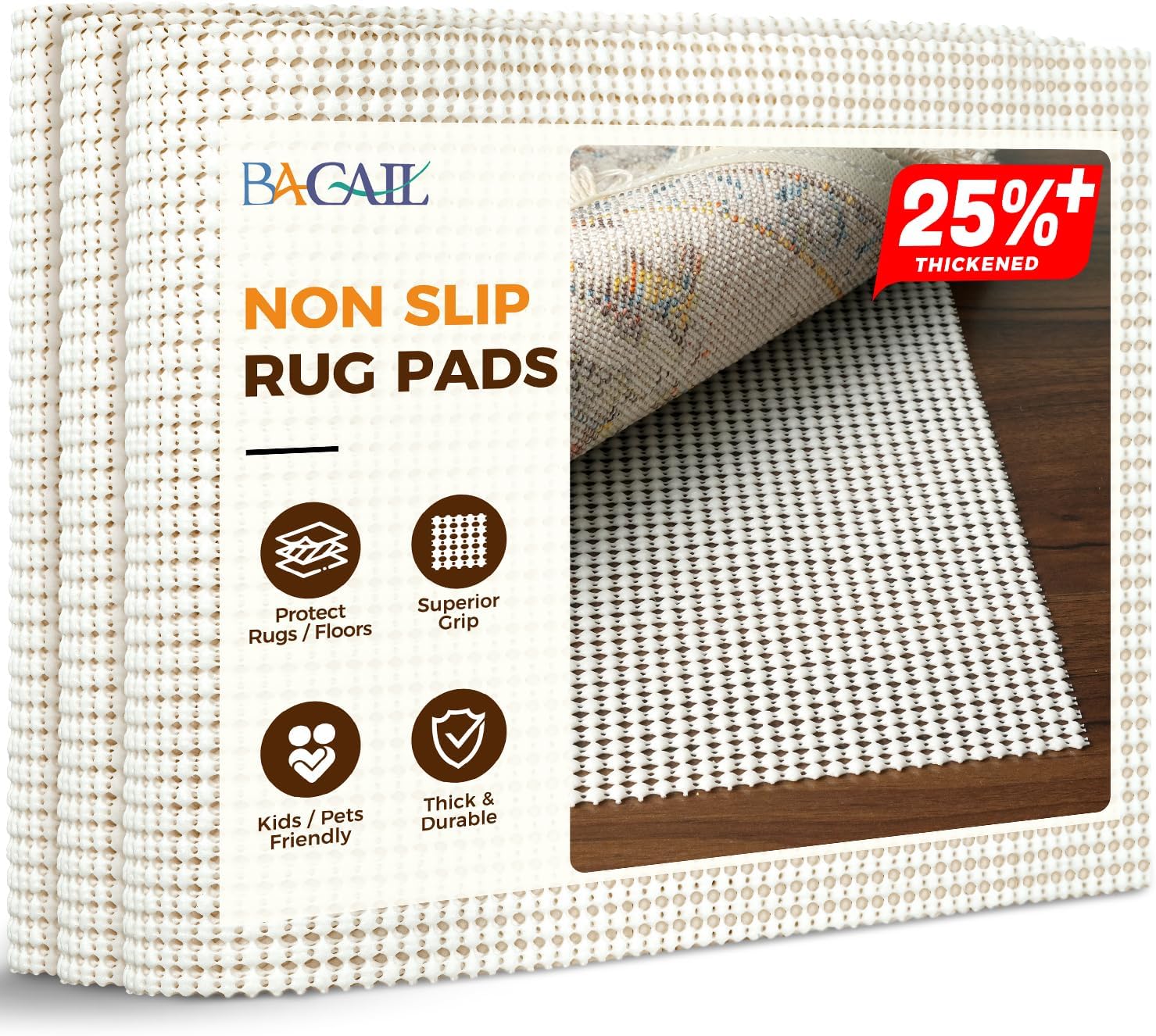
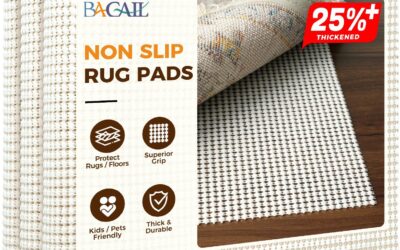
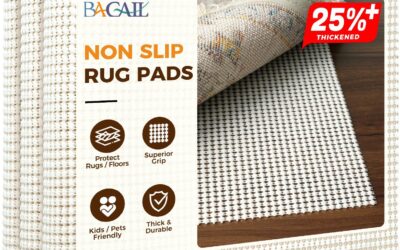
BAGAIL BASICS 8x10 Non-Slip Rug Pad for Hardwood Floors - Extra Thick Gripper Pad for Area Rugs
Pros
- Extra thick construction adds noticeable cushion and noise reduction
- Available in 18 pre-cut sizes, reducing guesswork and triming waste
- Works on multiple hard floor types including hardwood, tile, and laminate
- Easy no-tool installation that takes seconds to lay flat
- Open grid reduces friction by 70%, extending rug life and preserving patterns
Cons
- May not grip as effectively on textured tile or uneven stone floors
- No felt layer, so it prioritizes grip over maximum plushness compared to felt-and-rubber combo pads
- Initial mild odor reported by some buyers that takes a day or two to off-gas
If you have ever chased a sliding rug across your living room floor, you already know why a good rug pad matters. The BAGAIL BASICS gripper pad solves that problem cleanly. It is thicker than most budget options, which means it actually adds soft, cushioned feel underfoot rather than just sitting there like a thin sheet of plastic.
What sets this one apart in the crowded rug pad market is the combination of price, size options, and true multi-surface grip. It lays flat immediately, does not curl at the edges, and holds area rugs firmly even in high-traffic zones where kids and dogs do their worst. The open-grid design also means air circulates underneath, so you are not trapping moisture against your hardwood.
If you want reliablerug grip and floor protection without paying premium prices for a pad nobody ever sees, this one delivers.
Styles it works with: Modern Farmhouse, Scandinavian, Traditional, Boho (works under anyrug style since it is invisible once placed)
Best placed in: Living room under a large area rug, dining room beneath a table rug, kids' playroom over hardwood
May not suit: Homes with heavily textured natural stone floors where the grid pattern may not make full contact, or buyers who want maximum plush cushion (a felt-rubber hybrid pad would be better for that)
Buy it if:
- Your area rug slides or bunches on hardwood, tile, or laminate floors
- You have kids or pets and need a safer, slip-free surface in high-traffic rooms
- You want floor scratch protection without spending $40 or more on a premium pad
Consider waiting if:
- You need a specific size not among the 18 options and prefer not to trim
Skip it if:
- You need a pad for carpeted floors (this is designed for hard surfaces only)
- You prioritize maximum plush cushion over grip and want thick felt pad instead
Check the latest price and availability on Amazon before it sells out.
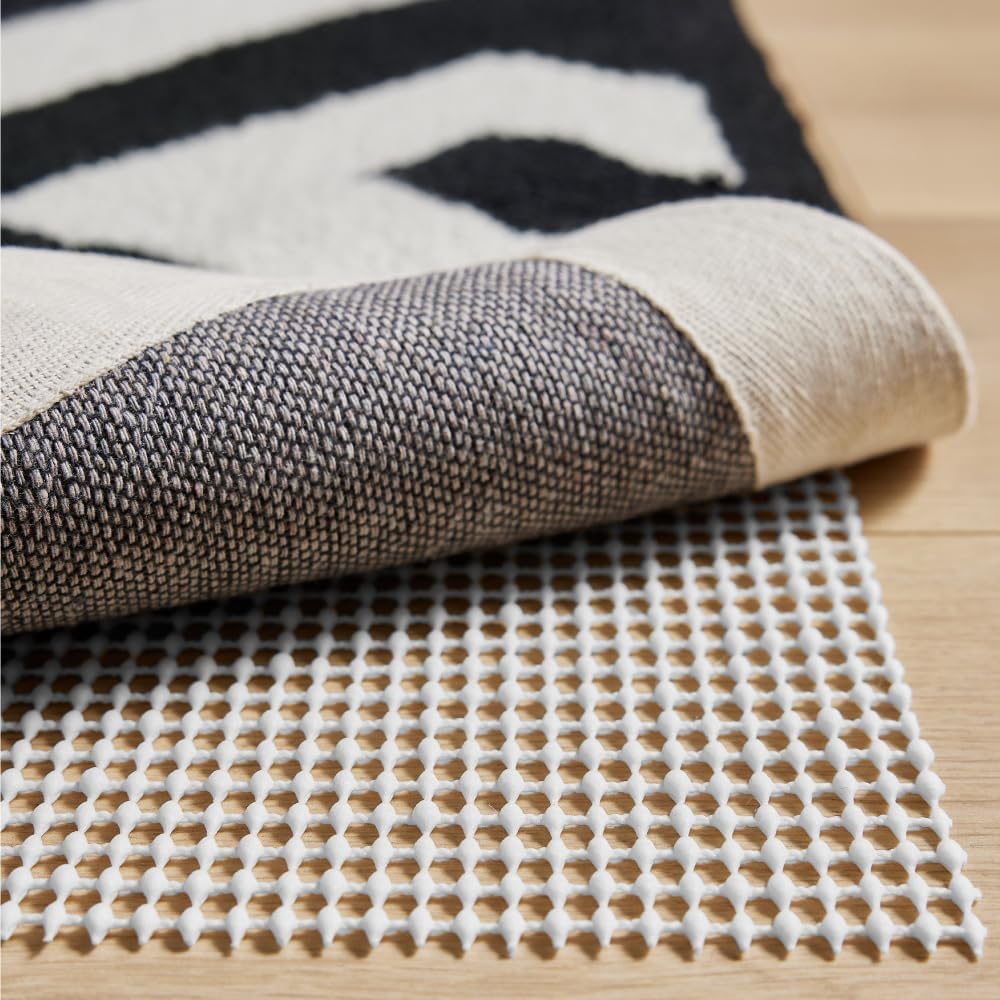
Gorilla Grip Strong Rug Pad Gripper 2x3 FT | Non-Slip, Dual-Sided, Hardwood & Tile Safe
Pros
- Exceptionally strong dual-sided grip that works on hardwood, tile, and laminate without damaging floors
- Thick cushioning adds real comfort underfoot, improving the feel of thinner rugs noticeably
- Easy to cut to any shape or size with standard scissors, making it versatile for non-standard rug dimensions
- Vacuum-friendly and reversible design makes routine cleaning and maintenance hassle-free
- Outstanding value at under $7, backed by over 50,000 mostly positive reviews
Cons
- The 2x3 ft size is limited to smaller accent rugs and may require purchasing multiple pads for larger area rugs
- PVC material may not be ideal for use under rugs on carpet surfaces, where performance is noticeably reduced
- In very warm or humid rooms, the grip strength can diminish over time and the pad may need repositioning
There is something quietly satisfying about a rug that stays exactly where you put it. The Gorilla Grip Rug Pad is one of those under-the-radar home upgrades that makes a real difference the moment you use it. No more nudging your entryway rug back into place every morning, no more bunched edges in the hallway, and no more worrying about guests slipping on a loose runner.
What makes this pad stand out from cheaper alternatives is the dual-sided grip. Both surfaces, the one facing your floor and the one facing your rug, hold firm without any adhesive. That means zero residue on your hardwood, tile, or laminate, and easy repositioning any time you rearrange furniture or swap out rugs with the seasons. The open grid construction is a smart design touch too, letting air circulate under your rug to protect against moisture and floor discoloration.
The added cushioning is a small but genuinely welcome bonus. Even a flat-woven rug feels more substantial and comfortable underfoot once this pad is underneath it. It quietly elevates the whole feel of a room. If you want rugs that stay perfectly in place and feel better underfoot without spending on a premium thick pad, this one delivers.
Styles it works with: Modern Farmhouse, Scandinavian, Minimalist, Transitional
Best placed in: Entryway or front hallway under a small accent rug, beside the bed as a soft landing spot, under a kitchen mat near the sink or stove, or beneath a small living room accent rug in front of a sofa
May not suit: Homes that use large area rugs 4x6 ft or bigger, since this 2x3 size will not provide full coverage and may require multiple pads or a larger size purchase. Also less effective for households placing rugs directly on top of thick carpet, where grip performance is reduced.
Buy it if:
- You have a small accent rug on hardwood or tile that keeps sliding, bunching, or shifting out of place throughout the day
- You want a non-adhesive solution that protects your floors from scratches and discoloration without leaving residue
- You are looking for an affordable way to make a flat or thin rug feel softer and more cushioned underfoot
Consider waiting if:
- You need a pad for a rug larger than 2x3 ft and want to check if a better-value bundle or larger size is available at a lower per-square-foot cost
Skip it if:
- Your rug sits on top of wall-to-wall carpet, as the grip technology is designed for hard floors and will not perform as well on carpet surfaces
- You need a felt-and-rubber pad for use on delicate or wax-finished hardwood floors, where a softer pad material is recommended by flooring manufacturers
Check the latest price and availability on Amazon before it sells out.

X-Protector Rug Tape for Carpet 8-Piece Set | Anti-Slip Corner Grippers for Area Rugs on Carpet
Pros
- Carpet-to-carpet grip works where standard rubber pads completely fail
- Very thin design stays invisible under rugs without raising edges
- Covers both anti-slip and anti-curling needs in a single affordable set
- Suitable for indoor and outdoor use, adding real versatility
- Strong satisfaction guarantee lowers the risk of a bad purchase
Cons
- Designed for low-pile carpet surfaces only, so it may not grip well on high-pile or shag carpet
- Only 8 pieces per set, which may not be enough coverage for very large area rugs without buying multiple packs
Most rug grippers are built for hard floors, which leaves anyone with wall-to-wall carpet in a frustrating blind spot. X-Protector actually designed these specifically for carpet-on-carpet layering, which is what makes this set stand out in a crowded category. The adhesive is engineered to bond two textile surfaces together, not just create friction against tile or hardwood.
In practice, the pads are thin enough that you genuinely forget they are there. There is no ridge under the rug, no visible lump at the corners, and no awkward repositioning every time someone walks through the room. The white color also stays out of sight even with lighter rug materials. For anyone who has fought with a runner that keeps folding in the entryway or an accent rug that migrates across the living room carpet, the difference is immediate.
If you want flat, secure rugs layered over carpet without ripping up your existing flooring or buying an entirely new pad, this one delivers.
Styles it works with: Modern Farmhouse, Transitional, Bohemian, Scandinavian
Best placed in: Living room seating areas layered over carpet, bedroom beside the bed where a smaller accent rug sits on top of carpet, carpeted hallways where runners tend to shift underfoot
May not suit: Rooms with high-pile or shag wall-to-wall carpet where the adhesive cannot grip the surface effectively; very large statement rugs that need full-perimeter coverage rather than corner-only anchoring
Buy it if:
- You are layering an area rug on top of existing wall-to-wall carpet and standard rubber pads keep sliding
- Your rug corners curl up and become a tripping hazard no matter how many times you press them flat
- You want a low-cost, low-effort fix that does not require removing furniture or replacing your flooring
Consider waiting if:
- You are still deciding on the final rug size or placement and do not want to commit the adhesive to a fixed position yet
Skip it if:
- Your floors are hardwood, tile, or vinyl since this product is built for carpet surfaces only
- You have deep-pile or shag carpet where the adhesive backing cannot make proper contact with the fibers
Check the latest price and availability on Amazon before it sells out.
What Not to Do
Don’t soak the rug unless the care label says it’s washable. Water can loosen backing glue and make ripples worse. Don’t iron directly on synthetic pile either; heat can flatten texture permanently.
Avoid random double-sided tape on finished wood. Rug-specific products are still not universal, but they’re designed for flooring contact. If the room gets strong afternoon sun, check the tape monthly because heat softens adhesive.
The safest sequence is simple: flatten first, grip second, tape only where a corner still moves. Order matters.
A rug that ripples near a doorway also needs clearance around the edge. If the rug runs right into a wall, a vent, or a heavy chair base, the border never gets a chance to relax. Leave at least 2 inches of breathing room where you can, and recheck the path after a week of normal traffic. Small shifts add up fast.
The Floor Check Before You Buy Anything
Run your hand across the floor where the ripple starts. If you feel grit, wax buildup, or a raised board edge, the rug is reacting to the surface underneath. A gripper pad can’t sit flat on crumbs or uneven finish. Clean a 12-inch border beyond the rug on all sides before you reset it.
Hardwood needs a dry microfiber pass first, then whatever cleaner your floor maker allows. Tile needs the grout lines dry because moisture under rubber backing can create odor. On carpet, use a carpet-safe rug pad instead of rubber tape because adhesive can pull fibers when you remove it.
Now check furniture placement. A sofa front leg that sits 1 inch onto the rug and 3 inches off the pad creates a twist point. Move the furniture deeper onto the rug or pull it fully off. Half-on placement looks casual, but it’s hard on thin rugs.
Give the reset 48 hours before judging it. Rugs remember pressure, and a fresh pad needs time to settle under traffic.
Frequently Asked Questions
Will furniture eventually flatten rug ripples?
No, not reliably. Furniture often pins the ripple and makes the crease sharper. Remove the weight, flatten the rug, then add grip before you put the furniture back.
How long does a new rug take to flatten?
It depends. Many rugs relax in 24 to 72 hours, but tightly folded rugs can take a week. Warm rooms speed the process; cold rooms make backing stiffer.
Can I use rug tape on hardwood floors?
Yes, but only if the tape is rated for your floor finish. Avoid generic craft tape or carpet tape on polyurethane, waxed wood, or floors with unknown coatings.
Is a thick rug pad better for ripples?
No. Grip matters more than thickness. A thick pad can add comfort, but a rubberized non-slip surface is what stops sideways movement.
Why does my rug ripple again after vacuuming?
The vacuum is pulling the pile or edge forward. Raise the brush bar, switch to suction-only mode, and make sure the pad covers the walking path under the rug.
Bottom Line
Most area-rug ripples come from pinned furniture points and a missing full-coverage gripper. BAGAILBASICS is the one most people should buy because it supports the whole rug field under larger layouts. If the floor is slick tile or hardwood, Gorilla Grip is the safer second look. Use X-Protector only for corners and narrow runners because tape won’t flatten a center wave by itself.
Write Your Review
No reviews yet. Be the first to share your experience!