

> Editorial Note: I’m Hannah Lin, an Interior Living Researcher who’s spent 9+ years analyzing the home furniture market. This guide draws on BIFMA, GREENGUARD, and FSC certification specs, plus owner reviews aggregated from Wirecutter and Apartment Therapy.
A peeling couch looks worse every week, but most cases come from one fixable cause: a delaminating surface coating. Before you panic, it helps to know how to how to clean a leather couch properly, which leather conditioner for couch actually slows damage, and how peeling compares to the wear you’d see on a best leather recliner sofa. If the cushions are also collapsing, that’s a separate job covered in how to fix a sagging couch, and if you’re weighing a full swap, best most comfortable sleeper sofa is worth a look. Here’s the realistic repair path.
Fix 1: Identify Bonded vs. Faux vs. Top-Grain
Start here, because the material decides everything. Bonded leather is roughly 10–20% leather fiber bonded to a polyurethane top layer, and that PU layer is what flakes off in those papery curls. Faux leather (PU or PVC vinyl over fabric) peels the same way. Real top-grain rarely peels. It cracks or scuffs instead.
The quick check: peel a loose flake and look at the back. A uniform plastic-like film means bonded or faux. A fibrous, suede-like underside leans genuine. The Spruce notes that bonded surfaces typically begin failing at 3–5 years of regular use, especially on high-contact seats and armrests. A second tell is the smell. Genuine hide has a distinct leather odor, while bonded and faux surfaces smell faintly of plastic or nothing at all. Check the manufacturer’s tag too. Terms like “bonded leather,” “leather match,” or “PU” all signal a coated surface that can peel. Knowing the type sets honest expectations. A repair kit restores appearance on all three, but on bonded material it’s a cosmetic buy-time fix, not a permanent cure.
Fix 2: Clean and Strip the Loose Flaking
Don’t skip this. New compound won’t bond to a surface that’s still shedding. Wipe the whole panel with a 50/50 mix of water and isopropyl alcohol, then let it dry for about 30 minutes.
Next, remove every loose piece. Use a soft scraping tool or your fingernail and lift off anything that’s already lifting. Family Handyman recommends working until you reach edges that stay firmly attached when you tug them. Tedious work. But the repair lasts far longer when the base is stable. For stubborn shedding zones, lightly rub with a microfiber cloth to pull off micro-flakes you can’t see clearly. The goal is a clean, dust-free, fully dry surface with no curling edges. Skipping the strip step is the single most common reason owner reviews report a repair that re-peeled within weeks.
Fix 3: Sand and Feather the Edges
Peeled patches leave a ridge where the old coating meets bare backing. If you fill straight over that ridge, you’ll see and feel the line forever. So you feather it.
Use 600-grit fine-grit sandpaper and sand the transition with light, circular passes. You’re not removing material. You’re tapering the hard edge down so the repaired patch sits flush. Wipe away grit dust with a barely damp cloth, then let it dry. Apartment Therapy suggests checking your work by running a fingertip across the boundary. It should feel like a gentle slope, not a step. On large armrest patches, feather a 1/2-inch border past the damage so the eventual color blend has somewhere to fade into. Two or three minutes of sanding per patch is usually enough. Don’t rush it.
Fix 4: Apply Repair Compound From a Kit
Now the actual rebuild. A leather repair kit gives you a flexible filler compound plus tint bases. Apply the compound thin with the included spatula, pressing it into the stripped area and screeding it level with the surrounding surface.
Thin coats win here. Plan on 2–3 coats, letting each dry 30–60 minutes, rather than one thick layer that cracks as it flexes. Most kits cure fully in about 24 hours. For texture, some kits include a grain pad you press into the tacky compound to mimic the surrounding leather pattern. Match your tint to the couch first on a hidden spot, since browns shift warm or cool once dry. The Vigorder and ARCSSAI brown kits below ship pre-mixed brown bases that owner reviews rate well for medium-brown sofas. Patience on cure time matters more than product choice.
Fix 5: Color-Match, Seal, and Condition
The repair isn’t done until it disappears. Blend the tinted finish coat outward from the patch in thin layers, feathering into the original color so there’s no hard border. Build color gradually. It’s easier to add a third coat than to lighten an overshot one.
Once the color matches, seal it. A topcoat or finisher locks the pigment and adds abrasion resistance. Most kits ship a matte or satin sealer, so pick the sheen closest to your couch to avoid a glossy patch that catches light. Let the seal cure 24 hours before sitting on the spot. Then condition. A quality leather conditioner applied every 3–6 months keeps the surrounding surface supple and slows the next round of peeling, which Wirecutter flags as the main preventive step for PU-coated furniture. Apply it with a clean cloth in thin layers, buff off the excess, and let it absorb overnight. Condition the whole panel, not just the repair. Keep the couch out of direct sun, too. UV exposure accelerates coating breakdown faster than normal wear, and a spot 2–3 feet from a south-facing window can run noticeably warmer over a day.
When to Repair vs. Reupholster or Replace
Be honest about the material. On faux or top-grain, a clean repair can last years, and conditioning keeps it that way. On bonded leather, peeling is usually progressive. The PU layer delaminates across the whole panel over time, so fixing one patch often means watching a new patch lift six months later. A kit buys time and looks good doing it, but it won’t permanently stop bonded delamination.
The math is simple. If more than roughly 30% of the seating surface is peeling, repeated patching gets tedious and the result looks uneven. At that point, professional reupholstering (often $600–$1,200) or replacement makes more sense than a fourth kit. For a couch under five years old with isolated damage, repair first. Another option worth pricing out is a fitted leather-look slipcover, which runs $40–$120 and hides progressive bonded peeling without the labor. It won’t restore the original look, but it buys a season or two while you save for a replacement. Weigh the couch’s sentimental and structural value too. A solid hardwood frame with good cushions justifies repair spend that a flat-pack frame doesn’t.
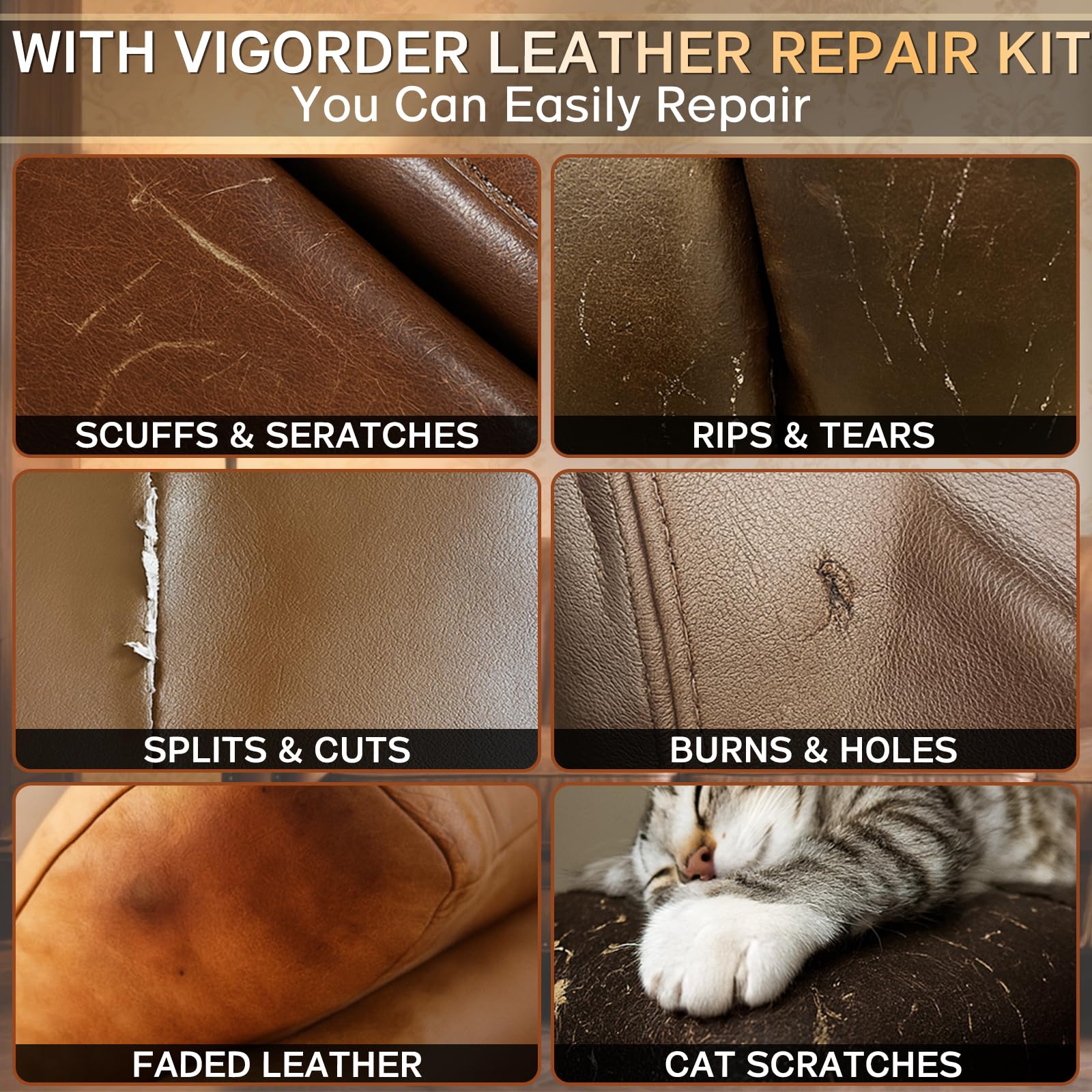
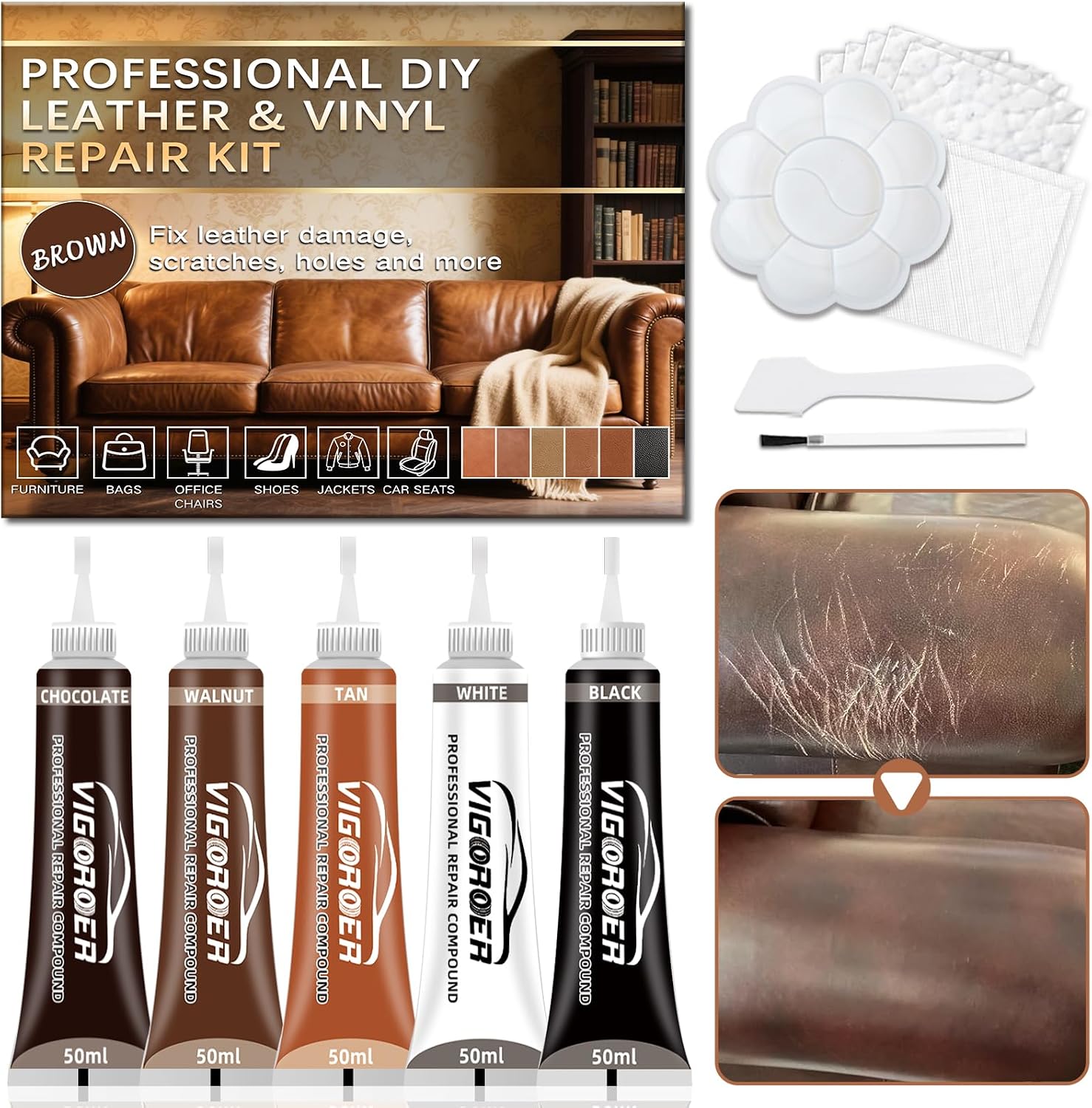
Vigorder Brown Leather Repair Kit – Fix Scratches, Tears & Peeling on Furniture, Sofas, Jackets & Purses
Pros
- Color-matching guide specifically calibrated for brown shades like tan, walnut, and chocolate makes blending repairs straightforward
- Eco-friendly, flexible formula does not harden over time, keeping repaired areas feeling natural
- Affordable entry price makes it easy to try before committing to a professional repair service
- Suitable for a wide range of leather and vinyl items beyond just furniture
Cons
- With only 78 reviews the long-term durability track record is limited compared to more established brands
- Color matching still requires careful mixing and may not be perfect on aged or faded leather
- Kit is designed around brown tones, so buyers with black, white, or non-standard leather colors will need a different product
If your favorite leather sofa has developed a frustrating scratch or a small tear from everyday life, the Vigorder kit gives you a realistic shot at fixing it yourself on a Saturday afternoon without calling in a professional. The brown-specific color palette is the standout detail here: instead of a generic beige filler, you get shades mapped to real brown leather furniture, which is exactly what most living rooms need.
The flexible, quick-drying formula is genuinely useful for furniture that sees daily use. Unlike rigid fillers that can crack under the movement of cushions and armrests, this one stays pliable after it cures, so a repair on a well-used sofa arm is far less likely to fail within weeks.
If you want to restore a scratched or peeling brown leather sofa without spending money on a reupholstery job, this one delivers.
Styles it works with: Mid-Century Modern, Traditional, Transitional, Industrial
Best placed in: Living room sofa or armchair, home office desk chair, entryway bench
May not suit: Homes with very light or cream leather furniture where brown-toned fillers would create a visible contrast; households looking to repair heavily distressed or extensively peeled sections larger than a few inches
Buy it if:
- You have a brown leather sofa, armchair, or ottoman with scratches, small tears, or early peeling and want a quick, affordable fix
- You are a first-time DIY leather repairer who needs clear instructions and color-matching guidance included in the box
- You want to extend the life of a leather jacket, handbag, or car seat without paying for professional restoration
Consider waiting if:
- Your leather item is a rare or custom color that may not blend well with the included brown shade range
Skip it if:
- Your leather furniture has large sections of deep peeling or structural damage that require professional-grade rebuilding compounds
- You need a kit for black, white, or brightly colored leather
Check the latest price and availability on Amazon before it sells out.

ARCSSAI Brown Leather Repair Kit for Furniture, Sofa, Car Seats & Jackets - Easy Color Match, No Experience Needed
Pros
- Works on both genuine leather and synthetic materials including bonded leather, pleather, and vinyl
- Comprehensive kit includes everything needed in one package with no extra purchases required
- Color mixing guide gives you flexibility to match a wide range of shades rather than buying color-specific kits
- Backed by a satisfaction guarantee with full replacement or refund if results disappoint
Cons
- Color matching can be tricky on aged or faded leather and may require multiple test applications to get right
- Results on large damaged areas may look noticeably patched rather than seamlessly restored
- Not ideal for damage smaller than 1/4 inch where the backing fabric cannot be properly inserted
If your sofa is showing its age with a few cracks or pet scratches, this kit is the kind of quiet fix that makes a real difference without the drama of shopping for new furniture. The color mixing guide is genuinely useful, especially for the common brown and tan leather tones found in most living rooms and home offices.
What stands out is how approachable the whole process feels. The instructions are laid out clearly, the compound dries fast, and the customer support team is available if you hit a snag. For a product that costs less than a dinner out, it removes a surprisingly stressful item from your to-do list.
If you want to restore a cracked or peeling leather sofa without spending hundreds on a reupholstery service, this one delivers.
Styles it works with: Traditional, Mid-Century Modern, Transitional, Industrial
Best placed in: Living room sofa or sectional, home office chair, car interior or driver seat
May not suit: Homes with very light or white leather where color matching is harder to achieve, or households needing a perfectly invisible repair on a high-visibility centerpiece sofa
Buy it if:
- Your leather sofa or armchair has visible cracks, peeling, or pet scratches and you want a quick affordable fix
- You drive frequently and your car seat leather is worn or cracked along common stress points
- You own leather bags, jackets, or shoes that need a spot repair and do not want to pay for professional restoration
Consider waiting if:
- The damage on your item is a very light or unusual color and you are unsure the included mixing guide can match it precisely
Skip it if:
- You need a flawless invisible repair on a high-end piece of furniture where any visible patching would be unacceptable
- The damaged area is extremely large and would require full panel coverage rather than spot repair
Check the latest price and availability on Amazon before it sells out.

ARCSSAI Leather & Vinyl Repair Kit - Match Any Color, Fix Furniture, Car Seats, Sofas & More
Pros
- Beginner-friendly with detailed step-by-step instructions included in the kit
- Versatile color mixing system covers nearly any leather or vinyl color in real homes
- Highly rated by nearly 9,000 buyers, indicating consistent real-world results
- Works on both genuine leather and synthetic materials including PU, faux, and bicast
Cons
- Color matching can be tricky for unusual or heavily faded shades -- results vary by skill level
- Holes smaller than 1/4 inch may not accommodate the backing fabric, limiting repair options for fine cracks
- Repaired areas may show slight texture differences under close inspection compared to original leather
There is something deeply satisfying about rescuing a beloved sofa or armchair instead of sending it to the landfill. The ARCSSAI Leather Repair Kit makes that possible without a trip to a specialist or a costly reupholstery quote. For home decor shoppers who have invested in quality leather furniture, this kit is the practical safety net that sits in a drawer until the day a pet scratch or an accidental cut threatens an otherwise beautiful piece.
What sets it apart for home use is the color-mixing system. Rather than forcing you to choose from a fixed palette, it gives you 10 base colors and a professional mixing guide so you can dial in a match that blends into your existing decor -- whether your sofa is a warm cognac, a deep charcoal, or an off-white cream. The fast-drying formula means minimal disruption to your living space, and the included backing fabric handles larger holes that other kits simply cannot address.
If you want to restore a cracked or scratched leather piece without the cost or hassle of professional repair, this one delivers.
Styles it works with: Modern, Industrial, Mid-Century Modern, Traditional
Best placed in: Living room sofa or sectional, home office chair, bedroom accent chair
May not suit: Homes with no leather or vinyl furniture at all; very light-colored or white leather where color-matching demands higher precision
Buy it if:
- Your leather sofa, couch, or armchair has visible cracks, peeling, or pet scratches you want to fix before guests arrive
- You own a leather car seat, jacket, or bag showing wear and want a single kit that handles all of them
- You want a low-cost, low-effort solution that avoids a $200-plus reupholstery bill
Consider waiting if:
- Your leather has a very unusual or highly saturated color and you are not confident in your color-mixing skills -- contact ARCSSAI support first for guidance
Skip it if:
- Your furniture damage is structural (broken frame, collapsed cushions) rather than surface-level leather damage
- You need a factory-perfect invisible repair on a high-end designer piece where any visible patch is unacceptable
Check the latest price and availability on Amazon before it sells out.
Frequently Asked Questions
Why is my leather couch peeling in the first place?
Most peeling couches are bonded or faux leather, where a thin polyurethane coating sits over a fiber or fabric backing. That coating dries out, loses flexibility, and delaminates with body oils, heat, and UV exposure. Genuine top-grain rarely peels. It cracks instead. So peeling is almost always a coating-failure issue, not a leather-quality one.
Can a repair kit permanently fix a peeling couch?
On faux and top-grain surfaces, yes, a careful repair can last for years with regular conditioning. On bonded leather, no. The delamination is progressive across the whole panel, so a kit is a cosmetic, buy-time fix rather than a permanent cure. Expect to re-patch new areas as they lift.

How long does a leather repair kit take to fully cure?
Plan on roughly 24 hours for full cure, though each thin coat dries in 30–60 minutes. Apply 2–3 thin coats instead of one thick layer, and wait the full cure window before sitting on the repaired spot. Rushing the cure is the top reason repairs fail early in owner reviews.
Will the repaired patch match the rest of the couch?
It can get close if you blend carefully. Match the tint on a hidden area first, build color in thin layers, and feather the edges outward so there’s no hard line. Browns shift warm or cool as they dry, so check the match after it cures, not while it’s wet.
How do I stop my leather couch from peeling again?
Condition every 3–6 months with a quality leather conditioner, keep the couch out of direct sun, and wipe up body oils and spills promptly. These steps slow coating breakdown but can’t reverse bonded-leather delamination that’s already underway. Prevention works best on faux and genuine surfaces.



Write Your Review
No reviews yet. Be the first to share your experience!