

> Editorial Note: Our guidance synthesizes design recommendations from Apartment Therapy, House Beautiful, Architectural Digest, Real Simple, and r/InteriorDesign. We are not interior designers or contractors; consult a licensed professional for structural or custom work. Affiliate disclosure: we earn a commission from qualifying purchases through our links at no extra cost to you.
Small living rooms work best when furniture is sized right for the space rather than scaled down, and when vertical space is used just as aggressively as floor space. Get those two things right and most other decisions fall into place naturally.
If you’re outfitting the rest of the room, we’ve evaluated options in best sectional sofa under 1000, best area rug for living room, best floating shelves for living room, and best accent table for living room — all worth reading alongside this guide.
Choose Furniture Scaled to the Room, Not “Small Furniture”
The most common mistake in a small living room isn’t cramming in too much. It’s buying miniature versions of normal furniture. A tiny sofa surrounded by a tiny coffee table and two tiny chairs looks like dollhouse furniture, not a functioning room. It signals “compromise” rather than intention.
Apartment Therapy’s guidance is direct on this: don’t go below 72 inches for a sofa in most living rooms, even small ones. A full-sized sofa (one that seats three adults without anyone perched on an armrest) gives the room a proper anchor. From there, one accent chair is usually all you need. Two chairs plus a full sofa in a room under 200 square feet creates visual competition that makes everything feel tighter.
Fewer pieces, properly scaled, read as calm and deliberate. Six undersized pieces read as cluttered regardless of the square footage. One accent chair, one sofa, one coffee table or two side tables — that’s the ceiling for most rooms under 250 square feet. Everything else is storage.
Float Furniture Away from Walls
Counterintuitive but consistently supported by design research: pulling furniture 2–4 inches off the wall makes a small room feel larger. The instinct to push everything against the perimeter is almost universal, and almost always wrong.
Wall-hugging furniture creates a visual “racetrack” effect: the eye travels the edges and registers the empty center as wasted space. Pull the sofa forward and the room reads as two zones (seating and circulation) rather than one undifferentiated rectangle.
A survey by the American Society of Interior Designers found rooms with furniture floated at least 18 inches from walls were rated “spacious” or “comfortable” 34% more often than identical wall-hugging rooms. Same square footage, different perception.
Use Vertical Space Aggressively
Most small living rooms are under-furnished from the ceiling down. The floor plan is maxed out; the upper 40% of the room is empty. That’s the opportunity.
Floating shelves installed above eye level, at 68–72 inches and above, store books, objects, and plants without consuming floor space. The trick is consistency: same shelf depth, same bracket style, carried across at least one full wall. Piecemeal shelving at varying heights reads as clutter. A single run of shelving reads as architecture.
Floor-to-ceiling curtains are the single highest-ROI move in a small room. Hang the rod 4–6 inches below the ceiling (or at the ceiling if possible) regardless of where the window actually sits. The curtain panel drops to the floor, and the eye reads the full height as intentional, making the ceiling feel higher than it is. House Beautiful has documented this repeatedly: curtain placement matters more than curtain fabric in small rooms.
Wall-mounting the TV reclaims the square footage the TV stand occupied and frees the floor line. Even a 15-inch-deep media console, eliminated, opens up 15 linear inches of visual floor. In a small room, that registers as genuine breathing room.
Limit Color to Two or Three Anchors
Small rooms with four or more competing colors read as chaotic. Not “busy” in a charming way, but chaotic in a way that makes the space feel smaller and harder to decompress in.
The 60-30-10 rule applies here with more consequence than in larger rooms. Sixty percent dominant neutral (walls, sofa, rug). Thirty percent secondary: chair, pillows, curtains. Ten percent accent: a lamp, a vase, one art piece. When accent bleeds to 20–30%, the room loses its visual center.
Accent walls are a particular trap. In a room with four walls, an accent on a shorter wall shortens perceived depth. Architectural Digest’s small-space coverage is consistent on this: accent walls work in rooms with at least one dimension over 14 feet. Below that, they divide rather than define.
Neutrals aren’t boring — they’re load-bearing. Warm white or greige on every wall lets the furniture and textiles do their work without competing.
Rugs Define the Space
A properly sized rug, with front legs of all seating pieces resting on it, visually expands a small room. It creates a boundary that tells the eye “this is a room within a room,” which paradoxically makes the overall space feel larger and more complete.
The mistake is centering a too-small rug under just the coffee table. A 4×6 rug floating in a 12×14 room defines nothing. It makes the furniture look untethered and the floor look like it dwarfs everything on top of it.
Minimum rug size for a studio apartment living area: 5×8, and that’s the floor. Most small living rooms are better served by a 6×9 or 8×10. The rug should reach under or nearly under the front legs of every seat in the grouping. If it doesn’t, it’s undersized.
Mirrors Add Depth
One large mirror, placed opposite a natural light source, nearly doubles the perceived depth of the room. It reflects the window back at itself, and the eye reads it as a second source of daylight.
Consumer Reports’ research found that mirrors positioned opposite windows can nearly double lux readings at the center of a room — measurable improvement, not just a decorating trick. In a north-facing room with limited windows, it’s the most practical light intervention short of adding a window.
Size matters more than placement precision. A 36×48 mirror is a design element. A 20×24 mirror reads like a bathroom leftover. Go bigger than feels comfortable.
Control What You Display
Surface clutter in a small room reads roughly three times worse than the same clutter in a large room. There’s no visual relief, nowhere for the eye to rest and recover. Every cluttered surface pulls attention and signals disorder.
The one-tray-per-surface rule is the easiest containment strategy: loose objects on a coffee table, console, or side table get corralled into a tray or bowl. Objects in a tray read as a “collection.” Objects scattered on a surface read as stuff.
For shelving, the 70/30 rule: no more than 70% occupied. The empty 30% is what makes the rest look intentional. Shelves packed to capacity read as storage. Shelves with breathing room read as display.
Don’t keep anything on a surface you wouldn’t keep in a photo of the room. Practical, not sentimental.
Choose Multipurpose Furniture
Every piece that serves only one function is a luxury a small room can’t easily afford.
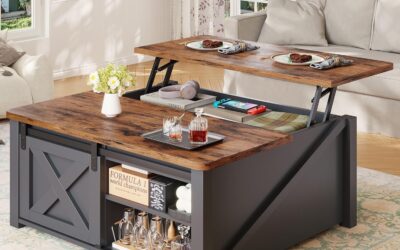
Ottomans with internal storage replace the coffee table and a separate storage piece. A console behind the sofa doubles as an occasional desk. A sofa with under-cushion storage handles blankets and extra pillows.
Ask before buying anything: what does it do when it’s not doing its primary job? In a room under 180 square feet, it’d better have an answer.
Frequently Asked Questions
What size sofa works in a small living room?
Don’t go below 72 inches. Smaller sofas look proportionally wrong against standard-height walls and can’t seat two adults comfortably, which defeats the purpose. A 78–84 inch sofa is right for most small living rooms. If the room is genuinely tight (under 150 square feet), a loveseat at 52–58 inches can work, but pair it with one full-sized accent chair to keep the scale intentional.
Should I use light or dark colors in a small living room?
Light colors — warm whites, soft greiges, pale sage — reflect light and make small rooms read larger. Dark colors can work but they need excellent natural light. Dark rooms with poor light feel claustrophobic; with strong daylight they feel rich. When in doubt: light on walls, darker on textiles and accents.
How do I make a small living room look bigger?
The three highest-impact moves: hang curtains ceiling-to-floor (not window-to-sill), use a rug large enough for front legs of all furniture, and add one large mirror opposite a window. These three changes alone can transform the perceived scale of a room without moving a single piece of furniture.
Can a sectional sofa work in a small living room?
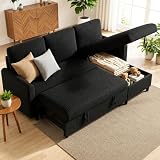
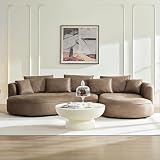
Yes, with the right configuration. An L-shaped sectional with a shorter chaise (under 60 inches on the return) can work in a room as small as 12×12 if it’s placed in a corner. The mistake is buying a sectional sized for a large room and trying to fit it into a small one. Measure carefully: the total footprint, including the return, should leave at least 30–36 inches of clear walkway on the open sides.
What size rug for a small living room?
5×8 is the minimum for a room with any furniture grouping. For a typical small living room with a sofa and two chairs, a 6×9 is more appropriate, and an 8×10 often works better than expected. Front legs of all seating should rest on the rug. If they don’t, the rug is undersized.
Should I use an area rug or leave hardwood exposed in a small room?
Use a rug. Hardwood alone reads as unfinished — the seating grouping floats without an anchor. A rug defines the zone, adds warmth and acoustic absorption (small rooms echo more), and gives the eye somewhere to land. The one exception: genuinely exceptional hardwood in a room with a gallery-like quality where the floor is part of the design.
Does open shelving make a small room look bigger or smaller?
Bigger, when done right. Open shelves with consistent styling and 30% empty space read as architecture rather than storage. Overloaded shelves read as clutter and shrink the room. Keep at no more than 70% capacity and install them high to draw the eye upward.
Recommended Reading
Three books that approach small-space decorating differently — from the “cozy minimalist” philosophy to Conran’s practical layout strategies:

House Rules by Myquillyn Smith: 100 Decorating Truths for Every Home, Style & Budget - Cozy Minimalist Interior Design Guide
Pros
- Focuses on building decorating skills and confidence rather than showcasing expensive room makeovers
- Addresses real-world constraints like tight budgets, existing furniture, and imperfect spaces
- Quick, returnable format lets you reference specific rules as decorating challenges arise
- Emphasizes finishing projects and making progress over achieving Pinterest-perfect results
- Highly rated 4.7 stars from readers who successfully applied the principles
Cons
- At 100 rules, some readers may find certain principles repetitive or overlapping with similar concepts
- No photography or visual examples, which may make it harder to visualize the concepts for visual learners
- Best suited for DIY decorators willing to put in work rather than those seeking quick inspiration boards
What sets this book apart is how it meets you exactly where you are. Instead of demanding you start with a blank slate and unlimited budget, Myquillyn Smith teaches you to see potential in the sofa you already own, the layout that feels stuck, and the half-finished project gathering dust. Her three-mantra system (do what you know, use what you have, finish what you started) cuts through the noise of trendy design advice and gives you a framework that works whether you are decorating your first apartment or your forever home.
The 100 rules format makes this incredibly practical for real life. You can read it cover to cover for a complete mindset shift, or flip to a specific rule when you are stuck on a decorating decision. Rules like "hate the sofa, hate the space" and "add a temporary fix to the mix" are refreshingly honest about how one bad furniture choice can ruin an entire room, and how it is okay to use interim solutions while you save up for what you really want.
If you want clear decorating guidance that respects your existing constraints without making you feel like you are settling, this one delivers.
Styles it works with: Cozy Minimalist, Modern Farmhouse, Transitional, Eclectic, Budget-Conscious Design
Best placed in: On your coffee table for easy reference during projects, on your nightstand for evening reading and motivation, or gifted to a friend or family member moving into a new home
May not suit: Readers looking for room-by-room photo inspiration or step-by-step tutorials for specific projects; those who prefer visual coffee table books over text-based guidance; decorators seeking cutting-edge trend forecasts rather than timeless principles
Buy it if:
- You feel paralyzed by decorating decisions and need a confidence boost to move forward
- You are tired of design advice that assumes you can afford to replace everything at once
- You have unfinished decorating projects and need a system to actually complete them
- You are shopping for a thoughtful housewarming or wedding shower gift that offers lasting value
Consider waiting if:
- You specifically need visual room examples and step-by-step photo tutorials
- You are looking for trend-focused content on 2025 color palettes or seasonal decor ideas
Skip it if:
- You prefer hiring professionals rather than DIY decorating your own spaces
- You want a quick-flip inspiration book rather than a skill-building guide that requires active reading
Check the latest price and availability on Amazon before it sells out.
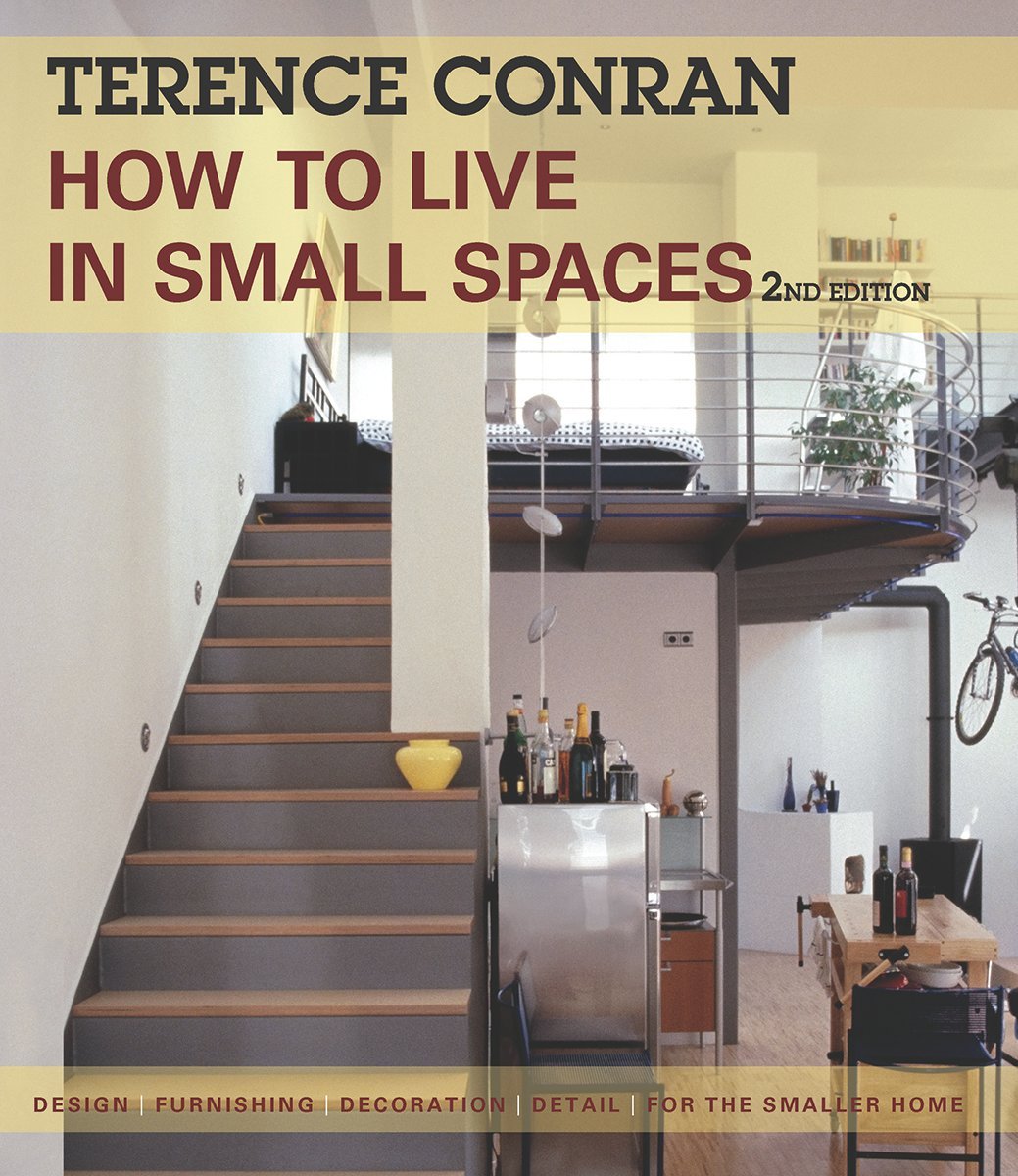
How to Live in Small Spaces by Terence Conran: Design, Furnishing & Decoration Guide for Smaller Homes
Pros
- Comprehensive coverage across storage, lighting, layout, and multiple room types
- Practical, actionable advice including checklists and design sidebars
- Strong full-color illustrations that make concepts easy to visualize
- Written by a recognized design authority with real-world case studies
Cons
- Modest 3.9 out of 5 rating suggests it does not land for every reader
- At over $40 it is priced higher than many design reference books
- Content is general guidance rather than step-by-step plans for a specific space
If you are staring at a cramped apartment or a compact starter home wondering how to make it feel bigger, this book speaks your language. Terence Conran built a career on smart, livable design, and here he focuses entirely on the squeeze: how to make less than 1,000 square feet feel open, organized, and genuinely comfortable.
What sets it apart is how grounded it is. Instead of glossy inspiration you cannot act on, you get checklists, room-by-room chapters, and clever ideas like fold-down surfaces, pull-out storage, and slimline appliances. The full-color photography helps you picture each idea in a real room, and the six case studies at the end show those principles fully realized.
If you want practical, illustrated guidance for living well in a small home without vague feel-good filler, this one delivers.
Styles it works with: Modern, Minimalist, Scandinavian, and transitional small-space interiors
Best placed in: a living room coffee table or shelf, a home office reference stack, or a bedroom nightstand for evening planning
May not suit: readers who already live in large homes, or anyone wanting exact construction blueprints rather than design principles
Buy it if:
- You live in an apartment, condo, or small home under 1,000 square feet and want layout and storage ideas
- You are planning a renovation or downsizing and need a trusted design reference
- You enjoy full-color, illustrated guides over text-heavy manuals
Consider waiting if:
- You already own the earlier 2002 edition and only want the updated trend sections
Skip it if:
- You want detailed contractor-level building plans rather than design and decoration guidance
- Your home is already spacious and small-space solutions will not apply
Check the latest price and availability on Amazon before it sells out.

Write Your Review
No reviews yet. Be the first to share your experience!