

> Editorial Note: I’m Hannah Lin, an Interior Living Researcher who’s spent 9+ years analyzing the home furniture market. This guide draws on BIFMA, GREENGUARD, and FSC certifications, plus owner reviews aggregated from Wirecutter, Apartment Therapy, and the major home design subreddits.
The biggest mistake people make with upholstered dining chairs is reaching for water before they’ve read the cleaning code stitched under the seat. That one letter decides whether a spill wipes away or sets into a permanent ring, and most owners never look for it. Once you’ve sorted your fabric, the rest of your room styling gets easier too, so it’s worth cross-referencing your other pieces like best gallery wall frames, best console table for entryway, best large floor mirror, best wall mirror for living room, and best table lamp for living room while you’re building a cohesive look.
What Does the Cleaning Code on Your Chair Actually Mean?
Flip the seat over and look for a small tag with a single letter. That code tells you exactly what your fabric can handle, and ignoring it causes most of the water rings and color bleeds people blame on the fabric itself.
W means water-based cleaners are safe. You can use a mild soap-and-water solution or a foaming upholstery cleaner. This is the most forgiving code and covers most modern polyester and chenille blends.
S means solvent-only. Water will stain these fabrics, so you need a dry-cleaning solvent or a water-free upholstery product. Rayon, some linens, and certain velvets carry this code.
WS means either water-based or solvent cleaners work. Check a hidden spot first, but you have flexibility.
X means vacuum only. No liquids of any kind. These are delicate fabrics that pill or shrink on contact with moisture.
If there’s no tag, assume the strictest option and treat it as S until you’ve spot-checked an out-of-sight corner. Higher-durability fabrics rated to Wyzenbeek 15,000+ double rubs (heavy-duty commercial grade) usually forgive more aggressive cleaning, but the code still governs what liquid you reach for. When in doubt, blot. Don’t rub.
What’s the Right Weekly and Monthly Routine?
A little maintenance beats deep cleaning every time. Dining chairs collect crumbs, skin oils, and airborne kitchen grease faster than any other seat in the house, and that grime is what turns a light fabric gray over 12 months.
Weekly, vacuum each chair with the upholstery brush attachment. Get into the seams and the crease where the seat meets the back, since that’s where crumbs and dust settle. A quick pass takes about two minutes per chair.
Monthly, do a light refresh. For W and WS fabrics, mix a teaspoon of mild dish soap into two cups of warm water, whip it into a foam, and apply only the foam with a soft cloth. The dry foam lifts soil without soaking the padding. Wipe with a clean damp cloth, then let the chair air-dry fully before anyone sits down.
Rotate chairs around the table every few months so one seat doesn’t take all the wear. Owner reviews aggregated by Wirecutter and Apartment Therapy consistently flag uneven fading as the top regret, and rotation fixes it for free. Keep chairs out of direct afternoon sun, which bleaches fabric dye faster than any cleaner ever will.
How Do You Treat Fresh Spills and Set-In Stains?
Speed matters more than product. A fresh spill sits on the surface for a minute or two before it wicks into the foam, so your first move is a dry towel, not a wet one.
Blot from the outside of the spill inward to keep it from spreading. Press, lift, and repeat with a clean section of towel until no more liquid transfers. For W-code fabrics, follow with the soap-foam method above. For grease (salad dressing, butter), sprinkle cornstarch or baking soda over the spot, wait 15 minutes, then vacuum it up before it soaks in.
Set-in stains need patience. Red wine, coffee, and tomato sauce respond to a solution of one tablespoon white vinegar plus one tablespoon dish soap in two cups of water for washable fabrics. Apply with a cloth, let it sit five minutes, then blot clean.
Never scrub a stain flat. Rubbing frays the weave and pushes pigment deeper into the fibers. And skip bleach entirely on colored upholstery, since it strips dye and leaves a pale halo worse than the original mark. If a stain survives two gentle attempts, stop and call a professional cleaner before you damage the nap.
When Should You Deep-Clean or Call a Pro?
Plan a deep clean twice a year for chairs in daily use, or quarterly if you have kids or pets. This is where removable seat cushions earn their keep. Many chairs, including several with wooden frames, let you unscrew the seat pad for washing.
For W and WS fabrics, a handheld extraction cleaner rinses and vacuums in one pass. Keep the padding as dry as possible and point a fan at the chair afterward, because trapped moisture in foam breeds mildew within 48 hours. GREENGUARD-certified low-emission foams handle this better, but every foam has limits.
Call a professional when the code is S or X, when the fabric is velvet or silk, or when a musty smell won’t lift after cleaning. Pros use controlled solvent extraction that home machines can’t match, and it costs far less than reupholstering. BIFMA-rated commercial frames and FSC-certified hardwood bases will outlast the fabric, so protecting the upholstery is what keeps a good chair in service for a decade.
If you’re shopping for replacements, look for removable, machine-washable covers and a stain-resistant finish. Those two features cut your long-term cleaning time roughly in half.
Helpful Picks
These upholstered dining chairs were shortlisted for wipeable or removable fabric seats and owner ratings that hold up in real kitchens. Start with the first if you want casters and a plush chenille seat; the others suit classic four-tops and smaller two-chair setups.

Pros
- Dual-mode base with removable casters or stationary foot pegs adds flexibility
- Smooth swivel lets you turn and reach without straining
- Supportive ergonomic shape with paded armrests suits extended sitting
- Solid300 lb weight capacity on a real ruberwood frame
- Priced well below comparable upholstered caster chairs from the same brand
Cons
- Casters may mark or scratch hardwood floors without a protective mat
- Only available in beige, limiting options for darker color schemes
- Chenille fabric may attract pet hair and require frequent lint rolling
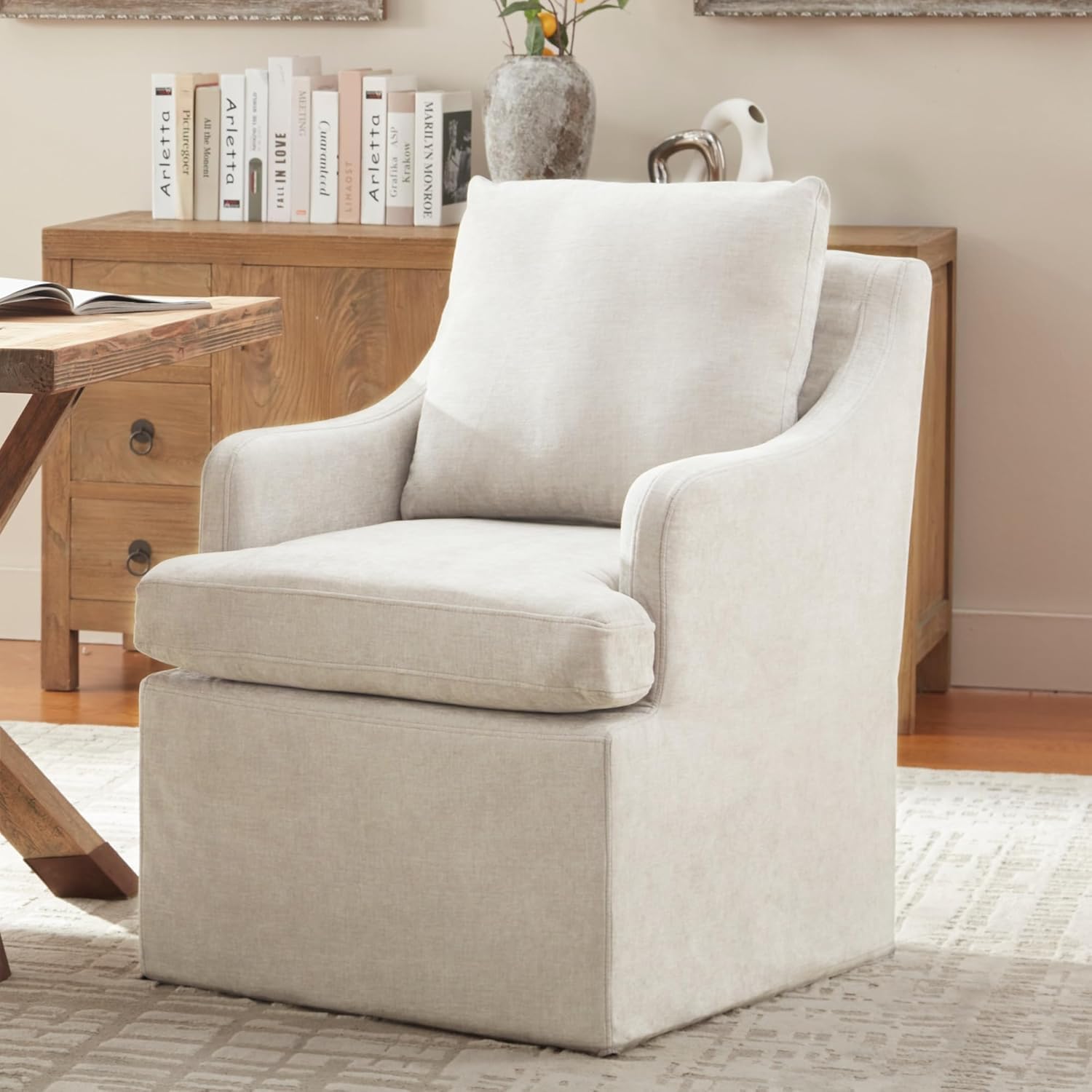
This VKNOW chair solves an everyday frustration: neding to scoot, turn, or reposition your seat at the table without the awkward chair-drag across the floor. The four smooth-rolling casters and swivel base let you glide in and out of conversations, reach across the table, or pivot toward the TV without missing a beat. It feels more like a cozy accent chair than a typical dining seat.
The beige chenille upholstery has a soft, textured look that photographs beautifully and feels warm in person. Paired with the curved armrests and thick cushioning, it reads as intentional decor rather than a basic kitchen chair. It works just as well pulled up to a writing desk or tucked into a bedroom corner for morning coffee.
If you want efortless mobility and all-day comfort without sacrificing style at your dining table, this one delivers.
Styles it works with: Modern Casual, Transitional, Scandinavian, Contemporary Farmhouse
Best placed in: Kitchen or dining table, home office desk, bedroom reading corner
May not suit: Homes with unprotected hardwood floors (casters may leave marks), very small dining spaces where a slimer armless chair would fit better, or households with pets that shed heavily on textured fabric
Buy it if:
- You eat, work, and relax in the same chair and need something that moves with you
- You want the look of an accent chair with the function of a rolling desk chair
- You prefer a supportive armrest design for longer sitting sessions
Consider waiting if:
- You need a color other than beige to match your existing decor
- You want a set of matching chairs and need to budget for multiples at once
Skip it if:
- Your dining area has delicate hardwood floors and you do not want to use a chair mat
- You need a compact armless chair to tuck fully under the table
Check the latest price and availability on Amazon before it sells out.

Pros
- Includes 4 chairs in one set, eliminating the need to buy separately
- Foot pegs provide extra comfort and farmhouse charm
- Easy assembly with clear instructions, no professional help needed
- Versatile beige color works with multiple decor styles
- Push-under design saves floor space in smaller dining areas
Cons
- No customer reviews yet to verify comfort and durability claims
- Fabric upholstery may stain more easily than faux leather or wood seats
- At $310 for the set, individual chair replacement could be costly
These chairs solve the biggest dining room dilemma: finding a full set that looks custom but doesn't require a custom budget. The wooden legs bring warmth, the beige upholstery keeps things light and neutral, and those foot pegs add a charming bistro touch you don't usually see at this price point.
We appreciate that COLAMY designed these to actually fit under your table. Too many dining chairs stick out and create tripping hazards, but these push in cleanly to give you your floor space back. The ergonomic back means guests won't be squirming halfway through dinner, and at 250 lbs per chair, they're sturdy enough for everyday family use.
If you want farmhouse style seating that won't crowd your dining area and comes ready to use out of the box, this set delivers.
Styles it works with: Modern Farmhouse, Transitional, Scandinavian, Cottage, Casual Dining
Best placed in: Dining room around rectangular or round tables, kitchen breakfast nook, farmhouse-style eat-in kitchen, home office or study for extra seating
May not suit: Formal dining rooms expecting tufted velvet or leather looks, homes with very small children prone to spills on fabric, ultra-modern minimalist spaces that require all-metal or acrylic chairs
Buy it if:
- You need a complete set of 4 dining chairs and want to avoid mismatched styles
- You prefer the warmth of wood legs over metal and want foot pegs for added comfort
- Your dining area is on the smaller side and you need chairs that tuck under the table cleanly
Consider waiting if:
- You want to see verified customer reviews before committing to this newer product
- You're waiting for a seasonal sale or Prime Day discount on furniture sets
Skip it if:
- You need chairs with arms or higher weight capacity above 250 lbs
- You require stain-resistant or wipeable surfaces for young kids or frequent entertaining
Check the latest price and availability on Amazon before it sells out.

Christopher Knight Home Tulif Dining Chairs Set of 2 - Cane Back Upholstered Kitchen Chairs, Ruberwood Frame
Pros
- Solid rubberwood construction provides long-lasting stability and eco-friendly appeal
- Cane webbing backrests add visual warmth and airflow for year-round comfort
- Upholstered cushion seats balance softness with support for everyday use
- Neutral walnut and beige colorway fits most existing dining room palettes
- Comes as a set of two, reducing the hassle of buying chairs individually
Cons
- No customer reviews yet, so long-term durability is unproven
- At roughly $185 per chair, it sits above budget options for similar cane-back styles
- Light beige fabric may show stains more easily in homes with kids or pets
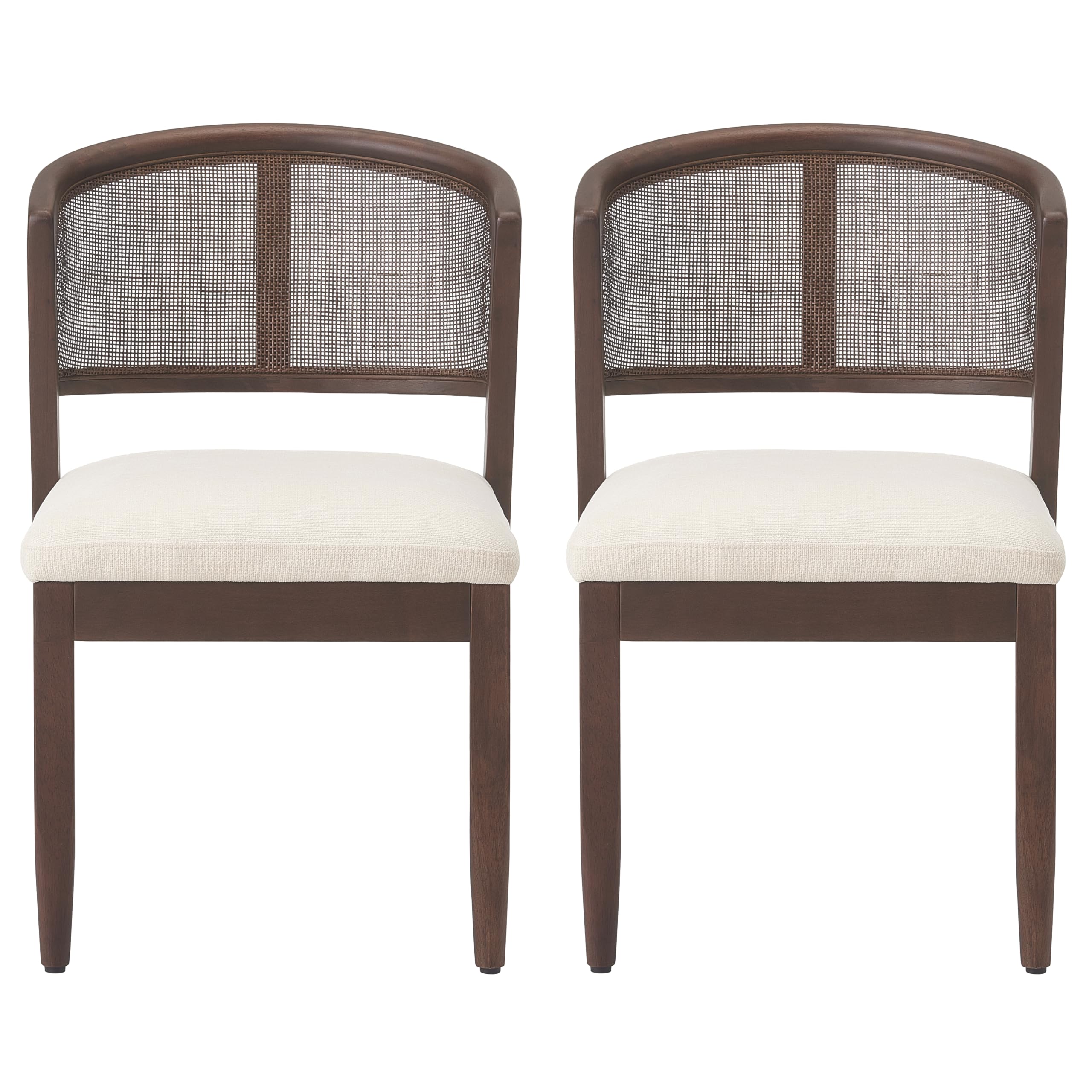
There is something immediately appealing about these Tulif chairs. The combination of handwoven cane and a solid rubberwood frame gives them a collected, artisan quality that you usually only find at boutique furniture stores. They look more expensive than they are, which is always a win when you are furnishing a full dining table.
In a real room, the walnut-toned legs and light beige cushion strike a balanced, warm note. They do not compete with your table or decor but quietly elevate the whole space. The cane back catches light beautifully and adds that layered, textural look designers love right now.
If you want that natural, woven-back dining chair look without sacrificing seat comfort or spending boutique prices, this one delivers.
Styles it works with: Modern Farmhouse, Mid-Century Modern, Coastal, Boho
Best placed in: Dining room around a wood or marble table, kitchen nook, living room as an accent reading chair
May not suit: Ultra-modern or industrial spaces where cane and ruberwood may feel out of place, or households with young children who might damage the cane webing
Buy it if:
- You are furnishing or refreshing a dining room and want chairs with natural texture and warmth
- You prefer a paded seat but still want an airy, open-back design
- You value sustainable materials like rubberwood and handwoven cane
Consider waiting if:
- You want to see real customer reviews before committing to a newer listing
- You need more than two chairs and want to confirm stock availability for a matching set
Skip it if:
- You need heavy-duty, fully wipeable seating for young kids or high-mess households
- You are looking for a bold color or fully upholstered back for maximum cushioning
Check the latest price and availability on Amazon before it sells out.
Frequently Asked Questions
Can I use a steam cleaner on upholstered dining chairs?
It depends on the cleaning code. Steam is safe on W and WS fabrics if you keep the padding from getting saturated, but it can shrink or watermark S and X fabrics. Always check the tag and spot-check a hidden corner first.
Are baby wipes safe for spot-cleaning fabric chairs?
No. Most baby wipes contain oils and additives that leave a residue attracting more dirt over time. Stick to a mild soap-and-water foam on W-code fabric, or a dedicated solvent product on S-code fabric.
How often should I deep-clean dining chairs?
It depends on traffic. Twice a year covers a typical household, while homes with kids or pets do better quarterly. Weekly vacuuming between deep cleans keeps grime from setting in and stretches the interval.
Will vinegar damage my upholstery?
Almost never on washable fabrics, and it’s one of the safest stain lifters for wine and coffee. Dilute one tablespoon in two cups of water, and avoid it on S-code or delicate fibers where any liquid is risky.
Can I machine-wash removable chair covers?
Yes, if the care tag allows it. Wash on a cold gentle cycle, skip the dryer, and reinstall while slightly damp so the cover stretches back to shape. Hot water and high heat shrink most upholstery fabrics.
How do I get rid of odors trapped in the fabric?
It depends on the source. For everyday smells, sprinkle baking soda over the seat, leave it 30 minutes, then vacuum thoroughly. Musty or pet odors that linger after cleaning usually mean moisture in the foam and call for a professional.
Does fabric type change how I should clean?
Yes. Chenille and polyester blends tolerate water-based cleaning, velvet and rayon usually need solvents, and performance fabrics rated to Wyzenbeek 15,000+ double rubs handle far more scrubbing. The code tag always overrides guesswork.









Write Your Review
No reviews yet. Be the first to share your experience!